
Asia Pacific Cashmere Clothing Market Outlook to 2030
Region:Asia
Author(s):Naman Rohilla
Product Code:KROD6760
December 2024
83
About the Report
Asia Pacific Cashmere Clothing Market Overview
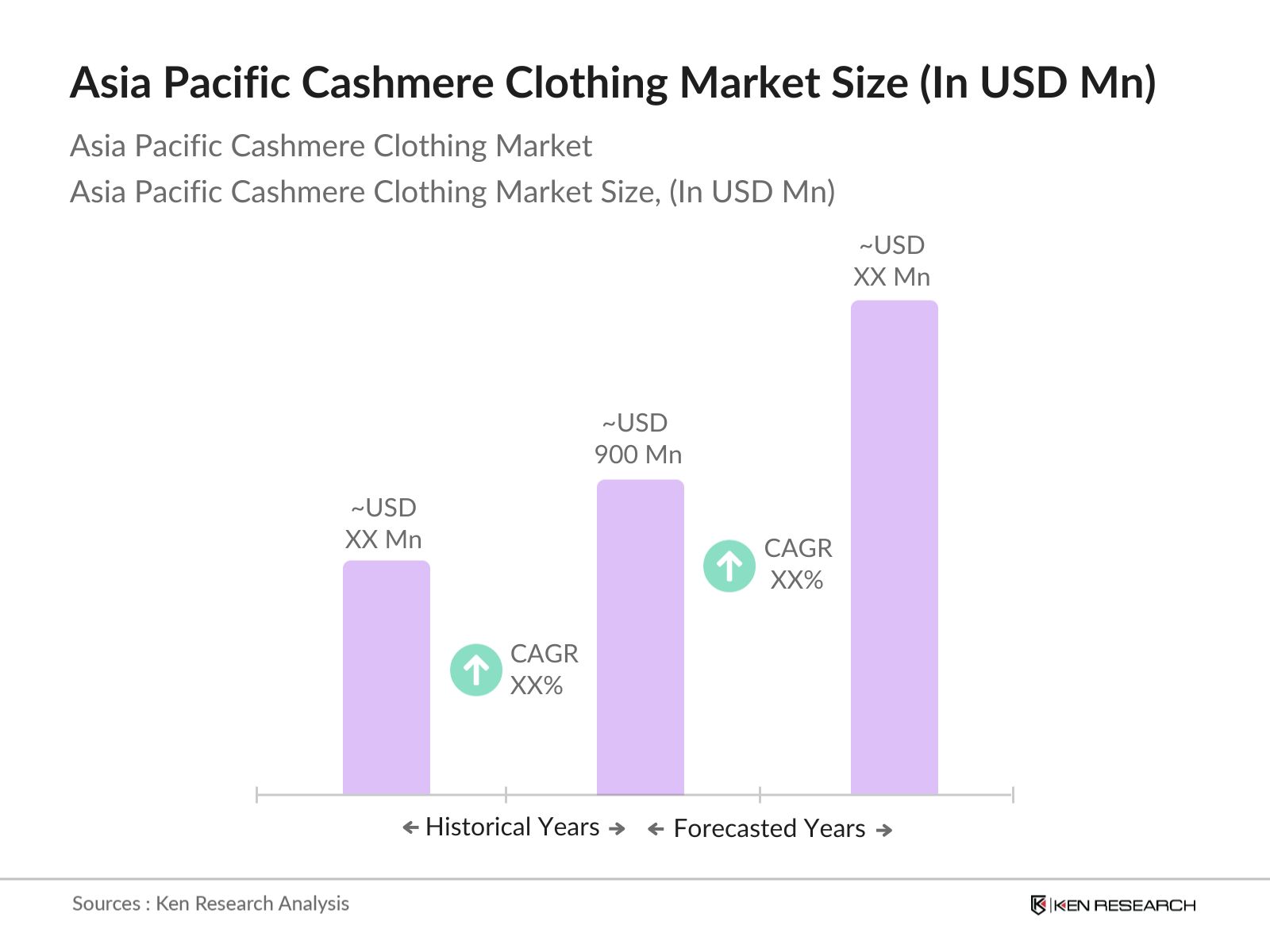
- The Asia Pacific cashmere clothing market is valued at USD 900 million, based on a five-year historical analysis. This market is driven by increasing consumer demand for premium and luxury apparel, especially from affluent urban populations in major economies. The rising disposable income across emerging markets like China and India, coupled with a growing awareness of sustainable and ethical fashion, is driving the demand for high-quality cashmere clothing. Additionally, technological advancements in textile production are contributing to the growth of the market by improving supply chains and expanding product variety.
- China, Japan, and South Korea are dominant players in the Asia Pacific cashmere clothing market due to their advanced manufacturing capabilities, a strong domestic demand for luxury goods, and established retail infrastructures. China leads the market due to its vast production capabilities and an expanding middle class that is increasingly leaning towards premium fashion. Meanwhile, Japan and South Korea excel in demand due to cultural influences and a high level of brand-conscious consumers.
- Several Asia Pacific governments are implementing stricter guidelines on sustainable textile production. In 2023, Chinas Ministry of Industry and Information Technology introduced new regulations promoting the use of renewable energy and reducing water consumption in textile manufacturing. These guidelines, aimed at reducing the environmental impact of cashmere production, are expected to push companies towards more sustainable practices. Mongolia, a major cashmere producer, has also introduced government programs to encourage the use of sustainable grazing practices to protect natural resources.
Asia Pacific Cashmere Clothing Market Segmentation
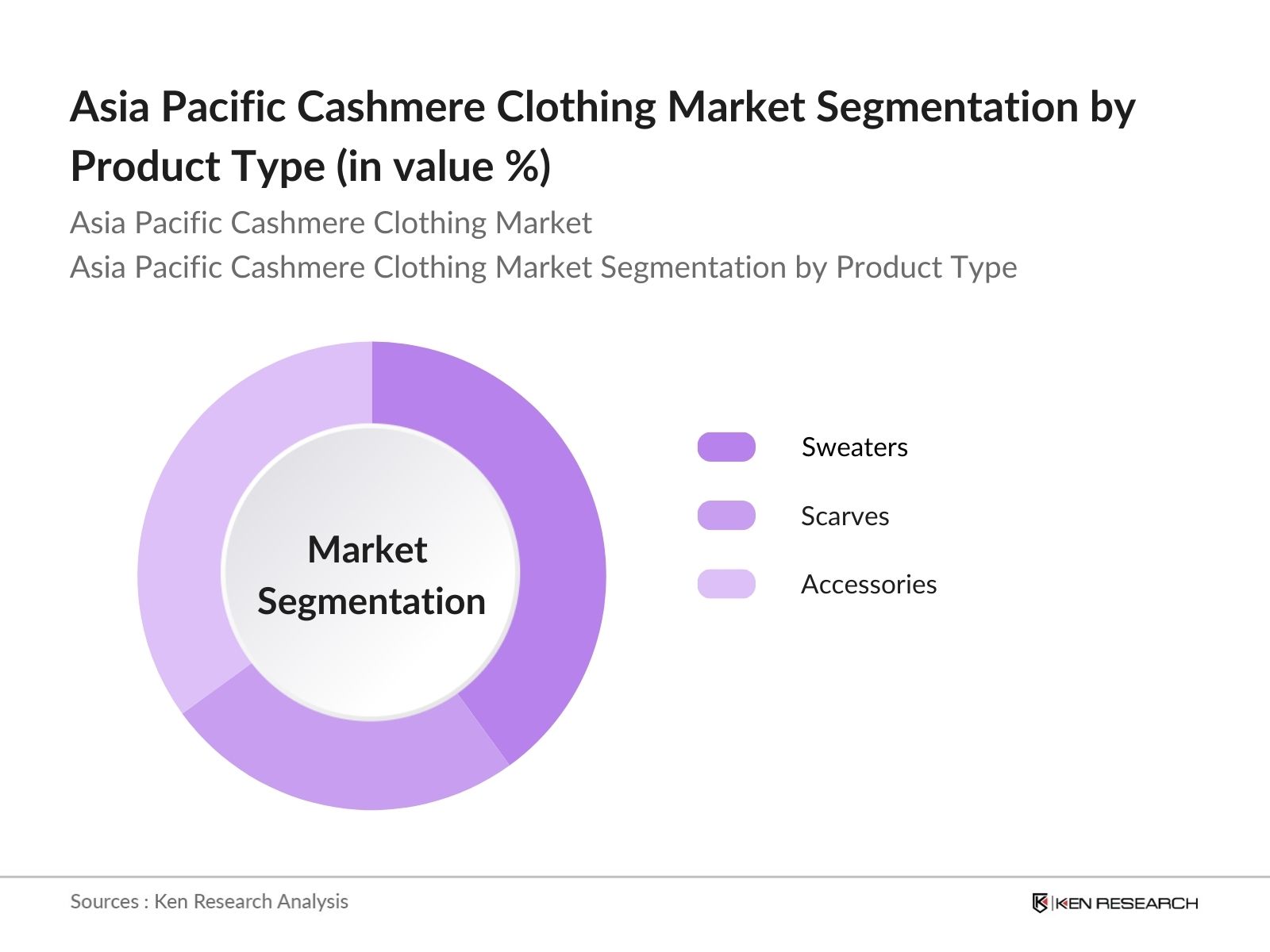
- By Product Type: The market is segmented by product type into sweaters, scarves, and accessories. Recently, sweaters have a dominant market share under the product type segmentation, driven by their wide appeal among consumers looking for comfort and style. Brands like Loro Piana and Brunello Cucinelli have solidified the sweater's place in the luxury market by focusing on quality craftsmanship and sustainable sourcing. This segment benefits from the versatility of sweaters, which can be worn across different seasons and are often associated with luxury fashion trends.
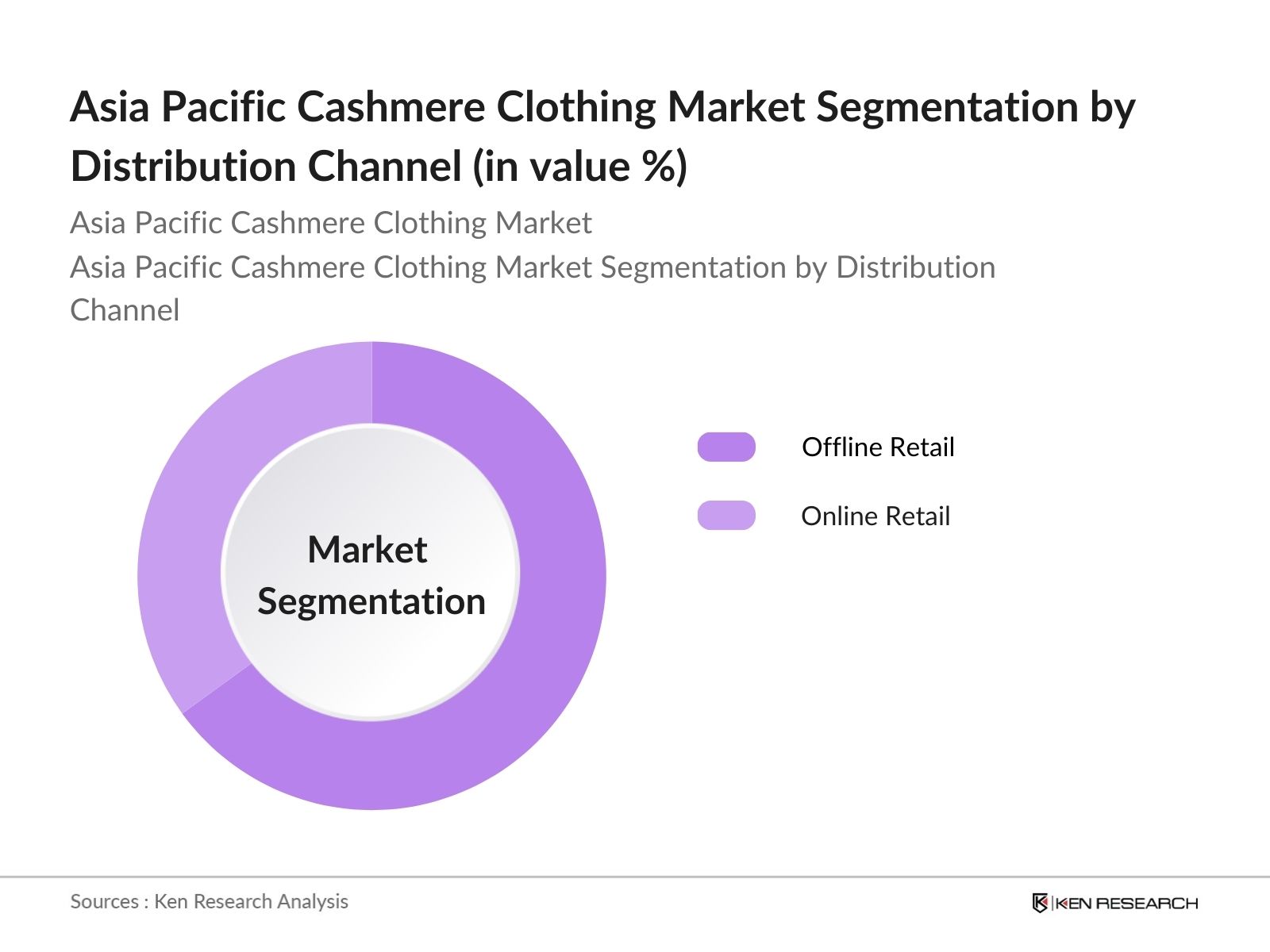
- By Distribution Channel: The market is also segmented by distribution channel into offline retail and online retail. Offline retail, comprising department stores and specialty stores, dominates the distribution channel due to the luxury experience these stores offer. Consumers prefer to touch and feel the softness and texture of cashmere clothing before making a purchase, which contributes to the dominance of this segment. Major retailers like Harrods and Selfridges provide an exclusive shopping experience that complements the luxury nature of cashmere clothing, maintaining a high market share in the Asia Pacific region.
Asia Pacific Cashmere Clothing Market Competitive Landscape
The Asia Pacific cashmere clothing market is dominated by both local and international luxury brands. Companies are leveraging sustainable sourcing, innovative designs, and strong brand loyalty to maintain their positions. The market features intense competition, especially as brands compete on factors such as product quality, sustainable initiatives, and customer experience.
|
Company |
Establishment Year |
Headquarters |
Revenue (USD bn) |
No. of Stores |
Product Range |
Sustainability Initiatives |
Global Presence |
Luxury Segment |
|
Loro Piana |
1924 |
Italy |
- |
- |
- |
- |
- |
- |
|
Brunello Cucinelli |
1978 |
Italy |
- |
- |
- |
- |
- |
- |
|
Ralph Lauren |
1967 |
USA |
- |
- |
- |
- |
- |
- |
|
Ermenegildo Zegna |
1910 |
Italy |
- |
- |
- |
- |
- |
- |
|
Burberry |
1856 |
UK |
- |
- |
- |
- |
- |
- |
Asia Pacific Cashmere Clothing Market Analysis
Asia Pacific Cashmere Clothing Market Growth Drivers
- Growing Demand for Luxury and Premium Fashion: The demand for luxury fashion in the Asia Pacific region is rising steadily due to an increasing number of high-net-worth individuals and a growing middle-class population. According to the World Bank, the number of middle-income earners in the region has surpassed 1.2 billion in 2023, contributing to higher spending on premium and luxury products like cashmere clothing. China and India have emerged as key markets, with consumer expenditure on luxury fashion increasing in both countries. In India alone, consumer spending is projected to grow by $2.7 trillion by 2025, largely driven by luxury apparel segments like cashmere.
- Expansion of E-commerce Platforms: The e-commerce boom in Asia Pacific is a key factor driving cashmere clothing demand, with the number of online shoppers reaching 1.4 billion in 2023, according to data from Statista. As internet penetration and digital payments become widespread, more consumers are purchasing high-end fashion items through e-commerce platforms. This has particularly benefited the cashmere clothing market, as online platforms allow greater accessibility and convenience for consumers seeking luxury products. Additionally, the value of online retail sales in China alone exceeded $3.8 trillion in 2023, reflecting the growing importance of digital channels for cashmere retailers.
- Rising Consumer Awareness about Sustainable Fashion: Consumers in the Asia Pacific region are increasingly aware of the environmental impact of fashion, with a growing preference for sustainable options like ethically sourced cashmere. According to the World Economic Forum, over 65 million consumers in the region expressed a preference for sustainable fashion in 2023. This shift is supported by government policies promoting sustainability, such as Chinas 14th Five-Year Plan, which encourages sustainable production methods in textiles. Consumers are now willing to pay a premium for eco-friendly fashion, driving demand for sustainable cashmere clothing.
Asia Pacific Cashmere Clothing Market Challenges
- High Cost of Raw Materials: The production of cashmere is highly dependent on raw materials from countries like China and Mongolia, which have seen increased production costs in recent years. According to the Food and Agriculture Organization (FAO), the price of raw cashmere rose by over 20% in 2023 due to rising feed costs for goats and increased demand. The cost of raw cashmere in Mongolia reached $116 per kilogram in 2023, putting pressure on manufacturers to maintain profitability. This rise in costs has been a challenge for smaller producers and brands aiming to offer affordable luxury options.
- Availability of Synthetic Alternatives: The availability of synthetic alternatives such as polyester and acrylic, which are cheaper to produce and purchase, poses a challenge to the cashmere market. The International Textile Manufacturers Federation (ITMF) reports that synthetic fibers made up over 75% of global fiber production in 2023, with Asia Pacific being a major hub for synthetic textiles. The affordability and versatility of synthetic alternatives make them an attractive option for budget-conscious consumers, dampening the growth of high-cost cashmere garments.
Asia Pacific Cashmere Clothing Market Future Outlook
Over the next five years, the Asia Pacific cashmere clothing market is expected to witness steady growth, driven by a rising middle-class population, increasing consumer demand for eco-friendly and ethically sourced products, and advancements in textile technology. The expansion of e-commerce platforms and the growing popularity of customized cashmere products are likely to further fuel the growth of the market. Brands that invest in sustainable practices and cater to the evolving preferences of millennials and Gen Z consumers are poised to thrive in this market.
Asia Pacific Cashmere Clothing Market Opportunities
- Increasing Demand for Ethical and Eco-friendly Cashmere Products: With growing consumer awareness around environmental sustainability, the demand for ethically sourced cashmere has surged across the Asia Pacific region. In 2023, over 45 million consumers in countries like China, South Korea, and Australia indicated a preference for sustainable and ethically sourced clothing, according to the United Nations Environment Programme (UNEP). This shift presents a major opportunity for cashmere producers who adhere to eco-friendly practices, such as using renewable energy in manufacturing or sourcing from sustainable farms, thus attracting a premium segment of the market.
- Growth of Personalized and Customized Clothing: The rise of personalized and customized fashion presents a growing opportunity in the cashmere clothing market. In 2023, the global custom apparel market was valued at over $4 billion, with a large portion of demand coming from Asia Pacific consumers seeking unique and tailored luxury garments. Customization in the cashmere sector is gaining traction, particularly among high-net-worth individuals who are willing to pay for bespoke designs. This trend is being accelerated by advancements in digital textile printing and 3D knitting technologies, which allow for more personalized cashmere clothing.
Scope of the Report
|
Product Type |
Sweaters Coats & Jackets Scarves & Shawls Dresses & Skirts Other Accessories |
|
Consumer Group |
Men Women Unisex |
|
Distribution Channel |
Offline Retail (Department Stores, Specialty Stores) Online Retail |
|
Price Range |
Premium Affordable Luxury Luxury |
|
Region |
China Japan South Korea India Australia & New Zealand |
Products
Key Target Audience
Investors and Venture Capitalist Firms
Luxury Retailers
Cashmere Clothing Manufacturers
Fashion Designers and Brands
Banks and Financial Institutions
Textile Producers
Government and Regulatory Bodies (China National Textile and Apparel Council, Japan Textile Federation)
E-commerce Platforms
Fashion Influencers and Stylists
Companies
Players Mentioned in the Report
Loro Piana
Brunello Cucinelli
Ermenegildo Zegna
Ralph Lauren
Burberry
Naadam
Malo Cashmere
Ballantyne Cashmere
Pringle of Scotland
Johnston of Elgin
Table of Contents
1. Asia Pacific Cashmere Clothing Market Overview
1.1. Definition and Scope
1.2. Market Taxonomy
1.3. Market Growth Rate
1.4. Market Segmentation Overview
2. Asia Pacific Cashmere Clothing Market Size (In USD Bn)
2.1. Historical Market Size
2.2. Year-on-Year Growth Analysis
2.3. Key Market Developments and Milestones
3. Asia Pacific Cashmere Clothing Market Analysis
3.1. Growth Drivers
3.1.1. Growing Demand for Luxury and Premium Fashion
3.1.2. Expansion of E-commerce Platforms
3.1.3. Rising Consumer Awareness about Sustainable Fashion
3.1.4. Influence of Western Fashion Trends in Emerging Markets
3.2. Market Challenges
3.2.1. High Cost of Raw Materials
3.2.2. Availability of Synthetic Alternatives
3.2.3. Seasonal Nature of Cashmere Production
3.3. Opportunities
3.3.1. Increasing Demand for Ethical and Eco-friendly Cashmere Products
3.3.2. Growth of Personalized and Customized Clothing
3.3.3. Expansion into Untapped Markets
3.4. Trends
3.4.1. Rise of Cashmere Blends
3.4.2. Shift Towards Lightweight, Year-round Cashmere Apparel
3.4.3. Technological Integration in Textile Production
3.5. Government Regulations
3.5.1. Sustainable Production Guidelines
3.5.2. Import and Export Tariffs on Luxury Goods
3.5.3. Labeling and Certification Requirements
3.6. SWOT Analysis
3.7. Stakeholder Ecosystem
3.8. Porters Five Forces Analysis
3.9. Competition Ecosystem
4. Asia Pacific Cashmere Clothing Market Segmentation
4.1. By Product Type (In Value %)
4.1.1. Sweaters
4.1.2. Coats & Jackets
4.1.3. Scarves & Shawls
4.1.4. Dresses & Skirts
4.1.5. Other Accessories
4.2. By Consumer Group (In Value %)
4.2.1. Men
4.2.2. Women
4.2.3. Unisex
4.3. By Distribution Channel (In Value %)
4.3.1. Offline Retail (Department Stores, Specialty Stores)
4.3.2. Online Retail
4.4. By Price Range (In Value %)
4.4.1. Premium
4.4.2. Affordable Luxury
4.4.3. Luxury
4.5. By Region (In Value %)
4.5.1. China
4.5.2. Japan
4.5.3. South Korea
4.5.4. India
4.5.5. Australia & New Zealand
5. Asia Pacific Cashmere Clothing Market Competitive Analysis
5.1. Detailed Profiles of Major Companies
5.1.1. Loro Piana
5.1.2. Brunello Cucinelli
5.1.3. Ermenegildo Zegna
5.1.4. Johnston of Elgin
5.1.5. Ralph Lauren
5.1.6. Burberry Group
5.1.7. The Elder Statesman
5.1.8. Naadam
5.1.9. Malo Cashmere
5.1.10. Ballantyne Cashmere
5.1.11. Pringle of Scotland
5.1.12. Barrie Knitwear
5.1.13. Everlane
5.1.14. Citizen Cashmere
5.1.15. Maiyet
5.2. Cross Comparison Parameters (Product Range, Manufacturing Capacity, Revenue, Sustainability Initiatives, Global Presence, Collaborations, Pricing Strategy, Market Share)
5.3. Market Share Analysis
5.4. Strategic Initiatives
5.5. Mergers & Acquisitions
5.6. Investment Analysis
5.7. Venture Capital Funding
5.8. Private Equity Investments
6. Asia Pacific Cashmere Clothing Market Regulatory Framework
6.1. Environmental Standards
6.2. Compliance Requirements
6.3. Certification Processes
7. Asia Pacific Cashmere Clothing Future Market Size (In USD Bn)
7.1. Future Market Size Projections
7.2. Key Factors Driving Future Market Growth
8. Asia Pacific Cashmere Clothing Future Market Segmentation
8.1. By Product Type (In Value %)
8.2. By Consumer Group (In Value %)
8.3. By Distribution Channel (In Value %)
8.4. By Price Range (In Value %)
8.5. By Region (In Value %)
9. Asia Pacific Cashmere Clothing Market Analysts Recommendations
9.1. TAM/SAM/SOM Analysis
9.2. Customer Cohort Analysis
9.3. Marketing Initiatives
9.4. White Space Opportunity Analysis
Research Methodology
Step 1: Identification of Key Variables
The initial phase involves constructing an ecosystem map that identifies all major stakeholders within the Asia Pacific cashmere clothing market. We utilize extensive desk research, combining secondary and proprietary databases, to gather comprehensive data on market size, supply chains, and demand drivers.
Step 2: Market Analysis and Construction
In this phase, we analyze historical data related to the Asia Pacific cashmere clothing market, including market penetration and revenue generation by product type and distribution channels. This helps us evaluate overall market dynamics and trends.
Step 3: Hypothesis Validation and Expert Consultation
Our hypotheses are tested through consultations with industry experts, including manufacturers and retailers. These consultations provide critical insights into production costs, consumer preferences, and distribution strategies that affect the market.
Step 4: Research Synthesis and Final Output
The final phase involves synthesizing data from both primary and secondary sources to deliver a validated market analysis. This includes engagement with cashmere producers and luxury brands to verify revenue estimates and market trends.
Frequently Asked Questions
01. How big is the Asia Pacific Cashmere Clothing Market?
The Asia Pacific cashmere clothing market is valued at USD 900 million, based on a five-year historical analysis, driven by demand for luxury apparel and sustainable fashion.
02. What are the challenges in the Asia Pacific Cashmere Clothing Market?
Challenges in the Asia Pacific cashmere clothing market include high raw material costs, seasonal production constraints, and competition from synthetic alternatives. Maintaining ethical sourcing practices also adds pressure to manufacturers.
03. Who are the major players in the Asia Pacific Cashmere Clothing Market?
Key players in the Asia Pacific cashmere clothing market include Loro Piana, Brunello Cucinelli, Ralph Lauren, Ermenegildo Zegna, and Burberry, all of which dominate through strong brand presence and sustainable production practices.
04. What are the growth drivers of the Asia Pacific Cashmere Clothing Market?
The Asia Pacific cashmere clothing market is driven by rising disposable income, a shift toward luxury fashion, and increasing consumer awareness of sustainability. E-commerce expansion is also facilitating growth.
Why Buy From Us?

What makes us stand out is that our consultants follows Robust, Refine and Result (RRR) methodology. i.e. Robust for clear definitions, approaches and sanity checking, Refine for differentiating respondents facts and opinions and Result for presenting data with story

We have set a benchmark in the industry by offering our clients with syndicated and customized market research reports featuring coverage of entire market as well as meticulous research and analyst insights.

While we don't replace traditional research, we flip the method upside down. Our dual approach of Top Bottom & Bottom Top ensures quality deliverable by not just verifying company fundamentals but also looking at the sector and macroeconomic factors.

With one step in the future, our research team constantly tries to show you the bigger picture. We help with some of the tough questions you may encounter along the way: How is the industry positioned? Best marketing channel? KPI's of competitors? By aligning every element, we help maximize success.

Our report gives you instant access to the answers and sources that other companies might choose to hide. We elaborate each steps of research methodology we have used and showcase you the sample size to earn your trust.

If you need any support, we are here! We pride ourselves on universe strength, data quality, and quick, friendly, and professional service.