
Asia Pacific Civil Aviation Simulators Market Outlook to 2030
Region:China
Author(s):Vijay Kumar
Product Code:KROD8734
Region:China
Author(s):Vijay Kumar
Product Code:KROD8734
November 2024
90
Listen to the audio summary

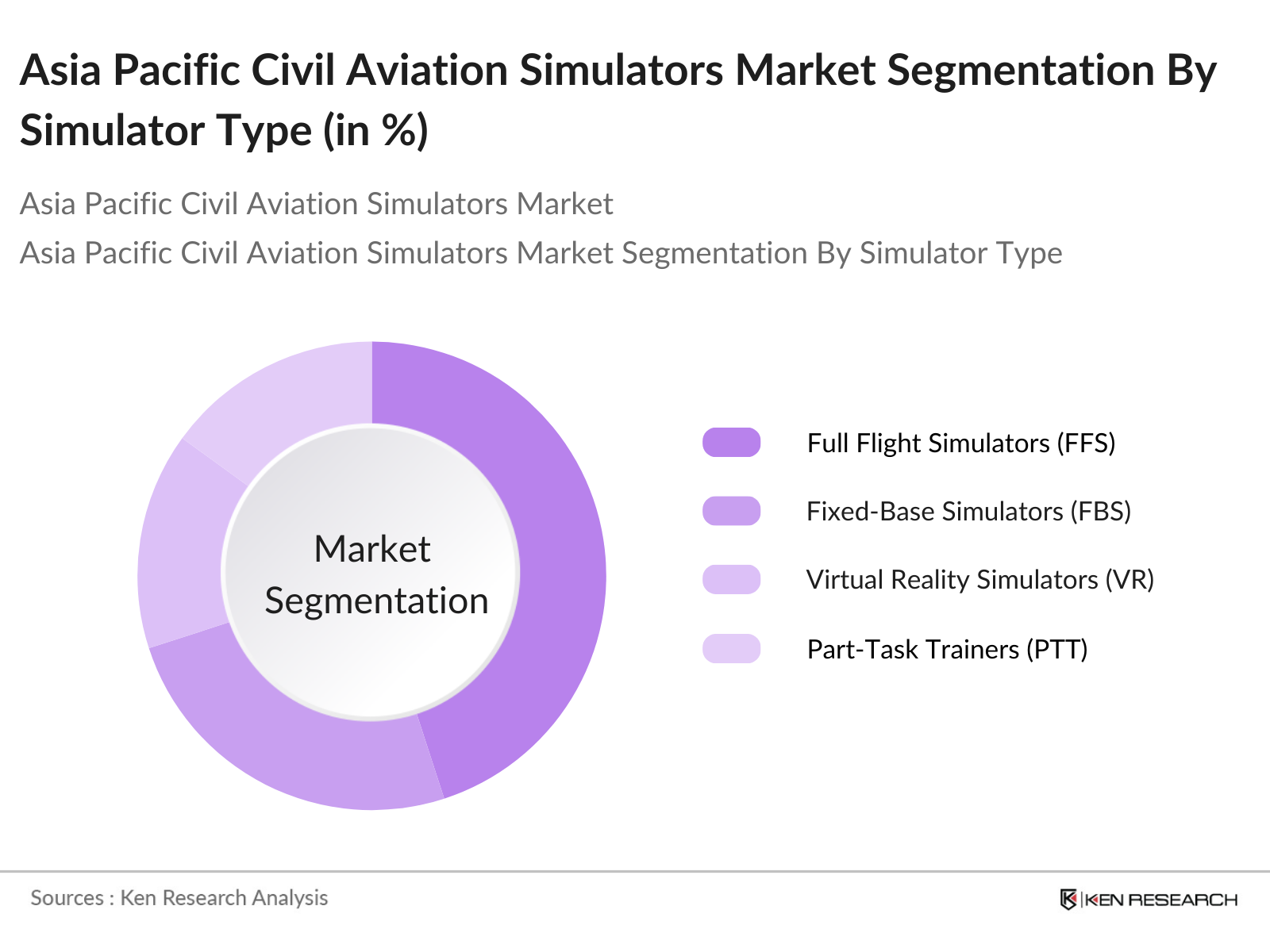
By Simulator Type: The market is segmented by simulator type into Full Flight Simulators (FFS), Fixed-Base Simulators (FBS), Virtual Reality Simulators (VR), and Part-Task Trainers (PTT). Currently, Full Flight Simulators hold the dominant market share due to their high fidelity and immersive capabilities, making them ideal for pilot certification training. The demand for FFS is fueled by regulatory requirements, as they are the only simulators capable of meeting mandatory training protocols for commercial pilots, thus ensuring safe and proficient flight operations.
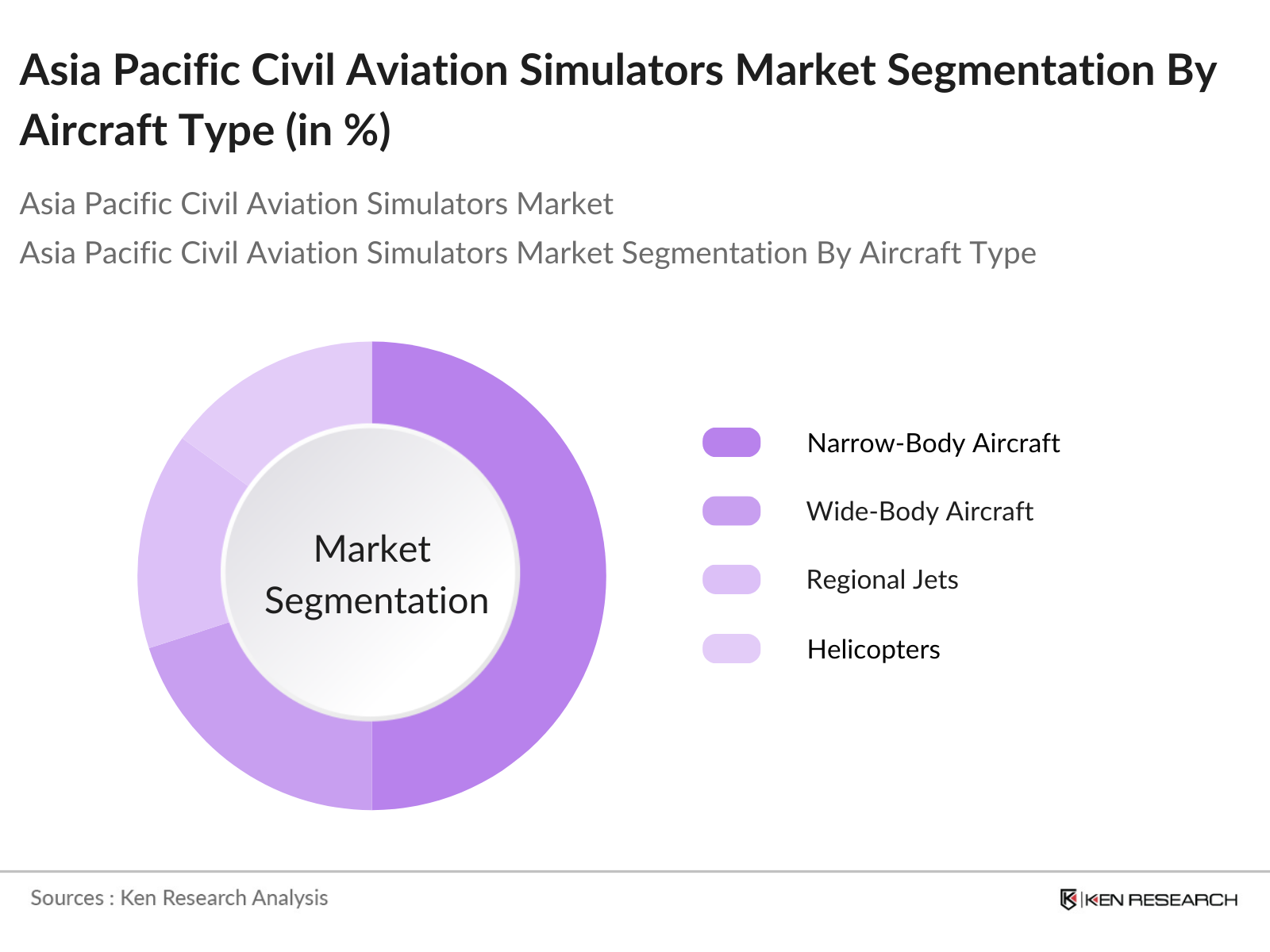
By Aircraft Type: The market is also segmented by aircraft type, including Narrow-Body Aircraft, Wide-Body Aircraft, Regional Jets, and Helicopters. Narrow-Body Aircraft simulators currently hold the largest share in this segment, attributed to the high demand from low-cost carriers and commercial airlines that primarily operate narrow-body fleets for regional and short-haul flights. This segments dominance is further bolstered by cost-efficiency in operations, allowing airlines to train pilots extensively while meeting the operational demands of domestic and intra-regional routes.
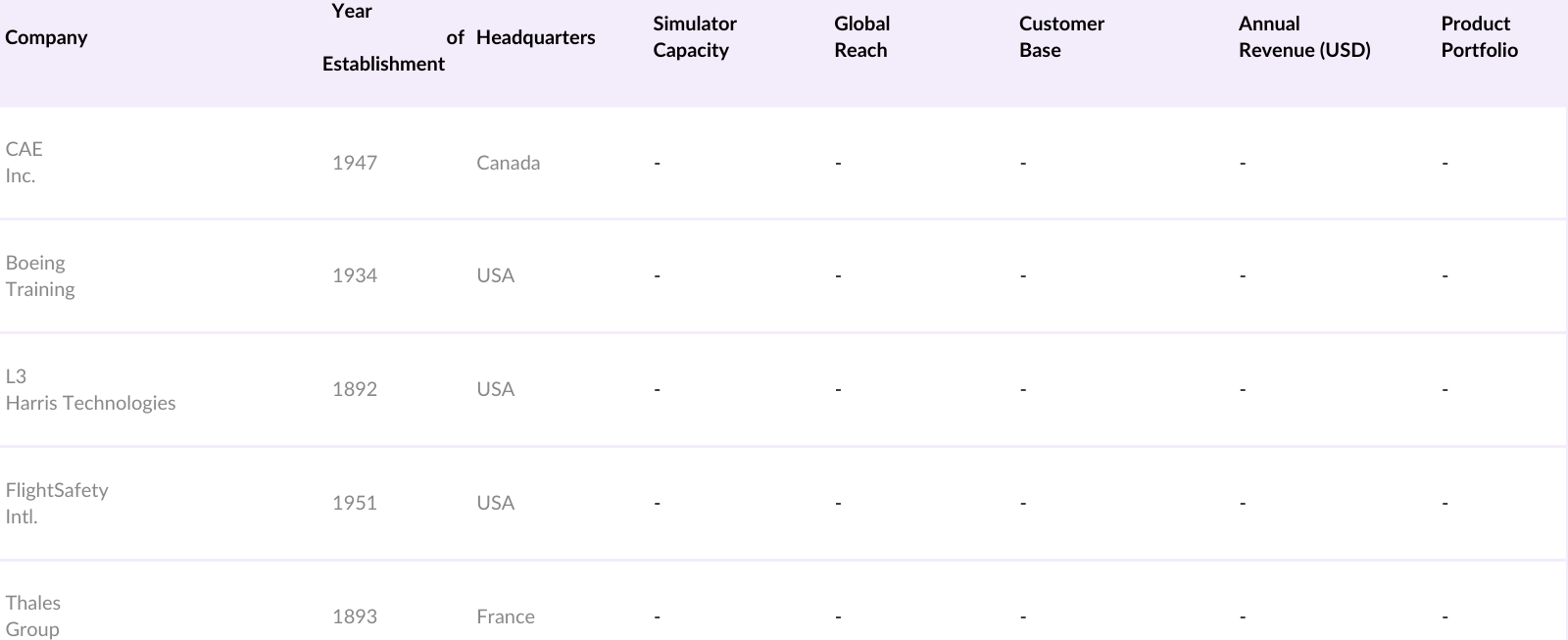
The Asia Pacific Civil Aviation Simulators market is marked by the presence of established players and intense competition. Key companies like CAE Inc., Boeing Training & Flight Services, and L3 Harris Technologies dominate, demonstrating advanced technological capabilities and extensive customer networks.
Over the next five years, the Asia Pacific Civil Aviation Simulators market is expected to experience substantial growth driven by continued fleet expansions, training requirements, and regulatory enforcement on pilot proficiency standards. Technological advancements in simulation systems, including VR integration and data analytics, are anticipated to enhance training realism and effectiveness.
|
Simulator Type |
Full Flight Simulators (FFS) Fixed-Base Simulators (FBS) Virtual Reality Simulators (VR) Part-Task Trainers (PTT) |
|
Aircraft Type |
Narrow-Body Aircraft Wide-Body Aircraft Regional Jets Helicopters |
|
End-User |
Commercial Airlines Civil Aviation Authorities Military Training Institutes |
|
Technology |
Hardware Software Cloud-Based Solutions Simulation and Control System |
|
Region |
China Japan India Australia Southeast Asia |
1.1 Definition and Scope
1.2 Market Taxonomy (Simulator Type, Aircraft Type, End-User Type)
1.3 Market Growth Rate (Annual Growth, CAGR)
1.4 Market Segmentation Overview
2.1 Historical Market Size
2.2 Year-On-Year Growth Analysis
2.3 Key Market Developments and Milestones
3.1 Growth Drivers
3.1.1 Rising Demand for Pilot Training
3.1.2 Technological Advancements in Simulation Technology
3.1.3 Increase in Fleet Size and Air Traffic
3.1.4 Government Policies Supporting Aviation Training
3.2 Market Challenges
3.2.1 High Initial Investment
3.2.2 Stringent Regulatory Requirements
3.2.3 Limited Availability of Skilled Workforce
3.2.4 Dependence on OEM Partnerships
3.3 Opportunities
3.3.1 Expansion of Low-Cost Carriers
3.3.2 International Partnerships in Aviation Training
3.3.3 Growing Demand in Emerging Economies
3.4 Trends
3.4.1 Integration of Virtual Reality and AI in Simulators
3.4.2 Shift Towards Full Flight Simulators (FFS)
3.4.3 Increased Focus on Environmental Sustainability
3.5 Government Regulation
3.5.1 Training Standards for Pilots
3.5.2 Certification Requirements for Simulators
3.5.3 Regulatory Incentives for Training Providers
3.5.4 Safety and Security Compliance
3.6 SWOT Analysis
3.7 Value Chain Analysis
3.8 Porters Five Forces
3.9 Competition Landscape
4.1 By Simulator Type (Value %)
4.1.1 Full Flight Simulators (FFS)
4.1.2 Fixed-Base Simulators (FBS)
4.1.3 Virtual Reality Simulators (VR)
4.1.4 Part-Task Trainers (PTT)
4.2 By Aircraft Type (Value %)
4.2.1 Narrow-Body Aircraft
4.2.2 Wide-Body Aircraft
4.2.3 Regional Jets
4.2.4 Helicopters
4.3 By End-User (Value %)
4.3.1 Commercial Airlines
4.3.2 Civil Aviation Authorities
4.3.3 Military
4.3.4 Training Institutes
4.4 By Technology (Value %)
4.4.1 Hardware
4.4.2 Software
4.4.3 Cloud-Based Solutions
4.4.4 Simulation and Control System
4.5 By Region (Value %)
4.5.1 China
4.5.2 Japan
4.5.3 India
4.5.4 Australia
4.5.5 Southeast Asia
5.1 Detailed Profiles of Key Companies
5.1.1 CAE Inc.
5.1.2 Boeing Training & Flight Services
5.1.3 L3 Harris Technologies
5.1.4 FlightSafety International
5.1.5 Thales Group
5.1.6 TRU Simulation + Training Inc.
5.1.7 Airbus Training
5.1.8 Indra Sistemas
5.1.9 Reiser Simulation and Training
5.1.10 FRASCA International Inc.
5.1.11 ELITE Simulation Solutions
5.1.12 ALSIM Flight Training Solutions
5.1.13 Ryan Aerospace Australia
5.1.14 Avion Group
5.1.15 Moog Inc.
5.2 Cross Comparison Parameters (Simulator Capacity, Headquarters, Market Share, Revenue, Recent Developments, Technological Capabilities, Customer Reach, Global Presence)
5.3 Market Share Analysis
5.4 Strategic Initiatives
5.5 Mergers and Acquisitions
5.6 Investment Analysis
5.7 Venture Capital and Private Equity Funding
5.8 Government Grants and Subsidies
6.1 Aviation Training Standards
6.2 Certification Processes for Simulators
6.3 Safety and Security Standards
6.4 Regional and National Compliance Requirements
7.1 Projected Market Size
7.2 Key Growth Drivers for Future Market
8.1 By Simulator Type (Value %)
8.2 By Aircraft Type (Value %)
8.3 By End-User (Value %)
8.4 By Technology (Value %)
8.5 By Region (Value %)
9.1 TAM/SAM/SOM Analysis
9.2 Customer Cohort Analysis
9.3 Strategic Market Positioning
9.4 White Space Opportunities
Disclaimer Contact UsThe research began with defining the ecosystem of the Asia Pacific Civil Aviation Simulators Market, identifying all major stakeholders. This foundational stage involved thorough desk research using secondary and proprietary databases, aiming to isolate critical variables influencing the market.
Historical data analysis formed the basis of market construction, examining parameters such as simulator usage across commercial and military sectors and revenue generation. Service quality assessments complemented these data to enhance the reliability of revenue estimates.
Hypotheses were established and then validated through consultations with industry experts. These interviews, conducted via computer-assisted telephone interviews (CATIs), provided insights on market trends and operational challenges.
The final phase involved direct engagement with manufacturers and aviation bodies, allowing us to cross-verify data and compile insights on product segmentation, consumer preferences, and other key metrics, achieving a thorough analysis of the market.
The Asia Pacific Civil Aviation Simulators market is valued at USD 290 million, based on a five-year historical analysis. This market is primarily driven by the rising demand for pilot training, fueled by expanding aviation fleets and increasing air traffic.
Key challenges include high capital investment costs, regulatory compliance requirements, and a limited skilled workforce for simulator operation and maintenance.
Prominent companies include CAE Inc., Boeing Training & Flight Services, L3 Harris Technologies, Flight Safety International, and Thales Group, which dominate through advanced technological offerings and strong client networks.
Growth is fueled by rising demand for pilot training, technological advancements, government regulations promoting skill standardization, and the expansion of low-cost carriers.

What makes us stand out is that our consultants follows Robust, Refine and Result (RRR) methodology. i.e. Robust for clear definitions, approaches and sanity checking, Refine for differentiating respondents facts and opinions and Result for presenting data with story

We have set a benchmark in the industry by offering our clients with syndicated and customized market research reports featuring coverage of entire market as well as meticulous research and analyst insights.

While we don't replace traditional research, we flip the method upside down. Our dual approach of Top Bottom & Bottom Top ensures quality deliverable by not just verifying company fundamentals but also looking at the sector and macroeconomic factors.

With one step in the future, our research team constantly tries to show you the bigger picture. We help with some of the tough questions you may encounter along the way: How is the industry positioned? Best marketing channel? KPI's of competitors? By aligning every element, we help maximize success.

Our report gives you instant access to the answers and sources that other companies might choose to hide. We elaborate each steps of research methodology we have used and showcase you the sample size to earn your trust.

If you need any support, we are here! We pride ourselves on universe strength, data quality, and quick, friendly, and professional service.