
Asia Pacific Coal Briquettes Market Outlook to 2030
Region:Asia
Author(s):Naman Rohilla
Product Code:KROD8089
Region:Asia
Author(s):Naman Rohilla
Product Code:KROD8089
December 2024
89
 Asia Pacific Coal Briquettes Market Segmentation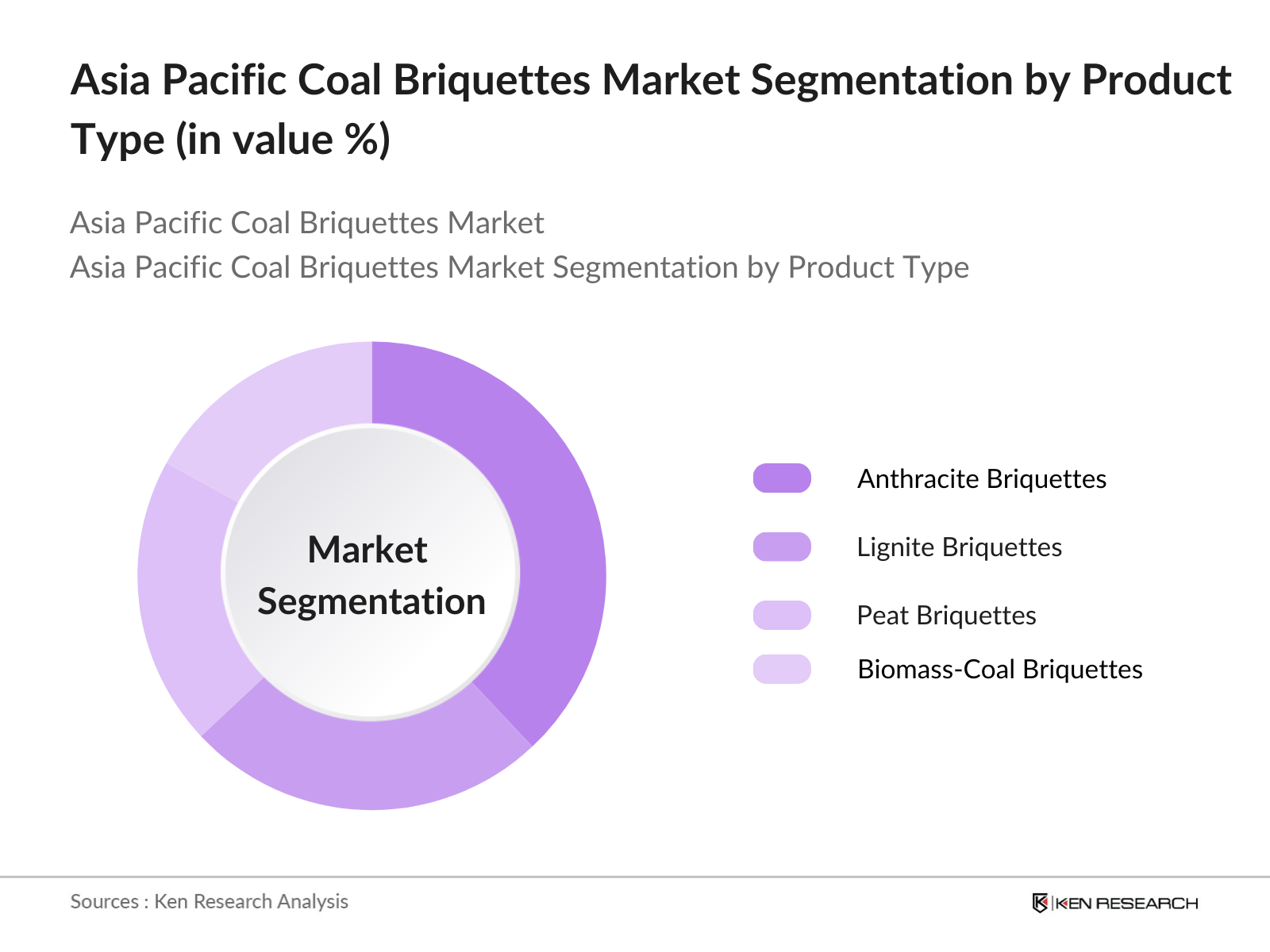
The Asia Pacific Coal Briquettes Market is dominated by key players, both regional and global, that have invested heavily in the production, marketing, and technological advancements of briquetting. Leading companies are capitalizing on economies of scale, government incentives, and strategic partnerships. Market consolidation is also evident with frequent mergers and acquisitions.

The Asia Pacific coal briquettes market is set to experience steady growth, driven by increasing demand for cost-effective and cleaner fuel alternatives. Government initiatives focusing on energy efficiency and emission reductions are expected to support the continued adoption of coal briquettes. Additionally, as industries in emerging economies continue to expand, the demand for industrial fuel, particularly in steel and cement production, will contribute to market growth. Advances in briquetting technologies, such as automated and low-emission systems, will further drive adoption in both the residential and industrial sectors.
|
By Product Type |
Anthracite Briquettes Lignite Briquettes Peat Briquettes Biomass-Coal Briquettes |
|
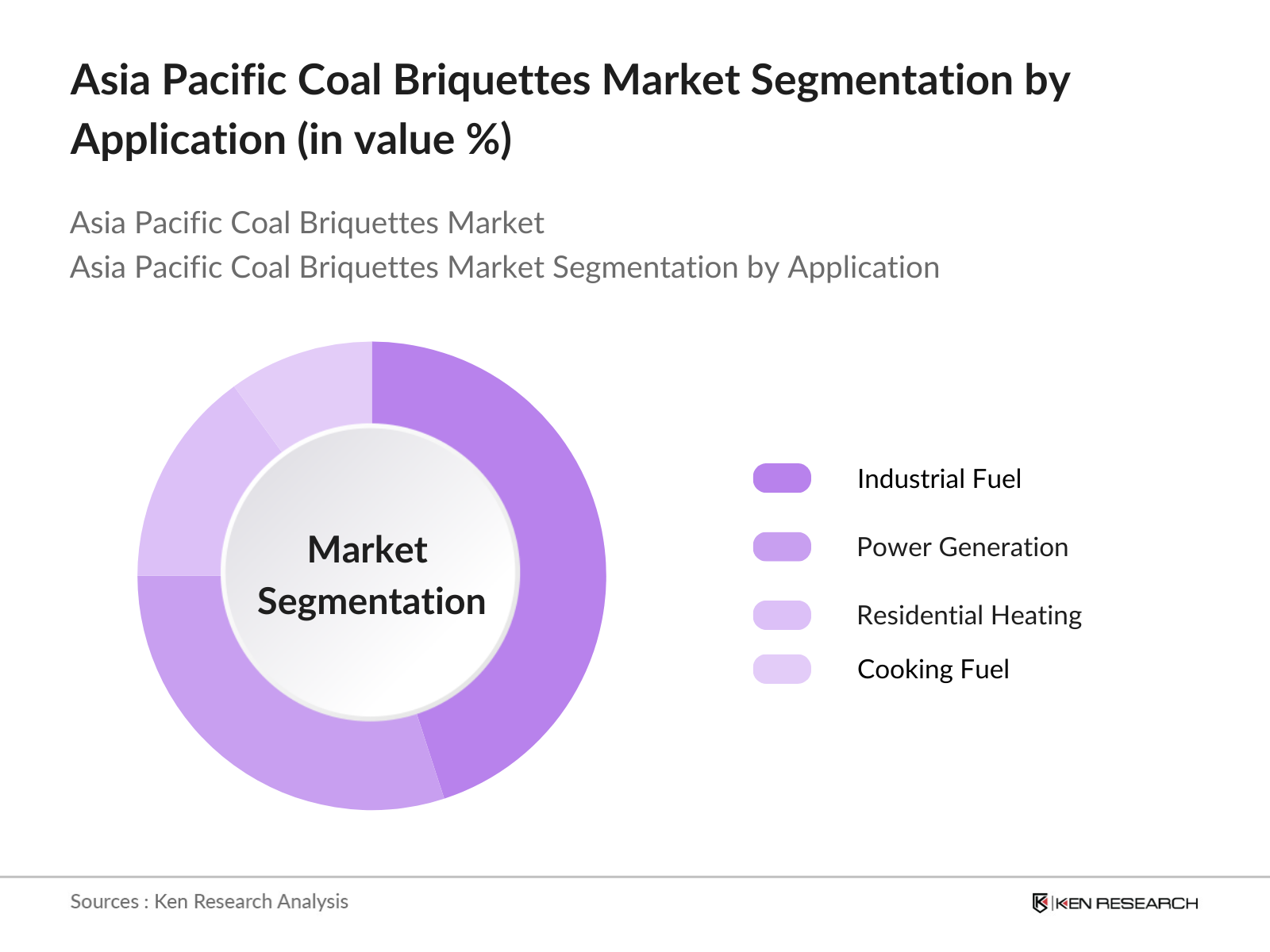
By Application |
Residential Heating Industrial Fuel Power Generation Cooking Fuel |
|
By Distribution Channel |
Direct Sales Indirect Sales Online Sales |
|
By End-User Industry |
Power and Energy Cement Industry Chemical Industry Residential Users |
|
By Region |
China India Japan Australia Southeast Asia (Indonesia, Vietnam, Thailand) |
1.1. Definition and Scope
1.2. Market Taxonomy
1.3. Market Growth Rate
1.4. Market Segmentation Overview
2.1. Historical Market Size
2.2. Year-On-Year Growth Analysis
2.3. Key Market Developments and Milestones
3.1. Growth Drivers
3.1.1. Rising Demand from Emerging Economies (Economic Growth, Power Generation)
3.1.2. Industrial Fuel Shift (Substitution from Crude Oil-Based Fuels)
3.1.3. Government Support for Energy Security (Energy Independence Initiatives, Subsidies)
3.1.4. Cost-Effectiveness Compared to Alternatives (Low Production Costs)
3.2. Market Challenges
3.2.1. Environmental Concerns (Carbon Emissions, Air Pollution Regulations)
3.2.2. High Initial Capital for Production Setup (Infrastructure and Logistics)
3.2.3. Volatile Coal Prices (Price Fluctuations, Global Supply Chain Constraints)
3.2.4. Transition Towards Renewable Energy (Decarbonization Efforts)
3.3. Opportunities
3.3.1. Technological Advancements in Briquetting (Efficient Machinery, Lower Emission Production)
3.3.2. Expansion into New Geographic Markets (Export Potential, Strategic Alliances)
3.3.3. Waste-to-Energy Initiatives (Circular Economy, Coal by-products Utilization)
3.3.4. Eco-Friendly Briquette Production (Biomass Blending, Clean Coal Technology)
3.4. Trends
3.4.1. Increasing Use of Biomass-Coal Briquettes (Hybrid Fuel Sources)
3.4.2. Automation in Briquette Manufacturing (Improved Efficiency and Output)
3.4.3. Regional Focus on Energy Security (Country-Level Initiatives, Subsidies)
3.4.4. Export Growth to Energy-Deficient Countries (Emerging Markets Demand)
3.5. Government Regulations
3.5.1. Coal Consumption and Emission Regulations (Carbon Caps, Sulfur Limits)
3.5.2. Environmental Taxation Policies (Carbon Taxes, Emission Trading)
3.5.3. Clean Coal Programs (Government Incentives, R&D Grants)
3.5.4. International Trade Policies (Tariffs, Bilateral Agreements)
3.6. SWOT Analysis
3.7. Stakeholder Ecosystem
3.8. Porters Five Forces
3.9. Competition Ecosystem
4.1. By Product Type (In Value %) 4.1.1. Anthracite Briquettes
4.1.2. Lignite Briquettes
4.1.3. Peat Briquettes
4.1.4. Biomass-Coal Briquettes
4.2. By Application (In Value %) 4.2.1. Residential Heating
4.2.2. Industrial Fuel
4.2.3. Power Generation
4.2.4. Cooking Fuel
4.3. By Distribution Channel (In Value %) 4.3.1. Direct Sales
4.3.2. Indirect Sales (Dealers, Distributors)
4.3.3. Online Sales
4.4. By End-User Industry (In Value %) 4.4.1. Power and Energy
4.4.2. Cement Industry
4.4.3. Chemical Industry
4.4.4. Residential Users
4.5. By Region (In Value %) 4.5.1. China
4.5.2. India
4.5.3. Japan
4.5.4. Australia
4.5.5. Southeast Asia (Indonesia, Vietnam, Thailand)
5.1. Detailed Profiles of Major Companies 5.1.1. Zhengzhou Zhongzhou Briquette Machinery Plant
5.1.2. Henan Kefan Mining Machinery Co., Ltd.
5.1.3. S. M. Group
5.1.4. EcoStan India Pvt Ltd
5.1.5. Radhe Engineering Co.
5.1.6. Jay Khodiyar Group
5.1.7. Biomass Briquette Systems
5.1.8. Briquetting Systems Inc.
5.1.9. Komarek (K.R. Komarek Inc.)
5.1.10. Global Agrotech Engineering
5.1.11. GEMCO Energy Machinery Co., Ltd.
5.1.12. Ronak Engineering
5.1.13. Anyang Gemco Energy Machinery Co., Ltd.
5.1.14. Rico Biomass Briquette Machine
5.1.15. Agico Group
5.2. Cross Comparison Parameters (Headquarters, Revenue, Production Capacity, Product Line, No. of Employees, Market Share, Inception Year, Technological Innovations)
5.3. Market Share Analysis
5.4. Strategic Initiatives
5.5. Mergers and Acquisitions
5.6. Investment Analysis
5.7. Government Grants
5.8. Private Equity Investments
5.9. Venture Capital Funding
6.1. Emission Standards Compliance
6.2. Certification Processes for Clean Coal Technologies
6.3. Waste Management Regulations
6.4. Environmental Impact Assessments
7.1. Future Market Size Projections
7.2. Key Factors Driving Future Market Growth
8.1. By Product Type (In Value %)
8.2. By Application (In Value %)
8.3. By Distribution Channel (In Value %)
8.4. By End-User Industry (In Value %)
8.5. By Region (In Value %)
9.1. TAM/SAM/SOM Analysis
9.2. Customer Cohort Analysis
9.3. Marketing Initiatives
9.4. White Space Opportunity Analysis
In this step, we mapped out the Asia Pacific Coal Briquettes Markets key stakeholders, including manufacturers, suppliers, and consumers. Secondary research was conducted using proprietary databases, industry reports, and government publications to identify critical market variables like production capacity, energy consumption patterns, and regulatory frameworks. These variables formed the foundation for the analysis.
We gathered historical data on production volumes, energy consumption by coal type, and revenue generation from multiple sources, including government reports and market databases. This data was used to estimate market penetration, assess key applications, and analyze end-user demand across regions.
Interviews with industry experts, including briquetting machine manufacturers and industrial fuel buyers, were conducted to validate the data. These experts provided insights into operational efficiencies, pricing trends, and future market opportunities, ensuring that the market estimates were accurate and reliable.
The final stage involved synthesizing the research findings into a comprehensive report. A bottom-up approach was used to validate the market size and growth figures. We also engaged with coal briquette exporters to gather additional insights on international trade trends, thus ensuring a robust and thorough analysis.
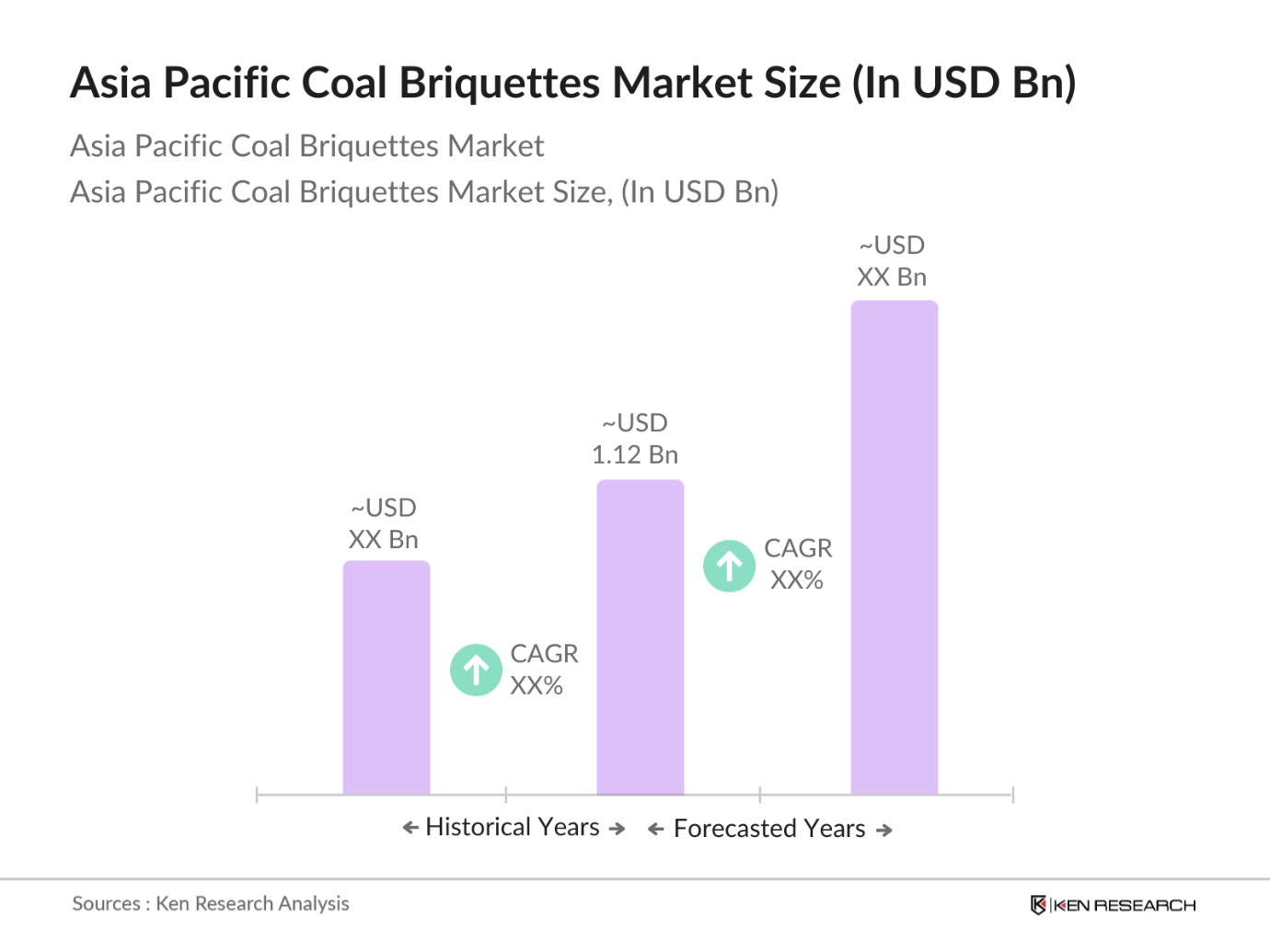
The Asia Pacific Coal Briquettes Market is valued at USD 1.12 billion, driven by strong demand from industrial sectors such as steel and cement manufacturing.
Challenges include environmental concerns related to carbon emissions, fluctuating coal prices, and competition from renewable energy sources, which threaten the long-term growth of the market.
Major players include Zhengzhou Zhongzhou Briquette Machinery Plant, EcoStan India Pvt Ltd, Radhe Engineering Co., GEMCO Energy Machinery Co., and Biomass Briquette Systems, known for their robust production capacity and innovative briquetting solutions.
Growth drivers include government incentives for cleaner energy alternatives, cost-effective production, and strong industrial demand in sectors like power generation and manufacturing.

What makes us stand out is that our consultants follows Robust, Refine and Result (RRR) methodology. i.e. Robust for clear definitions, approaches and sanity checking, Refine for differentiating respondents facts and opinions and Result for presenting data with story

We have set a benchmark in the industry by offering our clients with syndicated and customized market research reports featuring coverage of entire market as well as meticulous research and analyst insights.

While we don't replace traditional research, we flip the method upside down. Our dual approach of Top Bottom & Bottom Top ensures quality deliverable by not just verifying company fundamentals but also looking at the sector and macroeconomic factors.

With one step in the future, our research team constantly tries to show you the bigger picture. We help with some of the tough questions you may encounter along the way: How is the industry positioned? Best marketing channel? KPI's of competitors? By aligning every element, we help maximize success.

Our report gives you instant access to the answers and sources that other companies might choose to hide. We elaborate each steps of research methodology we have used and showcase you the sample size to earn your trust.

If you need any support, we are here! We pride ourselves on universe strength, data quality, and quick, friendly, and professional service.