
Asia Pacific Collagen Market Outlook to 2030
Region:Asia
Author(s):Shreya Garg
Product Code:KROD7226
December 2024
87
About the Report
Asia Pacific Collagen Market Overview
- The Asia Pacific collagen market, based on a five-year historical analysis, reached a valuation of USD 840 Million, driven by an expanding food and beverage sector, significant growth in nutraceuticals, and rising consumer awareness about health and wellness. The markets growth has been propelled by a strong demand for collagen in functional foods and dietary supplements, backed by increasing disposable income in key regions.
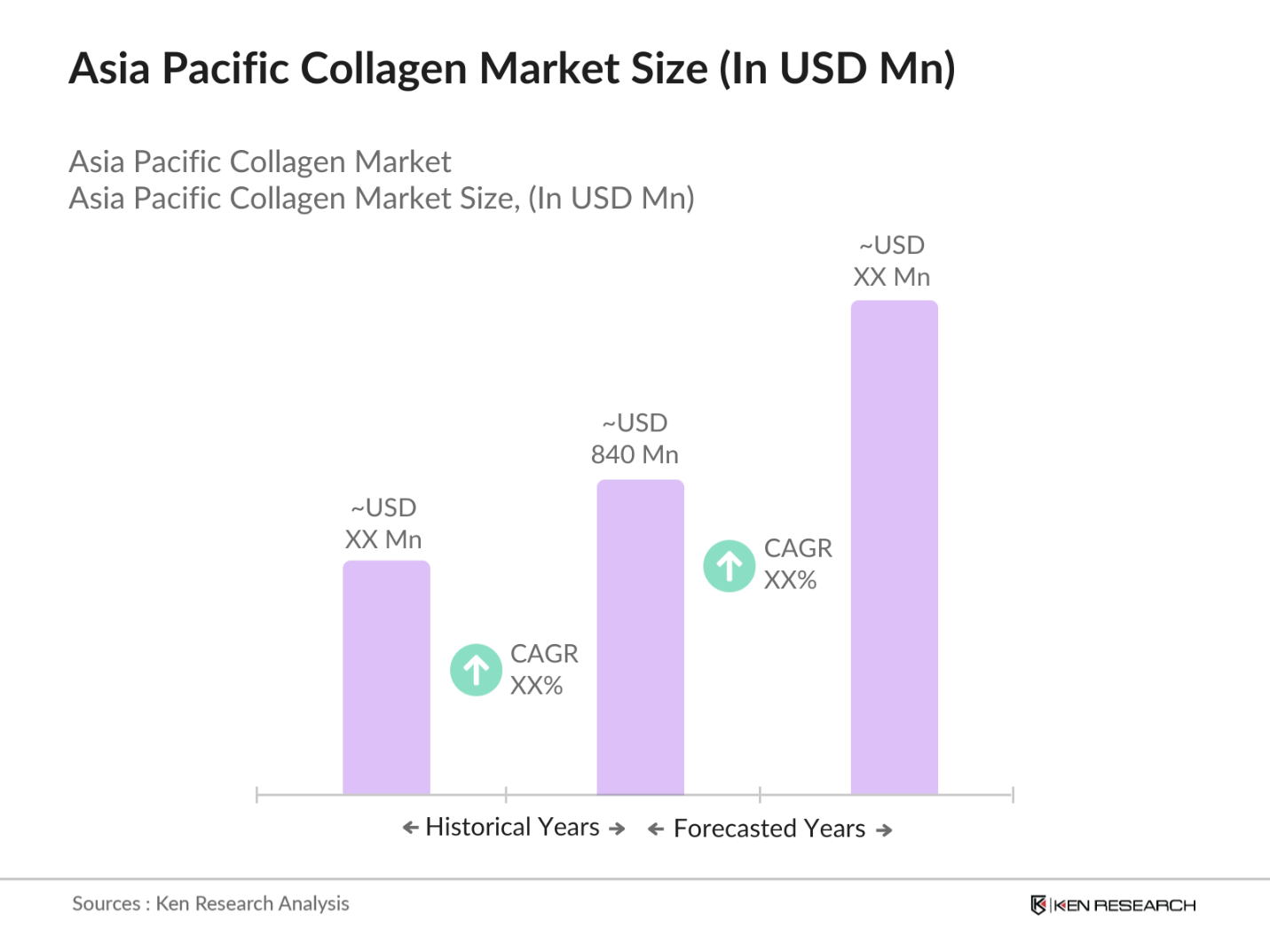
- China and Japan dominate the Asia Pacific collagen market due to their robust food processing industries, strong emphasis on health and beauty products, and technological advancements in collagen extraction. These countries are significant exporters of collagen, benefiting from well-established supply chains and innovative product offerings in the nutraceuticals and cosmetics sectors.
- The Asia Pacific region maintains strict regulations surrounding collagen as a food ingredient. For instance, in 2024, Japan's Ministry of Health imposed stringent quality checks for collagen-based products to ensure consumer safety. Compliance has been mandatory, and failure to meet these standards could lead to substantial penalties. Similarly, Chinas State Administration for Market Regulation (SAMR) continues to require detailed documentation for product approval. The cost and time required for regulatory compliance have remained significant, impacting market dynamics.
Asia Pacific Collagen Market Segmentation
By Product Type: The market is segmented by product type into gelatin, hydrolyzed collagen, native collagen, and synthetic collagen. Hydrolyzed collagen holds a dominant market share due to its superior bioavailability and widespread use in health supplements and food products. The product's ease of absorption by the human body makes it highly preferred in dietary and nutraceutical applications, enhancing its popularity among consumers focused on joint health and anti-aging solutions. 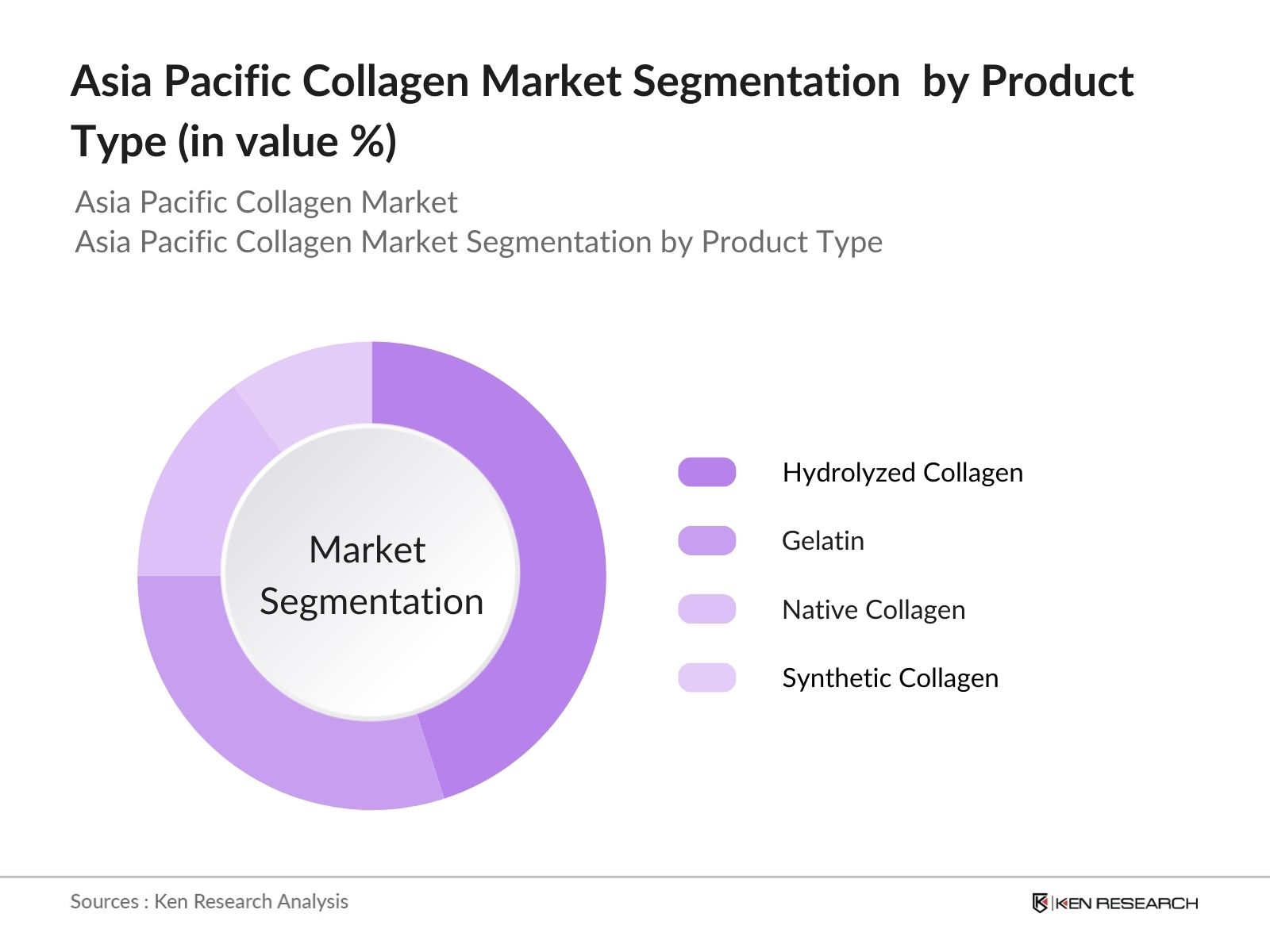
By Application: The market is segmented by application into food & beverages, pharmaceuticals, cosmetics, healthcare, and nutraceuticals. The food & beverages segment is leading the market due to the increasing use of collagen as a functional ingredient that enhances the nutritional profile of products. The rising trend of fortified foods and the growing consumer inclination towards protein-enriched diets have significantly boosted this segments prominence in the region. 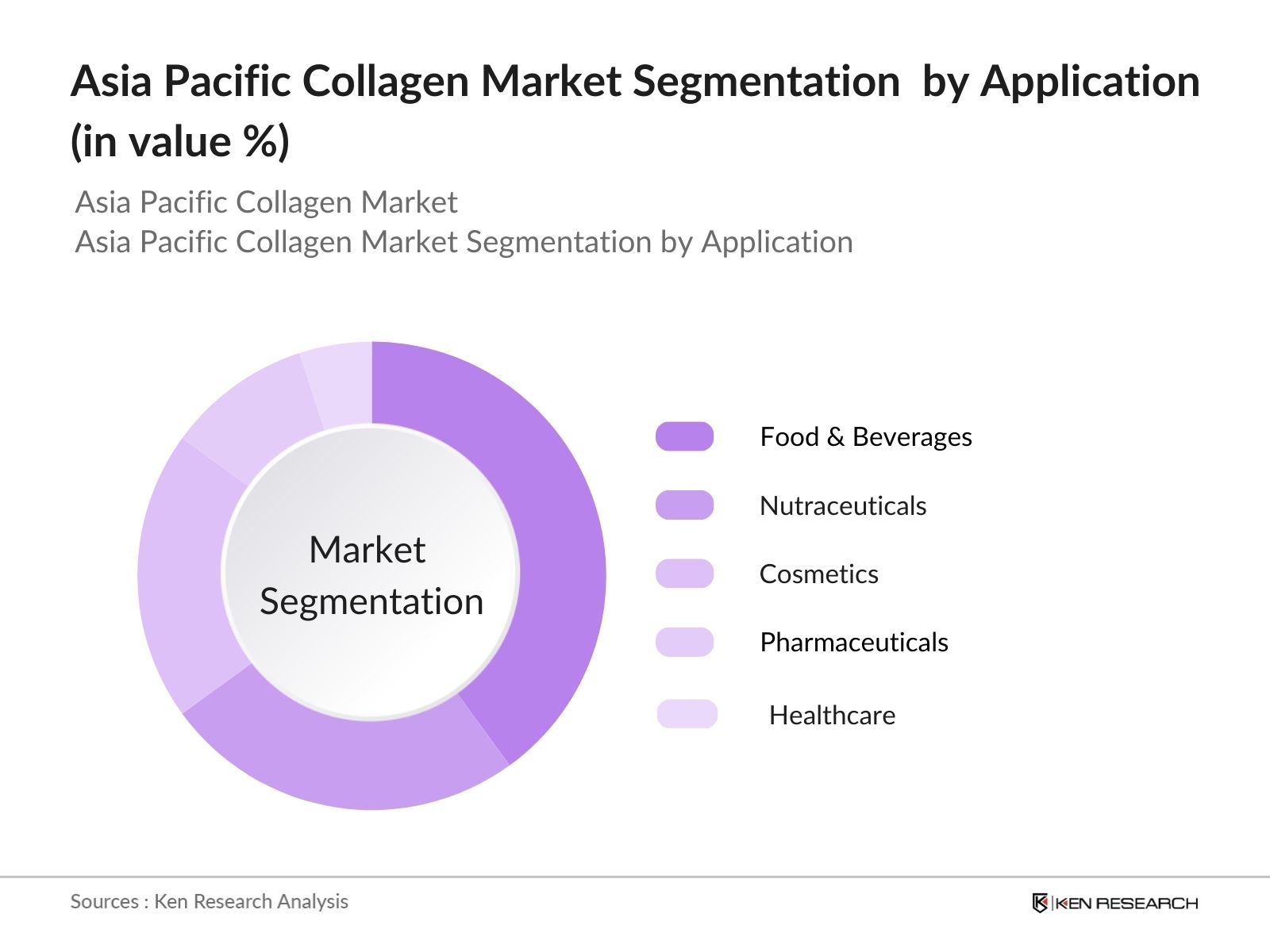
Asia Pacific Collagen Market Competitive Landscape
The Asia Pacific collagen market is dominated by major global and regional players. This consolidation highlights the markets competitive nature and the significant influence of established companies. The market features prominent players such as Rousselot, GELITA AG, and Nitta Gelatin Inc., who maintain their positions through extensive product portfolios and significant R&D investments. The competitive landscape also includes local manufacturers who leverage cost advantages and strong domestic distribution networks. 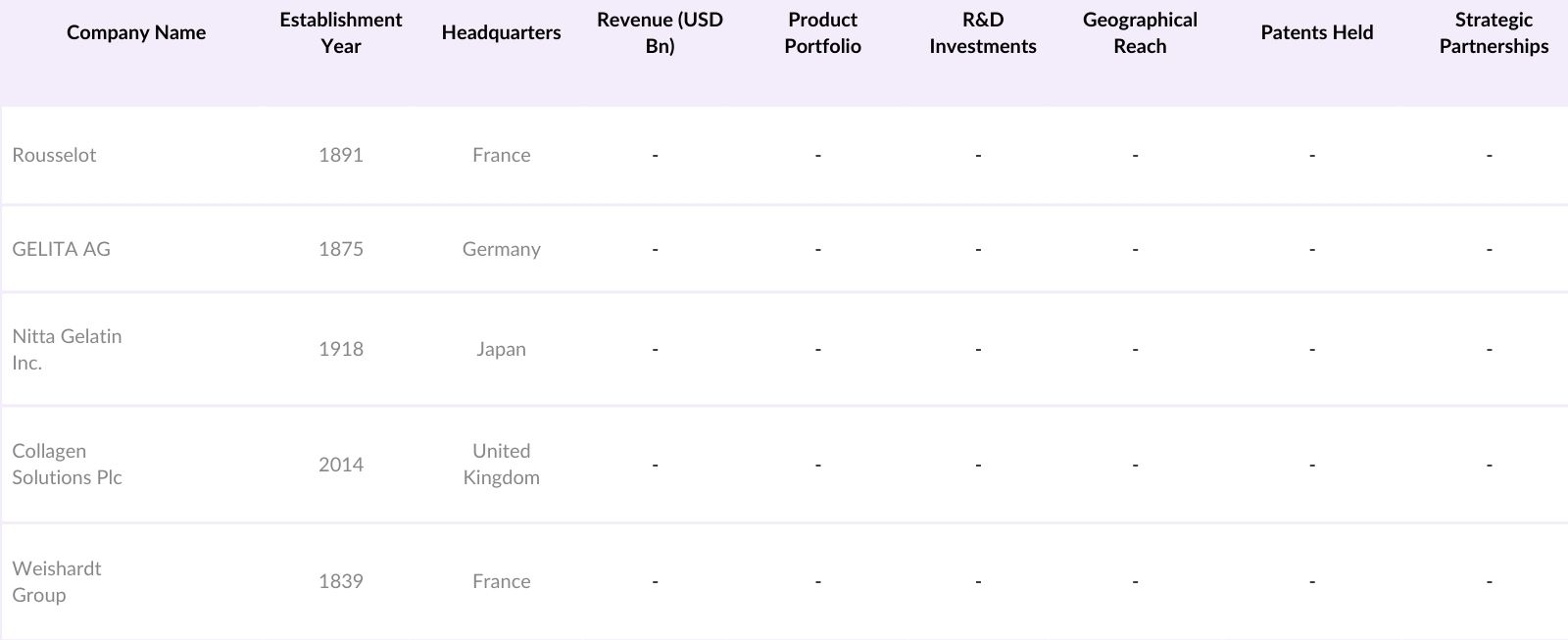
Asia Pacific Collagen Industry Analysis
Growth Drivers
- Rising Demand for Functional Foods: The Asia Pacific region has witnessed a notable increase in demand for functional foods driven by changing dietary preferences and a growing focus on health and wellness. In 2023, the World Bank highlighted that around 60% of the regions population was inclined toward functional food consumption due to a higher awareness of nutritional benefits. The increasing urbanization rate, at approximately 51% in 2024 according to the United Nations, has also contributed to the adoption of functional food products that incorporate collagen for its health-enhancing properties.
- Increasing Use in Cosmetics: The cosmetic industry in the Asia Pacific region has seen substantial growth, with Japan, China, and South Korea leading in innovation. Data from the IMF in 2024 indicated that these countries contributed to over $300 billion in the global beauty market. Collagens popularity in anti-aging and skin-care products aligns with the regional demand, where an estimated 45% of consumers aged 25-45 prioritize skincare routines that include collagen-based items. The Asian Development Bank reported an increasing disposable income level, reaching an average of $11,000 in urban households, driving this growth.
- Expanding Nutraceutical Sector: The nutraceutical sector in the Asia Pacific region continues to expand due to health-conscious consumer behavior and a shift toward preventive healthcare. The World Banks 2023 data showed a 25% increase in consumer spending on health supplements compared to 2021. Collagen-based supplements, recognized for promoting joint health and skin elasticity, have gained traction, with countries like China and India experiencing increased market penetration. This growth is supported by economic indicators such as a projected GDP growth rate of 4.5% in 2024, contributing to higher consumption of health-focused products.
Market Challenges
- High Cost of Production: Despite the growing market, the high cost of collagen production poses a significant challenge. The Food and Agriculture Organization (FAO) noted that in 2023, the production of high-quality collagen was labor and energy-intensive, which resulted in constraints for smaller manufacturers. Additionally, higher energy costs in major production hubs like Japan, where energy prices increased by 8% from 2022 to 2024 due to supply chain disruptions, have contributed to maintaining the high production cost. This cost factor limits the scalability for many companies in developing countries.
- Limited Awareness in Developing Regions: While urban centers in the Asia Pacific region are familiar with collagen's benefits, rural and developing areas still show limited awareness. The World Bank's 2023 survey of Southeast Asian countries indicated that only 30% of the rural population had adequate knowledge of collagen-based products. Furthermore, infrastructure limitations and lower internet penetrationstanding at 72% in 2024 for regions like Indonesiarestrict access to e-commerce and educational content. This disparity affects market reach and the potential for growth in less-developed areas.
Asia Pacific Collagen Market Future Outlook
Over the next five years, the Asia Pacific collagen market is projected to experience significant growth driven by increased applications in nutraceuticals and cosmetics. The demand for collagen peptides and hydrolyzed collagen will continue to rise, supported by advancements in extraction technology and the growing trend of natural and functional foods. Expansion in emerging markets such as India and Southeast Asia will further bolster growth, presenting opportunities for market players to capitalize on unmet needs in these regions.
Future Market Opportunities
- Expanding E-commerce Channels: The rapid growth of e-commerce in the Asia Pacific region is facilitating greater distribution of collagen products. Data from the International Telecommunication Union (ITU) indicated that internet penetration reached 87% in 2024 in countries like South Korea, enhancing the reach of online sales. E-commerce platforms reported a 20% rise in health and beauty product sales in 2023, which directly supported the sale of collagen supplements and cosmetics. As digital payment options become more accessible, the purchasing power of consumers is expected to bolster the markets expansion further.
- Emerging Markets (India, Southeast Asia): Emerging markets like India and countries in Southeast Asia represent significant growth opportunities for the collagen market. The IMF in 2023 reported that India's GDP growth rate was one of the highest globally, at 6.8%, with increasing consumer spending on wellness products. Similarly, Southeast Asias youthful demographicwith 50% of its population under 30 according to the UNdrives the demand for dietary and cosmetic collagen products. Improved trade agreements within ASEAN countries have also reduced import barriers, allowing for easier distribution and market entry.
Scope of the Report
|
Product Type |
Gelatin Hydrolyzed Collagen Native Collagen Synthetic Collagen |
|
Source |
Bovine Porcine Marine Poultry |
|
Application |
Food & Beverages Pharmaceuticals Cosmetics Healthcare Nutraceuticals |
|
Form |
Powder Liquid |
|
Country |
China Japan South Korea Australia India |
Products
Key Target Audience
Food and Beverage Manufacturers
Nutraceutical Companies
Pharmaceutical Companies
Cosmetic Product Manufacturers
Healthcare Providers and Clinics
Investors and Venture Capitalist Firms
Government and Regulatory Bodies (e.g., Food Safety and Standards Authority of India, National Agency of Drug and Food Control of Indonesia)
Collagen Raw Material Suppliers
Companies
Major Players
Rousselot
GELITA AG
Nitta Gelatin Inc.
Weishardt Group
Collagen Solutions Plc
PB Leiner
Lapi Gelatine
Connoils LLC
Holista Colltech
BioCell Technology LLC
Tessenderlo Group
Ewald-Gelatin GmbH
Advanced BioMatrix Inc.
Amicogen
Junca Gelatines
Table of Contents
Asia Pacific Collagen Market Overview
1.1. Definition and Scope
1.2. Market Taxonomy
1.3. Market Growth Rate
1.4. Market Segmentation Overview
Asia Pacific Collagen Market Size (In USD Mn)
2.1. Historical Market Size
2.2. Year-On-Year Growth Analysis
2.3. Key Market Developments and Milestones
Asia Pacific Collagen Market Analysis
3.1. Growth Drivers
3.1.1. Rising Demand for Functional Foods
3.1.2. Increasing Use in Cosmetics (Beauty & Personal Care)
3.1.3. Expanding Nutraceutical Sector
3.1.4. Advances in Processing Technologies
3.2. Market Challenges
3.2.1. High Cost of Production
3.2.2. Regulatory Barriers (Food Safety Standards)
3.2.3. Limited Awareness in Developing Regions
3.3. Opportunities
3.3.1. Growing Demand for Collagen-Based Biomaterials
3.3.2. Expanding E-commerce Channels
3.3.3. Emerging Markets (India, Southeast Asia)
3.4. Trends
3.4.1. Adoption of Sustainable Sourcing
3.4.2. Plant-Based Collagen Alternatives
3.4.3. Increased Focus on Collagen Peptides (Hydrolyzed Collagen)
3.5. Regulatory Framework
3.5.1. Regional Food & Drug Regulations
3.5.2. Import-Export Compliance
3.5.3. Health Claims and Labeling Requirements
3.6. SWOT Analysis
3.7. Stake Ecosystem
3.8. Porters Five Forces Analysis
3.9. Competition Ecosystem
Asia Pacific Collagen Market Segmentation
4.1. By Product Type (In Value %)
4.1.1. Gelatin
4.1.2. Hydrolyzed Collagen
4.1.3. Native Collagen
4.1.4. Synthetic Collagen
4.2. By Source (In Value %)
4.2.1. Bovine
4.2.2. Porcine
4.2.3. Marine
4.2.4. Poultry
4.3. By Application (In Value %)
4.3.1. Food & Beverages
4.3.2. Pharmaceuticals
4.3.3. Cosmetics
4.3.4. Healthcare
4.3.5. Nutraceuticals
4.4. By Form (In Value %)
4.4.1. Powder
4.4.2. Liquid
4.5. By Country (In Value %)
4.5.1. China
4.5.2. Japan
4.5.3. South Korea
4.5.4. Australia
4.5.5. India
Asia Pacific Collagen Market Competitive Analysis
5.1. Detailed Profiles of Major Companies
5.1.1. Rousselot
5.1.2. GELITA AG
5.1.3. Nitta Gelatin Inc.
5.1.4. Weishardt Group
5.1.5. Collagen Solutions Plc
5.1.6. PB Leiner
5.1.7. Lapi Gelatine
5.1.8. Connoils LLC
5.1.9. Holista Colltech
5.1.10. BioCell Technology LLC
5.1.11. Tessenderlo Group
5.1.12. Ewald-Gelatin GmbH
5.1.13. Advanced BioMatrix Inc.
5.1.14. Amicogen
5.1.15. Junca Gelatines
5.2. Cross Comparison Parameters (Revenue, Product Portfolio, R&D Investments, Manufacturing Capabilities, Geographical Reach, Market Share, Patents Held, Strategic Partnerships)
5.3. Market Share Analysis
5.4. Strategic Initiatives
5.5. Mergers and Acquisitions
5.6. Investment Analysis
5.7. Venture Capital Funding
5.8. Government Grants
5.9. Private Equity Investments
Asia Pacific Collagen Market Regulatory Framework
6.1. Compliance Standards (ISO, GMP)
6.2. Certification Processes
6.3. Country-Specific Import Regulations
Asia Pacific Collagen Future Market Size (In USD Mn)
7.1. Future Market Size Projections
7.2. Key Factors Driving Future Market Growth
Asia Pacific Collagen Future Market Segmentation
8.1. By Product Type (In Value %)
8.2. By Source (In Value %)
8.3. By Application (In Value %)
8.4. By Form (In Value %)
8.5. By Country (In Value %)
Asia Pacific Collagen Market Analysts Recommendations
9.1. TAM/SAM/SOM Analysis
9.2. Customer Cohort Analysis
9.3. Marketing Initiatives
9.4. White Space Opportunity Analysis
Research Methodology
Step 1: Identification of Key Variables
The initial phase involved the development of a comprehensive ecosystem map that includes major stakeholders within the Asia Pacific Collagen Market. This phase utilized secondary data from proprietary databases and credible industry sources to identify critical market variables.
Step 2: Market Analysis and Construction
This step involved compiling and assessing historical market data, analyzing the proportion of various product types and their applications, and evaluating revenue trends. Data was cross-referenced with third-party reports to ensure accuracy.
Step 3: Hypothesis Validation and Expert Consultation
Hypotheses developed during the market analysis were validated through consultations with industry experts and key opinion leaders. Insights from these interviews provided verification for market estimates and enriched the qualitative aspects of the report.
Step 4: Research Synthesis and Final Output
Final research outputs were synthesized by integrating data obtained from expert consultations and market modeling. This step ensured a comprehensive, validated analysis, including forecasts and competitive intelligence.
Frequently Asked Questions
How big is the Asia Pacific Collagen Market?
The Asia Pacific collagen market was valued at USD 840 Million, driven by growth in the food and beverage sector, expanding nutraceuticals, and increased consumer focus on health and wellness.
What are the main challenges in the Asia Pacific Collagen Market?
Challenges in the Asia Pacific collagen market include high production costs, regulatory complexities, and limited awareness in developing regions, which impact market growth and penetration.
Who are the major players in the Asia Pacific Collagen Market?
Key players in the Asia Pacific collagen market include Rousselot, GELITA AG, Nitta Gelatin Inc., Weishardt Group, and Collagen Solutions Plc. These companies dominate due to their comprehensive product portfolios and strategic investments.
What drives the Asia Pacific Collagen Market?
The Asia Pacific collagen market is driven by a rising demand for collagen in functional foods and nutraceuticals, the expanding cosmetics industry, and advances in processing technologies that enhance product quality and efficiency.
What are the growth prospects for the Asia Pacific Collagen Market?
The Asia Pacific collagen market is expected to grow significantly over the next five years, supported by increased demand for collagen peptides, advancements in biotechnology, and the growth of e-commerce channels.
Why Buy From Us?

What makes us stand out is that our consultants follows Robust, Refine and Result (RRR) methodology. i.e. Robust for clear definitions, approaches and sanity checking, Refine for differentiating respondents facts and opinions and Result for presenting data with story

We have set a benchmark in the industry by offering our clients with syndicated and customized market research reports featuring coverage of entire market as well as meticulous research and analyst insights.

While we don't replace traditional research, we flip the method upside down. Our dual approach of Top Bottom & Bottom Top ensures quality deliverable by not just verifying company fundamentals but also looking at the sector and macroeconomic factors.

With one step in the future, our research team constantly tries to show you the bigger picture. We help with some of the tough questions you may encounter along the way: How is the industry positioned? Best marketing channel? KPI's of competitors? By aligning every element, we help maximize success.

Our report gives you instant access to the answers and sources that other companies might choose to hide. We elaborate each steps of research methodology we have used and showcase you the sample size to earn your trust.

If you need any support, we are here! We pride ourselves on universe strength, data quality, and quick, friendly, and professional service.