
Asia Pacific Condensed Milk Market Outlook to 2030
Region:Asia
Author(s):Paribhasha Tiwari
Product Code:KROD10029
Region:Asia
Author(s):Paribhasha Tiwari
Product Code:KROD10029
November 2024
87
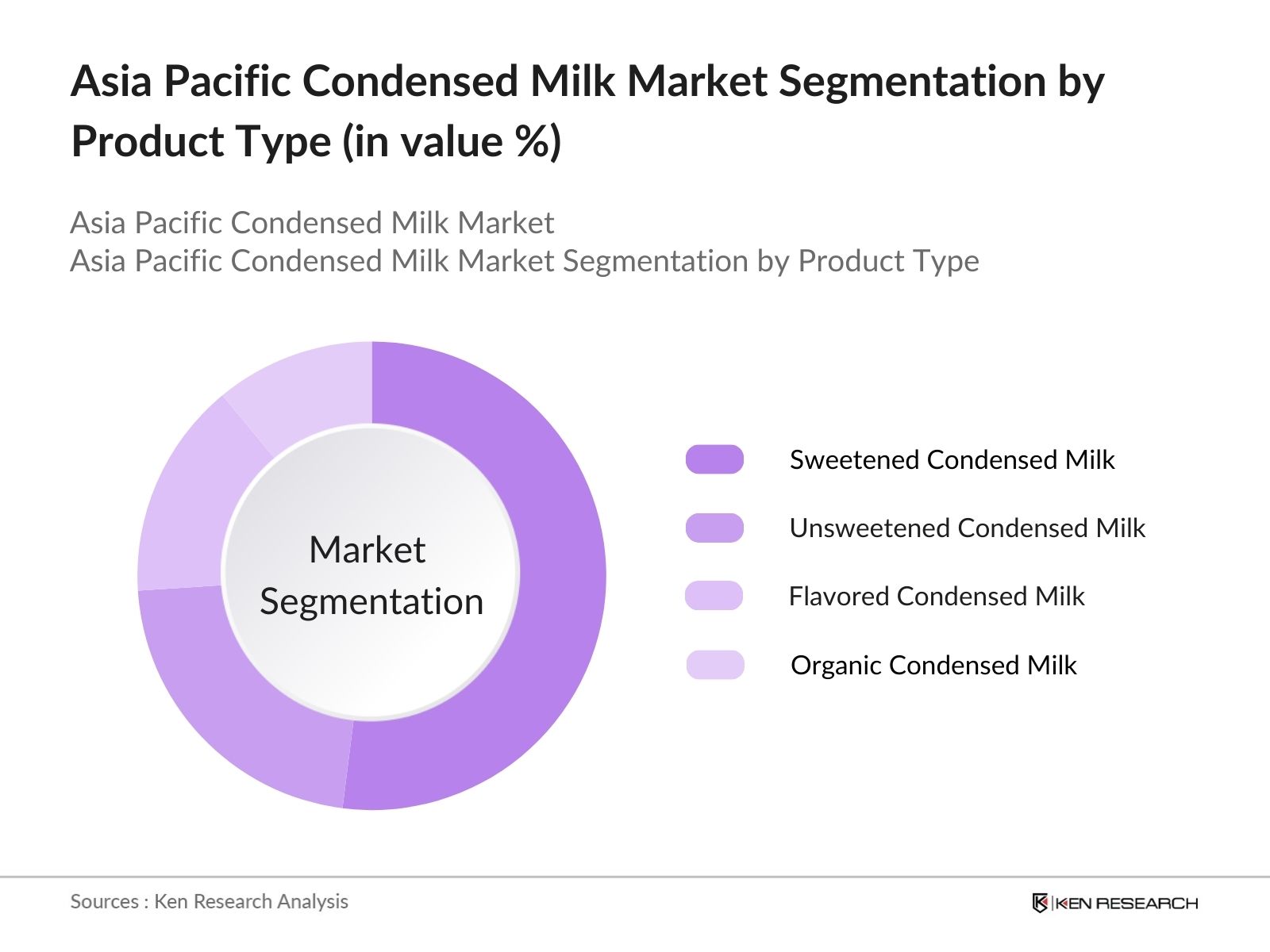
By Product Type: The Asia Pacific condensed milk market is segmented by product type into sweetened condensed milk, unsweetened condensed milk, flavored condensed milk, and organic condensed milk. Sweetened condensed milk holds the dominant market share due to its high usage in desserts, beverages, and confectionery. Its long shelf life and rich taste make it a preferred choice in both home cooking and commercial applications. The demand for sweetened condensed milk is particularly high in India and Southeast Asia, where it is a key ingredient in traditional sweets and beverages.
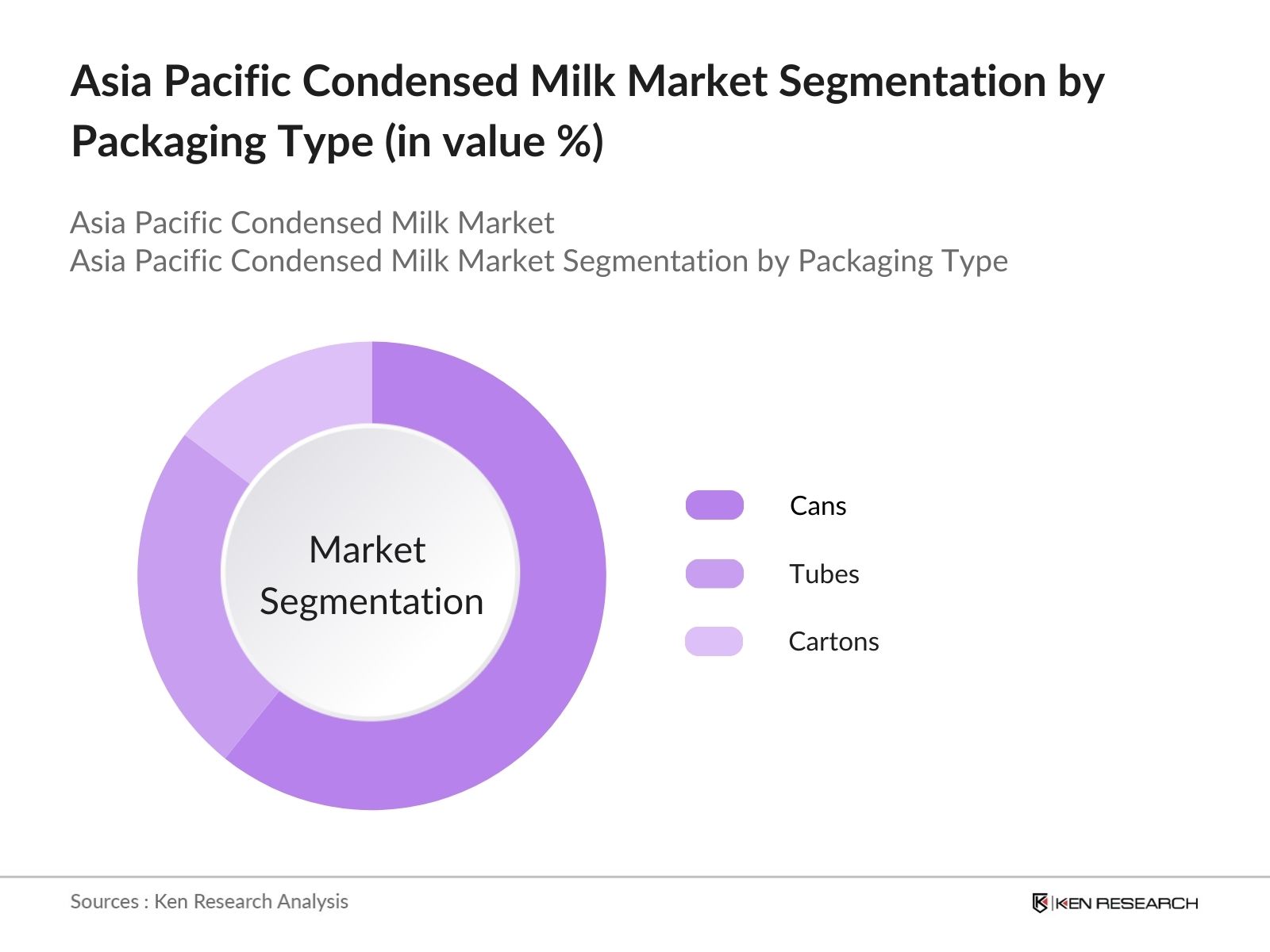
By Packaging Type: The market is also segmented by packaging type into cans, tubes, and cartons. Cans dominate the market due to their durability and extended shelf life. They are widely preferred by manufacturers and consumers alike for their ease of storage and transport. Additionally, cans offer better protection against contamination and spoilage, which is crucial for dairy products. Cartons, however, are gaining traction, particularly in Japan and Australia, where there is a growing demand for environmentally friendly packaging.
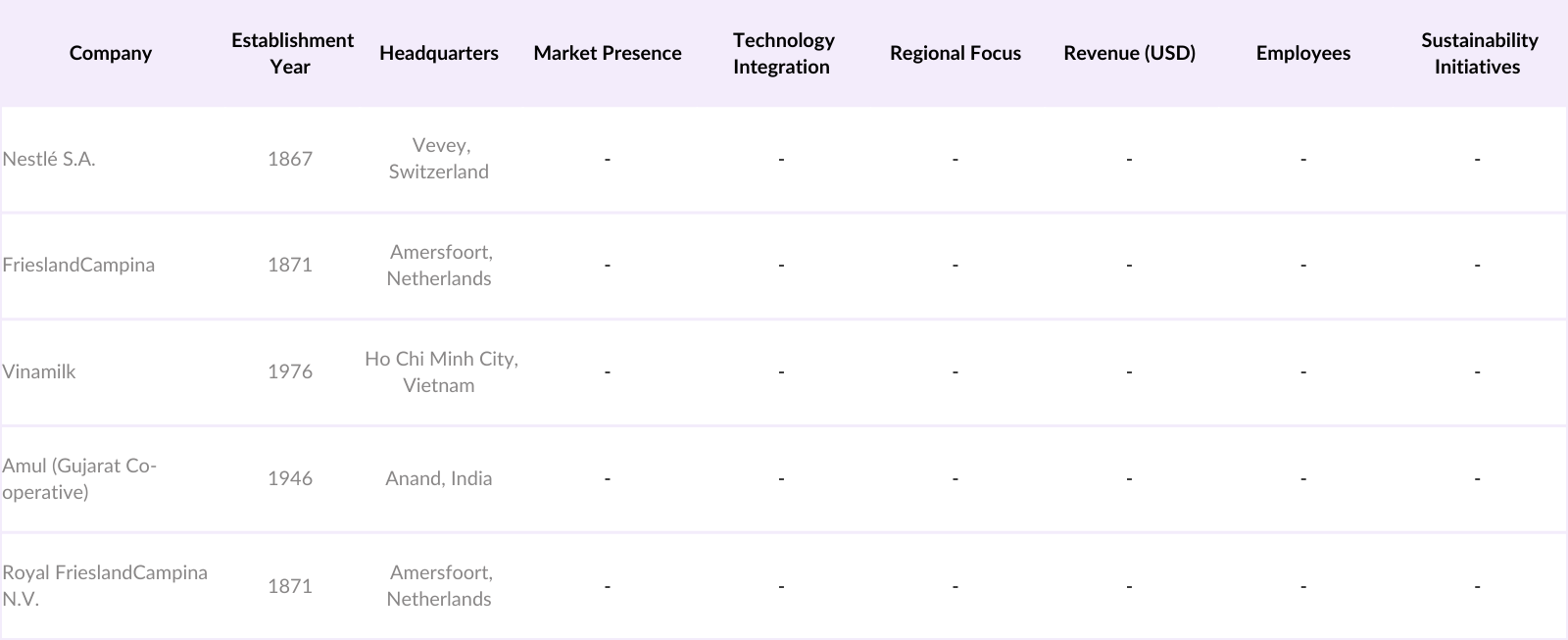
The Asia Pacific condensed milk market is characterized by the presence of both global dairy giants and local manufacturers. Major players like Nestl and FrieslandCampina dominate the market with their extensive product portfolios, strong distribution networks, and innovative packaging solutions. Local companies such as Vinamilk and Amul also hold significant shares in their respective countries due to their strong brand presence and extensive supply chains.
Over the next five years, the Asia Pacific condensed milk market is expected to experience steady growth, driven by increasing demand for dairy products in urban areas and the continued expansion of food processing industries in emerging markets like India, Vietnam, and the Philippines. The growing popularity of ready-to-eat and convenience foods, combined with innovations in dairy product offerings such as organic and low-sugar options, will likely contribute to the market's positive trajectory. Government support for the dairy industry, along with technological advancements in dairy production and packaging, will further fuel the growth.
|
By Product Type |
Sweetened Condensed Milk Unsweetened Condensed Milk Flavored Condensed Milk Organic Condensed Milk |
|
By Packaging Type |
Cans Tubes Cartons |
|
By Application |
Bakery and Confectionery Dairy Products Beverages Personal/Home Use |
|
By Distribution Channel |
Supermarkets/Hypermarkets Online Retail Convenience Stores Specialty Stores |
|
By Region |
China India Japan Australia Southeast Asia |
1.1. Definition and Scope
1.2. Market Taxonomy
1.3. Market Growth Drivers (Consumer Demand, Urbanization, Expanding Dairy Industry)
1.4. Market Segmentation Overview
2.1. Historical Market Size
2.2. Year-on-Year Growth Analysis
2.3. Key Market Developments and Milestones
3.1. Growth Drivers
3.1.1. Increasing Demand for Dairy Products
3.1.2. Growth in Urbanization (Rising Consumption in Urban Areas)
3.1.3. Expanding Use in Bakery and Confectionery (New Product Applications)
3.1.4. Export Opportunities (Increasing Trade with Global Markets)
3.2. Market Challenges
3.2.1. Fluctuating Dairy Prices
3.2.2. Stringent Food Safety Regulations (Quality Standards and Compliance)
3.2.3. High Competition from Substitutes (Alternative Dairy and Plant-Based Products)
3.3. Opportunities
3.3.1. Innovation in Packaging (Convenient and Sustainable Options)
3.3.2. Expansion into Untapped Rural Markets
3.3.3. Government Support for Dairy Sector (Incentives and Subsidies)
3.3.4. Rising Health-Conscious Consumer Base (Low-Sugar and Fortified Products)
3.4. Trends
3.4.1. Increased Popularity of Ready-to-Eat and Dessert Applications
3.4.2. Organic and Clean Label Condensed Milk (Health-Focused Products)
3.4.3. Growth of E-commerce Distribution Channels
3.4.4. Dairy-Free Alternatives Impacting Market Dynamics (Plant-Based Growth)
3.5. Government Regulations
3.5.1. Food Safety and Standards Authority of India (FSSAI) Guidelines
3.5.2. Australia and New Zealand Food Standards Code
3.5.3. Codex Alimentarius Regulations on Condensed Milk
3.5.4. Import/Export Tariffs and Trade Agreements
3.6. SWOT Analysis
3.7. Stakeholder Ecosystem (Dairy Farmers, Producers, Distributors, Retailers)
3.8. Porters Five Forces (Supplier Power, Buyer Power, Competition, Threat of Substitutes, Market Entry Barriers)
3.9. Competition Ecosystem
4.1. By Product Type (In Value %)
4.1.1. Sweetened Condensed Milk
4.1.2. Unsweetened Condensed Milk
4.1.3. Organic Condensed Milk
4.1.4. Flavored Condensed Milk
4.2. By Packaging Type (In Value %)
4.2.1. Cans
4.2.2. Tubes
4.2.3. Cartons
4.3. By Application (In Value %)
4.3.1. Bakery and Confectionery
4.3.2. Dairy Products
4.3.3. Beverages
4.3.4. Personal/Home Use
4.4. By Distribution Channel (In Value %)
4.4.1. Supermarkets/Hypermarkets
4.4.2. Online Retail
4.4.3. Convenience Stores
4.4.4. Specialty Stores
4.5. By Region (In Value %)
4.5.1. China
4.5.2. India
4.5.3. Japan
4.5.4. Australia
4.5.5. Southeast Asia
5.1. Detailed Profiles of Major Companies
5.1.1. Nestl S.A.
5.1.2. Fraser and Neave, Limited
5.1.3. Dutch Lady Milk Industries Berhad
5.1.4. Vinamilk
5.1.5. Eagle Family Foods Group
5.1.6. Arla Foods
5.1.7. Amul (Gujarat Cooperative Milk Marketing Federation)
5.1.8. Danone
5.1.9. F&N Magnolia
5.1.10. Royal FrieslandCampina N.V.
5.1.11. Parag Milk Foods
5.1.12. Devondale Murray Goulburn
5.1.13. Dairy Farmers of America
5.1.14. Alaska Milk Corporation
5.1.15. Lactalis Group
5.2. Cross Comparison Parameters (Revenue, Production Capacity, Product Range, Sustainability Initiatives, Distribution Reach, Market Share, Brand Value, Partnerships/Collaborations)
5.3. Market Share Analysis
5.4. Strategic Initiatives (Mergers & Acquisitions, New Product Launches, Geographical Expansion)
5.5. Investment Analysis
5.6. Government Subsidies and Support (Incentives, Dairy Development Programs)
6.1. Food Safety Regulations (Packaging and Labeling Standards, Ingredient Quality Control)
6.2. Trade Agreements and Tariff Structures (Impact of Free Trade Agreements)
6.3. Sustainability Certifications (Organic, Non-GMO)
6.4. Compliance with International Dairy Export Regulations
7.1. Future Market Size Projections
7.2. Key Factors Driving Future Growth (Evolving Consumer Preferences, Increasing Export Demand)
8.1. By Product Type (In Value %)
8.2. By Packaging Type (In Value %)
8.3. By Application (In Value %)
8.4. By Distribution Channel (In Value %)
8.5. By Region (In Value %)
9.1. TAM/SAM/SOM Analysis (Total Addressable Market, Serviceable Available Market, Serviceable Obtainable Market)
9.2. Consumer Cohort Analysis
9.3. Market Penetration and Expansion Strategies
9.4. White Space Opportunities (Product Innovation, Geographic Expansion)
In this phase, an ecosystem map was developed that includes all significant stakeholders within the Asia Pacific Condensed Milk Market. A combination of primary research and secondary data sources, such as government publications and industry reports, were used to identify and define the critical variables driving market dynamics.
The analysis focused on historical data collection and its impact on market performance. Market penetration, sales figures, and consumer preferences were assessed to ensure the reliability of the revenue estimates. This analysis provides a detailed understanding of the growth trends and market structure.
Key market assumptions were validated through expert interviews and consultations with industry leaders. Feedback from these professionals helped to refine the market data and ensure accuracy in reporting, further enhancing the report's credibility.
The final report was synthesized by engaging with major manufacturers and distributors of condensed milk to obtain direct insights into market dynamics. This step ensured a comprehensive analysis, merging both top-down and bottom-up approaches for a balanced market outlook.
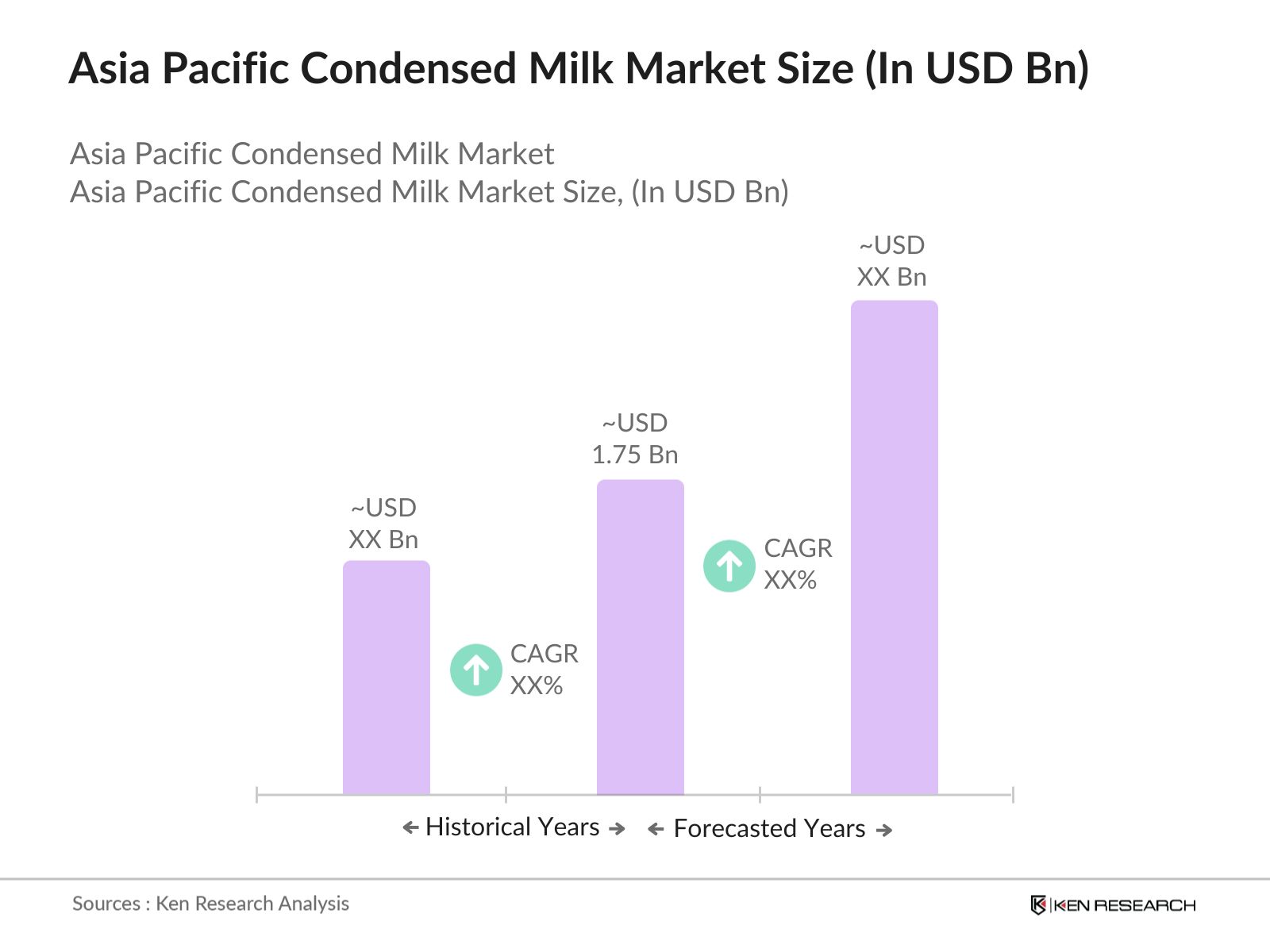
The Asia Pacific condensed milk market is valued at USD 1.75 billion, driven by rising demand for dairy products across multiple segments including beverages, bakery, and confectionery.
Challenges in Asia Pacific condensed milk market include fluctuating raw material prices, competition from non-dairy alternatives, and stringent food safety regulations that impact manufacturers.
Key players in the Asia Pacific condensed milk market include Nestl, FrieslandCampina, Vinamilk, and Amul, which dominate due to their extensive product portfolios and strong distribution networks.
Growth in the Asia Pacific condensed milk market is driven by increasing urbanization, rising disposable incomes, and the expanding food processing sector in countries like China, India, and Japan.

What makes us stand out is that our consultants follows Robust, Refine and Result (RRR) methodology. i.e. Robust for clear definitions, approaches and sanity checking, Refine for differentiating respondents facts and opinions and Result for presenting data with story

We have set a benchmark in the industry by offering our clients with syndicated and customized market research reports featuring coverage of entire market as well as meticulous research and analyst insights.

While we don't replace traditional research, we flip the method upside down. Our dual approach of Top Bottom & Bottom Top ensures quality deliverable by not just verifying company fundamentals but also looking at the sector and macroeconomic factors.

With one step in the future, our research team constantly tries to show you the bigger picture. We help with some of the tough questions you may encounter along the way: How is the industry positioned? Best marketing channel? KPI's of competitors? By aligning every element, we help maximize success.

Our report gives you instant access to the answers and sources that other companies might choose to hide. We elaborate each steps of research methodology we have used and showcase you the sample size to earn your trust.

If you need any support, we are here! We pride ourselves on universe strength, data quality, and quick, friendly, and professional service.