















Asia Pacific Construction Simulation Software Market Outlook to 2030
Region:Asia
Author(s):Paribhasha Tiwari
Product Code:KROD9191
December 2024
97
About the Report
Asia Pacific Construction Simulation Software Market Overview
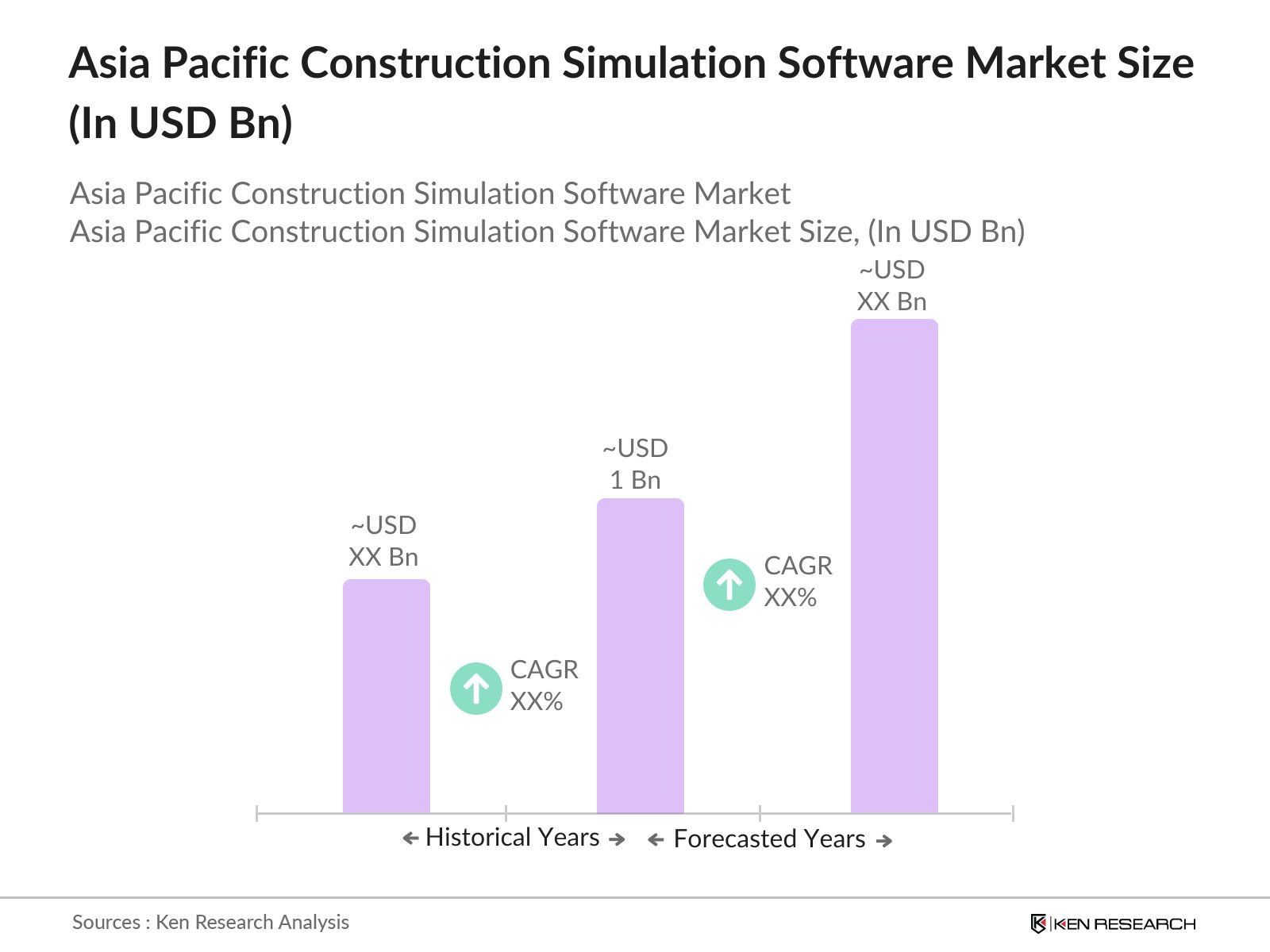
- The Asia Pacific Construction Simulation Software market is valued at USD 1 billion, supported by robust investments in infrastructure and the growing adoption of digital technologies in construction. The demand for simulation software is primarily driven by the need to optimize project planning, reduce costs, and enhance construction safety. Rising urbanization across countries like
- China and India further fuels t4his market as developers increasingly adopt advanced digital solutions for efficiency and compliance.
China and Japan dominate the market due to their advanced technological infrastructure and significant government investment in smart cities and sustainable construction projects. Chinas rapid urbanization and the deployment of large-scale infrastructure projects position it as a market leader. Japan, with its highly developed technological ecosystem and focus on automation, drives market adoption through its established construction giants. - The "BIM Application Promotion Program" launched by the Chinese government through its Ministry of Housing and Urban-Rural Development was initiated in2017. This program aims to enhance the adoption of Building Information Modeling (BIM) technologies across various construction projects in China, recognizing BIM's potential to improve project management, reduce costs, and enhance overall efficiency in the construction sector.
Asia Pacific Construction Simulation Software Market Segmentation
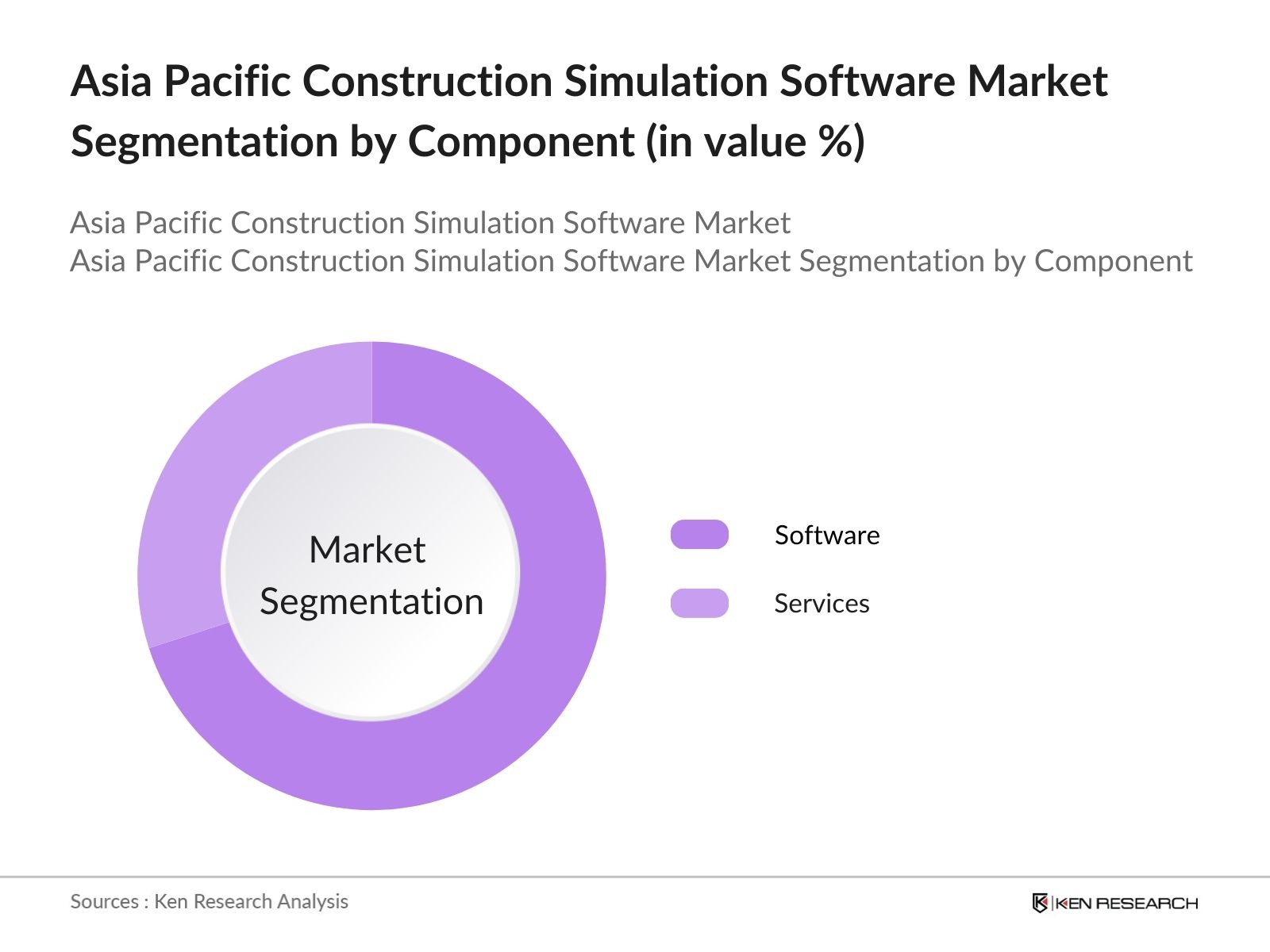
By Component: The Asia Pacific Construction Simulation Software market is segmented by component into Software and Services. Software dominates the market due to its direct applicability in project planning and design. Leading developers offer specialized modules for various construction phases, helping companies streamline their processes. The increasing demand for tailored software that integrates with IoT and AI platforms enhances its dominance.
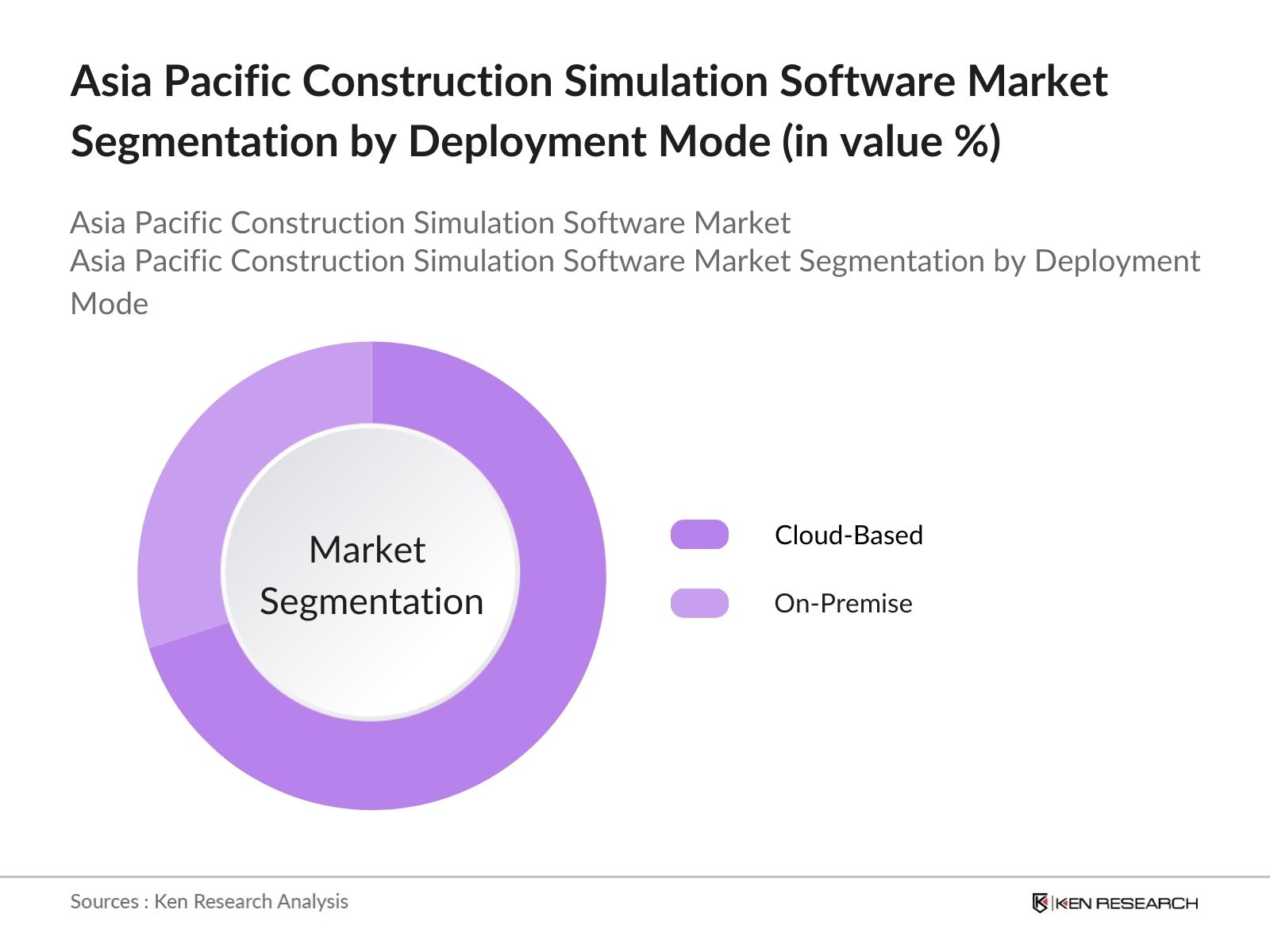
By Deployment Mode: The market is further segmented by deployment mode into On-Premise and Cloud-Based solutions. Cloud-based solutions lead this segment due to their scalability and lower upfront costs, making them appealing to mid-sized and small enterprises. Additionally, cloud solutions offer real-time collaboration features, essential for managing complex construction projects across multiple locations.
Asia Pacific Construction Simulation Software Market Competitive Landscape
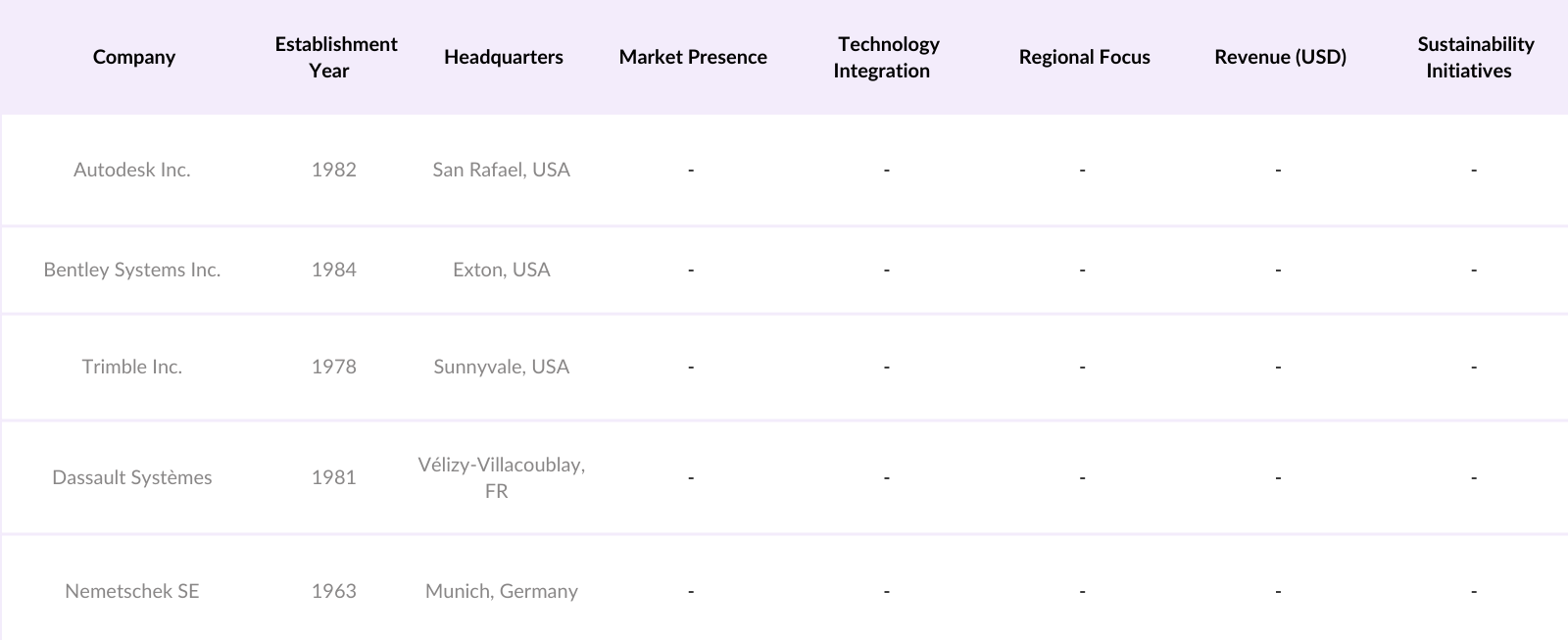
The Asia Pacific Construction Simulation Software market is characterized by intense competition among global leaders and regional players. Market dominance is achieved through strategic partnerships, innovation in technology, and extensive customer support. The market is led by companies like Autodesk Inc., Bentley Systems, and Trimble Inc., which focus on offering cutting-edge technologies and integration capabilities. Local players also play a significant role, particularly in markets like China and India, where customization to local regulations is critical.
Asia Pacific Construction Simulation Software Market Analysis
Growth Drivers
- Adoption of BIM (Building Information Modeling): The adoption of BIM is transforming infrastructure and construction projects by enabling enhanced project planning and execution. In 2024, the U.S. construction industry reported over 90,000 projects utilizing BIM, reflecting its rising influence. This technology aids in reducing design errors, saving up to $1.4 million in costs for projects exceeding $20 million. Additionally, government mandates in countries like the United States and Canada promote its implementation, further accelerating adoption.
- Increasing Infrastructure Investments: Governments in North America allocated over $1.2 trillion to infrastructure development in 2024. A significant portion of this is directed towards highways, bridges, and urban transportation systems, necessitating advanced modeling tools. With an additional $150 billion projected for sustainable infrastructure in 2025, the demand for digital simulation solutions in construction is poised to grow.
- Technological Advancements in Simulation Tools: The launch of AI-integrated simulation tools in 2023 enhanced design optimization capabilities, reducing project durations by 25-30 days on average. By 2024, over 10,000 construction firms in North America had adopted these tools, leading to reduced material wastage and savings amounting to $3 billion in project expenses.
Market Challenges
- High Initial Implementation Costs: Implementing advanced simulation tools incurs expenses ranging from $50,000 to $500,000 per project for licensing, training, and integration. Despite long-term benefits, this cost remains a deterrent for small and medium-sized construction firms, limiting market penetration.
- Lack of Skilled Professionals: North America reported a shortage of over 300,000 skilled professionals in the construction and technology sectors in 2024. This talent gap impedes the effective use of advanced simulation tools, with firms losing up to $1.5 billion annually in potential productivity gains.
Asia Pacific Construction Simulation Software Market Future Outlook
The Asia Pacific Construction Simulation Software market is projected to experience steady growth, supported by advancements in AI and cloud technologies, government investments in digital infrastructure, and increasing awareness of operational efficiency. Market trends such as digital twins, 5D BIM integration, and AR/VR applications are expected to drive further adoption of simulation software. As companies prioritize sustainability, the demand for software tools that can model eco-friendly construction processes is also anticipated to rise significantly.
Market Opportunities
- Integration with IoT and AI: The integration of IoT sensors and AI analytics in construction projects facilitated real-time monitoring for over 12,000 sites in 2024. This advancement improved site safety, reducing accidents by 35,000 incidents annually, and enhanced decision-making for large-scale projects.
- Expansion in Emerging Markets: Countries like Mexico are investing $300 billion in infrastructure over five years, creating opportunities for simulation tools providers. In 2024 alone, contracts worth $8 billion were awarded to firms deploying advanced digital solutions in these regions.
Scope of the Report
|
By Component |
Software Services |
|
By Deployment Mode |
On-Premise Cloud-Based |
|
By Application |
Project Management Safety Training Design and Planning Others |
|
By End-User |
Contractors Architects and Engineers Educational Institutions Government Agencies |
|
By Country |
China Japa India Australia Rest of Asia Pacific |
Products
Key Target Audience
Construction Firms
Architectural and Engineering Companies
Technology Providers
Building Material Suppliers
Safety Compliance Agencies
Infrastructure Developers
Government and Regulatory Bodies (e.g., Ministry of Housing and Urban-Rural Development in China, Japans Ministry of Land, Infrastructure, Transport, and Tourism)
Investors and Venture Capitalist Firms
Companies
Players Mentioned in the Report:
Autodesk Inc.
Bentley Systems Inc.
Trimble Inc.
Dassault Systmes
Nemetschek SE
Siemens AG
RIB Software SE
AVEVA Group plc
Oracle Corporation
Altair Engineering Inc.
Table of Contents
1. Asia Pacific Construction Simulation Software Market Overview
1.1. Definition and Scope
1.2. Market Taxonomy
1.3. Market Growth Rate
1.4. Market Segmentation Overview
2. Asia Pacific Construction Simulation Software Market Size (USD Billion)
2.1. Historical Market Size
2.2. Year-On-Year Growth Analysis
2.3. Key Market Developments and Milestones
3. Asia Pacific Construction Simulation Software Market Analysis
3.1. Growth Drivers
3.1.1. Adoption of BIM (Building Information Modeling)
3.1.2. Increasing Infrastructure Investments
3.1.3. Technological Advancements in Simulation Tools
3.1.4. Emphasis on Cost Reduction and Efficiency
3.2. Market Challenges
3.2.1. High Initial Implementation Costs
3.2.2. Lack of Skilled Professionals
3.2.3. Data Security Concerns
3.3. Opportunities
3.3.1. Integration with IoT and AI
3.3.2. Expansion in Emerging Markets
3.3.3. Development of Cloud-Based Solutions
3.4. Trends
3.4.1. Shift Towards Cloud Deployment
3.4.2. Increased Use of AR/VR in Construction Simulation
3.4.3. Collaboration with Academic Institutions for R&D
3.5. Government Regulations
3.5.1. National Construction Codes and Standards
3.5.2. Policies Promoting Digitalization in Construction
3.5.3. Incentives for Sustainable Building Practices
3.6. SWOT Analysis
3.7. Stakeholder Ecosystem
3.8. Porters Five Forces Analysis
3.9. Competitive Landscape
4. Asia Pacific Construction Simulation Software Market Segmentation
4.1. By Component (Value %)
4.1.1. Software
4.1.2. Services
4.2. By Deployment Mode (Value %)
4.2.1. On-Premise
4.2.2. Cloud-Based
4.3. By Application (Value %)
4.3.1. Project Management
4.3.2. Safety Training
4.3.3. Design and Planning
4.3.4. Others
4.4. By End-User (Value %)
4.4.1. Contractors
4.4.2. Architects and Engineers
4.4.3. Educational Institutions
4.4.4. Government Agencies
4.5. By Country (Value %)
4.5.1. China
4.5.2. Japan
4.5.3. India
4.5.4. Australia
4.5.5. Rest of Asia Pacific
5. Asia Pacific Construction Simulation Software Market Competitive Analysis
5.1. Detailed Profiles of Major Companies
5.1.1. Autodesk Inc.
5.1.2. Bentley Systems Inc.
5.1.3. Trimble Inc.
5.1.4. Dassault Systmes SE
5.1.5. Hexagon AB
5.1.6. Siemens AG
5.1.7. Nemetschek SE
5.1.8. Procore Technologies Inc.
5.1.9. Oracle Corporation
5.1.10. RIB Software SE
5.1.11. AVEVA Group plc
5.1.12. Ansys Inc.
5.1.13. Altair Engineering Inc.
5.1.14. GRAITEC Group
5.1.15. ACCA Software
5.2. Cross Comparison Parameters (Number of Employees, Headquarters, Inception Year, Revenue, Market Share, Product Portfolio, Regional Presence, R&D Investment)
5.3. Market Share Analysis
5.4. Strategic Initiatives
5.5. Mergers and Acquisitions
5.6. Investment Analysis
5.6.1. Venture Capital Funding
5.6.2. Government Grants
5.6.3. Private Equity Investments
6. Asia Pacific Construction Simulation Software Market Regulatory Framework
6.1. Industry Standards and Certifications
6.2. Compliance Requirements
6.3. Data Protection and Privacy Laws
7. Asia Pacific Construction Simulation Software Future Market Size (USD Billion)
7.1. Future Market Size Projections
7.2. Key Factors Driving Future Market Growth
8. Asia Pacific Construction Simulation Software Future Market Segmentation
8.1. By Component (Value %)
8.2. By Deployment Mode (Value %)
8.3. By Application (Value %)
8.4. By End-User (Value %)
8.5. By Country (Value %)
9. Asia Pacific Construction Simulation Software Market Analysts Recommendations
9.1. Total Addressable Market (TAM), Serviceable Available Market (SAM), Serviceable Obtainable Market (SOM) Analysis
9.2. Customer Segmentation and Targeting
9.3. Strategic Marketing Initiatives
9.4. Identification of White Space Opportunities
Disclaimer
Contact Us
Research Methodology
Step 1: Identification of Key Variables
This phase involves mapping the ecosystem of the Asia Pacific Construction Simulation Software market, identifying stakeholders, and gathering data from secondary sources like government reports, company filings, and industry publications.
Step 2: Market Analysis and Construction
Historical data is analyzed to establish market penetration rates, technology adoption, and revenue trends. Both top-down and bottom-up approaches are utilized for estimating the market size.
Step 3: Hypothesis Validation and Expert Consultation
Market hypotheses are tested through direct engagement with industry professionals using structured interviews. Insights from these experts help validate trends and refine forecasts.
Step 4: Research Synthesis and Final Output
Comprehensive data is synthesized into actionable insights. Verification with construction software developers ensures accuracy and credibility in the final report.
Frequently Asked Questions
01. How big is the Asia Pacific Construction Simulation Software Market?
The Asia Pacific Construction Simulation Software Market is valued at USD 1 billion, primarily driven by the demand for optimized project planning and advancements in digital construction technologies.
02. What are the major challenges in the Asia Pacific Construction Simulation Software Market?
Challenges in the Asia Pacific Construction Simulation Software Market include high upfront costs for implementation, data security concerns, and a lack of skilled professionals adept at using advanced simulation tools.
03. Who are the major players in the Asia Pacific Construction Simulation Software Market?
Key players in the Asia Pacific Construction Simulation Software market include Autodesk Inc., Bentley Systems Inc., Trimble Inc., Dassault Systmes, and Nemetschek SE. These companies dominate through their advanced technologies and strong global presence.
04. What are the growth drivers of the Asia Pacific Construction Simulation Software Market?
Key growth drivers of Asia Pacific Construction Simulation Software Market include the increasing adoption of BIM, government initiatives promoting digital construction, and the rising need for cost efficiency in large-scale infrastructure projects.
Why Buy From Us?

What makes us stand out is that our consultants follows Robust, Refine and Result (RRR) methodology. i.e. Robust for clear definitions, approaches and sanity checking, Refine for differentiating respondents facts and opinions and Result for presenting data with story

We have set a benchmark in the industry by offering our clients with syndicated and customized market research reports featuring coverage of entire market as well as meticulous research and analyst insights.

While we don't replace traditional research, we flip the method upside down. Our dual approach of Top Bottom & Bottom Top ensures quality deliverable by not just verifying company fundamentals but also looking at the sector and macroeconomic factors.

With one step in the future, our research team constantly tries to show you the bigger picture. We help with some of the tough questions you may encounter along the way: How is the industry positioned? Best marketing channel? KPI's of competitors? By aligning every element, we help maximize success.

Our report gives you instant access to the answers and sources that other companies might choose to hide. We elaborate each steps of research methodology we have used and showcase you the sample size to earn your trust.

If you need any support, we are here! We pride ourselves on universe strength, data quality, and quick, friendly, and professional service.