
Asia Pacific Copper Market Outlook to 2030
Region:Asia
Author(s):Yogita Sahu
Product Code:KROD2338
November 2024
87
About the Report
Asia Pacific Copper Market Overview
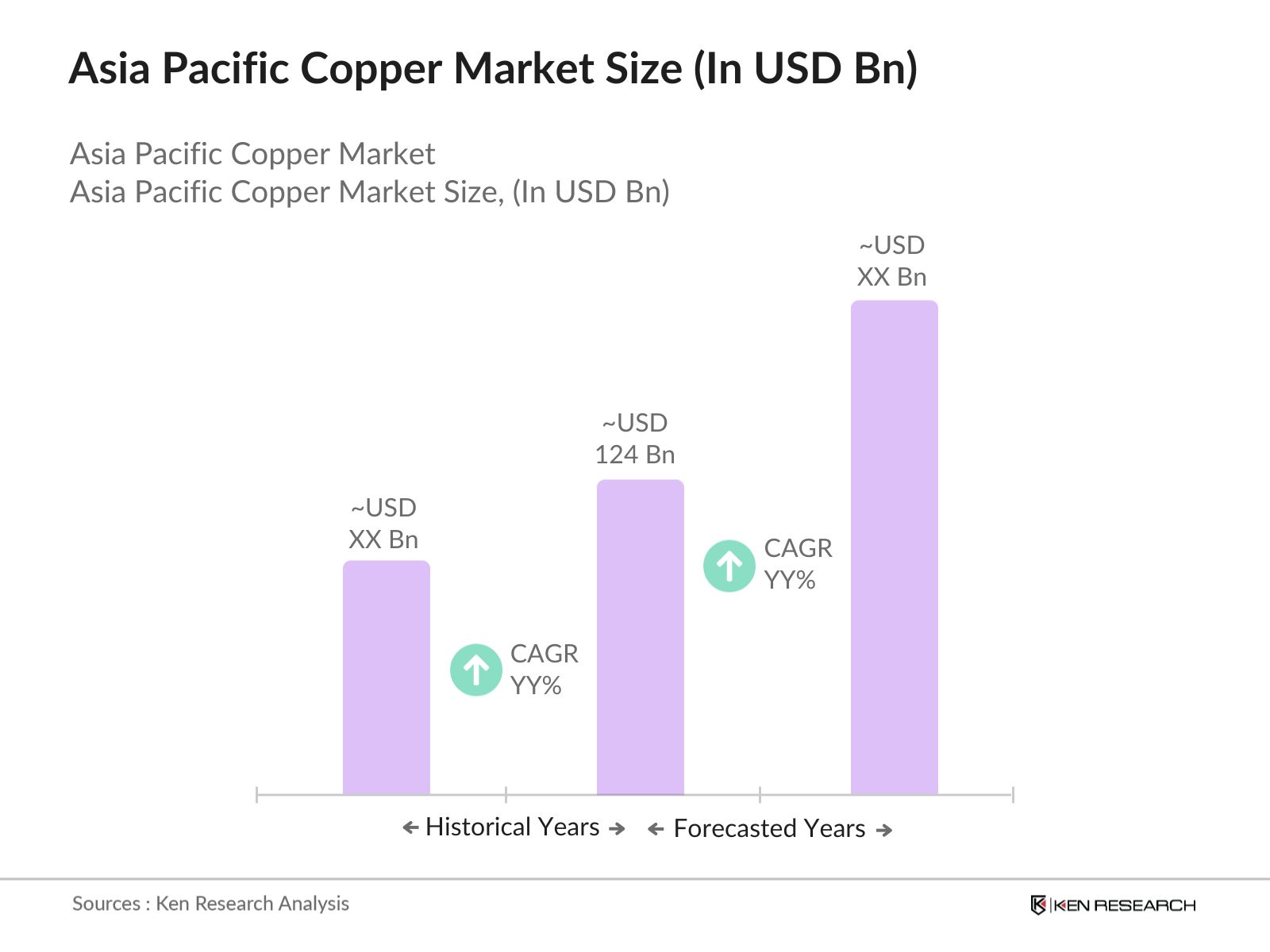
- The Asia Pacific Copper Market was valued to USD 124 billion by the increasing demand for electrical products, automotive manufacturing, and infrastructure development. Copper is widely used in electrical wiring due to its excellent conductivity, making it essential for the rapidly growing EV market and renewable energy sector.
- Major players in the market include companies like Jiangxi Copper Corporation, BHP Group, Rio Tinto, Sumitomo Metal Mining, and Mitsubishi Materials. These companies dominate the copper production and processing industry, holding significant market shares due to their extensive mining and refining capabilities.
- BHP Group plans to expand its Olympic Dam copper smelter and refinery, aiming to increase production from 322,000 tons in FY24 to 500,000 tons by the early 2030s, with potential growth to 650,000 tons by the mid-2030s. This initiative supports the rising demand for copper in renewable energy and EV sectors.
- China dominates the market in the Asia Pacific region, by its vast infrastructure projects, high copper consumption in the construction and electrical industries, and its leadership in EV production. China's Belt and Road Initiative, which includes numerous construction projects, further enhances its demand for copper, solidifying its position as the market leader.
Asia Pacific Copper Market Segmentation
The market is segmented into various factors like product, end-user, and region.
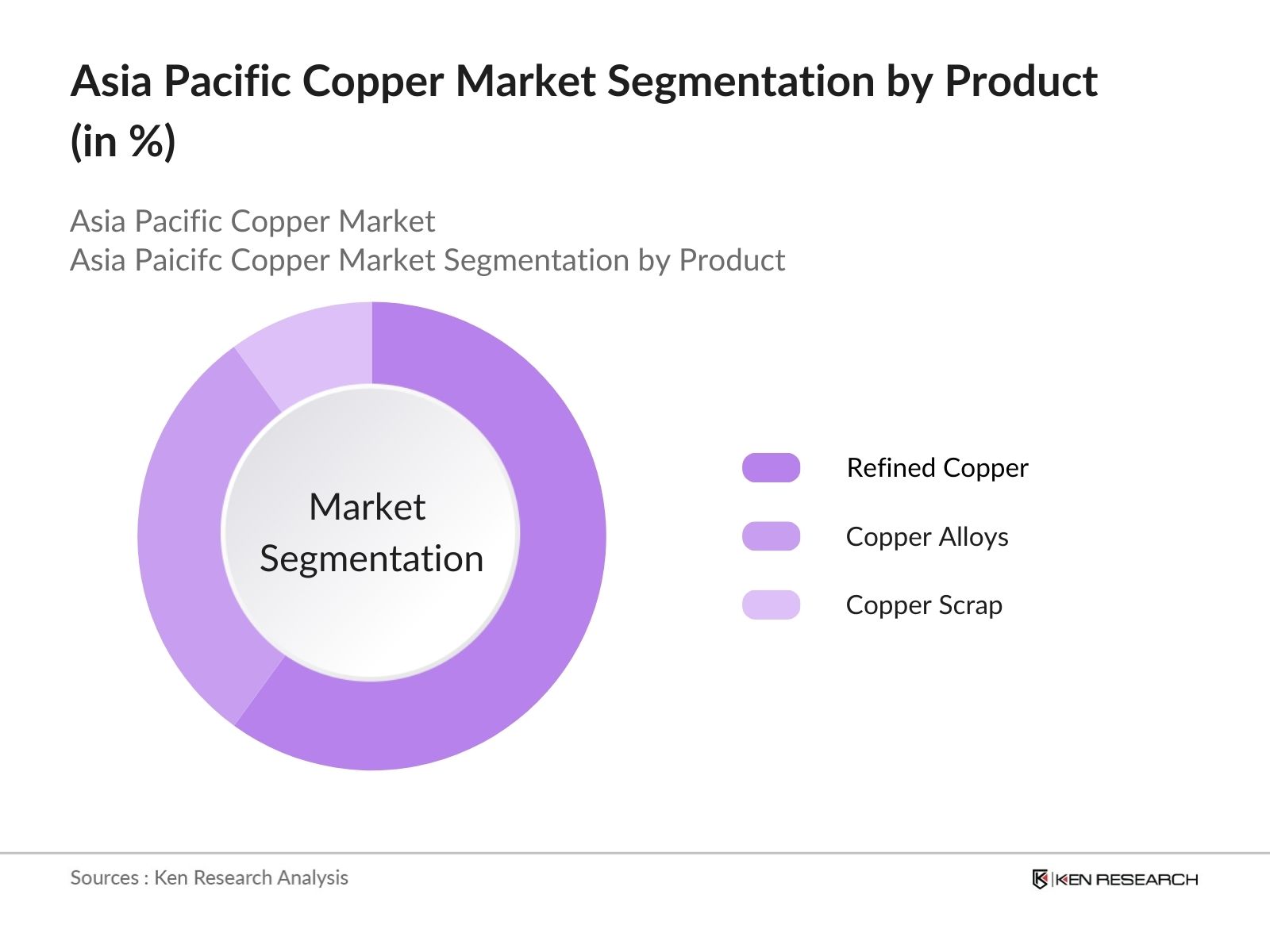
By Product: The market is segmented by product into refined copper, copper alloys, and copper scrap. Refined copper held the dominant market share due to the extensive use of refined copper in electrical wiring, construction, and automotive industries. With the growing demand for EVs and renewable energy, refined copper continues to be the most demanded product in the market.
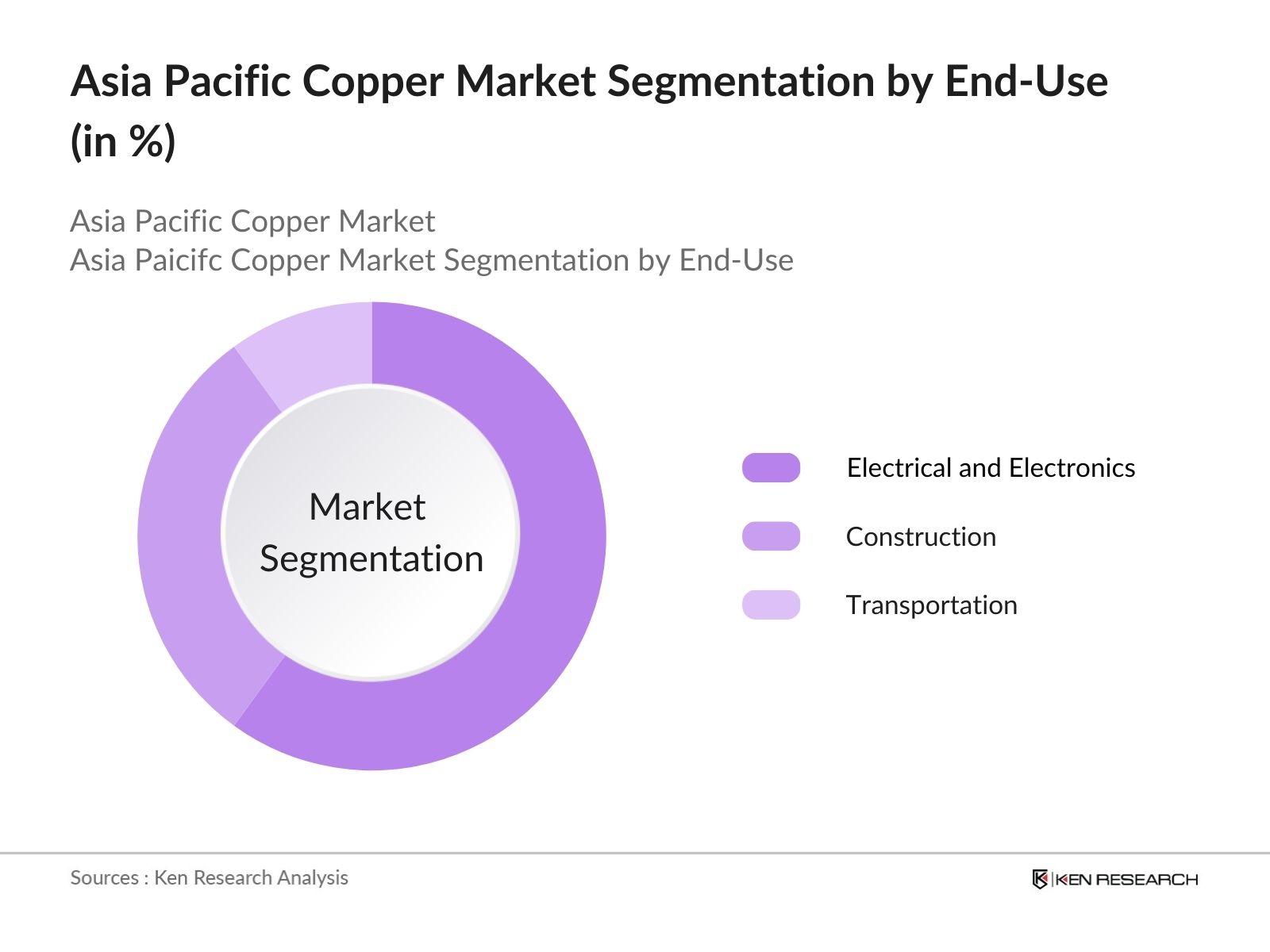
By End-user: The market is segmented by end-user into electrical and electronics, construction, and transportation. The electrical and electronics industry dominated the market with the need for efficient electrical conductivity in wiring and power generation. The growing EV market, where copper is essential for batteries and motors, also contributes to this segment's dominance.
By Region: The market is segmented by region into China, South Korea, Japan, India, Australia, and the Rest of APAC. China held a dominant market share by its massive construction projects and leadership in EV manufacturing. China's Belt and Road Initiative has further increased demand for copper in infrastructure development.
Asia Pacific Copper Market Competitive Landscape
|
Company |
Establishment Year |
Headquarters |
|
Jiangxi Copper Corporation |
1979 |
Nanchang, China |
|
BHP Group |
1885 |
Melbourne, Australia |
|
Rio Tinto |
1873 |
London, UK |
|
Sumitomo Metal Mining |
1590 |
Tokyo, Japan |
|
Mitsubishi Materials |
1871 |
Tokyo, Japan |
- Rio Tinto: In 2023, Rio Tinto announced progress in its long-term strategy, with copper production expected to grow by 4%. The Oyu Tolgoi mine in Mongolia will produce 500 kt of copper annually from 2028-2036, making it one of the largest copper mines globally. Rio Tintos capital investments will reach $10 billion annually from 2024-2026, focusing on copper and lithium projects. The company aims to halve its emissions by 2030, with a $5-6 billion decarbonization plan.
- Mitsubishi Materials: Mitsubishi Materials will begin commercially recycling rare metals like cobalt and lithium from used lithium-ion EV batteries in fiscal 2025. They aim to increase processing capacity to 6,000 tonnes per year by around fiscal 2030, using a technology to efficiently extract rare metals from "black mass" powder.
Asia Pacific Copper Market Analysis
Market Growth Drivers
- Electric Vehicle (EV) Expansion: The electric vehicle (EV) market is a significant growth driver for copper demand, requiring60 kg of copper per vehiclecompared to29 kgfor hybrids and24 kgfor combustion engines. By 2050, electrifying the global vehicle fleet will necessitate55% more new copper mines, with total copper demand needing to exceed115% of all copper mined historicallyby 2018.
- Renewable Energy Initiatives: The growth in renewable energy projects, particularly solar and wind energy, continues to bolster copper demand. By 2024, the Asia Pacific region will generate 50 gigawatts of energy from new solar installations, all of which require copper for power transmission and storage. Governments are increasingly investing in grid expansion projects, with China's 2023 power grid expansion utilizing over 2 million metric tons of copper.
- Infrastructure Development in Emerging Economies: Indonesia has finalized 190 National Strategic Projects (PSN) worth Rp 1515 trillion (US$95.8 billion) as of 2023, with 153 projects completed between 2016-2022 and 37 more in 2023.The government plans to invest over $400 billion in infrastructure from 2020-2024, focusing on transportation (60%), power plants, waste-to-energy facilities, and mass transit projects.
Market Challenges
- Volatility in Copper Prices: Copper prices have fluctuated due to supply chain disruptions and geopolitical tensions. In 2023, copper prices creating uncertainty for manufacturers reliant on the metal. These price hikes have impacted the cost structures of industries, particularly construction and electrical manufacturers in Asia Pacific, who now face increased operational costs.
- Copper Recycling Limitations: While recycling efforts are growing, the recycling rate for copper remains limited due to technological challenges. As of 2023, only 20% of copper is recycled in the Asia Pacific region, with a gap between supply and demand still existing. The lack of sophisticated recycling facilities in some regions hinders the ability to meet rising copper demand from secondary sources.
Government Initiatives
- Chinas Belt and Road Initiative (BRI): China's Belt and Road Initiative (BRI) aims to invest over USD 1 trillion in infrastructure projects across 149 countries by 2023. This initiative is expected to increase global copper demand by 22% by 2027, requiring an additional 6.5 million tonnes of copper, impacting the construction and energy sectors.
- Indias Smart Grid Mission: India's National Smart Grid Mission (NSGM), launched in 2015, is set to invest 116.01 crores in two smart grid projects. This initiative aims to enhance energy efficiency and reliability, boosting copper demand due to its essential role in smart grid technology. By 2028, copper consumption is expected to rise as smart grid infrastructure expands.
Asia Pacific Copper Market Future Outlook
Innovations include advancements in copper recycling technology, energy-efficient smelting processes, and sustainable mining practices aimed at reducing environmental impacts.
Future Market Trends
- Growing Demand for Copper in EV Infrastructure: By 2028, the Asia Pacific region is expected to witness a dramatic increase in copper demand for electric vehicle infrastructure. Countries like China and Japan will need nearly 5 million charging stations by 2028, each requiring significant amounts of copper for wiring and electrical components. This will contribute to sustained copper consumption.
- Increased Focus on Copper Recycling: Copper recycling is projected to grow by 2028, with recycling rates expected to increase by 30%. Technological advancements in recycling processes will help meet rising demand, and government regulations will further support these efforts. The Asia Pacific region will become a global leader in copper recycling, reducing dependency on new mining.
Scope of the Report
|
By Product |
Refined Copper Copper Alloys Copper Scrap |
|
By End-Use |
Electrical and Electronics Construction Transportation |
|
By Region |
China South Korea Japan India Australia Rest of APAC |
Products
Key Target Audience Organizations and Entities Who Can Benefit by Subscribing This Report:
Copper Mining Companies
Copper Refining Companies
Electrical Equipment Manufacturers
Automotive Manufacturers
Construction Companies
Renewable Energy Companies
Copper Recycling Companies
Government Regulatory Bodies (Infrastructure and Energy)
Banks and Financial Institutions
EV Manufacturers
Copper Alloy Manufacturers
Industrial Machinery Manufacturers
Power Generation Companies
Time Period Captured in the Report
Historical Period: 2018-2023
Base Year: 2023
Forecast Period: 2023-2028
Companies
Players Mentioned in the Report:
Jiangxi Copper Corporation
BHP Group
Rio Tinto
Sumitomo Metal Mining
Mitsubishi Materials
Southern Copper Corporation
Freeport-McMoRan
Hindalco Industries
Aurubis AG
Kaz Minerals
Antofagasta PLC
Vedanta Resources
First Quantum Minerals
Grupo Mexico
Anglo American PLC
Table of Contents
1. Asia Pacific Copper Market Overview
1.1. Definition and Scope
1.2. Market Taxonomy
1.3. Market Growth Rate (in metric tons and applications)
1.4. Market Segmentation Overview (key industries: electric vehicles, infrastructure, renewable energy)
2. Asia Pacific Copper Market Size (in USD Bn)
2.1. Historical Market Size (market metrics for key industries)
2.2. Year-on-Year Growth Analysis (detailed growth analysis by sub-segment)
2.3. Key Market Developments and Milestones (major projects, key investments)
3. Asia Pacific Copper Market Analysis
3.1. Growth Drivers
3.1.1. Demand from Electric Vehicle Production
3.1.2. Infrastructure Development in Emerging Economies
3.1.3. Renewable Energy Projects Expansion
3.1.4. Technological Innovations in Copper Refining
3.2. Restraints
3.2.1. Price Volatility
3.2.2. Mining and Environmental Regulations
3.2.3. Supply Chain Disruptions
3.2.4. Technological Limitations in Copper Recycling
3.3. Opportunities
3.3.1. Increasing Focus on Sustainable Copper Mining
3.3.2. Growth in Copper Recycling Technologies
3.3.3. Government Support for Infrastructure and Energy Initiatives
3.3.4. Investments in Copper for EV Charging Infrastructure
3.4. Trends
3.4.1. Rise of Electric Vehicles Driving Copper Demand
3.4.2. Adoption of Smart Grid Technologies Requiring Copper
3.4.3. Copper Demand from Data Centers and Renewable Energy Storage Systems
3.4.4. Shift Towards Copper Recycling for Sustainability
3.5. Government Regulation
3.5.1. Environmental Mining Regulations in China
3.5.2. Indias Copper Mining Expansion and Infrastructure Policies
3.5.3. South Korea's Renewable Energy Regulations
3.5.4. Australian Mining Guidelines for Copper Sustainability
3.6. SWOT Analysis
3.7. Supply Chain and Stakeholder Ecosystem
3.8. Competition Ecosystem
4. Asia Pacific Copper Market Segmentation
4.1. By Product Type (in value%)
4.1.1. Refined Copper
4.1.2. Copper Alloys
4.1.3. Copper Scrap
4.2. By End-Use Industry (in value%)
4.2.1. Electric Vehicles and Automotive
4.2.2. Construction and Infrastructure
4.2.3. Renewable Energy
4.2.4. Electronics and Electricals
4.3. By Region (in value%)
4.3.1. China
4.3.2. South Korea
4.3.3. Japan
4.3.4. India
4.3.5. Australia
4.3.6. Rest of APAC
5. Asia Pacific Copper Market Cross Comparison
5.1 Detailed Profiles of Major Companies (financial metrics, copper output, operational capacity)
5.1.1. Jiangxi Copper Corporation
5.1.2. BHP Group
5.1.3. Rio Tinto
5.1.4. Sumitomo Metal Mining
5.1.5. Mitsubishi Materials
5.1.6. Southern Copper Corporation
5.1.7. Freeport-McMoRan
5.1.8. Hindalco Industries
5.1.9. Aurubis AG
5.1.10. Kaz Minerals
5.1.11. Antofagasta PLC
5.1.12. Vedanta Resources
5.1.13. First Quantum Minerals
5.1.14. Grupo Mexico
5.1.15. Glencore
5.2 Cross Comparison Parameters (financial performance, copper production output, operational geography)
6. Asia Pacific Copper Market Competitive Landscape
6.1. Market Share Analysis (production volume, revenue)
6.2. Strategic Initiatives (joint ventures, collaborations)
6.3. Mergers and Acquisitions (recent transactions)
6.4. Investment Analysis
6.4.1. Venture Capital Investments in Copper Technologies
6.4.2. Government Grants for Copper Mining Expansion
6.4.3. Private Equity Investment in Copper Recycling
7. Asia Pacific Copper Market Regulatory Framework
7.1. Copper Mining Regulations in APAC
7.2. Environmental Standards and Compliance
7.3. Sustainability Initiatives in Copper Mining
8. Asia Pacific Copper Market Future Projections
8.1. Market Size Projections (in metric tons)
8.2. Key Factors Driving Future Growth (EVs, infrastructure, renewable energy)
9. Asia Pacific Copper Market Future Segmentation
9.1. By Product Type
9.2. By End-Use Industry
9.3. By Region
10. Asia Pacific Copper Market Analysts Recommendations
10.1. TAM/SAM/SOM Analysis
10.2. Customer Cohort Analysis
10.3. Marketing and Strategic Initiatives for Key Players
10.4. White Space Opportunity Analysis
11. Disclaimer
12. Contact Us
Research Methodology
Step:1 Identifying Key Variables:
Ecosystem creation for all the major entities and referring to multiple secondary and proprietary databases to perform desk research around market to collate industry level information.
Step:2 Market Building:
Collating statistics on this industry over the years, penetration of marketplaces and service providers ratio to compute revenue generated for Asia Pacific Copper industry. We will also review service quality statistics to understand revenue generated which can ensure accuracy behind the data points shared.
Step:3 Validating and Finalizing:
Building market hypothesis and conducting CATIs with industry experts belonging to different companies to validate statistics and seek operational and financial information from company representatives.
Step:4 Research output:
Our team will approach multiple copper mining companies and understand nature of product segments and sales, consumer preference and other parameters, which will support us validate statistics derived through bottom to top approach from such copper mining companies.
Frequently Asked Questions
01 How big is the Asia Pacific Copper market?
The Asia Pacific Copper Market was valued to USD 124 billion by the increasing demand for electrical products, automotive manufacturing, and infrastructure development.
02 What are the challenges in the Asia Pacific Copper market?
Challenges in the Asia Pacific Copper market include copper price volatility, stringent environmental regulations, limited recycling rates, and supply chain disruptions.
03 Who are the major players in the Asia Pacific Copper market?
Key players in the Asia Pacific Copper market include Jiangxi Copper Corporation, BHP Group, Rio Tinto, Sumitomo Metal Mining, and Mitsubishi Materials.
04 What are the main growth drivers of the Asia Pacific Copper market?
The growth of the Asia Pacific Copper market is driven the rising demand for electric vehicles (EVs), expansion of renewable energy projects, infrastructure development in emerging economies, and advancements in electric power infrastructure.
Why Buy From Us?

What makes us stand out is that our consultants follows Robust, Refine and Result (RRR) methodology. i.e. Robust for clear definitions, approaches and sanity checking, Refine for differentiating respondents facts and opinions and Result for presenting data with story

We have set a benchmark in the industry by offering our clients with syndicated and customized market research reports featuring coverage of entire market as well as meticulous research and analyst insights.

While we don't replace traditional research, we flip the method upside down. Our dual approach of Top Bottom & Bottom Top ensures quality deliverable by not just verifying company fundamentals but also looking at the sector and macroeconomic factors.

With one step in the future, our research team constantly tries to show you the bigger picture. We help with some of the tough questions you may encounter along the way: How is the industry positioned? Best marketing channel? KPI's of competitors? By aligning every element, we help maximize success.

Our report gives you instant access to the answers and sources that other companies might choose to hide. We elaborate each steps of research methodology we have used and showcase you the sample size to earn your trust.

If you need any support, we are here! We pride ourselves on universe strength, data quality, and quick, friendly, and professional service.