















Asia Pacific Dairy Alternatives Market Outlook to 2030
Region:Asia
Author(s):Meenakshi
Product Code:KROD3213
October 2024
94
About the Report
Asia Pacific Dairy Alternatives Market Overview
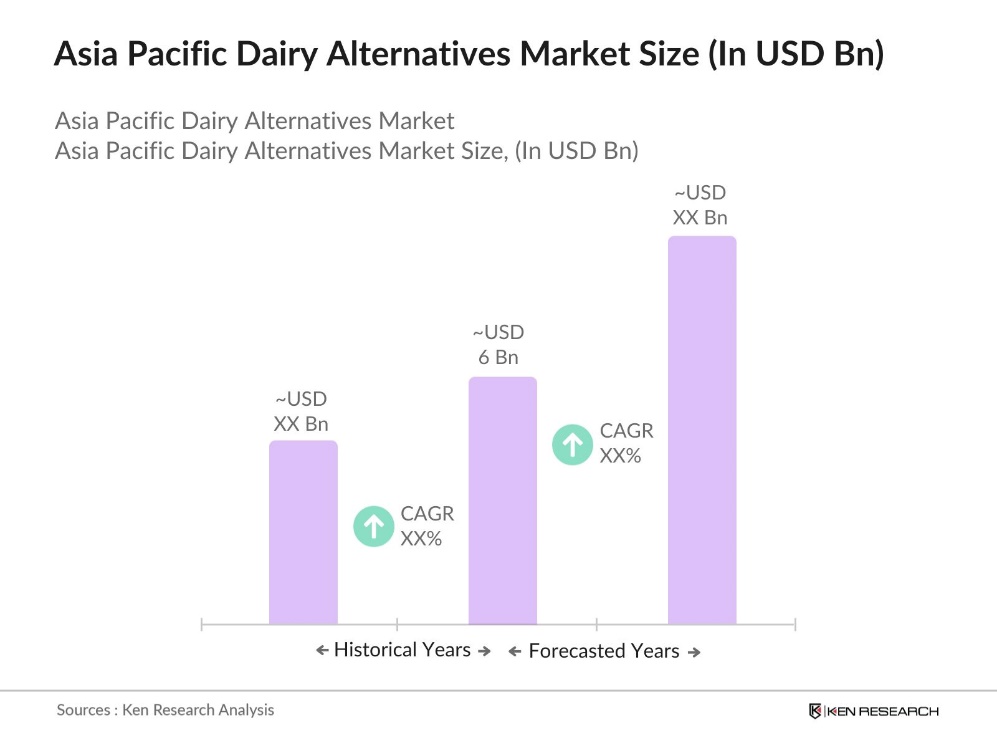
- The Asia Pacific Dairy Alternatives Market is valued at USD 6 billion, driven by increasing consumer awareness of health benefits and rising cases of lactose intolerance. Consumers are shifting towards plant-based diets, supported by innovations in product formulations like fortified plant-based milk and creamers. The market is further fueled by urbanization, health-conscious trends, and a significant increase in demand for alternatives like almond and oat milk. Additionally, regulatory frameworks supporting sustainable and eco-friendly products are driving the markets growth.
- Countries such as China, Japan, and Australia dominate the market due to their large urban populations, significant health awareness, and growing vegan communities. China leads the way, benefiting from both population size and government policies promoting sustainable food options. Japan and Australias established infrastructure for health and wellness products, as well as a growing number of consumers seeking plant-based diets, have also solidified their dominance in the market.
- The Australia-India Economic Cooperation and Trade Agreement (ECTA) enhances trade by eliminating tariffs on over 90% of Australian goods exports to India, including dairy and plant-based products. Tariffs on agricultural products like almonds and lentils are being reduced, improving the availability and pricing of these key ingredients for dairy alternatives. This agreement facilitates smoother trade through streamlined documentation and advance tariff rulings, providing significant opportunities for dairy alternative manufacturers exporting to India.
Asia Pacific Dairy Alternatives Market Segmentation
- By Product Type: The Asia Pacific dairy alternatives market is segmented by product type into soy milk, almond milk, oat milk, coconut milk, and rice milk. Soy milk has maintained a dominant market share due to its cost-effectiveness, protein content, and widespread availability. Being one of the first dairy alternatives introduced in the region, soy milk has built a loyal customer base, especially in China and Japan, where soy-based diets are traditionally common. The continued innovation in flavor and fortified products ensures soy milks stronghold in the market.

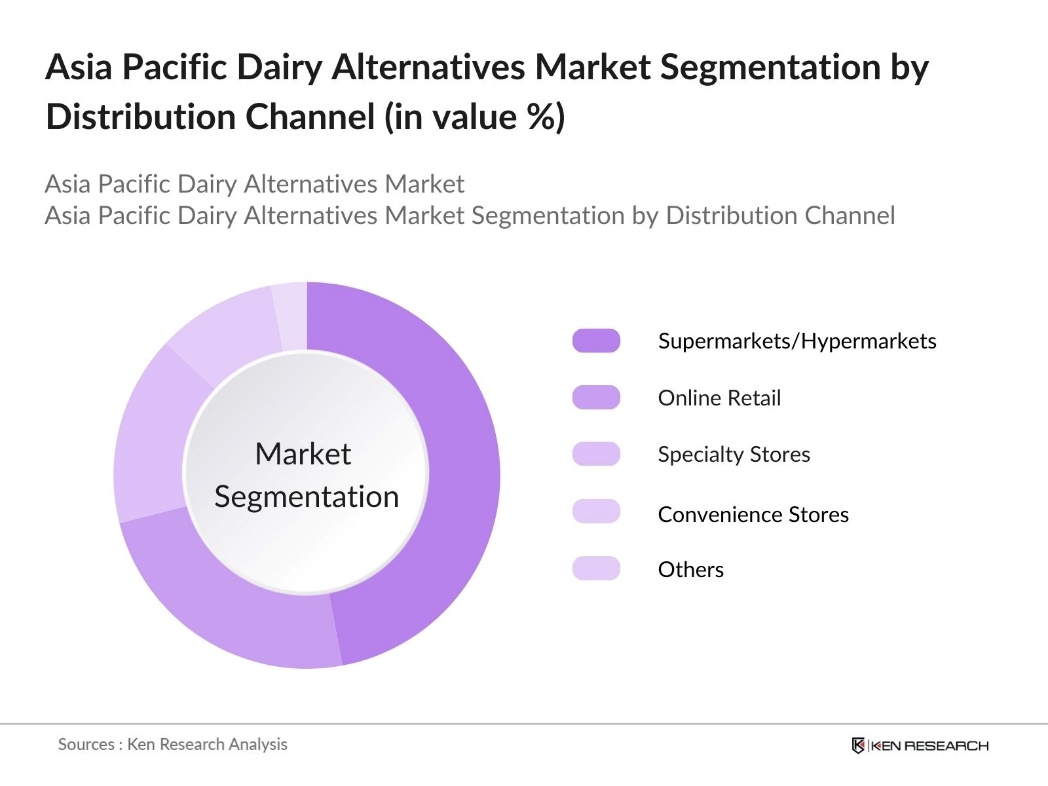
- By Distribution Channel: The Asia Pacific dairy alternatives market is segmented by distribution channels into online retail, supermarkets/hypermarkets, specialty stores, convenience stores, and others. Supermarkets/hypermarkets dominate the distribution channels as they offer a wide array of dairy alternatives, attracting health-conscious consumers with their extensive product varieties and promotional offers. These retail giants offer a convenient one-stop-shop experience, contributing to their dominance in urban and suburban areas across Asia Pacific countries, especially in Australia and China.
Asia Pacific Dairy Alternatives Market Competitive Landscape
The Asia Pacific dairy alternatives market is dominated by both global and local players, with companies investing heavily in product innovation, distribution networks, and sustainability initiatives. The competitive landscape is shaped by large conglomerates such as Danone S.A. and Blue Diamond Growers, as well as emerging companies like Oatly Group AB, which have introduced a wide range of fortified and functional products targeting various consumer segments. The consolidation of key players highlights their influence over supply chains, marketing strategies, and product innovations.
|
Company Name |
Year Established |
Headquarters |
Product Range |
Sustainability Initiatives |
Distribution Networks |
R&D Investment |
Market Penetration |
Global Presence |
Product Certifications |
|
Danone S.A. |
1919 |
Paris, France |
|||||||
|
Blue Diamond Growers |
1910 |
California, USA |
|||||||
|
The Hain Celestial Group |
1993 |
New York, USA |
|||||||
|
Vitasoy International Holdings |
1940 |
Hong Kong |
|||||||
|
Oatly Group AB |
1994 |
Sweden |
Asia Pacific Dairy Alternatives Industry Analysis
Growth Drivers
- Increasing Lactose Intolerance: The prevalence of lactose intolerance in the Asia Pacific region is increasing, with estimates showing over 90% of adults in East Asia experiencing some degree of lactose malabsorption. For instance, lactase deficiency was found in 38.5% of children aged 3-5 years, increasing to 87% in older children (ages 7-13). This high prevalence of lactose intolerance has driven demand for dairy alternatives, as consumers seek lactose-free options such as soy, almond, and oat-based milk. The shift towards these products aligns with the growing interest in digestive health and nutrition, creating a substantial base for the dairy alternatives market to flourish.
- Rising Health Awareness (Plant-based Nutrition): Health-conscious consumers in the Asia Pacific are increasingly turning to plant-based dairy alternatives, driven by a desire for more nutritious, low-cholesterol, and heart-friendly options. Governments across the region have launched health campaigns promoting plant-based nutrition. For example, according to a combined study report by the Associated Chambers of Commerce and Industry of India and Vegan First published in 2023. The rising incidence of chronic diseases related to animal fats, such as cardiovascular conditions, further underscores the shift towards plant-based dairy.
- Expanding Vegan Population: The vegan movement is steadily growing in the Asia Pacific region, particularly in countries like Australia and India. In Australia, the shift towards vegan and vegetarian diets has gained significant attention, while India has a long-standing tradition of plant-based diets, driven by cultural and religious practices. This growing preference for plant-based nutrition has contributed to an increased demand for dairy alternatives like almond and coconut milk. The rise of veganism is further encouraged by influential public figures and the wider availability of plant-based products in supermarkets and restaurants, making these alternatives more accessible to consumers.
Market Restraints
- High Cost of Dairy Alternatives: Despite rising demand, the high cost of dairy alternatives compared to traditional dairy products remains a significant barrier. In countries like India, where dairy is a dietary staple, plant-based alternatives such as almond or soy milk can cost nearly twice as much as cow's milk. The higher price is primarily due to the cost of raw materials like almonds and oats, which are often imported. This pricing challenge makes dairy alternatives less accessible to the price-sensitive population across several Asia Pacific countries.
- Limited Availability in Certain Regions: Access to dairy alternatives is still limited in rural parts of the Asia Pacific region. While urban centers like Tokyo and Sydney have a growing variety of plant-based milk options, rural areas in countries such as Indonesia and Vietnam face limited availability. Distribution challenges, including underdeveloped supply chains, mean that dairy alternatives are often confined to major supermarkets and online platforms, which limits market penetration in less developed regions with millions of potential consumers.
Asia Pacific Dairy Alternatives Market Future Outlook
Over the next five years, the Asia Pacific dairy alternatives market is projected to witness substantial growth driven by consumer demand for healthier, plant-based alternatives, government support for sustainable agriculture, and innovations in product formulations such as fortified plant-based dairy products. As the market continues to evolve, companies will focus on expanding distribution channels, especially through online retail and partnerships with supermarkets and specialty stores to cater to a growing health-conscious audience. Additionally, the emphasis on eco-friendly and cruelty-free products will remain a strong factor influencing market dynamics.
Market Opportunities
- Innovation in Product Offerings (Fortification, Flavored Options): The dairy alternatives market in Asia Pacific is experiencing a wave of innovation with new product offerings such as fortified plant-based milk and flavored alternatives. Companies are introducing products enriched with essential nutrients like calcium and vitamins to meet consumer demand for health-focused options. Additionally, flavors such as vanilla, chocolate, and berry are gaining popularity, catering to the tastes of young consumers and children. This innovation drives consumer engagement and boosts the adoption of dairy alternatives across various demographics.
- Growing Demand in Emerging Markets (India, China): Emerging markets such as India and China offer enormous potential for the dairy alternatives market. Indias urban population, estimated at 518 million, is witnessing a growing trend of adopting dairy alternatives due to health and environmental concerns. Similarly, China's urbanization rate of over 64% has led to increased health awareness and demand for plant-based dairy alternatives. These markets present a significant opportunity for growth as rising disposable incomes and expanding middle-class populations create demand for health-conscious food options.
Scope of the Report
|
By Product Type |
Soy Milk Almond Milk Oat Milk Coconut Milk Rice Milk |
|
By Source |
Plant-based Milk Plant-based Yogurt Plant-based Cheese Plant-based Creamers Others |
|
By Distribution Channel |
Online Retail Supermarkets/Hypermarkets Specialty Stores Convenience Stores Others |
|
By Application |
Beverages Desserts Snacks Infant Formula |
|
By Region |
China Japan India Australia & New Zealand Southeast Asia |
Products
Key Target Audience
Dairy Alternative Manufacturers Companies
Plant-Based Product Companies
Online Retail Platforms
Investment and Venture Capital Firms
Government and Regulatory Bodies (e.g., Food Standards Australia, China Food and Drug Administration)
Companies
Major Players Mentioned in the Report
Danone S.A.
Blue Diamond Growers
The Hain Celestial Group
Vitasoy International Holdings
Oatly Group AB
Califia Farms, LLC
Ripple Foods
Daiya Foods Inc.
SunOpta Inc.
Eden Foods, Inc.
Kikkoman Corporation
Nutriops S.L.
Earth's Own Food Company
Valsoia S.p.A
Tofutti Brands, Inc.
Table of Contents
1. Asia Pacific Dairy Alternatives Market Overview
1.1. Definition and Scope
1.2. Market Taxonomy
1.3. Market Growth Rate (Soy Milk, Almond Milk, Oat Milk, Coconut Milk, Rice Milk)
1.4. Market Segmentation Overview
2. Asia Pacific Dairy Alternatives Market Size (In USD Bn)
2.1. Historical Market Size
2.2. Year-On-Year Growth Analysis
2.3. Key Market Developments and Milestones
3. Asia Pacific Dairy Alternatives Market Analysis
3.1. Growth Drivers
3.1.1. Increasing Lactose Intolerance
3.1.2. Rising Health Awareness (Plant-based nutrition)
3.1.3. Expanding Vegan Population
3.1.4. Government Initiatives Promoting Plant-based Diets
3.2. Market Restraints
3.2.1. High Cost of Dairy Alternatives
3.2.2. Limited Availability in Certain Regions
3.2.3. Consumer Taste Preferences (Preference for traditional dairy)
3.3. Opportunities
3.3.1. Growing Demand in Emerging Markets (India, China)
3.3.2. Innovation in Product Offerings (Fortification, Flavored options)
3.3.3. Increased E-Commerce Penetration
3.4. Trends
3.4.1. Adoption of Sustainable Packaging
3.4.2. Investment in New Product Lines (Fermented products, plant-based yogurts)
3.4.3. Expansion of Organic Dairy Alternatives
3.5. Government Regulation
3.5.1. Plant-based Labeling Requirements
3.5.2. Import Tariffs on Raw Materials (Nuts, Oats)
3.5.3. Incentives for Plant-based Product Manufacturers
3.6. SWOT Analysis
3.7. Stakeholder Ecosystem (Manufacturers, Distributors, Retailers, Consumers)
3.8. Porters Five Forces
3.9. Competition Ecosystem
4. Asia Pacific Dairy Alternatives Market Segmentation
4.1. By Product Type (In Value %)
4.1.1. Soy Milk
4.1.2. Almond Milk
4.1.3. Oat Milk
4.1.4. Coconut Milk
4.1.5. Rice Milk
4.2. By Source (In Value %)
4.2.1. Plant-based Milk
4.2.2. Plant-based Yogurt
4.2.3. Plant-based Cheese
4.2.4. Plant-based Creamers
4.2.5. Others
4.3. By Distribution Channel (In Value %)
4.3.1. Online Retail
4.3.2. Supermarkets/Hypermarkets
4.3.3. Specialty Stores
4.3.4. Convenience Stores
4.3.5. Others
4.4. By Application (In Value %)
4.4.1. Beverages
4.4.2. Desserts
4.4.3. Snacks
4.4.4. Infant Formula
4.5. By Region (In Value %)
4.5.1. China
4.5.2. Japan
4.5.3. India
4.5.4. Australia & New Zealand
4.5.5. Southeast Asia
5. Asia Pacific Dairy Alternatives Market Competitive Analysis
5.1 Detailed Profiles of Major Companies
5.1.1. Danone S.A.
5.1.2. Blue Diamond Growers
5.1.3. The Hain Celestial Group
5.1.4. Oatly Group AB
5.1.5. Vitasoy International Holdings Ltd.
5.1.6. Califia Farms, LLC
5.1.7. Earths Own Food Company
5.1.8. Valsoia S.p.A
5.1.9. Ripple Foods
5.1.10. Daiya Foods Inc.
5.1.11. Kikkoman Corporation
5.1.12. SunOpta Inc.
5.1.13. Eden Foods, Inc.
5.1.14. Nutriops S.L.
5.1.15. Tofutti Brands, Inc.
5.2 Cross Comparison Parameters (No. of Employees, Headquarters, Revenue, Product Portfolio, Sustainability Initiatives, Supply Chain Innovation, R&D Investment, Customer Loyalty Programs)
5.3. Market Share Analysis
5.4. Strategic Initiatives
5.5. Mergers and Acquisitions
5.6. Investment Analysis
5.7. Venture Capital Funding
5.8. Government Grants
5.9. Private Equity Investments
6. Asia Pacific Dairy Alternatives Market Regulatory Framework
6.1. Food Safety Regulations for Plant-based Products
6.2. Labeling and Marketing Guidelines
6.3. Import and Export Tariff Regulations
6.4. Nutritional Standard Requirements
7. Asia Pacific Dairy Alternatives Future Market Size (In USD Bn)
7.1. Future Market Size Projections
7.2. Key Factors Driving Future Market Growth
8. Asia Pacific Dairy Alternatives Future Market Segmentation
8.1. By Product Type (In Value %)
8.2. By Source (In Value %)
8.3. By Distribution Channel (In Value %)
8.4. By Application (In Value %)
8.5. By Region (In Value %)
9. Asia Pacific Dairy Alternatives Market Analysts Recommendations
9.1. TAM/SAM/SOM Analysis
9.2. Customer Cohort Analysis
9.3. Marketing Initiatives
9.4. White Space Opportunity Analysis
Disclaimer
Contact Us
Research Methodology
Step 1: Identification of Key Variables
The first step involves a comprehensive desk research phase where we map out key stakeholders, including manufacturers, distributors, and end-users of dairy alternatives. By utilizing proprietary databases and public sources, we identify factors influencing market growth, such as health trends, regulatory frameworks, and product innovation.
Step 2: Market Analysis and Construction
In this phase, we assess historical data on dairy alternatives, focusing on market penetration and revenue generation by product type and distribution channels. This data allows us to build reliable models and forecasts that provide insights into market demand and supply chain efficiencies.
Step 3: Hypothesis Validation and Expert Consultation
We conduct interviews with industry professionals, including manufacturers and retailers, to validate hypotheses regarding market drivers and challenges. These consultations offer first-hand insights into market trends, consumer behavior, and growth projections.
Step 4: Research Synthesis and Final Output
The final step involves synthesizing research findings into a coherent report. We incorporate qualitative and quantitative data to provide a comprehensive analysis of the Asia Pacific dairy alternatives market, ensuring all forecasts are well-supported by historical trends and expert opinions.
Frequently Asked Questions
01 How big is the Asia Pacific Dairy Alternatives Market?
The Asia Pacific Dairy Alternatives Market is valued at USD 6 billion, driven by the growing demand for plant-based products and increasing lactose intolerance among the population.
02 What are the challenges in the Asia Pacific Dairy Alternatives Market?
Challenges in Asia Pacific Dairy Alternatives Market include the high cost of dairy alternative products compared to traditional dairy, limited availability in certain regions, and consumer reluctance to switch due to taste preferences.
03 Who are the major players in the Asia Pacific Dairy Alternatives Market?
Key players in the Asia Pacific Dairy Alternatives Market include Danone S.A., Blue Diamond Growers, The Hain Celestial Group, Vitasoy International Holdings, and Oatly Group AB. These companies have extensive distribution networks and innovative product offerings that cater to various consumer preferences.
04 What are the growth drivers of the Asia Pacific Dairy Alternatives Market?
The Asia Pacific Dairy Alternatives Market is driven by increasing health consciousness, a growing vegan population, government incentives promoting plant-based diets, and product innovations like fortified and flavored alternatives.
Why Buy From Us?

What makes us stand out is that our consultants follows Robust, Refine and Result (RRR) methodology. i.e. Robust for clear definitions, approaches and sanity checking, Refine for differentiating respondents facts and opinions and Result for presenting data with story

We have set a benchmark in the industry by offering our clients with syndicated and customized market research reports featuring coverage of entire market as well as meticulous research and analyst insights.

While we don't replace traditional research, we flip the method upside down. Our dual approach of Top Bottom & Bottom Top ensures quality deliverable by not just verifying company fundamentals but also looking at the sector and macroeconomic factors.

With one step in the future, our research team constantly tries to show you the bigger picture. We help with some of the tough questions you may encounter along the way: How is the industry positioned? Best marketing channel? KPI's of competitors? By aligning every element, we help maximize success.

Our report gives you instant access to the answers and sources that other companies might choose to hide. We elaborate each steps of research methodology we have used and showcase you the sample size to earn your trust.

If you need any support, we are here! We pride ourselves on universe strength, data quality, and quick, friendly, and professional service.