















Asia Pacific Data Virtualization Market Outlook to 2030
Region:Asia
Author(s):Yogita Sahu
Product Code:KROD9215
December 2024
84
About the Report
Asia Pacific Data Virtualization Market Overview
- The Asia Pacific data virtualization market, valued at USD 4.83 billion, is driven by the increasing demand for real-time data management solutions across various industries such as IT, BFSI, healthcare, and retail. The exponential growth in data generation due to digital transformation and the widespread adoption of cloud-based solutions have further fueled this market.
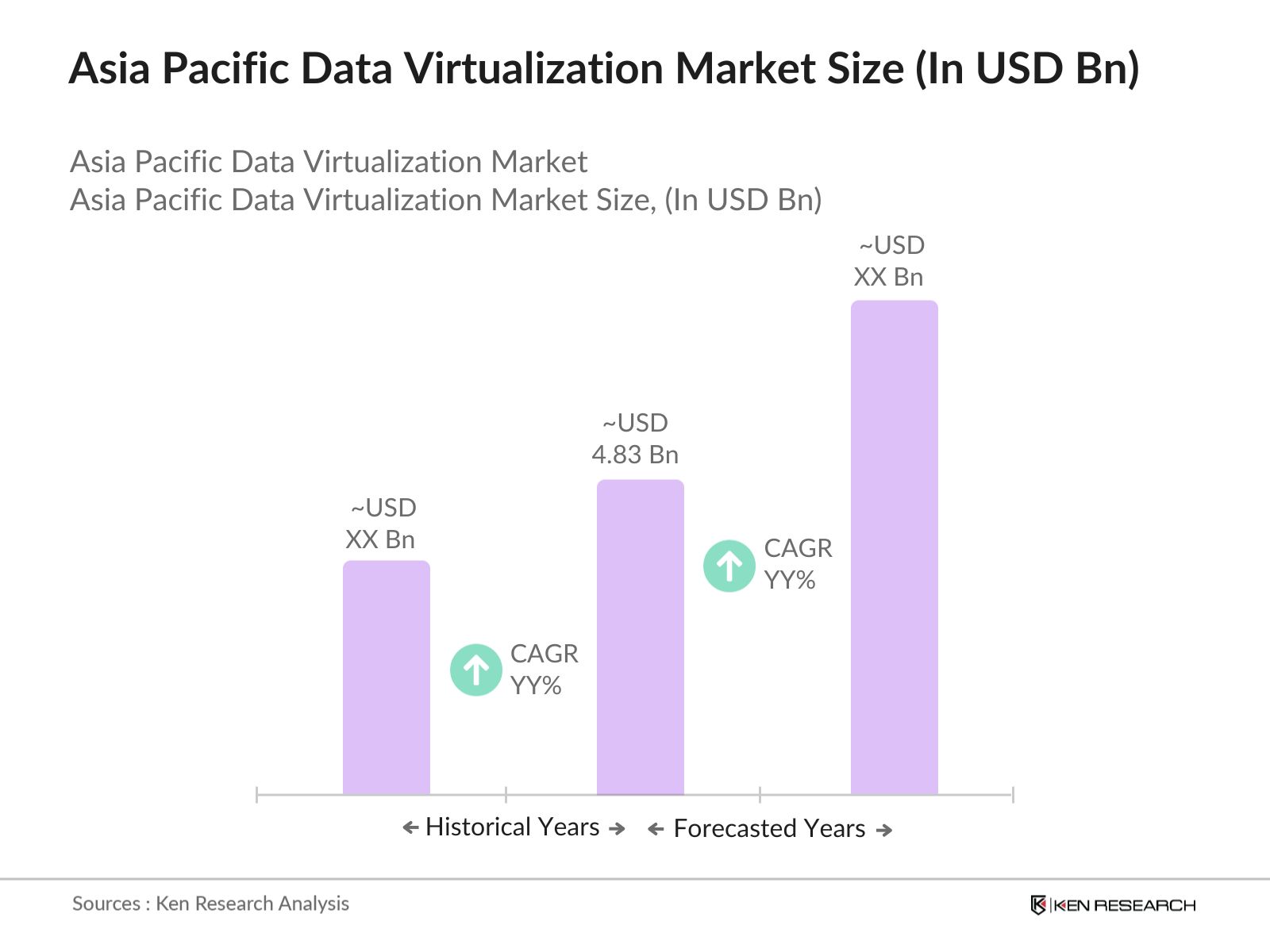
- Key countries dominating the market include China, India, and Japan, primarily due to their advanced IT infrastructure and large-scale adoption of cloud technologies. China leads with extensive investments in data centers and virtualization technologies, while Indias rapid digital transformation and focus on business intelligence are key drivers for its fast-growing market.
- In 2024, the Indian government is expected to fully implement the NDGFP, aimed at improving data governance and promoting data-sharing across public and private sectors. This policy will drive the adoption of data virtualization solutions, particularly in government departments managing large datasets.
Asia Pacific Data Virtualization Market Segmentation
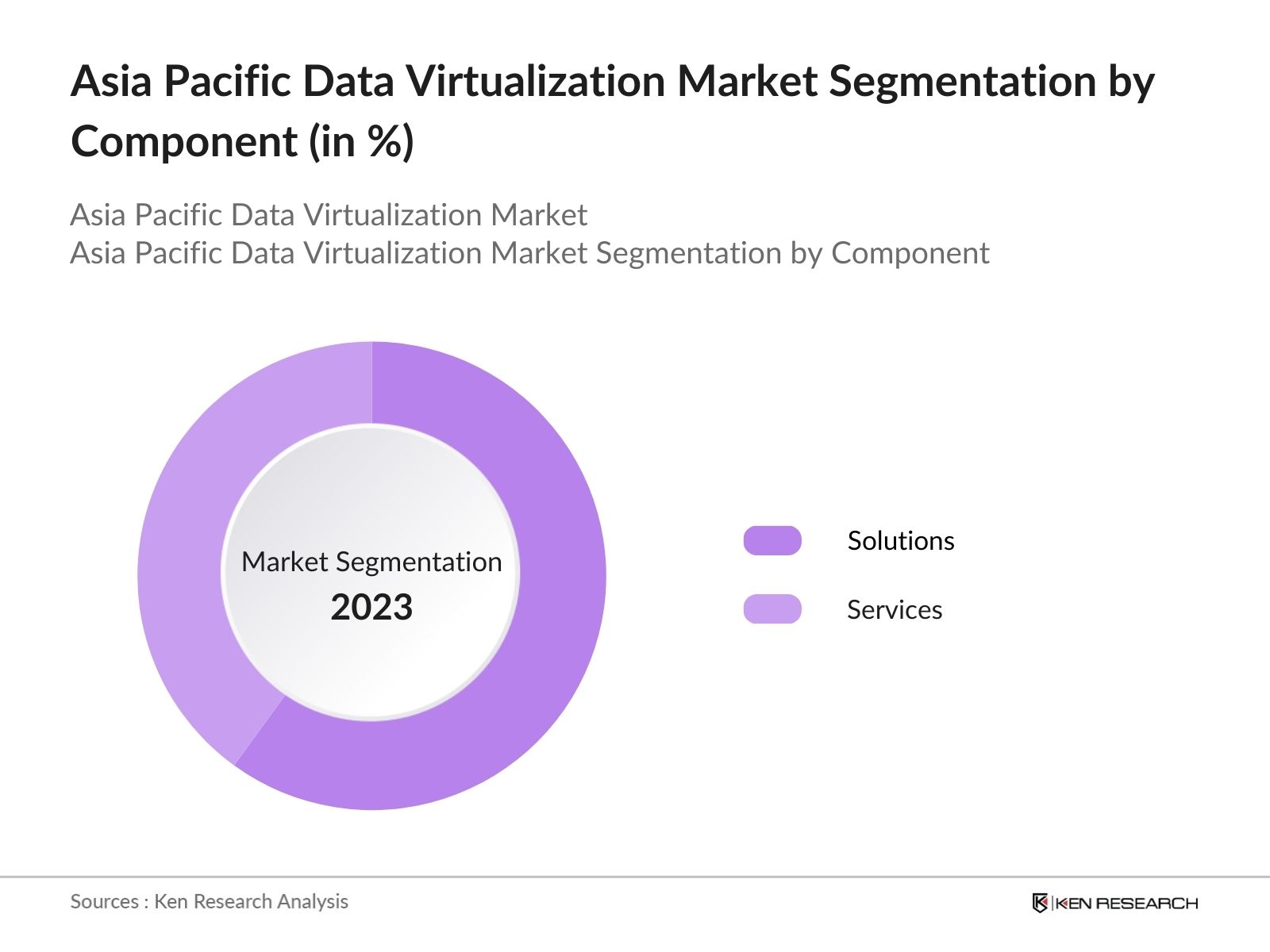
By Component: The market is segmented by component into solutions and services. Solutions hold the dominant market share, as businesses increasingly invest in standalone software for data integration and application tool solutions to streamline operations. The demand for managed and advisory services, particularly for cloud integration and technical support, is also rising due to the complexity of virtualization solutions.
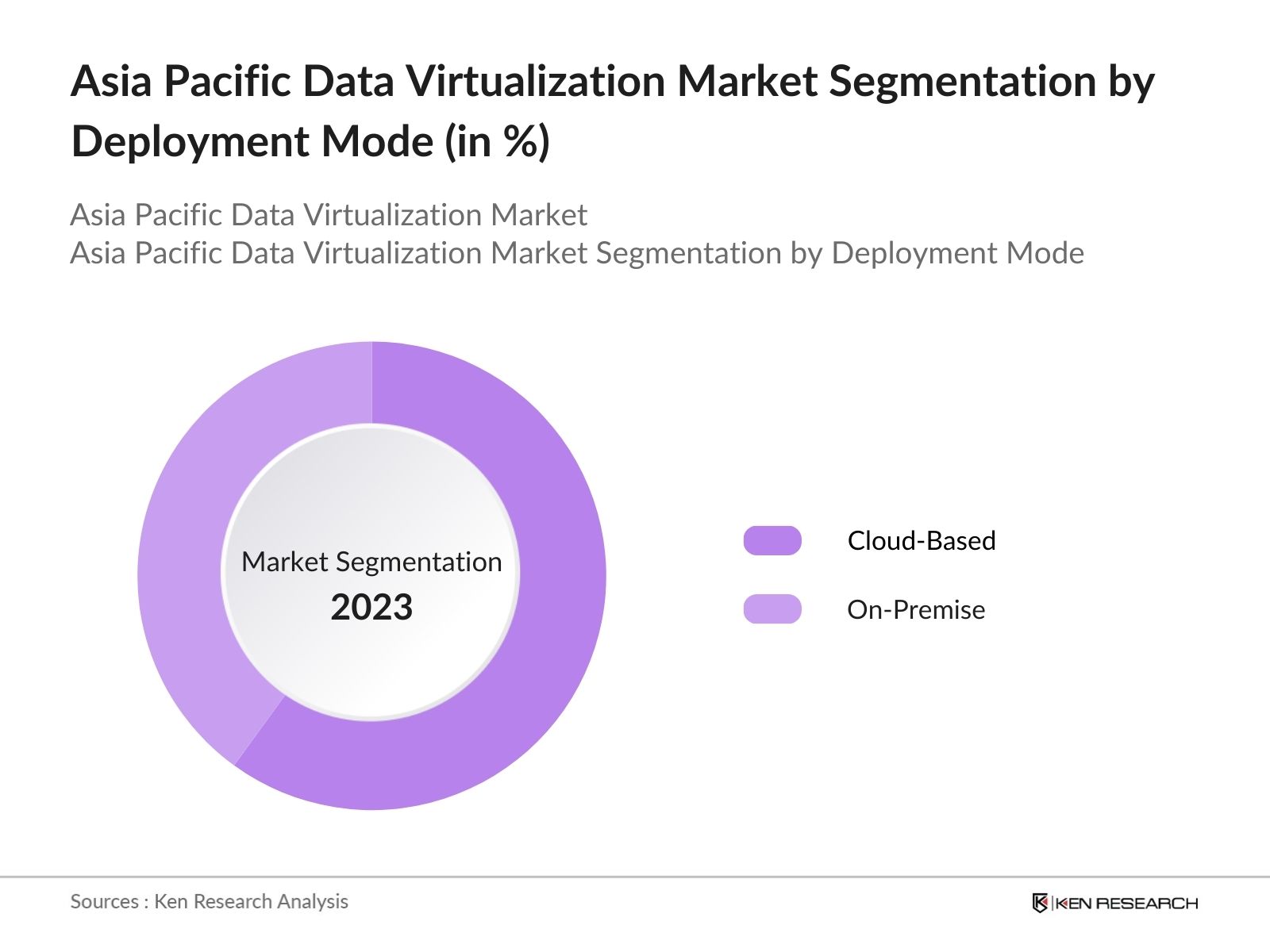
By Deployment Mode: The market is segmented by cloud based and on-premise sub parts. Cloud Based dominates this segment due to its ability to integrate multiple data sources, creating unified data views for improved decision-making. Organizations increasingly rely on these tools to maintain data quality and ensure real-time access across disparate systems. The popularity of data integration solutions stems from their capacity to simplify complex datasets for analytics.
Asia Pacific Data Virtualization Market Competitive Landscape
The market is dominated by a mix of global and regional players, offering a range of solutions from standalone software to integrated cloud services. Key players invest heavily in research and development to maintain their market positions, emphasizing innovation and advanced analytics integration.
|
Company Name |
Establishment Year |
Headquarters |
Employees |
Cloud Integration Capabilities |
Revenue |
Market Strategy |
Key Products |
|
IBM Corporation |
1911 |
Armonk, USA |
|||||
|
SAP SE |
1972 |
Walldorf, Germany |
|||||
|
Cisco Systems Inc. |
1984 |
San Jose, USA |
|||||
|
Oracle Corporation |
1977 |
Austin, USA |
|||||
|
Microsoft Corporation |
1975 |
Redmond, USA |
Asia Pacific Data Virtualization Market Analysis
Market Growth Drivers
- Increased Data Generation and Management Needs: The Asia Pacific region is seeing a surge in the volume of data generated due to the growth of digitalization across various industries. By 2024, it's projected that the region will generate over 80 zettabytes of data annually. This increasing data volume is pushing businesses towards adopting data virtualization solutions to manage and access distributed data more efficiently, particularly as sectors like retail, banking, and healthcare expand.
- Government Digital Initiatives: Governments in the region are actively promoting digital transformation projects, such as Indias Digital India program, which aims to increase the adoption of digital technologies across sectors. By 2024, the Indian government plans to invest nearly INR 1 trillion in digital infrastructure development, directly increasing the need for data virtualization technologies to streamline access and analysis of public and private sector data.
- Increasing Cloud Adoption: The increasing adoption of cloud services in the Asia Pacific region is driving the demand for data virtualization. With cloud data centers in the region expected to exceed 1,200 by 2024, businesses are migrating to hybrid and multi-cloud environments, necessitating data virtualization solutions to integrate and access disparate data sources effectively.
Market Challenges
- Data Security and Privacy Concerns The rise of cyberattacks in the region, with more than 300,000 reported incidents in 2023 alone, creates challenges for businesses adopting data virtualization. Handling sensitive and distributed data in virtual environments raises concerns over security vulnerabilities, as virtualized systems increase potential access points for malicious actors.
- High Implementation Costs Data virtualization technology often requires upfront investment for integration, especially for large-scale organizations managing vast amounts of data across multiple systems. In 2024, it is estimated that the average implementation cost for enterprises in the Asia Pacific will range between USD 500,000 and USD 2 million, depending on the complexity and size of the business.
Asia Pacific Data Virtualization Market Future Outlook
Over the next five years, the Asia Pacific data virtualization industry is expected to witness substantial growth, driven by increasing investments in cloud infrastructure, the growing need for real-time data access, and the integration of advanced analytics tools such as artificial intelligence (AI) and machine learning (ML).
Future Market Opportunities
- Rising Adoption of Multi-Cloud Environments Over the next five years, businesses across the Asia Pacific region will increasingly move towards multi-cloud environments to handle their growing data demands. By 2029, it is estimated that over 70% of enterprises in the region will operate in hybrid or multi-cloud environments, necessitating more robust data virtualization solutions to integrate and manage these diverse platforms effectively.
- Expansion of Data Privacy Regulations Governments across the region are expected to introduce stricter data privacy and governance regulations by 2028, similar to the European Union's GDPR. These laws will force companies to adopt data virtualization technologies to ensure compliance with local regulations while maintaining efficient data access and management.
Scope of the Report
|
By Component |
Solutions Services |
|
By Deployment Mode |
Cloud-Based On-Premise |
|
By End-User Industry |
IT & Telecom BFSI Healthcare Retail |
|
By Organization Size |
Large Enterprises SMEs |
|
By Region |
China India Japan Southeast Asia |
Products
Key Target Audience Organizations and Entities Who Can Benefit by Subscribing This Report:
Banks and Financial Institution
Cloud Service Providers
BFSI IT Infrastructure Heads
Software Development Companies
Private Equity Firms
Investor and Venture Capitalist Firms
Government and Regulatory Bodies (Ministry of Information Technology, Ministry of Data Security)
Companies
Players Mentioned in the Report:
IBM Corporation
SAP SE
Oracle Corporation
Microsoft Corporation
Cisco Systems Inc.
Dell Technologies
VMware Inc.
Fujitsu Limited
Alteryx Inc.
Denodo Technologies Inc.
Table of Contents
Asia Pacific Data Virtualization Market Overview
1.1 Definition and Scope
1.2 Market Taxonomy
1.3 Market Growth Rate
1.4 Market Segmentation Overview
Asia Pacific Data Virtualization Market Size (In USD Bn)
2.1 Historical Market Size
2.2 Year-On-Year Growth Analysis
2.3 Key Market Developments and Milestones
Asia Pacific Data Virtualization Market Analysis
3.1 Growth Drivers
3.1.1 Demand for Real-Time Data Access
3.1.2 Increasing Adoption of Cloud-Based Solutions
3.1.3 Integration with Business Intelligence (BI) Tools
3.1.4 Rise in Digital Transformation Initiatives
3.2 Market Challenges
3.2.1 Data Security and Privacy Concerns
3.2.2 Resistance to Change from Traditional Systems
3.2.3 Complexity in Data Governance
3.3 Opportunities
3.3.1 Customization for Industry-Specific Solutions
3.3.2 Expansion in Emerging Markets
3.3.3 AI and Machine Learning Integration
3.4 Trends
3.4.1 Edge Computing Integration
3.4.2 Rise of Open-Source Platforms
3.4.3 Advanced Analytics Integration
3.5 Government Regulation
3.5.1 Data Protection Laws
3.5.2 Compliance with Industry Standards
3.6 SWOT Analysis
3.7 Stakeholder Ecosystem
3.8 Porters Five Forces
3.9 Competition Ecosystem
Asia Pacific Data Virtualization Market Segmentation
4.1 By Component (In Value %)
4.1.1 Solutions (Standalone Software, Data Integration Solution)
4.1.2 Services (Managed Services, Advisory & Implementation)
4.2 By Deployment Mode (In Value %)
4.2.1 Cloud-Based
4.2.2 On-Premise
4.3 By End-User Industry (In Value %)
4.3.1 IT and Telecom
4.3.2 BFSI
4.3.3 Healthcare and Life Sciences
4.3.4 Retail
4.3.5 Government and Defense
4.4 By Organization Size (In Value %)
4.4.1 Large Enterprises
4.4.2 SMEs
4.5 By Region (In Value %)
4.5.1 China
4.5.2 India
4.5.3 Japan
4.5.4 Southeast Asia
4.5.5 Australia
Asia Pacific Data Virtualization Market Competitive Analysis
5.1 Detailed Profiles of Major Companies
5.1.1 IBM Corporation
5.1.2 SAP SE
5.1.3 Oracle Corporation
5.1.4 Microsoft Corporation
5.1.5 VMware Inc.
5.1.6 Cisco Systems Inc.
5.1.7 Dell Technologies
5.1.8 Fujitsu Limited
5.1.9 Red Hat Inc.
5.1.10 Alteryx Inc.
5.1.11 Denodo Technologies Inc.
5.1.12 Cluvio GmbH
5.1.13 QlikTech International
5.1.14 SAS Institute Inc.
5.1.15 Tableau Software
5.2 Cross Comparison Parameters (No. of Employees, Headquarters, Inception Year, Revenue, Innovation Index, Industry Focus, Customer Base, Cloud Integration Capabilities)
5.3 Market Share Analysis
5.4 Strategic Initiatives
5.5 Mergers and Acquisitions
5.6 Investment Analysis
5.7 Venture Capital Funding
5.8 Government Grants
5.9 Private Equity Investments
Asia Pacific Data Virtualization Market Regulatory Framework
6.1 Data Protection and Compliance Requirements
6.2 Certification and Auditing Processes
Asia Pacific Data Virtualization Future Market Size (In USD Bn)
7.1 Future Market Size Projections
7.2 Key Factors Driving Future Market Growth
Asia Pacific Data Virtualization Future Market Segmentation
8.1 By Component (In Value %)
8.2 By Deployment Mode (In Value %)
8.3 By End-User Industry (In Value %)
8.4 By Organization Size (In Value %)
8.5 By Region (In Value %)
Asia Pacific Data Virtualization Market Analysts Recommendations
9.1 TAM/SAM/SOM Analysis
9.2 Market Penetration Strategy
9.3 White Space Opportunity Analysis
9.4 Marketing Initiatives for Regional Growth
Research Methodology
Step 1: Identification of Key Variables
The initial step involved mapping the data virtualization ecosystem in the Asia Pacific market, using secondary research to collect comprehensive information on key stakeholders. This included a review of proprietary databases, industry reports, and market dynamics to identify crucial market influencers.
Step 2: Market Analysis and Construction
This step focused on compiling and analyzing historical data on the Asia Pacific data virtualization market. The assessment involved evaluating market penetration, customer satisfaction, and revenue generation metrics, particularly for cloud-based solutions.
Step 3: Hypothesis Validation and Expert Consultation
Through expert interviews, market hypotheses were validated. These consultations, conducted via telephonic interviews, provided valuable insights from industry professionals regarding the trends and challenges in data virtualization.
Step 4: Research Synthesis and Final Output
In the final stage, the data was synthesized into a comprehensive analysis. This involved detailed engagement with major data virtualization vendors, allowing the collection of granular insights on market performance, customer adoption rates, and technological advancements.
Frequently Asked Questions
01. How big is the Asia Pacific Data Virtualization Market?
The Asia Pacific data virtualization market is valued at USD 4.83 billion, driven by the rising demand for real-time data management solutions across various industries such as IT, BFSI, and healthcare.
02. What are the challenges in the Asia Pacific Data Virtualization Market?
Challenges in the Asia Pacific data virtualization market include data security and privacy concerns, especially with cloud-based solutions, and resistance to change from traditional data management systems.
03. Who are the major players in the Asia Pacific Data Virtualization Market?
Key players in the Asia Pacific data virtualization market include IBM Corporation, SAP SE, Oracle Corporation, Microsoft Corporation, and Cisco Systems Inc., known for their strong presence in cloud-based virtualization solutions.
04. What are the growth drivers of the Asia Pacific Data Virtualization Market?
The Asia Pacific data virtualization market is propelled by the increasing need for real-time data access, growing digital transformation initiatives, and the integration of AI and machine learning technologies into data management processes.
05. What is the future outlook for the Asia Pacific Data Virtualization Market?
The Asia Pacific data virtualization market is expected to grow over the next five years, driven by advancements in cloud infrastructure, the rise of edge computing, and the increasing need for scalable, flexible data solutions.
Why Buy From Us?

What makes us stand out is that our consultants follows Robust, Refine and Result (RRR) methodology. i.e. Robust for clear definitions, approaches and sanity checking, Refine for differentiating respondents facts and opinions and Result for presenting data with story

We have set a benchmark in the industry by offering our clients with syndicated and customized market research reports featuring coverage of entire market as well as meticulous research and analyst insights.

While we don't replace traditional research, we flip the method upside down. Our dual approach of Top Bottom & Bottom Top ensures quality deliverable by not just verifying company fundamentals but also looking at the sector and macroeconomic factors.

With one step in the future, our research team constantly tries to show you the bigger picture. We help with some of the tough questions you may encounter along the way: How is the industry positioned? Best marketing channel? KPI's of competitors? By aligning every element, we help maximize success.

Our report gives you instant access to the answers and sources that other companies might choose to hide. We elaborate each steps of research methodology we have used and showcase you the sample size to earn your trust.

If you need any support, we are here! We pride ourselves on universe strength, data quality, and quick, friendly, and professional service.