
Asia-Pacific Edge Computing Market Outlook to 2030
Region:Afganistan
Author(s):Naman Rohilla
Product Code:KROD3384
Region:Afganistan
Author(s):Naman Rohilla
Product Code:KROD3384
November 2024
97
The Asia-Pacific Edge Computing Market is segmented by technology, MRO type, end-user industry, product type, and geographical region.
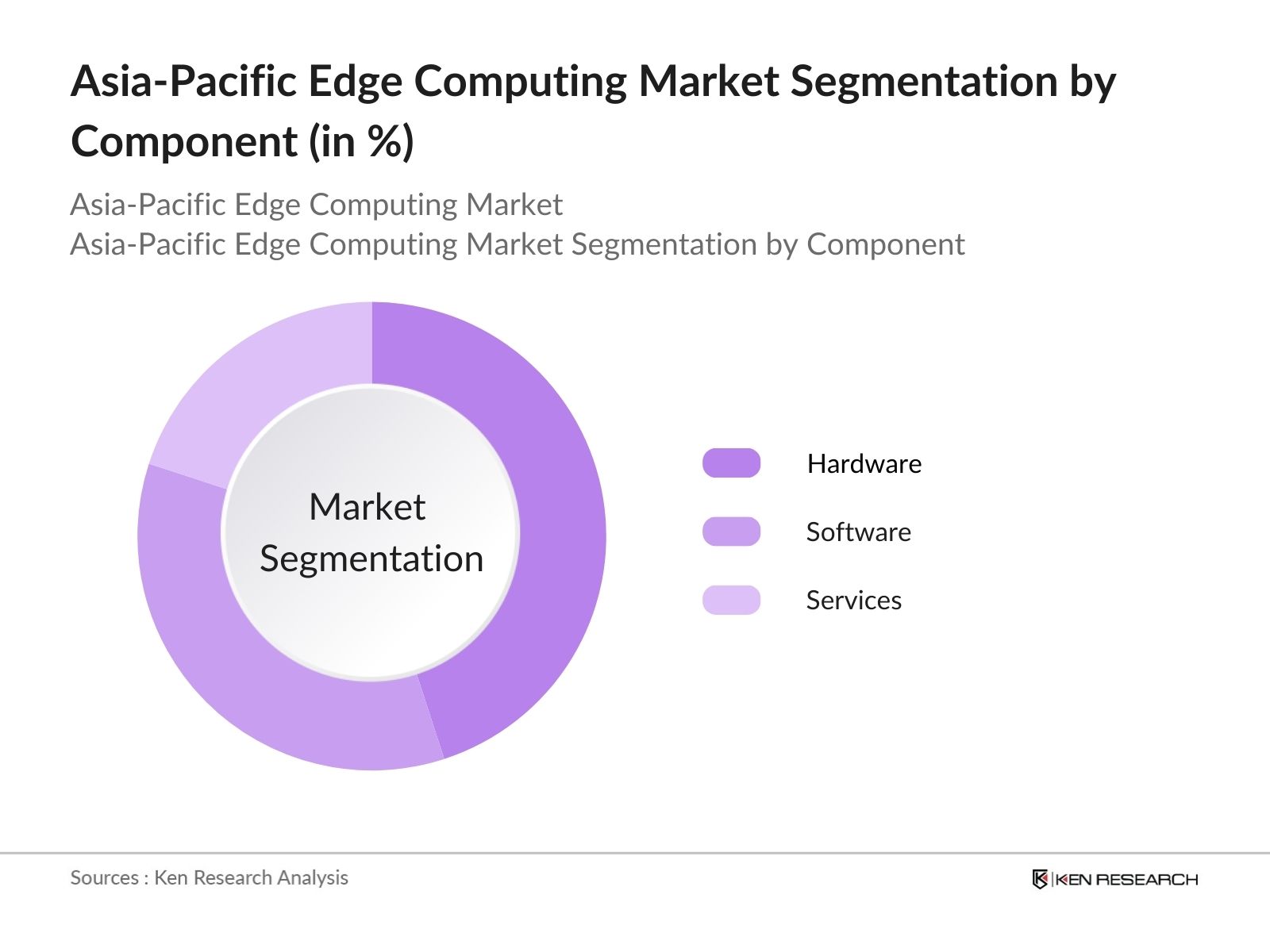
By Component: The Asia-Pacific edge computing market is segmented by component into hardware, software, and services. Hardware, including edge devices, sensors, and networking equipment, holds the dominant market share due to the necessity of physical infrastructure for edge computing. The expansion of IoT and smart applications has led to an increased demand for edge devices capable of handling real-time data processing. Companies are continually upgrading their hardware solutions to meet the growing demand for faster and more reliable edge infrastructure.
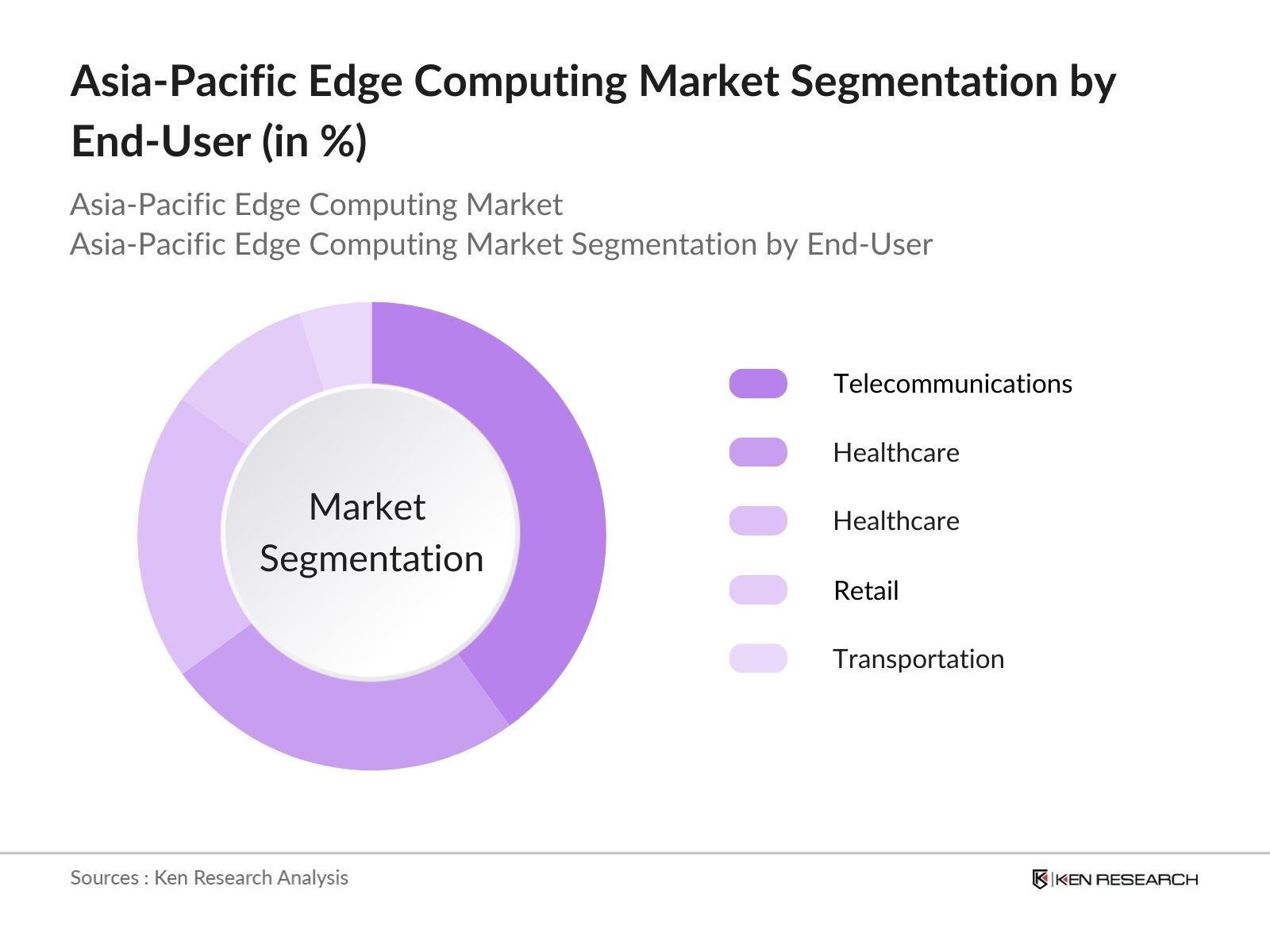
By End-User Industry: The market is segmented by end-user industries into telecommunications, healthcare, manufacturing, retail, and transportation & logistics. Telecommunications holds the largest share in this segmentation due to the ongoing 5G rollouts across Asia-Pacific, which require edge computing for efficient data management and low-latency services. Telecom operators are leveraging edge computing to support smart city projects, mobile edge computing (MEC), and advanced network services.
The Asia-Pacific edge computing market is dominated by a few global technology giants and regional leaders. Companies like Amazon Web Services (AWS), Google Cloud, and Huawei have established their presence due to their vast resources, strong R&D capabilities, and strategic partnerships with regional telecommunications companies. These firms are leading the market with advanced edge computing solutions tailored to various industries.
|
Company |
Established |
Headquarters |
Revenue |
Edge Devices |
Data Centers |
R&D Investment |
Cloud Integration |
|
Amazon Web Services (AWS) |
2006 |
Seattle, USA |
- |
- |
- |
- |
- |
|
Google Cloud |
2008 |
Mountain View, USA |
- |
- |
- |
- |
- |
|
Huawei Technologies |
1987 |
Shenzhen, China |
- |
- |
- |
- |
- |
|
Cisco Systems |
1984 |
San Jose, USA |
- |
- |
- |
- |
- |
|
Dell Technologies |
1984 |
Round Rock, USA |
- |
- |
- |
- |
- |
Over the next five years, the Asia-Pacific edge computing market is expected to exhibit growth, driven by advancements in 5G technology, the proliferation of IoT devices, and increasing demand for low-latency processing in sectors such as manufacturing and healthcare. The rise of autonomous systems, including vehicles and industrial robots, will further necessitate the adoption of edge computing. Additionally, government-backed smart city initiatives will continue to fuel the demand for edge solutions to manage real-time data processing at the edge of networks.
|
By Component |
Hardware Software Services |
|
By Deployment Model |
On-Premise Cloud-Based Hybrid |
|
By End-User Industry |
Telecommunications Healthcare Manufacturing Retail Transportation & Logistics |
|
By Application |
Industrial Automation Real-Time Data Analytics Autonomous Vehicles Smart Grid Management |
|
By Region |
China Japan South Korea Australia India |
1.1. Definition and Scope
1.2. Market Taxonomy
1.3. Market Growth Rate
1.4. Market Segmentation Overview
2.1. Historical Market Size
2.2. Year-On-Year Growth Analysis
2.3. Key Market Developments and Milestones
3.1. Growth Drivers
3.1.1. Increasing IoT Adoption
3.1.2. Demand for Low-Latency Computing
3.1.3. Rise in Smart City Initiatives
3.1.4. Expansion of 5G Infrastructure
3.2. Market Challenges
3.2.1. Data Privacy and Security Concerns
3.2.2. High Deployment Costs
3.2.3. Interoperability Issues
3.3. Opportunities
3.3.1. Integration with AI and Machine Learning
3.3.2. Growth of Edge Data Centers
3.3.3. Edge-As-A-Service Models
3.4. Trends
3.4.1. Increasing Use of Micro Data Centers
3.4.2. Hybrid Cloud and Edge Solutions
3.4.3. AI at the Edge
3.5. Government Regulations
3.5.1. Data Sovereignty Laws
3.5.2. Regional Cybersecurity Frameworks
3.5.3. 5G Spectrum Allocations
3.6. SWOT Analysis
3.7. Stake Ecosystem
3.8. Porters Five Forces
3.9. Competition Ecosystem
4.1. By Component (In Value %)
4.1.1. Hardware (Edge Devices, Sensors, Networking Equipment)
4.1.2. Software (Edge Platforms, Cloud Integration Software)
4.1.3. Services (Edge Managed Services, System Integration)
4.2. By Deployment Model (In Value %)
4.2.1. On-Premise Edge Computing
4.2.2. Cloud-Based Edge Computing
4.2.3. Hybrid Edge
4.3. By End-User Industry (In Value %)
4.3.1. Telecommunications
4.3.2. Healthcare
4.3.3. Manufacturing
4.3.4. Retail
4.3.5. Transportation & Logistics
4.4. By Application (In Value %)
4.4.1. Industrial Automation
4.4.2. Real-Time Data Analytics
4.4.3. Autonomous Vehicles
4.4.4. Smart Grid Management
4.5. By Region (In Value %)
4.5.1. China
4.5.2. Japan
4.5.3. South Korea
4.5.4. Australia
4.5.5. India
4.5.6. Rest of APAC
5.1 Detailed Profiles of Major Companies
5.1.1. Amazon Web Services
5.1.2. Microsoft Azure
5.1.3. Google Cloud
5.1.4. Huawei Technologies Co., Ltd.
5.1.5. Cisco Systems, Inc.
5.1.6. IBM Corporation
5.1.7. Dell Technologies
5.1.8. HPE (Hewlett Packard Enterprise)
5.1.9. Intel Corporation
5.1.10. Nokia Corporation
5.1.11. EdgeConneX
5.1.12. Equinix, Inc.
5.1.13. Vapor IO
5.1.14. Schneider Electric
5.1.15. ADLINK Technology Inc.
5.2 Cross Comparison Parameters (Revenue, Cloud Integration Capabilities, Geographical Reach, Number of Data Centers, AI/ML Integration, Security Solutions, IoT Partnerships, Edge Data Center Deployment)
5.3. Market Share Analysis
5.4. Strategic Initiatives
5.5. Mergers and Acquisitions
5.6. Investment Analysis
5.7. Venture Capital Funding
5.8. Private Equity Investments
6.1. Data Compliance Requirements
6.2. 5G Network Regulations
6.3. Edge Infrastructure Standards
7.1. Future Market Size Projections
7.2. Key Factors Driving Future Market Growth
8.1. By Component (In Value %)
8.2. By Deployment Model (In Value %)
8.3. By End-User Industry (In Value %)
8.4. By Application (In Value %)
8.5. By Region (In Value %)
9.1. TAM/SAM/SOM Analysis
9.2. Customer Cohort Analysis
9.3. Market Penetration Strategies
9.4. Innovation White Space Opportunities
Disclaimer Contact UsThis phase involved mapping out the ecosystem of stakeholders in the Asia-Pacific edge computing market. Desk research was conducted, using both secondary and proprietary databases, to pinpoint critical variables influencing market growth, such as 5G deployment and IoT adoption.
Historical data was collected and analyzed, covering penetration of edge devices, the relationship between cloud and edge providers, and sector-specific applications. This was followed by calculating revenue and market growth patterns for different end-user industries.
Market hypotheses were formulated and validated through interviews with industry experts via computer-assisted telephone interviews (CATI). Feedback from edge computing professionals provided deeper insights into operational challenges and growth drivers.
In the final phase, direct consultation with major edge computing solution providers and manufacturers confirmed data accuracy. This process ensured the report presents a comprehensive view of the market, validated by both top-down and bottom-up approaches.
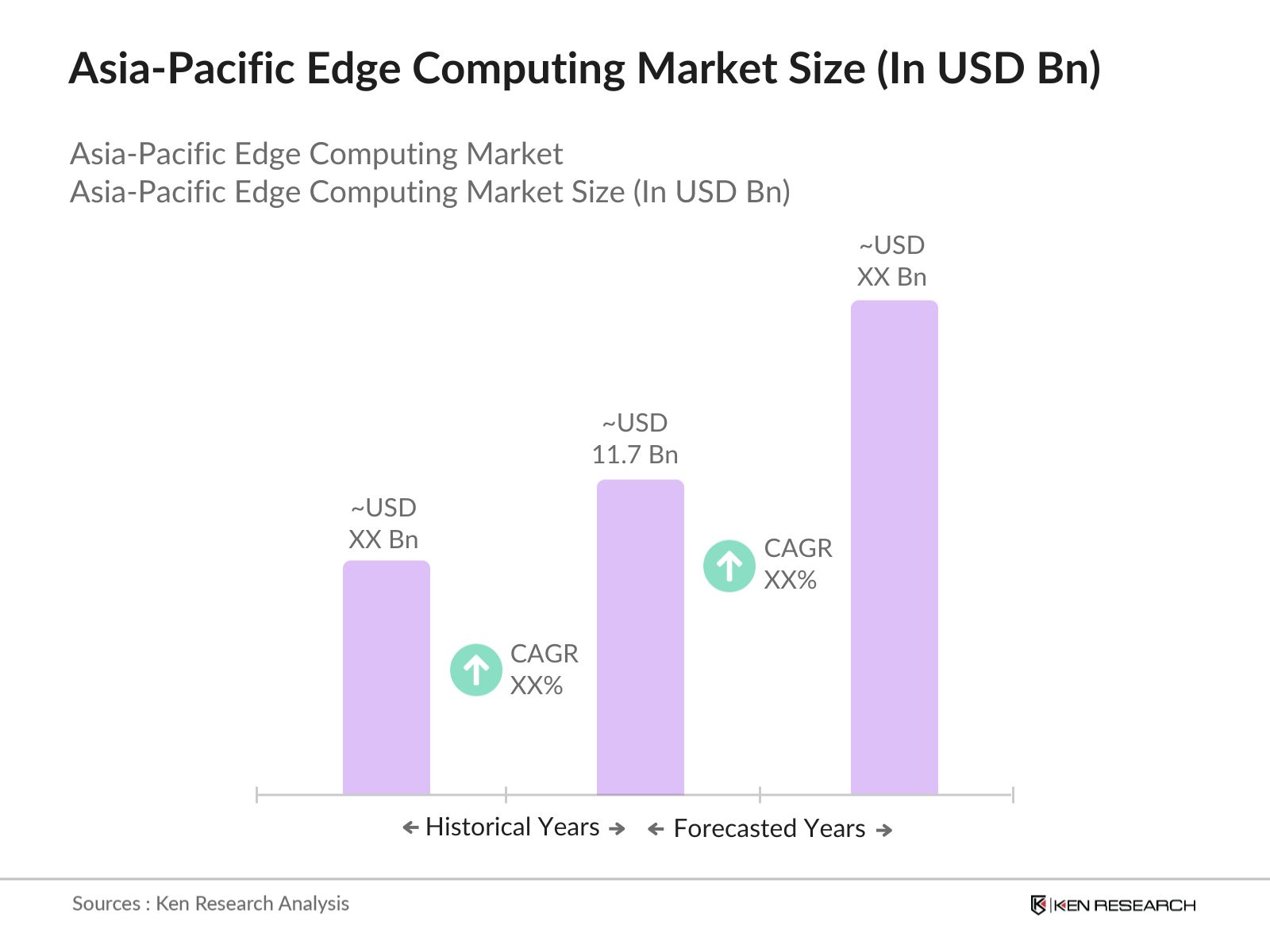
The Asia-Pacific edge computing market is valued at USD 11.7 billion, driven by the expansion of 5G infrastructure, rising IoT adoption, and demand for real-time data processing.
Key challenges of the Asia-Pacific edge computing market include data privacy concerns, high deployment costs, and interoperability issues between different systems and devices. Additionally, the complexity of managing decentralized networks poses technical barriers.
Asia-Pacific edge computing market players include Amazon Web Services (AWS), Google Cloud, Huawei Technologies, Cisco Systems, and Dell Technologies. These companies dominate due to their strong infrastructure, innovation capabilities, and strategic partnerships.
Asia-Pacific edge computing market growth drivers include the expansion of 5G networks, increasing demand for low-latency processing, and the rise of smart cities across the region. Additionally, advancements in AI/ML at the edge and edge data centers are further boosting the market growth.

What makes us stand out is that our consultants follows Robust, Refine and Result (RRR) methodology. i.e. Robust for clear definitions, approaches and sanity checking, Refine for differentiating respondents facts and opinions and Result for presenting data with story

We have set a benchmark in the industry by offering our clients with syndicated and customized market research reports featuring coverage of entire market as well as meticulous research and analyst insights.

While we don't replace traditional research, we flip the method upside down. Our dual approach of Top Bottom & Bottom Top ensures quality deliverable by not just verifying company fundamentals but also looking at the sector and macroeconomic factors.

With one step in the future, our research team constantly tries to show you the bigger picture. We help with some of the tough questions you may encounter along the way: How is the industry positioned? Best marketing channel? KPI's of competitors? By aligning every element, we help maximize success.

Our report gives you instant access to the answers and sources that other companies might choose to hide. We elaborate each steps of research methodology we have used and showcase you the sample size to earn your trust.

If you need any support, we are here! We pride ourselves on universe strength, data quality, and quick, friendly, and professional service.