















Asia-Pacific Edible Oil Market Outlook to 2030
Region:Asia
Author(s):Naman Rohilla
Product Code:KROD4938
December 2024
100
About the Report
Asia-Pacific Edible Oil Market Overview
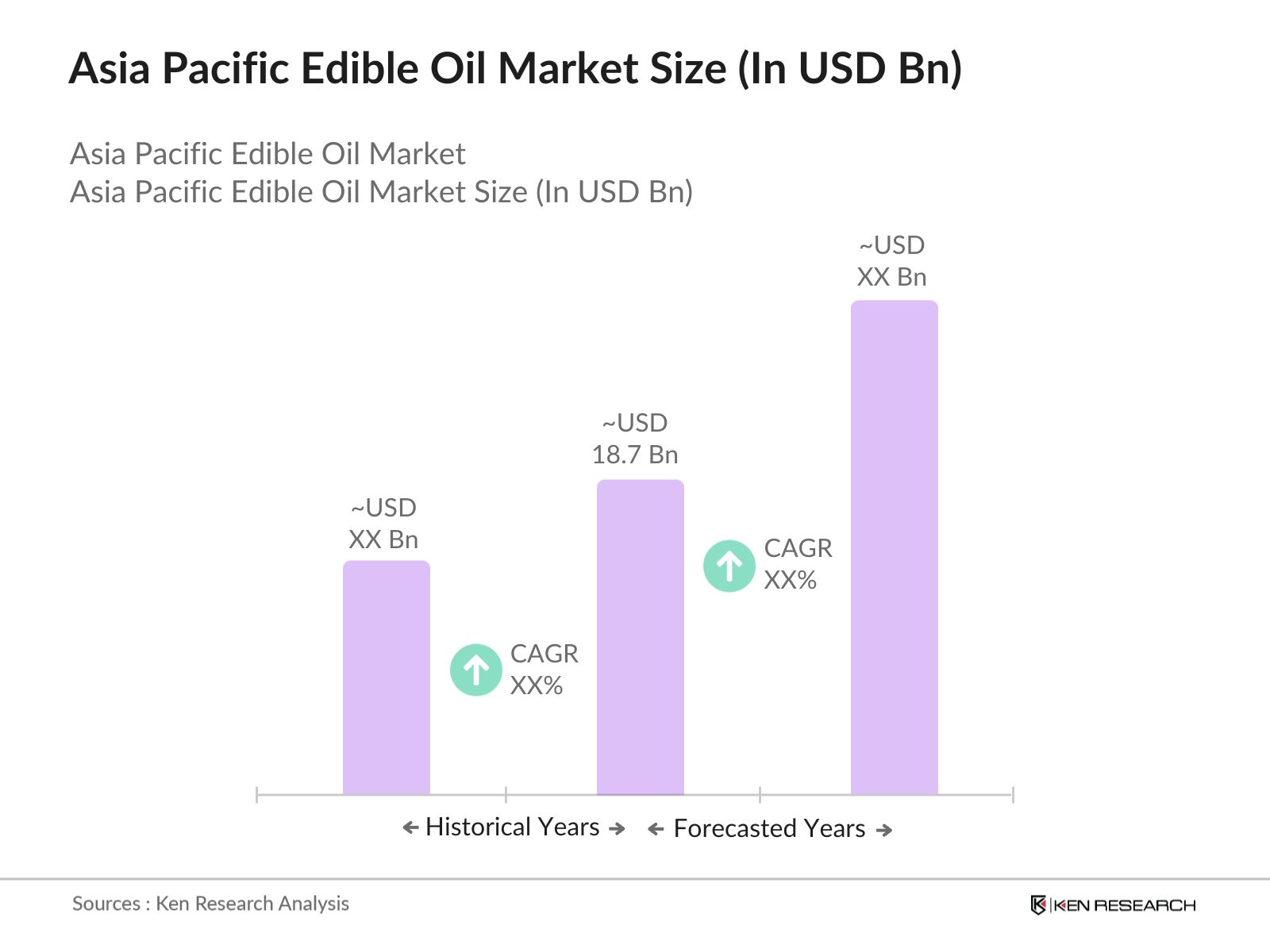
- The Asia-Pacific edible oil market is valued at USD 18.7 billion based on a five-year historical analysis. This market is driven by the increasing demand for a variety of oils, including palm, soybean, and sunflower, which cater to the region's vast and diverse population. Factors such as the rising population, increased urbanization, and growing health consciousness among consumers have driven the consumption of healthier oil alternatives, including cold-pressed and organic options. Government initiatives to enhance oilseed production, as well as subsidies, have further boosted the market.
- The Asia-Pacific edible oil market is dominated by countries such as China and India. China is the largest consumer due to its extensive population, strong manufacturing base, and high demand for various processed foods. India, on the other hand, stands out as one of the largest importers of palm oil, primarily driven by its vast food processing industry and the demand for affordable cooking oil. Additionally, countries like Indonesia and Malaysia lead in palm oil production, playing a key role in the regional and global edible oil trade.
- Government regulations in the Asia-Pacific region mandate strict edible oil standards. Countries like India, Japan, and South Korea have introduced stringent certification systems to ensure food safety and quality. In 2023, Indias Food Safety and Standards Authority of India (FSSAI) revised its edible oil standards to include new parameters for purity, trans-fat content, and labelling. These regulations ensure that imported and domestically produced oils meet global quality benchmarks, thereby promoting healthier products in the market.
Asia-Pacific Edible Oil Market Segmentation
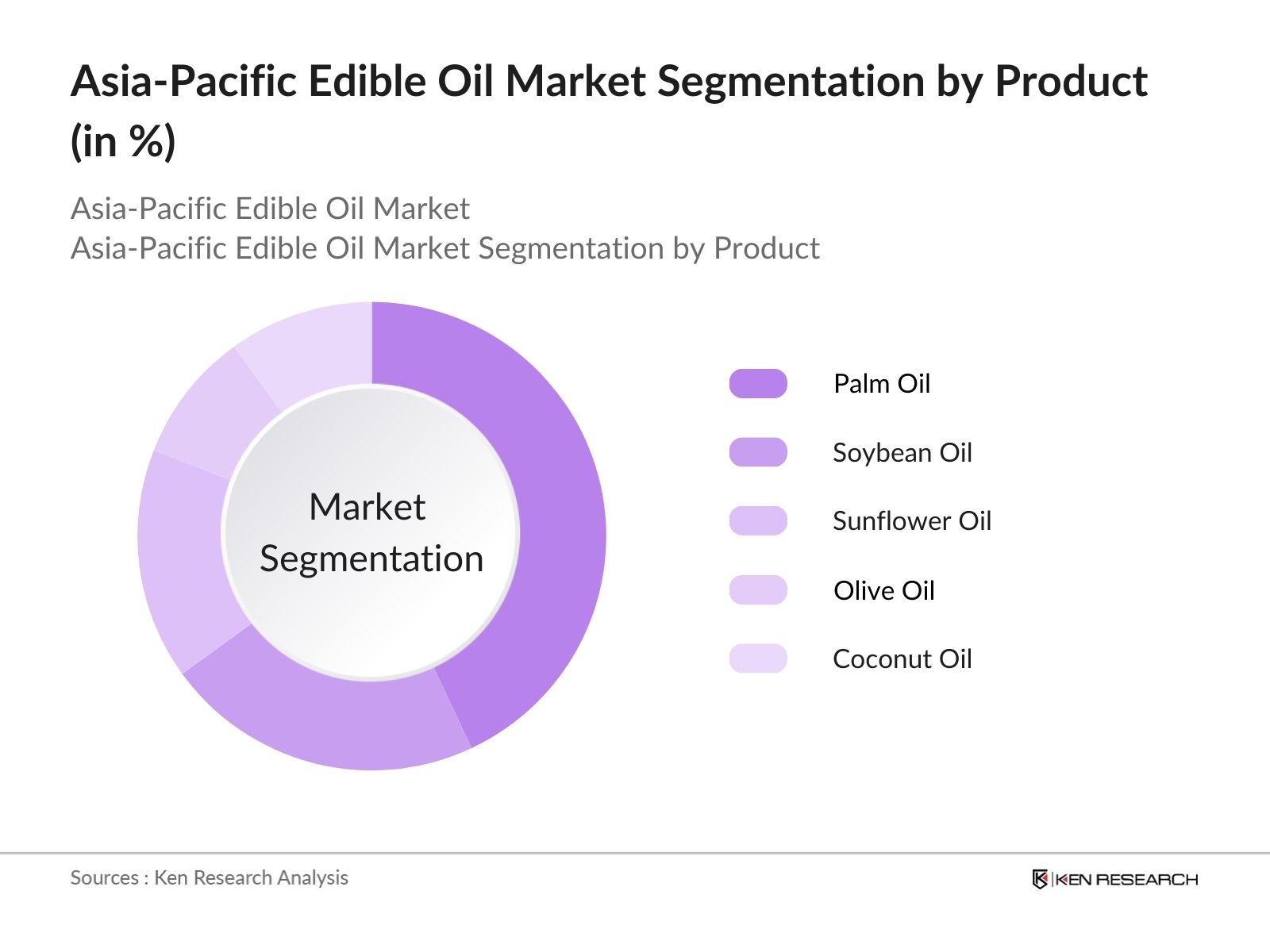
- By Product Type: The Asia-Pacific edible oil market is segmented by product type into palm oil, soybean oil, sunflower oil, olive oil, and coconut oil. Among these, palm oil holds the dominant market share due to its widespread use in both food and non-food industries. Palm oil is extensively used in processed food items, and its versatility extends to cosmetics and biofuels. The abundance of palm oil plantations, particularly in Indonesia and Malaysia, ensures a consistent supply, making it a cost-effective option for manufacturers and consumers alike.
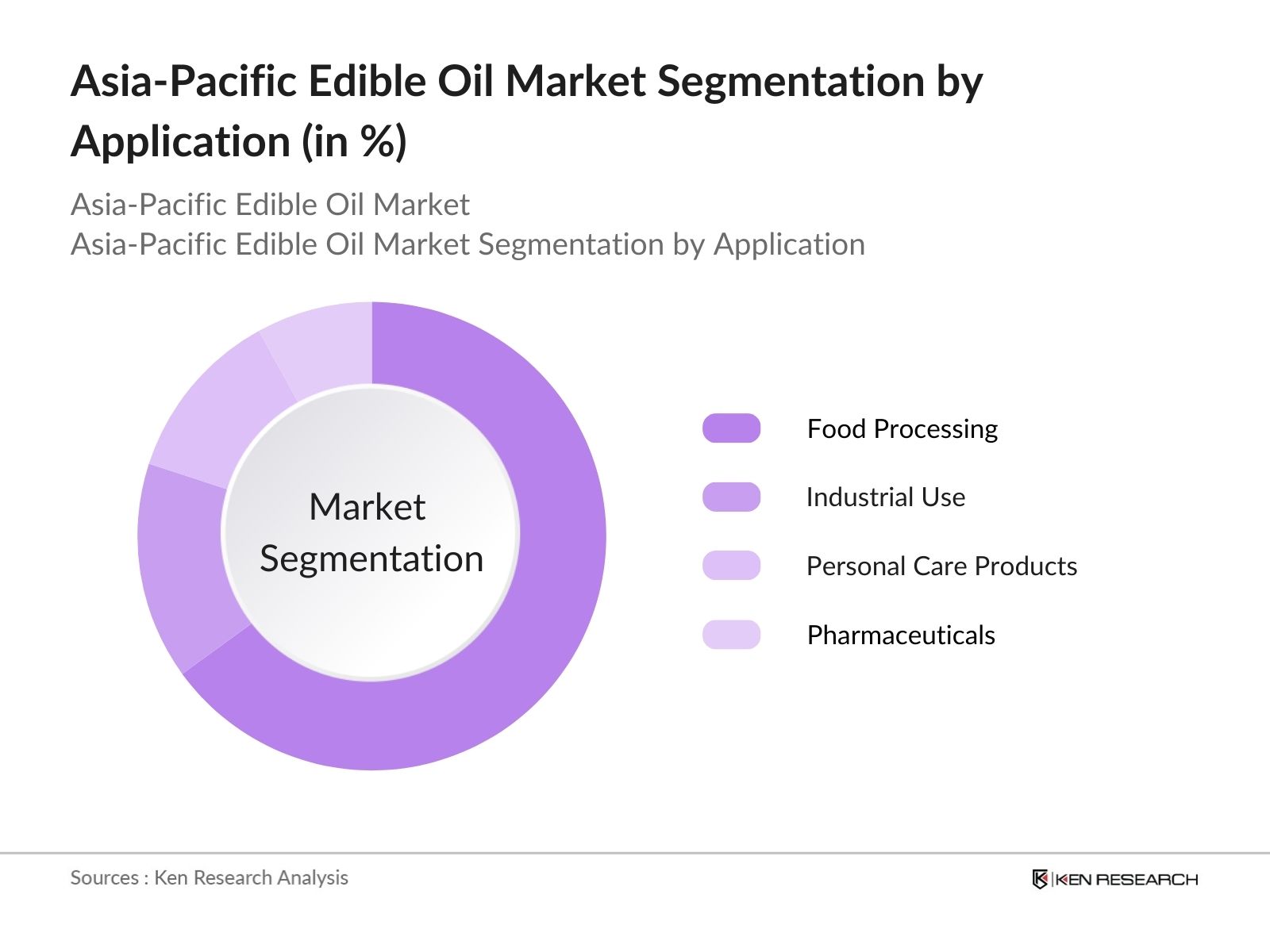
- By Application: The Asia-Pacific edible oil market is segmented by application into food processing, industrial use, personal care products, and pharmaceuticals. Food processing dominates the market due to the rising demand for edible oils in cooking, frying, and food preparation. The growing trend of convenience foods and ready-to-eat meals has accelerated the use of oils in food processing industries across the region. Furthermore, with the expansion of the fast-food sector and the increasing influence of Western diets, the demand for oils in food applications is expected to remain high.
Asia-Pacific Edible Oil Market Competitive Landscape
The Asia-Pacific edible oil market is dominated by a mix of global and regional players who lead in production, processing, and distribution. These companies have control over supply chains, raw material sourcing, and price-setting mechanisms. Additionally, many companies are investing in sustainable practices and refining techniques to meet the growing demand for healthier and environmentally friendly oil options.
|
Company |
Establishment Year |
Headquarters |
Revenue (USD Bn) |
Market Share |
Product Portfolio |
Sustainability Initiatives |
Production Capacity |
Global Reach |
|
Wilmar International |
1991 |
Singapore |
- |
- |
- |
- |
- |
- |
|
Cargill, Inc. |
1865 |
USA |
- |
- |
- |
- |
- |
- |
|
Archer Daniels Midland |
1902 |
USA |
- |
- |
- |
- |
- |
- |
|
Sime Darby Plantation Berhad |
2007 |
Malaysia |
- |
- |
- |
- |
- |
- |
|
Bunge Limited |
1818 |
USA |
- |
- |
- |
- |
- |
- |
Asia-Pacific Edible Oil Market Analysis
Asia-Pacific Edible Oil Market Growth Drivers
- Changing Dietary Preferences: In the Asia-Pacific region, urbanization has led to a notable shift in dietary patterns, with increased consumption of plant-based oils such as olive, sunflower, and canola oil. According to World Bank data, Asias urban population reached over 2.37 billion in 2022, driving demand for healthier oil options. Additionally, with a growing focus on reducing saturated fats in diets, consumers are opting for oils that are rich in omega-3 and polyunsaturated fats, driving the transition from traditional oils like palm oil. These trends are further supported by government campaigns promoting healthier eating habits across the region.
- Urbanization and Industrialization: Urbanization and industrialization in the Asia-Pacific region have fueled the expansion of the edible oil sector. Countries like India and China have witnessed rapid industrial growth with their urban population reaching 483 million and 900 million, respectively, in 2023. This has spurred higher consumption of edible oils due to an increase in packaged and ready-to-eat foods. Moreover, the demand for higher-grade oils has surged with growing middle-class incomes. Rising industrial-scale food processing and an expanding HoReCa (Hotel, Restaurant, Catering) sector contribute to the higher consumption of refined edible oils.
- Rising Health Consciousness: Rising health consciousness is another growth driver in the edible oil market in Asia-Pacific. Countries such as Japan, South Korea, and Australia are seeing increased demand for healthy oils like avocado, olive, and cold-pressed oils due to their perceived health benefits. According to the IMF, healthcare expenditure in Australia, for example, reached USD 185 billion in 2023, underscoring the publics investment in health and wellness. As consumers in these countries become more health-aware, the demand for oils free of trans-fats and high in healthy fats is on the rise. IMF.
Asia-Pacific Edible Oil Market Challenges
- Fluctuations in Raw Material Prices: The edible oil market in Asia-Pacific is highly susceptible to fluctuations in raw material prices due to varying supply levels, climate change, and geopolitical tensions. In 2023, soybean prices rose sharply by over USD 150 per metric ton due to reduced yields from major producing countries such as Brazil and the U.S., exacerbated by trade restrictions. Palm oil prices, driven by unpredictable weather patterns and global demand, also saw volatility. This unpredictability hampers the margins of processors and manufacturers in the region, making it difficult for companies to maintain price stability.
- Environmental Concerns Related to Palm Oil Production: Palm oil, a major edible oil in the region, faces environmental scrutiny. Indonesia and Malaysia, the worlds largest producers, account for over 85 million tons of palm oil production in 2023, but the environmental damage due to deforestation and biodiversity loss remains a critical issue. Governments and environmental groups are pushing for more sustainable practices, as the environmental costs have led to trade barriers, especially in Western markets. However, sustainable certification initiatives like RSPO (Roundtable on Sustainable Palm Oil) are slowly gaining traction but remain challenging to implement on a wide scale.
Asia-Pacific Edible Oil Market Future Outlook
Over the next five years, the Asia-Pacific edible oil market is expected to grow, driven by increasing urbanization, changing dietary preferences, and continuous government support for oilseed production. The demand for healthier oil alternatives, such as olive and sunflower oil, is expected to grow as consumers become more health-conscious. Furthermore, innovations in oil extraction techniques and the rising trend of organic and non-GMO oils will likely play a key role in market expansion. Countries like Indonesia and Malaysia are expected to maintain their dominance in palm oil production, while India and China will continue to be the largest consumers.
Asia-Pacific Edible Oil Market Opportunities
- Emerging Export Markets: Emerging markets, particularly in Africa and the Middle East, offer export opportunities for Asia-Pacific edible oil producers. In 2023, Asia-Pacific nations like Malaysia and Indonesia exported 46 million tons of palm oil to countries in the Middle East and Africa, where growing populations and industrialization have increased demand for edible oils. These regions represent key growth markets for Asia-Pacific producers looking to expand beyond their traditional export destinations. Investment in logistics and trade partnerships will be crucial in leveraging these opportunities.
- Investment in Oilseed Processing Technology: There is considerable opportunity for growth through investments in oilseed processing technologies, particularly in countries like India and China. In 2023, Chinas government invested USD 5 billion in modernizing its agricultural and processing infrastructure, aimed at boosting domestic oilseed production and refining capacity. The adoption of efficient oil extraction and refining technologies could improve yields and reduce wastage, addressing both supply chain issues and sustainability concerns. Countries are increasingly investing in technology to optimize the value chain from oilseed cultivation to processing.
Scope of the Report
|
Product Type |
Palm Oil Soybean Oil Sunflower Oil Olive Oil Coconut Oil |
|
Source |
Plant-Based Oils Animal-Based Oils Synthetic Oils |
|
Application |
Food Processing Industrial Use Personal Care Products Pharmaceuticals |
|
Distribution Channel |
Supermarkets/Hypermarkets Specialty Stores Online Retail Direct Sales |
|
Country |
China India Japan Australia ASEAN Countries |
Products
Key Target Audience
Edible Oil Manufacturers
Oilseed Processors
Banks and Financial Institutions
Food and Beverage Companies
Personal Care Product Manufacturers
Government and Regulatory Bodies (Food Safety and Standards Authority of India, China Food and Drug Administration)
Retail and Supermarket Chains
Investors and Venture Capitalist Firms
Pharmaceutical Companies
Companies
Major Players in the Asia-Pacific Edible Oil Market
Wilmar International Limited
Cargill, Inc.
Archer Daniels Midland Company
Sime Darby Plantation Berhad
Bunge Limited
Marico Limited
Adani Wilmar Limited
Olam International
IOI Corporation Berhad
AAK AB
Fuji Oil Holdings Inc.
Ruchi Soya Industries Ltd.
PT Astra Agro Lestari Tbk
Pacific Oils and Fats Industries Limited
Golden Agri-Resources Ltd
Table of Contents
1. Asia-Pacific Edible Oil Market Overview
1.1. Definition and Scope
1.2. Market Taxonomy
1.3. Market Growth Rate
1.4. Market Segmentation Overview
2. Asia-Pacific Edible Oil Market Size (In USD Bn)
2.1. Historical Market Size
2.2. Year-On-Year Growth Analysis
2.3. Key Market Developments and Milestones
3. Asia-Pacific Edible Oil Market Analysis
3.1. Growth Drivers (Government Initiatives, Population Growth, and Rising Demand for Healthy Oils)
3.1.1. Changing Dietary Preferences
3.1.2. Urbanization and Industrialization
3.1.3. Rising Health Consciousness
3.1.4. Government Subsidies for Oilseed Production
3.2. Market Challenges (Supply Chain Constraints, Price Volatility, and Environmental Impact)
3.2.1. Fluctuations in Raw Material Prices
3.2.2. Environmental Concerns Related to Palm Oil Production
3.2.3. Lack of Technological Advancements in Refining
3.2.4. Trade Restrictions and Tariffs
3.3. Opportunities (Innovation in Oil Blends, Organic and Non-GMO Oil Demand, Export Opportunities)
3.3.1. Emerging Export Markets
3.3.2. Investment in Oilseed Processing Technology
3.3.3. Expansion into Untapped Rural Markets
3.4. Trends (Shift Toward Cold-Pressed Oils, Increased Focus on Sustainable Production)
3.4.1. Demand for Cold-Pressed and Virgin Oils
3.4.2. Growing Focus on Traceability and Sustainability
3.4.3. Rising Popularity of Organic and Non-GMO Oils
3.4.4. Integration of Technology for Quality Assurance
3.5. Government Regulation (Edible Oil Standards, Import Policies, and Subsidies)
3.5.1. Asia-Pacific Edible Oil Standards and Certifications
3.5.2. Government Subsidies for Domestic Oilseed Farming
3.5.3. Tariffs and Import Regulations on Edible Oils
3.5.4. Food Safety and Quality Control Regulations
3.6. SWOT Analysis
3.7. Stake Ecosystem
3.8. Porters Five Forces
3.9. Competition Ecosystem
4. Asia-Pacific Edible Oil Market Segmentation
4.1. By Product Type (In Value %)
4.1.1. Palm Oil
4.1.2. Soybean Oil
4.1.3. Sunflower Oil
4.1.4. Olive Oil
4.1.5. Coconut Oil
4.2. By Source (In Value %)
4.2.1. Plant-Based Oils
4.2.2. Animal-Based Oils
4.2.3. Synthetic Oils
4.3. By Application (In Value %)
4.3.1. Food Processing
4.3.2. Industrial Use
4.3.3. Personal Care Products
4.3.4. Pharmaceuticals
4.4. By Distribution Channel (In Value %)
4.4.1. Supermarkets/Hypermarkets
4.4.2. Specialty Stores
4.4.3. Online Retail
4.4.4. Direct Sales
4.5. By Country (In Value %)
4.5.1. China
4.5.2. India
4.5.3. Japan
4.5.4. Australia
4.5.5. ASEAN Countries
5. Asia-Pacific Edible Oil Market Competitive Analysis
5.1. Detailed Profiles of Major Companies
5.1.1. Wilmar International Limited
5.1.2. Cargill, Inc.
5.1.3. Archer Daniels Midland Company
5.1.4. Sime Darby Plantation Berhad
5.1.5. Bunge Limited
5.1.6. Marico Limited
5.1.7. Adani Wilmar Limited
5.1.8. Olam International
5.1.9. IOI Corporation Berhad
5.1.10. AAK AB
5.1.11. Fuji Oil Holdings Inc.
5.1.12. Ruchi Soya Industries Ltd.
5.1.13. PT Astra Agro Lestari Tbk
5.1.14. Pacific Oils and Fats Industries Limited
5.1.15. Golden Agri-Resources Ltd
5.2. Cross Comparison Parameters (Number of Employees, Headquarters, Inception Year, Revenue, Product Portfolio, Production Capacity, Market Share, Sustainability Initiatives)
5.3. Market Share Analysis
5.4. Strategic Initiatives
5.5. Mergers and Acquisitions
5.6. Investment Analysis
5.7. Venture Capital Funding
5.8. Government Grants
5.9. Private Equity Investments
6. Asia-Pacific Edible Oil Market Regulatory Framework
6.1. Food and Safety Standards
6.2. Import and Export Regulations
6.3. Compliance and Certification Processes
7. Asia-Pacific Edible Oil Future Market Size (In USD Bn)
7.1. Future Market Size Projections
7.2. Key Factors Driving Future Market Growth
8. Asia-Pacific Edible Oil Future Market Segmentation
8.1. By Product Type (In Value %)
8.2. By Source (In Value %)
8.3. By Application (In Value %)
8.4. By Distribution Channel (In Value %)
8.5. By Country (In Value %)
9. Asia-Pacific Edible Oil Market Analysts Recommendations
9.1. TAM/SAM/SOM Analysis
9.2. Customer Cohort Analysis
9.3. Marketing Initiatives
9.4. White Space Opportunity Analysis
Research Methodology
Step 1: Identification of Key Variables
The initial phase involves mapping out the entire edible oil value chain across the Asia-Pacific region. Using a combination of proprietary and public databases, the critical variables influencing market dynamics, such as production capacity, consumption patterns, and price fluctuations, are identified.
Step 2: Market Analysis and Construction
This phase focuses on gathering and analyzing historical data from primary sources, such as government records and company financials. Detailed research is conducted to determine edible oil consumption rates, market penetration, and revenue generation for each segment and country within the Asia-Pacific region.
Step 3: Hypothesis Validation and Expert Consultation
Industry experts and stakeholders, including manufacturers and distributors, are consulted through interviews. Their insights into production challenges, market trends, and future projections help validate the market estimates and refine the data.
Step 4: Research Synthesis and Final Output
The final phase synthesizes data from the bottom-up approach, combining input from manufacturers, suppliers, and regulatory bodies. This ensures an accurate and comprehensive analysis of the Asia-Pacific edible oil market.
Frequently Asked Questions
01. How big is the Asia-Pacific Edible Oil Market?
The Asia-Pacific edible oil market is valued at USD 18.7 billion, driven by increasing demand for various oils like palm and soybean, and supported by government initiatives in the region.
02. What are the challenges in the Asia-Pacific Edible Oil Market?
Challenges in the Asia-Pacific edible oil market include price volatility in raw materials, environmental concerns regarding palm oil production, and supply chain constraints affecting oilseed availability.
03. Who are the major players in the Asia-Pacific Edible Oil Market?
Key players in the Asia-Pacific edible oil market include Wilmar International, Cargill, Archer Daniels Midland, Sime Darby Plantation, and Bunge Limited, with dominance due to extensive distribution networks and sustainable practices.
04. What are the growth drivers of the Asia-Pacific Edible Oil Market?
The Asia-Pacific edible oil market is propelled by factors such as rising urbanization, population growth, and the increasing demand for healthy oils, along with government subsidies for domestic oilseed production.
Why Buy From Us?

What makes us stand out is that our consultants follows Robust, Refine and Result (RRR) methodology. i.e. Robust for clear definitions, approaches and sanity checking, Refine for differentiating respondents facts and opinions and Result for presenting data with story

We have set a benchmark in the industry by offering our clients with syndicated and customized market research reports featuring coverage of entire market as well as meticulous research and analyst insights.

While we don't replace traditional research, we flip the method upside down. Our dual approach of Top Bottom & Bottom Top ensures quality deliverable by not just verifying company fundamentals but also looking at the sector and macroeconomic factors.

With one step in the future, our research team constantly tries to show you the bigger picture. We help with some of the tough questions you may encounter along the way: How is the industry positioned? Best marketing channel? KPI's of competitors? By aligning every element, we help maximize success.

Our report gives you instant access to the answers and sources that other companies might choose to hide. We elaborate each steps of research methodology we have used and showcase you the sample size to earn your trust.

If you need any support, we are here! We pride ourselves on universe strength, data quality, and quick, friendly, and professional service.