















Asia Pacific Electric Bike Kit Market Outlook to 2030
Region:Asia
Author(s):Yogita Sahu
Product Code:KROD5017
November 2024
84
About the Report
Asia Pacific Electric Bike Kit Market Overview
- The Asia Pacific Electric Bike Kit market, valued at USD 40.59 billion, has experienced rapid growth in recent years, driven primarily by increasing environmental awareness and government incentives promoting clean energy alternatives. The electric bike kits provide an affordable solution for converting traditional bikes into electric ones, reducing the reliance on fuel-based transportation.
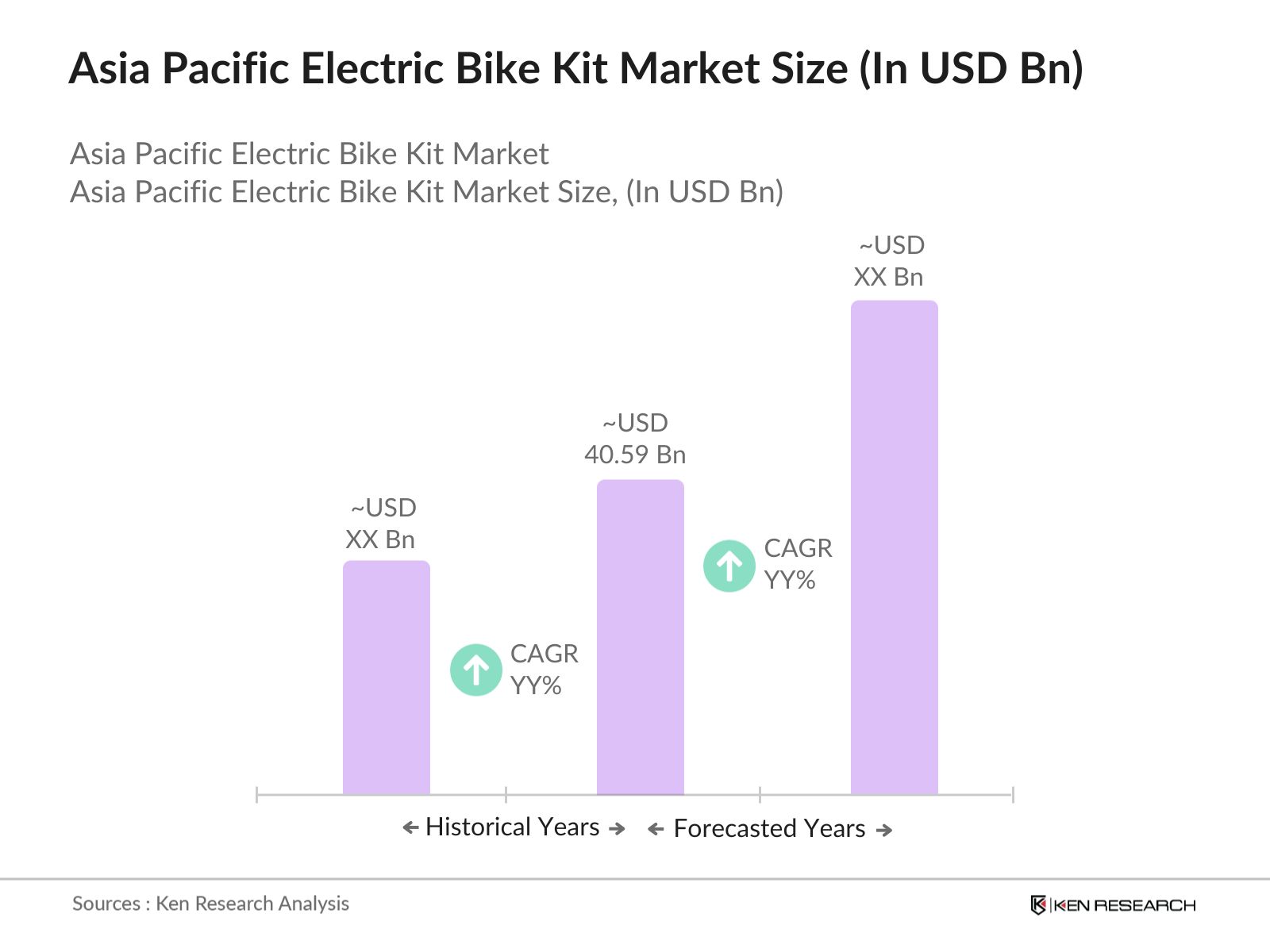
- China, India, and Japan are the dominant countries in the market. China, in particular, leads due to its extensive manufacturing capacity, advanced technological developments, and government policies favoring electric mobility. India follows closely, driven by rising consumer demand for affordable electric solutions and supportive government regulations aimed at reducing urban pollution.
- The Indian governments FAME II initiative, launched to promote the adoption of electric vehicles, earmarked INR 10,000 crore for subsidies, with a considerable portion allocated for electric two-wheelers, including bike kits. In 2024, over 750,000 electric bike kits were sold under the scheme, reflecting the governments push towards eco-friendly transportation.
Asia Pacific Electric Bike Kit Market Segmentation
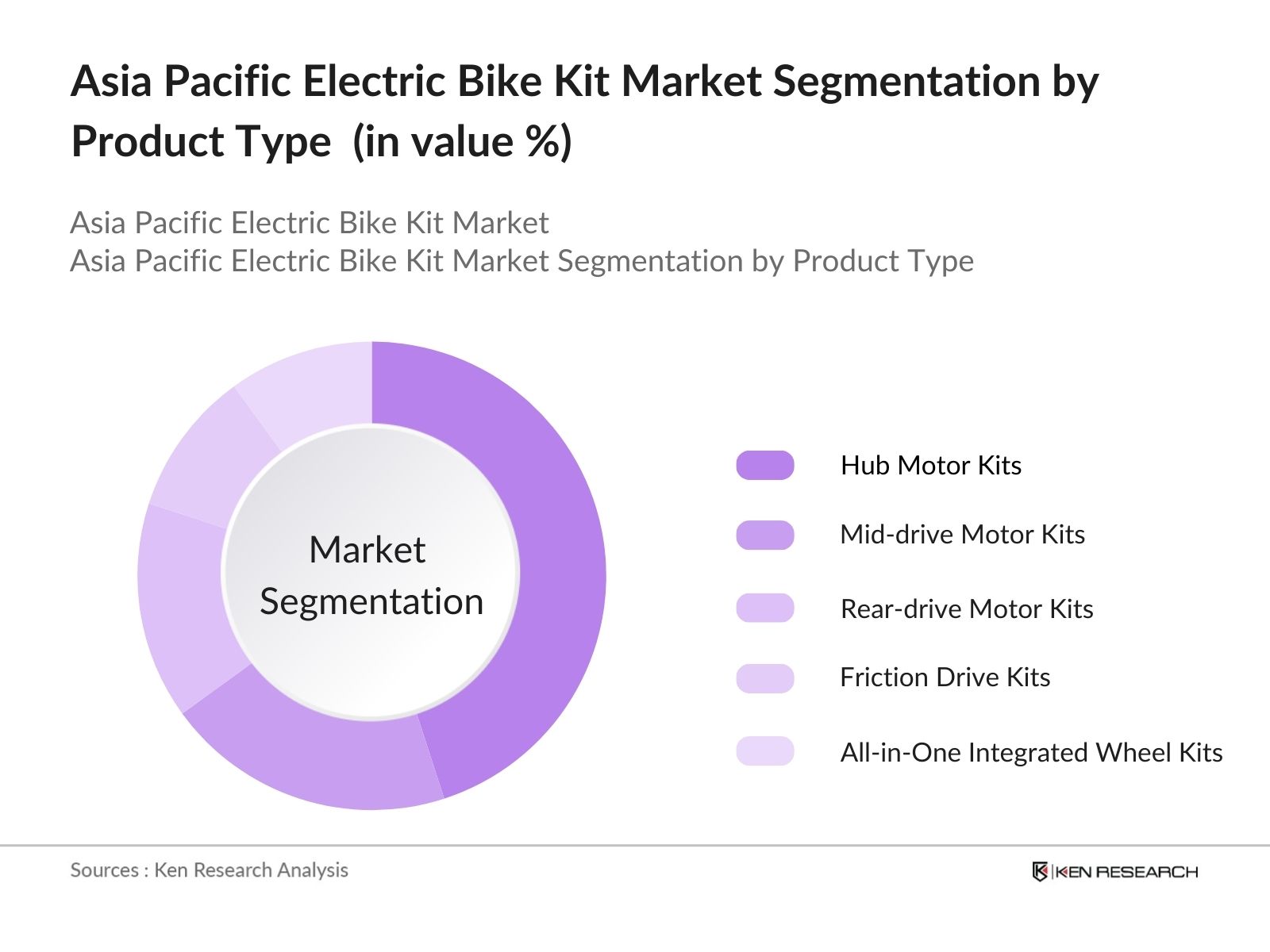
By Product Type: The market is segmented by product type into hub motor kits, mid-drive motor kits, rear-drive motor kits, friction drive kits, and all-in-one integrated wheel kits. The hub motor kits dominate the product type segmentation due to their ease of installation and cost-effectiveness. Consumers, especially in China and India, prefer hub motor kits as they are suitable for urban commuting and offer adequate performance at a lower cost.
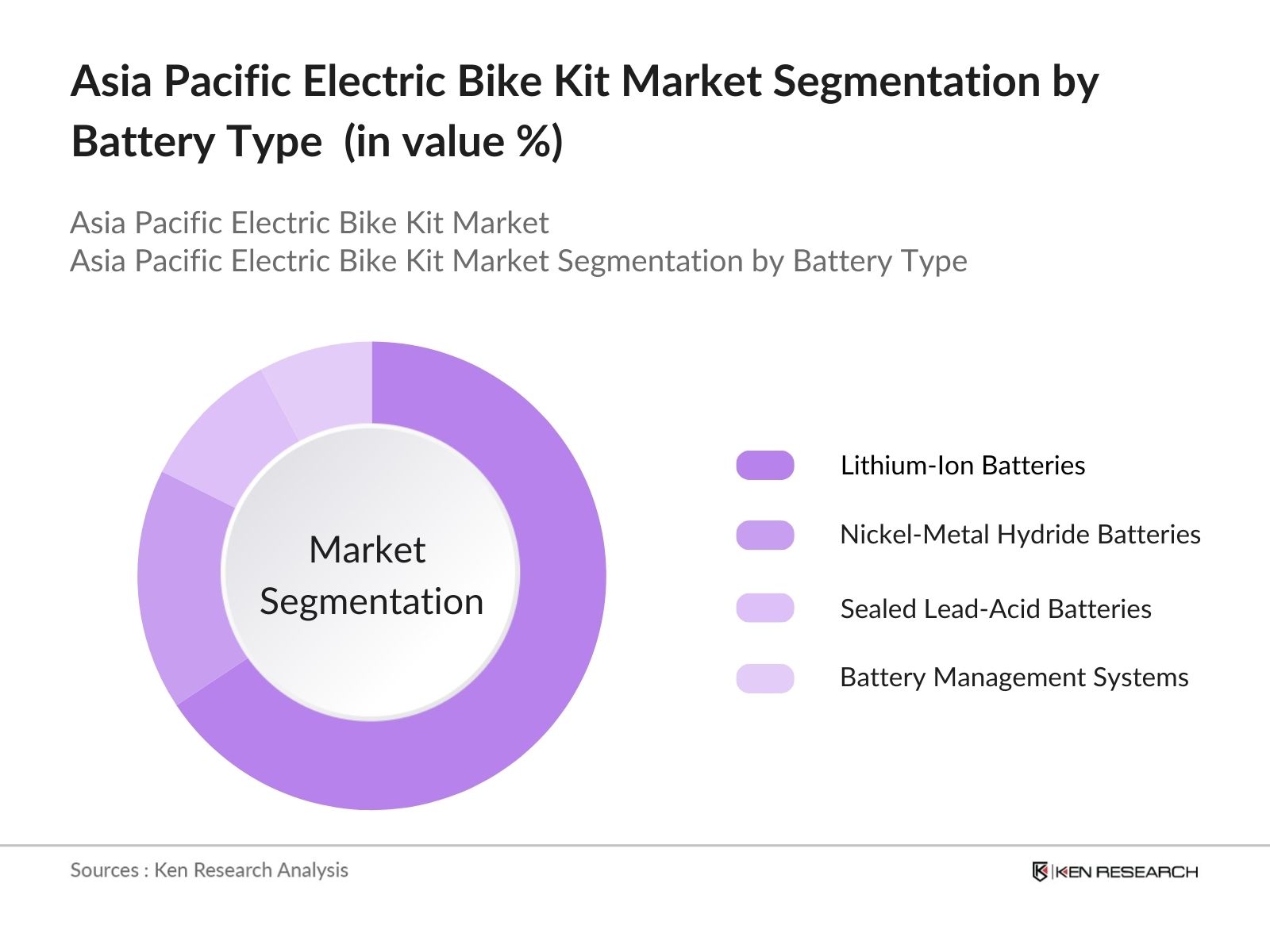
By Battery Type: The market is also segmented by battery type into lithium-ion batteries, nickel-metal hydride batteries, sealed lead-acid batteries, and battery management systems. Lithium-ion batteries lead the market share due to their lightweight, high energy density, and long life cycles. These batteries are preferred for their efficient performance and quick charging capabilities, making them the ideal choice for most electric bike kits.
Asia Pacific Electric Bike Kit Market Competitive Landscape
The market is characterized by the presence of several key players, both global and local, that dominate due to their strong product offerings, technological innovations, and strategic expansions.
|
Company Name |
Establishment Year |
Headquarters |
No. of Employees |
Global Reach |
Product Portfolio |
R&D Investments |
Revenue (USD) |
Manufacturing Locations |
|
Bosch eBike Systems |
2009 |
Stuttgart, Germany |
||||||
|
Shimano Inc. |
1921 |
Osaka, Japan |
||||||
|
Yamaha Motor Co., Ltd. |
1955 |
Shizuoka, Japan |
||||||
|
Bafang Electric |
2003 |
Suzhou, China |
||||||
|
Panasonic Corporation |
1918 |
Osaka, Japan |
Asia Pacific Electric Bike Kit Market Analysis
Market Growth Drivers
- Rising Adoption of Electric Vehicles in Urban Centers: In 2024, major cities across Asia Pacific, such as Beijing and Tokyo, have registered over 3.5 million new electric vehicles, with 650,000 units of these being electric bikes, according to local transport authorities. This trend is accelerating due to governments' increasing focus on reducing carbon emissions, and electric bike kits offer an affordable and sustainable alternative to full electric vehicle purchases, contributing to an expected increase in demand for retrofit solutions.
- Government Subsidies for Electric Vehicles and Components: Countries like China and India have implemented subsidies for electric vehicle components, including kits. In China, subsidies of up to 6,000 are available for electric vehicles, leading to a surge in the retrofitting of bicycles into electric bikes, with nearly 1 million retrofits in 2024 alone. The Indian government also offers INR 15,000 rebates for e-bike kits under the Faster Adoption and Manufacturing of Hybrid and Electric Vehicles (FAME) scheme.
- Increased Demand in Tourist Destinations: Tourism hotspots like Bali and Phuket are increasingly utilizing electric bikes for eco-friendly tourism. In 2024, electric bike rentals have accounted more rentals monthly in these regions. The growing use of electric bike kits to retrofit traditional bicycles for rental purposes has helped local businesses capitalize on this demand while reducing operational costs associated with fuel-based vehicles.
Market Challenges
- Inadequate Charging Infrastructure in Developing Countries: Despite government efforts, electric vehicle charging infrastructure remains underdeveloped in countries like India and Vietnam. With only 7,500 public charging stations across the two nations in 2024, the limited availability of charging points reduces the appeal of electric bikes and retrofitted kits, especially for long-distance commuters who require reliable charging options.
- Regulatory Challenges and Compliance Issues: The varying regulations across Asia Pacific present challenges for electric bike kits. For instance, in India, electric bikes with a motor power exceeding 250W are subject to stringent registration requirements. In 2024, over 15,000 electric bikes were seized for non-compliance with local regulations, causing hesitation among consumers and businesses about adopting electric bike kits.
Asia Pacific Electric Bike Kit Market Future Outlook
Over the next five years, the Asia Pacific Electric Bike Kit industry is expected to experience growth, driven by continuous technological innovations, expanding urbanization, and increased government support for electric mobility solutions. Countries like China and India are likely to dominate, given their large populations and aggressive policies promoting electric vehicles (EVs).
Future Market Opportunities
- Expansion of Modular Electric Bike Kits for Customization: Over the next five years, modular kits will dominate the market, allowing consumers to upgrade different components based on their specific requirements. Companies like Bafang and Bosch will lead the trend by introducing modular motor and battery options for greater versatility. Governments in markets like Australia and Japan are expected to introduce incentives for customizable kits as part of their EV strategies.
- Increased Government Investment in Charging Infrastructure: By 2028, it is estimated that Asia Pacific will see over 500,000 new electric vehicle charging stations, with at least 50,000 dedicated specifically to two-wheelers like electric bikes. This is expected to further increase demand for retrofitting traditional bicycles, especially in countries with large urban populations such as India and China.
Scope of the Report
|
By Product Type |
Hub Motor Kits Mid-drive Motor Kits Rear-drive Motor Kits Friction Drive Kits All-in-One Integrated Wheel Kits |
|
By Battery Type |
Lithium-Ion Batteries Nickel-Metal Hydride Batteries Sealed Lead-Acid Batteries Battery Management Systems |
|
By Application |
Personal Use Commercial Use (Delivery, Logistics) Leisure and Sports |
|
By Power Output |
Less than 250W 250W to 500W Above 500W |
|
By Region |
China India Japan South Korea Australia |
Products
Key Target Audience Organizations and Entities Who Can Benefit by Subscribing This Report:
Electric Vehicle Manufacturers
Battery Manufacturers
Electric Bike Component Suppliers
Urban Mobility Solution Providers
Investments and Venture Capitalist Firms
Government and Regulatory Bodies (e.g., Ministry of Transportation, Ministry of Industry and Information Technology)
Banks and Financial Institution
Bike Rental and Sharing Companies
Companies
Players Mentioned in the Report:
Bosch eBike Systems
Shimano Inc.
Yamaha Motor Co., Ltd.
Bafang Electric
Panasonic Corporation
Dapu Motors
Brose Fahrzeugteile SE & Co. KG
Falco eMotors
Go SwissDrive AG
Golden Motor Technology Co., Ltd.
TDCM Corporation
TranzX
Tongsheng Electric Bike
CNEBIKES CO., Ltd.
EBIKELING
Table of Contents
Asia Pacific Electric Bike Kit Market Overview
1.1. Definition and Scope
1.2. Market Taxonomy
1.3. Market Growth Rate (Annual Growth %)
1.4. Market Segmentation Overview (Product Type, Application, Region)
Asia Pacific Electric Bike Kit Market Size (In USD Bn)
2.1. Historical Market Size
2.2. Year-On-Year Growth Analysis
2.3. Key Market Developments and Milestones
Asia Pacific Electric Bike Kit Market Analysis
3.1. Growth Drivers (Market-specific)
3.1.1. Rising Consumer Demand for Sustainable Transport Solutions
3.1.2. Government Subsidies and Incentives for Electric Vehicle Adoption
3.1.3. Increasing Cost of Fuel and Maintenance of Traditional Motorcycles
3.1.4. Expansion of Urban Mobility Infrastructure
3.2. Market Challenges (Market-specific)
3.2.1. High Cost of E-Bike Kits
3.2.2. Limited Battery Range and Charging Infrastructure
3.2.3. Lack of Awareness in Emerging Economies
3.2.4. Complexities in Retrofitting Traditional Bikes
3.3. Opportunities (Market-specific)
3.3.1. Technological Advancements in Battery and Motor Technologies
3.3.2. Expansion in Tier-II and Tier-III Cities
3.3.3. Customization and Modular Design Offerings
3.3.4. Growth of Online and E-commerce Channels for Distribution
3.4. Trends (Market-specific)
3.4.1. Lightweight and Portable E-Bike Kits
3.4.2. Integration of Smart Features (IoT, GPS, App-based Controls)
3.4.3. Rise in Foldable E-Bike Kits for Urban Commuters
3.4.4. Increased Focus on Aesthetic and Ergonomic Designs
3.5. Government Regulation (Market-specific)
3.5.1. E-bike Speed and Power Regulations
3.5.2. Electric Vehicle Incentive Schemes
3.5.3. Safety and Compliance Standards for E-Bike Kits
3.5.4. Import Tariff Regulations on Electric Components
3.6. SWOT Analysis
3.7. Stakeholder Ecosystem (Manufacturers, Distributors, Retailers, End Users)
3.8. Porters Five Forces Analysis
3.9. Competitive Landscape
Asia Pacific Electric Bike Kit Market Segmentation
4.1. By Product Type (In Value %)
4.1.1. Hub Motor Kits
4.1.2. Mid-drive Motor Kits
4.1.3. Rear-drive Motor Kits
4.1.4. Friction Drive Kits
4.1.5. All-in-One Integrated Wheel Kits
4.2. By Battery Type (In Value %)
4.2.1. Lithium-Ion Batteries
4.2.2. Nickel-Metal Hydride Batteries
4.2.3. Sealed Lead-Acid Batteries
4.2.4. Others (Battery Management Systems)
4.3. By Application (In Value %)
4.3.1. Personal Use
4.3.2. Commercial Use (Delivery, Logistics)
4.3.3. Leisure and Sports
4.4. By Power Output (In Value %)
4.4.1. Less than 250W
4.4.2. 250W to 500W
4.4.3. Above 500W
4.5. By Region (In Value %)
4.5.1. China
4.5.2. India
4.5.3. Japan
4.5.4. South Korea
4.5.5. Australia
Asia Pacific Electric Bike Kit Market Competitive Analysis
5.1. Detailed Profiles of Major Companies
5.1.1. Bosch eBike Systems
5.1.2. Bafang Electric
5.1.3. Shimano Inc.
5.1.4. Yamaha Motor Co., Ltd.
5.1.5. Brose Fahrzeugteile SE & Co. KG
5.1.6. Panasonic Corporation
5.1.7. Dapu Motors
5.1.8. TranzX
5.1.9. Falco eMotors
5.1.10. Tongsheng Electric Bike
5.1.11. Go SwissDrive AG
5.1.12. Golden Motor Technology Co., Ltd.
5.1.13. CNEBIKES CO., Ltd.
5.1.14. TDCM Corporation
5.1.15. EBIKELING
5.2. Cross Comparison Parameters (Market-specific: Number of Employees, Headquarters, Revenue, Global Reach, Product Portfolio, Market Share, R&D Investments, Manufacturing Locations)
5.3. Market Share Analysis
5.4. Strategic Initiatives
5.5. Mergers And Acquisitions
5.6. Investment Analysis
5.7. Venture Capital Funding
5.8. Government Grants
5.9. Private Equity Investments
Asia Pacific Electric Bike Kit Market Regulatory Framework
6.1. Certification and Testing Standards for E-bike Kits
6.2. Compliance Requirements for Batteries and Electrical Components
6.3. Regional Trade Agreements and Policies
6.4. Emission and Safety Standards
Asia Pacific Electric Bike Kit Future Market Size (In USD Bn)
7.1. Future Market Size Projections
7.2. Key Factors Driving Future Market Growth
Asia Pacific Electric Bike Kit Future Market Segmentation
8.1. By Product Type (In Value %)
8.2. By Battery Type (In Value %)
8.3. By Application (In Value %)
8.4. By Power Output (In Value %)
8.5. By Region (In Value %)
Asia Pacific Electric Bike Kit Market Analysts Recommendations
9.1. TAM/SAM/SOM Analysis
9.2. Product Positioning and Branding Strategy
9.3. Marketing Campaign Optimization
9.4. White Space Opportunity Analysis
Disclaimer Contact UsResearch Methodology
Step 1: Identification of Key Variables
The research begins by identifying the critical market variables, such as market size, growth drivers, and competitive dynamics. Extensive desk research, including secondary sources like industry reports, is utilized to gather preliminary data on the Asia Pacific Electric Bike Kit market.
Step 2: Market Analysis and Construction
This phase involves analyzing the historical market data to build a detailed market model. Various parameters, including product types, application areas, and regional segmentation, are evaluated to construct an accurate market analysis.
Step 3: Hypothesis Validation and Expert Consultation
To validate market assumptions, consultations with industry experts from major electric bike kit manufacturers are conducted. These interviews help in refining the market hypotheses and ensure the data is accurate.
Step 4: Research Synthesis and Final Output
The final stage synthesizes the insights gathered from primary and secondary research. The findings are structured into actionable insights, providing a comprehensive view of the Asia Pacific Electric Bike Kit market.
Frequently Asked Questions
How big is the Asia Pacific Electric Bike Kit Market?
The Asia Pacific Electric Bike Kit market is valued at USD 40.59 billion, driven by rising environmental concerns and increasing demand for sustainable transportation solutions.
What are the challenges in the Asia Pacific Electric Bike Kit Market?
Challenges in the Asia Pacific Electric Bike Kit market include the high cost of electric bike kits, lack of infrastructure for battery charging, and limited awareness in developing economies.
Who are the major players in the Asia Pacific Electric Bike Kit Market?
Key players in the Asia Pacific Electric Bike Kit market include Bosch eBike Systems, Shimano Inc., Yamaha Motor Co., Ltd., Bafang Electric, and Panasonic Corporation, dominating due to their technological advancements and expansive product portfolios.
What are the growth drivers of the Asia Pacific Electric Bike Kit Market?
The Asia Pacific Electric Bike Kit market is driven by government incentives promoting electric mobility, advancements in battery technology, and the rising demand for eco-friendly commuting solutions in densely populated cities.
What are the trends in the Asia Pacific Electric Bike Kit Market?
Key trends in the Asia Pacific Electric Bike Kit market include the development of lightweight electric bike kits, integration of smart features such as IoT and GPS, and the rise in demand for customizable and portable kits.
Why Buy From Us?

What makes us stand out is that our consultants follows Robust, Refine and Result (RRR) methodology. i.e. Robust for clear definitions, approaches and sanity checking, Refine for differentiating respondents facts and opinions and Result for presenting data with story

We have set a benchmark in the industry by offering our clients with syndicated and customized market research reports featuring coverage of entire market as well as meticulous research and analyst insights.

While we don't replace traditional research, we flip the method upside down. Our dual approach of Top Bottom & Bottom Top ensures quality deliverable by not just verifying company fundamentals but also looking at the sector and macroeconomic factors.

With one step in the future, our research team constantly tries to show you the bigger picture. We help with some of the tough questions you may encounter along the way: How is the industry positioned? Best marketing channel? KPI's of competitors? By aligning every element, we help maximize success.

Our report gives you instant access to the answers and sources that other companies might choose to hide. We elaborate each steps of research methodology we have used and showcase you the sample size to earn your trust.

If you need any support, we are here! We pride ourselves on universe strength, data quality, and quick, friendly, and professional service.