
Asia Pacific Electric Bike Market Outlook to 2030
Region:Asia
Author(s):Shreya Garg
Product Code:KROD3222
November 2024
98
About the Report
Asia Pacific Electric Bike Market Overview
- The Asia Pacific Electric Bike market is valued at USD 14 billion, driven by increasing urbanization, rising environmental awareness, and government initiatives promoting eco-friendly transportation. With cities becoming more congested, electric bikes offer an efficient, zero-emission solution for short-distance travel. Government subsidies and tax incentives further support the market's growth, making electric bikes an increasingly popular choice for commuters.
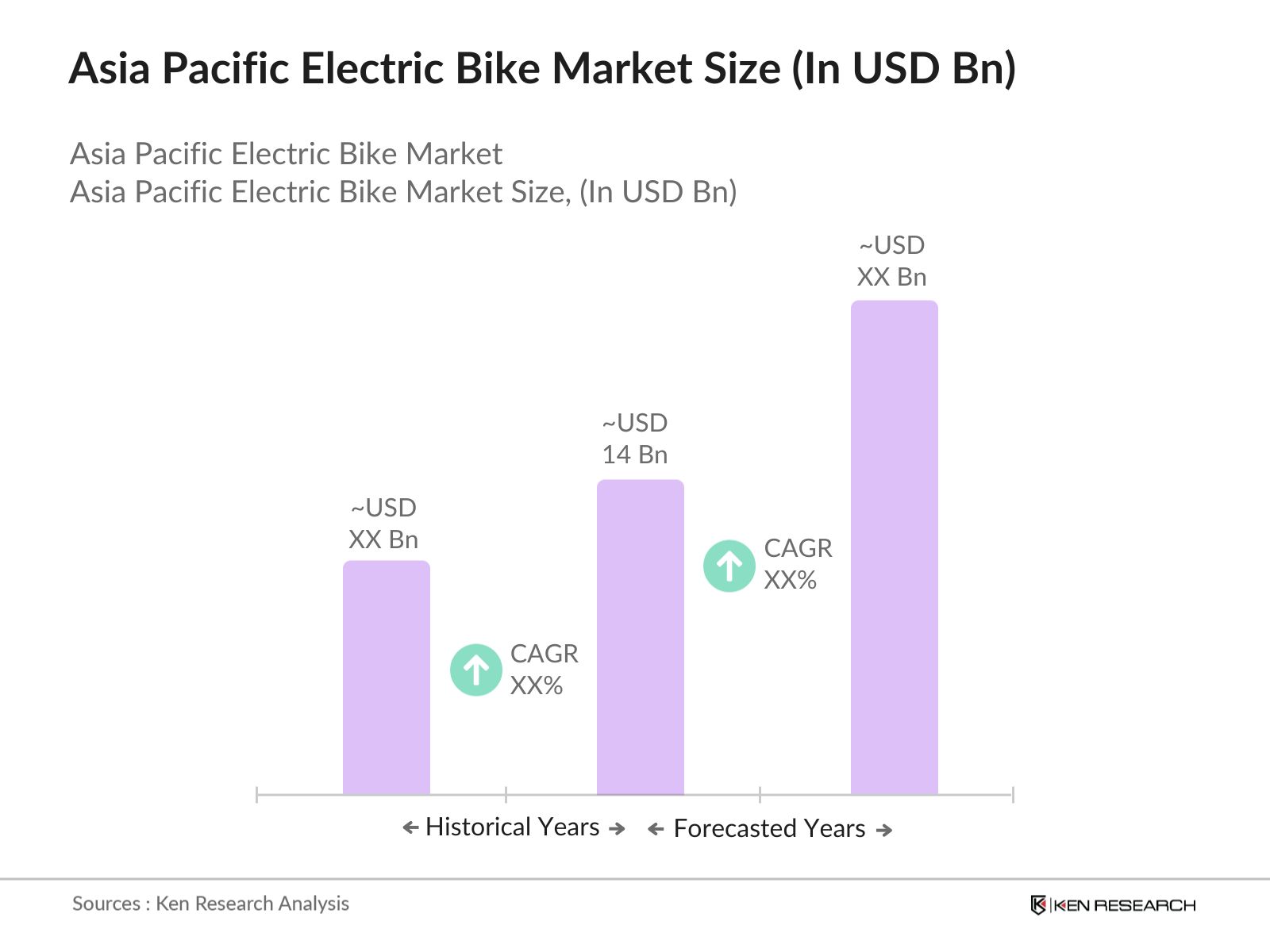
- China, India, and Japan dominate the Asia Pacific electric bike market due to their large populations and advanced manufacturing capabilities. China is the largest producer and consumer of electric bikes, benefiting from its robust infrastructure, cost-effective production, and strong government support for electric vehicles. India's growing middle class and increased focus on environmental sustainability contribute to its market prominence, while Japans technological advancements in battery and motor systems make it a significant player in the region.
- Governments across the Asia Pacific region is implementing national policies to promote electric vehicle (EV) adoption, including electric bikes. In 2024, the Japanese government announced its goal to have 30 million electric vehicles, including electric bikes, on the road by 2030 as part of its Green Growth Strategy. Similarly, South Koreas Ministry of Environment has launched a program offering subsidies of up to KRW 500,000 (USD 400) per electric bike to encourage widespread adoption. These policies are instrumental in driving the growth of the electric bike market.
Asia Pacific Electric Bike Market Segmentation
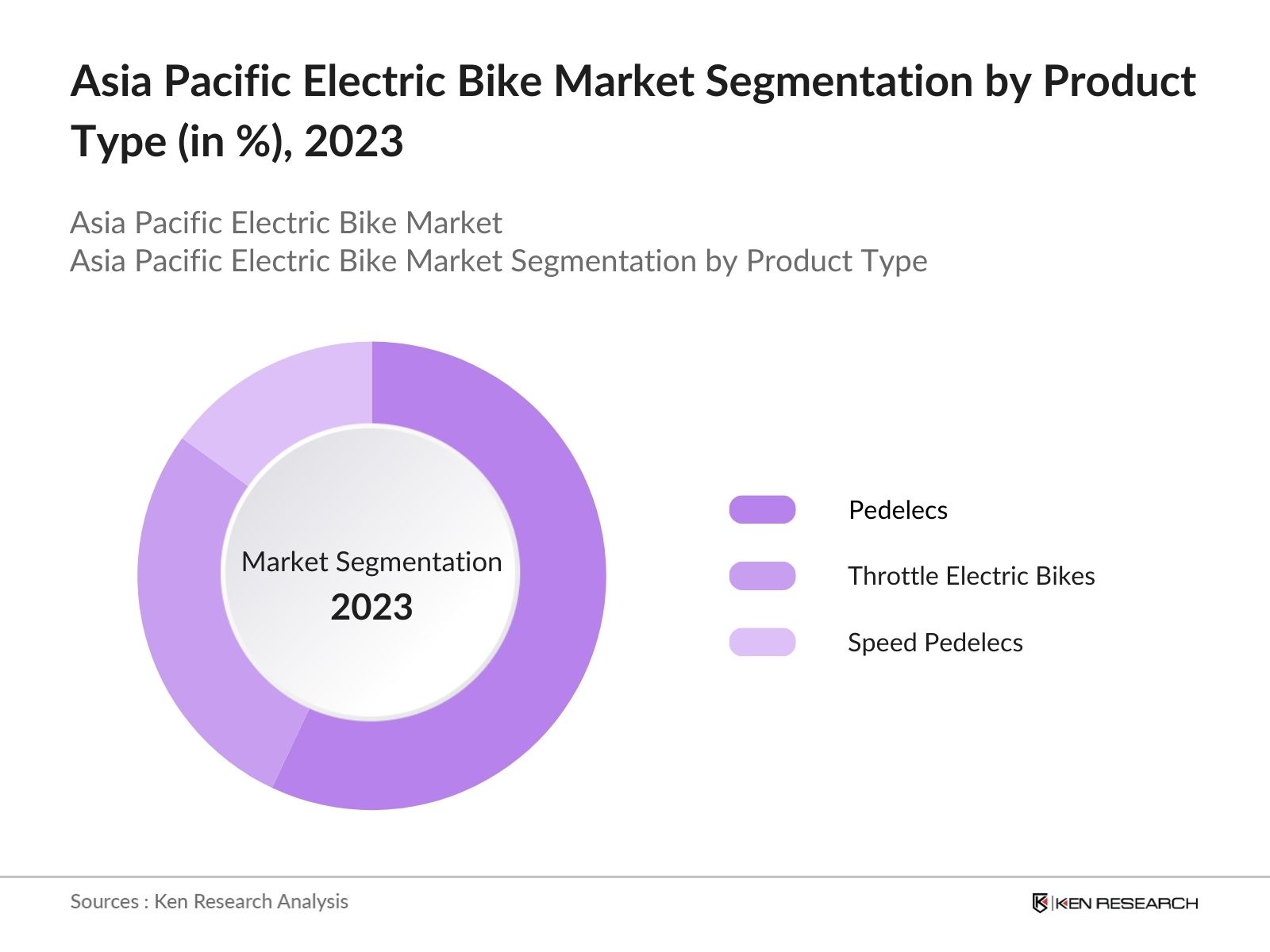
By Product Type: The market is segmented by product type into pedelecs, throttle electric bikes, and speed pedelecs. Among these, pedelecs hold the dominant market share due to their widespread adoption across urban areas. Pedelecs, or pedal-assist electric bikes, offer a comfortable and energy-efficient solution for daily commuting. The combination of manual pedaling and electric assistance provides users with extended travel distances and ease of navigation in congested urban environments. Additionally, government subsidies and tax incentives, particularly in China and India, further drive the dominance of this segment in the market.
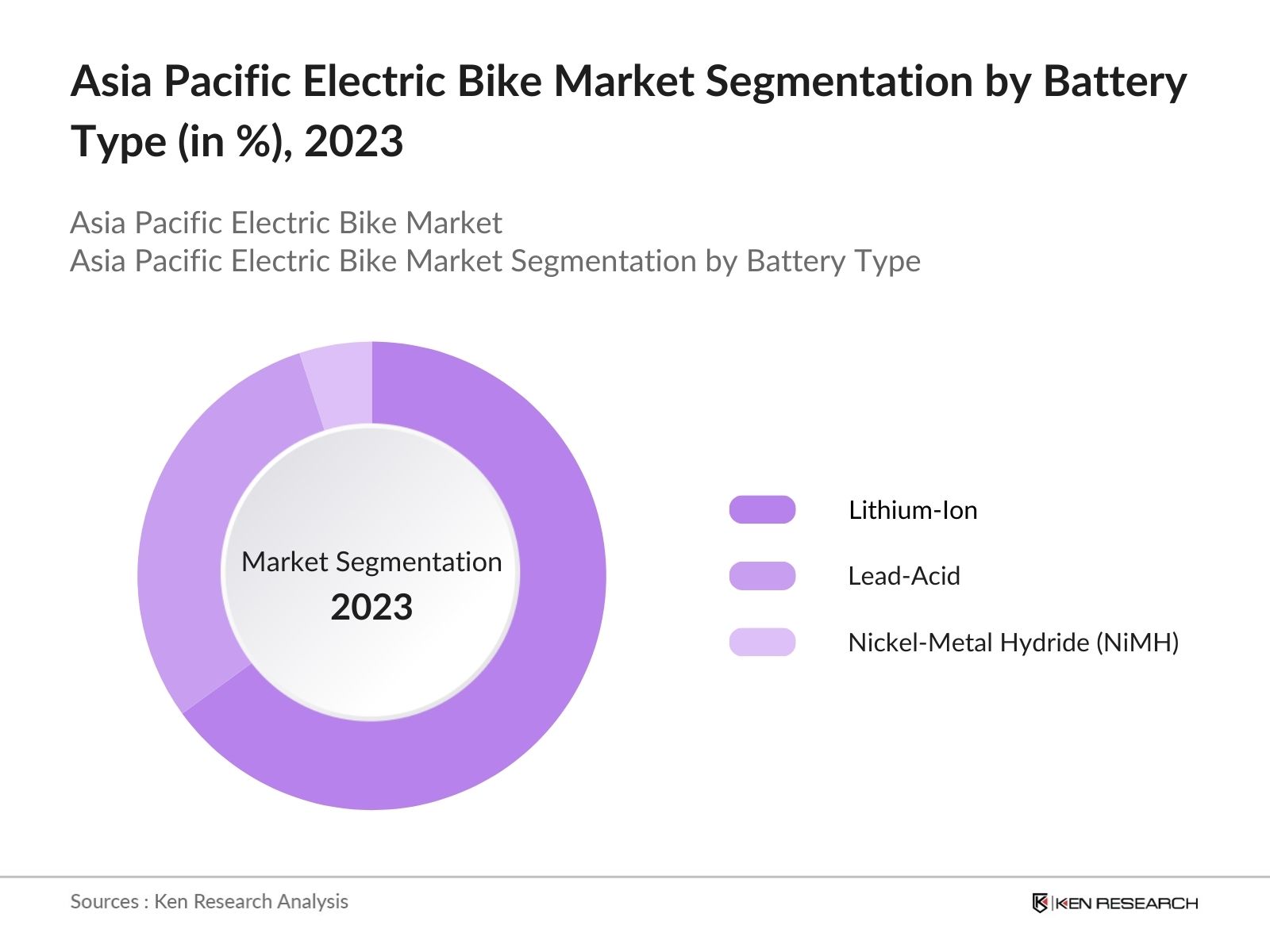
By Battery Type: The market is further segmented by battery type into lithium-ion, lead-acid, and nickel-metal hydride (NiMH) batteries. Lithium-ion batteries dominate the market owing to their high energy density, longer lifecycle, and decreasing production costs. These batteries are more lightweight and compact compared to lead-acid batteries, making them a preferred choice for electric bike manufacturers. Continuous improvements in battery technology, including faster charging times and extended ranges, have contributed to the increasing popularity of lithium-ion batteries in the electric bike market.
Asia Pacific Electric Bike Market Competitive Landscape
The Asia Pacific Electric Bike market is dominated by a mix of regional and global players, each contributing to the market's growth through technological innovation and competitive pricing. These companies focus on developing lightweight models, enhancing battery life, and integrating smart features like GPS and app connectivity. The competitive landscape highlights the dominance of a few major players, particularly in China and Japan. These companies leverage their production capabilities and technological advancements to maintain their market positions.
|
Company |
Year Established |
Headquarters |
Number of Employees |
Revenue (USD Bn) |
Market Share |
Product Portfolio |
Technological Innovation |
Regional Presence |
Pricing Strategy |
|---|---|---|---|---|---|---|---|---|---|
|
Giant Manufacturing Co. Ltd |
1972 |
Taiwan |
|||||||
|
Yamaha Motor Co. Ltd. |
1955 |
Japan |
|||||||
|
Aima Technology Group |
1999 |
China |
|||||||
|
Bosch eBike Systems |
2009 |
Germany |
|||||||
|
Rad Power Bikes Inc. |
2007 |
USA |
Asia Pacific Electric Bike Industry Analysis
Growth Drivers
- Rise in Urban Commuting: The growth of urbanization across Asia Pacific is fueling the demand for electric bikes as an alternative mode of transportation. According to data from the World Bank, over 2.3 billion people in Asia Pacific are now living in urban areas in 2024, with cities such as Tokyo, Jakarta, and Shanghai seeing increases in population density. This rise in urban dwellers has led to a surge in demand for electric bikes as they provide an eco-friendly, efficient, and cost-effective commuting option, especially in congested cities with limited parking spaces and increasing fuel costs.
- Government Incentives: Governments in the Asia Pacific region is actively promoting the adoption of electric bikes through subsidies and tax rebates to reduce carbon emissions. The Indian government has allocated over INR 100 billion to incentivize electric vehicle adoption under the Faster Adoption and Manufacturing of Electric Vehicles (FAME) scheme, while China offers direct subsidies of up to RMB 5,000 per electric bike. These incentives are designed to make electric bikes more affordable, accelerating their adoption in urban centers.
- Technological Advancements: Technological advancements in electric bike batteries and charging infrastructure are revolutionizing the market. The development of solid-state batteries has increased battery efficiency, allowing electric bikes to travel up to 100 kilometers on a single charge. Additionally, fast-charging stations are being installed in urban centers, such as the 10,000+ charging stations across South Korea, according to the Ministry of Trade, Industry and Energy. These innovations are making e-bikes more reliable and convenient for daily commuting. Source.
Market Challenges
- High Initial Costs: Electric bikes remain relatively expensive due to the high costs associated with advanced batteries and motors. For instance, lithium-ion batteries, which are essential for long-range performance, can cost between USD 300 to USD 800 per unit, contributing to the higher upfront price of electric bikes compared to traditional bikes. In 2024, the average price of an electric bike in Japan stands at approximately JPY 150,000, making it inaccessible to low-income consumers. This high initial cost is a major barrier to wider adoption across the Asia Pacific region.
- Lack of Charging Infrastructure: The limited availability of charging stations is a challenge for the Asia Pacific electric bike market. In countries like Indonesia and the Philippines, there are fewer than 500 public charging stations for electric vehicles, making it difficult for electric bike users to recharge their vehicles during long commutes. This inadequate infrastructure limits the range and convenience of electric bikes, particularly in rural and suburban areas where charging stations are even scarcer. The lack of accessible charging points remains a key challenge to market growth.
Asia Pacific Electric Bike Market Future Outlook
The Asia Pacific Electric Bike market is expected to experience substantial growth over the next five years, driven by the increasing focus on sustainability, advancements in battery technology, and supportive government policies. Countries like China and India are projected to continue leading the market due to their expanding infrastructure for electric mobility and ongoing urbanization. Additionally, improvements in e-bike range, affordability, and the integration of smart technologies such as IoT will further boost market demand. This, coupled with the increasing popularity of shared mobility services, will ensure steady growth in the Asia Pacific electric bike market.
Future Market Opportunities
- Growth in Shared E-Bike Services: Shared electric bike services are gaining traction in major cities across Asia Pacific, providing a convenient and eco-friendly transportation option for urban commuters. In 2024, Chinas leading bike-sharing company, Meituan, operates over 2 million electric bikes across 200 cities, serving millions of daily riders. This growth in shared services is driven by rising urban congestion and government policies promoting shared mobility solutions to reduce traffic and emissions. The increasing availability of e-bike rental programs in countries like South Korea, Japan, and Taiwan is creating new opportunities for market growth.
- Expansion into Emerging Markets: Electric bike manufacturers are expanding into rural and suburban markets across Asia Pacific, where traditional transportation infrastructure is often underdeveloped. In India, the governments rural electrification program has improved access to electricity in over 500,000 villages, making electric bikes a viable transportation option in these areas. As rural populations gain access to reliable energy sources, the demand for electric bikes is expected to rise, particularly in regions where public transport options are limited. This presents a growth opportunity for manufacturers targeting underserved markets.
Scope of the Report
|
Product Type |
Pedelecs Throttle Electric Bikes Speed Pedelecs |
|
Battery Type |
Lithium-Ion Batteries Lead-Acid Batteries Nickel-Metal Hydride (NiMH) Batteries |
|
Application |
Commuting Cargo/Delivery Leisure/Tourism |
|
Motor Type |
Hub Motor Mid-Drive Motor Friction Drive |
|
Region |
China India Japan Australia Southeast Asia |
Products
Key Target Audience
Electric bike manufacturers
Battery and motor suppliers
Shared mobility service providers
Local transportation authorities (Ministry of Transport, India)
Environmental regulatory bodies (National Green Tribunal, China)
Investments and venture capitalist firms
Urban planning and development agencies
Banks and Financial Institutes
Government and regulatory bodies (NITI Aayog, India; Ministry of Industry and Information Technology, China)
Companies
Major Players in the Market
Giant Manufacturing Co. Ltd.
Yamaha Motor Co. Ltd.
Aima Technology Group Co. Ltd.
Yadea Group Holdings Ltd.
Merida Industry Co. Ltd.
Bosch eBike Systems
Accell Group N.V.
Trek Bicycle Corporation
Specialized Bicycle Components Inc.
Rad Power Bikes Inc.
Pedego Electric Bikes
Riese & Mller GmbH
Aventon Bikes
Fuji-ta Group
Tern Bicycles
Table of Contents
Asia Pacific Electric Bike Market Overview
1.1 Definition and Scope
1.2 Market Taxonomy
1.3 Market Growth Rate
1.4 Market Segmentation Overview
Asia Pacific Electric Bike Market Size (In USD Bn)
2.1 Historical Market Size
2.2 Year-On-Year Growth Analysis
2.3 Key Market Developments and Milestones
Asia Pacific Electric Bike Market Analysis
3.1 Growth Drivers
3.1.1 Rise in Urban Commuting (Electric Bike Usage in Urban Areas)
3.1.2 Government Incentives (Subsidies, Tax Rebates for E-Bike Adoption)
3.1.3 Technological Advancements (Battery Innovation, Charging Infrastructure)
3.1.4 Environmental Concerns (Shift Towards Zero-Emission Vehicles)
3.2 Market Challenges
3.2.1 High Initial Costs (Battery and Motor Costs)
3.2.2 Lack of Charging Infrastructure (Limited Availability of Charging Stations)
3.2.3 Regulatory Constraints (Local Legislation and Speed Limits)
3.3 Opportunities
3.3.1 Growth in Shared E-Bike Services (E-Bike Rental and Ride-Sharing Programs)
3.3.2 Expansion into Emerging Markets (Rural and Suburban Expansion)
3.3.3 Technological Innovation (Lightweight and Foldable E-Bike Models)
3.4 Trends
3.4.1 Integration of Smart Features (Connectivity, GPS, Mobile Apps)
3.4.2 Rise of Eco-Tourism (E-Bikes for Leisure and Tourism)
3.4.3 Customization and Personalization (Tailored E-Bike Designs)
3.5 Government Regulation
3.5.1 National Electric Vehicle Policies (EV Adoption Programs)
3.5.2 Import/Export Tariffs (Trade Barriers Impacting E-Bike Manufacturing)
3.5.3 Safety Standards (E-Bike Speed Limits and Helmet Laws)
3.6 SWOT Analysis
3.7 Stake Ecosystem
3.8 Porters Five Forces
3.9 Competition Ecosystem
Asia Pacific Electric Bike Market Segmentation
4.1 By Product Type (In Value %)
4.1.1 Pedelecs (Pedal-Assist Electric Bikes)
4.1.2 Throttle Electric Bikes
4.1.3 Speed Pedelecs (High-Speed E-Bikes)
4.2 By Battery Type (In Value %)
4.2.1 Lithium-Ion Batteries
4.2.2 Lead-Acid Batteries
4.2.3 Nickel-Metal Hydride (NiMH) Batteries
4.3 By Application (In Value %)
4.3.1 Commuting
4.3.2 Cargo/Delivery
4.3.3 Leisure/Tourism
4.4 By Motor Type (In Value %)
4.4.1 Hub Motor
4.4.2 Mid-Drive Motor
4.4.3 Friction Drive
4.5 By Region (In Value %)
4.5.1 China
4.5.2 India
4.5.3 Japan
4.5.4 Australia
4.5.5 Southeast Asia
Asia Pacific Electric Bike Market Competitive Analysis
5.1 Detailed Profiles of Major Companies
5.1.1 Giant Manufacturing Co. Ltd.
5.1.2 Yamaha Motor Co. Ltd.
5.1.3 Aima Technology Group Co. Ltd.
5.1.4 Yadea Group Holdings Ltd.
5.1.5 Merida Industry Co. Ltd.
5.1.6 Bosch eBike Systems
5.1.7 Accell Group N.V.
5.1.8 Trek Bicycle Corporation
5.1.9 Specialized Bicycle Components Inc.
5.1.10 Rad Power Bikes Inc.
5.1.11 Pedego Electric Bikes
5.1.12 Riese & Mller GmbH
5.1.13 Aventon Bikes
5.1.14 Fuji-ta Group
5.1.15 Tern Bicycles
5.2 Cross Comparison Parameters (No. of Employees, Revenue, Headquarters, Product Portfolio, Market Share, Product Innovation, Market Presence, Pricing Strategy)
5.3 Market Share Analysis
5.4 Strategic Initiatives
5.5 Mergers and Acquisitions
5.6 Investment Analysis
5.7 Venture Capital Funding
5.8 Government Grants
5.9 Private Equity Investments
Asia Pacific Electric Bike Market Regulatory Framework
6.1 Environmental Standards
6.2 Compliance Requirements
6.3 Certification Processes
Asia Pacific Electric Bike Future Market Size (In USD Bn)
7.1 Future Market Size Projections
7.2 Key Factors Driving Future Market Growth
Asia Pacific Electric Bike Future Market Segmentation
8.1 By Product Type (In Value %)
8.2 By Battery Type (In Value %)
8.3 By Application (In Value %)
8.4 By Motor Type (In Value %)
8.5 By Region (In Value %)
Asia Pacific Electric Bike Market Analysts Recommendations
9.1 TAM/SAM/SOM Analysis
9.2 Customer Cohort Analysis
9.3 Marketing Initiatives
9.4 White Space Opportunity Analysis
Disclaimer
Contact Us
Research Methodology
Step 1: Identification of Key Variables
The initial phase involves mapping the ecosystem of the Asia Pacific Electric Bike Market, which includes all major stakeholders like manufacturers, suppliers, and government agencies. This is done through desk research and analysis of proprietary databases to identify key market drivers and inhibitors.
Step 2: Market Analysis and Construction
In this step, we analyze historical data for electric bike adoption rates and sales performance. Factors such as technological advancements and government policies are considered to build a detailed analysis of market growth and consumer behavior.
Step 3: Hypothesis Validation and Expert Consultation
Market hypotheses are validated through interviews with industry experts and electric bike manufacturers. These consultations provide real-time insights into market challenges and growth opportunities, refining the data collected.
Step 4: Research Synthesis and Final Output
The final phase consolidates data from various sources, including direct engagement with manufacturers and stakeholders, to ensure a comprehensive market analysis. This ensures the accuracy and reliability of the market size, segmentation, and growth projections.
Frequently Asked Questions
01 How big is the Asia Pacific Electric Bike Market?
The Asia Pacific Electric Bike market is valued at USD 14 billion, driven by urbanization, environmental awareness, and government initiatives promoting eco-friendly transportation.
02 What are the challenges in the Asia Pacific Electric Bike Market?
Challenges in the Asia Pacific Electric Bike market include high initial costs for electric bikes, lack of charging infrastructure, and varying regulations across different countries, particularly concerning speed limits and safety standards.
03 Who are the major players in the Asia Pacific Electric Bike Market?
Major players in the Asia Pacific Electric Bike market include Giant Manufacturing Co. Ltd., Yamaha Motor Co. Ltd., Aima Technology Group Co. Ltd., Yadea Group Holdings Ltd., and Bosch eBike Systems, each contributing significantly through technological innovation and competitive pricing.
04 What are the growth drivers of the Asia Pacific Electric Bike Market?
Key growth drivers in the Asia Pacific Electric Bike market include rising urbanization, environmental concerns, government subsidies, and advancements in battery technology, which have improved the affordability and usability of electric bikes.
05 Which regions dominate the Asia Pacific Electric Bike Market?
China, India, and Japan dominate the Asia Pacific Electric Bike market due to their large populations, advanced manufacturing capabilities, and strong government support for electric mobility.
Why Buy From Us?

What makes us stand out is that our consultants follows Robust, Refine and Result (RRR) methodology. i.e. Robust for clear definitions, approaches and sanity checking, Refine for differentiating respondents facts and opinions and Result for presenting data with story

We have set a benchmark in the industry by offering our clients with syndicated and customized market research reports featuring coverage of entire market as well as meticulous research and analyst insights.

While we don't replace traditional research, we flip the method upside down. Our dual approach of Top Bottom & Bottom Top ensures quality deliverable by not just verifying company fundamentals but also looking at the sector and macroeconomic factors.

With one step in the future, our research team constantly tries to show you the bigger picture. We help with some of the tough questions you may encounter along the way: How is the industry positioned? Best marketing channel? KPI's of competitors? By aligning every element, we help maximize success.

Our report gives you instant access to the answers and sources that other companies might choose to hide. We elaborate each steps of research methodology we have used and showcase you the sample size to earn your trust.

If you need any support, we are here! We pride ourselves on universe strength, data quality, and quick, friendly, and professional service.