
Asia Pacific Electric Motor Market Outlook to 2030
Region:Afganistan
Author(s):Paribhasha Tiwari
Product Code:KROD9202
Region:Afganistan
Author(s):Paribhasha Tiwari
Product Code:KROD9202
December 2024
84
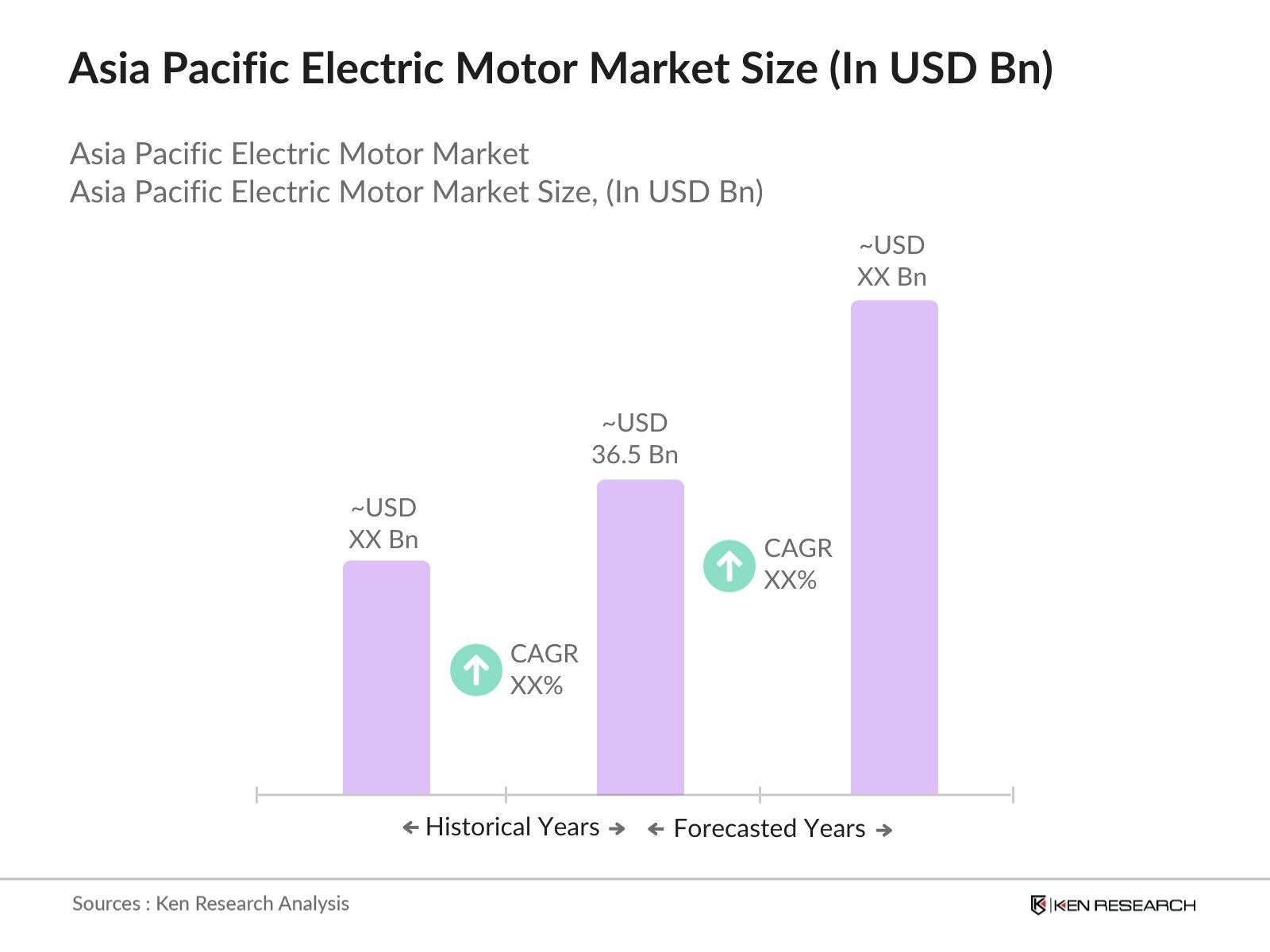

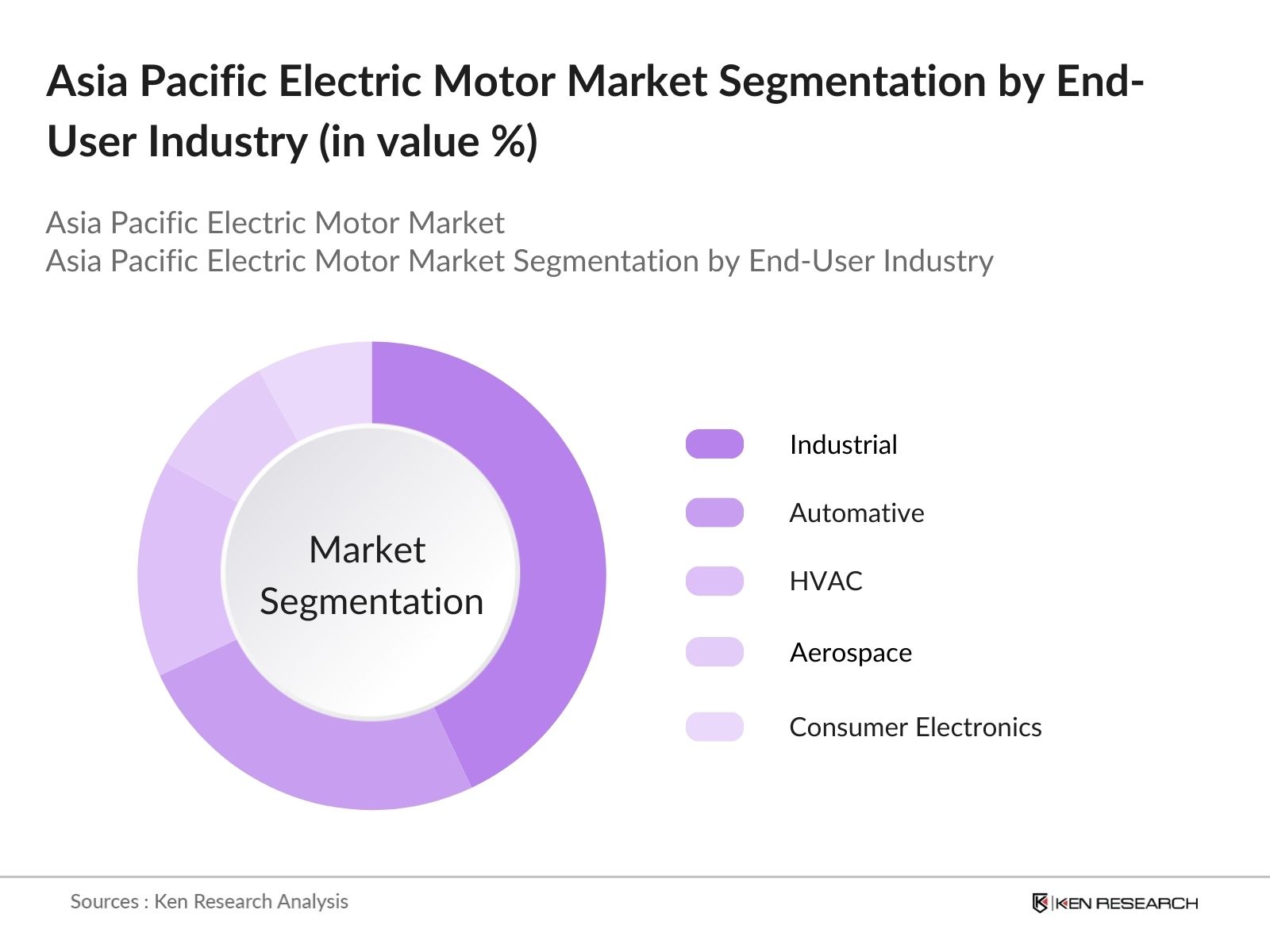
The Asia Pacific Electric Motor Market is dominated by key regional and global players, reflecting strong consolidation and technological expertise in the industry. The market is shaped by major players, such as ABB Ltd., Siemens AG, and Nidec Corporation, who bring extensive portfolios and advanced motor technologies. Local manufacturers in China and India are also competing through cost-effective products and regional expansion.

Over the next five years, the Asia Pacific Electric Motor Market is expected to see sustained growth, driven by advancements in electric motor technology, increasing adoption of EVs, and strong government support for renewable energy. The growing demand for energy-efficient appliances and the rise of smart home technologies are also poised to shape the future of the market significantly.
|
By Motor Type |
- AC Motors |
|
By Voltage |
- Low Voltage |
|
By End-User Industry |
- Industrial |
|
By Application |
- Pumps |
|
By Country |
- China |
1.1. Definition and Scope
1.2. Market Taxonomy
1.3. Market Growth Rate
1.4. Market Segmentation Overview
2.1. Historical Market Size
2.2. Year-On-Year Growth Analysis
2.3. Key Market Developments and Milestones
3.1. Growth Drivers
3.1.1. Industrial Automation
3.1.2. Electric Vehicle Adoption
3.1.3. Infrastructure Development
3.1.4. Energy Efficiency Regulations
3.2. Market Challenges
3.2.1. High Initial Investment
3.2.2. Technical Challenges
3.2.3. Supply Chain Disruptions
3.3. Opportunities
3.3.1. Technological Advancements
3.3.2. Expansion into Emerging Markets
3.3.3. Government Incentives
3.4. Trends
3.4.1. Integration with IoT
3.4.2. Development of Smart Motors
3.4.3. Increased Use in Renewable Energy Systems
3.5. Government Regulations
3.5.1. Energy Efficiency Standards
3.5.2. Emission Reduction Targets
3.5.3. Incentives for Electric Motor Adoption
3.6. SWOT Analysis
3.7. Stakeholder Ecosystem
3.8. Porters Five Forces Analysis
3.9. Competitive Landscape
4.1. By Motor Type (Value %)
4.1.1. AC Motors
4.1.2. DC Motors
4.1.3. Hermetic Motors
4.2. By Voltage (Value %)
4.2.1. Low Voltage
4.2.2. Medium Voltage
4.2.3. High Voltage
4.3. By End-User Industry (Value %)
4.3.1. Industrial
4.3.2. Automotive
4.3.3. HVAC
4.3.4. Aerospace
4.3.5. Consumer Electronics
4.4. By Application (Value %)
4.4.1. Pumps
4.4.2. Fans
4.4.3. Compressors
4.4.4. Others
4.5. By Country (Value %)
4.5.1. China
4.5.2. India
4.5.3. Japan
4.5.4. South Korea
4.5.5. Rest of Asia Pacific
5.1. Detailed Profiles of Major Companies
5.1.1. ABB Ltd.
5.1.2. Siemens AG
5.1.3. Nidec Corporation
5.1.4. Toshiba Corporation
5.1.5. Hitachi Ltd.
5.1.6. Mitsubishi Electric Corporation
5.1.7. WEG Industries
5.1.8. Regal Rexnord Corporation
5.1.9. Johnson Electric Holdings Limited
5.1.10. TECO Electric & Machinery Co., Ltd.
5.1.11. Hyundai Electric & Energy Systems Co., Ltd.
5.1.12. Kirloskar Electric Company
5.1.13. Bharat Heavy Electricals Limited (BHEL)
5.1.14. Fuji Electric Co., Ltd.
5.1.15. Yaskawa Electric Corporation
5.2. Cross Comparison Parameters
5.2.1. Number of Employees
5.2.2. Headquarters Location
5.2.3. Year of Inception
5.2.4. Revenue
5.2.5. Product Portfolio
5.2.6. Market Share
5.2.7. Recent Developments
5.2.8. Strategic Initiatives
5.3. Market Share Analysis
5.4. Strategic Initiatives
5.5. Mergers and Acquisitions
5.6. Investment Analysis
5.6.1. Venture Capital Funding
5.6.2. Government Grants
5.6.3. Private Equity Investments
6.1. Energy Efficiency Standards
6.2. Compliance Requirements
6.3. Certification Processes
7.1. Future Market Size Projections
7.2. Key Factors Driving Future Market Growth
8.1. By Motor Type (Value %)
8.2. By Voltage (Value %)
8.3. By End-User Industry (Value %)
8.4. By Application (Value %)
8.5. By Country (Value %)
9.1. Total Addressable Market (TAM), Serviceable Available Market (SAM), and Serviceable Obtainable Market (SOM) Analysis
9.2. Customer Cohort Analysis
9.3. Marketing Initiatives
9.4. White Space Opportunity Analysis
The research begins with mapping the ecosystem of the Asia Pacific Electric Motor Market, including stakeholders such as manufacturers, distributors, and end-users. This stage relies on secondary research from credible sources and databases to define the market's key variables.
Historical data is collected to evaluate the penetration and performance of electric motors across industries. Metrics like energy efficiency standards and market adoption rates are analyzed to construct an accurate market overview.
Expert consultations through interviews and surveys validate initial hypotheses. These interactions involve stakeholders from motor manufacturing, EV production, and industrial automation industries to ensure data accuracy and reliability.
Insights from stakeholders and secondary data are synthesized to develop comprehensive findings. Final validations are conducted to align statistics and trends with market realities, ensuring a reliable and actionable report.
The Asia Pacific Electric Motor Market is valued at USD 36.5 billion, driven by the expansion of industrial sectors, increasing adoption of EVs, and demand for energy-efficient appliances.
Challenges in the Asia Pacific Electric Motor Market include high production costs, technical complexities in advanced motor designs, and supply chain disruptions due to geopolitical tensions.
Key players in the Asia Pacific Electric Motor Market include ABB Ltd., Siemens AG, Nidec Corporation, Toshiba Corporation, and Mitsubishi Electric Corporation, known for their technological advancements and wide product portfolios.
Growth drivers in the Asia Pacific Electric Motor Market include the adoption of electric vehicles, industrial automation, and increased investments in renewable energy projects, boosting demand for energy-efficient motors.

What makes us stand out is that our consultants follows Robust, Refine and Result (RRR) methodology. i.e. Robust for clear definitions, approaches and sanity checking, Refine for differentiating respondents facts and opinions and Result for presenting data with story

We have set a benchmark in the industry by offering our clients with syndicated and customized market research reports featuring coverage of entire market as well as meticulous research and analyst insights.

While we don't replace traditional research, we flip the method upside down. Our dual approach of Top Bottom & Bottom Top ensures quality deliverable by not just verifying company fundamentals but also looking at the sector and macroeconomic factors.

With one step in the future, our research team constantly tries to show you the bigger picture. We help with some of the tough questions you may encounter along the way: How is the industry positioned? Best marketing channel? KPI's of competitors? By aligning every element, we help maximize success.

Our report gives you instant access to the answers and sources that other companies might choose to hide. We elaborate each steps of research methodology we have used and showcase you the sample size to earn your trust.

If you need any support, we are here! We pride ourselves on universe strength, data quality, and quick, friendly, and professional service.