
Asia Pacific Electrical Components Market Outlook to 2030
Region:Asia
Author(s):Sanjna
Product Code:KROD6180
November 2024
96
About the Report
Asia Pacific Electrical Components Market Overview
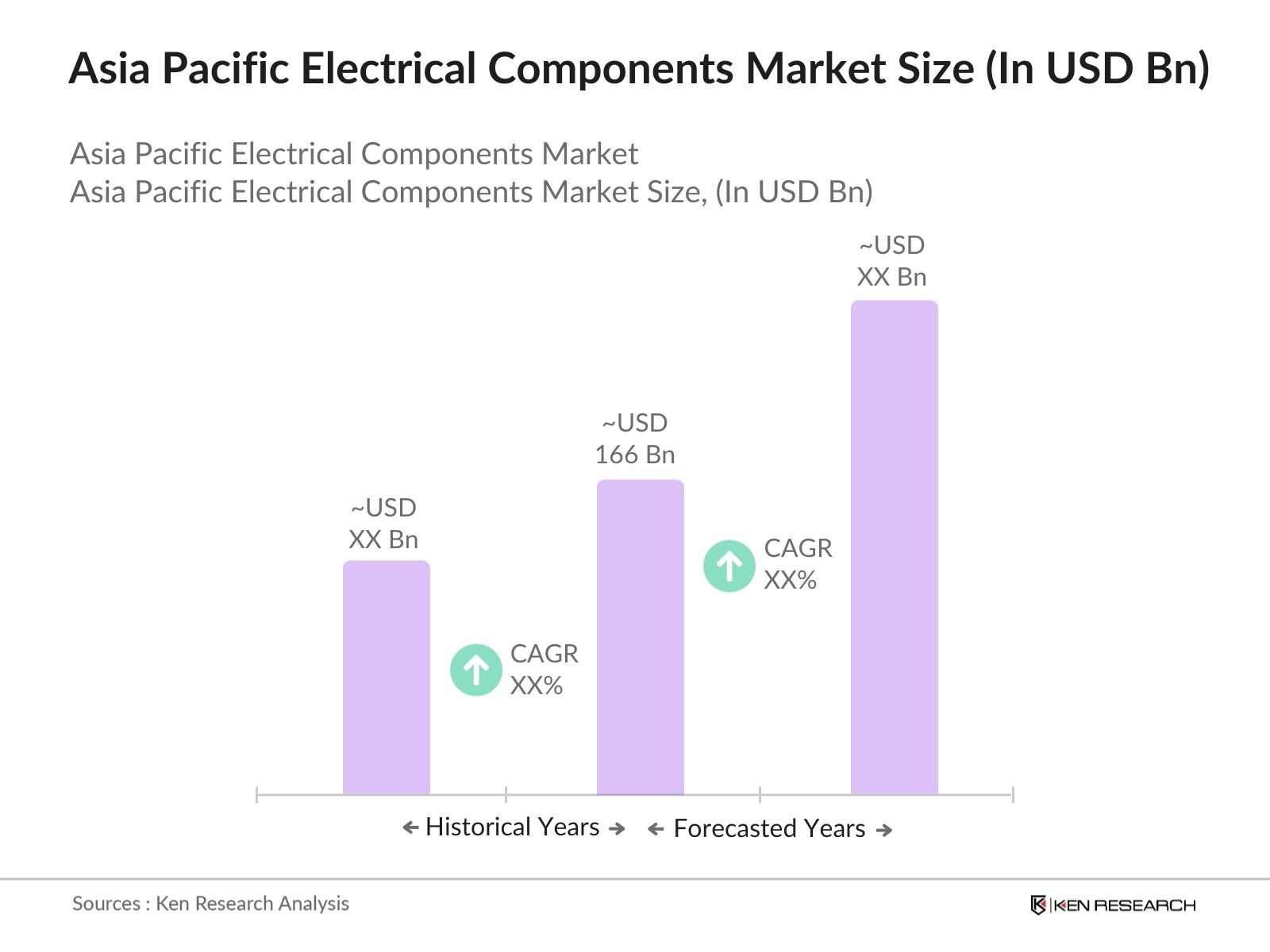
- Asia Pacific Electrical Components market is valued at USD 166 billion, driven by the regions rapid industrialization, urbanization, and the rise of renewable energy sources. Countries such as China, Japan, and South Korea are increasingly focusing on upgrading their electrical grids and infrastructure, enhancing the markets growth. With a significant portion of the demand coming from sectors like automotive, manufacturing, and consumer electronics, the market is witnessing steady development, supported by government initiatives and private investments in energy-efficient and renewable energy technologies.
- The market dominance is led by China, Japan, and South Korea, which account for a significant portion of the market. China's dominance stems from its robust manufacturing infrastructure and continuous investments in renewable energy and smart grids. Japan and South Korea, on the other hand, lead in technological advancements, especially in semiconductor manufacturing and energy-efficient systems.
- Governments across Asia Pacific are implementing electrification policies to reduce carbon emissions, particularly in sectors like transportation and manufacturing. In 2023, China enacted regulations mandating electric vehicles to account for 50% of new vehicle sales by 2035. Additionally, Japan has introduced similar policies to phase out gasoline-powered vehicles. These policies are driving the adoption of electric infrastructure and components, as well as energy-efficient technologies designed to support low-carbon economies.
Asia Pacific Electrical Components Market Segmentation
By Component Type: The Asia Pacific Electrical Components market is segmented by component type into passive components, active components, and electromechanical components. Active components hold a dominant market share, particularly driven by the increased demand for semiconductors and integrated circuits in applications such as electric vehicles and consumer electronics. The surge in IoT-enabled devices and smart homes has also contributed to the dominance of active components.
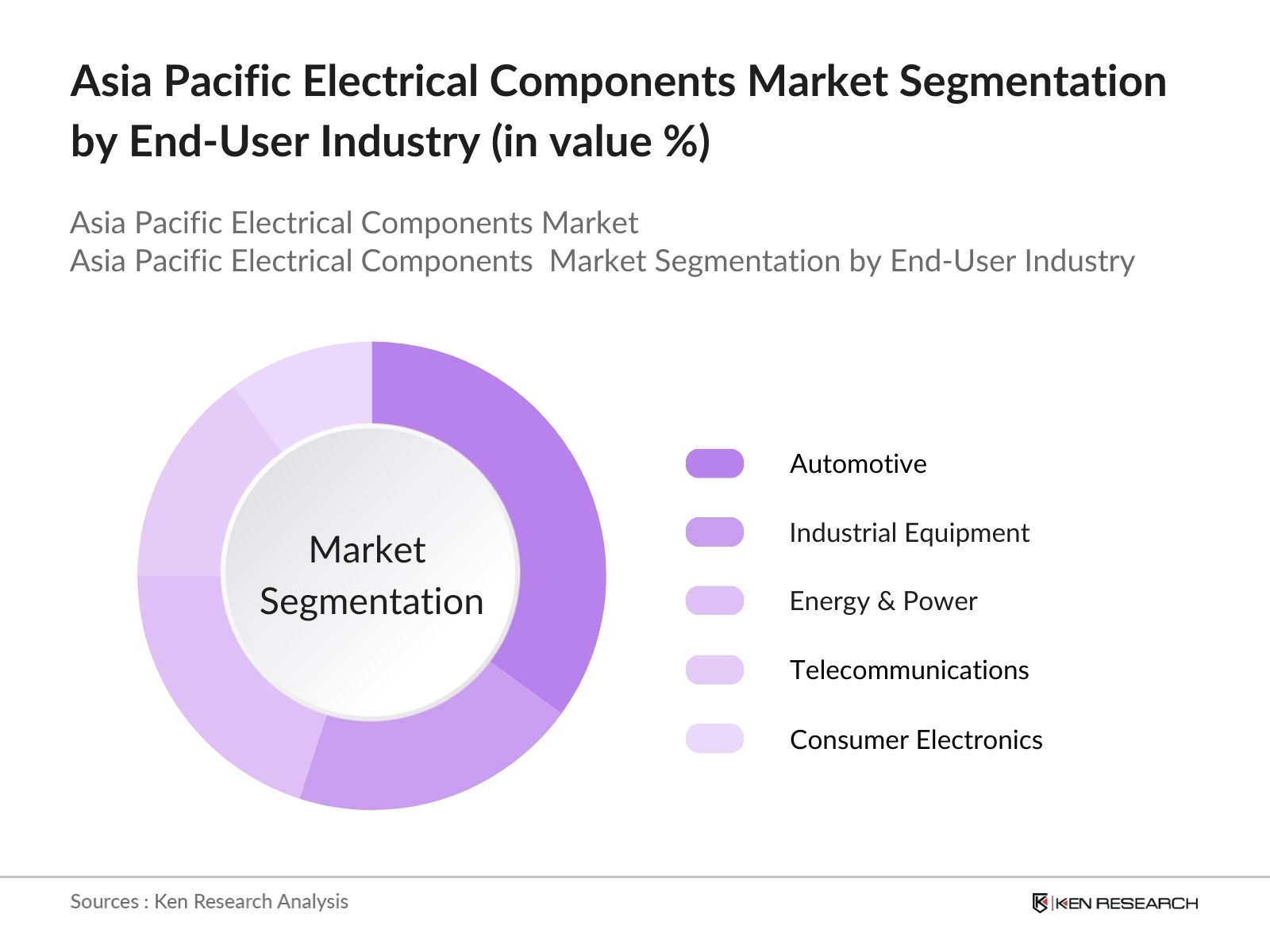
 By End-User Industry: The market is further segmented by end-user industries into automotive, industrial equipment, energy & power, telecommunications, and consumer electronics. The automotive industry dominates this segment due to the rise in electric vehicles (EVs) and the need for high-efficiency electrical systems in modern vehicles. In particular, countries like China and Japan have been at the forefront of EV adoption, requiring a large supply of electrical components to support production. The electrification of transport systems, coupled with government incentives for clean energy, is fueling this segments growth.
 Asia Pacific Electrical Components Market Competitive Landscape
The Asia Pacific Electrical Components market is dominated by several key players with a diverse range of product offerings. The market shows consolidation around companies that lead in technological innovation, sustainability, and energy efficiency. Companies like Mitsubishi Electric and Schneider Electric focus on continuous R&D and investment in next-generation components, while local players such as Panasonic and Toshiba leverage their regional presence to maintain competitiveness.
|
Company Name |
Establishment Year |
Headquarters |
Employees |
R&D Investment (USD) |
Revenue (USD Bn) |
Patents Filed |
Product Portfolio |
Sustainability Initiatives |
|
Mitsubishi Electric |
1921 |
Tokyo, Japan |
- |
- |
- |
- |
- |
- |
|
Schneider Electric |
1836 |
Rueil-Malmaison, France |
- |
- |
- |
- |
- |
- |
|
Panasonic Corporation |
1918 |
Osaka, Japan |
- |
- |
- |
- |
- |
- |
|
Toshiba Corporation |
1875 |
Tokyo, Japan |
- |
- |
- |
- |
- |
- |
|
TE Connectivity |
2007 |
Schaffhausen, Switzerland |
- |
- |
- |
- |
- |
- |
Asia Pacific Electrical Components Market Analysis
Growth Drivers
- Increase in Electrical Vehicle Adoption: As of 2023, China alone saw over 5 million new EV registrations, supported by government subsidies and infrastructure development. The expansion of charging networks across countries like Japan, South Korea, and Australia is expected to contribute to a further rise in demand for electrical components like EV powertrains and charging infrastructure. With countries like India planning to phase out gasoline and diesel vehicles by 2030, the demand for high-voltage electrical components is set to rise.
- Rising Investments in Smart Grid Infrastructure: In 2022, Japan invested $10 billion in smart grid technology to support grid modernization and enhance energy security. China, with its focus on becoming a carbon-neutral economy by 2060, is pouring significant capital into the development of smart grids. Electrical components such as transformers, relays, and sensors are crucial for these upgrades. The integration of IoT and advanced analytics in the grids is driving demand for modernized electrical infrastructure components across the region.
- Surge in Renewable Energy Integration: The Asia Pacific region is aggressively expanding its renewable energy capacity, with countries like China and India leading the charge. Chinas renewable energy capacity exceeded 1,300 GW in 2023, with a significant portion coming from wind and solar power. This surge is increasing demand for electrical components like inverters, transformers, and switchgear to support renewable energy grids.
Challenges
- High Capital Investment in Advanced Technologies: Modernization of electrical infrastructure, such as upgrading to smart grids, requires significant capital. For instance, Chinas State Grid Corporation has invested over $70 billion in smart grid technologies, placing financial strain on smaller market participants. This challenge is even more pronounced in developing countries like India and Indonesia, where financing for large-scale electrical upgrades is harder to obtain, thereby hindering market growth.
- Stringent Environmental and Regulatory Standards: In 2023, China enacted new regulations limiting the use of hazardous substances in electrical products, compelling manufacturers to invest in eco-friendly alternatives, which increases production costs. Additionally, Indias e-waste management rules require companies to adhere to strict recycling and disposal protocols, which has increased operational costs for electrical component manufacturers. Meeting these stringent standards while maintaining profitability remains a challenge for many companies in the region.
Asia Pacific Electrical Components Market Future Outlook
Asia Pacific Electrical Components market is expected to grow significantly, driven by rapid advancements in electric vehicle technology, increased investment in smart grid infrastructure, and growing demand for renewable energy integration. The market will also benefit from government initiatives aimed at reducing carbon emissions, promoting energy efficiency, and upgrading national electrical grids. Furthermore, with the expansion of 5G networks and IoT technologies, the need for advanced electrical components is poised to increase, driving innovation and growth in the sector.
Market Opportunities
- Expansion of Smart Cities Projects: The Asia Pacific region is witnessing a rapid expansion in smart city initiatives, which is expected to drive the demand for advanced electrical components. In 2023, India announced plans to build 100 smart cities, with investments exceeding $30 billion for infrastructure that includes smart lighting, energy-efficient grids, and IoT-enabled electrical systems. China also committed to expanding its smart cities, with Shenzhen investing over $10 billion in intelligent electrical infrastructure. This growth opens new opportunities for companies providing components like sensors, smart meters, and energy-efficient transformers.
- Emerging Demand for IoT-Enabled Electrical Components: As IoT technology becomes more prevalent in the Asia Pacific region, there is growing demand for electrical components that can integrate with IoT platforms. In 2024, Japan is expected to increase IoT investments by $1.2 billion, particularly in sectors like industrial automation and energy management, which require advanced electrical components like smart sensors, automated switches, and connected devices.
Scope of the Report
|
Segment |
Sub-Segments |
|
Component Type |
Passive Components Active Components Electromechanical Components |
|
End-User Industry |
Automotive Industrial Equipment Energy & Power Telecommunications Consumer Electronics |
|
Application |
Power Generation and Distribution Electric Vehicle Infrastructure Home Automation Systems |
|
Technology Type |
IoT-Enabled Components Smart Grids Wireless Power Transmission |
|
Region |
China Japan India Southeast Asia Australia |
Products
Key Target Audience
Electrical Component Manufacturers
Energy & Power Companies
Electric Vehicle Manufacturers
Telecommunications Service Providers
Renewable Energy Project Developers
Smart Grid Solution Providers
Investors and Venture Capitalist Firms
Government and Regulatory Bodies (Ministry of Power, Bureau of Energy Efficiency)
Companies
Players Mentioned in the Report
Mitsubishi Electric
Schneider Electric
Panasonic Corporation
Toshiba Corporation
TE Connectivity
ABB Ltd.
Siemens AG
Honeywell International Inc.
General Electric
Eaton Corporation
Table of Contents
1. Asia Pacific Electrical Components Market Overview
1.1. Definition and Scope
1.2. Market Taxonomy
1.3. Market Growth Rate (Regional electrical components demand, technology advancement adoption rates, regulatory impact)
1.4. Market Segmentation Overview
2. Asia Pacific Electrical Components Market Size (In USD Mn)
2.1. Historical Market Size
2.2. Year-On-Year Growth Analysis (Including impact of electrical vehicle growth, smart grid developments, renewable energy initiatives)
2.3. Key Market Developments and Milestones (Smart grid implementations, electrical vehicle charging infrastructure expansion, regional collaborations)
3. Asia Pacific Electrical Components Market Analysis
3.1. Growth Drivers
3.1.1. Increase in Electrical Vehicle Adoption
3.1.2. Rising Investments in Smart Grid Infrastructure
3.1.3. Surge in Renewable Energy Integration
3.1.4. Government Incentives for Energy-Efficient Solutions
3.2. Market Challenges
3.2.1. High Capital Investment in Advanced Technologies
3.2.2. Stringent Environmental and Regulatory Standards
3.2.3. Supply Chain Disruptions (Impact of semiconductor shortages)
3.3. Opportunities
3.3.1. Expansion of Smart Cities Projects
3.3.2. Emerging Demand for IoT-Enabled Electrical Components
3.3.3. Growth in Energy Storage Solutions (Batteries, Inverters)
3.4. Trends
3.4.1. Adoption of Energy-Efficient Technologies (LEDs, Solar Inverters)
3.4.2. Development of Electrification in Industrial Applications
3.4.3. Technological Innovations in Wireless Power Transfer
3.5. Government Regulation
3.5.1. Electrification Policies for Low-Carbon Emissions
3.5.2. Energy Efficiency Standards
3.5.3. Grid Modernization Regulations (Regional mandates and funding programs)
3.5.4. Renewable Energy Integration Policies
3.6. SWOT Analysis
3.7. Stake Ecosystem
3.8. Porters Five Forces
3.9. Competition Ecosystem
4. Asia Pacific Electrical Components Market Segmentation
4.1. By Component Type (In Value %)
4.1.1. Passive Components (Resistors, Capacitors, Inductors)
4.1.2. Active Components (Transistors, Integrated Circuits, Diodes)
4.1.3. Electromechanical Components (Relays, Switches, Connectors)
4.2. By End-User Industry (In Value %)
4.2.1. Automotive
4.2.2. Industrial Equipment
4.2.3. Energy & Power
4.2.4. Telecommunications
4.2.5. Consumer Electronics
4.3. By Application (In Value %)
4.3.1. Power Generation and Distribution
4.3.2. Electric Vehicle Infrastructure
4.3.3. Home Automation Systems
4.4. By Technology Type (In Value %)
4.4.1. IoT-Enabled Components
4.4.2. Smart Grids
4.4.3. Wireless Power Transmission
4.5. By Region (In Value %)
4.5.1. China
4.5.2. Japan
4.5.3. India
4.5.4. Southeast Asia
4.5.5. Australia
5. Asia Pacific Electrical Components Market Competitive Analysis
5.1 Detailed Profiles of Major Companies
5.1.1. Schneider Electric
5.1.2. ABB Ltd.
5.1.3. Mitsubishi Electric
5.1.4. Siemens AG
5.1.5. Panasonic Corporation
5.1.6. Honeywell International Inc.
5.1.7. TE Connectivity
5.1.8. General Electric
5.1.9. Toshiba Corporation
5.1.10. Eaton Corporation
5.2 Cross Comparison Parameters (Employee Size, Manufacturing Plants, Regional Presence, Product Portfolio, Sustainability Initiatives, Patents, Recent Partnerships, Revenue)
5.3. Market Share Analysis
5.4. Strategic Initiatives (Mergers & Acquisitions, Joint Ventures, New Product Launches)
5.5. Mergers and Acquisitions
5.6. Investment Analysis (Private Equity, Venture Capital Funding, Corporate Investments)
5.7. Government Grants and Subsidies
5.8. Private Equity Investments
6. Asia Pacific Electrical Components Market Regulatory Framework
6.1. Energy Efficiency and Safety Standards
6.2. Compliance and Certification Requirements
6.3. Policies on E-Waste Management and Recycling
6.4. Trade Regulations (Import/Export Tariffs on Electrical Components)
7. Asia Pacific Electrical Components Future Market Size (In USD Mn)
7.1. Future Market Size Projections
7.2. Key Factors Driving Future Market Growth
8. Asia Pacific Electrical Components Future Market Segmentation
8.1. By Component Type (In Value %)
8.2. By End-User Industry (In Value %)
8.3. By Application (In Value %)
8.4. By Technology Type (In Value %)
8.5. By Region (In Value %)
9. Asia Pacific Electrical Components Market Analysts Recommendations
9.1. TAM/SAM/SOM Analysis
9.2. Competitive Positioning Strategy
9.3. Customer Cohort Analysis
9.4. Key Marketing Initiatives and Target Market Segments
Research Methodology
Step 1: Identification of Key Variables
The research process began with identifying the key variables that drive the Asia Pacific Electrical Components Market. Extensive desk research was conducted using secondary sources like industry reports, whitepapers, and company financial filings. Primary sources such as industry experts were consulted to validate the data.
Step 2: Market Analysis and Construction
This phase involved analyzing historical market trends, regional penetration, and industry-wide data on electrical component usage across different sectors. The market analysis was focused on understanding the growth rate and how technological advancements influence market demand.
Step 3: Hypothesis Validation and Expert Consultation
The next step involved formulating hypotheses about market growth, which were validated through consultations with key industry players. These consultations helped refine the data, ensuring accuracy in projections and market sizing.
Step 4: Research Synthesis and Final Output
Finally, all research findings were synthesized to produce a comprehensive report. A mix of bottom-up and top-down approaches was used to ensure the credibility and reliability of the data presented in this report.
Frequently Asked Questions
1. How big is the Asia Pacific Electrical Components Market?
The Asia Pacific Electrical Components market is valued at USD 166 billion, driven by the increasing demand for energy-efficient solutions and advancements in smart grid infrastructure across the region.
2. What are the challenges in the Asia Pacific Electrical Components Market?
Asia Pacific Electrical Components market faces challenges like high capital costs for implementing advanced technologies, supply chain disruptions, and stringent regulatory standards that impact the growth of certain electrical components.
3. Who are the major players in the Asia Pacific Electrical Components Market?
Key players in Asia Pacific Electrical Components market include Mitsubishi Electric, Schneider Electric, Panasonic Corporation, Toshiba Corporation, and TE Connectivity. These companies dominate due to their innovation, extensive product portfolios, and strong presence in the region.
4. What are the growth drivers of the Asia Pacific Electrical Components Market?
Growth in Asia Pacific Electrical Components market is driven by increasing demand for electric vehicles, smart grid advancements, renewable energy integration, and government incentives for energy-efficient systems.
Why Buy From Us?

What makes us stand out is that our consultants follows Robust, Refine and Result (RRR) methodology. i.e. Robust for clear definitions, approaches and sanity checking, Refine for differentiating respondents facts and opinions and Result for presenting data with story

We have set a benchmark in the industry by offering our clients with syndicated and customized market research reports featuring coverage of entire market as well as meticulous research and analyst insights.

While we don't replace traditional research, we flip the method upside down. Our dual approach of Top Bottom & Bottom Top ensures quality deliverable by not just verifying company fundamentals but also looking at the sector and macroeconomic factors.

With one step in the future, our research team constantly tries to show you the bigger picture. We help with some of the tough questions you may encounter along the way: How is the industry positioned? Best marketing channel? KPI's of competitors? By aligning every element, we help maximize success.

Our report gives you instant access to the answers and sources that other companies might choose to hide. We elaborate each steps of research methodology we have used and showcase you the sample size to earn your trust.

If you need any support, we are here! We pride ourselves on universe strength, data quality, and quick, friendly, and professional service.