
Asia Pacific Energy Drinks Market Outlook to 2030
Region:Asia
Author(s):Sanjna Verma
Product Code:KROD4170
December 2024
92
About the Report
Asia Pacific Energy Drinks Market Overview
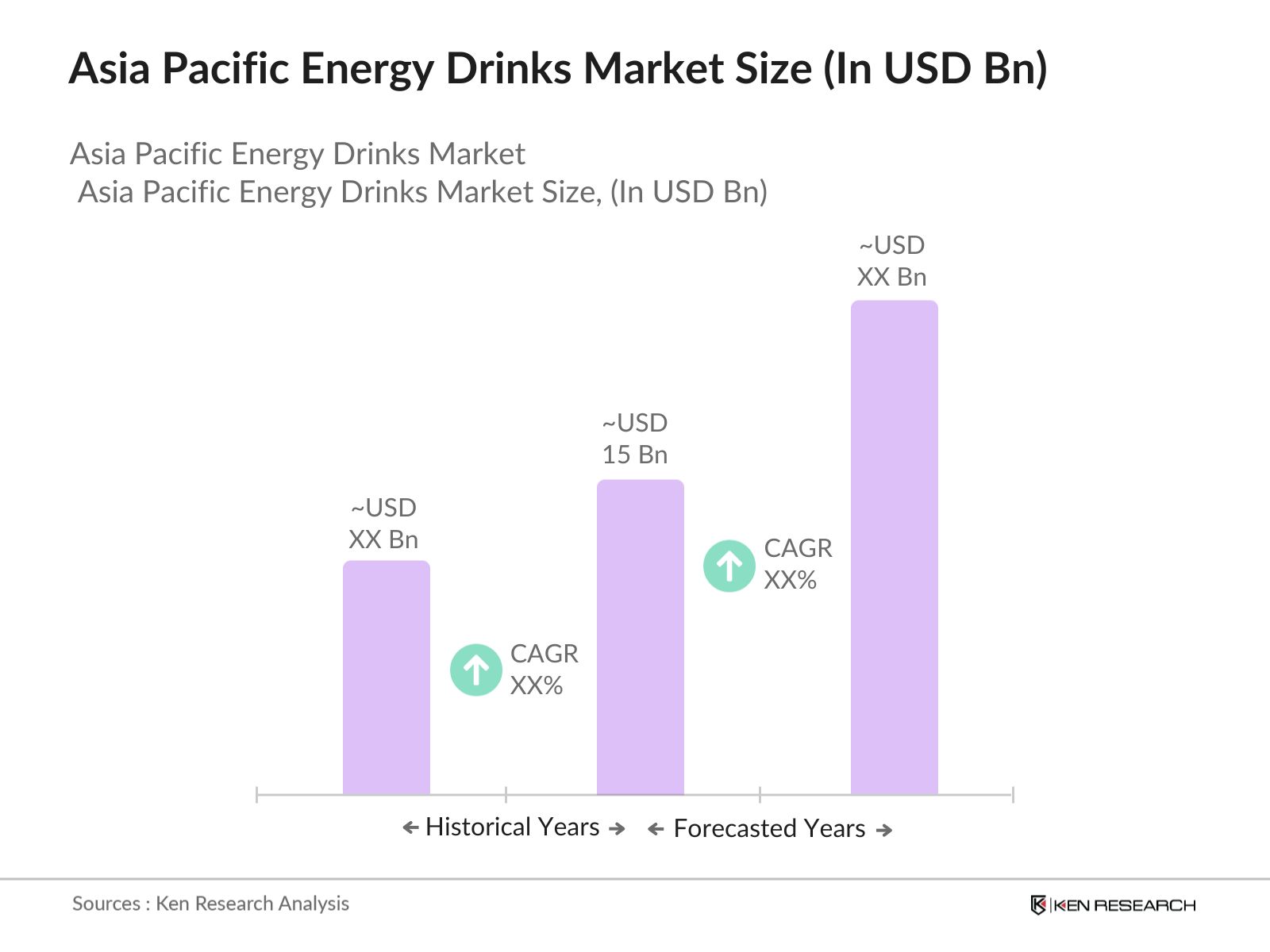
- The Asia-Pacific energy drinks market is a dynamic and rapidly evolving segment of the global beverage industry. Valued at USD 15 billion, the market is driven by increasing urbanization, the rising popularity of fitness and sports activities, and a growing shift towards functional beverages among younger populations. The preference for quick energy boosts in busy lifestyles, coupled with growing consumer awareness about health and performance enhancement, has fueled demand across major countries like China, Japan, and India.
- China, India, and Japan dominate the Asia-Pacific energy drinks market due to their large, health-conscious populations and increasing disposable incomes. In China, the focus on high energy levels for productivity and urbanization trends has bolstered the market. Japan, on the other hand, has a long history of health-driven beverage consumption, which complements the energy drinks category.
- Regulatory authorities across the Asia-Pacific region are imposing stricter limits on the caffeine content in energy drinks. For example, Chinas National Health Commission has set a limit of 150 mg of caffeine per serving for energy drinks in 2024. These regulations are designed to prevent excessive caffeine intake, particularly among younger consumers. Compliance with these limits is mandatory for manufacturers looking to market their products in countries with stringent food safety standards, such as Japan, China, and South Korea.
Asia Pacific Energy Drinks Market Segmentation
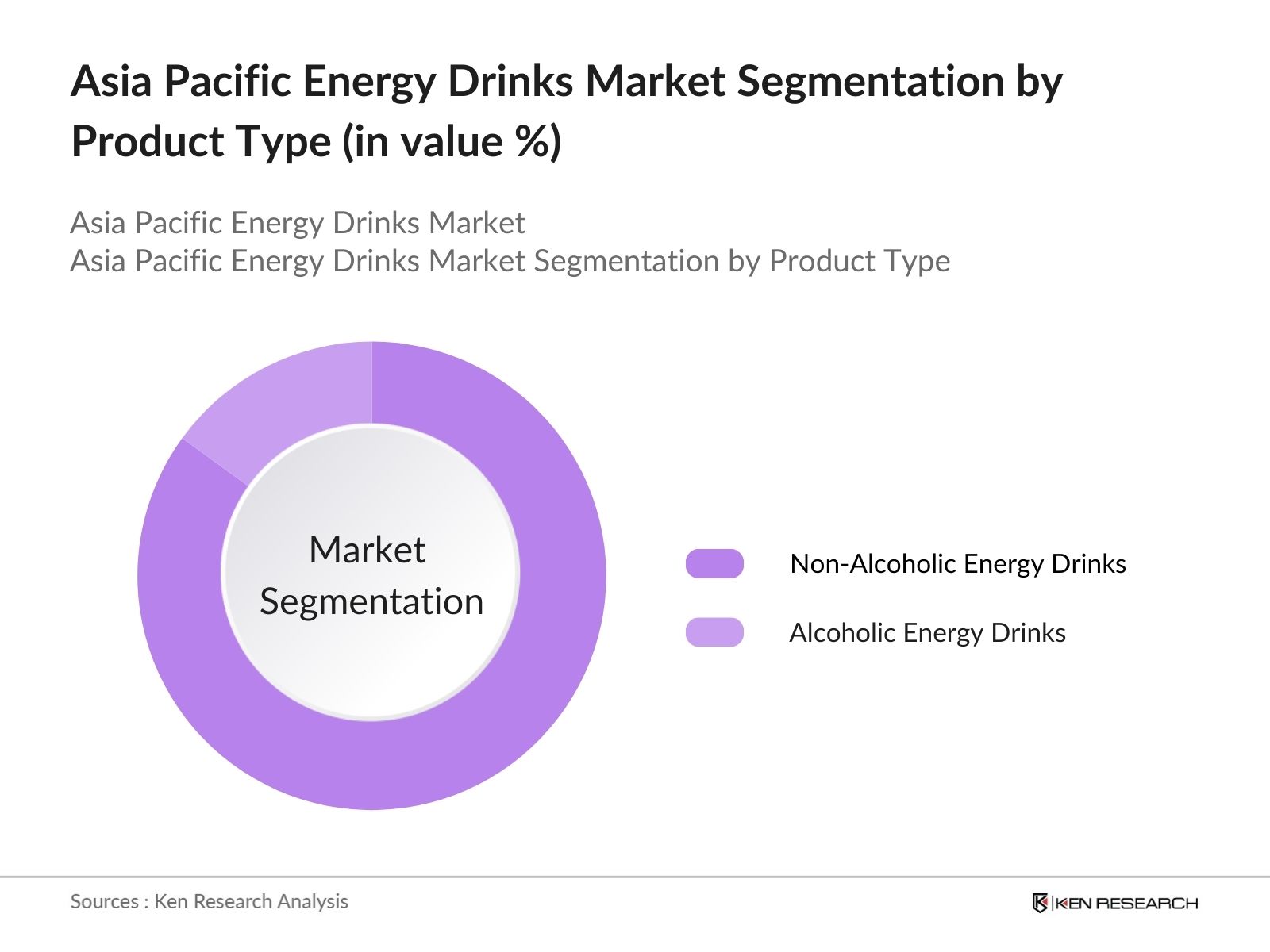
- By Product Type: The Asia-Pacific energy drinks market is segmented by product type into non-alcoholic energy drinks and alcoholic energy drinks. Non-alcoholic energy drinks currently dominate the market due to the higher consumption levels in countries where cultural and religious norms restrict alcohol use. The broad consumer base, spanning fitness enthusiasts, students, and busy professionals, drives demand for non-alcoholic variants that offer both energy boosts and hydration. In particular, sugar-free and low-calorie versions are gaining popularity as health-conscious consumers seek alternatives to sugary soft drinks.
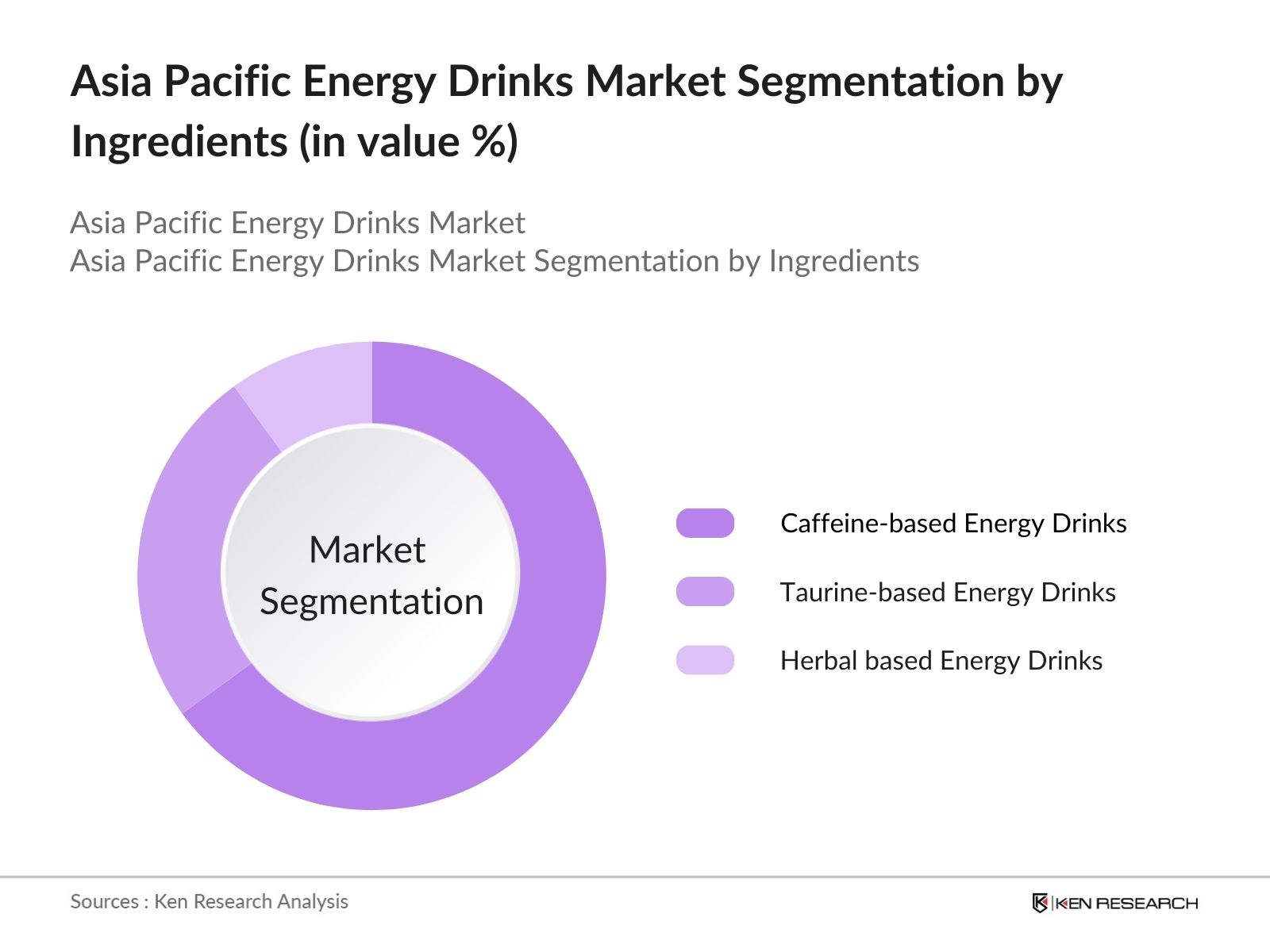
- By Ingredients: Segmentation by ingredients divides the market into caffeine-based, taurine-based, and herbal-based energy drinks. Caffeine-based energy drinks have a dominant market share due to the strong consumer association between caffeine and heightened alertness, energy, and productivity. Additionally, the availability of caffeine from coffee beans, guarana, and green tea extract has made this category popular among athletes and office-goers alike. However, the herbal-based subsegment is experiencing rapid growth, as consumers become more aware of natural and plant-based alternatives, especially those rich in antioxidants.
Asia Pacific Energy Drinks Market Competitive Landscape
The Asia-Pacific energy drinks market is moderately consolidated, with a few key players leading the market. Brands like Red Bull, Monster Beverage Corporation, and PepsiCo (Rockstar) dominate due to their widespread distribution networks, aggressive marketing, and strong brand loyalty. However, local players such as Otsuka Pharmaceutical and Osotspa are gaining ground in countries like Japan and Thailand due to their ability to cater to local tastes and preferences.
|
Company |
Establishment Year |
Headquarters |
Revenue (2023) |
No. of Employees |
Distribution Reach |
Local Market Strength |
Key Products |
Strategic Initiative |
|
Red Bull GmbH |
1987 |
Austria |
- |
- |
- |
- |
- |
- |
|
Monster Beverage Corporation |
1935 |
USA |
- |
- |
- |
- |
- |
- |
|
PepsiCo (Rockstar) |
1965 |
USA |
- |
- |
- |
- |
- |
- |
|
Otsuka Pharmaceutical Co., Ltd. |
1921 |
Japan |
- |
- |
- |
- |
- |
- |
|
Osotspa Co., Ltd. |
1891 |
Thailand |
- |
- |
- |
- |
- |
- |
Asia Pacific Energy Drinks Market Analysis
Growth Drivers
- Rising Health Awareness: In 2024, the Asia-Pacific region has seen significant growth in health-conscious behaviors, driven by a shift toward preventive health practices. The World Bank estimates that 9.8% of Asias population now falls within high-income brackets, which correlates with greater spending on health-oriented products like energy drinks with added vitamins and minerals. Health-conscious consumption has risen, with nearly 75% of urban consumers in markets such as Japan and South Korea prioritizing products that enhance physical stamina and well-being.
- Demand for Functional Beverages: According to the International Monetary Fund (IMF), countries like China, India, and Indonesia are seeing a rapid rise in disposable incomes, averaging around $4,850 per capita. This increase directly impacts the consumption of energy drinks, as consumers in these countries prioritize beverages that provide immediate benefits, such as enhanced focus, quick hydration, and nutrient replenishment, which functional beverages like energy drinks offer.
- Increasing Participation in Sports & Fitness: In 2024, participation in sports and fitness activities is at an all-time high across Asia-Pacific. According to data from the Asia-Pacific Economic Cooperation (APEC), over 600 million people are actively engaged in recreational or professional fitness activities, spurred by increased awareness of fitness and government health initiatives. This surge is directly linked to the demand for energy drinks as performance enhancers.
Challenges
- Health Concerns Related to Excessive Consumption: Excessive consumption of energy drinks has raised concerns regarding potential health risks, prompting regulatory bodies to intervene. According to Japans Ministry of Health, over 20% of emergency room visits related to beverage consumption between 2022-2023 involved energy drinks, leading to increased scrutiny of caffeine content and labeling. Several countries, including Japan and South Korea, have issued stricter guidelines to regulate the maximum allowable caffeine levels in energy drinks, posing challenges for manufacturers to comply without affecting product appeal.
- Fluctuating Raw Material Prices: The cost of key raw materials used in energy drinks, such as caffeine, taurine, and ginseng, has been volatile due to global supply chain disruptions. According to the IMFs commodity price index, raw material costs for caffeine and taurine have seen an average increase of 8% in 2023. This directly impacts the profit margins for energy drink manufacturers in the Asia-Pacific region, who are facing rising production costs while striving to maintain competitive pricing in key markets like China, India, and Australia.
Asia Pacific Energy Drinks Market Future Outlook
Asia-Pacific energy drinks market is expected to grow significantly, driven by increasing demand for healthier, functional beverages, expanding fitness trends, and the rising influence of Westernized consumption habits across the region. Countries like China and India will continue to lead the growth, supported by their large youth populations and rising disposable incomes. The increasing focus on product innovations, such as herbal and sugar-free drinks, will also help fuel market expansion.
Market Opportunities
- Expansion into Emerging Markets: Vietnam and Indonesia are emerging as high-potential markets for energy drinks, driven by strong economic growth and increasing urbanization. According to the World Bank, Vietnams GDP per capita rose to $4,500 in 2024, while Indonesias reached $5,050, contributing to a greater demand for lifestyle products, including energy drinks. The youthful population and growing middle class in these countries present an opportunity for manufacturers to expand their presence and tap into markets where energy drink consumption is still in its early stages.
- Innovation in Sugar-Free and Organic Variants: As consumers become more health-conscious, demand for sugar-free and organic energy drinks is on the rise. According to theInternational Diabetes Federation (IDF), approximately206 million adultsare living with diabetes in the Western Pacific region, which includes many countries in the Asia-PacificThis has pushed consumers to seek sugar-free alternatives. Organic products are also gaining favor, especially in countries like Australia and Japan, where organic certification is seen as a mark of premium quality.
Scope of the Report
|
By Product Type |
Non-Alcoholic Alcoholic |
|
By Ingredients |
Caffeine-Based Taurine-Based Herbal-Based |
|
By Packaging |
Bottles Cans Pouches |
|
By Consumption Time |
Before Exercise During Exercise Post-Exercise |
|
By Distribution Channel |
Supermarkets/Hypermarkets Convenience Stores Online Retailers |
Products
Key Target Audience
Energy Drink Manufacturers
Health and Fitness Companies
Packaging and Design Companies
Fitness and Sporting Goods Companies
Sports and Event Organizers
Investors and Venture Capitalist Firms
Government and Regulatory Bodies (e.g., China Food and Drug Administration, Japan Ministry of Health)
Companies
Players Mentioned in the Report
Red Bull GmbH
Monster Beverage Corporation
PepsiCo, Inc. (Rockstar)
Otsuka Pharmaceutical Co., Ltd.
Suntory Holdings Limited
Osotspa Co., Ltd.
Fraser & Neave Holdings Bhd
Cloud 9 (Asia Brewery)
Coca-Cola HBC
THP Group
Table of Contents
1. Market Overview
1.1 Definition and Scope
1.2 Market Taxonomy
1.3 Market Dynamics
1.4 Market Growth Drivers
2. Asia-Pacific Energy Drinks Market Size
2.1 Current Market Size (in USD Billion)
2.2 Market Growth (Year-on-Year Growth Analysis)
2.3 Key Milestones & Developments
3. Asia-Pacific Energy Drinks Market Analysis
3.1 Growth Drivers
3.1.1 Rising Health Awareness (Key Driver: Health-Conscious Consumption)
3.1.2 Demand for Functional Beverages (Key Driver: Convenience Beverages)
3.1.3 Increasing Participation in Sports & Fitness (Key Driver: Performance Boosts)
3.1.4 Shifting Consumer Preferences Towards Non-Alcoholic Beverages
3.2 Market Challenges
3.2.1 Health Concerns Related to Excessive Consumption (Regulatory Pressures)
3.2.2 Fluctuating Raw Material Prices (Impact on Profit Margins)
3.2.3 Regulatory Challenges (Safety and Compliance in Key Markets)
3.2.4 Consumer Shifts Toward Clean Label Products
3.3 Opportunities
3.3.1 Expansion into Emerging Markets (Untapped Potential in Vietnam, Indonesia)
3.3.2 Innovation in Sugar-Free and Organic Variants
3.3.3 Rising Popularity of Online Retail Channels
3.3.4 Collaborations with Sports & Fitness Brands
3.4 Trends
3.4.1 Growing Demand for Organic and Natural Ingredients
3.4.2 Increasing Popularity of Caffeine-Free and Herbal-Based Energy Drinks
3.4.3 Surge in Promotional Campaigns and Celebrity Endorsements
3.4.4 Incorporation of Local Flavors in Energy Drinks
3.5 Government Regulations
3.5.1 Regulations on Caffeine Content (Food Safety Standards)
3.5.2 Advertising Restrictions (Youth Targeting in Energy Drinks)
3.5.3 Product Labeling Requirements (Transparency in Ingredients)
3.5.4 Import and Export Regulations (Tariffs and Trade Barriers)
4. Asia-Pacific Energy Drinks Market Segmentation
4.1 By Product Type (in Value %)
4.1.1 Non-Alcoholic Energy Drinks
4.1.2 Alcoholic Energy Drinks
4.2 By Ingredients (in Value %)
4.2.1 Caffeine-Based Energy Drinks
4.2.2 Taurine-Based Energy Drinks
4.2.3 Herbal-Based Energy Drinks
4.3 By Packaging (in Value %)
4.3.1 Bottles
4.3.2 Cans
4.3.3 Pouches
4.4 By Consumption Time (in Value %)
4.4.1 Before Exercise
4.4.2 During Exercise
4.4.3 Post-Exercise
4.5 By Distribution Channel (in Value %)
4.5.1 Supermarkets/Hypermarkets
4.5.2 Convenience Stores
4.5.3 Online Retailers
5. Asia-Pacific Energy Drinks Market Competitive Landscape
5.1 Detailed Profiles of Major Players
5.1.1 Red Bull GmbH
5.1.2 Monster Beverage Corporation
5.1.3 PepsiCo, Inc. (Rockstar)
5.1.4 Coca-Cola HBC (Burn)
5.1.5 Suntory Holdings Limited
5.1.6 Otsuka Pharmaceutical Co., Ltd.
5.1.7 Fraser & Neave Holdings Bhd
5.1.8 Osotspa Co., Ltd.
5.1.9 Cloud 9 (Asia Brewery)
5.1.10 THP Group
5.2 Cross Comparison Parameters
(No. of Employees, Headquarters, Revenue, Market Share)
5.3 Market Share Analysis (Competitor Breakdown by Region)
5.4 Key Strategic Initiatives (Product Launches, Partnerships, Mergers & Acquisitions)
6. Asia-Pacific Energy Drinks Market Regulatory Framework
6.1 Food and Beverage Standards (Ingredients and Additives)
6.2 Packaging and Labeling Regulations
6.3 Import and Trade Policies
6.4 Environmental Regulations (Sustainability in Packaging)
7. Asia-Pacific Energy Drinks Future Market Size and Growth Potential
7.1 Projections for Market Expansion
7.2 Key Factors Driving Future Market Growth
8. Asia-Pacific Energy Drinks Market Analyst Recommendations
8.1 TAM/SAM/SOM Analysis
8.2 Market Entry Strategies
8.3 Product Innovation and Development Strategies
Research Methodology
Step 1: Identification of Key Variables
The first step involves identifying the critical variables that shape the Asia-Pacific energy drinks market. This includes comprehensive desk research and the use of proprietary databases to analyze consumer preferences, regulatory frameworks, and market dynamics.
Step 2: Market Analysis and Construction
Historical data on market performance is collected and analyzed to evaluate growth patterns. This analysis includes reviewing th penetration of energy drinks across different segments, sales performance, and geographic distribution.
Step 3: Hypothesis Validation and Expert Consultation
Key market assumptions are validated by consulting industry experts and conducting interviews with energy drink manufacturers. This step ensures accurate data collection and reliable forecasting.
Step 4: Research Synthesis and Final Output
The final stage involves synthesizing the collected data into actionable insights. This includes creating forecasts, identifying growth opportunities, and providing a comprehensive market analysis of the Asia-Pacific energy drinks industry.
Frequently Asked Questions
01. How big is the Asia-Pacific Energy Drinks Market?
The Asia-Pacific energy drinks market was valued at USD 15 billion, driven by increasing urbanization and the rising demand for functional beverages.
02. What are the challenges in the Asia-Pacific Energy Drinks Market?
Key challenges in Asia Pacific Energy Drinks Market include regulatory hurdles concerning caffeine content, health concerns around excessive consumption, and competition from alternative beverages.
03. Who are the major players in the Asia-Pacific Energy Drinks Market?
Major players of Asia Pacific Energy Drinks Market include Red Bull, Monster Beverage Corporation, PepsiCo (Rockstar), Otsuka Pharmaceutical, and Osotspa.
04. What drives the growth of the Asia-Pacific Energy Drinks Market?
Growth of Asia Pacific Energy Drinks Market is driven by increasing consumer demand for performance-enhancing beverages, fitness trends, and the influence of Western culture on consumption habits.
Why Buy From Us?

What makes us stand out is that our consultants follows Robust, Refine and Result (RRR) methodology. i.e. Robust for clear definitions, approaches and sanity checking, Refine for differentiating respondents facts and opinions and Result for presenting data with story

We have set a benchmark in the industry by offering our clients with syndicated and customized market research reports featuring coverage of entire market as well as meticulous research and analyst insights.

While we don't replace traditional research, we flip the method upside down. Our dual approach of Top Bottom & Bottom Top ensures quality deliverable by not just verifying company fundamentals but also looking at the sector and macroeconomic factors.

With one step in the future, our research team constantly tries to show you the bigger picture. We help with some of the tough questions you may encounter along the way: How is the industry positioned? Best marketing channel? KPI's of competitors? By aligning every element, we help maximize success.

Our report gives you instant access to the answers and sources that other companies might choose to hide. We elaborate each steps of research methodology we have used and showcase you the sample size to earn your trust.

If you need any support, we are here! We pride ourselves on universe strength, data quality, and quick, friendly, and professional service.