
Asia-Pacific Erectile Dysfunction Market Outlook to 2030
Region:Asia
Author(s):Naman Rohilla
Product Code:KROD3202
November 2024
97
About the Report
Asia-Pacific Erectile Dysfunction Market Overview
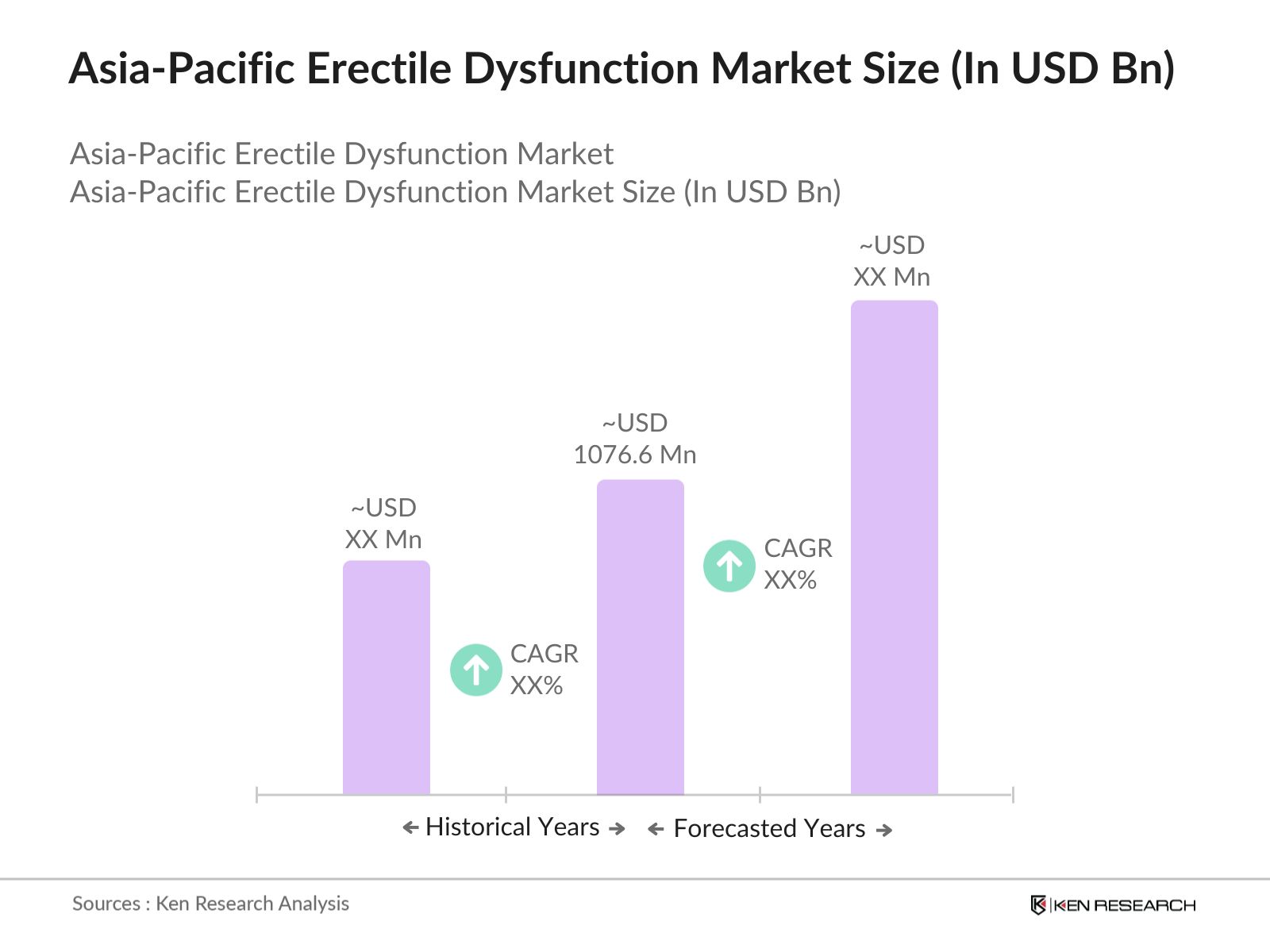
- The Asia-Pacific Erectile Dysfunction (ED) market is valued at USD 1076.6 million, based on a five-year historical analysis. The growth of the market is driven by an aging population across key countries, increasing lifestyle-related health issues such as diabetes and obesity, and the availability of advanced treatment options. Some progress in telemedicine and increased public awareness regarding sexual health have also contributed to the market's expansion. This data is derived from industry-backed resources such as the World Health Organization (WHO) and the International Society for Sexual Medicine (ISSM).
- China, India, and Japan dominate the Asia-Pacific ED market due to their large aging populations and the high prevalence of lifestyle-related diseases that contribute to erectile dysfunction. China and Japan, in particular, have seen market growth due to widespread healthcare infrastructure improvements and growing public awareness about sexual health. India's dominance can be attributed to the rapid expansion of healthcare access and the increasing acceptance of ED treatments in urban areas.
- Government regulations surrounding ED medications remain strict across the Asia-Pacific region. As of 2024, Australias Therapeutic Goods Administration (TGA) continues to uphold rigorous standards for drug approvals, although specific confirmation of two new ED drugs being approved this year is not available. Meanwhile, countries like Japan and China are indeed streamlining their drug approval processes, implementing expedited pathways for innovative ED treatments as part of broader government health reforms aimed at enhancing access to essential medicines.
Asia-Pacific Erectile Dysfunction Market Segmentation
The Asia-Pacific Erectile Dysfunction Market is segmented by treatment type, distribution channel, age group, end user, and geographical region.
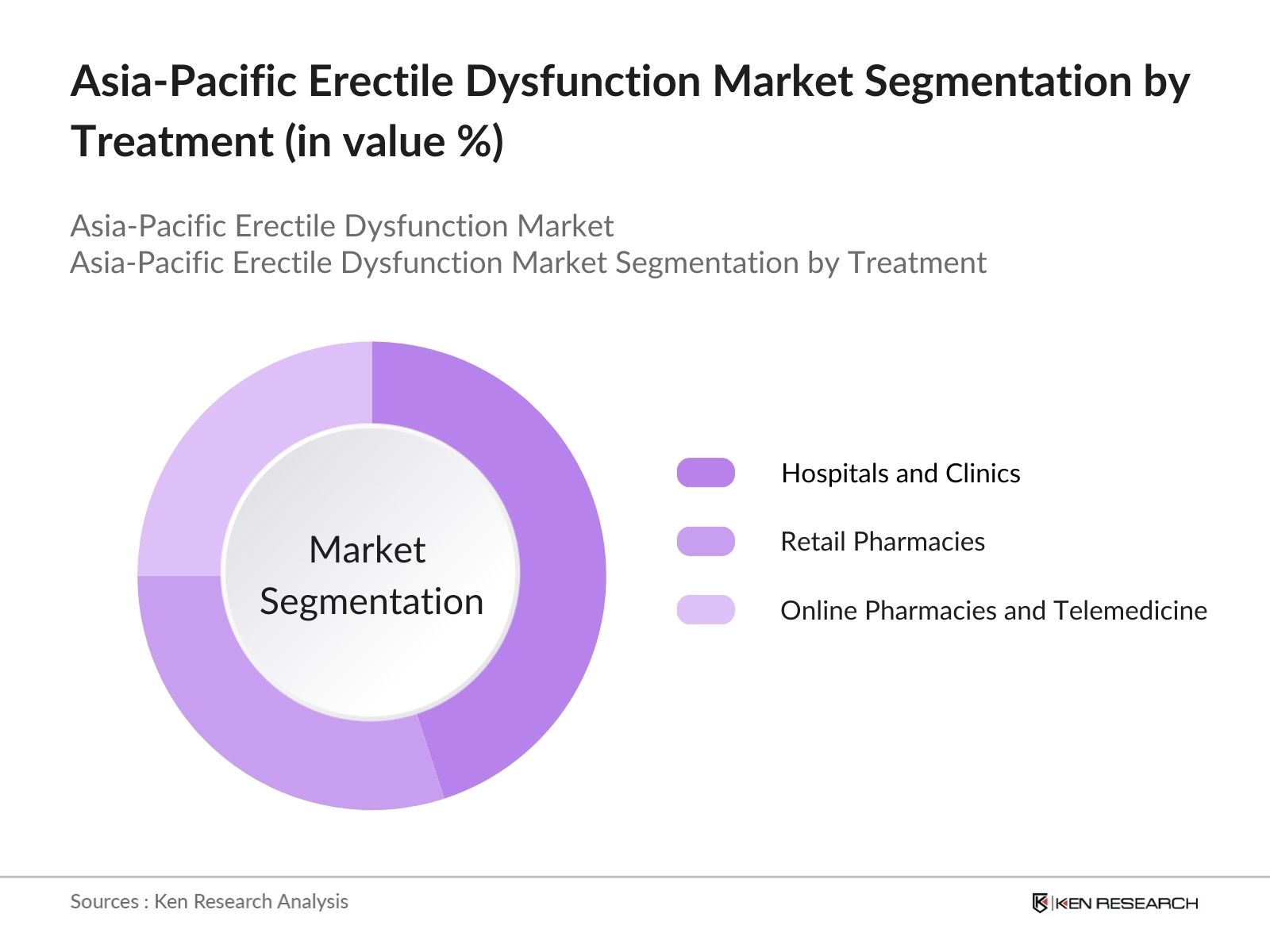
By Treatment Type: The Asia-Pacific Erectile Dysfunction market is segmented by treatment type into oral medications, surgical treatments, and non-invasive treatments. Oral medications, particularly phosphodiesterase type 5 inhibitors (PDE5Is) like sildenafil and tadalafil, hold a dominant market share under this segment. This is due to the widespread availability of oral treatments, their affordability, and minimal invasiveness compared to surgical interventions. Additionally, the convenience of oral medication for patients contributes to the segment's continued dominance.
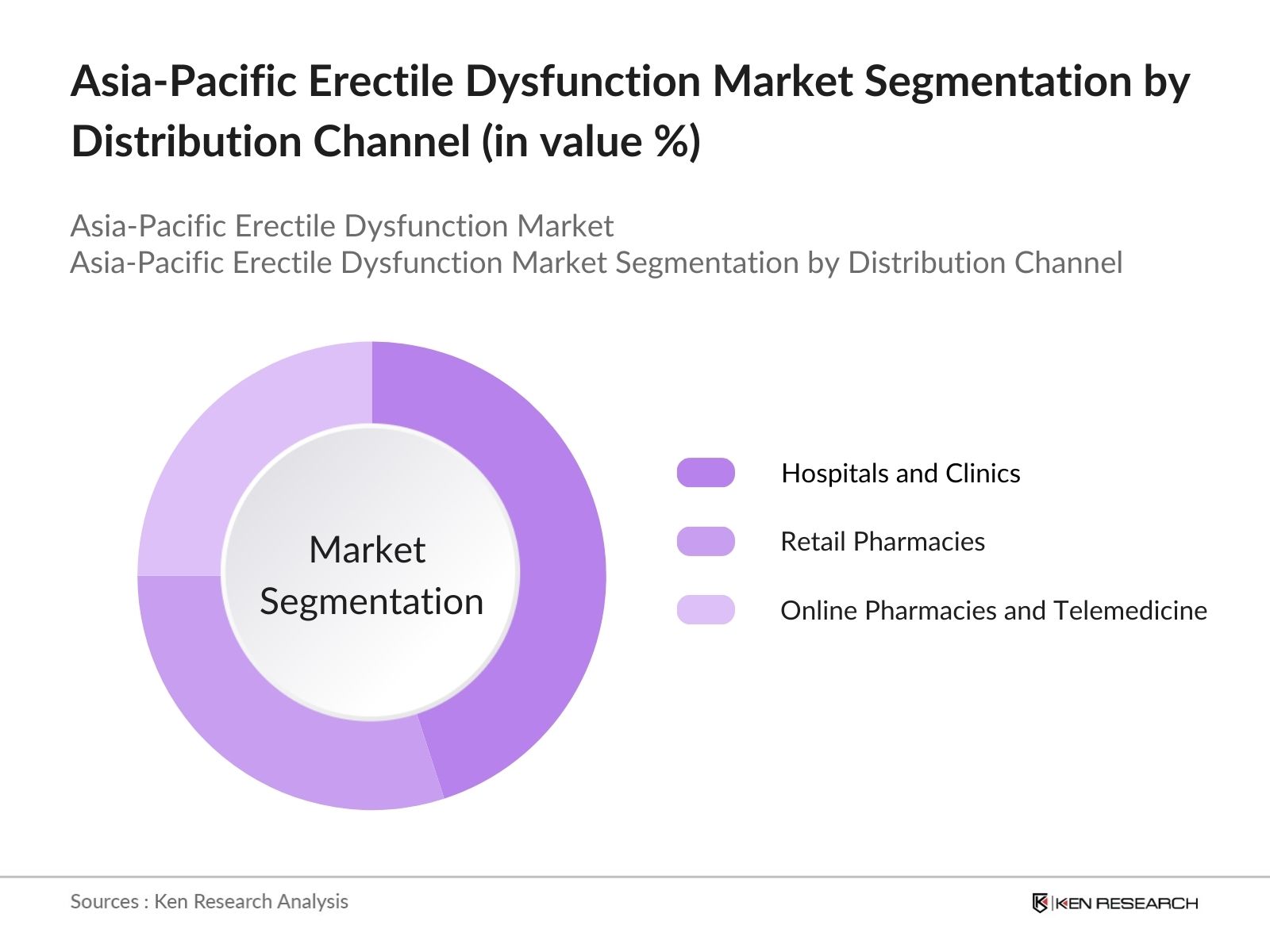
By Distribution Channel: The market is further segmented by distribution channel into hospitals and clinics, retail pharmacies, and online pharmacies. Online pharmacies and telemedicine platforms have gained market share due to the growing ease of access and discreet nature of consultations. In urban areas, the increasing use of digital health platforms for consultation and prescription fulfillment has also driven growth in this segment, particularly in countries like China and India.
Asia-Pacific Erectile Dysfunction Market Competitive Landscape
The Asia-Pacific Erectile Dysfunction market is dominated by global pharmaceutical companies with strong portfolios in the ED treatment segment. Companies like Pfizer, Eli Lilly, and Bayer lead the market with their established brands and continuous innovations. The competitive landscape shows a mix of global leaders and smaller, regional players offering cost-effective alternatives.
|
Company |
Establishment Year |
Headquarters |
Revenue (USD Bn) |
Employees |
Key Product |
Geographic Presence |
R&D Investment |
New Product Launches |
|
Pfizer Inc. |
1849 |
USA |
- |
- |
- |
- |
- |
- |
|
Eli Lilly and Company |
1876 |
USA |
- |
- |
- |
- |
- |
- |
|
Bayer AG |
1863 |
Germany |
- |
- |
- |
- |
- |
- |
|
Teva Pharmaceutical Industries |
1901 |
Israel |
- |
- |
- |
- |
- |
- |
|
Viatris Inc. |
2020 |
USA |
- |
- |
- |
- |
- |
- |
Asia-Pacific Erectile Dysfunction Market Analysis
Asia-Pacific Erectile Dysfunction Market Growth Drivers:
- Ageing Population (Impact on Erectile Dysfunction Prevalence): The Asia-Pacific region is witnessing rapid population ageing, with Japan having the highest proportion of elderly, where around 30% of the population is projected to be above 65 in 2024. This demographic shift increases the prevalence of erectile dysfunction (ED) as studies show that ED affects about 50% of men aged 40-70 globally. The World Bank reports that the median age in South Korea has reached 43.5 years in 2024, contributing to rising cases of ED. Aging populations in countries like China, which now has over 260 million individuals aged 60 or older, are driving the demand for ED treatments.
- Lifestyle Changes (Impact of Smoking, Obesity, and Sedentary Lifestyles): Lifestyle factors such as obesity, smoking, and sedentary habits are contributing to rising ED cases. The World Health Organization (WHO) reported that over 25% of adults in Southeast Asia are considered obese in 2024, a major risk factor for ED. Additionally, tobacco use remains high, with around 1.2 billion smokers globally, a substantial portion of whom reside in Asia. These factors lead to vascular problems that exacerbate ED, further increasing the need for medical interventions in the region.
- Increasing Awareness & Acceptance of Erectile Dysfunction Treatments: Growing awareness about ED and available treatments is reshaping the stigma associated with the condition. In 2024, awareness campaigns in countries like India have led to an estimated 20% increase in consultations for ED-related treatments, according to the Indian Ministry of Health. Additionally, the rise of media campaigns, especially in urban areas, has resulted in more men seeking help for ED, with South Korea reporting an 8% increase in ED drug prescriptions in the first half of 2024.
Asia-Pacific Erectile Dysfunction Market Challenges:
- Stigma Associated with Erectile Dysfunction: Despite increased awareness, social stigma continues to deter many men from seeking treatment for ED. Surveys conducted by Japan's Health Ministry in 2024 revealed that nearly 30% of men over 40 experiencing ED had not sought medical help due to embarrassment or fear of social judgment. In conservative cultures across South Asia, the social acceptance of discussing sexual health issues remains limited, posing a barrier to the growth of the ED treatment market. Studies indicate that only about 10% of men with ED in China seek treatment, highlighting the substantial impact of stigma.
- High Cost of Treatments and Medication: The cost of ED treatments remains a major barrier for a large portion of the Asia-Pacific population. A report by Australias Pharmaceutical Benefits Scheme in 2024 highlighted that the average out-of-pocket cost for ED medications like sildenafil can reach up to $100 per month. In developing nations such as Indonesia, the cost of advanced treatments like penile implants can exceed $5,000, making it unaffordable for many citizens.
Asia-Pacific Erectile Dysfunction Future Market Outlook
Over the next five years, the Asia-Pacific Erectile Dysfunction market is expected to see growth, driven by rising awareness about ED treatments, advancements in medical technology, and a surge in digital health platforms. The ageing population in key markets like Japan, China, and South Korea, coupled with the growing acceptance of online consultations and prescriptions, will further fuel market expansion. Additionally, innovations in non-invasive therapies such as shockwave therapy and stem cell treatments are anticipated to become widely available, attracting a broader range of consumers looking for alternatives to oral medications.
Asia-Pacific Erectile Dysfunction Market Opportunities:
- Rising Demand for Non-Invasive and Natural Treatments: The demand for non-invasive and natural treatments for ED is growing, particularly in countries like Thailand and India, where traditional medicine practices are popular. A study by Thailand's Ministry of Public Health in 2024 revealed that over 20% of men are opting for herbal remedies such as ginseng and acupuncture to treat ED. The global trend toward holistic health and wellness is further accelerating this shift, creating opportunities for companies to develop alternative therapies that align with consumer preferences.
- Technological Advancements in Treatment Options (Stem Cell Therapy, Shockwave Therapy): Innovative treatments such as stem cell therapy and shockwave therapy are gaining traction as non-invasive alternatives to traditional ED medications. In South Korea, 2024 saw the successful implementation of over 1,000 stem cell therapy procedures for ED, as reported by the South Korean Medical Research Council. Shockwave therapy is also expanding, particularly in China, where over 15 hospitals have adopted this treatment, showing promising long-term results for patients.
Scope of the Report
|
By Treatment Type |
Oral Medications Surgical Treatments Non-Invasive Treatments |
|
By Distribution Channel |
Hospitals and Clinics Retail Pharmacies Online Pharmacies Telemedicine Platforms |
|
By Age Group |
40-49 Years 50-59 Years 60+ Years |
|
By Region |
China South Korea Japan India Australia Rest of APAC |
|
By End User |
Individuals Medical Institutions Specialty Clinics |
Products
Key Target Audience Organizations and Entities Who Can Benefit by Subscribing This Report:
Government and Regulatory Bodies
Banks and Financial Institutes
Investors and Venture Capitalists
Pharmaceutical Manufacturers
Medical Device Manufacturers
Telemedicine Service Companies
Health Insurance Companies
Companies
Players Mentioned in the Report:
Pfizer Inc.
Eli Lilly and Company
Bayer AG
Boston Scientific Corporation
Coloplast A/S
Viatris Inc.
Teva Pharmaceutical Industries
Metuchen Pharmaceuticals LLC
Apricus Biosciences, Inc.
GlaxoSmithKline plc
Futura Medical plc
Lupin Limited
Endo Pharmaceuticals Inc.
Antares Pharma, Inc.
Sanofi S.A.
Table of Contents
1. Asia-Pacific Erectile Dysfunction Market Overview
1.1. Definition and Scope
1.2. Market Taxonomy
1.3. Market Growth Rate
1.4. Market Segmentation Overview
2. Asia-Pacific Erectile Dysfunction Market Size (In USD Bn)
2.1. Historical Market Size
2.2. Year-On-Year Growth Analysis
2.3. Key Market Developments and Milestones
3. Asia-Pacific Erectile Dysfunction Market Analysis
3.1. Growth Drivers
3.1.1. Aging Population (Impact on Erectile Dysfunction Prevalence)
3.1.2. Lifestyle Changes (Impact of Smoking, Obesity, and Sedentary Lifestyles)
3.1.3. Increasing Awareness & Acceptance of Erectile Dysfunction Treatments
3.1.4. Advancements in Medical Technologies (Telemedicine, Personalized Medicine)
3.2. Market Challenges
3.2.1. Stigma Associated with Erectile Dysfunction
3.2.2. High Cost of Treatments and Medication
3.2.3. Side Effects of Common Treatments (Phosphodiesterase Type 5 Inhibitors)
3.3. Opportunities
3.3.1. Rising Demand for Non-Invasive and Natural Treatments
3.3.2. Technological Advancements in Treatment Options (Stem Cell Therapy, Shockwave Therapy)
3.3.3. Expansion of Online Pharmacies and Telemedicine Platforms
3.4. Trends
3.4.1. Personalized Erectile Dysfunction Treatments
3.4.2. Use of Telemedicine for Prescriptions and Consultations
3.4.3. Integration of AI for Diagnosis and Treatment Optimization
3.5. Government Regulation
3.5.1. Drug Approval Processes for Erectile Dysfunction Medication
3.5.2. Regulatory Landscape for Telemedicine and Online Consultations
3.5.3. National Healthcare Initiatives for Sexual Health
3.6. SWOT Analysis
3.7. Stakeholder Ecosystem (Pharmaceutical Manufacturers, Distributors, Telemedicine Providers)
3.8. Porters Five Forces (Power of Buyers, Power of Suppliers, Threat of New Entrants, Threat of Substitutes, Industry Rivalry)
3.9. Competition Ecosystem
4. Asia-Pacific Erectile Dysfunction Market Segmentation
4.1. By Treatment Type (In Value %)
4.1.1. Oral Medications (Phosphodiesterase Type 5 Inhibitors, Hormone Replacement Therapy)
4.1.2. Surgical Treatments (Penile Implants, Vascular Surgery)
4.1.3. Non-Invasive Treatments (Shockwave Therapy, Counseling, Vacuum Devices)
4.2. By Distribution Channel (In Value %)
4.2.1. Hospitals and Clinics
4.2.2. Retail Pharmacies
4.2.3. Online Pharmacies and Telemedicine Platforms
4.3. By Age Group (In Value %)
4.3.1. 40-49 Years
4.3.2. 50-59 Years
4.3.3. 60+ Years
4.4. By Region (In Value %)
4.4.1. China
4.4.2. South Korea
4.4.3. Japan
4.4.4. India
4.4.5. Australia
4.4.6. Rest of APAC
4.5. By End User (In Value %)
4.5.1. Individuals
4.5.2. Medical Institutions
4.5.3. Specialty Clinics
5. Asia-Pacific Erectile Dysfunction Market Competitive Analysis
5.1. Detailed Profiles of Major Companies
5.1.1. Pfizer Inc.
5.1.2. Eli Lilly and Company
5.1.3. Bayer AG
5.1.4. Boston Scientific Corporation
5.1.5. Coloplast A/S
5.1.6. Viatris Inc.
5.1.7. Teva Pharmaceutical Industries Ltd.
5.1.8. Metuchen Pharmaceuticals LLC
5.1.9. Apricus Biosciences, Inc.
5.1.10. GlaxoSmithKline plc
5.1.11. Futura Medical plc
5.1.12. Lupin Limited
5.1.13. Endo Pharmaceuticals Inc.
5.1.14. Antares Pharma, Inc.
5.1.15. Sanofi S.A.
5.2. Cross Comparison Parameters (Revenue, No. of Employees, R&D Investment, Product Portfolio, Geographical Presence, Key Therapeutics, Market Share)
5.3. Market Share Analysis
5.4. Strategic Initiatives (Partnerships, Licensing Agreements)
5.5. Mergers and Acquisitions
5.6. Investment Analysis
5.7. Government Grants
5.8. Private Equity Investments
6. Asia-Pacific Erectile Dysfunction Market Regulatory Framework
6.1. Drug Approval Requirements
6.2. Compliance and Safety Guidelines for Medical Devices
6.3. Certification and Licensing Processes for Telemedicine Platforms
7. Asia-Pacific Erectile Dysfunction Future Market Size (In USD Bn)
7.1. Future Market Size Projections
7.2. Key Factors Driving Future Market Growth
8. Asia-Pacific Erectile Dysfunction Future Market Segmentation
8.1. By Treatment Type (In Value %)
8.2. By Distribution Channel (In Value %)
8.3. By Age Group (In Value %)
8.4. By Region (In Value %)
8.5. By End User (In Value %)
9. Asia-Pacific Erectile Dysfunction Market Analysts Recommendations
9.1. TAM/SAM/SOM Analysis
9.2. Customer Cohort Analysis
9.3. Marketing Initiatives
9.4. White Space Opportunity Analysis
Disclaimer Contact UsResearch Methodology
Step 1: Identification of Key Variables
This step involves identifying the critical factors driving the Asia-Pacific Erectile Dysfunction market. Our research process integrates secondary data sources such as industry databases, government reports, and proprietary tools to capture all significant market variables influencing growth.
Step 2: Market Analysis and Construction
This phase involves analyzing historical market data and key performance indicators (KPIs) such as treatment adoption rates, sales volumes, and revenues. Our analysts also assess product penetration and the share of online versus offline sales channels.
Step 3: Hypothesis Validation and Expert Consultation
We validate market assumptions through expert consultations, leveraging insights from healthcare professionals, pharmaceutical executives, and telemedicine platform leaders. These inputs provide operational and financial insights to refine our data analysis.
Step 4: Research Synthesis and Final Output
In this final step, we combine all data and insights to prepare a comprehensive market analysis. The final report provides validated market forecasts, competitive analysis, and strategic recommendations for stakeholders.
Frequently Asked Questions
01. How big is the Asia-Pacific Erectile Dysfunction Market?
The Asia-Pacific Erectile Dysfunction market is valued at USD 1076.6 million in 2023, driven by advancements in treatment options, increasing awareness, and the growing adoption of telemedicine platforms.
02. What are the challenges in the Asia-Pacific Erectile Dysfunction Market?
The Asia-Pacific Erectile Dysfunction market challenges include the social stigma associated with ED, high treatment costs, and side effects from traditional medications. The market also faces regulatory hurdles in the adoption of telemedicine services.
03. Who are the major players in the Asia-Pacific Erectile Dysfunction Market?
The Asia-Pacific Erectile Dysfunction market major players include Pfizer Inc., Eli Lilly and Company, Bayer AG, Teva Pharmaceutical Industries, and Viatris Inc., all of which have strong brand recognition and wide distribution networks.
04. What are the growth drivers of the Asia-Pacific Erectile Dysfunction Market?
The Asia-Pacific Erectile Dysfunction market growth is driven by the region's aging population, increasing consumer awareness about treatment options, and the rise of digital healthcare platforms like telemedicine. Technological innovations in treatment methods also fuel market expansion.
Why Buy From Us?

What makes us stand out is that our consultants follows Robust, Refine and Result (RRR) methodology. i.e. Robust for clear definitions, approaches and sanity checking, Refine for differentiating respondents facts and opinions and Result for presenting data with story

We have set a benchmark in the industry by offering our clients with syndicated and customized market research reports featuring coverage of entire market as well as meticulous research and analyst insights.

While we don't replace traditional research, we flip the method upside down. Our dual approach of Top Bottom & Bottom Top ensures quality deliverable by not just verifying company fundamentals but also looking at the sector and macroeconomic factors.

With one step in the future, our research team constantly tries to show you the bigger picture. We help with some of the tough questions you may encounter along the way: How is the industry positioned? Best marketing channel? KPI's of competitors? By aligning every element, we help maximize success.

Our report gives you instant access to the answers and sources that other companies might choose to hide. We elaborate each steps of research methodology we have used and showcase you the sample size to earn your trust.

If you need any support, we are here! We pride ourselves on universe strength, data quality, and quick, friendly, and professional service.