















Asia Pacific Ethylene Market Outlook to 2030
Region:Asia
Author(s):Meenakshi Bisht
Product Code:KROD6155
December 2024
93
About the Report
Asia Pacific Ethylene Market Overview
- The Asia Pacific ethylene market, valued at USD 59.32 billion, is primarily driven by the burgeoning demand for polyethylene in packaging and construction industries. The region's rapid industrialization and urbanization have significantly increased the consumption of ethylene derivatives, bolstering market growth.
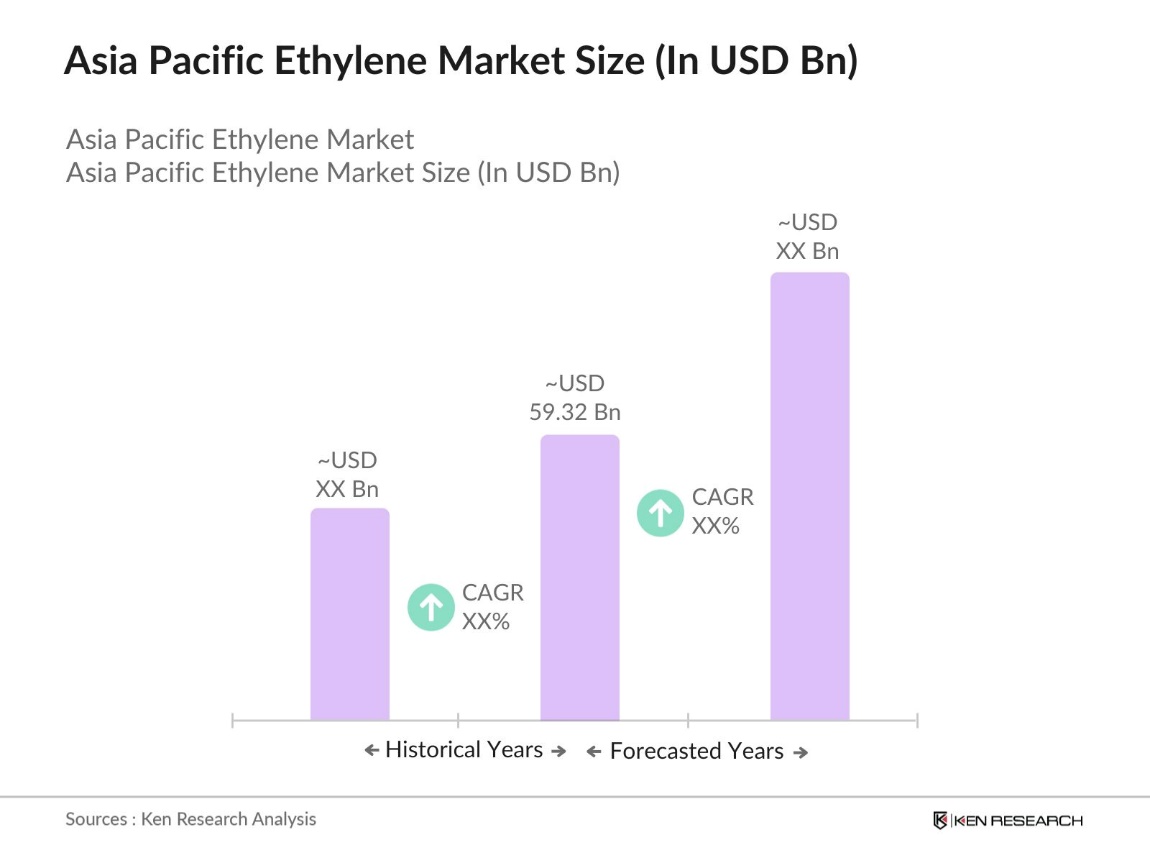
- China and India are the dominant players in the Asia Pacific ethylene market. China's extensive petrochemical infrastructure and substantial investments in production capacities position it as a leader. India's growing industrial base and increasing demand for plastics further contribute to its significant market share.
- Governments across the Asia Pacific region have implemented stringent emission standards and environmental policies affecting the ethylene industry. For example, India's National Clean Air Programme targets a 30% reduction in particulate matter levels by 2024, influencing operational practices in the petrochemical sector.
Asia Pacific Ethylene Market Segmentation
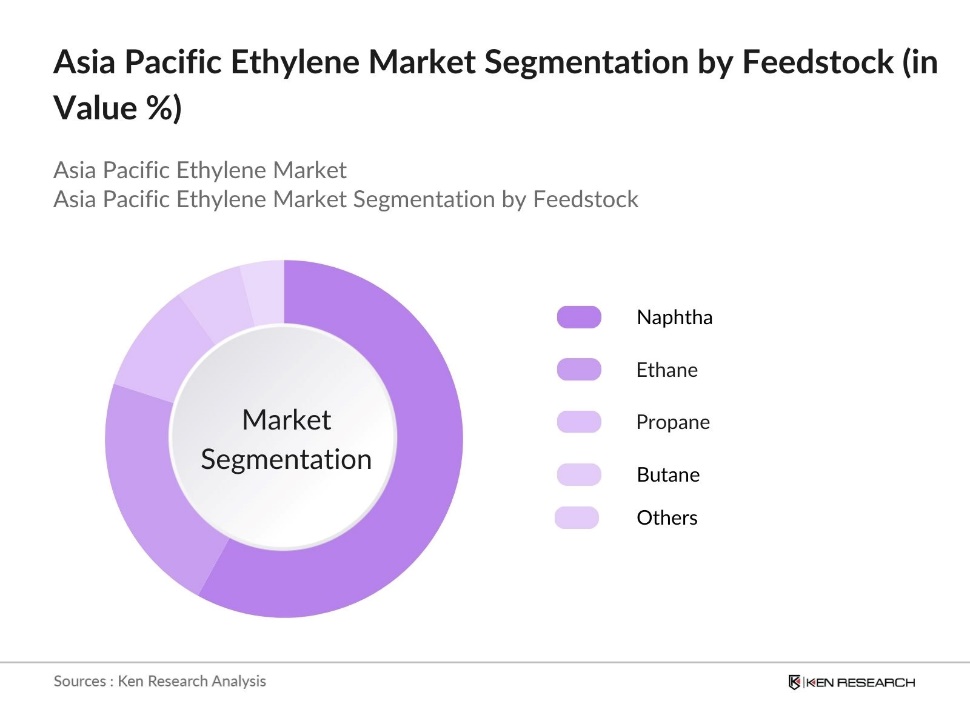
By Feedstock: The market is segmented by feedstock into naphtha, ethane, propane, butane, and others. Naphtha dominates this segment due to its widespread availability and established use in steam cracking processes. The region's abundant naphtha resources and the flexibility it offers in producing various petrochemicals make it the preferred feedstock for ethylene production.
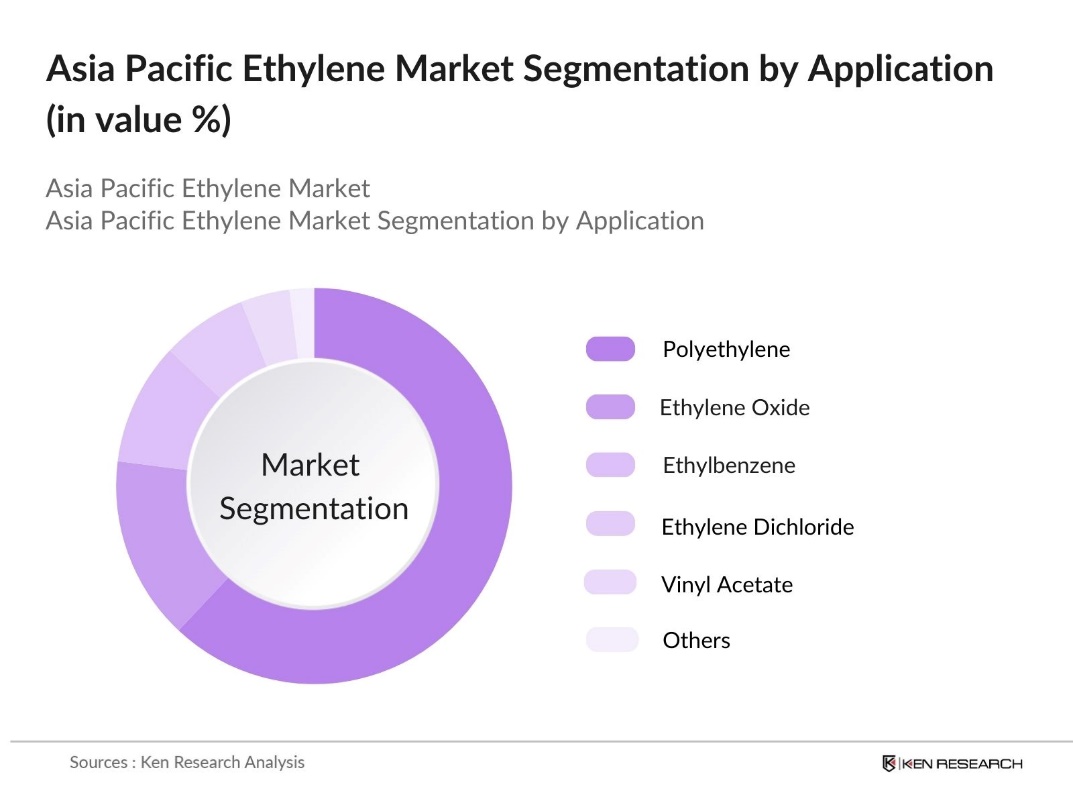
By Application: The market is segmented by application into polyethylene, ethylene oxide, ethylbenzene, ethylene dichloride, vinyl acetate, and others. Polyethylene holds the largest market share, driven by its extensive use in packaging, construction, and automotive industries. Its versatility, durability, and cost-effectiveness make polyethylene a preferred material across various applications, sustaining its dominance in the ethylene market.
Asia Pacific Ethylene Market Competitive Landscape
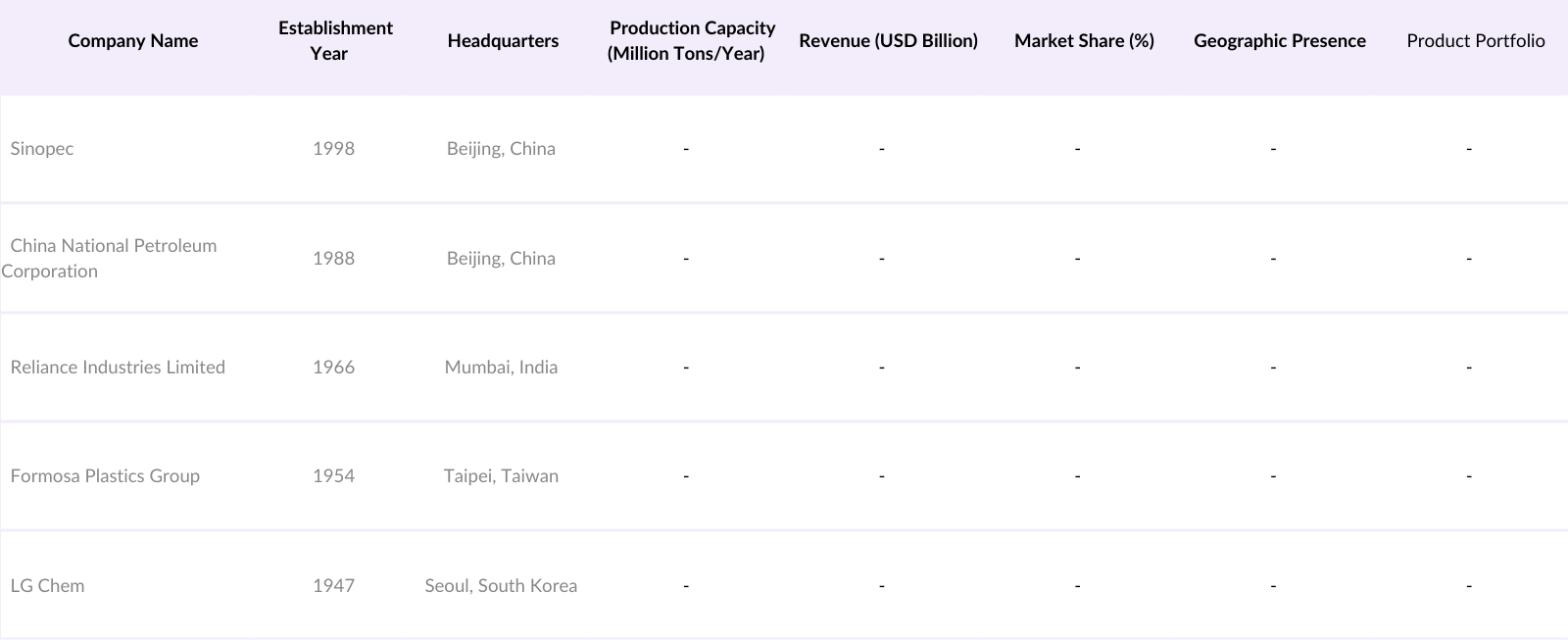
The Asia Pacific ethylene market is characterized by the presence of several key players who contribute to the market's competitive dynamics. Below is an overview of five major companies:
Asia Pacific Ethylene Industry Analysis
Growth Drivers
- Industrialization and Urbanization: The Asia Pacific region has experienced significant industrialization and urbanization, leading to increased demand for ethylene-based products. For instance, China's urban population grew from 897.58 million in 2022 to 910.90 million in 2023, reflecting a substantial rise in urbanization. This urban expansion has driven the need for construction materials, packaging, and consumer goods, all of which utilize ethylene derivatives.
- Rising Demand in Packaging and Automotive Sectors: The packaging industry in Asia Pacific has seen remarkable growth, in 2022, China produced approximately 114.9 million tons of plastic products. Ethylene, a key component in polyethylene production, is essential for manufacturing various packaging materials. In the automotive sector, countries like Japan produced it, incorporating ethylene-based plastics for lightweight components, enhancing fuel efficiency.
- Technological Advancements in Production Processes: Recent technological advancements are boosting ethylene production efficiency in the Asia Pacific. Innovations like advanced steam cracking have optimized production by increasing yields, lowering costs, and reducing environmental impact. These improvements enable producers to meet the rising demand for ethylene derivatives more effectively, supporting the growth of industries dependent on ethylene-based products throughout the region.
Market Challenges
- Volatility in Raw Material Prices: The Asia Pacific ethylene market is significantly impacted by fluctuations in raw material prices, which directly affect production costs for manufacturers. This volatility introduces challenges to maintaining stable profit margins and consistent pricing strategies, as producers must continuously adapt to shifting input costs. These changes create an unpredictable environment, requiring companies to implement dynamic approaches to manage cost pressures effectively.
- Environmental Regulations and Compliance: Stringent environmental regulations across the Asia Pacific region present challenges for ethylene producers, mandating adherence to emissions-reduction initiatives. Compliance with these regulations requires substantial investment in advanced, cleaner technologies and sustainable processes. Such measures, though necessary for environmental goals, increase operational costs for companies, reshaping production practices and prompting a transition toward more sustainable and regulatory-compliant industry standards.
Asia Pacific Ethylene Market Future Outlook
Over the next five years, the Asia Pacific ethylene market is expected to experience significant growth, driven by continuous industrial expansion, increasing demand for plastics, and advancements in production technologies. The region's focus on sustainable practices and the development of bio-based ethylene are anticipated to open new avenues for market players.
Market Opportunities
- Growth in Emerging Economies: Emerging economies in the Asia Pacific region provide promising growth opportunities for the ethylene market. Rapid industrialization and urbanization in these countries drive demand for consumer goods, packaging, and construction materials that rely on ethylene derivatives. This growth offers a substantial market potential, as expanding industries in these economies increasingly incorporate ethylene-based products.
- Development of Bio-based Ethylene: The development of bio-based ethylene presents a sustainable alternative to conventional production methods. Companies in the region are investing in research and development to establish bio-based ethylene production, aligning with global sustainability goals. This shift opens new market opportunities by supporting the growing demand for eco-friendly alternatives and reducing environmental impact across industries reliant on ethylene derivatives.
Scope of the Report
|
Feedstock |
Naphtha Ethane Propane Butane Others |
|
Application |
Polyethylene Ethylene Oxide Ethylbenzene Ethylene Dichloride Vinyl Acetate Others |
|
End-Use Industry |
Packaging Automotive Building & Construction Agrochemicals Textiles Chemicals Rubber & Plastics Soaps & Detergents Others |
|
Production Process |
Steam Cracking Catalytic Cracking Others |
|
Country |
China India Japan South Korea Australia Indonesia Malaysia Rest of Asia Pacific |
Products
Key Target Audience
Petrochemical Companies
Packaging Manufacturers
Automotive Component Manufacturers
Textile Industry
Government and Regulatory Bodies (Ministry of Industry and Information Technology, National Development and Reform Commission)
Investors and venture capital Firms
Banks and Financial Institutions
Companies
Players Mentioned in the Report
Sinopec
China National Petroleum Corporation (CNPC)
Reliance Industries Limited
Formosa Plastics Group
LG Chem
Mitsubishi Chemical Corporation
Lotte Chemical Corporation
PTT Global Chemical Public Company Limited
SABIC
Exxon Mobil Corporation
Table of Contents
1. Asia Pacific Ethylene Market Overview
1.1 Definition and Scope
1.2 Market Taxonomy
1.3 Market Growth Rate
1.4 Market Segmentation Overview
2. Asia Pacific Ethylene Market Size (USD Mn)
2.1 Historical Market Size
2.2 Year-On-Year Growth Analysis
2.3 Key Market Developments and Milestones
3. Asia Pacific Ethylene Market Analysis
3.1 Growth Drivers
3.1.1 Industrialization and Urbanization
3.1.2 Rising Demand in Packaging and Automotive Sectors
3.1.3 Expansion of Petrochemical Industries
3.1.4 Technological Advancements in Production Processes
3.2 Market Challenges
3.2.1 Volatility in Raw Material Prices
3.2.2 Environmental Regulations and Compliance
3.2.3 Competition from Alternative Materials
3.2.4 Supply Chain Disruptions
3.3 Opportunities
3.3.1 Growth in Emerging Economies
3.3.2 Development of Bio-based Ethylene
3.3.3 Strategic Partnerships and Collaborations
3.3.4 Investments in Research and Development
3.4 Trends
3.4.1 Shift Towards Sustainable Production Methods
3.4.2 Integration of Digital Technologies in Manufacturing
3.4.3 Increasing Capacity Expansions in the Region
3.4.4 Adoption of Circular Economy Practices
3.5 Government Regulations
3.5.1 Emission Standards and Environmental Policies
3.5.2 Trade Policies and Tariffs
3.5.3 Incentives for Green Technologies
3.5.4 Safety and Quality Standards
3.6 SWOT Analysis
3.7 Stakeholder Ecosystem
3.8 Porters Five Forces Analysis
3.9 Competitive Landscape
4. Asia Pacific Ethylene Market Segmentation
4.1 By Feedstock (Value %)
4.1.1 Naphtha
4.1.2 Ethane
4.1.3 Propane
4.1.4 Butane
4.1.5 Others
4.2 By Application (Value %)
4.2.1 Polyethylene
4.2.2 Ethylene Oxide
4.2.3 Ethylbenzene
4.2.4 Ethylene Dichloride
4.2.5 Vinyl Acetate
4.2.6 Others
4.3 By End-Use Industry (Value %)
4.3.1 Packaging
4.3.2 Automotive
4.3.3 Building & Construction
4.3.4 Agrochemicals
4.3.5 Textiles
4.3.6 Chemicals
4.3.7 Rubber & Plastics
4.3.8 Soaps & Detergents
4.3.9 Others
4.4 By Production Process (Value %)
4.4.1 Steam Cracking
4.4.2 Catalytic Cracking
4.4.3 Others
4.5 By Country (Value %)
4.5.1 China
4.5.2 India
4.5.3 Japan
4.5.4 South Korea
4.5.5 Australia
4.5.6 Indonesia
4.5.7 Malaysia
4.5.8 Rest of Asia Pacific
5. Asia Pacific Ethylene Competitive Analysis
5.1 Detailed Profiles of Major Companies
5.1.1 Sinopec
5.1.2 China National Petroleum Corporation (CNPC)
5.1.3 Reliance Industries Limited
5.1.4 Formosa Plastics Group
5.1.5 LG Chem
5.1.6 Mitsubishi Chemical Corporation
5.1.7 Lotte Chemical Corporation
5.1.8 PTT Global Chemical Public Company Limited
5.1.9 SABIC
5.1.10 Exxon Mobil Corporation
5.1.11 Royal Dutch Shell plc
5.1.12 Dow Inc.
5.1.13 BASF SE
5.1.14 Chevron Phillips Chemical Company
5.1.15 INEOS Group
5.2 Cross Comparison Parameters (Production Capacity, Revenue, Market Share, Geographic Presence, Product Portfolio, Strategic Initiatives, R&D Investments, Sustainability Practices)
5.3 Market Share Analysis
5.4 Strategic Initiatives
5.5 Mergers and Acquisitions
5.6 Investment Analysis
5.6.1 Venture Capital Funding
5.6.2 Government Grants
5.6.3 Private Equity Investments
6. Asia Pacific Ethylene Regulatory Framework
6.1 Environmental Standards
6.2 Compliance Requirements
6.3 Certification Processes
7. Asia Pacific Ethylene Future Market Size (USD Mn)
7.1 Future Market Size Projections
7.2 Key Factors Driving Future Market Growth
8. Asia Pacific Ethylene Future Market Segmentation
8.1 By Feedstock (Value %)
8.2 By Application (Value %)
8.3 By End-Use Industry (Value %)
8.4 By Production Process (Value %)
8.5 By Country (Value %)
9. Asia Pacific Ethylene Analysts Recommendations
9.1 Total Addressable Market (TAM), Serviceable Available Market (SAM), Serviceable Obtainable Market (SOM) Analysis
9.2 Customer Cohort Analysis
9.3 Marketing Initiatives
9.4 White Space Opportunity Analysis
Disclaimer Contact UsResearch Methodology
Step 1: Identification of Key Variables
The initial phase involves constructing an ecosystem map encompassing all major stakeholders within the Asia Pacific Ethylene Market. This step is underpinned by extensive desk research, utilizing a combination of secondary and proprietary databases to gather comprehensive industry-level information. The primary objective is to identify and define the critical variables that influence market dynamics.
Step 2: Market Analysis and Construction
In this phase, we compile and analyze historical data pertaining to the Asia Pacific Ethylene Market. This includes assessing market penetration, the ratio of marketplaces to service providers, and the resultant revenue generation. Furthermore, an evaluation of service quality statistics is conducted to ensure the reliability and accuracy of the revenue estimates.
Step 3: Hypothesis Validation and Expert Consultation
Market hypotheses are developed and subsequently validated through computer-assisted telephone interviews (CATIs) with industry experts representing a diverse array of companies. These consultations provide valuable operational and financial insights directly from industry practitioners, which are instrumental in refining and corroborating the market data.
Step 4: Research Synthesis and Final Output
The final phase involves direct engagement with multiple ethylene manufacturers to acquire detailed insights into product segments, sales performance, consumer preferences, and other pertinent factors. This interaction serves to verify and complement the statistics derived from the bottom-up approach, thereby ensuring a comprehensive, accurate, and validated analysis of the Asia Pacific Ethylene market.
Frequently Asked Questions
01 How big is the Asia Pacific Ethylene Market?
The Asia Pacific ethylene market is valued at USD 59.32 billion, driven by the increasing demand for polyethylene in packaging and construction industries.
02 What are the challenges in the Asia Pacific Ethylene Market?
Challenges in Asia Pacific ethylene market include volatility in raw material prices, stringent environmental regulations, competition from alternative materials, and potential supply chain disruptions.
03 Who are the major players in the Asia Pacific Ethylene Market?
Key players in Asia Pacific ethylene market include Sinopec, China National Petroleum Corporation (CNPC), Reliance Industries Limited, Formosa Plastics Group, and LG Chem.
04 What are the growth drivers of the Asia Pacific Ethylene Market?
The Asia Pacific ethylene market is propelled by rapid industrialization, urbanization, rising demand in packaging and automotive sectors, and technological advancements in production processes.
Why Buy From Us?

What makes us stand out is that our consultants follows Robust, Refine and Result (RRR) methodology. i.e. Robust for clear definitions, approaches and sanity checking, Refine for differentiating respondents facts and opinions and Result for presenting data with story

We have set a benchmark in the industry by offering our clients with syndicated and customized market research reports featuring coverage of entire market as well as meticulous research and analyst insights.

While we don't replace traditional research, we flip the method upside down. Our dual approach of Top Bottom & Bottom Top ensures quality deliverable by not just verifying company fundamentals but also looking at the sector and macroeconomic factors.

With one step in the future, our research team constantly tries to show you the bigger picture. We help with some of the tough questions you may encounter along the way: How is the industry positioned? Best marketing channel? KPI's of competitors? By aligning every element, we help maximize success.

Our report gives you instant access to the answers and sources that other companies might choose to hide. We elaborate each steps of research methodology we have used and showcase you the sample size to earn your trust.

If you need any support, we are here! We pride ourselves on universe strength, data quality, and quick, friendly, and professional service.