
Asia Pacific Fabric Stain Remover Market Outlook to 2030
Region:Asia
Author(s):Sanjna
Product Code:KROD10342
November 2024
94
About the Report
Asia Pacific Fabric Stain Remover Market Overview
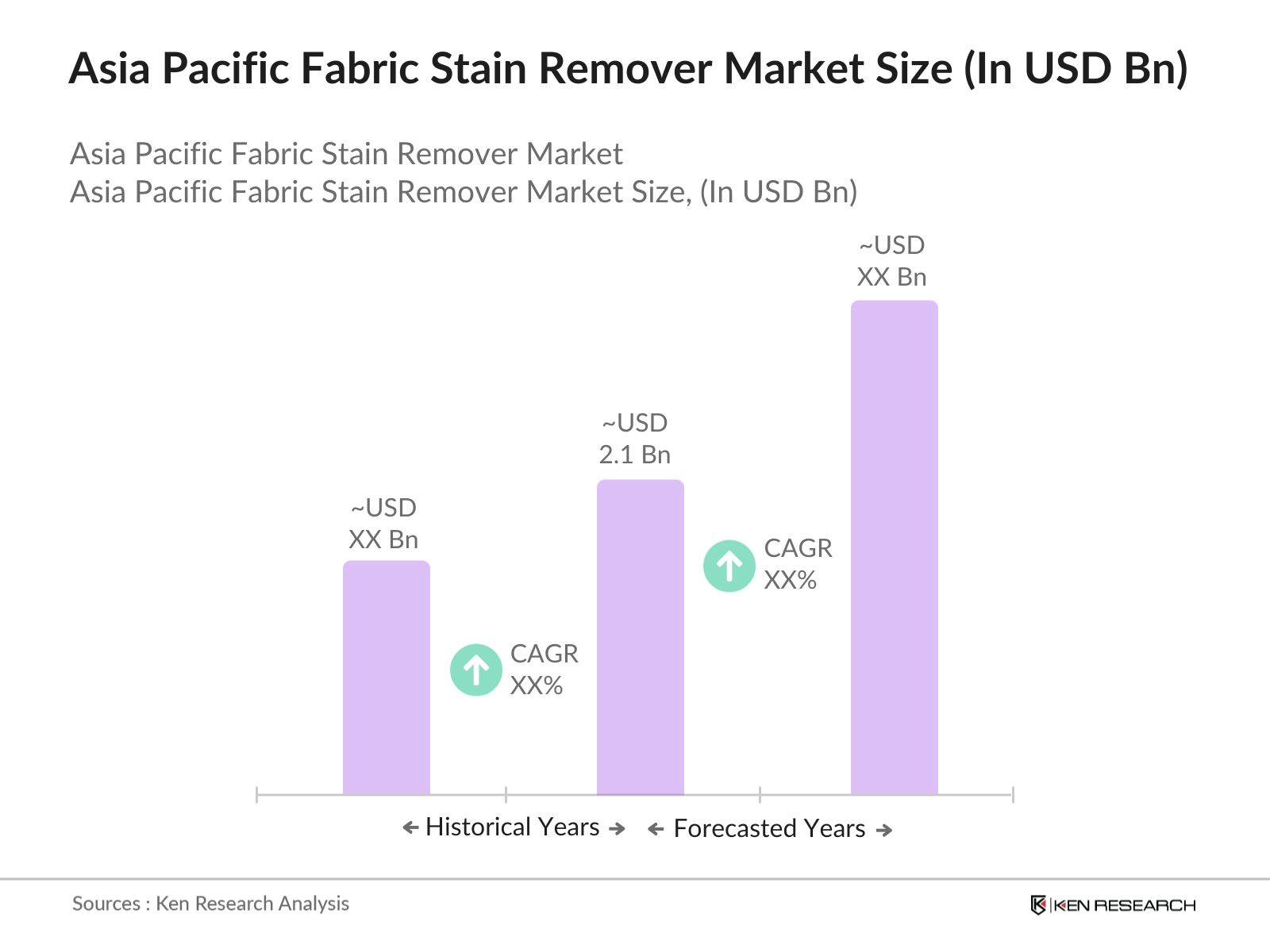
- The Asia Pacific fabric stain remover market is valued at USD 2.1 billion based on a five-year historical analysis. The market is driven by increasing consumer awareness regarding fabric care, combined with a shift toward environmentally-friendly products. The rising disposable income in key economies like China and India further boosts consumer demand for premium and eco-friendly fabric care products, leading to steady growth.
- Countries such as China, India, and Japan dominate the Asia Pacific fabric stain remover market. China leads due to its massive population, growing urbanization, and the presence of a large number of manufacturing facilities. Meanwhile, India's rapid economic growth and changing consumer behavior toward personal and household hygiene have furthered the market's expansion. These countries' dominance stems from their growing economies and increasing consumer spending on fabric care products.
- Governments across the Asia Pacific region have imposed stringent regulations on the use of harmful chemicals like phosphates and bleach in fabric stain removers. In 2023, the Ministry of Environment in Japan banned the use of phosphates in household cleaning products due to their environmental impact, particularly on water systems. Similar restrictions are being implemented in countries like Australia and New Zealand. These regulations have pushed manufacturers to reformulate their products, using safer alternatives such as enzymes and plant-based surfactants.
Asia Pacific Fabric Stain Remover Market Segmentation
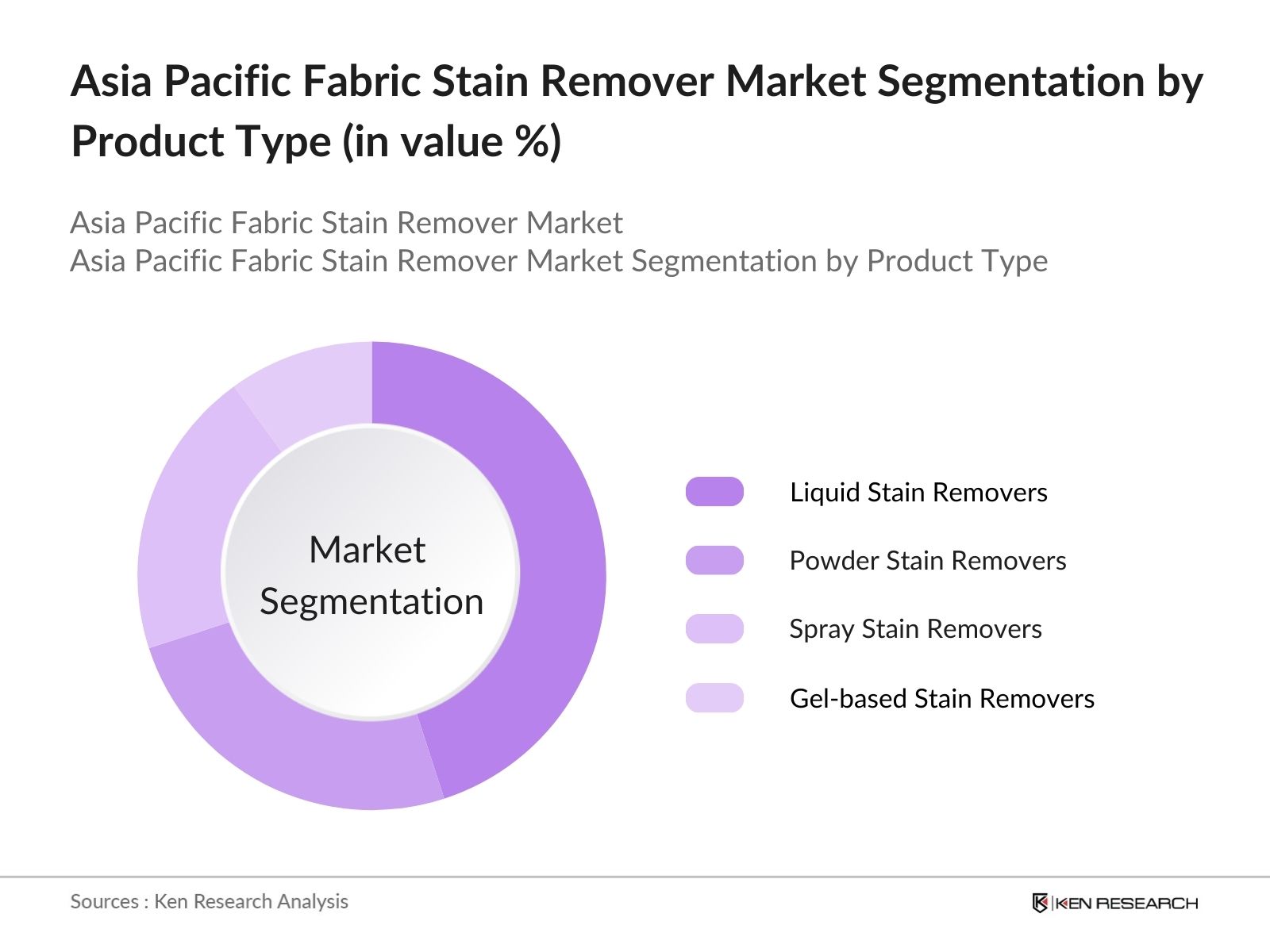
By Product Type: The Asia Pacific fabric stain remover market is segmented by product type into liquid stain removers, powder stain removers, spray stain removers, and gel-based stain removers. Among these, liquid stain removers hold the dominant market share due to their ease of application and superior effectiveness in removing tough stains. This segment has gained significant traction as consumers increasingly prefer liquid formulations for use in both manual washing and washing machines.
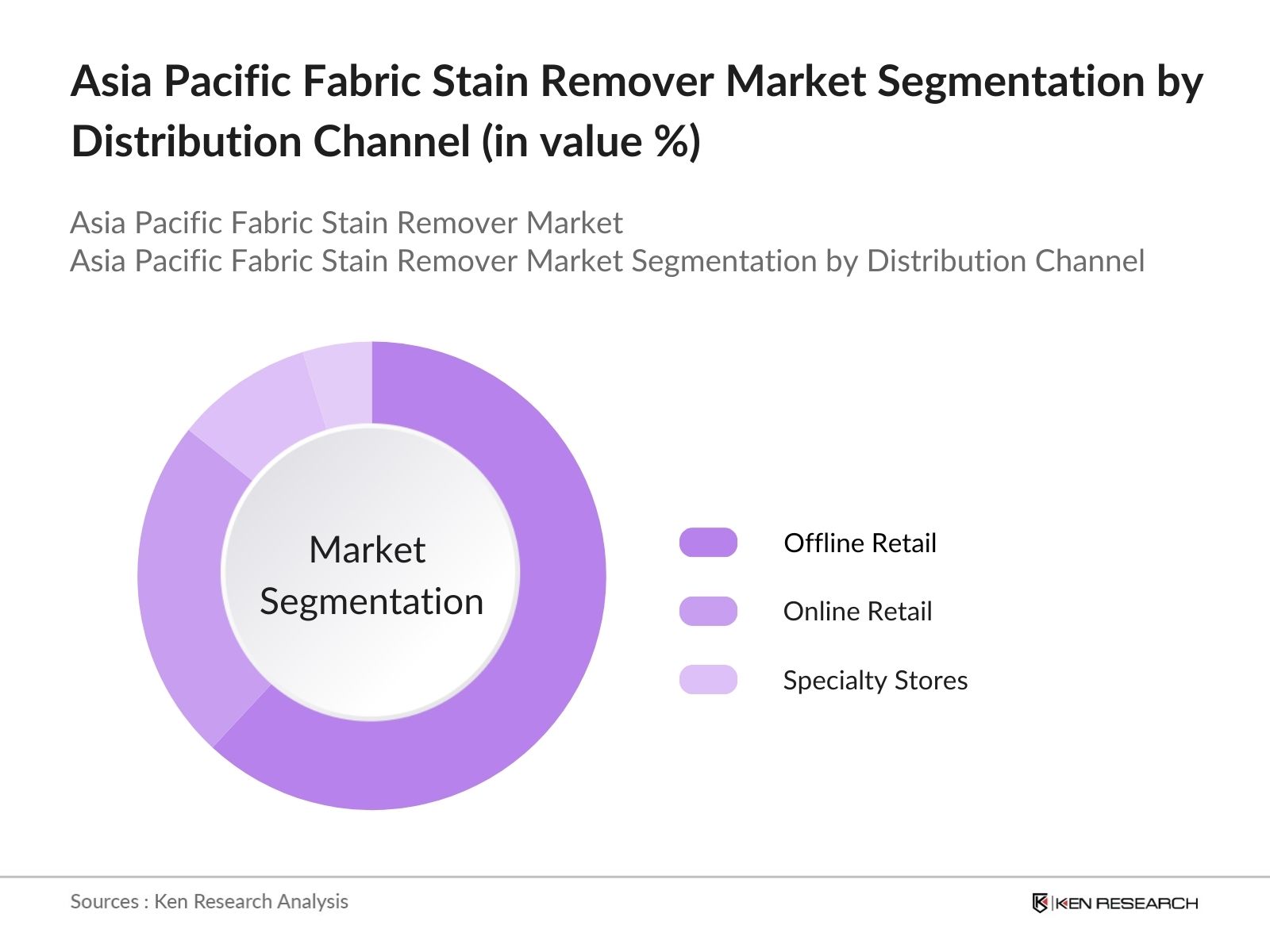
 By Distribution Channel: The market is segmented by distribution channels into online retail, offline retail (supermarkets/hypermarkets, convenience stores), and specialty stores. Offline retail, particularly supermarkets and hypermarkets, dominates the distribution channel segmentation due to the high consumer preference for purchasing household products in bulk and their convenience. The established presence of well-known retail chains across the region, along with regular promotional offers and discounts, attracts a large consumer base.
Asia Pacific Fabric Stain Remover Market Competitive Landscape
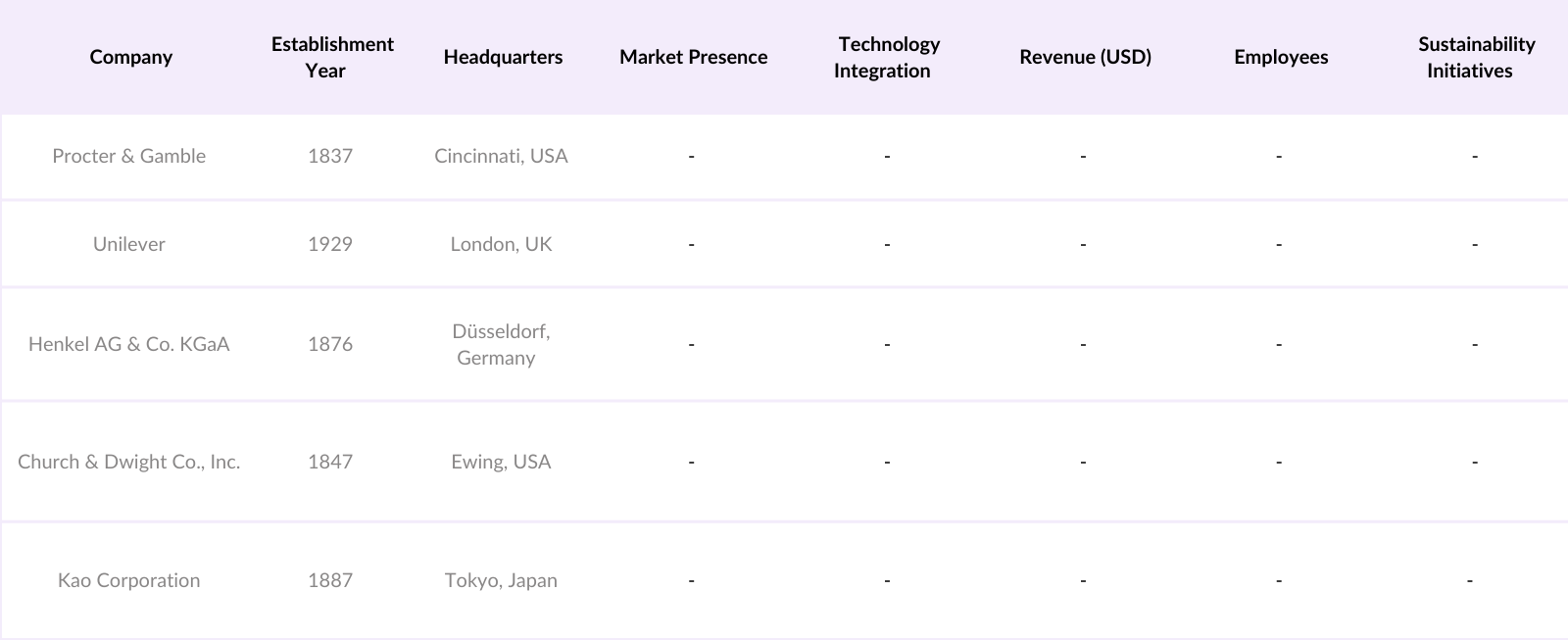
The Asia Pacific fabric stain remover market is characterized by the presence of both global and regional players. The market is consolidated, with leading multinational corporations holding a significant market share. These companies are increasingly focusing on product innovation, eco-friendly formulations, and expanding their distribution networks to maintain their competitive edge. The market also sees an increasing trend of partnerships and collaborations aimed at sustainability initiatives, which is a growing consumer demand in the region.
Asia Pacific Fabric Stain Remover Market Analysis
Growth Drivers
- Shift towards environmentally safe chemicals: The growing demand for fabric stain removers with eco-friendly formulations is driven by heightened environmental awareness. In Asia Pacific, approximately 60% of consumers in urban areas prefer products made with environmentally safe chemicals as of 2024, which is influenced by government regulations like Japan's Chemical Substances Control Law that limits the use of hazardous substances in household products. This shift aligns with global commitments to reduce chemical pollution, such as the UN's Sustainable Development Goals (SDGs).
- Growth in e-commerce for household products: The rise of e-commerce platforms has significantly boosted the availability of fabric stain removers, particularly in urban regions of Asia Pacific. As of 2024, over 1.5 billion online consumers across China, India, and Southeast Asia purchased household products through platforms such as Amazon and Alibaba. This trend is supported by growing internet penetration, which reached over 70% in major markets like China and India. The ease of online shopping, combined with targeted advertising and subscription services, has allowed manufacturers to rapidly scale their operations.
- Rise in consumer spending on fabric care: Household spending on fabric care products in Asia Pacific has been on the rise, driven by an increase in disposable income. In 2024, the average household in urban China spent nearly $1,200 annually on fabric care, with a noticeable surge in demand for stain removers. Similarly, Indian households have seen a rise in expenditure on laundry and cleaning products, bolstered by a growing middle class. This trend is supported by strong economic growth, with Indias GDP expected to surpass $3.5 trillion by the end of 2024.
Challenges
- Regulatory restrictions on hazardous chemicals: In Japan, the Chemical Substances Control Law restricts the use of toxic substances in household cleaning products, directly affecting stain remover formulations. The need to comply with these stringent regulations has resulted in increased R&D costs for manufacturers, as they shift towards safer ingredients. Furthermore, fines for non-compliance have risen, with penalties reaching up to $500,000 in Australia for violations under the Industrial Chemicals Act.
- Fluctuating prices of key ingredients: The prices of key raw materials used in fabric stain removers, such as surfactants and solvents, have seen significant fluctuations in recent years. In 2023, the price of linear alkylbenzene sulfonate (a common surfactant) increased by nearly 12% due to supply chain disruptions and rising crude oil prices. This has directly impacted manufacturers' production costs, especially in countries like India and Indonesia, where domestic production of these chemicals is limited.
Asia Pacific Fabric Stain Remover Market Future Outlook
Asia Pacific fabric stain remover market is expected to exhibit steady growth, driven by increasing consumer preference for eco-friendly and sustainable fabric care products. The rising awareness about the harmful effects of traditional chemical-based products is likely to propel the demand for natural and bio-based stain removers. Additionally, expanding e-commerce channels, particularly in emerging economies, will support the growth of online sales. The market is also poised to benefit from continuous innovations in product formulations and packaging that cater to the sustainability trend, further enhancing market growth.
Market Opportunities
- Growth potential in rural markets: Rural markets across Asia Pacific present untapped growth opportunities for fabric stain remover manufacturers. In 2024, approximately 60% of the population in countries like India and Indonesia still reside in rural areas, where the penetration of branded fabric care products remains low. Government programs focused on rural electrification and infrastructure development, such as Indias Saubhagya Scheme, have improved access to modern household appliances, driving demand for fabric care products. Manufacturers that invest in affordable, eco-friendly formulations for rural consumers stand to gain significant market share.
- Expansion of online distribution channels: The rapid growth of e-commerce platforms in Asia Pacific has created significant opportunities for fabric stain remover manufacturers. In 2023, online sales of household products in the region were valued at over $90 billion, with China and India leading the charge. Manufacturers are increasingly partnering with e-commerce giants like Amazon, Alibaba, and Flipkart to reach a wider consumer base, especially in remote areas where brick-and-mortar stores are scarce.
Scope of the Report
|
Segments |
Sub-segments |
|
Product Type |
Liquid Stain Removers Powder Stain Removers Spray Stain Removers Gel-Based Stain Removers |
|
Application |
Residential Use Commercial Use |
|
Distribution Channel |
Online Retail Offline Retail Specialty Stores |
|
Ingredient Type |
Chemical-based Stain Removers Enzyme-based Stain Removers Natural/Bio-based Stain Removers |
|
Country |
China India Japan Australia South Korea |
Products
Key Target Audience
Fabric Care Manufacturers
FMCG (Fast-Moving Consumer Goods) Companies
Packaging Companies
Brand Management Firms
E-commerce Platforms
Investors and Venture Capitalist Firms
Government and Regulatory Bodies (Environmental Protection Agencies)
Companies
Players Mentioned in the Report
Procter & Gamble
Unilever
Henkel AG & Co. KGaA
Church & Dwight Co., Inc.
Kao Corporation
Reckitt Benckiser Group PLC
SC Johnson & Son, Inc.
Amway
Lion Corporation
The Clorox Company
Table of Contents
1. Asia Pacific Fabric Stain Remover Market Overview
1.1. Definition and Scope
1.2. Market Taxonomy
1.3. Market Dynamics
1.4. Market Segmentation Overview
2. Asia Pacific Fabric Stain Remover Market Size (In USD Mn)
2.1. Historical Market Size
2.2. Year-On-Year Growth Analysis
2.3. Key Market Developments and Milestones
3. Asia Pacific Fabric Stain Remover Market Analysis
3.1. Growth Drivers (Market demand for eco-friendly formulations, Urbanization, Changing consumer lifestyles, Government initiatives for sustainability)
3.1.1. Shift towards environmentally safe chemicals
3.1.2. Growth in e-commerce for household products
3.1.3. Rise in consumer spending on fabric care
3.1.4. Supportive government regulations for chemical safety
3.2. Market Challenges (High raw material costs, Competition from low-cost alternatives, Strict regulatory frameworks for chemical use, Consumer price sensitivity)
3.2.1. Regulatory restrictions on hazardous chemicals
3.2.2. Fluctuating prices of key ingredients
3.2.3. High competition from domestic manufacturers
3.3. Opportunities (Innovations in stain remover formulations, Rising demand from emerging economies, Brand partnerships with fashion industry, Increasing focus on biodegradable products)
3.3.1. Growth potential in rural markets
3.3.2. Expansion of online distribution channels
3.3.3. Innovations in multi-purpose fabric care products
3.4. Trends (Increasing consumer awareness about product ingredients, Demand for multifunctional cleaning products, Rising influence of sustainable packaging, Growth in DIY fabric care solutions)
3.4.1. Use of plant-based active ingredients
3.4.2. Adoption of refillable and recyclable packaging
3.4.3. Rise in promotional campaigns targeting sustainability-conscious consumers
3.5. Government Regulation (Compliance with chemical safety standards, Labeling and packaging regulations, Green certification requirements, Environmental compliance frameworks)
3.5.1. Restrictions on the use of phosphates and bleach
3.5.2. Regulations on eco-labeling and green certifications
3.5.3. Mandatory environmental disclosures for products
3.6. SWOT Analysis
3.7. Stakeholder Ecosystem
3.8. Porters Five Forces
3.9. Competition Ecosystem
4. Asia Pacific Fabric Stain Remover Market Segmentation
4.1. By Product Type (In Value %)
4.1.1. Liquid Stain Removers
4.1.2. Powder Stain Removers
4.1.3. Spray Stain Removers
4.1.4. Gel-Based Stain Removers
4.2. By Application (In Value %)
4.2.1. Residential Use
4.2.2. Commercial Use (Hotels, Hospitals, Laundromats)
4.3. By Distribution Channel (In Value %)
4.3.1. Online Retail
4.3.2. Offline Retail (Supermarkets/Hypermarkets, Convenience Stores)
4.3.3. Specialty Stores
4.4. By Ingredient Type (In Value %)
4.4.1. Chemical-based Stain Removers
4.4.2. Enzyme-based Stain Removers
4.4.3. Natural/Bio-based Stain Removers
4.5. By Country (In Value %)
4.5.1. China
4.5.2. India
4.5.3. Japan
4.5.4. Australia
4.5.5. South Korea
5. Asia Pacific Fabric Stain Remover Market Competitive Analysis
5.1 Detailed Profiles of Major Companies
5.1.1. Procter & Gamble
5.1.2. Unilever
5.1.3. Henkel AG & Co. KGaA
5.1.4. Reckitt Benckiser Group PLC
5.1.5. Church & Dwight Co., Inc.
5.1.6. SC Johnson & Son, Inc.
5.1.7. Kao Corporation
5.1.8. Amway
5.1.9. Lion Corporation
5.1.10. The Clorox Company
5.2 Cross Comparison Parameters (Revenue, Product Portfolio, Market Presence, Sustainability Initiatives, Innovation Capabilities, Regional Market Focus, Key Partnerships, Manufacturing Capacity)
5.3. Market Share Analysis
5.4. Strategic Initiatives
5.5. Mergers and Acquisitions
5.6. Investment Analysis
5.7. Venture Capital Funding
5.8. Government Grants
5.9. Private Equity Investments
6. Asia Pacific Fabric Stain Remover Market Regulatory Framework
6.1. Environmental Standards
6.2. Compliance Requirements
6.3. Certification Processes
7. Asia Pacific Fabric Stain Remover Future Market Size (In USD Mn)
7.1. Future Market Size Projections
7.2. Key Factors Driving Future Market Growth
8. Asia Pacific Fabric Stain Remover Future Market Segmentation
8.1. By Product Type (In Value %)
8.2. By Application (In Value %)
8.3. By Distribution Channel (In Value %)
8.4. By Ingredient Type (In Value %)
8.5. By Country (In Value %)
9. Asia Pacific Fabric Stain Remover Market Analysts Recommendations
9.1. TAM/SAM/SOM Analysis
9.2. Customer Cohort Analysis
9.3. White Space Opportunity Analysis
9.4. Marketing Initiatives
Research Methodology
Step 1: Identification of Key Variables
In this stage, the research team identified critical variables affecting the Asia Pacific fabric stain remover market. These variables were determined through extensive secondary research using proprietary databases and industry reports. The key variables included consumer demand for eco-friendly products, distribution channels, and emerging technological trends.
Step 2: Market Analysis and Construction
We analyzed historical market data to construct a detailed market landscape. This process involved the evaluation of product penetration, distribution networks, and pricing strategies. The data was cross-referenced with industry reports to ensure accuracy.
Step 3: Hypothesis Validation and Expert Consultation
Market hypotheses were validated through expert interviews and consultations with fabric care manufacturers, distributors, and sustainability experts. These consultations provided operational insights that were integrated into the final analysis.
Step 4: Research Synthesis and Final Output
In the final stage, all data was synthesized to create an accurate representation of the market. The output includes a comprehensive analysis of market dynamics, key players, and trends in the Asia Pacific fabric stain remover market.
Frequently Asked Questions
1. How big is the Asia Pacific Fabric Stain Remover Market?
The Asia Pacific fabric stain remover market was valued at USD 2.1 billion, driven by increasing consumer demand for eco-friendly fabric care products and rapid urbanization across major economies in the region.
2. What are the challenges in the Asia Pacific Fabric Stain Remover Market?
Challenges in Asia Pacific fabric stain remover market include fluctuating raw material prices, competition from low-cost local manufacturers, and regulatory hurdles related to chemical safety standards. Additionally, consumer price sensitivity can pose challenges to premium product adoption.
3. Who are the major players in the Asia Pacific Fabric Stain Remover Market?
Key players in Asia Pacific fabric stain remover market include Procter & Gamble, Unilever, Henkel AG & Co. KGaA, Church & Dwight Co., Inc., and Kao Corporation. These companies dominate due to their extensive product portfolios, strong distribution networks, and focus on sustainability.
4. What are the growth drivers of the Asia Pacific Fabric Stain Remover Market?
Asia Pacific fabric stain remover market is propelled by increasing consumer preference for environmentally friendly products, rising disposable income, and the growth of e-commerce channels, particularly in emerging economies like China and India.
Why Buy From Us?

What makes us stand out is that our consultants follows Robust, Refine and Result (RRR) methodology. i.e. Robust for clear definitions, approaches and sanity checking, Refine for differentiating respondents facts and opinions and Result for presenting data with story

We have set a benchmark in the industry by offering our clients with syndicated and customized market research reports featuring coverage of entire market as well as meticulous research and analyst insights.

While we don't replace traditional research, we flip the method upside down. Our dual approach of Top Bottom & Bottom Top ensures quality deliverable by not just verifying company fundamentals but also looking at the sector and macroeconomic factors.

With one step in the future, our research team constantly tries to show you the bigger picture. We help with some of the tough questions you may encounter along the way: How is the industry positioned? Best marketing channel? KPI's of competitors? By aligning every element, we help maximize success.

Our report gives you instant access to the answers and sources that other companies might choose to hide. We elaborate each steps of research methodology we have used and showcase you the sample size to earn your trust.

If you need any support, we are here! We pride ourselves on universe strength, data quality, and quick, friendly, and professional service.