















Asia Pacific Foldable Houses Market Outlook to 2030
Region:Asia
Author(s):Sanjna Verma
Product Code:KROD8139
December 2024
81
About the Report
Asia Pacific Foldable Houses Market Overview
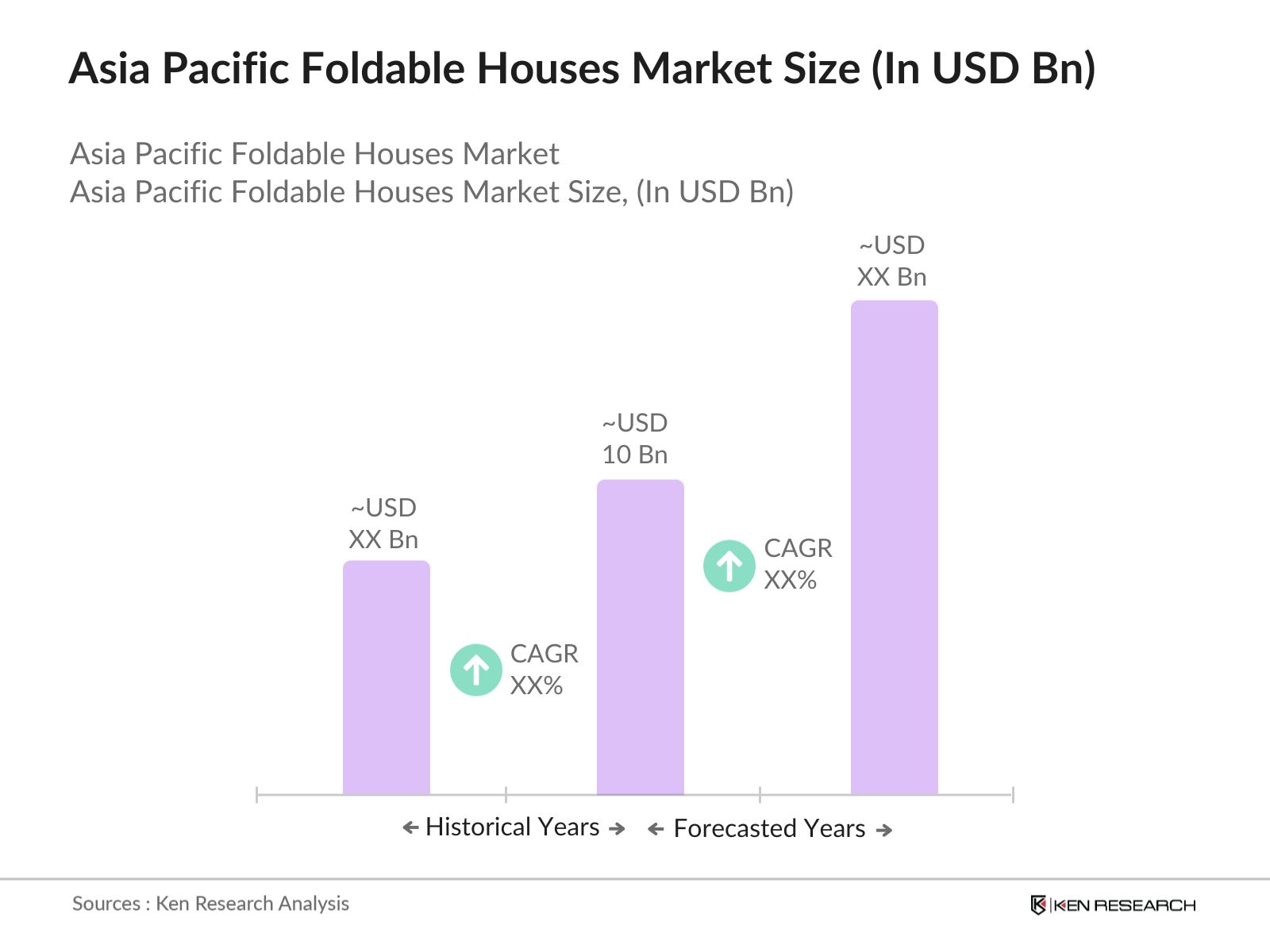
- Asia Pacific foldable houses market is experiencing rapid growth, valued at USD 10 billion based on a five-year historical analysis. This market growth is largely driven by increasing demand for affordable and rapid housing solutions across urban and disaster-prone regions. Countries like China, India, and Japan are seeing significant growth due to their high population density and the necessity for innovative housing solutions that can be quickly deployed and relocated in response to natural disasters and urbanization pressure.
- Dominant countries in this market include China, Japan, and Australia, driven by their advanced construction industries and supportive regulatory frameworks for sustainable and modular housing. In China and Japan, foldable houses are utilized for disaster relief and temporary accommodations, while Australia leads in eco-friendly and off-grid housing solutions due to strong government incentives and public demand for sustainable living options.
- Foldable houses must comply with varying building codes across the Asia Pacific region. Governments are starting to include foldable homes in regulatory frameworks, particularly in disaster-prone areas. In 2024, Japan revised its national building code to accommodate foldable housing solutions for earthquake-prone zones, requiring strict compliance with safety and durability standards. These building code revisions are essential for ensuring that foldable homes can be deployed widely while maintaining safety standards
Asia Pacific Foldable Houses Market Segmentation
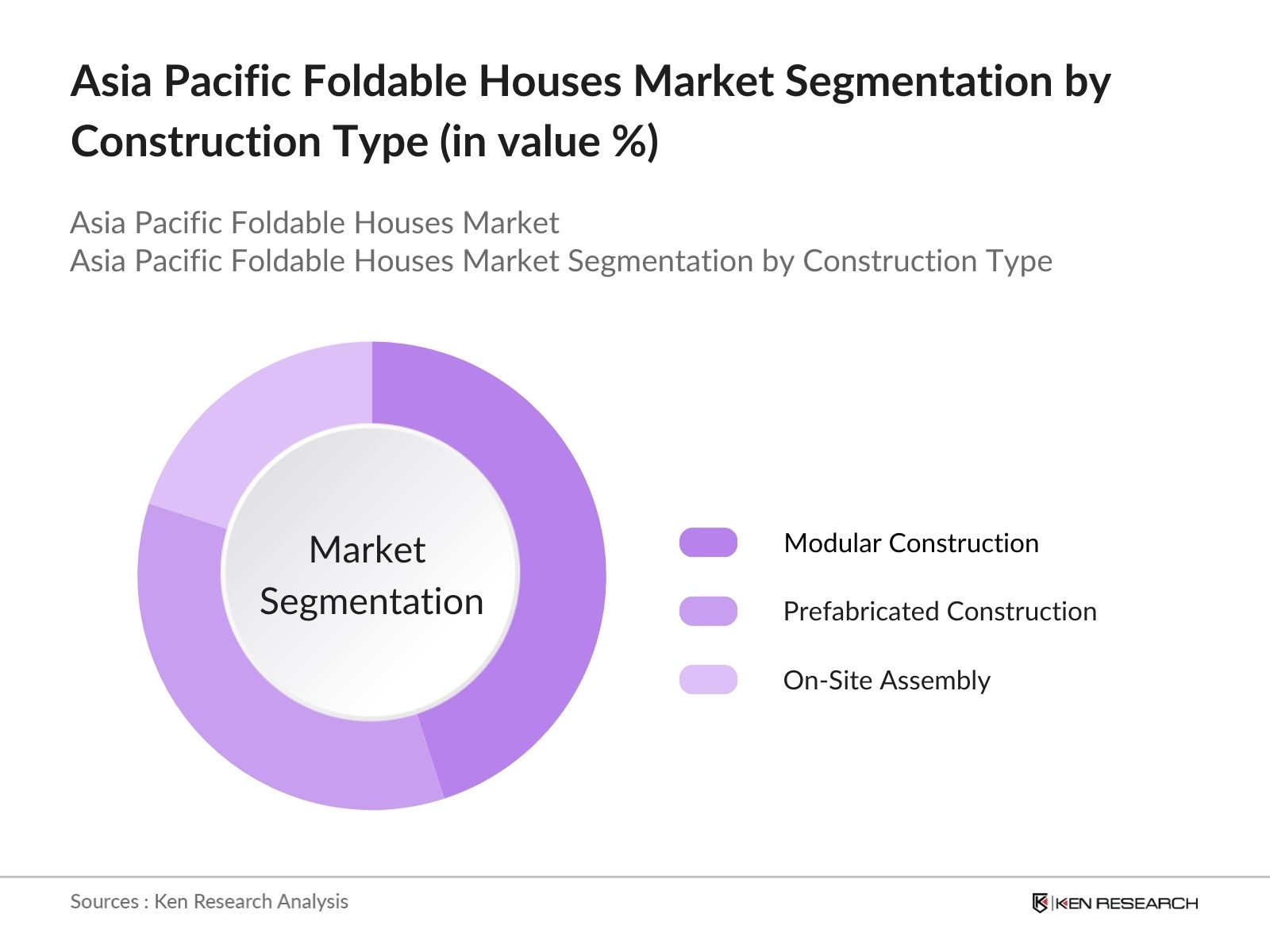
By Construction Type: The Asia Pacific foldable houses market is segmented by construction type into modular construction, prefabricated construction, and on-site assembly. Recently, modular construction has a dominant market share due to its rapid deployment capabilities and growing acceptance in urban areas. Modular homes can be mass-produced off-site, transported, and assembled within days, offering a solution to the increasing demand for quick, cost-efficient housing. Prefabricated construction follows closely, popular in countries like Japan for disaster relief.
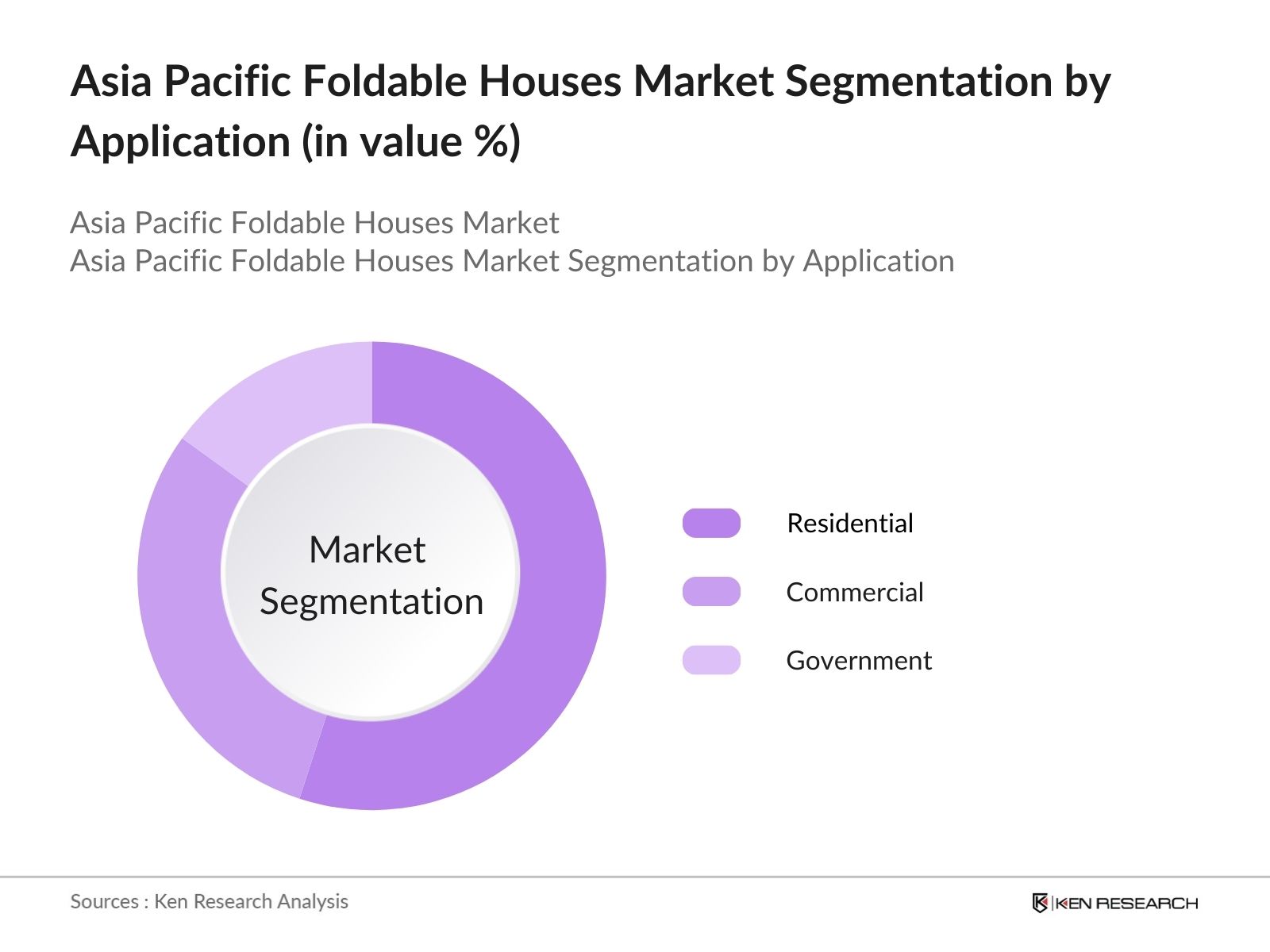
By Application: The foldable houses market is segmented by application into residential, commercial, and government housing projects. Residential applications dominate the market, accounting for a significant share as foldable homes are increasingly adopted by middle-income groups seeking affordable housing solutions. Commercial use is also growing as businesses invest in temporary and flexible accommodations, particularly in remote work locations and industrial areas.
Asia Pacific Foldable Houses Market Competitive Landscape
The Asia Pacific foldable houses market is dominated by several key players that are driving innovation and expanding market reach. These companies focus on modular and prefabricated housing solutions, offering energy-efficient, eco-friendly designs and rapid deployment. The presence of international players alongside domestic companies highlights the competitive nature of the market.
|
Company |
Established |
Headquarters |
No. of Employees |
Product Innovation |
Sustainability Initiatives |
Revenue (USD Mn) |
Geographical Reach |
Recent Developments |
|
Ten Fold Engineering |
2013 |
UK |
- |
- |
- |
- |
- |
- |
|
Boxabl |
2017 |
USA |
- |
- |
- |
- |
- |
- |
|
Revolution Precrafted |
2015 |
Philippines |
- |
- |
- |
- |
- |
- |
|
Honomobo |
2016 |
Canada |
- |
- |
- |
- |
- |
- |
|
Katerra |
2009 |
USA |
- |
- |
- |
- |
- |
- |
Asia Pacific Foldable Houses Market Analysis
Growth Drivers
- Rising Demand for Affordable Housing: The rising population and urban migration in the Asia Pacific region are driving the demand for affordable housing solutions. As of 2024, urban populations in countries like India and China are projected to grow by 20 million people annually, increasing the demand for innovative and affordable housing solutions like foldable houses. The need for affordable housing is critical as the World Bank estimates that nearly 30% of the urban population in Asia lives in slums or inadequate housing conditions, pushing governments and private entities to seek cost-effective, quickly deployable alternatives like foldable homes.
- Rapid Urbanization in Emerging Economies: Rapid urbanization in emerging economies across the Asia Pacific is creating a significant demand for innovative housing solutions. By 2024, more than 700 million people are expected to reside in urban areas in Southeast Asia alone, according to the IMF, increasing the need for housing that can accommodate this surge efficiently. Foldable houses provide a quick-to-implement solution in densely populated cities facing land and infrastructure shortages, especially in countries like Indonesia and the Philippines, where urbanization rates are particularly high.
- Technological Innovations in Foldable Construction: Technological advancements in foldable construction techniques have enabled the development of durable and modular housing units. These innovations allow for faster assembly, reduced labor requirements, and optimized material usage. As of 2024, foldable house manufacturing times have decreased by nearly 30%, significantly improving the scalability of these housing solutions.
Market Challenges
- Regulatory and Compliance Barriers in Construction: The foldable housing market in Asia Pacific faces substantial regulatory hurdles, as building codes and housing regulations vary across countries. In many regions, these new housing technologies are not yet fully integrated into the existing legal frameworks. In 2024, more than 60% of foldable housing projects in Southeast Asia encountered delays due to regulatory compliance issues.
- Complexity in Scaling Production and Installation: Scaling the production and installation of foldable houses is a complex challenge due to the technical expertise required. According to World Bank data, only 25% of housing developers in the Asia Pacific region have the necessary training to implement foldable housing on a large scale. Additionally, production bottlenecks can arise due to limited access to specialized materials or equipment, which can further complicate large-scale deployment efforts.
Asia Pacific Foldable Houses Market Future Outlook
Asia Pacific foldable houses market is expected to witness significant growth driven by urbanization, government initiatives supporting affordable housing, and growing consumer demand for sustainable and disaster-resilient homes. Innovations in materials and technology, such as foldable houses integrated with smart energy systems, will further enhance the market's growth potential. As governments in the region continue to invest in infrastructure and housing for disaster relief, this sector is poised for strong expansion, with modular construction leading the way in cost-effective solutions for urban and rural areas alike.
Market Opportunities
- Growing Demand for Sustainable and Eco-friendly Housing: There is an increasing demand for sustainable and eco-friendly housing solutions across the Asia Pacific region, particularly in urban areas. In 2024, over 40% of housing projects in urban China included eco-friendly designs. Foldable houses, which use sustainable materials like recycled steel and timber, are becoming a viable option to meet this demand.
- Integration with Smart Cities and IoT-Enabled Housing: Foldable houses are increasingly being integrated into smart city projects across Asia Pacific, providing a versatile solution for IoT-enabled urban living. In 2024, South Korea integrated foldable houses into smart city developments, enabling connectivity with energy-efficient systems, solar panels, and smart grids. These houses are particularly popular in urban renewal projects where space is limited, with plans to include foldable homes in over 15% of new smart city zones in the region by the end of 2025.
Scope of the Report
|
By Construction Type |
Modular Construction Prefabricated Construction On-Site Assembly |
|
By Application |
Residential Commercial Government Housing Projects |
|
By Material Type |
Steel Wood Composite Materials |
|
By End-Use Industry |
Construction Real Estate Development Government Housing Projects |
|
By Region |
China India Japan Australia Southeast Asia |
Products
Key Target Audience
Real Estate Developers
Construction Companies
Architects and Designers
Disaster Relief Organizations
Modular Home Manufacturers
Renewable Energy Solution Providers
Government and Regulatory Bodies (Ministry of Housing, Ministry of Urban Development)
Investors and Venture Capitalist Firms
Companies
Major Players
Ten Fold Engineering
Boxabl
Revolution Precrafted
Honomobo
Katerra
MADI Homes
Dvele
Wheelhaus
Algeco Scotsman
Heijmans N.V.
Table of Contents
1. Asia Pacific Foldable Houses Market Overview
1.1. Definition and Scope
1.2. Market Taxonomy
1.3. Market Growth Rate
1.4. Market Segmentation Overview
2. Asia Pacific Foldable Houses Market Size (In USD Bn)
2.1. Historical Market Size
2.2. Year-On-Year Growth Analysis
2.3. Key Market Developments and Milestones
3. Asia Pacific Foldable Houses Market Analysis
3.1. Growth Drivers (Urbanization, Population Growth, Real Estate Market Demand, Technological Advancements)
3.1.1. Rising Demand for Affordable Housing
3.1.2. Rapid Urbanization in Emerging Economies
3.1.3. Technological Innovations in Foldable Construction
3.1.4. Government Initiatives for Disaster-Resilient Housing
3.2. Market Challenges (Structural Integrity, Consumer Trust, Regulatory Approvals, Logistical Constraints)
3.2.1. Perception and Trust Issues with New Housing Technology
3.2.2. Regulatory and Compliance Barriers in Construction
3.2.3. High Initial Setup and Transport Costs
3.2.4. Complexity in Scaling Production and Installation
3.3. Opportunities (Sustainable Living, Off-Grid Solutions, Smart Cities Integration, Emerging Markets)
3.3.1. Growing Demand for Sustainable and Eco-friendly Housing
3.3.2. Rise of Off-Grid and Remote Housing Solutions
3.3.3. Integration with Smart Cities and IoT-Enabled Housing
3.3.4. Expanding Opportunities in Remote and Rural Development
3.4. Trends (Sustainability, Modular Construction, Technological Innovations, Consumer Preferences)
3.4.1. Increased Adoption of Sustainable Materials
3.4.2. Growth in Modular and Prefabricated Construction Techniques
3.4.3. Rise of Automated and Robotic Construction Processes
3.4.4. Growing Preference for Quick-to-Install Homes
3.5. Government Regulations (Building Codes, Green Certification, Housing Initiatives, Disaster Management)
3.5.1. Building Code Compliance for Foldable Homes
3.5.2. Green Certification for Sustainable Construction
3.5.3. Government Housing and Shelter Initiatives
3.5.4. Disaster-Resilient Housing Guidelines
3.6. SWOT Analysis (Strengths, Weaknesses, Opportunities, Threats)
3.7. Stakeholder Ecosystem (Manufacturers, Contractors, Real Estate Developers, Regulators)
3.8. Porters Five Forces (Competitive Rivalry, Supplier Power, Buyer Power, Threat of Substitutes, Threat of New Entrants)
3.9. Competition Ecosystem
4. Asia Pacific Foldable Houses Market Segmentation
4.1. By Construction Type (In Value %)
4.1.1. Modular Construction
4.1.2. Prefabricated Construction
4.1.3. On-Site Assembly
4.2. By Application (In Value %)
4.2.1. Residential
4.2.2. Commercial
4.2.3. Government Housing Projects
4.3. By Material Type (In Value %)
4.3.1. Steel
4.3.2. Wood
4.3.3. Composite Materials
4.4. By End-Use Industry (In Value %)
4.4.1. Construction
4.4.2. Real Estate Development
4.4.3. Government Housing Projects
4.5. By Region (In Value %)
4.5.1. China
4.5.2. India
4.5.3. Japan
4.5.4. Australia
4.5.5. Southeast Asia
5. Asia Pacific Foldable Houses Market Competitive Analysis
5.1 Detailed Profiles of Major Companies
5.1.1. Ten Fold Engineering
5.1.2. Boxabl
5.1.3. MADI Homes
5.1.4. Heijmans N.V.
5.1.5. Honomobo
5.1.6. Revolution Precrafted
5.1.7. Dvele
5.1.8. Wheelhaus
5.1.9. Algeco Scotsman
5.1.10. Katerra
5.2 Cross Comparison Parameters (No. of Employees, Headquarters, Inception Year, Revenue, Market Penetration, Geographic Presence, Product Innovation, Sustainability Initiatives)
5.3. Market Share Analysis
5.4. Strategic Initiatives
5.5. Mergers And Acquisitions
5.6. Investment Analysis
5.7. Venture Capital Funding
5.8. Government Grants
5.9. Private Equity Investments
6. Asia Pacific Foldable Houses Market Regulatory Framework
6.1. Construction and Building Standards
6.2. Compliance with Local Zoning Laws
6.3. Certification and Licensing Processes
6.4. Environmental Impact Assessments
7. Asia Pacific Foldable Houses Future Market Size (In USD Bn)
7.1. Future Market Size Projections
7.2. Key Factors Driving Future Market Growth
8. Asia Pacific Foldable Houses Future Market Segmentation
8.1. By Construction Type (In Value %)
8.2. By Application (In Value %)
8.3. By Material Type (In Value %)
8.4. By End-Use Industry (In Value %)
8.5. By Region (In Value %)
9. Asia Pacific Foldable Houses Market Analysts Recommendations
9.1. TAM/SAM/SOM Analysis
9.2. Customer Cohort Analysis
9.3. Marketing Initiatives
9.4. White Space Opportunity Analysis
Research Methodology
Step 1: Identification of Key Variables
The initial phase involves creating a comprehensive ecosystem map for the Asia Pacific foldable houses market. This map includes all key stakeholders, such as construction companies, housing authorities, and disaster relief organizations. Extensive desk research is conducted, utilizing secondary databases and proprietary data sources to identify critical market variables.
Step 2: Market Analysis and Construction
In this phase, historical data from the foldable houses market is compiled and analyzed to assess market penetration, deployment in urban and rural regions, and revenue generation. The analysis includes an evaluation of housing demand across different segments, ensuring the accuracy of revenue estimates.
Step 3: Hypothesis Validation and Expert Consultation
Market hypotheses are validated through consultations with industry experts, including manufacturers, real estate developers, and government officials. This step ensures that data on market trends, growth drivers, and opportunities are accurate and reliable.
Step 4: Research Synthesis and Final Output
The final stage synthesizes insights gathered from manufacturers and industry stakeholders to refine the market analysis. Detailed insights into product innovations, sales performance, and consumer preferences are verified through expert interviews to provide a validated, comprehensive market report.
Frequently Asked Questions
01 How big is the Asia Pacific Foldable Houses Market?
The Asia Pacific foldable houses market is valued at USD 10 billion, driven by the growing need for affordable housing solutions, urbanization, and demand for eco-friendly, quick-deployment homes across countries like China and Japan.
02 What are the challenges in the Asia Pacific Foldable Houses Market?
Asia Pacific foldable houses market faces challenges such as high initial setup costs, regulatory hurdles in the construction sector, and consumer trust issues with new housing technologies, impacting the adoption rate in some countries.
03 Who are the major players in the Asia Pacific Foldable Houses Market?
Key players in Asia Pacific foldable houses market include Ten Fold Engineering, Boxabl, Revolution Precrafted, Honomobo, and Katerra, which dominate due to their innovative solutions in modular and prefabricated housing.
04 What are the growth drivers of the Asia Pacific Foldable Houses Market?
Asia Pacific foldable houses market is driven by urbanization, rising demand for disaster-resilient housing, government support for affordable housing initiatives, and technological advancements in modular construction methods.
Why Buy From Us?

What makes us stand out is that our consultants follows Robust, Refine and Result (RRR) methodology. i.e. Robust for clear definitions, approaches and sanity checking, Refine for differentiating respondents facts and opinions and Result for presenting data with story

We have set a benchmark in the industry by offering our clients with syndicated and customized market research reports featuring coverage of entire market as well as meticulous research and analyst insights.

While we don't replace traditional research, we flip the method upside down. Our dual approach of Top Bottom & Bottom Top ensures quality deliverable by not just verifying company fundamentals but also looking at the sector and macroeconomic factors.

With one step in the future, our research team constantly tries to show you the bigger picture. We help with some of the tough questions you may encounter along the way: How is the industry positioned? Best marketing channel? KPI's of competitors? By aligning every element, we help maximize success.

Our report gives you instant access to the answers and sources that other companies might choose to hide. We elaborate each steps of research methodology we have used and showcase you the sample size to earn your trust.

If you need any support, we are here! We pride ourselves on universe strength, data quality, and quick, friendly, and professional service.