
Asia Pacific Fuel Cell Vehicle Market Outlook to 2030
Region:Afganistan
Author(s):Yogita Sahu
Product Code:KROD4847
Region:Afganistan
Author(s):Yogita Sahu
Product Code:KROD4847
December 2024
90
Listen to the audio summary
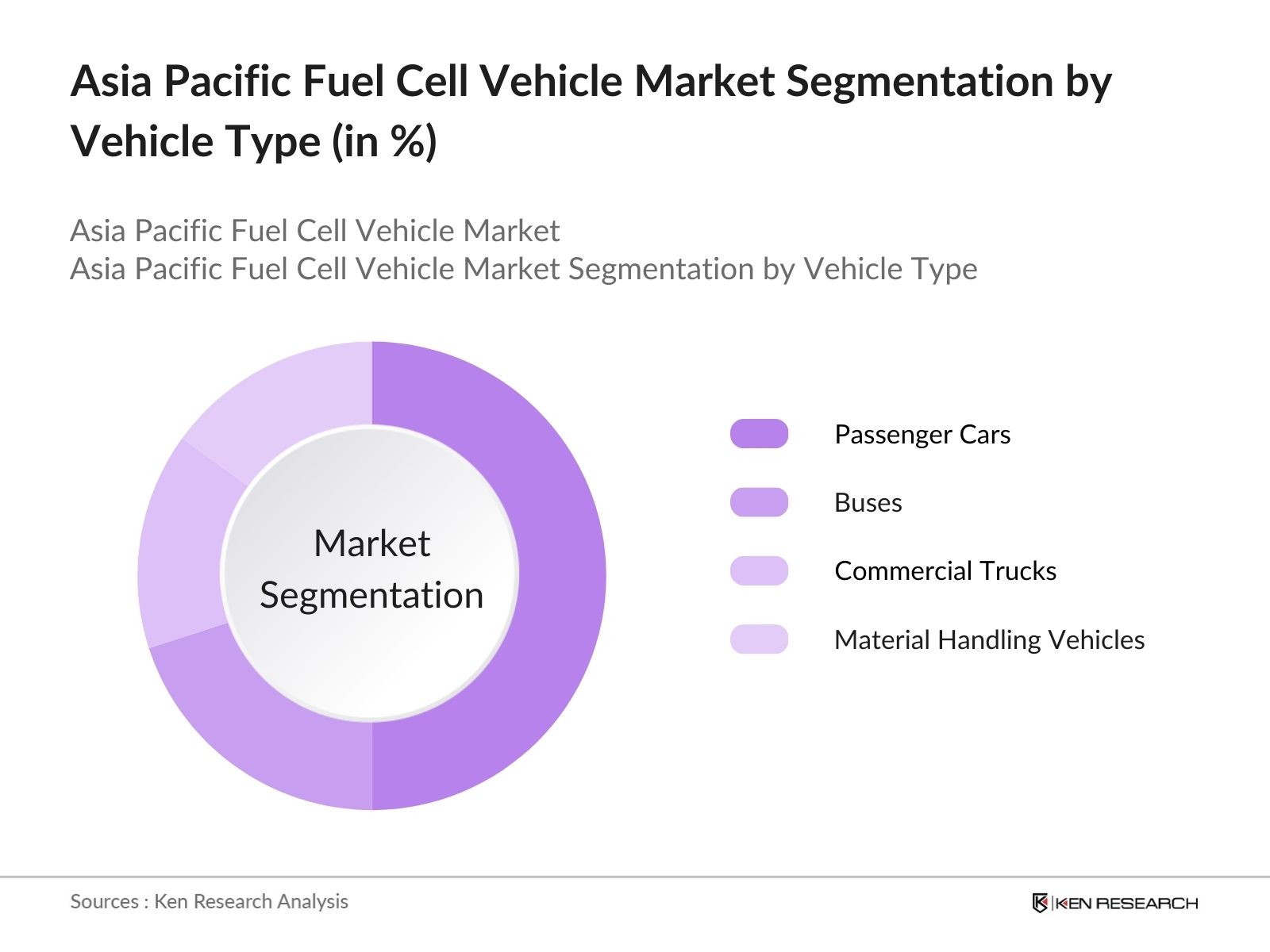
By Vehicle Type: The market is segmented by vehicle type into passenger cars, buses, commercial trucks, and material handling vehicles. Recently, passenger cars have claimed the dominant market share under vehicle type due to rising consumer interest in sustainable personal transportation and advancements in fuel cell technology making it more accessible for everyday use. Japanese brands, like Toyota and Honda, have been pioneers in producing fuel cell passenger cars, contributing to the segments strong position in the market.
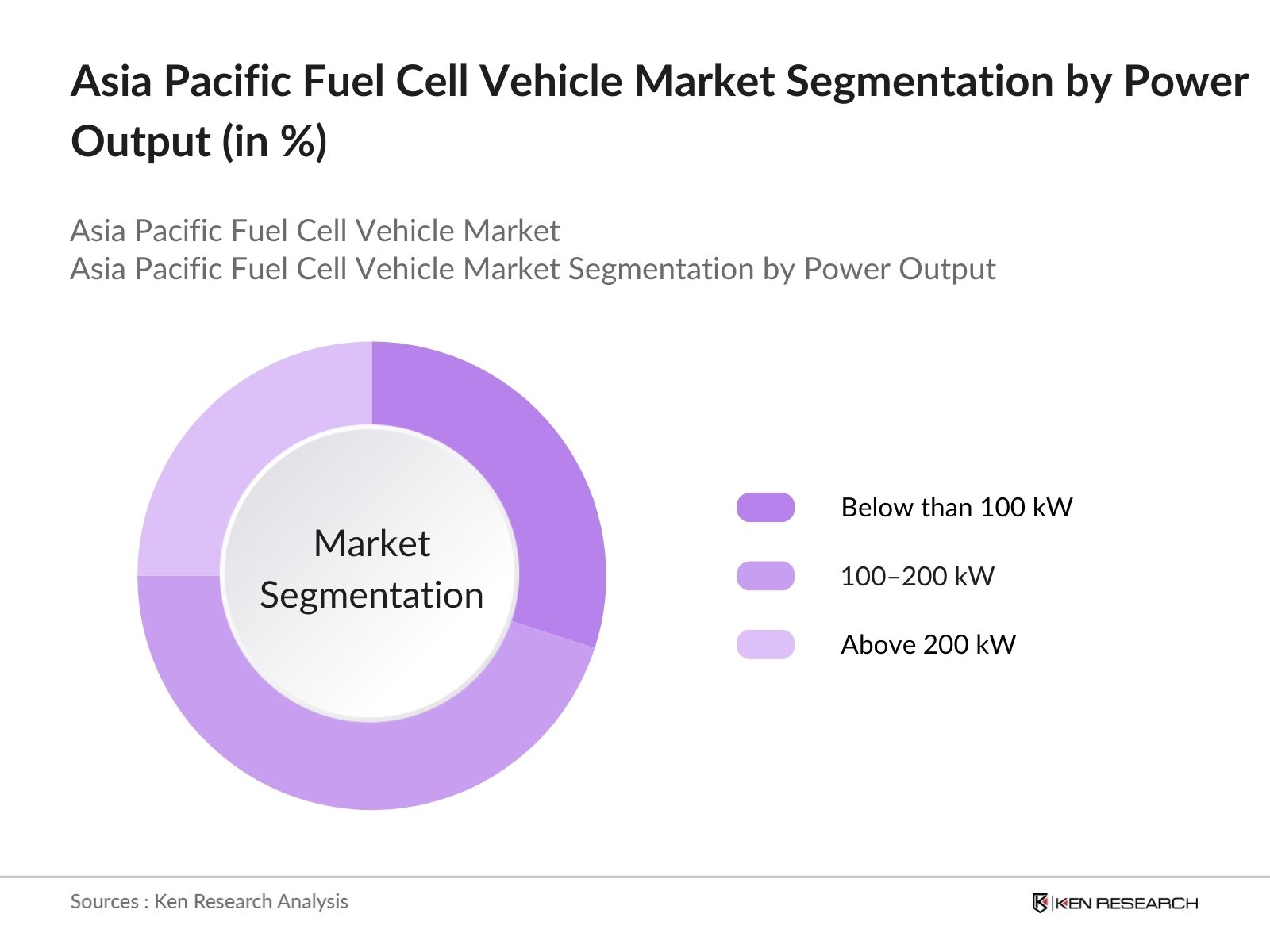
By Power Output: The market is also segmented by power output into below 100 kW, 100-200 kW, and above 200 kW. The 100-200 kW segment holds a leading market share due to its suitability for both passenger and commercial vehicles. This range meets the power needs of most fuel cell passenger vehicles and urban buses, making it versatile and practical for mass adoption. The 100-200 kW power output also aligns well with current infrastructure capabilities, making it highly marketable.
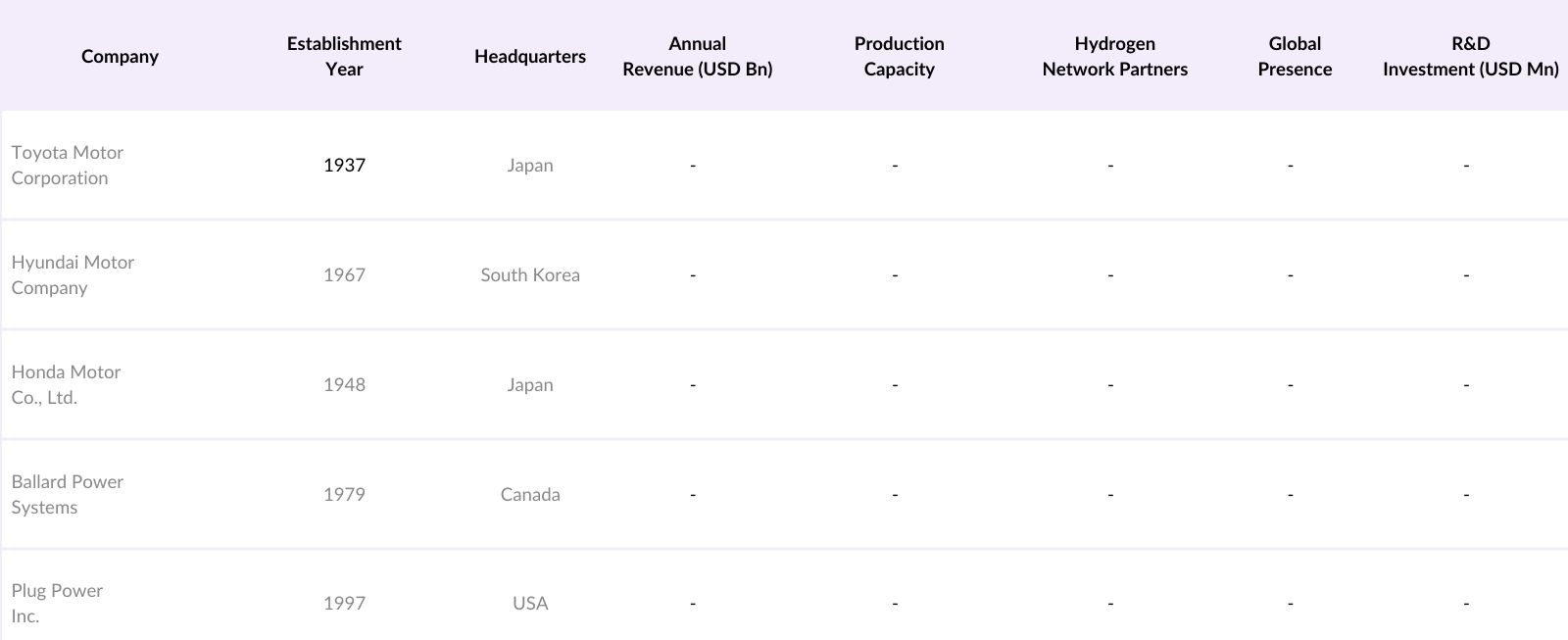
The market is dominated by a few major players, including Toyota, Hyundai, and Honda, which have spearheaded the development of hydrogen-powered vehicles in the region. These brands leverage their established manufacturing infrastructure, research capabilities, and government support to strengthen their market position.
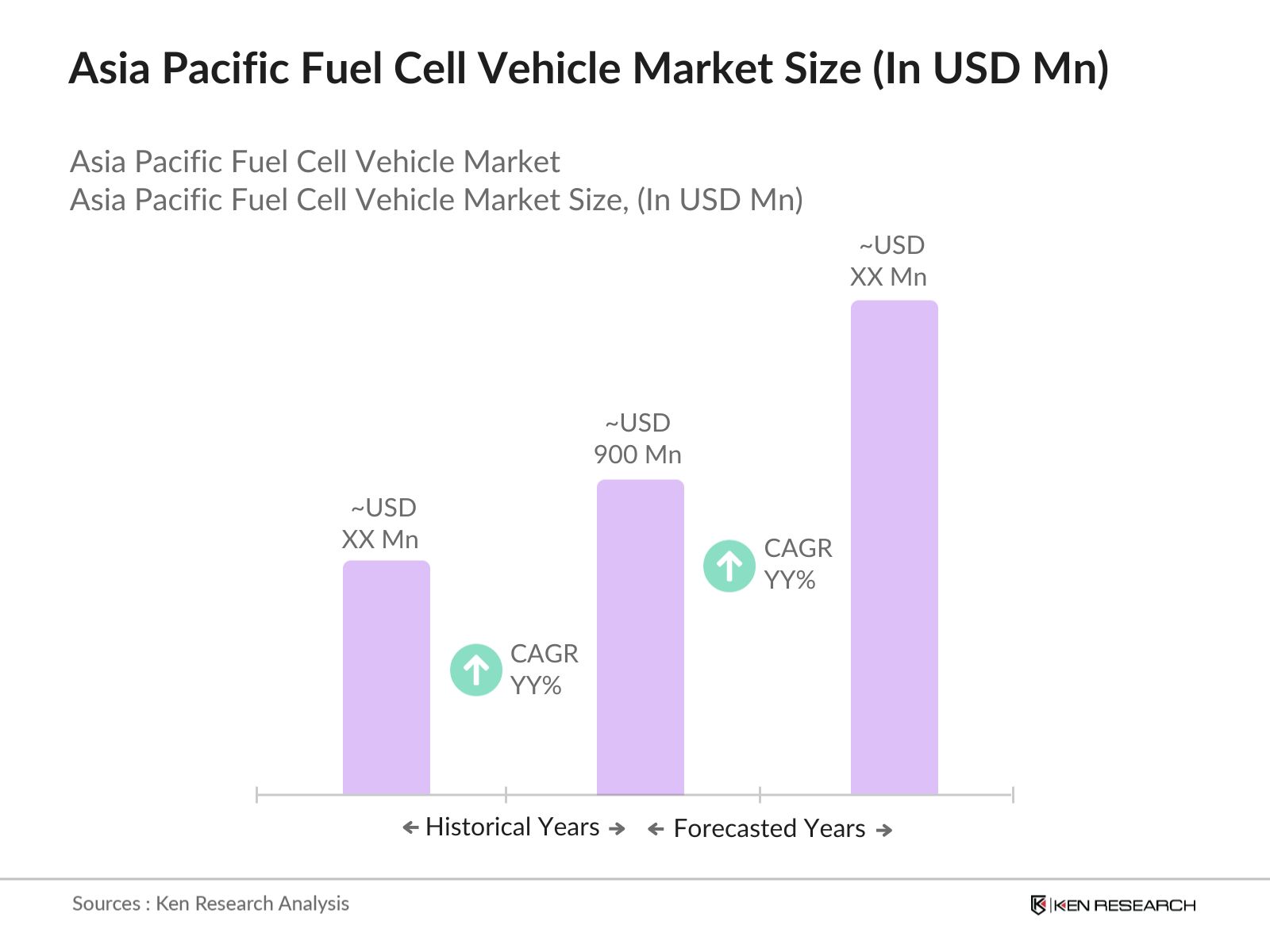
Over the next five years, the Asia Pacific fuel cell vehicle industry is anticipated to experience substantial growth, driven by continuous government incentives, increasing investment in hydrogen refueling infrastructure, and growing consumer demand for zero-emission vehicles.
|
Vehicle Type |
Passenger Cars |
|
Power Output |
Below 100 kW |
|
Fuel Type |
Hydrogen Fuel Cells |
|
Technology |
Proton Exchange Membrane Fuel Cells (PEMFC) |
|
Region |
China |
1.1. Definition and Scope
1.2. Market Taxonomy
1.3. Market Dynamics Overview (Market Demand Drivers, Technological Advancements)
1.4. Market Segmentation Overview
2.1. Historical Market Size
2.2. Year-On-Year Growth Analysis
2.3. Key Market Developments and Milestones (Government Policies, Technology Innovations, Milestone Adoptions)
3.1. Growth Drivers
3.1.1. Emissions Regulations
3.1.2. Technological Advancements in Hydrogen Fuel Cells
3.1.3. Rising Investments in Green Mobility
3.1.4. Government Incentives and Subsidies
3.2. Market Challenges
3.2.1. High Production and Maintenance Costs
3.2.2. Limited Hydrogen Refueling Infrastructure
3.2.3. Competition from Battery Electric Vehicles (BEVs)
3.2.4. Consumer Awareness and Acceptance
3.3. Opportunities
3.3.1. Expansion in Emerging Markets
3.3.2. Increasing Collaborations for Infrastructure Development
3.3.3. Potential for Fuel Cell Integration in Heavy-Duty Vehicles
3.3.4. Enhanced Hydrogen Storage Solutions
3.4. Trends
3.4.1. Development of Compact Fuel Cells
3.4.2. Rise of Fuel Cell Vehicles in Public Transportation
3.4.3. Growing Focus on Hybrid Fuel Cell Systems
3.4.4. Increasing Adoption of Zero Emission Technologies
3.5. Government Regulations
3.5.1. Emission Reduction Targets
3.5.2. Safety Standards for Fuel Cell Vehicles
3.5.3. Hydrogen Infrastructure Policies
3.5.4. National and Regional Initiatives
3.6. Competitive Landscape
3.7. Porter’s Five Forces Analysis
3.8. Stakeholder Ecosystem Analysis
4.1. By Vehicle Type (In Value %)
4.1.1. Passenger Cars
4.1.2. Buses
4.1.3. Commercial Trucks
4.1.4. Material Handling Vehicles
4.2. By Power Output (In Value %)
4.2.1. Below 100 kW
4.2.2. 100-200 kW
4.2.3. Above 200 kW
4.3. By Fuel Type (In Value %)
4.3.1. Hydrogen Fuel Cells
4.3.2. Methanol Fuel Cells
4.4. By Technology (In Value %)
4.4.1. Proton Exchange Membrane Fuel Cells (PEMFC)
4.4.2. Solid Oxide Fuel Cells (SOFC)
4.5. By Region (In Value %)
4.5.1. China
4.5.2. Japan
4.5.3. South Korea
4.5.4. Australia
4.5.5. Southeast Asia
5.1. Detailed Profiles of Major Companies
5.1.1. Toyota Motor Corporation
5.1.2. Hyundai Motor Company
5.1.3. Honda Motor Co., Ltd.
5.1.4. Daimler AG
5.1.5. Nissan Motor Corporation
5.1.6. Ballard Power Systems
5.1.7. Cummins Inc.
5.1.8. Plug Power Inc.
5.1.9. Nikola Corporation
5.1.10. General Motors (GM)
5.1.11. Audi AG
5.1.12. BMW AG
5.1.13. Bosch Mobility Solutions
5.1.14. Bloom Energy
5.1.15. FAW Group
5.2. Cross Comparison Parameters (Market Position, Product Portfolio, Regional Presence, Revenue Streams, Technological Partnerships, R&D Investments, Production Capacity, Strategic Collaborations)
5.3. Market Share Analysis
5.4. Strategic Initiatives and Innovations
5.5. Mergers and Acquisitions
5.6. Investment Analysis
5.7. Joint Ventures and Collaborations
5.8. Government Incentives
5.9. Private and Public Funding Analysis
6.1. Hydrogen Fuel Standards and Regulations
6.2. Vehicle Safety Standards
6.3. Environmental Compliance
6.4. Certification Processes
7.1. Future Market Size Projections
7.2. Key Growth Drivers
8.1. By Vehicle Type (In Value %)
8.2. By Power Output (In Value %)
8.3. By Fuel Type (In Value %)
8.4. By Technology (In Value %)
8.5. By Region (In Value %)
9.1. Total Addressable Market (TAM), Serviceable Available Market (SAM), and Serviceable Obtainable Market (SOM) Analysis
9.2. Market Entry Strategies
9.3. Key Distribution Channels
9.4. Identifying White Space Opportunities
The initial step involves building a comprehensive ecosystem map encompassing the primary stakeholders within the Asia Pacific fuel cell vehicle market. Through rigorous desk research, both proprietary and public databases are used to gather essential industry-level data, aiming to outline the core variables that affect market dynamics.
This stage compiles historical data on the Asia Pacific fuel cell vehicle market, analyzing key metrics such as market penetration, adoption rates, and revenue streams across different regions. Additionally, fuel cell technology adoption in heavy-duty versus passenger segments is assessed to provide reliable revenue projections.
Hypotheses developed during the initial stages are validated through consultations with industry experts, conducted via structured interviews. Feedback from fuel cell vehicle manufacturers and hydrogen infrastructure developers helps refine and corroborate data accuracy.
The final phase consolidates data obtained through interactions with stakeholders, validating market segmentation and analyzing consumer behavior trends. This ensures a comprehensive, validated analysis for the Asia Pacific fuel cell vehicle market.
The Asia Pacific fuel cell vehicle market is valued at USD 900 million, driven by strong government support, emission regulations, and advancements in hydrogen refueling infrastructure.
Challenges in the Asia Pacific fuel cell vehicle market include high production costs, limited hydrogen refueling stations, competition from electric vehicles, and the need for increased consumer awareness about hydrogen technology.
Key players in the Asia Pacific fuel cell vehicle market include Toyota, Hyundai, Honda, Ballard Power Systems, and Plug Power, which dominate through extensive R&D investment, strategic partnerships, and a strong focus on hydrogen infrastructure.
Growth in the Asia Pacific fuel cell vehicle market is driven by favorable government policies, advancements in hydrogen fuel cell technology, and an increasing focus on sustainable transportation solutions, especially in Japan, South Korea, and China.

What makes us stand out is that our consultants follows Robust, Refine and Result (RRR) methodology. i.e. Robust for clear definitions, approaches and sanity checking, Refine for differentiating respondents facts and opinions and Result for presenting data with story

We have set a benchmark in the industry by offering our clients with syndicated and customized market research reports featuring coverage of entire market as well as meticulous research and analyst insights.

While we don't replace traditional research, we flip the method upside down. Our dual approach of Top Bottom & Bottom Top ensures quality deliverable by not just verifying company fundamentals but also looking at the sector and macroeconomic factors.

With one step in the future, our research team constantly tries to show you the bigger picture. We help with some of the tough questions you may encounter along the way: How is the industry positioned? Best marketing channel? KPI's of competitors? By aligning every element, we help maximize success.

Our report gives you instant access to the answers and sources that other companies might choose to hide. We elaborate each steps of research methodology we have used and showcase you the sample size to earn your trust.

If you need any support, we are here! We pride ourselves on universe strength, data quality, and quick, friendly, and professional service.