
Asia Pacific Furniture Market Outlook to 2030
Region:Afganistan
Author(s):Meenakshi Bisht
Product Code:KROD9276
Region:Afganistan
Author(s):Meenakshi Bisht
Product Code:KROD9276
December 2024
86
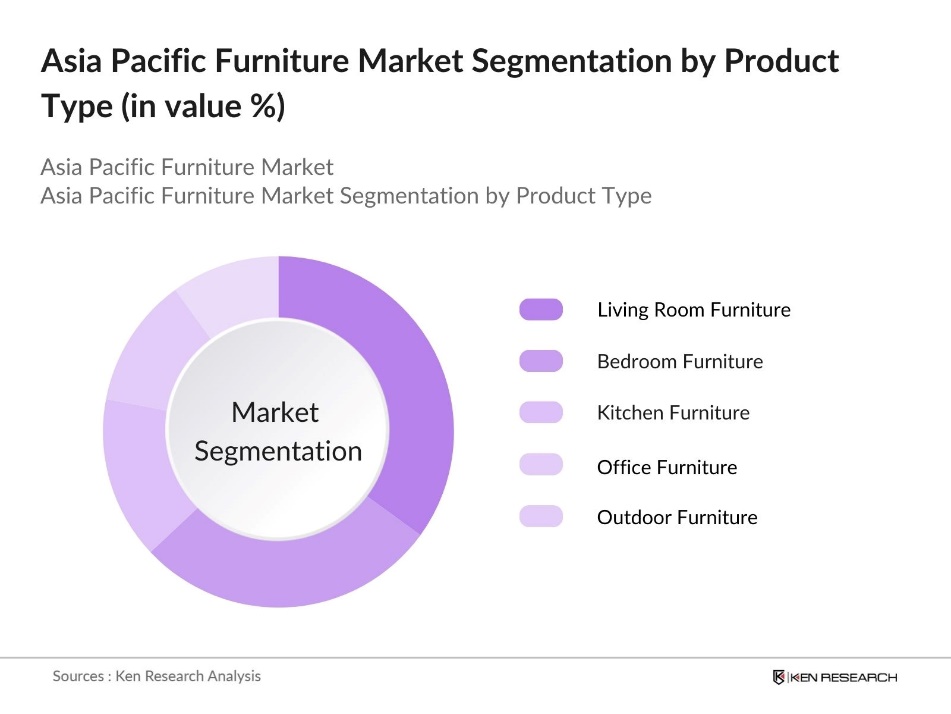
By Product Type: The Asia Pacific furniture market is segmented by product type into living room furniture, bedroom furniture, kitchen furniture, office furniture, and outdoor furniture. Among these, living room furniture holds the dominant market share in 2023. The reason for this is the increasing consumer preference for multifunctional and stylish furniture pieces that enhance both comfort and aesthetics. The demand for sofa sets, coffee tables, and storage units is particularly high, driven by urban dwellers seeking to maximize space utilization in smaller apartments.
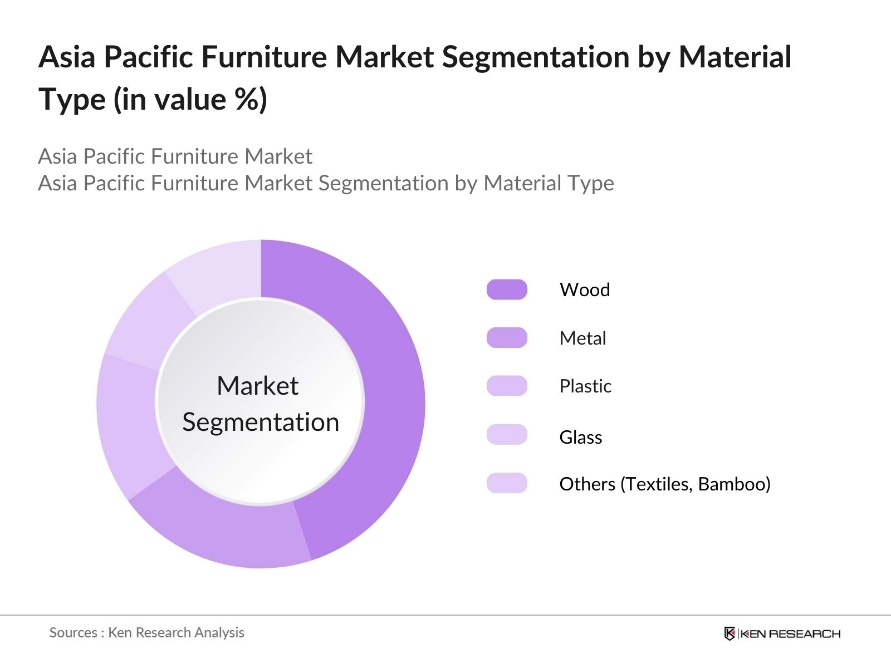
By Material Type: The Asia Pacific furniture market is segmented by material type into wood, metal, plastic, glass, and others (textiles, bamboo, etc.). Wood dominates the market share, accounting for a significant portion of the 2023 market. Woods dominance stems from its durability, versatility, and cultural preference across many Asia Pacific countries. Moreover, sustainable wood sourcing and eco-friendly certifications are becoming increasingly important, further solidifying wood's position as the material of choice for environmentally conscious consumers.
The market is dominated by several prominent players such as IKEA, Ashley Furniture, and Steelcase. These companies benefit from their wide product range, global supply chains, and high brand equity. In addition, regional players like Godrej Interio in India and Damro in Southeast Asia are also highly competitive, offering affordable and region-specific products.
|
Company Name |
Establishment Year |
Headquarters |
No. of Employees |
Revenue (USD Bn) |
Regional Market Presence |
Online Sales Penetration |
Product Range |
Sustainability Certifications |
Brand Awareness |
|
IKEA |
1943 |
Sweden |
|||||||
|
Godrej Interio |
1897 |
India |
|||||||
|
Ashley Furniture Industries |
1945 |
USA |
|||||||
|
Steelcase |
1912 |
USA |
|||||||
|
Damro |
1986 |
Sri Lanka |
Over the next five years, the Asia Pacific furniture market is expected to witness considerable growth driven by rapid urbanization, evolving consumer lifestyles, and increased demand for affordable, customizable, and sustainable furniture solutions. The expanding middle class in countries like China, India, and Southeast Asia will continue to bolster the market, with online sales expected to surge. The rise of smart homes and technological integration in furniture, such as smart tables and modular units, will also play a significant role in shaping the future of the market.
|
Product Type |
Living Room Furniture Bedroom Furniture Kitchen Furniture Office Furniture Outdoor Furniture |
|
Material Type |
Wood Metal Plastic Glass Others (Textiles, Bamboo) |
|
Distribution Channel |
Online Offline (Specialty Stores, Supermarkets) |
|
End-Use |
Residential Commercial (Offices, Hotels, Restaurants) |
|
Region |
China Japan India Southeast Asia Australia |
1.1. Definition and Scope
1.2. Market Taxonomy
1.3. Market Growth Rate
1.4. Market Segmentation Overview
2.1. Historical Market Size
2.2. Year-On-Year Growth Analysis
2.3. Key Market Developments and Milestones
3.1. Growth Drivers
3.1.1. Rapid Urbanization (Urban Population Growth Rate)
3.1.2. Rise in Disposable Income (Household Disposable Income Growth)
3.1.3. E-commerce Penetration (Online Retail Market Growth)
3.1.4. Demand for Modular and Customized Furniture (Consumer Preferences)
3.2. Market Challenges
3.2.1. Supply Chain Disruptions (Logistics Challenges)
3.2.2. Volatility in Raw Material Prices (Wood, Metal, and Textile Prices)
3.2.3. High Competition from Local Manufacturers (Market Fragmentation)
3.3. Opportunities
3.3.1. Increasing Demand for Smart Furniture (Technological Integration in Furniture)
3.3.2. Growth of Sustainable and Eco-Friendly Furniture (Sustainability Preferences)
3.3.3. Expansion of Premium and Luxury Furniture Segment (Luxury Furniture Market Growth)
3.4. Trends
3.4.1. Adoption of Augmented Reality for Virtual Furnishing (Tech Integration)
3.4.2. Growing Popularity of Multifunctional Furniture (Space-Saving Solutions)
3.4.3. Rise of Subscription-Based Furniture Models (Subscription Economy Impact)
3.5. Government Regulations
3.5.1. Environmental Standards and Certifications (Sustainability Standards)
3.5.2. Import and Export Tariffs (Trade Policies Impacting Imports)
3.5.3. Labor Regulations in Manufacturing (Labor Compliance)
3.6. SWOT Analysis
3.7. Stake Ecosystem
3.8. Porters Five Forces
3.9. Competition Ecosystem
4.1. By Product Type (In Value %)
4.1.1. Living Room Furniture
4.1.2. Bedroom Furniture
4.1.3. Kitchen Furniture
4.1.4. Office Furniture
4.1.5. Outdoor Furniture
4.2. By Material Type (In Value %)
4.2.1. Wood
4.2.2. Metal
4.2.3. Plastic
4.2.4. Glass
4.2.5. Others (Textiles, Bamboo, etc.)
4.3. By Distribution Channel (In Value %)
4.3.1. Online
4.3.2. Offline (Specialty Stores, Supermarkets)
4.4. By End-Use (In Value %)
4.4.1. Residential
4.4.2. Commercial (Offices, Hotels, Restaurants)
4.5. By Region (In Value %)
4.5.1. China
4.5.2. Japan
4.5.3. India
4.5.4. Southeast Asia
4.5.5. Australia
5.1. Detailed Profiles of Major Companies
5.1.1. IKEA
5.1.2. Godrej Interio
5.1.3. Ashley Furniture Industries
5.1.4. Herman Miller
5.1.5. Steelcase
5.1.6. Inter IKEA Systems B.V.
5.1.7. Williams-Sonoma
5.1.8. La-Z-Boy Incorporated
5.1.9. Haworth Inc.
5.1.10. KOKUYO Co., Ltd.
5.1.11. HNI Corporation
5.1.12. Okamura Corporation
5.1.13. DFS Furniture
5.1.14. Damro Furniture
5.1.15. Foshan Sunon Furniture
5.2. Cross Comparison Parameters
5.3. Market Share Analysis
5.4. Strategic Initiatives
5.5. Mergers and Acquisitions
5.6. Investment Analysis
5.7. Venture Capital Funding
5.8. Government Grants
5.9. Private Equity Investments
6.1. Environmental Standards (Material Sourcing and Disposal Regulations)
6.2. Compliance Requirements (Labor Standards, Manufacturing Codes)
6.3. Certification Processes (Furniture Quality Certifications)
7.1. Future Market Size Projections
7.2. Key Factors Driving Future Market Growth
8.1. By Product Type (In Value %)
8.2. By Material Type (In Value %)
8.3. By Distribution Channel (In Value %)
8.4. By End-Use (In Value %)
8.5. By Region (In Value %)
9.1. TAM/SAM/SOM Analysis
9.2. Customer Cohort Analysis
9.3. Marketing Initiatives
9.4. White Space Opportunity Analysis
Disclaimer Contact UsThe initial phase involves identifying critical factors that influence the Asia Pacific furniture market, such as urbanization, consumer preferences, and supply chain dynamics. This is achieved through extensive desk research using proprietary databases and secondary sources to develop a comprehensive market ecosystem.
During this stage, historical data is compiled to analyze market penetration, production capacities, and revenue generation across various product segments. This information is used to construct a reliable market model that captures current trends and market dynamics.
Market hypotheses are developed based on the data collected, and these hypotheses are then validated through consultations with industry experts. The interviews provide critical insights into operational and financial dynamics, further refining the market estimates.
The final phase involves synthesizing all research findings into a comprehensive report. Data from primary and secondary research is consolidated to provide an accurate and validated market analysis, including detailed segmentation, growth drivers, and competitive landscape.
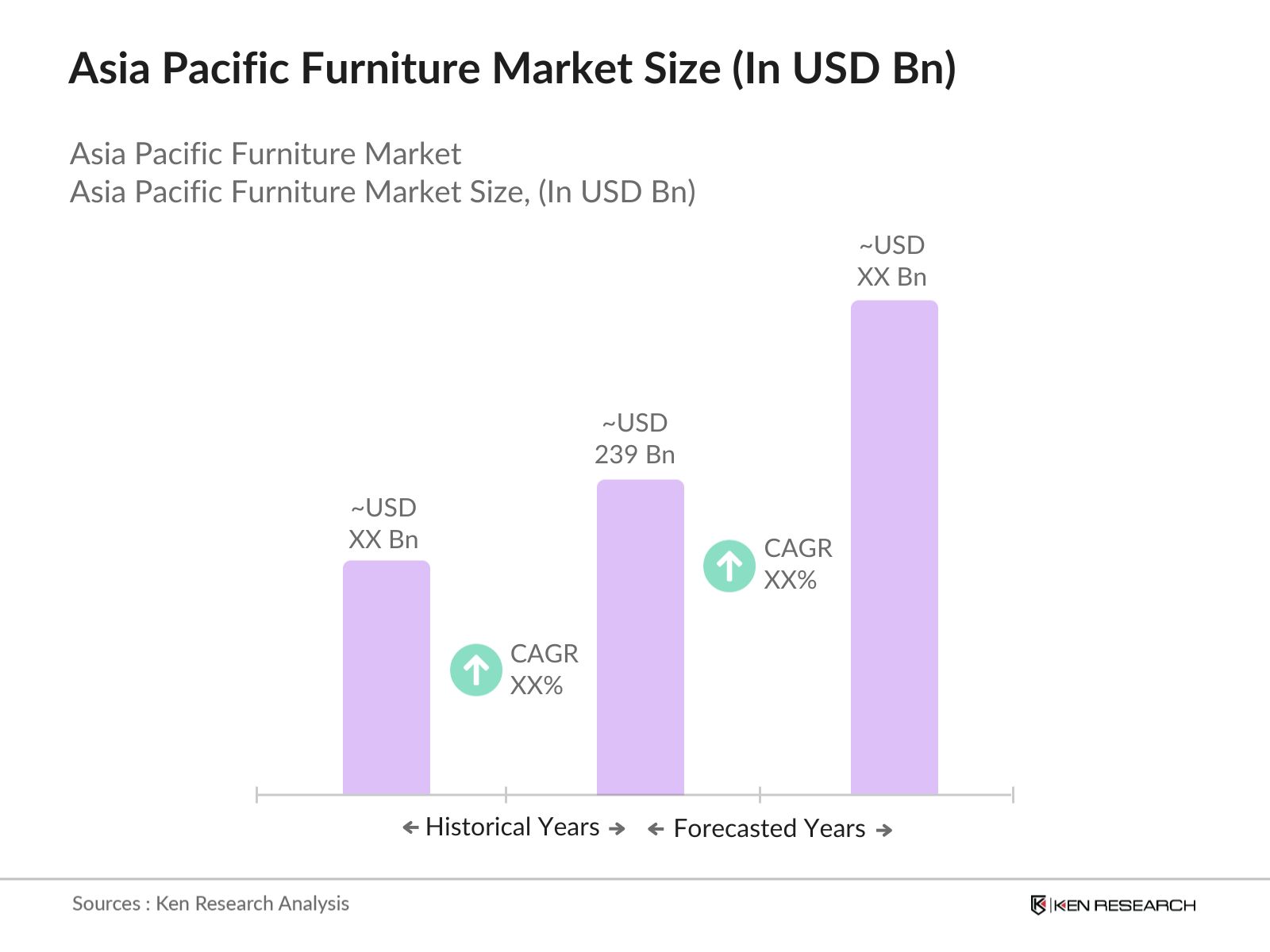
The Asia Pacific Furniture Market is valued at USD 239 billion, driven by increasing urbanization, rising disposable incomes, and the growing popularity of multifunctional furniture.
Challenges in Asia Pacific Furniture Market include supply chain disruptions, rising raw material costs, and increasing competition from local manufacturers. Additionally, meeting sustainability standards is becoming a key challenge for market players.
Key players in Asia Pacific Furniture Market include IKEA, Godrej Interio, Ashley Furniture Industries, Steelcase, and Damro. These companies dominate the market due to their strong brand presence, wide distribution networks, and innovative product offerings.
The Asia Pacific Furniture Market is propelled by factors such as the rise in disposable income, rapid urbanization, and the growing trend of home improvement. Moreover, the increasing demand for eco-friendly and multifunctional furniture is also a significant growth driver.

What makes us stand out is that our consultants follows Robust, Refine and Result (RRR) methodology. i.e. Robust for clear definitions, approaches and sanity checking, Refine for differentiating respondents facts and opinions and Result for presenting data with story

We have set a benchmark in the industry by offering our clients with syndicated and customized market research reports featuring coverage of entire market as well as meticulous research and analyst insights.

While we don't replace traditional research, we flip the method upside down. Our dual approach of Top Bottom & Bottom Top ensures quality deliverable by not just verifying company fundamentals but also looking at the sector and macroeconomic factors.

With one step in the future, our research team constantly tries to show you the bigger picture. We help with some of the tough questions you may encounter along the way: How is the industry positioned? Best marketing channel? KPI's of competitors? By aligning every element, we help maximize success.

Our report gives you instant access to the answers and sources that other companies might choose to hide. We elaborate each steps of research methodology we have used and showcase you the sample size to earn your trust.

If you need any support, we are here! We pride ourselves on universe strength, data quality, and quick, friendly, and professional service.