















Asia pacific Genetic Testing Market
Region:Asia
Author(s):Paribhasha Tiwari
Product Code:KROD8135
November 2024
85
About the Report
Asia pacific Genetic Testing Market Overview
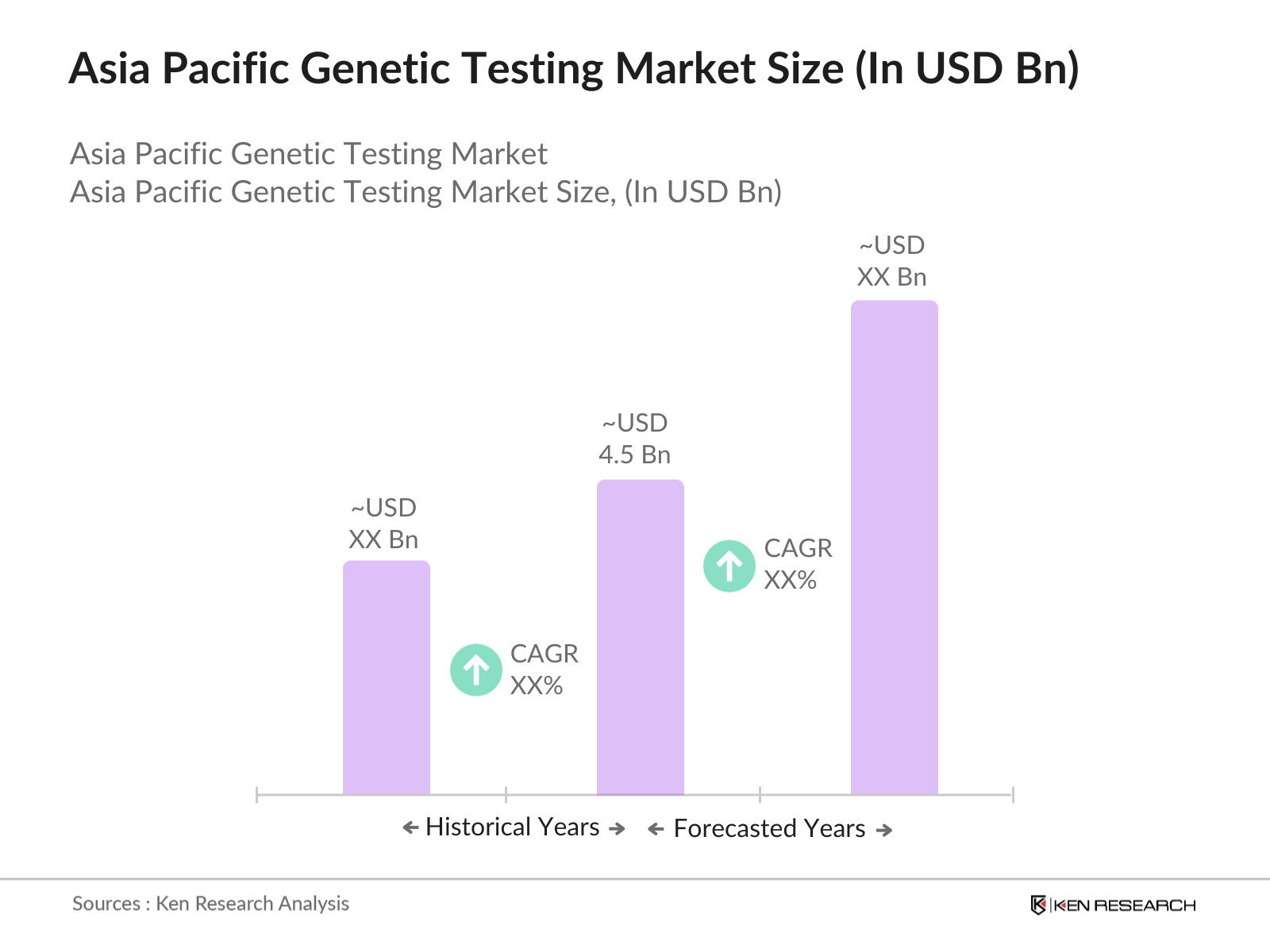
- The Asia Pacific Genetic Testing market is valued at USD 4.5 billion, based on a five-year historical analysis. This market is largely driven by the rising demand for personalized medicine, especially in oncology, cardiovascular diseases, and rare genetic disorders. The increasing adoption of advanced technologies like Next-Generation Sequencing (NGS) and Polymerase Chain Reaction (PCR) have further propelled the growth of the market. Additionally, growing consumer awareness of the benefits of early detection of genetic conditions and the expansion of healthcare infrastructure across the region has contributed to the markets expansion.
- Countries like China, Japan, and India dominate the Asia Pacific Genetic Testing market due to their advanced healthcare infrastructure, growing population, and increasing awareness of genetic disorders. China leads the market owing to its heavy investments in genomic research and the rapid adoption of innovative genetic testing technologies. Japans aging population, which faces an increased risk of genetic disorders, also boosts demand, while Indias growing healthcare sector and rising medical tourism make it a key player in the region.
- Singapores national Precision Medicine program, launched in 2020 and extended through 2025 with USD 300 million, is a significant government initiative supporting genetic testing. Similarly, China's National Precision Medicine Strategy aims to integrate genetic testing into routine healthcare, with over USD 10 billion in funding allocated through 2025. These initiatives are boosting genetic testing adoption in the region.
Asia pacific Genetic Testing Market Segmentation
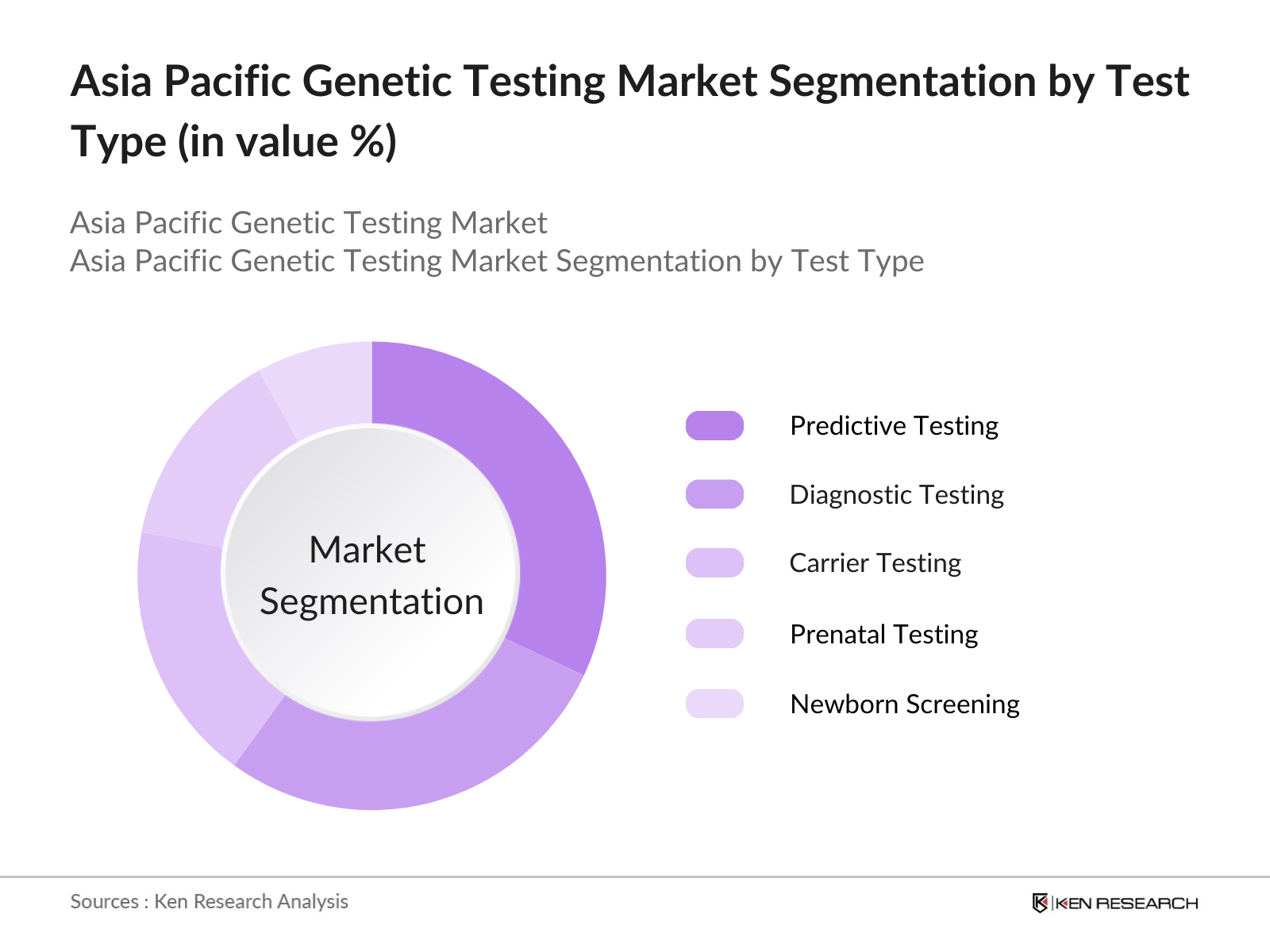
By Test Type: The Asia Pacific Genetic Testing market is segmented by test type into predictive testing, diagnostic testing, carrier testing, prenatal testing, and newborn screening. Recently, predictive testing has held a dominant market share in the Asia Pacific region due to its rising application in identifying genetic predispositions to conditions like cancer and cardiovascular diseases. The growth of predictive testing is also driven by the increasing focus on personalized medicine and preventive healthcare strategies by both consumers and healthcare providers.
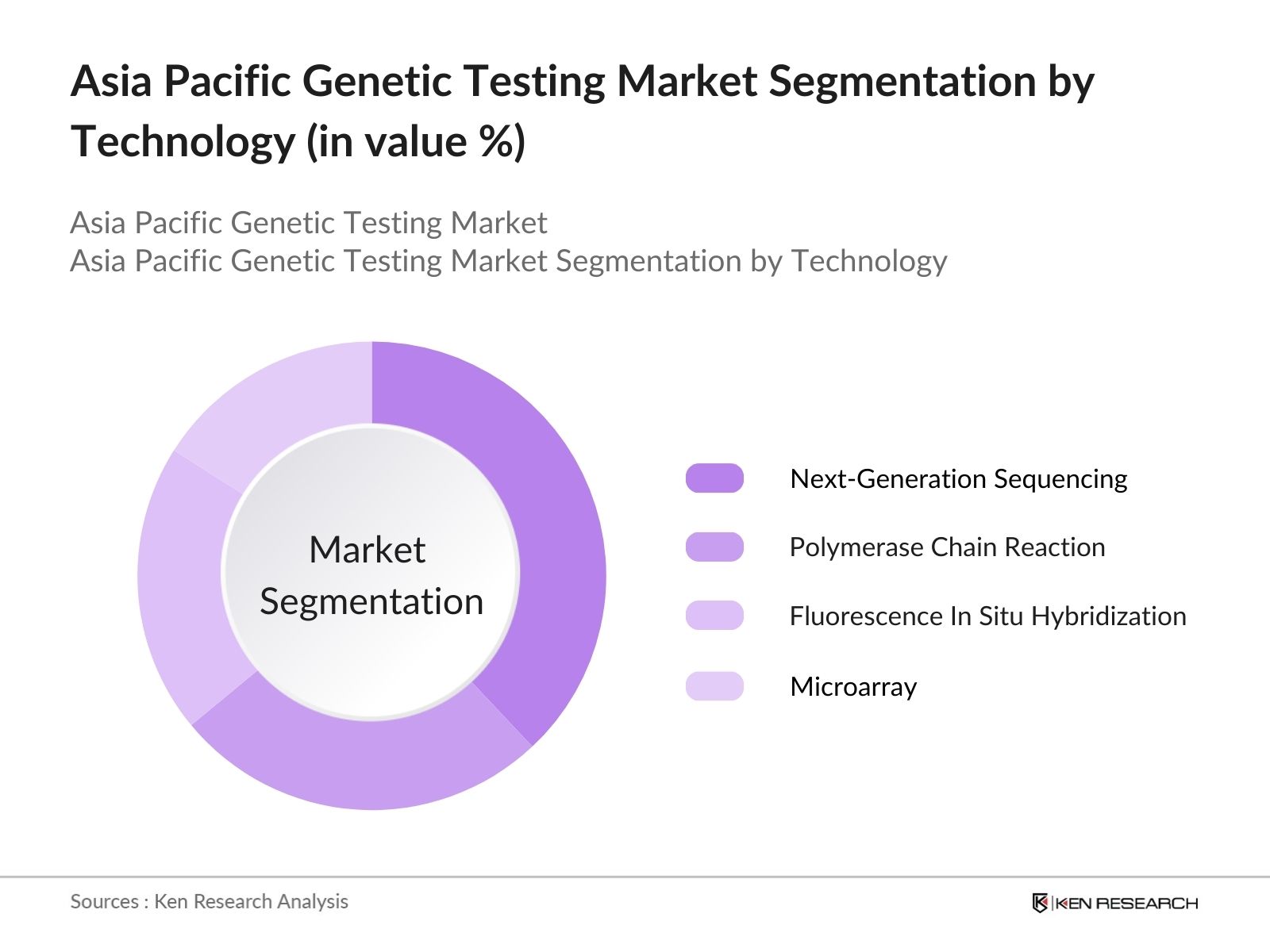
By Technology: The market is also segmented by technology into Polymerase Chain Reaction (PCR), Next-Generation Sequencing (NGS), Fluorescence In Situ Hybridization (FISH), and Microarray. Among these, Next-Generation Sequencing (NGS) is the leading technology owing to its ability to sequence entire genomes rapidly and at a lower cost. The growing adoption of NGS across diagnostic labs and hospitals for early detection of genetic mutations and rare diseases is pushing its market dominance in the region.
Asia pacific Genetic Testing Market Competitive Landscape
The Asia Pacific Genetic Testing market is dominated by a mix of regional and global players who have established strong footprints in various countries across the region. The consolidation of key players highlights the significant influence these companies hold in shaping the market's dynamics. The competitive landscape features significant partnerships between local laboratories and multinational genetic testing companies to expand service offerings and coverage.
|
Company Name |
Establishment Year |
Headquarters |
No. of Employees |
Revenue (USD Mn) |
Market Presence |
Key Technologies |
Major Segment Focus |
|
Illumina, Inc. |
1998 |
San Diego, USA |
- | - | - | - | - |
|
BGI Genomics |
1999 |
Shenzhen, China |
- | - | - | - | - |
|
Thermo Fisher Scientific |
1956 |
Waltham, USA |
- | - | - | - | - |
|
Myriad Genetics |
1991 |
Salt Lake City, USA |
- | - | - | - | - |
|
Qiagen N.V. |
1984 |
Hilden, Germany |
- | - | - | - | - |
Asia Pacific Genetic Testing Market Analysis
Growth Drivers
- Increasing Adoption of Personalized Medicine: The Asia-Pacific region has seen significant investment in personalized medicine, with governments and healthcare providers integrating genetic testing into personalized treatment plans. In 2024, the Indian government allocated USD 150 million for precision medicine under its National Health Mission, emphasizing personalized care. Similarly, China's 14th Five-Year Plan (2021-2025) has allocated USD 10 billion for research into gene-based treatments, which is expected to drive the demand for genetic testing across the region.
- Technological Advancements in Genetic Testing Techniques (PCR, NGS): The adoption of Next-Generation Sequencing (NGS) and Polymerase Chain Reaction (PCR) techniques in genetic testing is increasing due to their accuracy and cost-effectiveness. In 2023, Australias genetic research centers processed 50,000 NGS tests, showing a sharp rise in demand for more detailed genetic analysis. Technological advancements have reduced the time for diagnosis from weeks to days, helping healthcare systems across Asia-Pacific to enhance early-stage detection of genetic disorders.
- Rising Prevalence of Genetic Disorders (e.g., Down Syndrome, Cystic Fibrosis): The rise in genetic disorders such as Down Syndrome and Cystic Fibrosis in APAC has necessitated greater adoption of genetic testing. In China, 20,000 cases of Down Syndrome were detected in newborns in 2023, and genetic testing played a pivotal role in early diagnosis. In India, 8,000 babies were born with Cystic Fibrosis in 2023, prompting a significant increase in prenatal genetic screening for such conditions.
Market Challenges
- High Costs Associated with Genetic Testing (Test Costs, Infrastructure): The high cost of genetic testing remains a significant barrier in APAC. For instance, in 2024, the cost of comprehensive genetic tests in countries like Japan and South Korea remains between USD 2,000 and USD 4,000, limiting widespread adoption among middle-income populations. The lack of affordable genetic testing infrastructure in emerging markets further exacerbates this challenge.
- Lack of Genetic Counseling Infrastructure: Although genetic testing is growing in demand, APAC faces a shortage of certified genetic counselors. India, with a population of 1.4 billion, had only 150 trained genetic counselors as of 2023. The absence of a proper counseling framework makes it challenging for patients to understand genetic test results, limiting the effectiveness of genetic testing services.
Asia pacific Genetic Testing Market Future Outlook
Over the next five years, the Asia Pacific Genetic Testing market is expected to witness substantial growth driven by advancements in genetic testing technologies, rising demand for personalized medicine, and a growing focus on early detection of genetic disorders. The expansion of healthcare infrastructure, increasing awareness among patients, and supportive government policies will continue to fuel the demand for genetic testing services across the region. Additionally, collaborations between local diagnostic centers and global genetic testing companies will further drive market growth.
Market Opportunities
- Growth of Direct-to-Consumer Genetic Testing: The direct-to-consumer genetic testing market is expanding across APAC, with companies like 23andMe gaining traction. In 2023, Japan saw over 30,000 orders for at-home genetic testing kits, driven by consumers' growing interest in ancestry and health-related insights. The convenience of these services is attracting more customers, especially in urban centers in Australia and Southeast Asia.
- Expanding Applications in Oncology and Pharmacogenomics: Genetic testing applications in oncology and pharmacogenomics are rapidly expanding across the region. In South Korea, over 10,000 genetic tests were conducted for oncology patients in 2023, leading to more tailored cancer treatments. The demand for pharmacogenomic tests, which help determine how individual patients respond to medications, is also increasing, particularly in Chinas rapidly evolving healthcare sector.
Scope of the Report
|
By Test Type |
Predictive Testing Diagnostic Testing Carrier Testing Prenatal Testing, Newborn Screening |
|
By Technology |
Polymerase Chain Reaction (PCR) Next-Generation Sequencing (NGS) Fluorescence In Situ Hybridization (FISH) Microarray |
|
By Application |
Oncology Cardiovascular Diseases Neurological Disorders Infectious Diseases Others (Pharmacogenomics, Rare Diseases) |
|
By End User |
Hospitals and Clinics Diagnostic Laboratories Academic and Research Institutions Direct-to-Consumer Services |
|
By Region |
China Japan India Australia Southeast Asia |
Products
Key Target Audience
Genetic Testing Service Providers
Pharmaceutical Companies
Healthcare Providers
Government and Regulatory Bodies (e.g., China National Health Commission, Ministry of Health Japan)
Hospitals and Diagnostic Laboratories
Investors and Venture Capitalist Firms
Insurance Providers
Genetic Research Organizations
Companies
Players Mentioned in the Report:
Illumina, Inc.
Thermo Fisher Scientific
F. Hoffmann-La Roche AG
Qiagen N.V.
BGI Genomics
Myriad Genetics
Agilent Technologies
PerkinElmer, Inc.
Pacific Biosciences of California, Inc.
GeneDx
Table of Contents
1. Asia Pacific Genetic Testing Market Overview
1.1. Definition and Scope
1.2. Market Taxonomy
1.3. Genetic Testing Market Growth Rate
1.4. Market Segmentation Overview
2. Asia Pacific Genetic Testing Market Size (In USD Bn)
2.1. Historical Market Size
2.2. Year-On-Year Growth Analysis
2.3. Key Market Developments and Milestones
3. Asia Pacific Genetic Testing Market Analysis
3.1. Growth Drivers
3.1.1. Increasing Adoption of Personalized Medicine
3.1.2. Technological Advancements in Genetic Testing Techniques (PCR, NGS)
3.1.3. Rising Prevalence of Genetic Disorders (e.g., Down Syndrome, Cystic Fibrosis)
3.1.4. Favorable Government Policies Supporting Genetic Research (e.g., Precision Medicine Initiatives)
3.2. Market Challenges
3.2.1. High Costs Associated with Genetic Testing (Test Costs, Infrastructure)
3.2.2. Lack of Genetic Counseling Infrastructure
3.2.3. Ethical and Privacy Concerns
3.2.4. Regulatory Hurdles (Lack of Uniform Guidelines in APAC)
3.3. Opportunities
3.3.1. Growth of Direct-to-Consumer Genetic Testing
3.3.2. Expanding Applications in Oncology and Pharmacogenomics
3.3.3. Potential in Emerging Markets (India, Southeast Asia)
3.3.4. Collaboration between Pharma and Genetic Testing Companies
3.4. Trends
3.4.1. Increased Use of Next-Generation Sequencing (NGS) Technologies
3.4.2. Expansion of Carrier Screening Tests
3.4.3. Growth of Whole Genome and Exome Sequencing
3.4.4. Integration of AI in Data Interpretation
3.5. Government Regulations
3.5.1. Regulatory Landscape in Major Markets (China, India, Japan)
3.5.2. Data Protection Regulations (e.g., GDPR, HIPAA Compliance)
3.5.3. Government Incentives for Genetic Research
3.5.4. Public-Private Partnerships to Promote Genetic Testing Accessibility
3.6. SWOT Analysis
3.7. Stakeholder Ecosystem (Manufacturers, Laboratories, Healthcare Providers, Regulators)
3.8. Porters Five Forces
3.9. Competition Ecosystem
4. Asia Pacific Genetic Testing Market Segmentation
4.1. By Test Type (In Value %)
4.1.1. Predictive Testing
4.1.2. Diagnostic Testing
4.1.3. Carrier Testing
4.1.4. Prenatal Testing
4.1.5. Newborn Screening
4.2. By Technology (In Value %)
4.2.1. Polymerase Chain Reaction (PCR)
4.2.2. Next-Generation Sequencing (NGS)
4.2.3. Fluorescence In Situ Hybridization (FISH)
4.2.4. Microarray
4.3. By Application (In Value %)
4.3.1. Oncology
4.3.2. Cardiovascular Diseases
4.3.3. Neurological Disorders
4.3.4. Infectious Diseases
4.3.5. Others (Pharmacogenomics, Rare Diseases)
4.4. By End User (In Value %)
4.4.1. Hospitals and Clinics
4.4.2. Diagnostic Laboratories
4.4.3. Academic and Research Institutions
4.4.4. Direct-to-Consumer Services
4.5. By Region (In Value %)
4.5.1. China
4.5.2. Japan
4.5.3. India
4.5.4. Australia
4.5.5. Southeast Asia
5. Asia Pacific Genetic Testing Market Competitive Analysis
5.1. Detailed Profiles of Major Companies
5.1.1. Illumina, Inc.
5.1.2. Thermo Fisher Scientific, Inc.
5.1.3. F. Hoffmann-La Roche AG
5.1.4. Qiagen N.V.
5.1.5. Myriad Genetics, Inc.
5.1.6. BGI Genomics Co., Ltd.
5.1.7. Invitae Corporation
5.1.8. Agilent Technologies, Inc.
5.1.9. PerkinElmer, Inc.
5.1.10. Pacific Biosciences of California, Inc.
5.1.11. Natera, Inc.
5.1.12. GeneDx (a subsidiary of BioReference Laboratories)
5.1.13. Centogene N.V.
5.1.14. 23andMe, Inc.
5.1.15. Color Genomics, Inc.
5.2. Cross Comparison Parameters
No. of Employees
Headquarters
Inception Year
Revenue
Test Portfolio
Technological Capabilities
Geographic Reach
Market Share in Genetic Testing
5.3. Market Share Analysis
5.4. Strategic Initiatives
5.5. Mergers and Acquisitions
5.6. Investment Analysis
5.7. Venture Capital Funding
5.8. Government Grants
5.9. Private Equity Investments
6. Asia Pacific Genetic Testing Market Regulatory Framework
6.1. Genetic Testing Standards (ISO Guidelines, APAC-Specific Regulations)
6.2. Compliance Requirements (FDA, CE Marking, CFDA)
6.3. Ethical Considerations in Genetic Testing (Informed Consent, Data Security)
6.4. Certification Processes
7. Asia Pacific Genetic Testing Future Market Size (In USD Bn)
7.1. Future Market Size Projections
7.2. Key Factors Driving Future Market Growth
8. Asia Pacific Genetic Testing Future Market Segmentation
8.1. By Test Type (In Value %)
8.2. By Technology (In Value %)
8.3. By Application (In Value %)
8.4. By End User (In Value %)
8.5. By Region (In Value %)
9. Asia Pacific Genetic Testing Market Analysts Recommendations
9.1. TAM/SAM/SOM Analysis
9.2. Customer Cohort Analysis
9.3. Marketing Initiatives
9.4. White Space Opportunity Analysis
Disclaimer Contact UsResearch Methodology
Step 1: Identification of Key Variables
The first step in our research involved mapping the genetic testing ecosystem in Asia Pacific. This was done through extensive desk research using proprietary databases and government sources to gather industry-level information. Key variables identified include test type preferences, technological adoption, and regional market penetration.
Step 2: Market Analysis and Construction
In this phase, we compiled and analyzed historical market data, including the penetration of different genetic testing services across countries. This involved calculating the revenue contributions of different segments and understanding the distribution channels used by genetic testing service providers in the region.
Step 3: Hypothesis Validation and Expert Consultation
To validate market hypotheses, we conducted expert consultations through computer-assisted interviews with industry practitioners. These discussions provided financial insights, allowing for the refinement of market data. Feedback from executives at major genetic testing companies further corroborated our findings.
Step 4: Research Synthesis and Final Output
The final stage involved the integration of data from various sources. We reached out to key manufacturers and service providers in the Asia Pacific Genetic Testing Market to ensure that the statistics presented are accurate and reflective of current market dynamics.
Frequently Asked Questions
1. How big is the Asia Pacific Genetic Testing Market?
The Asia Pacific Genetic Testing Market is valued at USD 4.5 billion, driven by growing demand for predictive and diagnostic testing, particularly in the fields of oncology and rare genetic disorders.
2. What are the challenges in the Asia Pacific Genetic Testing Market?
Key challenges in the Asia Pacific Genetic Testing Market include high costs associated with genetic testing, lack of genetic counseling infrastructure, regulatory hurdles, and privacy concerns regarding genetic data.
3. Who are the major players in the Asia Pacific Genetic Testing Market?
Major players in the Asia Pacific Genetic Testing Market include Illumina, BGI Genomics, Thermo Fisher Scientific, Myriad Genetics, and Qiagen, with strong market presence due to advanced technologies and extensive service offerings.
4. What are the growth drivers of the Asia Pacific Genetic Testing Market?
Growth of Asia Pacific Genetic Testing Market is driven by advancements in genetic testing technologies like Next-Generation Sequencing (NGS), increased adoption of personalized medicine, and supportive government policies promoting early detection of genetic disorders.
Why Buy From Us?

What makes us stand out is that our consultants follows Robust, Refine and Result (RRR) methodology. i.e. Robust for clear definitions, approaches and sanity checking, Refine for differentiating respondents facts and opinions and Result for presenting data with story

We have set a benchmark in the industry by offering our clients with syndicated and customized market research reports featuring coverage of entire market as well as meticulous research and analyst insights.

While we don't replace traditional research, we flip the method upside down. Our dual approach of Top Bottom & Bottom Top ensures quality deliverable by not just verifying company fundamentals but also looking at the sector and macroeconomic factors.

With one step in the future, our research team constantly tries to show you the bigger picture. We help with some of the tough questions you may encounter along the way: How is the industry positioned? Best marketing channel? KPI's of competitors? By aligning every element, we help maximize success.

Our report gives you instant access to the answers and sources that other companies might choose to hide. We elaborate each steps of research methodology we have used and showcase you the sample size to earn your trust.

If you need any support, we are here! We pride ourselves on universe strength, data quality, and quick, friendly, and professional service.