















Asia Pacific Genetic Testing Market Outlook to 2030
Region:Asia
Author(s):Sanjeev
Product Code:KROD3697
November 2024
84
About the Report
Asia Pacific Genetic Testing Market Overview
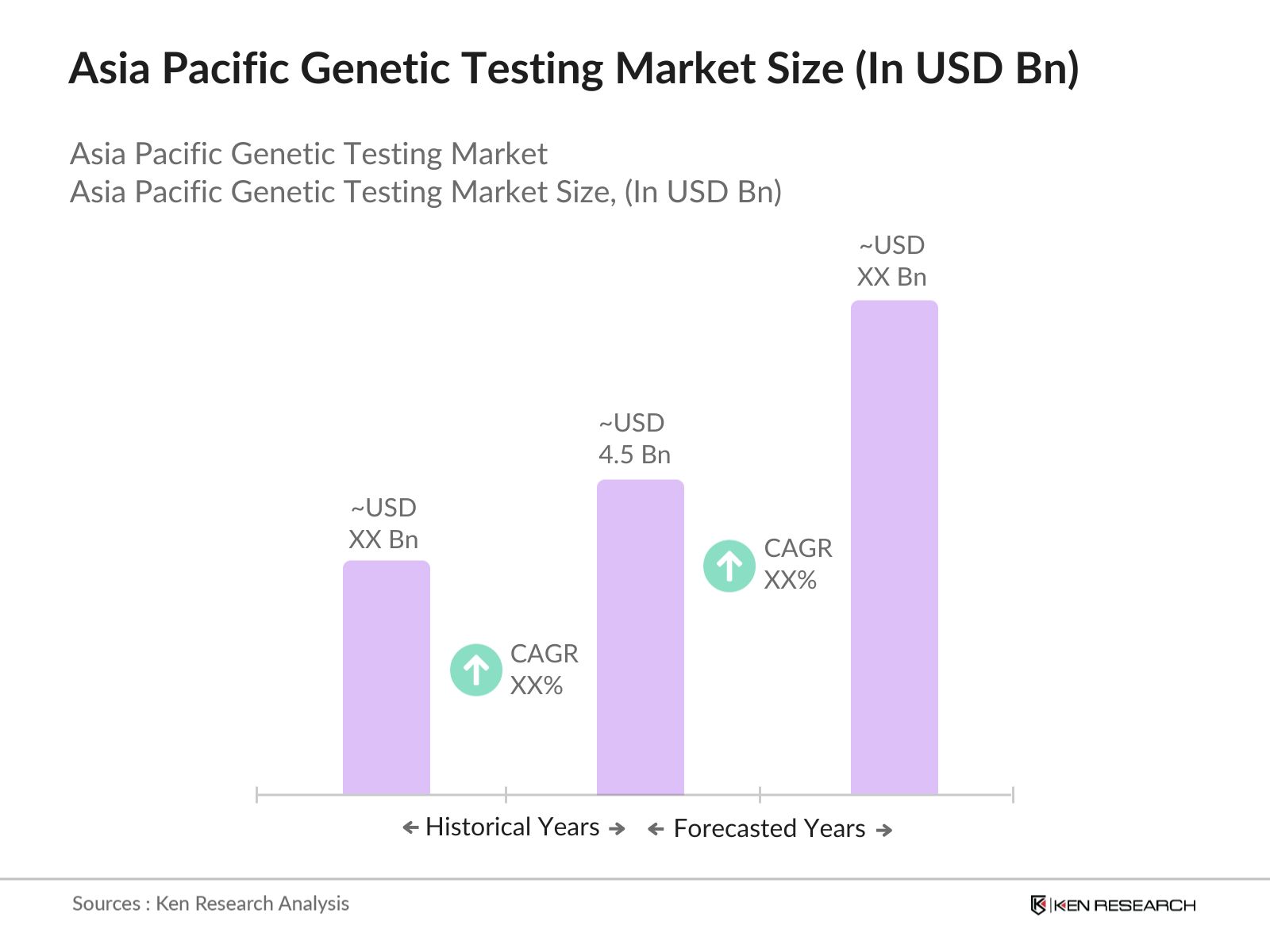
- The Asia Pacific genetic testing market is valued at USD 4.5 billion, driven primarily by advancements in genetic technology and increased demand for personalized medicine. The region's growing awareness of genetic disorders, supported by government initiatives and healthcare reforms, has fueled the adoption of genetic testing services. Hospitals and diagnostic labs have integrated these tests into their clinical workflows, while the rising availability of direct-to-consumer genetic testing options has broadened access to individuals seeking insights into their genetic profiles. This rapid expansion is expected to persist as more affordable and accurate testing methods are developed, contributing to market growth.
- China, Japan, and India are the dominant countries in the Asia Pacific genetic testing market. These countries have established strong healthcare infrastructures, leading research institutions, and an increasing number of clinical trials focused on genetic testing technologies. China's significant investments in biotechnology and genetic research have further solidified its leadership in the market. In Japan, high consumer awareness and advanced healthcare systems have fostered the uptake of genetic screening for hereditary diseases and cancer. India, meanwhile, is seeing rapid growth due to its large population and increasing access to healthcare services.
- Governments across Asia Pacific have implemented stringent regulatory frameworks for genetic testing. Japans Pharmaceuticals and Medical Devices Agency (PMDA) regulates genetic testing products and ensures compliance with safety and ethical standards. In Australia, the Therapeutic Goods Administration (TGA) oversees the approval of genetic tests. In 2024, India introduced new regulatory guidelines under the Central Drugs Standard Control Organization (CDSCO), while Chinas Ministry of Health enforces strict regulations on the sale and use of genetic testing kits.
Asia Pacific Genetic Testing Market Segmentation
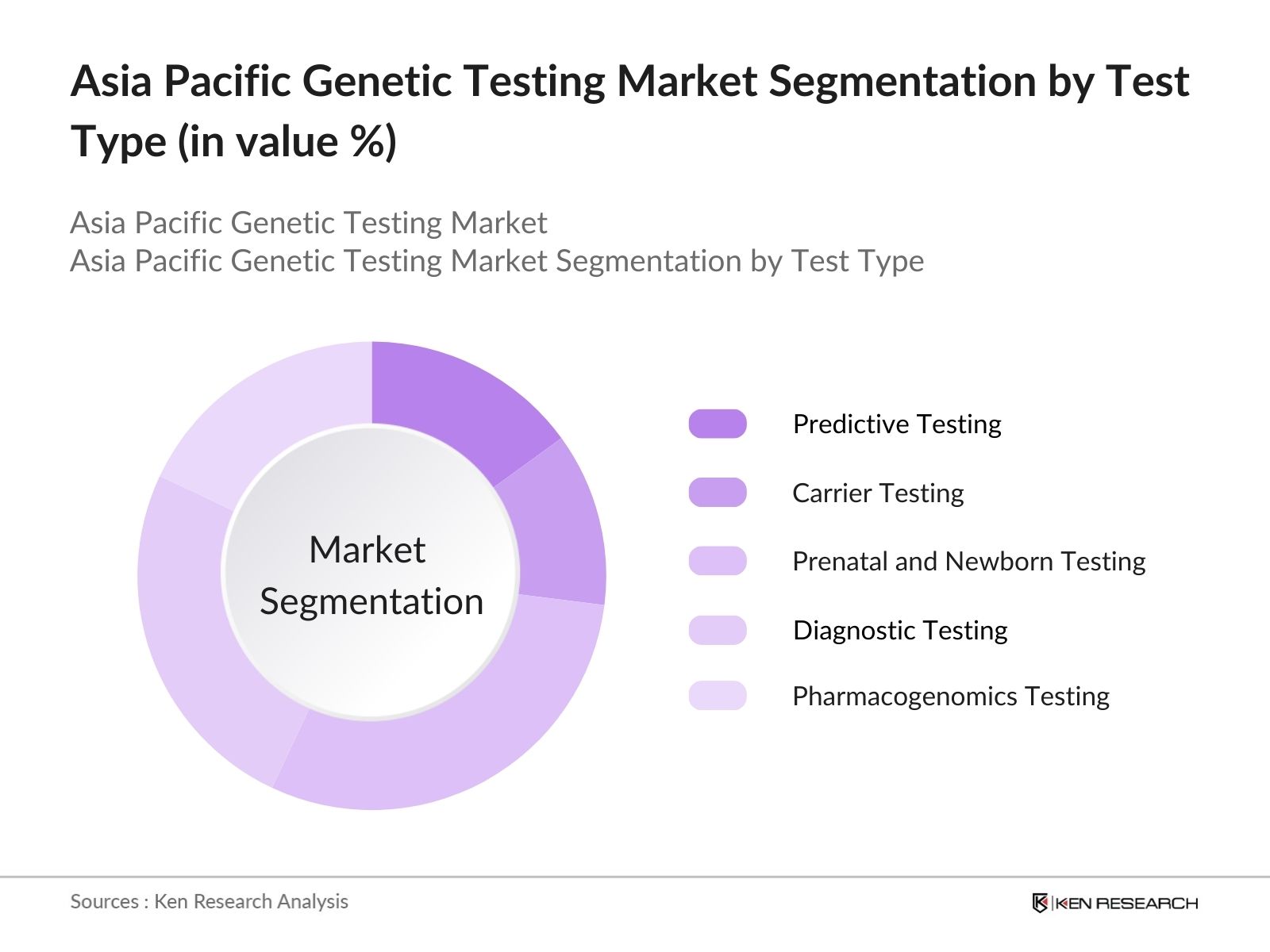
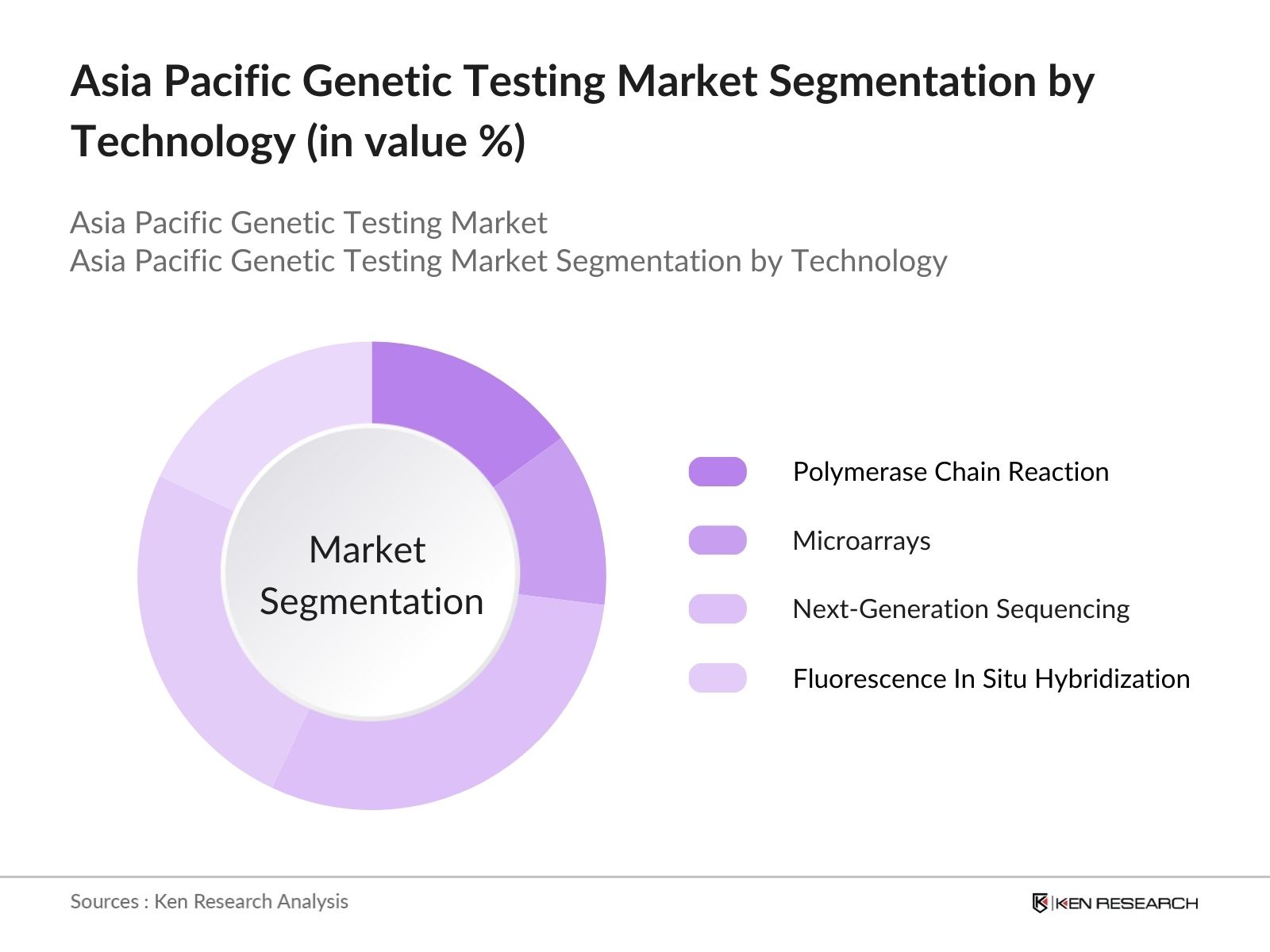
The Asia Pacific genetic testing market is segmented by test type and by technology.
- By Test Type: The market is segmented by test type into predictive testing, carrier testing, prenatal and newborn testing, diagnostic testing, and pharmacogenomics testing. Prenatal and newborn testing hold the dominant market share due to the rising awareness among parents about early diagnosis of congenital disabilities and genetic disorders. The widespread availability of non-invasive prenatal testing (NIPT) has contributed to this dominance, offering parents a safer option for identifying chromosomal abnormalities early in pregnancy. As healthcare providers continue to recommend these tests, they are becoming a standard part of prenatal care in the region.
- By Technology: The market is also segmented by technology into polymerase chain reaction (PCR), microarrays, next-generation sequencing (NGS), and fluorescence in situ hybridization (FISH). Next-generation sequencing (NGS) has emerged as the dominant segment in this category due to its high accuracy, speed, and ability to detect a wide range of genetic mutations. NGS allows for comprehensive genome-wide analysis, making it essential in both clinical diagnostics and research settings. The demand for precision medicine, which relies on NGS for identifying gene mutations linked to diseases, has further accelerated its adoption across the Asia Pacific region.
Asia Pacific Genetic Testing Market Competitive Landscape
The Asia Pacific genetic testing market is dominated by a few key players that leverage advanced genetic technologies and extensive distribution networks. Global companies like Roche Diagnostics and Illumina have strengthened their presence through collaborations with local healthcare institutions. Meanwhile, regional players such as BGI Group and Myriad Genetics have focused on expanding their product offerings and services. This competitive landscape is marked by both innovation in genetic testing solutions and strategic partnerships aimed at penetrating emerging markets.
|
Company Name |
Establishment Year |
Headquarters |
Market Presence |
No. of Employees |
Key Technology |
R&D Investments |
|
Roche Diagnostics |
1896 |
Switzerland |
||||
|
Illumina, Inc. |
1998 |
USA |
||||
|
Thermo Fisher Scientific |
1956 |
USA |
||||
|
BGI Group |
1999 |
China |
||||
|
Myriad Genetics |
1991 |
USA |
Asia Pacific Genetic Testing Market Analysis
Market Growth Drivers
- Advancements in Genetic Technologies: The genetic testing market in Asia Pacific is witnessing growth due to advancements in sequencing technologies such as next-generation sequencing (NGS) and CRISPR. NGS platforms are enabling high-throughput sequencing, allowing researchers and healthcare providers to perform large-scale genome analyses more efficiently. According to data from the World Bank, Japan has invested over $2 billion into research and development for biotechnological advancements, including genetic technologies in 2024. This has accelerated the adoption of novel genetic testing methods across healthcare systems, facilitating early disease detection and personalized treatments.
- Increasing Prevalence of Genetic Disorders: Asia Pacific has seen an increase in genetic disorders such as thalassemia, cystic fibrosis, and sickle cell anemia, driving demand for genetic testing. In India, government reports suggest over 45,000 newborns are diagnosed annually with congenital genetic disorders. China also reported a rise in inherited disorders, with over 10,000 cases of neonatal Down syndrome identified in 2023. The increased prevalence of these disorders is pushing healthcare systems to adopt comprehensive genetic screening programs, backed by healthcare reforms in countries like China and India.
- Rising Demand for Personalized Medicine: The shift towards personalized medicine in the Asia Pacific region is accelerating genetic testing adoption. In Australia, 85% of healthcare professionals in 2024 are reported to be incorporating genomic data to tailor treatment plans for conditions like cancer and rare diseases. Personalized therapies using genetic markers have also seen uptake in countries like Japan and South Korea, where over $1.5 billion has been allocated to precision medicine research initiatives. This demand is fueled by better healthcare outcomes observed in patients treated with gene-specific therapies.
Market Challenges
- High Cost of Genetic Testing: Despite growing demand, the high cost of genetic testing remains a challenge in the Asia Pacific market. In countries like Australia, a comprehensive genetic test for cancer risks can cost as much as AUD 2,500. Although some countries, such as Japan, have introduced partial subsidies, affordability remains a concern for middle-income populations in countries like India and Indonesia. As of 2024, Indias per capita income is around $2,400, making genetic testing accessible only to a small percentage of the population.
- Ethical and Regulatory Concerns: Ethical and regulatory challenges hinder the widespread adoption of genetic testing in Asia Pacific. Countries like China and India have stringent regulations on genetic data usage, with privacy concerns growing due to the increasing availability of genetic testing. As of 2024, Indias Personal Data Protection Bill imposes strict controls on the storage and sharing of genetic information. Regulatory frameworks for genetic testing differ significantly across Asia Pacific countries, slowing cross-border testing services and collaboration, particularly in the context of clinical trials.
Asia Pacific Genetic Testing Market Future Outlook
Over the next five years, the Asia Pacific genetic testing market is expected to experience substantial growth, driven by technological advancements, increasing consumer demand for personalized medicine, and government support for healthcare reforms. The introduction of more affordable and accurate genetic tests, coupled with growing awareness of the benefits of early diagnosis of genetic disorders, will likely fuel market expansion. Furthermore, collaborations between research institutions, healthcare providers, and genetic testing companies are anticipated to play a pivotal role in improving market accessibility and affordability.
Market Opportunities
- Expansion of Direct-to-Consumer Genetic Testing: Direct-to-consumer (DTC) genetic testing is gaining momentum in Asia Pacific, with a surge in online platforms offering services for ancestry, health risk assessments, and fitness genetics. In 2023, China saw over 1 million DTC genetic test kits sold, a significant rise from previous years. The growing popularity of these kits in urban centers of Japan and Australia is expected to create new opportunities for companies entering this market. Regulatory reforms in countries like South Korea, which relaxed restrictions on DTC genetic testing in 2022, are further boosting market expansion.
- Increasing Application of Genetic Testing in Cancer Screening: Cancer screening using genetic markers is expanding across Asia Pacific as healthcare providers adopt genetic testing to identify high-risk individuals. In Japan, approximately 250,000 individuals underwent genetic cancer screening in 2023, particularly for breast and colorectal cancers. Similarly, India reported a growing number of oncologists recommending genetic testing for early cancer detection, especially in urban hospitals. With the rising cancer burdenIndia reported over 1.39 million new cases in 2022genetic testing offers a crucial method for early detection and personalized treatment pathways.
Scope of the Report
|
Predictive Testing Carrier Testing Prenatal and Newborn Testing Diagnostic Testing Pharmacogenomics Testing |
|
|
By Technology |
PCR Microarrays NGS FISH |
|
By Application |
Oncology Infectious Diseases Rare Diseases Cardiovascular Diseases |
|
By End-User |
Hospitals and Clinics Diagnostic Laboratories Research Institutes Direct-to-Consumer Services |
|
By Region |
North East West South |
Products
Key Target Audience
Hospitals and Healthcare Providers
Genetic Testing Laboratories
Research Institutions
Biotechnology Companies
Investments and Venture Capital Firms
Government and Regulatory Bodies (National Institutes of Health, Food and Drug Administration)
Insurance Providers
Banks and Financial Institutes
Direct-to-Consumer Genetic Testing Providers
Companies
Major Players in the Market
Roche Diagnostics
Illumina, Inc.
Thermo Fisher Scientific
Qiagen N.V.
BGI Group
Agilent Technologies
Myriad Genetics
Genomic Health
Invitae Corporation
Fulgent Genetics
Natera Inc.
Bio-Rad Laboratories
Laboratory Corporation of America Holdings (LabCorp)
Quest Diagnostics
Ambry Genetics
Table of Contents
1. Asia Pacific Genetic Testing Market Overview
1.1. Definition and Scope
1.2. Market Taxonomy
1.3. Market Growth Rate
1.4. Market Segmentation Overview
2. Asia Pacific Genetic Testing Market Size (In USD Mn)
2.1. Historical Market Size
2.2. Year-On-Year Growth Analysis
2.3. Key Market Developments and Milestones
3. Asia Pacific Genetic Testing Market Analysis
3.1. Growth Drivers
3.1.1. Advancements in Genetic Technologies
3.1.2. Increasing Prevalence of Genetic Disorders
3.1.3. Rising Demand for Personalized Medicine
3.1.4. Government Initiatives and Healthcare Reforms
3.2. Market Challenges
3.2.1. High Cost of Genetic Testing
3.2.2. Ethical and Regulatory Concerns
3.2.3. Lack of Skilled Genetic Counselors
3.3. Opportunities
3.3.1. Expansion of Direct-to-Consumer Genetic Testing
3.3.2. Increasing Application of Genetic Testing in Cancer Screening
3.3.3. Collaborations between Healthcare Providers and Diagnostic Labs
3.4. Trends
3.4.1. Integration of Artificial Intelligence in Genetic Analysis
3.4.2. Growth of Non-Invasive Prenatal Testing (NIPT)
3.4.3. Rise of Whole Genome Sequencing
3.5. Government Regulations
3.5.1. Regulatory Frameworks by Major Countries (Japan, Australia, India, China)
3.5.2. Standards for Genetic Data Privacy
3.5.3. Ethical Guidelines for Genetic Testing
3.6. SWOT Analysis
3.7. Stakeholder Ecosystem
3.8. Porters Five Forces Analysis
3.9. Competition Ecosystem
4. Asia Pacific Genetic Testing Market Segmentation
4.1. By Test Type (In Value %)
4.1.1. Predictive Testing
4.1.2. Carrier Testing
4.1.3. Prenatal and Newborn Testing
4.1.4. Diagnostic Testing
4.1.5. Pharmacogenomics Testing
4.2. By Technology (In Value %)
4.2.1. Polymerase Chain Reaction (PCR)
4.2.2. Microarrays
4.2.3. Next-Generation Sequencing (NGS)
4.2.4. Fluorescence In Situ Hybridization (FISH)
4.3. By Application (In Value %)
4.3.1. Oncology
4.3.2. Infectious Diseases
4.3.3. Rare Diseases
4.3.4. Cardiovascular Diseases
4.4. By End-User (In Value %)
4.4.1. Hospitals and Clinics
4.4.2. Diagnostic Laboratories
4.4.3. Research Institutes
4.4.4. Direct-to-Consumer Services
4.5. By Region (In Value %)
4.5.1. North
4.5.2. South
4.5.3. West
4.5.4. East
5. Asia Pacific Genetic Testing Market Competitive Analysis
5.1. Detailed Profiles of Major Companies
5.1.1. Roche Diagnostics
5.1.2. Illumina, Inc.
5.1.3. Thermo Fisher Scientific
5.1.4. Qiagen N.V.
5.1.5. BGI Group
5.1.6. Agilent Technologies
5.1.7. Myriad Genetics
5.1.8. Genomic Health
5.1.9. Invitae Corporation
5.1.10. Fulgent Genetics
5.1.11. Natera Inc.
5.1.12. Bio-Rad Laboratories
5.1.13. Laboratory Corporation of America Holdings (LabCorp)
5.1.14. Quest Diagnostics
5.1.15. Ambry Genetics
5.2. Cross Comparison Parameters (No. of Employees, Headquarters, Revenue, Market Presence, Innovation in Testing, R&D Investment, M&A Activities, Strategic Partnerships)
5.3. Market Share Analysis
5.4. Strategic Initiatives
5.5. Mergers and Acquisitions
5.6. Investment Analysis
5.7. Venture Capital Funding
5.8. Government Grants
5.9. Private Equity Investments
6. Asia Pacific Genetic Testing Market Regulatory Framework
6.1. Regulatory Bodies
6.2. Compliance and Certifications
6.3. Data Privacy and Genetic Information Protection
7. Asia Pacific Genetic Testing Future Market Size (In USD Mn)
7.1. Future Market Size Projections
7.2. Key Factors Driving Future Market Growth
8. Asia Pacific Genetic Testing Future Market Segmentation
8.1. By Test Type (In Value %)
8.2. By Technology (In Value %)
8.3. By Application (In Value %)
8.4. By End-User (In Value %)
8.5. By Region (In Value %)
9. Asia Pacific Genetic Testing Market Analysts Recommendations
9.1. TAM/SAM/SOM Analysis
9.2. Customer Cohort Analysis
9.3. White Space Opportunity Analysis
9.4. Strategic Market Entry Recommendations
Disclaimer
Contact Us
Research Methodology
Step 1: Identification of Key Variables
The first step involves mapping the ecosystem of the Asia Pacific genetic testing market. We utilize extensive desk research combined with proprietary databases to identify the major stakeholders, including genetic testing providers, laboratories, and government agencies. This phase focuses on defining key variables like market demand, technological innovations, and regulatory developments that drive market dynamics.
Step 2: Market Analysis and Construction
In this phase, historical data on the Asia Pacific genetic testing market is compiled and analyzed. Key factors include the penetration of genetic testing services across hospitals, diagnostic centers, and direct-to-consumer models. We also examine the growth of genetic testing technologies, including PCR and NGS, and their contributions to market revenue.
Step 3: Hypothesis Validation and Expert Consultation
Market hypotheses are developed and validated through interviews with industry experts from leading companies. These consultations provide insights into the practical challenges and opportunities within the genetic testing market. In particular, we gather detailed data on product performance, consumer preferences, and technological advancements directly from industry practitioners.
Step 4: Research Synthesis and Final Output
The final phase of the research synthesizes the data gathered from multiple sources, ensuring a comprehensive and validated market analysis. Direct consultations with genetic testing companies and research institutions allow us to verify and complement the data collected through the bottom-up approach. The final output includes a well-rounded analysis of market trends, challenges, and growth opportunities.
Frequently Asked Questions
01. How big is the Asia Pacific Genetic Testing Market?
The Asia Pacific genetic testing market is valued at USD 4.5 billion, driven by advancements in genetic technologies, increasing consumer demand for personalized medicine, and government support for healthcare reforms.
02. What are the challenges in the Asia Pacific Genetic Testing Market?
The challenges in this Asia Pacific genetic testing market include high testing costs, ethical concerns surrounding genetic data privacy, and a shortage of trained genetic counselors to guide patients through test results.
03. Who are the major players in the Asia Pacific Genetic Testing Market?
Major players in the Asia Pacific genetic testing market include Roche Diagnostics, Illumina, Thermo Fisher Scientific, BGI Group, and Myriad Genetics, all of which have established strong market positions through technological innovation and strategic collaborations.
04. What are the growth drivers of the Asia Pacific Genetic Testing Market?
The Asia Pacific genetic testing market is driven by the growing prevalence of genetic disorders, increased adoption of personalized medicine, technological advancements in genetic testing methods like NGS, and supportive government healthcare reforms.
05. What are the technological trends in the Asia Pacific Genetic Testing Market?
Asia Pacific genetic testing market Key technological trends include the increasing use of next-generation sequencing (NGS) for comprehensive genome analysis, the integration of AI in genetic data interpretation, and the expansion of non-invasive prenatal testing (NIPT) services.
Why Buy From Us?

What makes us stand out is that our consultants follows Robust, Refine and Result (RRR) methodology. i.e. Robust for clear definitions, approaches and sanity checking, Refine for differentiating respondents facts and opinions and Result for presenting data with story

We have set a benchmark in the industry by offering our clients with syndicated and customized market research reports featuring coverage of entire market as well as meticulous research and analyst insights.

While we don't replace traditional research, we flip the method upside down. Our dual approach of Top Bottom & Bottom Top ensures quality deliverable by not just verifying company fundamentals but also looking at the sector and macroeconomic factors.

With one step in the future, our research team constantly tries to show you the bigger picture. We help with some of the tough questions you may encounter along the way: How is the industry positioned? Best marketing channel? KPI's of competitors? By aligning every element, we help maximize success.

Our report gives you instant access to the answers and sources that other companies might choose to hide. We elaborate each steps of research methodology we have used and showcase you the sample size to earn your trust.

If you need any support, we are here! We pride ourselves on universe strength, data quality, and quick, friendly, and professional service.