















Asia Pacific Glass Fiber Reinforced Concrete (GFRC) Market Outlook to 2030
Region:Global
Author(s):Abhinav kumar
Product Code:KROD6234
November 2024
87
About the Report
Asia Pacific Glass Fiber Reinforced Concrete Market Overview
- The Asia Pacific Glass Fiber Reinforced Concrete (GFRC) market is valued at USD 640 million, based on a five-year historical analysis. This valuation reflects the growing adoption of GFRC in construction, driven by the materials exceptional strength-to-weight ratio and its resistance to weathering and environmental degradation. The demand for GFRC is largely propelled by the expansion of the construction sector across both commercial and residential projects, where sustainability and durability are paramount concerns. Government initiatives for green buildings and energy efficiency further fuel the market's growth.
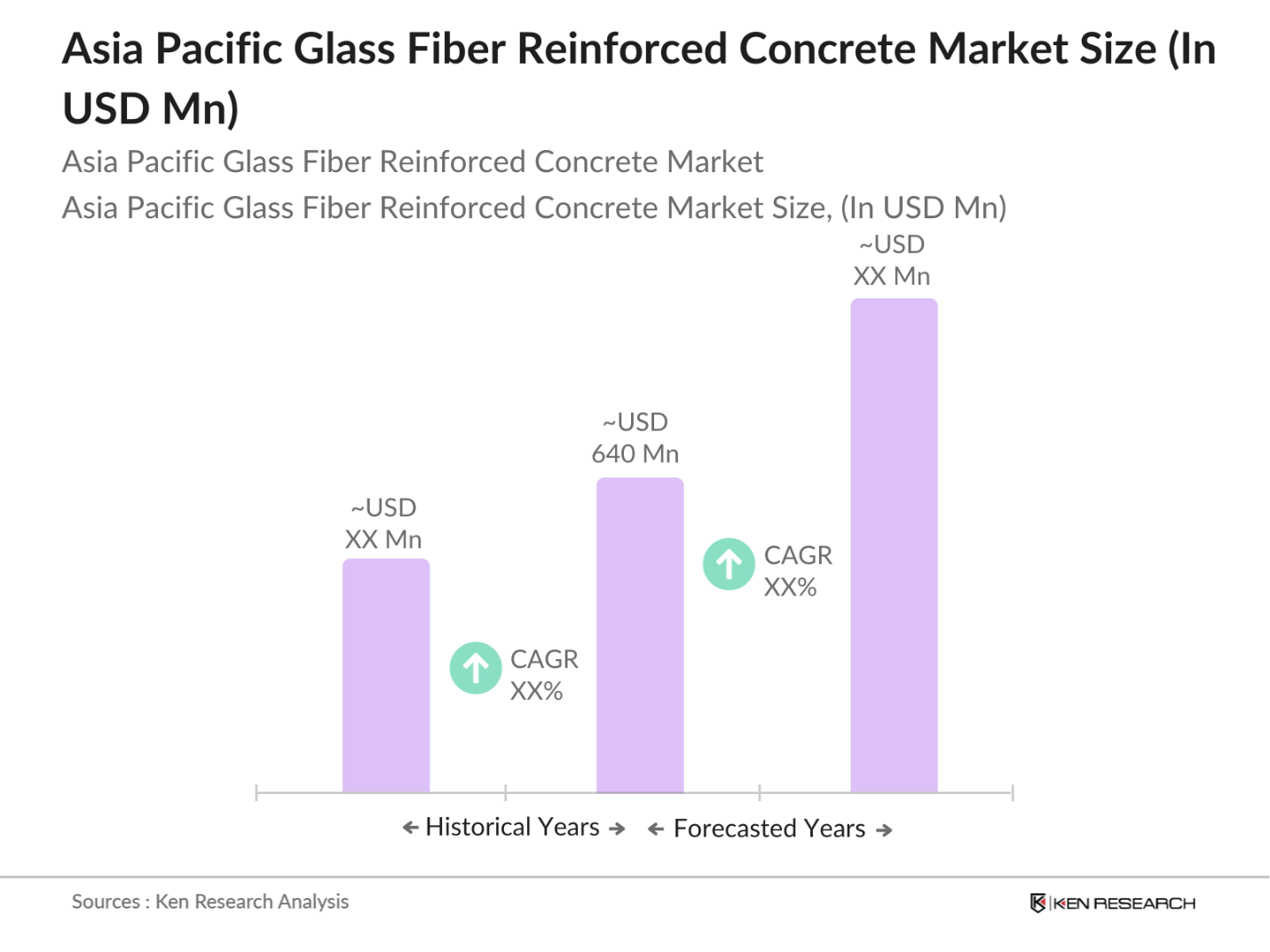
- The market is dominated by key countries such as China, Japan, and India. China leads due to its massive infrastructure projects, urbanization, and the growing trend towards sustainable building materials. Japan and India follow, driven by their respective construction booms and the adoption of modern architectural designs where GFRC is used extensively for its lightweight and aesthetic properties. These countries' dominance is rooted in strong industrial output and government policies promoting green infrastructure.
- The shift toward lightweight construction materials is a significant trend in the Asia Pacific region, driven by the need for efficient and sustainable building solutions. GFRCs lightweight properties, combined with its high strength, make it an ideal material for both retrofitting and new constructions. In 2023, the Ministry of Housing and Urban-Rural Development in China reported that over 45% of new construction projects adopted lightweight materials, including GFRC, to reduce transportation costs and labor. This trend is expected to continue as urban areas expand and governments promote sustainable urban development.
Asia Pacific Glass Fiber Reinforced Concrete Market Segmentation
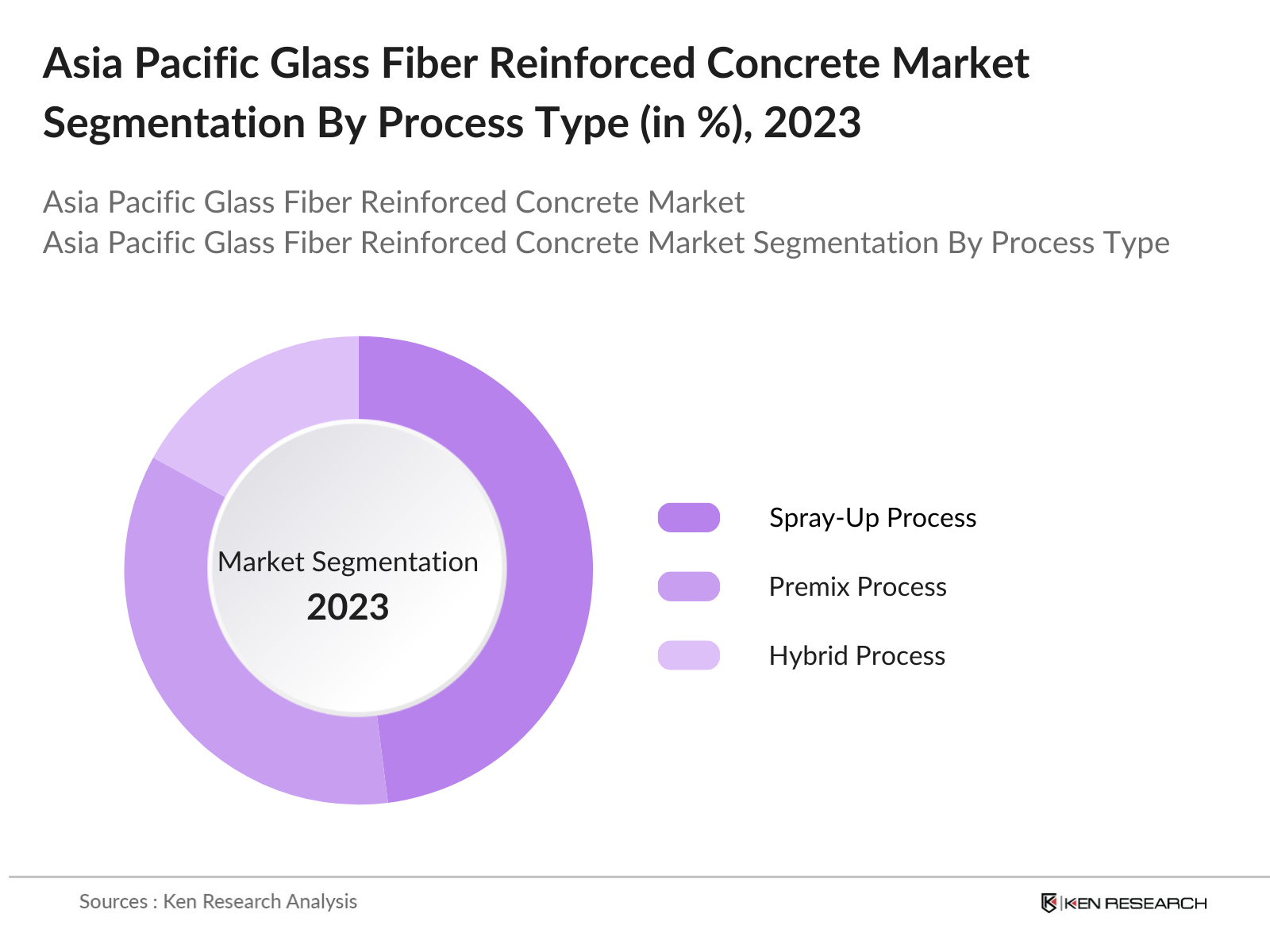
By Process: The Asia Pacific GFRC market is segmented by process into Spray-Up Process, Premix Process, and Hybrid Process. Recently, the Spray-Up Process has gained a dominant market share under this segmentation. This is primarily due to its efficiency and cost-effectiveness in producing large and intricate architectural panels. Spray-Up allows for fast production while maintaining the structural integrity of GFRC, making it a favored method in large-scale construction projects such as high-rise buildings and infrastructure developments.
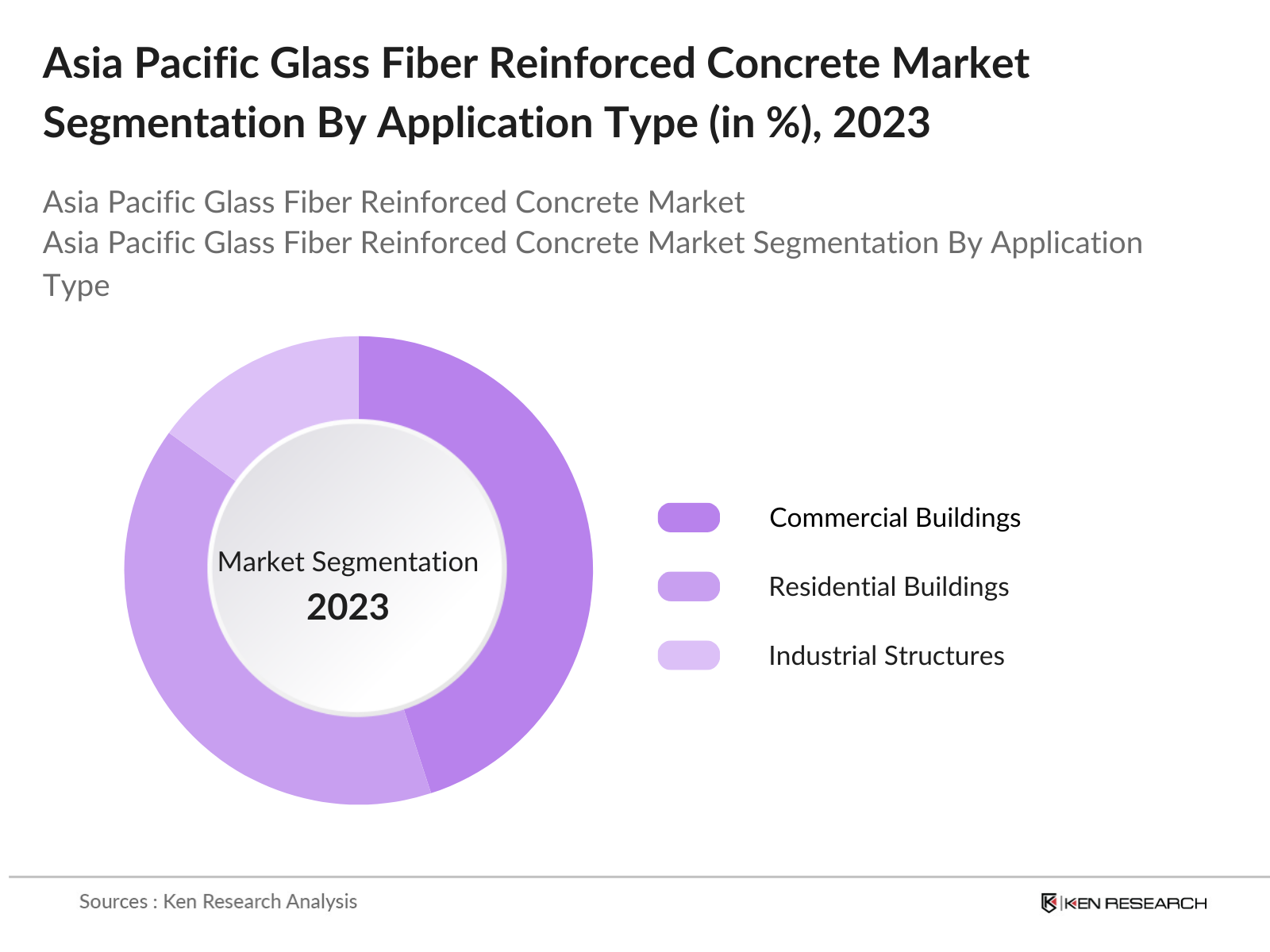
By Application: The Asia Pacific GFRC market is further segmented by application into Residential Buildings, Commercial Buildings, and Industrial Structures. Among these, Commercial Buildings have emerged as the dominant application segment, accounting for a significant portion of the market. The rising demand for innovative and sustainable building materials in modern commercial projects, such as shopping malls, office complexes, and entertainment centers, has solidified GFRCs position in this sector. Its aesthetic flexibility and durability make it a preferred choice for architects and builders in commercial applications.
Asia Pacific Glass Fiber Reinforced Concrete Market Competitive Landscape
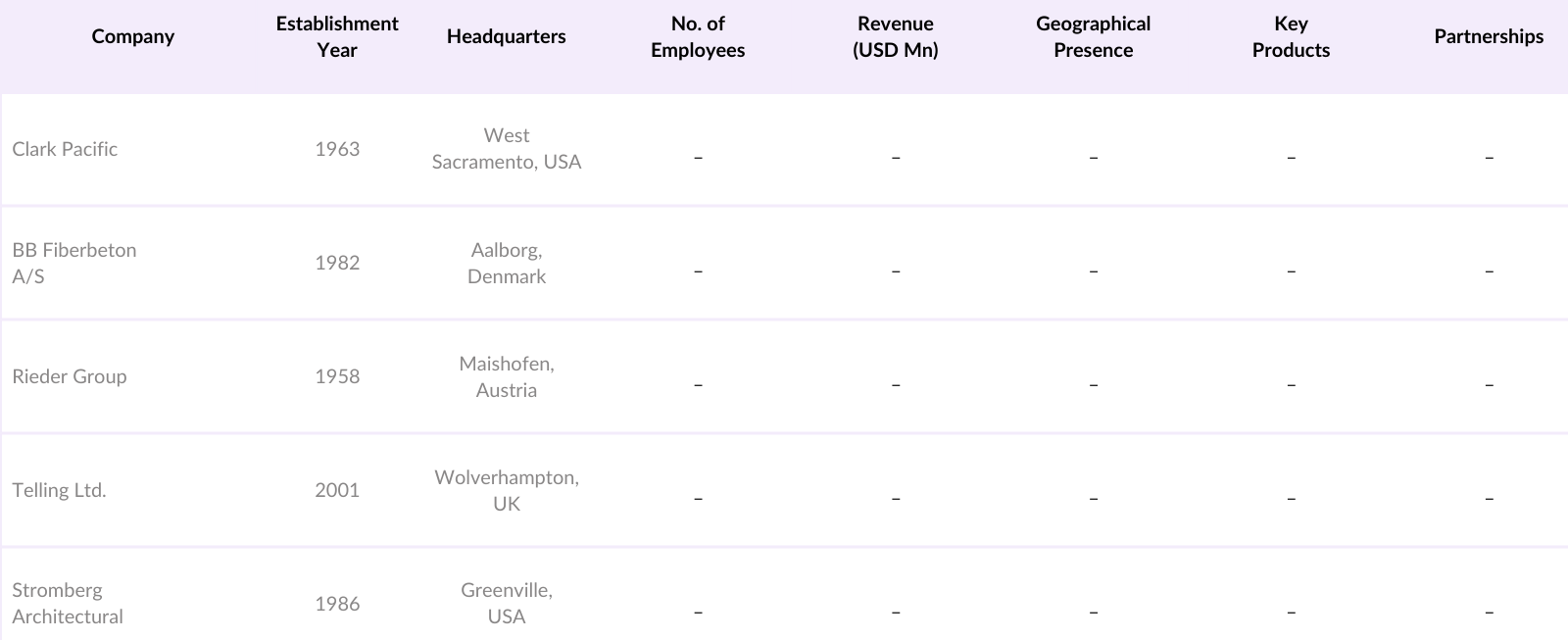
The Asia Pacific GFRC market is dominated by a mix of global and regional players, including several companies that have invested heavily in expanding their presence in the region. The consolidation in the market reflects the influence of established firms that possess advanced production technologies, vast distribution networks, and a strong focus on sustainability.
Asia Pacific Glass Fiber Reinforced Concrete Industry Analysis
Growth Drivers
- Sustainable Construction Practices: The Asia Pacific region is actively promoting sustainable construction practices due to increasing environmental concerns. The adoption of Glass Fiber Reinforced Concrete (GFRC) aligns with the region's green building movement. In 2023, Japan committed USD 5.3 billion to green building initiatives, while China's 14th Five-Year Plan emphasizes eco-friendly construction materials like GFRC. According to the World Bank, carbon emissions in the region rose by 3% in 2022, prompting government action. GFRCs lower carbon footprint and durability make it an ideal material for infrastructure projects striving to meet stringent environmental.
- Increasing Demand for High-Performance Materials: The construction industry in the Asia Pacific is experiencing robust demand for high-performance materials due to rapid industrialization and urban development. In 2022, the World Bank reported over 450 million people migrating to urban areas within the region, driving demand for durable, resilient materials like GFRC. Its ability to withstand harsh environmental conditions, such as extreme humidity and temperature fluctuations, makes GFRC a preferred choice for public infrastructure projects, such as bridges and highways. Additionally, the need for materials with longer life cycles has boosted GFRCs prominence in both commercial and residential sectors.
- Government Infrastructure Initiatives: Several countries in the Asia Pacific region have launched large-scale infrastructure initiatives aimed at modernizing urban areas and improving transportation networks. In 2022, India allocated over USD 1.6 trillion toward its National Infrastructure Pipeline (NIP), including projects requiring durable and cost-effective materials like GFRC. Similarly, Indonesia is working on a USD 35 billion infrastructure revamp program. The use of GFRC in these projects has been encouraged due to its lightweight nature and low maintenance costs, aligning with the governments.
Market Challenges
- High Production Costs: One of the major challenges facing the GFRC market in Asia Pacific is the high cost of production, largely due to the specialized equipment and skilled labor required. In 2023, production costs for GFRC in key markets like Japan and South Korea were estimated at 25% higher than for traditional concrete materials. According to industry data from government sources, energy consumption in the manufacturing process contributes significantly to these costs. Additionally, transportation logistics for heavy materials, particularly in geographically fragmented countries like Indonesia and the Philippines, further inflate costs.
- Fluctuating Raw Material Prices: The cost of raw materials, particularly glass fibers and cement, is subject to frequent price fluctuations, which poses a challenge for the GFRC market. Data from the IMF indicates that global commodity prices for raw materials increased by 8% in 2023, directly impacting production costs in the Asia Pacific region. The reliance on imported raw materials, especially in countries like Malaysia and Thailand, exacerbates this issue, making pricing volatile. This volatility can slow the adoption of GFRC in construction projects, as contractors opt for more stable, cost-efficient materials.
Asia Pacific Glass Fiber Reinforced Concrete Market Future Outlook
Over the next five years, the Asia Pacific GFRC market is expected to see notable growth, driven by the increasing demand for lightweight, durable, and sustainable construction materials. As more governments across the region introduce stricter building regulations focusing on energy efficiency and sustainability, GFRC is likely to gain further prominence. Additionally, advancements in production technologies and innovations in material compositions will open up new applications for GFRC across both commercial and residential sectors. The market's growth will also be supported by the regions rapid urbanization and the boom in infrastructure development. Major cities across China, India, and Japan will continue to be at the forefront of adopting GFRC solutions, ensuring sustained market demand.
Opportunities
- Adoption of Prefabricated GFRC Panels: The adoption of prefabricated GFRC panels in construction is a growing trend in the Asia Pacific market. With China leading the region, over 30% of new construction projects in 2023 incorporated prefabricated elements, including GFRC panels, according to government reports. The panels reduce construction time by up to 50%, making them highly cost-effective for large-scale developments. Countries like Australia and Singapore have also initiated prefabrication policies in housing projects, promoting the use of materials like GFRC due to its high strength-to-weight ratio, thermal insulation, and low maintenance requirements.
- Technological Innovations in GFRC Composites: Technological advancements in GFRC composites have opened up new opportunities for market growth in the Asia Pacific region. In 2023, several R&D projects in Japan and South Korea focused on enhancing the tensile strength of GFRC by up to 40% using nanomaterials. These innovations are making GFRC more competitive in high-stress applications, such as bridges and industrial facilities. The development of eco-friendly GFRC composites, incorporating recycled materials, aligns with the regions push for sustainable infrastructure solutions, providing manufacturers with opportunities to tap into new market segments.
Scope of the Report
|
By Process |
Spray-Up Process |
|
By Application |
Residential Buildings |
|
By Type |
Panels |
|
By End-User Industry |
Construction |
|
By Country |
China |
Products
Key Target Audience Organizations and Entities Who Can Benefit by Subscribing This Report:
Architectural Companies
Real Estate Development Companies
Construction Companies
Government and Regulatory Bodies (e.g., Green Building Council, Environmental Protection Agencies)
Investor and Venture Capitalist Firms
Infrastructure Development Companies
Urban Planning Departments
Building Material Supplier Companies
Companies
Players Mentioned in the Report
Clark Pacific
BB Fiberbeton A/S
Rieder Group
Telling Ltd.
Stromberg Architectural
Loveld NV
SureCrete Design Products
Formglas Products Ltd.
Fibrex Construction Group
Betofiber A/S
Table of Contents
1. Asia Pacific GFRC Market Overview
1.1. Definition and Scope
1.2. Market Taxonomy
1.3. Market Growth Rate
1.4. Market Segmentation Overview
2. Asia Pacific GFRC Market Size (In USD Mn)
2.1. Historical Market Size
2.2. Year-On-Year Growth Analysis
2.3. Key Market Developments and Milestones
3. Asia Pacific GFRC Market Analysis
3.1. Growth Drivers
3.1.1. Sustainable Construction Practices
3.1.2. Increasing Demand for High-Performance Materials
3.1.3. Government Infrastructure Initiatives
3.1.4. Rapid Urbanization
3.2. Market Challenges
3.2.1. High Production Costs
3.2.2. Fluctuating Raw Material Prices
3.2.3. Limited Skilled Workforce in the Region
3.3. Opportunities
3.3.1. Adoption of Prefabricated GFRC Panels
3.3.2. Technological Innovations in GFRC Composites
3.3.3. Expansion in Residential and Commercial Infrastructure Projects
3.4. Trends
3.4.1. Shift Toward Lightweight Construction Materials
3.4.2. Integration of GFRC in Sustainable Building Solutions
3.4.3. Use of GFRC in Architectural Design and Faades
3.5. Government Regulations
3.5.1. Green Building Certifications
3.5.2. Compliance with Energy Efficiency Standards
3.5.3. Environmental Protection Regulations
3.6. SWOT Analysis
3.7. Stakeholder Ecosystem
3.8. Porters Five Forces
3.9. Competition Ecosystem
4. Asia Pacific GFRC Market Segmentation
4.1. By Process (In Value %)
4.1.1. Spray-Up Process
4.1.2. Premix Process
4.1.3. Hybrid Process
4.2. By Application (In Value %)
4.2.1. Residential Buildings
4.2.2. Commercial Buildings
4.2.3. Industrial Structures
4.3. By Type (In Value %)
4.3.1. Panels
4.3.2. Mesh
4.3.3. Premixed
4.4. By End-User Industry (In Value %)
4.4.1. Construction
4.4.2. Infrastructure
4.4.3. Industrial
4.5. By Country (In Value %)
4.5.1. China
4.5.2. India
4.5.3. Japan
4.5.4. South Korea
4.5.5. Australia
5. Asia Pacific GFRC Market Competitive Analysis
5.1. Detailed Profiles of Major Companies
5.1.1. Clark Pacific
5.1.2. BB Fiberbeton A/S
5.1.3. Betofiber A/S
5.1.4. Rieder Group
5.1.5. Willis Construction Co.
5.1.6. Telling Ltd.
5.1.7. Formglas Products Ltd.
5.1.8. Loveld NV
5.1.9. Stromberg Architectural
5.1.10. Blueconcrete
5.1.11. Fibrex Construction Group
5.1.12. Fishstone Concrete Products
5.1.13. Pennine Stone Ltd.
5.1.14. SureCrete Design Products
5.1.15. Flexcrete Technologies Ltd.
5.2. Cross Comparison Parameters (No. of Employees, Headquarters, Revenue, Product Portfolio, Market Share, Geographical Presence, Strategic Partnerships, Key Competitors)
5.3. Market Share Analysis
5.4. Strategic Initiatives
5.5. Mergers and Acquisitions
5.6. Investment Analysis
5.7. Venture Capital Funding
5.8. Government Grants
5.9. Private Equity Investments
6. Asia Pacific GFRC Market Regulatory Framework
6.1. Building Standards and Certifications
6.2. Compliance with Sustainable Development Goals
6.3. Energy Efficiency Mandates
6.4. Environmental Compliance Requirements
7. Asia Pacific GFRC Future Market Size (In USD Mn)
7.1. Future Market Size Projections
7.2. Key Factors Driving Future Market Growth
8. Asia Pacific GFRC Future Market Segmentation
8.1. By Process (In Value %)
8.2. By Application (In Value %)
8.3. By Type (In Value %)
8.4. By End-User Industry (In Value %)
8.5. By Country (In Value %)
9. Asia Pacific GFRC Market Analysts Recommendations
9.1. TAM/SAM/SOM Analysis
9.2. Customer Cohort Analysis
9.3. Marketing Initiatives
9.4. White Space Opportunity Analysis
Disclaimer Contact UsResearch Methodology
Step 1: Identification of Key Variables
The first step involves developing a comprehensive ecosystem map of the Asia Pacific GFRC Market. Secondary research using databases like Statista and industry reports from trusted sources provides an overview of major stakeholders. This step focuses on identifying the core variables that influence the markets growth, including technological advancements, supply chain efficiency, and regulatory frameworks.
Step 2: Market Analysis and Construction
Historical data from 2018 onwards is analyzed to assess market penetration and adoption rates of GFRC in the construction industry. Revenue patterns and shifts in demand for GFRC products across the Asia Pacific region are thoroughly examined, including the ratio of residential to commercial usage.
Step 3: Hypothesis Validation and Expert Consultation
Initial hypotheses regarding market drivers and challenges are validated through interviews with industry experts, including architects, contractors, and manufacturers of GFRC products. These consultations are critical in ensuring that the data reflects actual market conditions.
Step 4: Research Synthesis and Final Output
Finally, the gathered data is synthesized, and a bottom-up analysis is conducted, wherein input from manufacturers and distributors is cross-verified with industry trends. The final report is developed to provide a robust and actionable analysis of the Asia Pacific GFRC market.
Frequently Asked Questions
01. How big is the Asia Pacific GFRC Market?
The Asia Pacific GFRC market, valued at USD 640 million, is driven by increasing urbanization, government infrastructure projects, and the growing demand for sustainable building materials.
02. What are the challenges in the Asia Pacific GFRC Market?
Key challenges include high production costs, fluctuating raw material prices, and the need for skilled labor to ensure quality during the GFRC installation process.
03. Who are the major players in the Asia Pacific GFRC Market?
Major players include Clark Pacific, BB Fiberbeton A/S, Rieder Group, Telling Ltd., and Stromberg Architectural, each contributing to the market with innovative GFRC solutions and strategic partnerships.
04. What are the growth drivers of the Asia Pacific GFRC Market?
The markets growth is propelled by government regulations promoting green building solutions, increasing demand for durable construction materials, and advancements in GFRC manufacturing technologies.
Why Buy From Us?

What makes us stand out is that our consultants follows Robust, Refine and Result (RRR) methodology. i.e. Robust for clear definitions, approaches and sanity checking, Refine for differentiating respondents facts and opinions and Result for presenting data with story

We have set a benchmark in the industry by offering our clients with syndicated and customized market research reports featuring coverage of entire market as well as meticulous research and analyst insights.

While we don't replace traditional research, we flip the method upside down. Our dual approach of Top Bottom & Bottom Top ensures quality deliverable by not just verifying company fundamentals but also looking at the sector and macroeconomic factors.

With one step in the future, our research team constantly tries to show you the bigger picture. We help with some of the tough questions you may encounter along the way: How is the industry positioned? Best marketing channel? KPI's of competitors? By aligning every element, we help maximize success.

Our report gives you instant access to the answers and sources that other companies might choose to hide. We elaborate each steps of research methodology we have used and showcase you the sample size to earn your trust.

If you need any support, we are here! We pride ourselves on universe strength, data quality, and quick, friendly, and professional service.