
Asia Pacific Greeting Cards Market Outlook to 2030
Region:Afganistan
Author(s):Meenakshi Bisht
Product Code:KROD7973
Region:Afganistan
Author(s):Meenakshi Bisht
Product Code:KROD7973
December 2024
90
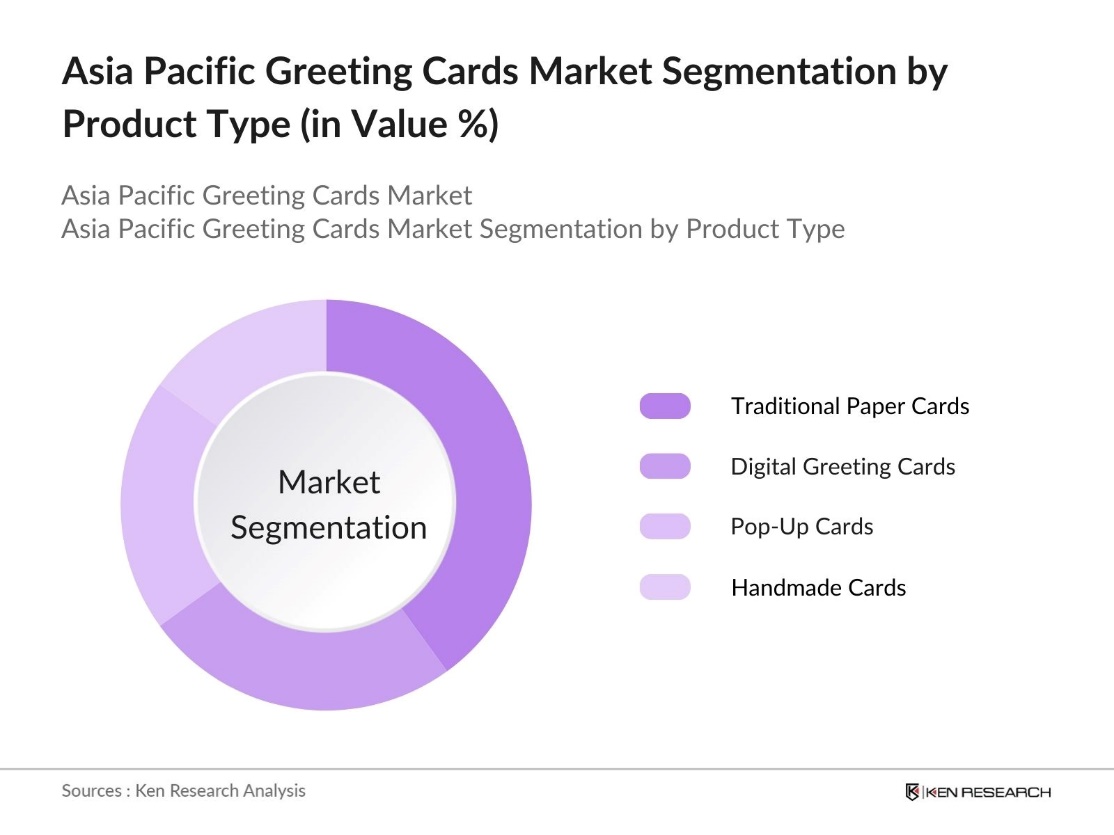
By Product Type: The market is segmented by product type into traditional paper cards, digital greeting cards, pop-up cards, and handmade cards. Traditional paper cards remain the most dominant product type, due to its attributed to the ingrained cultural habit of giving physical cards during festivals and personal occasions across the region. Consumers continue to prefer tangible cards for their sentimental value, and major retailers capitalize on this by offering a wide range of paper cards catering to different languages, themes, and customization options.
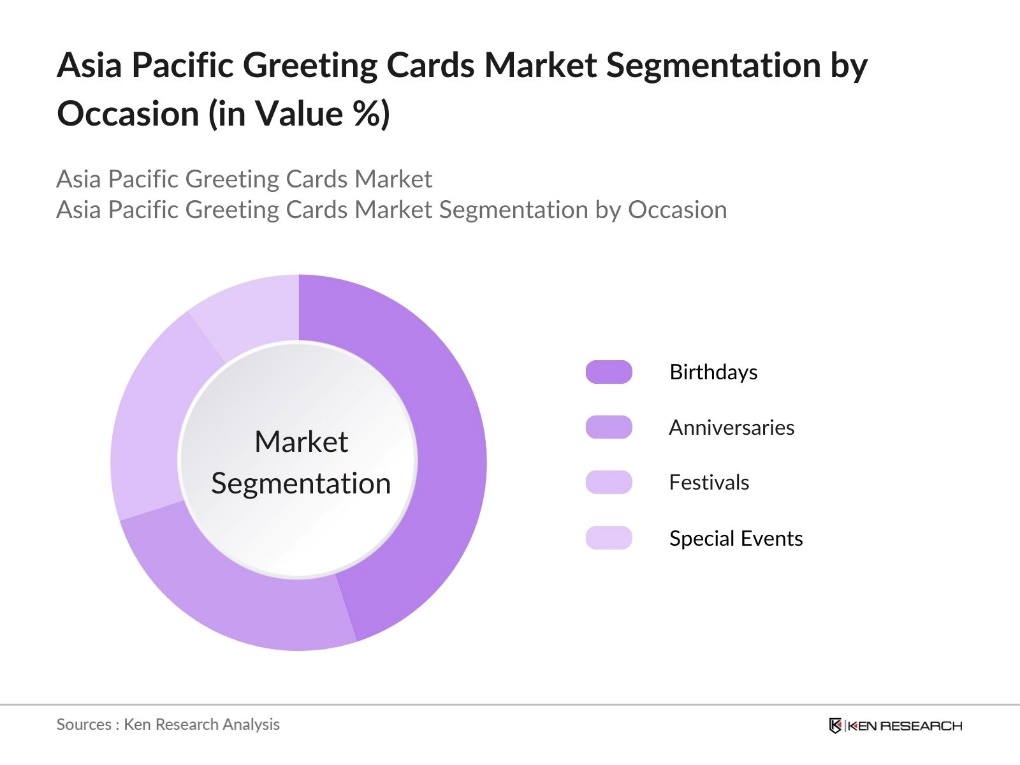
By Occasion: The market is segmented by occasion into birthdays, anniversaries, festivals, and special events. The birthday cards segment dominates the market share. The enduring popularity of birthday celebrations, combined with the trend toward personalized birthday cards, drives this segment. Many companies have expanded their birthday card collections to include customization options such as names, photos, and tailored messages, which has increased consumer engagement and loyalty to this category.
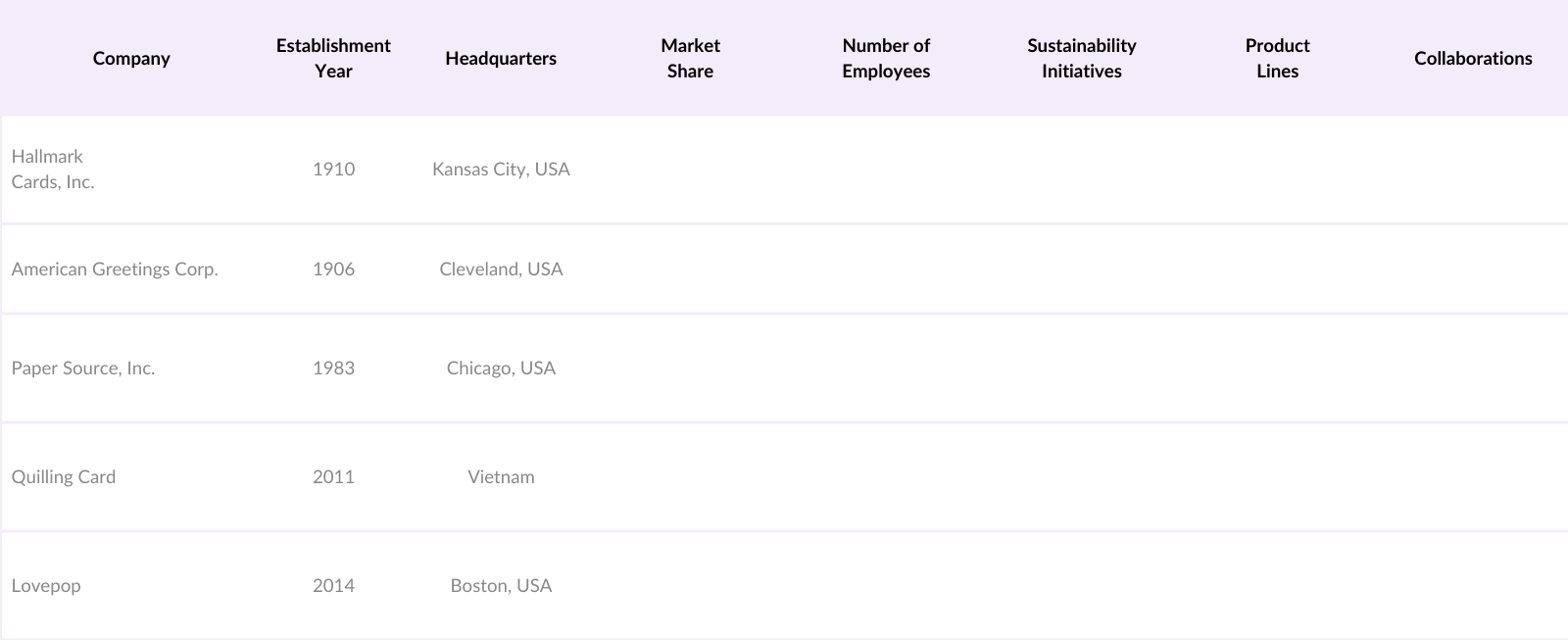
The Asia Pacific Greeting Cards Market is dominated by a mix of local and international players. The competition is shaped by a focus on design innovation, sustainability, and the ability to offer localized and customized products. The market is consolidated, with major players controlling a significant portion of the market. Their ability to innovate, particularly in digital offerings and eco-friendly solutions, helps them remain competitive.
Over the next five years, the Asia Pacific Greeting Cards Market is anticipated to witness significant changes driven by evolving consumer preferences for digital cards, the rise of augmented reality (AR) integrations, and a greater emphasis on eco-friendly practices. Customization will continue to be a major growth driver, with both consumers and corporations seeking personalized solutions. Additionally, the increasing penetration of e-commerce platforms in rural and urban areas is expected to enhance market accessibility and product variety.
|
By Product Type |
Traditional Paper Cards Digital Greeting Cards Musical and Pop-Up Cards Handmade Cards |
|
By Occasion |
Birthdays, Anniversaries Festivals (Christmas, Diwali, Lunar New Year) Special Events (Graduations, Weddings) |
|
By Distribution Channel |
E-commerce Brick-and-Mortar Retail Gift Shops Specialty Stores |
|
By Consumer Group |
Personal Use Corporate Use (B2B) Educational Institutions (Schools, Universities) |
|
By Region |
China Japan India Australia Southeast Asia |
1.1. Definition and Scope
1.2. Market Taxonomy
1.3. Market Growth Rate
1.4. Market Segmentation Overview
2.1. Historical Market Size
2.2. Year-on-Year Growth Analysis
2.3. Key Market Developments and Milestones (Technological advancements, changes in consumer behavior)
3.1. Growth Drivers
3.1.1. Rising Disposable Income
3.1.2. Increasing Cultural Significance (Festivals, Celebrations)
3.1.3. Expansion of E-commerce Platforms (Digital cards, online retail)
3.1.4. Corporate Gifting Trends
3.2. Market Challenges
3.2.1. Shift to Digital Communications (Emails, Social Media)
3.2.2. Environmental Concerns (Sustainability, Waste Reduction)
3.2.3. Competitive Pricing Pressure
3.3. Opportunities
3.3.1. Customization and Personalization (Tailored designs, user-generated content)
3.3.2. Growth in Niche Segments (Eco-friendly greeting cards, handmade cards)
3.3.3. Collaborations with Artists and Designers
3.4. Trends
3.4.1. Increasing Demand for Digital Greeting Cards
3.4.2. Use of Augmented Reality (AR) in Cards
3.4.3. Subscription Models for Greeting Cards
3.5. Government Regulation
3.5.1. Paper Recycling Standards
3.5.2. E-commerce Regulations (For online card retailers)
3.5.3. Import Tariffs on Printed Goods
3.6. SWOT Analysis
3.7. Stakeholder Ecosystem (Retailers, Designers, Card Manufacturers)
3.8. Porters Five Forces
3.9. Competitive Landscape Analysis
4.1. By Product Type (In Value %)
4.1.1. Traditional Paper Cards
4.1.2. Digital Greeting Cards
4.1.3. Musical and Pop-Up Cards
4.1.4. Handmade Cards
4.2. By Occasion (In Value %)
4.2.1. Birthdays
4.2.2. Anniversaries
4.2.3. Festivals (Christmas, Diwali, Lunar New Year)
4.2.4. Special Events (Graduations, Weddings)
4.3. By Distribution Channel (In Value %)
4.3.1. E-commerce
4.3.2. Brick-and-Mortar Retail
4.3.3. Gift Shops
4.3.4. Specialty Stores
4.4. By Consumer Group (In Value %)
4.4.1. Personal Use
4.4.2. Corporate Use (B2B)
4.4.3. Educational Institutions (Schools, Universities)
4.5. By Region (In Value %)
4.5.1. China
4.5.2. Japan
4.5.3. India
4.5.4. Australia
4.5.5. Southeast Asia
5.1. Detailed Profiles of Major Companies
5.1.1. Hallmark Cards, Inc.
5.1.2. American Greetings Corporation
5.1.3. Paper Source, Inc.
5.1.4. Card Factory
5.1.5. Quilling Card
5.1.6. Lovepop
5.1.7. DesignWorks Ink
5.1.8. The Art File
5.1.9. Studio Penny Lane
5.1.10. Paperchase
5.1.11. Scribe Publishing Co.
5.1.12. Action Publishing
5.1.13. Rifle Paper Co.
5.1.14. Moo Print Ltd.
5.1.15. Minted
5.2. Cross Comparison Parameters (No. of Employees, Product Lines, Digital Capabilities, Global Reach, Sustainability Initiatives, Collaborations, Revenue, Profit Margins)
5.3. Market Share Analysis
5.4. Strategic Initiatives (Product Launches, Partnerships)
5.5. Mergers and Acquisitions
5.6. Investment Analysis
5.7. Venture Capital Funding
5.8. Government Grants
5.9. Private Equity Investments
6.1. Environmental Standards (Paper Usage, Recycled Material Requirements)
6.2. Compliance Requirements (Digital vs. Physical Card Standards)
6.3. Certification Processes (Sustainability Certifications, Fair Trade Compliance)
7.1. Future Market Size Projections
7.2. Key Factors Driving Future Market Growth (Expansion of e-commerce, Eco-friendly trends, Consumer personalization demands)
8.1. By Product Type (In Value %)
8.2. By Occasion (In Value %)
8.3. By Distribution Channel (In Value %)
8.4. By Consumer Group (In Value %)
8.5. By Region (In Value %)
9.1. TAM/SAM/SOM Analysis
9.2. Customer Cohort Analysis (Consumer Trends, Corporate Buyers)
9.3. Marketing Initiatives (Social Media Campaigns, Influencer Partnerships)
9.4. White Space Opportunity Analysis (Underserved Regions, Niche Products)
Disclaimer Contact UsThe initial stage involved constructing a comprehensive map of all stakeholders within the Asia Pacific Greeting Cards Market. This was achieved through extensive desk research and analysis of secondary data sources such as industry reports, financial filings, and proprietary databases. The objective was to identify key variables such as demand drivers, pricing trends, and product differentiation strategies.
Historical data on the Asia Pacific Greeting Cards Market was compiled and analyzed. This included detailed analysis of market penetration rates, distribution channel performance, and revenue streams across key segments. A thorough examination of consumer preferences and purchasing behavior provided insights into the major growth drivers.
To validate the hypotheses developed during the analysis phase, consultations were conducted with industry experts and key opinion leaders. These insights were gathered through structured interviews and surveys to ensure that the market data and projections were accurate and representative of actual market conditions.
The final stage involved synthesizing the research findings and generating detailed insights into the Asia Pacific Greeting Cards Market. This included validation of product segmentation, market share estimates, and growth drivers. The final output also provided a comprehensive understanding of the competitive landscape and future trends.
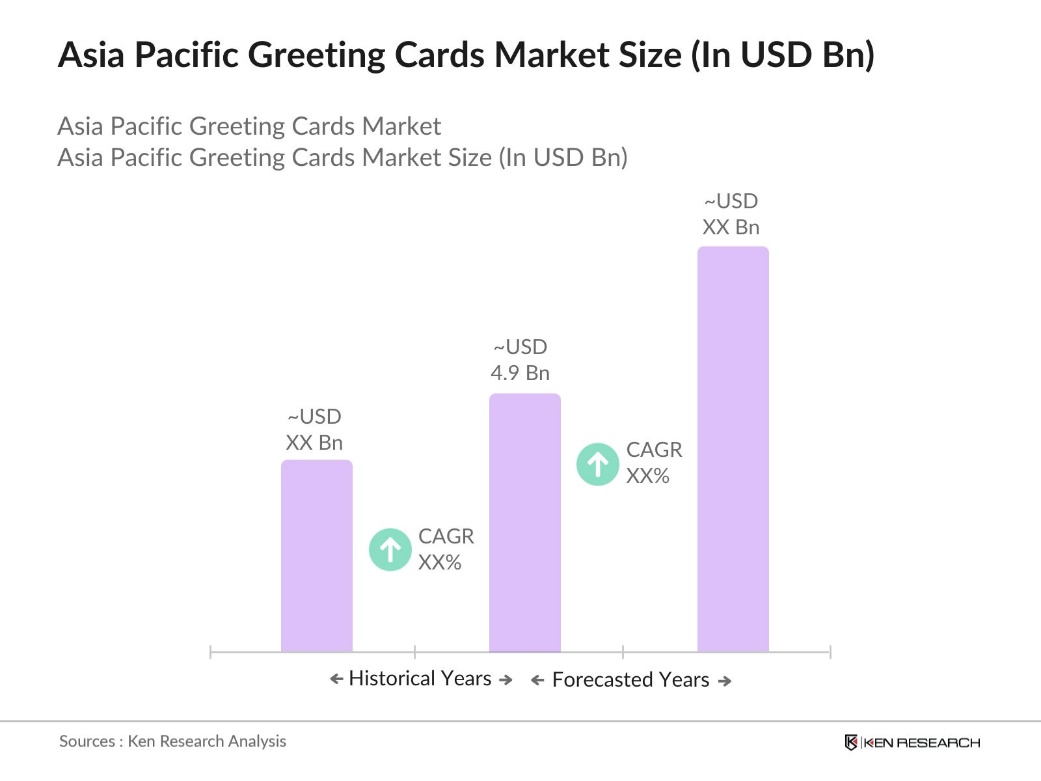
The Asia Pacific Greeting Cards Market is valued at USD 4.9 billion. This valuation is driven by consumer demand for personalized and eco-friendly greeting cards, as well as the regions strong cultural emphasis on festivals and special occasions.
Challenges in Asia Pacific Greeting Cards Market include the shift toward digital communications, with more consumers opting for social media and messaging apps over traditional cards. Environmental concerns regarding the use of paper and the carbon footprint of production also present hurdles for the market.
Major players in Asia Pacific Greeting Cards Market include Hallmark Cards, Inc., American Greetings Corporation, Paper Source, Inc., Quilling Card, and Lovepop. These companies dominate the market due to their strong brand presence, innovative product offerings, and expansive distribution networks.
Growth drivers in Asia Pacific Greeting Cards Market include increasing disposable incomes, the expansion of e-commerce platforms, and the rising demand for personalized greeting cards. Additionally, the growing popularity of eco-friendly and handmade cards is boosting market demand.

What makes us stand out is that our consultants follows Robust, Refine and Result (RRR) methodology. i.e. Robust for clear definitions, approaches and sanity checking, Refine for differentiating respondents facts and opinions and Result for presenting data with story

We have set a benchmark in the industry by offering our clients with syndicated and customized market research reports featuring coverage of entire market as well as meticulous research and analyst insights.

While we don't replace traditional research, we flip the method upside down. Our dual approach of Top Bottom & Bottom Top ensures quality deliverable by not just verifying company fundamentals but also looking at the sector and macroeconomic factors.

With one step in the future, our research team constantly tries to show you the bigger picture. We help with some of the tough questions you may encounter along the way: How is the industry positioned? Best marketing channel? KPI's of competitors? By aligning every element, we help maximize success.

Our report gives you instant access to the answers and sources that other companies might choose to hide. We elaborate each steps of research methodology we have used and showcase you the sample size to earn your trust.

If you need any support, we are here! We pride ourselves on universe strength, data quality, and quick, friendly, and professional service.