
Asia Pacific Health and Fitness App Market Outlook to 2030

Region:Asia

Author(s):Abhinav kumar

Product Code:KROD8151

Published On

November 2024

Total pages

90

About the Report

Asia Pacific Health and Fitness App Market Overview

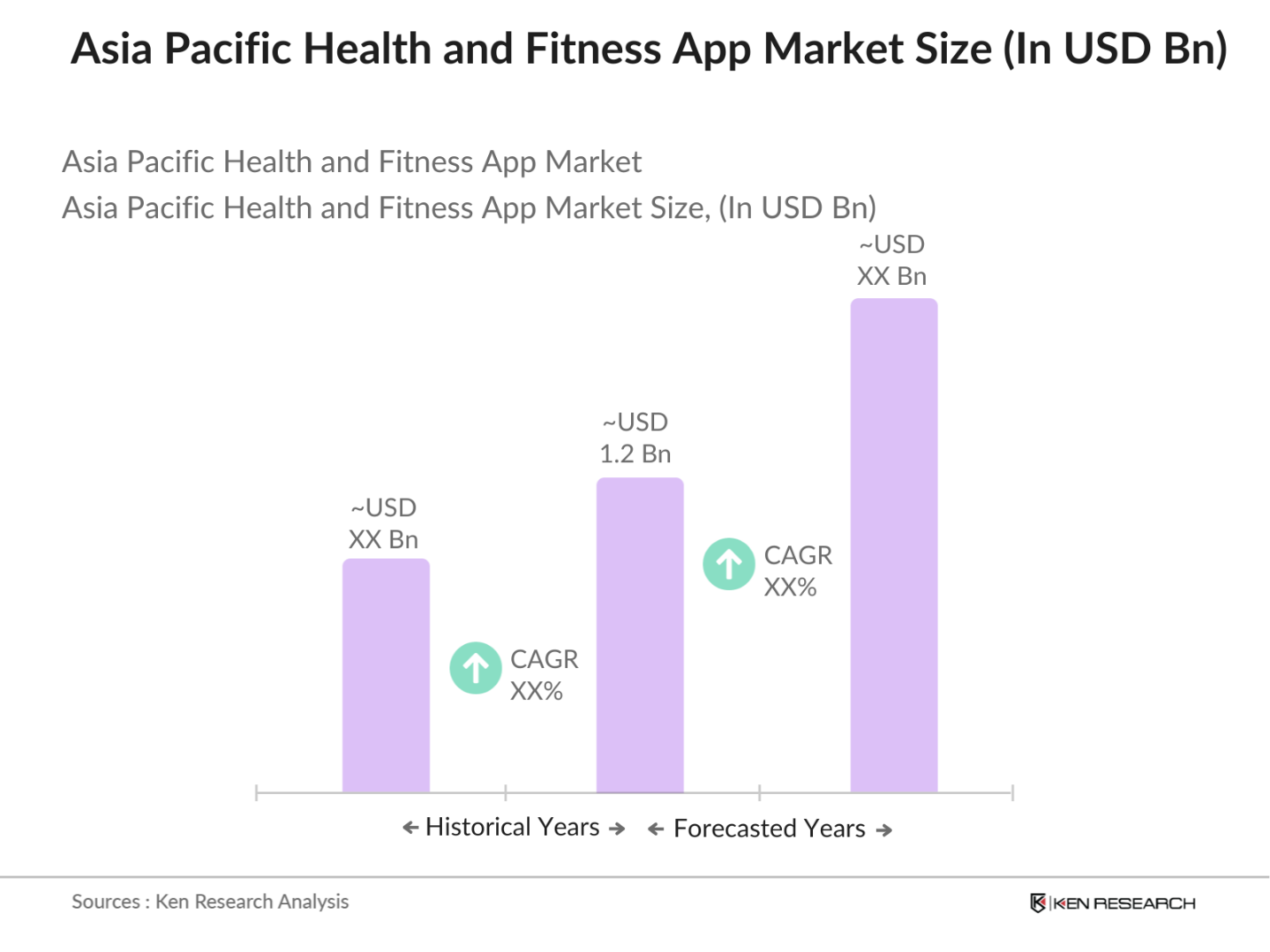
  • The Asia Pacific Health and Fitness App Market is valued at approximately USD 1.2 billion, driven by the rising health awareness among consumers and the increasing adoption of smartphones. Health-conscious individuals across the region are seeking convenient, on-the-go solutions to track fitness, nutrition, and mental well-being. The growth of digital infrastructure and access to mobile apps is further accelerated by the popularity of virtual fitness programs and personalized health tracking, which continue to expand the market.

Asia Pacific Health and Fitness App Market Size

  • Cities and countries like China, India, and Japan dominate the market. China, with its vast population and high smartphone penetration, leads in the adoption of fitness apps. In India, a growing fitness culture, coupled with government initiatives promoting wellness, has driven the surge in app usage. Japans high standard of living and increasing awareness of health management have made it one of the dominant players in this market.
  • Data security and privacy regulations are becoming increasingly important in the Asia Pacific region, particularly as health apps collect sensitive information. Countries like India and Australia have enacted laws to safeguard user data. India's Personal Data Protection Bill, implemented in 2022, requires all health and fitness apps to obtain user consent before collecting data and mandates strict guidelines on data storage. These laws are critical to maintaining user trust and ensuring that apps remain compliant with the regions stringent data privacy regulations.

Asia Pacific Health and Fitness App Market Segmentation

By Application: The Asia Pacific Health and Fitness App Market is segmented by application into exercise and fitness apps, nutrition and diet apps, and wellness and meditation apps. Exercise and fitness apps dominate the market due to the widespread popularity of workout routines accessible from home. Brands like MyFitnessPal and Strava have gained a loyal user base with their effective workout tracking tools and ability to sync with wearable devices. The demand for structured fitness programs, combined with gamification features, has contributed to the growth of this segment.

Asia Pacific Health and Fitness App Market Segmentation By Application

By Platform: The market is also segmented by platform into iOS, Android, and web-based platforms. Android holds a dominant position due to the widespread use of Android smartphones across emerging markets in the Asia Pacific region. With a wide range of affordable devices and a user-friendly app ecosystem, Android apps have been able to penetrate various demographic segments. The flexibility of Android devices in integrating fitness apps and other health services has strengthened its hold on the market.
Asia Pacific Health and Fitness App Market Segmentation By Platform

Asia Pacific Health and Fitness App Market Competitive Landscape

The Asia Pacific Health and Fitness App Market is dominated by both global players and emerging regional brands. The competition is characterized by innovations in app features, collaborations with fitness experts, and increasing integration with wearable devices. Notable players have established strong user bases by continuously upgrading their offerings to cater to evolving fitness and wellness trends.

Asia Pacific Health and Fitness App Market Competitive Landscape

Asia Pacific Health and Fitness App Industry Analysis

Growth Drivers

  • Rising Health Awareness: The increasing awareness of health issues is a primary driver for the Asia Pacific Health and Fitness App Market. The region has seen a surge in lifestyle-related diseases, with cardiovascular disease being the leading cause of death, affecting over 17.9 million people worldwide, including a significant population in Asia, according to the WHO. This rising concern over sedentary lifestyles and unhealthy diets has led individuals to seek digital solutions for health tracking and improvement, contributing to the widespread adoption of health and fitness apps. In 2024, the focus on health apps is increasing due to these prevailing health issues.
  • Increasing Smartphone Penetration: Smartphone penetration in the Asia Pacific region is one of the strongest drivers for the health and fitness app market. The region is home to over 2.7 billion smartphone users, with markets such as India and China experiencing rapid growth. In 2023, India added more than 60 million new smartphone users, and China reached approximately 912 million smartphone users. The accessibility of smartphones at affordable prices, coupled with fast-growing mobile internet connectivity, has resulted in a substantial rise in app downloads related to health and fitness.
  • Government Initiatives for Health and Wellness: Governments in the Asia Pacific region have initiated several programs to promote health and wellness. For instance, India's Fit India Movement emphasizes the use of technology and apps to monitor fitness levels. Similarly, Chinas Healthy China 2030 initiative promotes health-focused digital solutions, aiming to increase the average life expectancy to 79 years. These efforts by governments to foster healthier societies, particularly through the use of technology, have led to an increase in the usage of health and fitness apps. Government backing is propelling the adoption of health technologies.

Market Challenges

  • Data Privacy Concerns: Data privacy remains a significant challenge for the Asia Pacific health and fitness app market. Many apps collect sensitive user data, including health metrics and lifestyle habits, which users fear may be misused. According to a 2023 survey by the Singapore Cyber Security Agency, 70% of users expressed concerns about their health data privacy. Stricter data protection laws such as Indias Personal Data Protection Bill and similar regulations in Australia are attempting to address these issues. Compliance with these laws remains a challenge for app developers and may restrict user adoption.
  • Competition from Free Apps: The market is highly competitive, with a large number of free health and fitness apps dominating app stores. Many users prefer these free apps over paid subscriptions, limiting the revenue potential for premium app developers. In 2023, Google Play reported over 50,000 free health and fitness apps in the Asia Pacific region. The presence of so many alternatives often makes it challenging for companies to differentiate their paid offerings, leading to slow adoption of premium models. Free apps often draw users away from advanced paid versions.

Asia Pacific Health and Fitness App Market Future Outlook

Over the next five years, the Asia Pacific Health and Fitness App Market is expected to witness robust growth. The increasing focus on preventive healthcare, integration of artificial intelligence in personalized fitness recommendations, and the continued rise of fitness tracking through wearable devices are anticipated to be key growth drivers. Moreover, consumer interest in virtual health coaching and telefitness services is likely to accelerate market expansion across the region.

Opportunities

  • Integration with Wearable Devices: Integration with wearable devices presents a significant growth opportunity for health and fitness apps. In 2023, Asia Pacific accounted for approximately 38 million shipments of wearable devices like smartwatches and fitness trackers. Leading brands such as Xiaomi, Huawei, and Fitbit have been at the forefront of this expansion. Wearable devices offer real-time health tracking, which users can sync with their fitness apps, enhancing user engagement and retention. This integration drives higher engagement with fitness apps and improves user experience, presenting a lucrative opportunity for app developers.
  • Subscription-Based Models: Subscription-based models have emerged as a key opportunity for revenue generation in the Asia Pacific health and fitness app market. Many apps are adopting a freemium model, offering basic features for free while providing advanced services through paid subscriptions. In 2023, it was reported that over 15 million users in India and China paid for fitness app subscriptions, fueling the markets monetization potential. By offering exclusive content, personalized training, and ad-free experiences, these apps are seeing increased revenues from loyal users who prefer premium content.

Scope of the Report

By Application

Exercise and Fitness Apps

Nutrition and Diet Apps

Wellness and Meditation Apps

By Platform

iOS

Android

Web-Based

By Type of User

Individual Users

Corporate Wellness Programs

Fitness Trainers

By Subscription Model

Free with Ads

Freemium

Premium Paid Subscription

By Region

China

India

Japan

Australia

Southeast Asia

Products


Key Target Audience Organizations and Entities Who Can Benefit by Subscribing This Report:

  • Investors and Venture Capitalist Firms

  • Government and Regulatory Bodies (Ministries of Health, Telecommunication Authorities)

  • Fitness Trainers and Influencer Companies

  • Technology Provider Industries

  • App Developers and Software Companies

  • Gym Chains and Fitness Studio Industries

  • Mobile Device Manufacturing Companies

  • Health Insurance Provider Companies

Companies


Players Mentioned in the Report

  • MyFitnessPal

  • Strava, Inc.

  • Headspace, Inc.

  • Nike Training Club

  • HealthifyMe

  • Cure.fit

  • Fitbit Inc.

  • Asana Rebel

  • Peloton Interactive

  • Calm

Table of Contents

1. Asia Pacific Health and Fitness App Market Overview

1.1. Definition and Scope

1.2. Market Taxonomy

1.3. Market Growth Rate

1.4. Market Segmentation Overview

2. Asia Pacific Health and Fitness App Market Size (In USD Mn)

2.1. Historical Market Size

2.2. Year-On-Year Growth Analysis

2.3. Key Market Developments and Milestones

3. Asia Pacific Health and Fitness App Market Analysis

3.1. Growth Drivers

3.1.1. Rising Health Awareness

3.1.2. Increasing Smartphone Penetration

3.1.3. Government Initiatives for Health and Wellness

3.1.4. Fitness Influencers and Online Communities

3.2. Market Challenges

3.2.1. Data Privacy Concerns

3.2.2. Competition from Free Apps

3.2.3. Fragmented Regulatory Standards

3.3. Opportunities

3.3.1. Integration with Wearable Devices

3.3.2. Subscription-Based Models

3.3.3. Expansion into Rural Areas

3.4. Trends

3.4.1. AI and Personalization in Health Apps

3.4.2. Gamification of Fitness

3.4.3. Virtual Health Coaching and Telefitness

3.5. Government Regulations

3.5.1. Data Security and Privacy Regulations

3.5.2. Health and Fitness Certifications for Apps

3.6. SWOT Analysis

3.7. Stakeholder Ecosystem

3.8. Porters Five Forces Analysis

3.9. Competition Ecosystem

4. Asia Pacific Health and Fitness App Market Segmentation

4.1. By Application (In Value %)

4.1.1. Exercise and Fitness Apps

4.1.2. Nutrition and Diet Apps

4.1.3. Wellness and Meditation Apps

4.2. By Platform (In Value %)

4.2.1. iOS

4.2.2. Android

4.2.3. Web-Based

4.3. By Type of User (In Value %)

4.3.1. Individual Users

4.3.2. Corporate Wellness Programs

4.3.3. Fitness Trainers

4.4. By Subscription Model (In Value %)

4.4.1. Free with Ads

4.4.2. Freemium

4.4.3. Premium Paid Subscription

4.5. By Region (In Value %)

4.5.1. China

4.5.2. India

4.5.3. Japan

4.5.4. Australia

4.5.5. Southeast Asia

5. Asia Pacific Health and Fitness App Market Competitive Analysis

5.1. Detailed Profiles of Major Companies

5.1.1. MyFitnessPal

5.1.2. Strava, Inc.

5.1.3. Headspace, Inc.

5.1.4. Nike Training Club

5.1.5. Fitbit Inc.

5.1.6. HealthifyMe

5.1.7. Cure.fit

5.1.8. Asana Rebel

5.1.9. Daily Yoga

5.1.10. Centr (Chris Hemsworth)

5.1.11. 8fit

5.1.12. Calm

5.1.13. MapMyRun

5.1.14. Peloton Interactive

5.1.15. Freeletics

5.2. Cross Comparison Parameters (No. of Users, Headquarters, Inception Year, Monthly Active Users, Subscription Revenue, Partnerships, Regional Penetration, Platform Support)

5.3. Market Share Analysis

5.4. Strategic Initiatives

5.5. Mergers and Acquisitions

5.6. Investment Analysis

5.7. Venture Capital Funding

5.8. Private Equity Investments

6. Asia Pacific Health and Fitness App Market Regulatory Framework

6.1. Data Privacy and Protection Standards

6.2. Compliance with Local Health Regulations

6.3. Certification and Accreditation Process

7. Asia Pacific Health and Fitness App Future Market Size (In USD Mn)

7.1. Future Market Size Projections

7.2. Key Factors Driving Future Market Growth

8. Asia Pacific Health and Fitness App Future Market Segmentation

8.1. By Application (In Value %)

8.2. By Platform (In Value %)

8.3. By User Type (In Value %)

8.4. By Subscription Model (In Value %)

8.5. By Region (In Value %)

9. Asia Pacific Health and Fitness App Market Analysts Recommendations

9.1. TAM/SAM/SOM Analysis

9.2. Consumer Behavior Analysis

9.3. Marketing Initiatives

9.4. White Space Opportunity Analysis

Disclaimer Contact Us

Research Methodology

Step 1: Identification of Key Variables

The first phase involves mapping the stakeholders in the Asia Pacific Health and Fitness App Market. Extensive desk research is conducted using secondary databases to gather comprehensive information on market trends, user behaviors, and technological advancements. The critical market drivers, challenges, and opportunities are identified.

Step 2: Market Analysis and Construction

This phase includes an in-depth analysis of the historical market data. Parameters such as the number of app downloads, user engagement rates, and revenue generation models are evaluated. The data helps to determine the reliability and accuracy of market estimates for different segments.

Step 3: Hypothesis Validation and Expert Consultation

Hypotheses regarding market growth are validated through interviews with industry experts from leading app developers, fitness trainers, and technology providers. These insights allow for the refinement of market forecasts and enhance the credibility of the reports findings.

Step 4: Research Synthesis and Final Output

The final phase consolidates the research findings from secondary and primary sources. Market forecasts are generated using both top-down and bottom-up approaches, ensuring a holistic understanding of the Asia Pacific Health and Fitness App Market dynamics.

Frequently Asked Questions

01. How big is the Asia Pacific Health and Fitness App Market?

The Asia Pacific Health and Fitness App Market is valued at USD 1.2 billion, driven by increasing consumer interest in health and wellness, as well as rising smartphone penetration across the region.

02. What are the challenges in the Asia Pacific Health and Fitness App Market?

Challenges include data privacy concerns, the fragmented regulatory environment, and high competition from free-to-use apps that limit the adoption of subscription-based models.

03. Who are the major players in the Asia Pacific Health and Fitness App Market?

Key players in the market include MyFitnessPal, Strava, Headspace, Nike Training Club, and HealthifyMe. These companies dominate due to their strong user bases, innovative features, and effective partnerships.

04. What are the growth drivers of the Asia Pacific Health and Fitness App Market?

Growth drivers include the rising awareness of fitness and preventive healthcare, advancements in AI-based personalized fitness recommendations, and increased adoption of wearable devices for health monitoring.

Why Buy From Us?

RRR
Refine Robust Result (RRR) Framework

What makes us stand out is that our consultants follows Robust, Refine and Result (RRR) methodology. i.e. Robust for clear definitions, approaches and sanity checking, Refine for differentiating respondents facts and opinions and Result for presenting data with story

Our Reach Is Unmatched

We have set a benchmark in the industry by offering our clients with syndicated and customized market research reports featuring coverage of entire market as well as meticulous research and analyst insights.

Research
Shifting the Research Paradigm

While we don't replace traditional research, we flip the method upside down. Our dual approach of Top Bottom & Bottom Top ensures quality deliverable by not just verifying company fundamentals but also looking at the sector and macroeconomic factors.

Insite
More Insights-Better Decisions

With one step in the future, our research team constantly tries to show you the bigger picture. We help with some of the tough questions you may encounter along the way: How is the industry positioned? Best marketing channel? KPI's of competitors? By aligning every element, we help maximize success.

Trust
Transparency and Trust

Our report gives you instant access to the answers and sources that other companies might choose to hide. We elaborate each steps of research methodology we have used and showcase you the sample size to earn your trust.

support
Round the Clock Support

If you need any support, we are here! We pride ourselves on universe strength, data quality, and quick, friendly, and professional service.

Why Client Choose Us?

400000+ Reports in repository
150+ Consulting project a year
100+ Analysts
8000+ Client Queries in 2022