
Asia Pacific Health & Wellness Market Outlook to 2030
Region:Asia
Author(s):Sanjna
Product Code:KROD5690
Region:Asia
Author(s):Sanjna
Product Code:KROD5690
November 2024
86
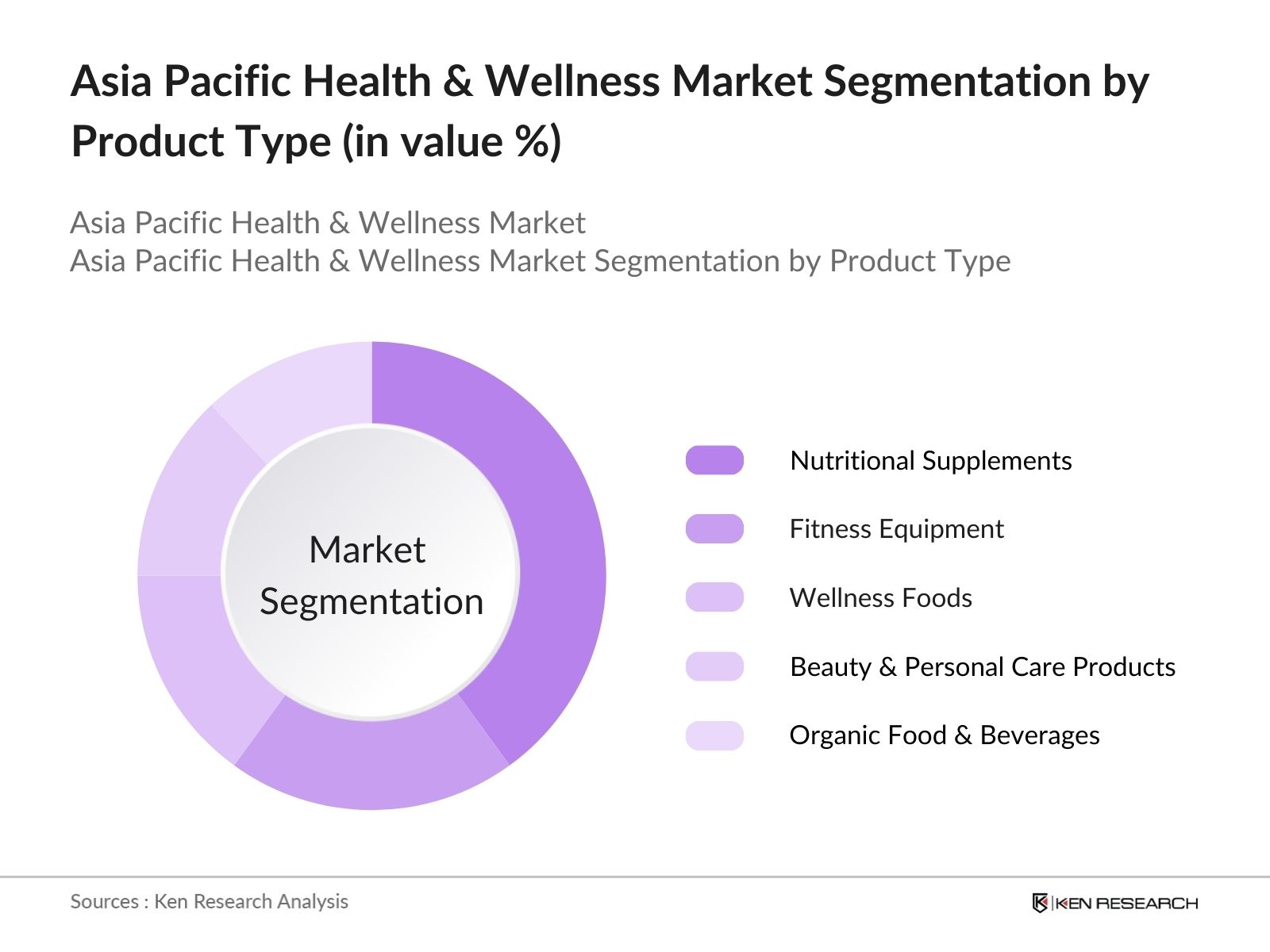
By Product Type: The Asia Pacific Health & Wellness Market is segmented by product type into nutritional supplements, fitness equipment, wellness foods, beauty and personal care products, and organic food & beverages. Nutritional supplements dominate this segment, primarily due to increasing awareness of the importance of dietary supplements in improving overall health and wellness. Vitamins, minerals, and protein supplements are widely consumed by health-conscious individuals, particularly in urban areas. The rise in chronic diseases and an aging population further contribute to the dominance of this sub-segment, as consumers seek preventive solutions for long-term health benefits.
 By Distribution Channel: The market is also segmented by distribution channels into online retail, specialty stores, supermarkets/hypermarkets, and pharmacies. Online retail is the dominant distribution channel, primarily driven by the convenience it offers to consumers. The growth of e-commerce platforms, particularly in China and India, has accelerated the availability of health and wellness products, enabling consumers to access a wide range of options from the comfort of their homes.
The Asia Pacific Health & Wellness Market is dominated by a few key players, with companies like Nestl Health Science and Amway Corporation holding a significant share due to their extensive product portfolios and established distribution networks. The market also sees strong competition from local brands, particularly in emerging markets like India and Southeast Asia, where demand for affordable health and wellness solutions is rising.
|
Company Name |
Establishment Year |
Headquarters |
Revenue (2023) |
Product Portfolio |
Geographical Reach |
R&D Investments |
Market Penetration |
Digital Platforms |
Sustainability Initiatives |
|
Nestl Health Science |
2011 |
Switzerland |
- |
- |
- |
- |
- |
- |
- |
|
Amway Corporation |
1959 |
USA |
- |
- |
- |
- |
- |
- |
- |
|
Herbalife Nutrition |
1980 |
USA |
- |
- |
- |
- |
- |
- |
- |
|
Unilever |
1929 |
UK |
- |
- |
- |
- |
- |
- |
- |
|
GNC Holdings |
1935 |
USA |
- |
- |
- |
- |
- |
- |
- |
Growth Drivers
Challenges
Asia Pacific Health & Wellness Market is expected to show significant growth, driven by increasing consumer demand for preventive healthcare solutions, advancements in health technology, and the rising popularity of personalized wellness products. Governments in the region are also supporting health and wellness initiatives, which will contribute to the sectors continued expansion. Furthermore, the growing influence of digital platforms and e-commerce is expected to further enhance the accessibility of wellness products, particularly in rural areas and underserved markets.
Market Opportunities
|
Segment |
Sub-Segment |
|
Product Type |
Nutritional Supplements Functional Foods & Beverages Wellness Equipment (Fitness Devices, Wearables) Personal Care & Beauty Products Organic Food & Beverages |
|
Distribution Channel |
Online Retail Supermarkets & Hypermarkets Specialty Stores Pharmacies & Drugstores |
|
Demographics |
Urban Population Rural Population Age Group (Millennials, Gen X, Baby Boomers) |
|
Application |
Preventive Healthcare Fitness and Weight Management Mental Health and Wellness Beauty and Personal Care |
|
Region |
East Asia Southeast Asia Oceania South Asia |
1.1. Definition and Scope
1.2. Market Taxonomy
1.3. Market Growth Rate
1.4. Market Segmentation Overview
2.1. Historical Market Size
2.2. Year-On-Year Growth Analysis
2.3. Key Market Developments and Milestones
3.1. Growth Drivers
3.1.1. Growing Focus on Preventive Healthcare
3.1.2. Increasing Demand for Organic and Natural Products
3.1.3. Rising Adoption of Digital Health Solutions
3.1.4. Government Initiatives Promoting Health & Wellness
3.2. Market Challenges
3.2.1. Regulatory Compliance and Standards
3.2.2. High Cost of Premium Products
3.2.3. Market Fragmentation
3.2.4. Limited Consumer Awareness in Developing Countries
3.3. Opportunities
3.3.1. Expansion into Untapped Markets in Southeast Asia
3.3.2. Collaboration with Healthcare Providers
3.3.3. Growth in Digital Health Platforms
3.3.4. Innovations in Personalization and Customization
3.4. Trends
3.4.1. Growing Popularity of Telehealth and Virtual Consultations
3.4.2. Increased Use of Wearable Health Devices
3.4.3. Personalized Nutrition Solutions Gaining Traction
3.4.4. Consumer Shift Towards Plant-Based Supplements
3.5. Government Regulation
3.5.1. National Health Campaigns
3.5.2. Regulatory Standards for Health Supplements
3.5.3. Certification Processes for Wellness Products
3.5.4. Health Data Privacy Regulations
4.1. By Product Type (In Value %)
4.1.1. Nutritional Supplements
4.1.2. Functional Foods & Beverages
4.1.3. Wellness Equipment (Fitness Devices, Wearables)
4.1.4. Personal Care & Beauty Products
4.1.5. Organic Food & Beverages
4.2. By Distribution Channel (In Value %)
4.2.1. Online Retail
4.2.2. Supermarkets & Hypermarkets
4.2.3. Specialty Stores
4.2.4. Pharmacies & Drugstores
4.3. By Demographics (In Value %)
4.3.1. Urban Population
4.3.2. Rural Population
4.3.3. Age Group (Millennials, Gen X, Baby Boomers)
4.4. By Application (In Value %)
4.4.1. Preventive Healthcare
4.4.2. Fitness and Weight Management
4.4.3. Mental Health and Wellness
4.4.4. Beauty and Personal Care
4.5. By Region (In Value %)
4.5.1. East Asia
4.5.2. Southeast Asia
4.5.3. Oceania
4.5.4. South Asia
5.1. Detailed Profiles of Major Companies
5.1.1. Nestl Health Science
5.1.2. Amway Corporation
5.1.3. Herbalife Nutrition
5.1.4. Unilever
5.1.5. GNC Holdings
5.1.6. Abbott Laboratories
5.1.7. Bayer AG
5.1.8. Natures Bounty
5.1.9. Suntory Wellness
5.1.10. Glanbia Performance Nutrition
5.2. Cross Comparison Parameters (Revenue, Distribution Networks, Product Portfolio, Consumer Base, R&D Investment, Sustainability Initiatives, Market Share, Growth Strategy)
5.3. Market Share Analysis
5.4. Strategic Initiatives
5.5. Mergers and Acquisitions
5.6. Investment Analysis
5.7. Government Funding & Grants
5.8. Venture Capital and Private Equity Investments
6.1. Regulations for Nutritional Supplements
6.2. Health & Wellness Certifications
6.3. Government Health Campaigns and Support
6.4. Food Safety and Standards Regulations
7.1. Future Market Size Projections
7.2. Key Factors Driving Future Market Growth
8.1. By Product Type (In Value %)
8.2. By Distribution Channel (In Value %)
8.3. By Demographics (In Value %)
8.4. By Application (In Value %)
8.5. By Region (In Value %)
9.1. TAM/SAM/SOM Analysis
9.2. Customer Cohort Analysis
9.3. Marketing Initiatives
9.4. White Space Opportunity Analysis
The initial phase involves mapping out the ecosystem of the Asia Pacific Health & Wellness Market. Extensive desk research is conducted using proprietary databases to gather information on the major stakeholders, including consumers, manufacturers, distributors, and regulatory bodies. The objective is to identify critical variables that influence market dynamics, such as consumer preferences, purchasing power, and government regulations.
This phase includes the collection and analysis of historical data on market segments such as product types and distribution channels. Data on market penetration, sales performance, and consumer preferences is compiled, helping to build an accurate picture of current market conditions. This step ensures that our estimates are based on reliable data sources.
Market hypotheses are tested through interviews with industry experts from leading health and wellness companies. This consultation process validates the insights derived from desk research and enhances the overall reliability of the report. The information obtained provides key operational and financial insights that form the basis of our market projections.
The final phase synthesizes data from various sources, including manufacturers and distributors, to provide a comprehensive overview of the market. This step involves triangulating data to ensure accuracy, followed by a detailed analysis of market trends and growth opportunities. The final output offers a thorough, data-driven report on the Asia Pacific Health & Wellness Market.
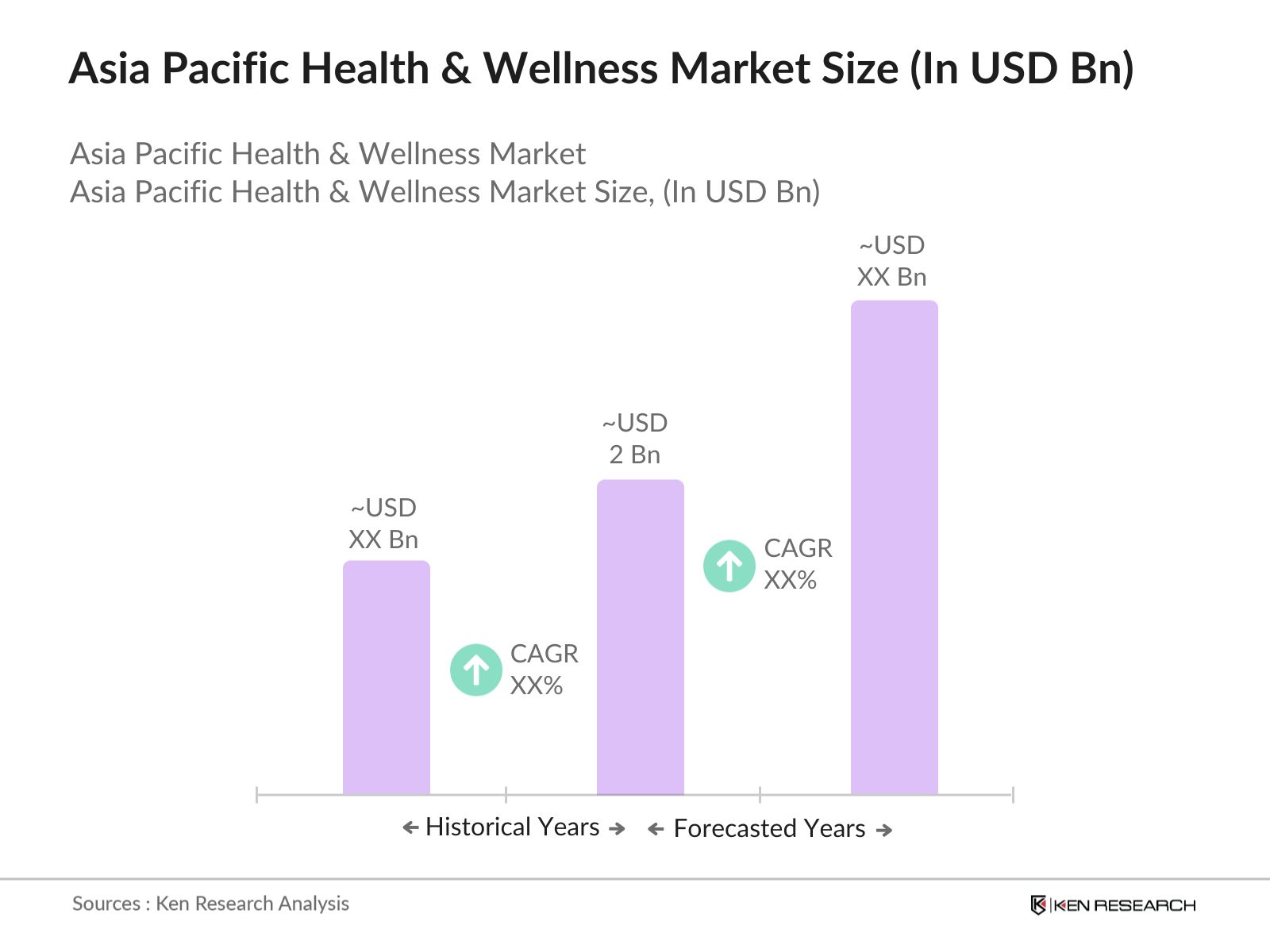
The Asia Pacific Health & Wellness Market is valued at USD 2 billion, driven by increased consumer awareness and demand for preventive healthcare products, along with the expansion of e-commerce platforms.
Challenges in Asia Pacific Health & Wellness Market include regulatory hurdles, market fragmentation, and the high cost of premium products. Additionally, limited consumer awareness in rural areas hampers market growth.
Key players in Asia Pacific Health & Wellness Market include Nestl Health Science, Amway Corporation, Herbalife Nutrition, Unilever, and GNC Holdings. These companies dominate due to their extensive product portfolios, global presence, and strong brand loyalty.
Asia Pacific Health & Wellness Market is driven by factors such as growing awareness of preventive healthcare, government initiatives promoting health and wellness, and the increasing adoption of digital health technologies.

What makes us stand out is that our consultants follows Robust, Refine and Result (RRR) methodology. i.e. Robust for clear definitions, approaches and sanity checking, Refine for differentiating respondents facts and opinions and Result for presenting data with story

We have set a benchmark in the industry by offering our clients with syndicated and customized market research reports featuring coverage of entire market as well as meticulous research and analyst insights.

While we don't replace traditional research, we flip the method upside down. Our dual approach of Top Bottom & Bottom Top ensures quality deliverable by not just verifying company fundamentals but also looking at the sector and macroeconomic factors.

With one step in the future, our research team constantly tries to show you the bigger picture. We help with some of the tough questions you may encounter along the way: How is the industry positioned? Best marketing channel? KPI's of competitors? By aligning every element, we help maximize success.

Our report gives you instant access to the answers and sources that other companies might choose to hide. We elaborate each steps of research methodology we have used and showcase you the sample size to earn your trust.

If you need any support, we are here! We pride ourselves on universe strength, data quality, and quick, friendly, and professional service.