
Asia Pacific Healthcare Analytics Market Outlook to 2030
Region:Asia
Author(s):Sanjna Verma
Product Code:KROD3818
October 2024
96
About the Report
Asia Pacific Healthcare Analytics Market Overview
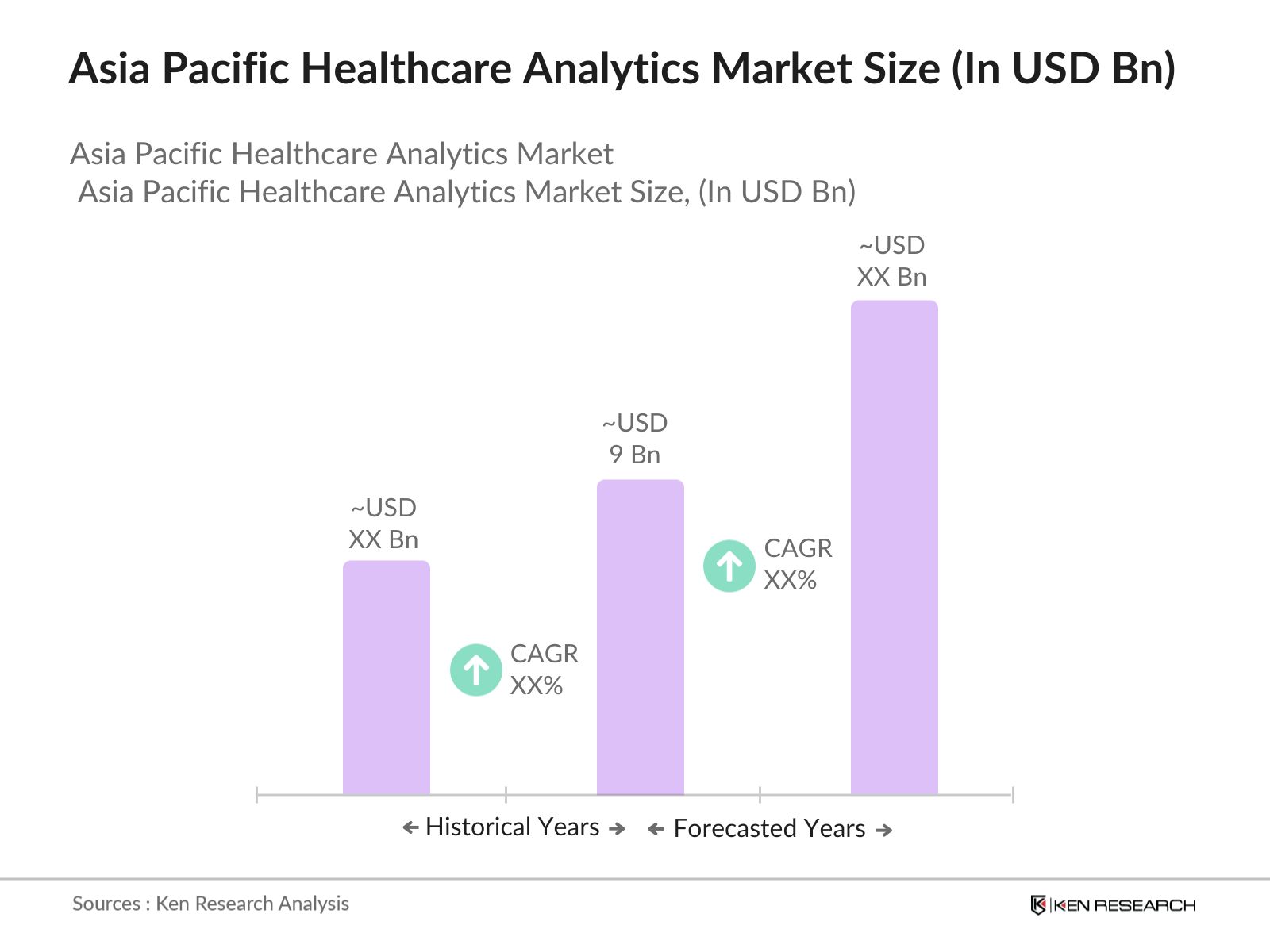
- Asia Pacific Healthcare Analytics Market was valued at USD 9 billion. The market's growth is largely driven by the adoption of digital health solutions, the increasing demand for advanced data analytics, and the rising importance of population health management. The region's healthcare providers are leveraging big data and artificial intelligence (AI) to improve patient outcomes, optimize operations, and reduce costs.
- Countries such as Japan, China, and India dominate the healthcare analytics market in Asia Pacific due to their large population base, high healthcare expenditure, and rapid adoption of digital technologies. Japan leads the market with its mature healthcare system and significant investments in data analytics, while China benefits from extensive government initiatives and healthcare reforms aimed at modernizing the healthcare sector.
- Many countries in the Asia Pacific region have launched national health informatics programs to improve healthcare delivery and data management. Australias My Health Record system, which connects millions of citizens to digital health services, is a prime example. In 2024, the system is expected to manage over 50 million health records, enhancing the efficiency of healthcare delivery. These national initiatives are driving the adoption of healthcare analytics by centralizing patient data and facilitating easy access for healthcare providers.
Asia Pacific Healthcare Analytics Market Segmentation
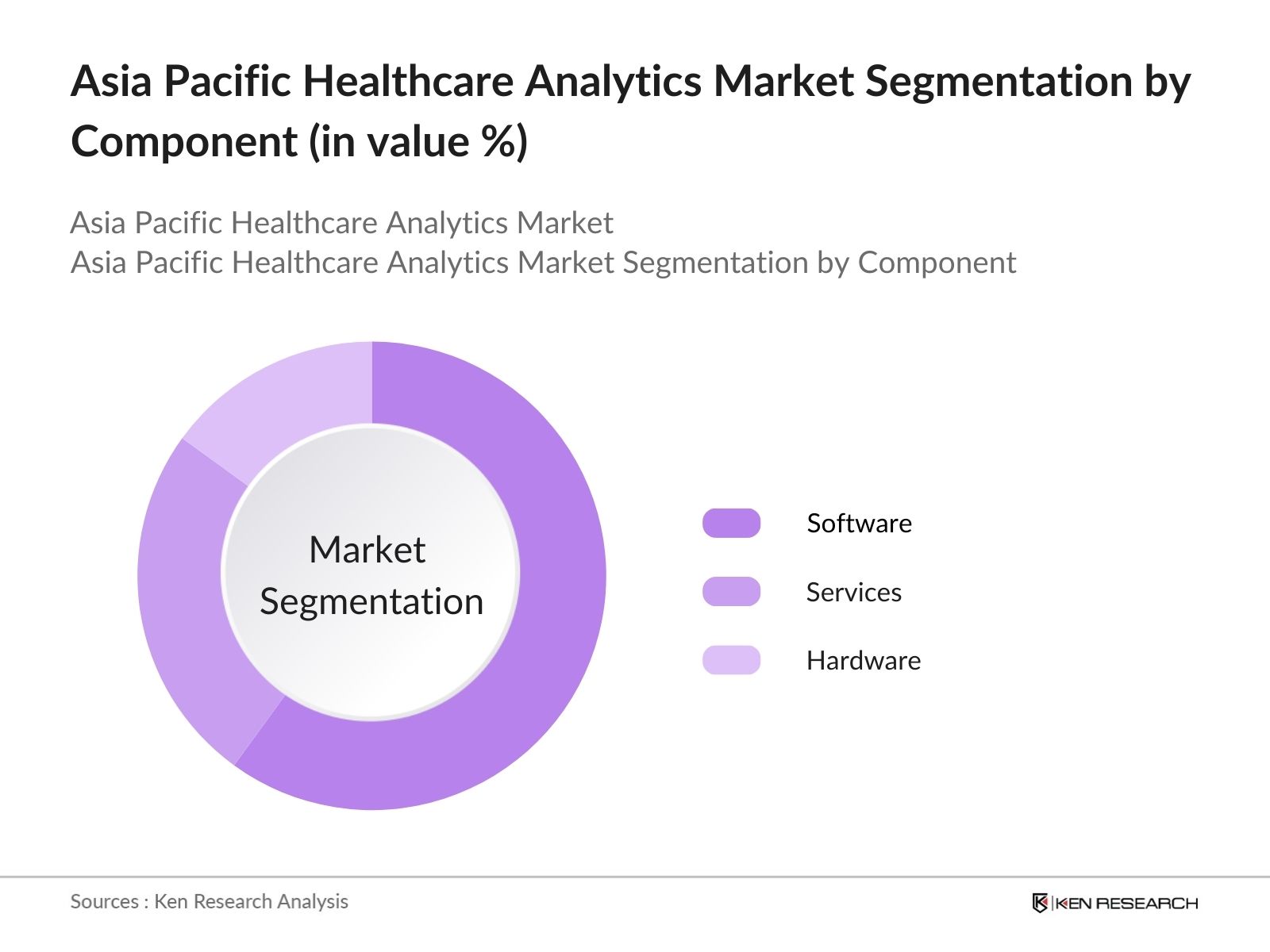
By Component: The Asia Pacific healthcare analytics market is segmented by component into software, services, and hardware. Among these, software holds a dominant market share in the region. This is driven by the increasing need for data management and analytics software to process large volumes of healthcare data. Healthcare providers and payers are increasingly relying on analytics software for real-time decision-making, population health management, and financial performance optimization. Moreover, the software sub-segment is witnessing rapid advancements in artificial intelligence (AI) and machine learning (ML), making it the preferred choice for healthcare analytics across the region.
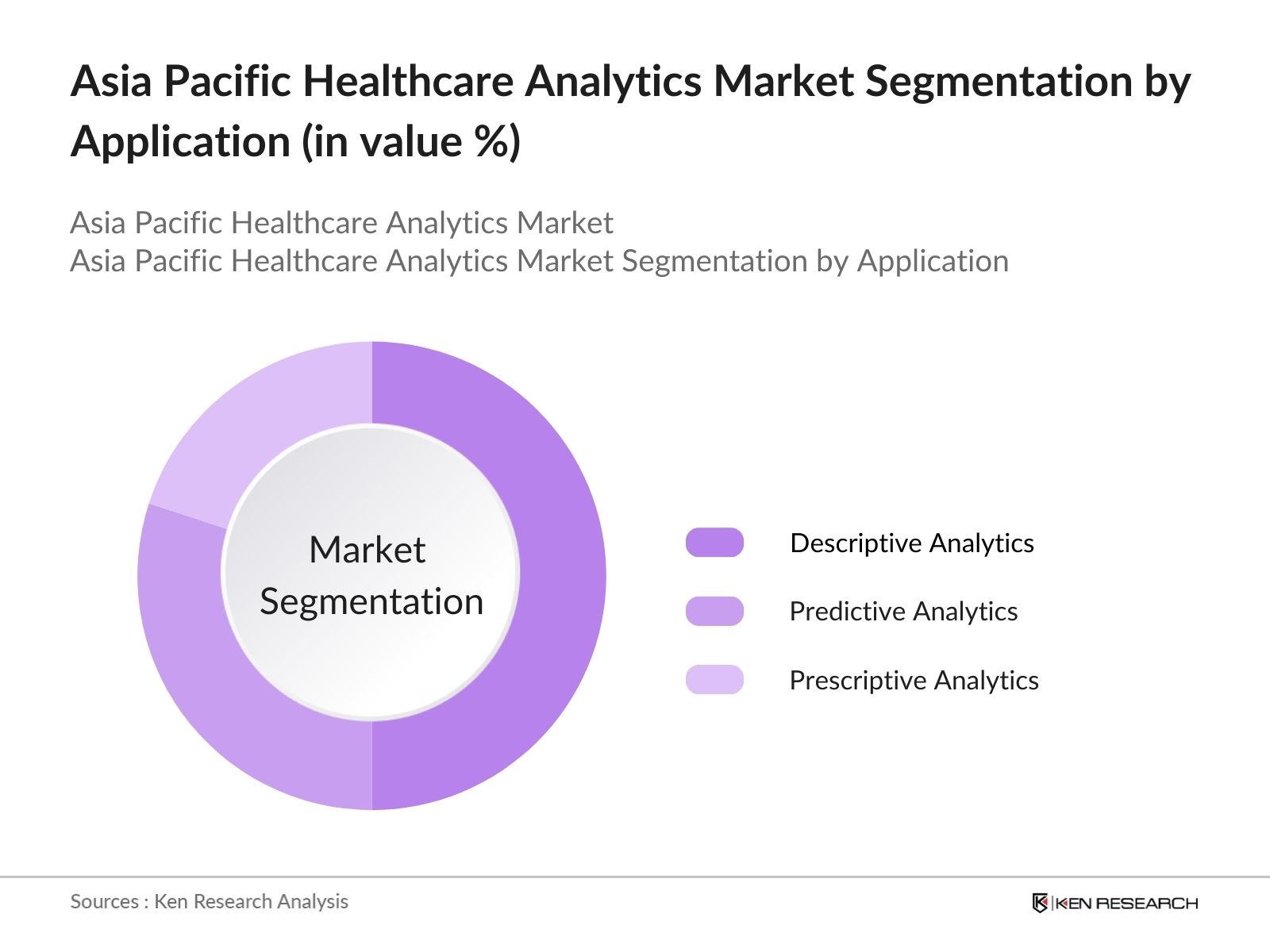
By Application: The market is segmented by application into descriptive analytics, predictive analytics, and prescriptive analytics. Descriptive analytics leads the market, accounting for the largest share in 2023, primarily because of its established presence in healthcare organizations for historical data analysis. Descriptive analytics tools are widely used by healthcare providers to analyze patient data and operational performance, which helps in identifying patterns and improving healthcare delivery. While predictive and prescriptive analytics are gaining traction, descriptive analytics remains the foundational layer for healthcare analytics in the region.
Asia Pacific Healthcare Analytics Market Competitive Landscape
The Asia Pacific healthcare analytics market is dominated by a mix of local and global players, with a few companies holding a significant market share. Major players are investing in mergers and acquisitions, product innovations, and partnerships to strengthen their market positions. The competition is primarily centered around the development of AI-driven healthcare analytics solutions, cloud-based platforms, and advanced data security solutions.
|
Company |
Establishment Year |
Headquarters |
Healthcare Analytics Solutions Portfolio |
R&D Investments |
Number of Employees |
Global Presence |
Revenue (2023) |
Strategic Partnerships |
Technological Innovations |
|
Optum Inc. |
1996 |
USA |
- |
- |
- |
- |
- |
- |
- |
|
Cerner Corporation |
1979 |
USA |
- |
- |
- |
- |
- |
- |
- |
|
IBM Watson Health |
2015 |
USA |
- |
- |
- |
- |
- |
- |
- |
|
SAS Institute Inc. |
1976 |
USA |
- |
- |
- |
- |
- |
- |
- |
|
Inovalon Holdings Inc. |
1998 |
USA |
- |
- |
- |
- |
- |
- |
- |
Asia Pacific Healthcare Analytics Market Analysis
Growth Drivers
- Adoption of Electronic Health Records (EHRs): The adoption of Electronic Health Records (EHRs) has significantly accelerated in the Asia Pacific region due to increasing government mandates and healthcare modernization efforts. In 2023, countries like Australia, Japan, and Singapore have reported widespread EHR implementation, with 85% of healthcare facilities in Australia using EHR systems. This widespread adoption is supported by national health programs, such as Australias My Health Record system, which connects over 23 million citizens to digital health services.
- Increasing Government Initiatives and Healthcare Spending: Governments in the Asia Pacific region have been increasing healthcare spending to modernize the industry. Total spending on health in the 202324 Australian Federal Budget is estimated to be $106.5 billion, representing approximately 15.6% of the Australian Government's total expenditure. Government initiatives, such as Indias Ayushman Bharat digital health mission, aim to provide universal health coverage, boosting demand for healthcare analytics.
- Rising Need for Advanced Analytics in Population Health Management: The increasing prevalence of chronic diseases and aging populations in Asia Pacific necessitate the use of advanced analytics in population health management. In China alone, there are over 264 million individuals aged 60 and above, requiring significant healthcare management. Advanced analytics, including AI-driven solutions, can help manage large patient datasets to track disease patterns, predict outbreaks, and allocate healthcare resources efficiently.
Challenges
- Data Security and Privacy Concerns: Countries like Singapore and South Korea have enacted strict data protection laws, such as the Personal Data Protection Act (PDPA) and the Act on the Protection of Personal Information. However, healthcare providers continue to face challenges in ensuring the security of sensitive patient data, especially as digital health solutions and analytics become more widespread.
- High Costs Associated with Implementation of Analytics Solutions: Implementing advanced healthcare analytics solutions remains costly for many healthcare providers in Asia Pacific. In countries like India and Indonesia, the high initial investment in analytics infrastructure, including hardware, software, and skilled personnel, poses a barrier to widespread adoption. For example, a mid-sized hospital in India spends approximately USD 300,000 annually on analytics solutions. This cost includes system integration, data storage, and ongoing maintenance, which smaller healthcare facilities struggle to afford, thereby slowing the adoption of these technologies.
Asia Pacific Healthcare Analytics Future Market Outlook
The Asia Pacific healthcare analytics market is expected to experience significant growth, driven by the region's rapid adoption of digital health technologies and big data solutions. The increasing focus on value-based care, coupled with the rising need for population health management and personalized medicine, is expected to fuel demand for advanced analytics tools. Moreover, government initiatives aimed at improving healthcare infrastructure and increasing healthcare expenditure will play a key role in shaping the future of the healthcare analytics market in Asia Pacific.
Market Opportunities
- Growing Use of Predictive and Prescriptive Analytics: There is a rising demand for predictive and prescriptive analytics in Asia Pacific healthcare, driven by the need for better patient management and resource allocation. In 2023, hospitals in China and Japan have started using predictive analytics to forecast patient admissions and manage hospital bed utilization more effectively. These advanced analytics solutions help healthcare providers optimize their resources by predicting patient needs, reducing hospital overcrowding and improving patient outcomes.
- Expansion of Cloud-Based Healthcare Analytics Platforms: Cloud-based healthcare analytics platforms are rapidly gaining traction across Asia Pacific, offering scalable and cost-effective solutions. Australia, for example, has seen an increase in cloud-based healthcare analytics adoption, with over 60% of healthcare facilities utilizing cloud services in 2023. These platforms enable healthcare providers to store and analyze vast amounts of patient data without the need for expensive on-site infrastructure.
Scope of the Report
|
Segment |
Sub-Segment |
|
Component |
Software Services Hardware |
|
Deployment Mode |
On-Premise Cloud-Based |
|
Analytics Type |
Descriptive Analytics Predictive Analytics Prescriptive Analytics |
|
Application |
Financial Analytics Clinical Analytics Operational Analytics Population Health Analytics |
|
End User |
Healthcare Providers Healthcare Payers Pharmaceutical Companies Academic Institutions |
Products
Key Target Audience
Healthcare Providers (Hospitals, Clinics, Ambulatory Care Centers)
Healthcare Payers (Insurance Companies, Public Healthcare Organizations)
Pharmaceutical Companies (Drug Manufacturers, Biotechnology Firms)
Technology Providers (Cloud Computing, Big Data, and AI Firms)
Population Health Management Companies
Healthcare Data Analytics Startups
Investors and Venture Capitalist Firms
Government and Regulatory Bodies (Ministries of Health, Data Protection Agencies)
Companies
Players Mentioned in the Report
Optum Inc.
Cerner Corporation
IBM Watson Health
SAS Institute Inc.
Inovalon Holdings Inc.
Oracle Corporation
GE Healthcare
Siemens Healthineers
Allscripts Healthcare Solutions
Health Catalyst Inc.
CitiusTech Inc.
Epic Systems Corporation
Cotiviti
MedeAnalytics Inc.
McKesson Corporation
Table of Contents
1. Asia Pacific Healthcare Analytics Market Overview
1.1. Definition and Scope
1.2. Market Taxonomy
1.3. Market Growth Rate
1.4. Market Segmentation Overview
2. Asia Pacific Healthcare Analytics Market Size (In USD Bn)
2.1. Historical Market Size
2.2. Year-On-Year Growth Analysis
2.3. Key Market Developments and Milestones
3. Asia Pacific Healthcare Analytics Market Analysis
3.1. Growth Drivers
3.1.1. Adoption of Electronic Health Records (EHRs)
3.1.2. Increasing Government Initiatives and Healthcare Spending
3.1.3. Rising Need for Advanced Analytics in Population Health Management
3.1.4. Growing Utilization of Big Data and AI in Healthcare
3.2. Market Challenges
3.2.1. Data Security and Privacy Concerns
3.2.2. High Costs Associated with Implementation of Analytics Solutions
3.2.3. Interoperability Issues Among Healthcare Providers
3.3. Opportunities
3.3.1. Growing Use of Predictive and Prescriptive Analytics
3.3.2. Expansion of Cloud-Based Healthcare Analytics Platforms
3.3.3. Rising Demand for Personalized Medicine
3.4. Trends
3.4.1. Integration of AI and Machine Learning in Healthcare Analytics
3.4.2. Increasing Adoption of Real-Time Analytics
3.4.3. Emphasis on Value-Based Care Models
3.5. Government Regulation
3.5.1. Data Protection and Healthcare Compliance Regulations (e.g., HIPAA, GDPR)
3.5.2. National Health Informatics Programs
3.5.3. Public-Private Partnerships for Healthcare Modernization
3.6. SWOT Analysis
3.7. Stake Ecosystem (Hospitals, Providers, Payers, Pharmaceutical Companies, etc.)
3.8. Porters Five Forces
3.9. Competition Ecosystem (Top Competitors, Startups, Strategic Alliances)
4. Asia Pacific Healthcare Analytics Market Segmentation
4.1. By Component (In Value %)
4.1.1. Software
4.1.2. Services
4.1.3. Hardware
4.2. By Deployment Mode (In Value %)
4.2.1. On-Premise
4.2.2. Cloud-Based
4.3. By Analytics Type (In Value %)
4.3.1. Descriptive Analytics
4.3.2. Predictive Analytics
4.3.3. Prescriptive Analytics
4.4. By Application (In Value %)
4.4.1. Financial Analytics
4.4.2. Clinical Analytics
4.4.3. Operational Analytics
4.4.4. Population Health Analytics
4.5. By End User (In Value %)
4.5.1. Healthcare Providers
4.5.2. Healthcare Payers
4.5.3. Pharmaceutical Companies
4.5.4. Academic Institutions
5. Asia Pacific Healthcare Analytics Market Competitive Analysis
5.1. Detailed Profiles of Major Companies
5.1.1. Optum Inc.
5.1.2. Cerner Corporation
5.1.3. Allscripts Healthcare Solutions
5.1.4. McKesson Corporation
5.1.5. IBM Watson Health
5.1.6. SAS Institute Inc.
5.1.7. Oracle Corporation
5.1.8. Inovalon Holdings Inc.
5.1.9. Cotiviti
5.1.10. MedeAnalytics Inc.
5.1.11. CitiusTech Inc.
5.1.12. Health Catalyst Inc.
5.1.13. GE Healthcare
5.1.14. Siemens Healthineers
5.1.15. Epic Systems Corporation
5.2. Cross Comparison Parameters (No. of Employees, Headquarters, Inception Year, Revenue, Healthcare Analytics Solutions Portfolio, Geographical Reach, Strategic Alliances, Technological Innovations)
5.3. Market Share Analysis
5.4. Strategic Initiatives (Partnerships, Collaborations, Product Launches)
5.5. Mergers and Acquisitions
5.6. Investment Analysis
5.7. Venture Capital Funding
5.8. Government Grants
5.9. Private Equity Investments
6. Asia Pacific Healthcare Analytics Market Regulatory Framework
6.1. Data Protection Laws
6.2. Compliance Requirements (Healthcare Data Standards)
6.3. Certification Processes for Healthcare Analytics Solutions
7. Asia Pacific Healthcare Analytics Future Market Size (In USD Bn)
7.1. Future Market Size Projections
7.2. Key Factors Driving Future Market Growth
8. Asia Pacific Healthcare Analytics Future Market Segmentation
8.1. By Component (In Value %)
8.2. By Deployment Mode (In Value %)
8.3. By Analytics Type (In Value %)
8.4. By Application (In Value %)
8.5. By End User (In Value %)
9. Asia Pacific Healthcare Analytics Market Analysts Recommendations
9.1. TAM/SAM/SOM Analysis
9.2. Customer Cohort Analysis
9.3. Marketing Initiatives
9.4. White Space Opportunity Analysis
10. Disclaimer
11. Contact Us
Research Methodology
Step 1: Identification of Key Variables
The first step in the research process involved mapping the ecosystem of the Asia Pacific healthcare analytics market. This phase was driven by desk research, drawing from multiple databases to identify the key players, components, and dynamics that influence market trends. Variables such as technological adoption rates, healthcare expenditure, and government regulations were considered.
Step 2: Market Analysis and Construction
The market analysis phase included compiling and assessing historical data on market growth, segmentation, and industry penetration. A thorough examination of revenue figures, adoption rates of analytics solutions, and the impact of healthcare reforms was performed to construct a comprehensive view of the market.
Step 3: Hypothesis Validation and Expert Consultation
Interviews were conducted with industry experts to validate the research hypotheses. Consultations with senior executives from healthcare providers, payers, and analytics companies provided operational and financial insights that were crucial for refining market projections and segmentation analysis.
Step 4: Research Synthesis and Final Output
The final phase involved cross-verifying the collected data with input from industry stakeholders. Healthcare providers and analytics companies were consulted to ensure the accuracy of the market trends, revenue forecasts, and key opportunities highlighted in the report.
Frequently Asked Questions
01. How big is the Asia Pacific Healthcare Analytics Market?
The Asia Pacific healthcare analytics market was valued at USD 9 billion, driven by the adoption of digital health solutions and government initiatives promoting data analytics in healthcare.
02. What are the challenges in the Asia Pacific Healthcare Analytics Market?
Challenges of Asia Pacific Healthcare Analytics Market include data privacy concerns, high implementation costs, and the lack of skilled professionals to manage and analyze healthcare data.
03. Who are the major players in the Asia Pacific Healthcare Analytics Market?
Key players of Asia Pacific Healthcare Analytics Market include Optum Inc., Cerner Corporation, IBM Watson Health, SAS Institute Inc., and Inovalon Holdings Inc., all of which dominate through their innovative analytics solutions and strong market presence.
04. What are the growth drivers of the Asia Pacific Healthcare Analytics Market?
Growth of Asia Pacific Healthcare Analytics Market is driven by the increasing adoption of AI and machine learning in healthcare analytics, rising healthcare expenditure, and government support for healthcare digitization across major economies like China, Japan, and India.
Why Buy From Us?

What makes us stand out is that our consultants follows Robust, Refine and Result (RRR) methodology. i.e. Robust for clear definitions, approaches and sanity checking, Refine for differentiating respondents facts and opinions and Result for presenting data with story

We have set a benchmark in the industry by offering our clients with syndicated and customized market research reports featuring coverage of entire market as well as meticulous research and analyst insights.

While we don't replace traditional research, we flip the method upside down. Our dual approach of Top Bottom & Bottom Top ensures quality deliverable by not just verifying company fundamentals but also looking at the sector and macroeconomic factors.

With one step in the future, our research team constantly tries to show you the bigger picture. We help with some of the tough questions you may encounter along the way: How is the industry positioned? Best marketing channel? KPI's of competitors? By aligning every element, we help maximize success.

Our report gives you instant access to the answers and sources that other companies might choose to hide. We elaborate each steps of research methodology we have used and showcase you the sample size to earn your trust.

If you need any support, we are here! We pride ourselves on universe strength, data quality, and quick, friendly, and professional service.