
Asia Pacific Hearing Aid Market Outlook to 2030
Region:Asia
Author(s):Sanjana
Product Code:KROD3454
October 2024
82
About the Report
Asia Pacific Hearing Aid Market Overview
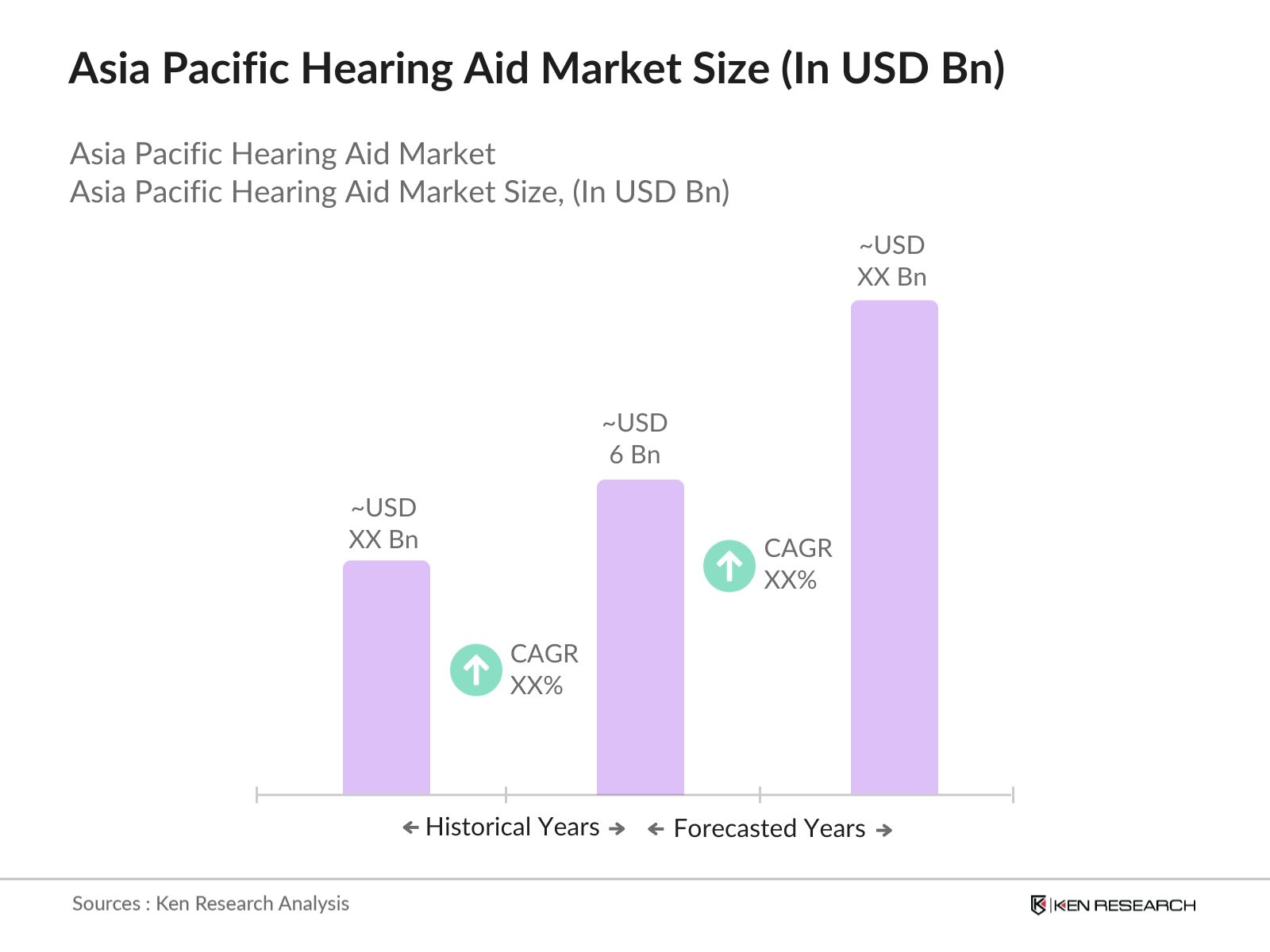
- The Asia Pacific hearing aid market is valued at USD 6 billion, driven by the increasing prevalence of hearing impairment, especially among the aging population. Growing urbanization, better access to healthcare, and technological advancements like Bluetooth-enabled hearing aids and AI-integrated solutions have also propelled the market. Furthermore, initiatives from governments to offer subsidized hearing aids to senior citizens have positively influenced the market's growth trajectory.
- Dominant countries in the region include China, Japan, and Australia. China dominates due to its large population base and expanding healthcare infrastructure, allowing wider access to audiology services. Japans dominance is attributed to its rapidly aging population, creating higher demand for hearing aids. Australia, meanwhile, benefits from a strong regulatory framework and government support, which helps to subsidize hearing aid purchases, making it more accessible to a broader demographic.
- Japans Pharmaceuticals and Medical Devices Agency (PMDA) and Australias Therapeutic Goods Administration (TGA) are some of the key regulatory bodies. In 2023, hearing aids approved by the FDA accounted for 80% of devices sold in Australia, reflecting the strict adherence to international standards. Countries like South Korea and China are also aligning their certification processes with global standards, easing the entry of foreign manufacturers.
Asia Pacific Hearing Aid Market Segmentation
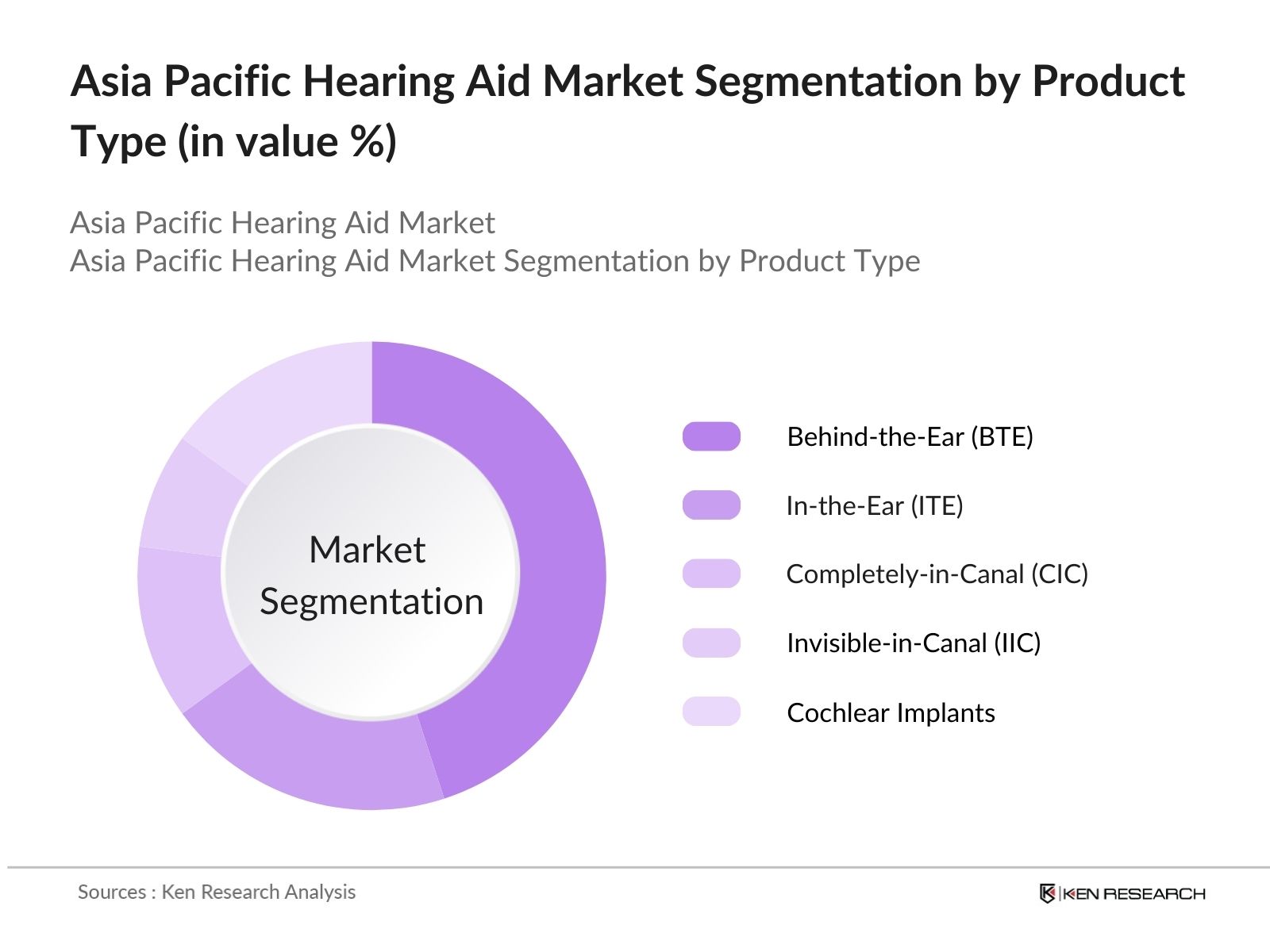
By Product Type: The Asia Pacific hearing aid market is segmented by product type into behind-the-ear (BTE), in-the-ear (ITE), completely-in-canal (CIC), invisible-in-canal (IIC), and cochlear implants. Recently, behind-the-ear hearing aids have a dominant market share due to their ease of use, especially for elderly patients, and their ability to cater to a wide range of hearing loss severity. Brands like Oticon and Starkey have focused on improving BTE devices, further contributing to the dominance of this segment. Their larger size allows for more powerful batteries and extra features, such as Bluetooth connectivity and noise reduction technology.
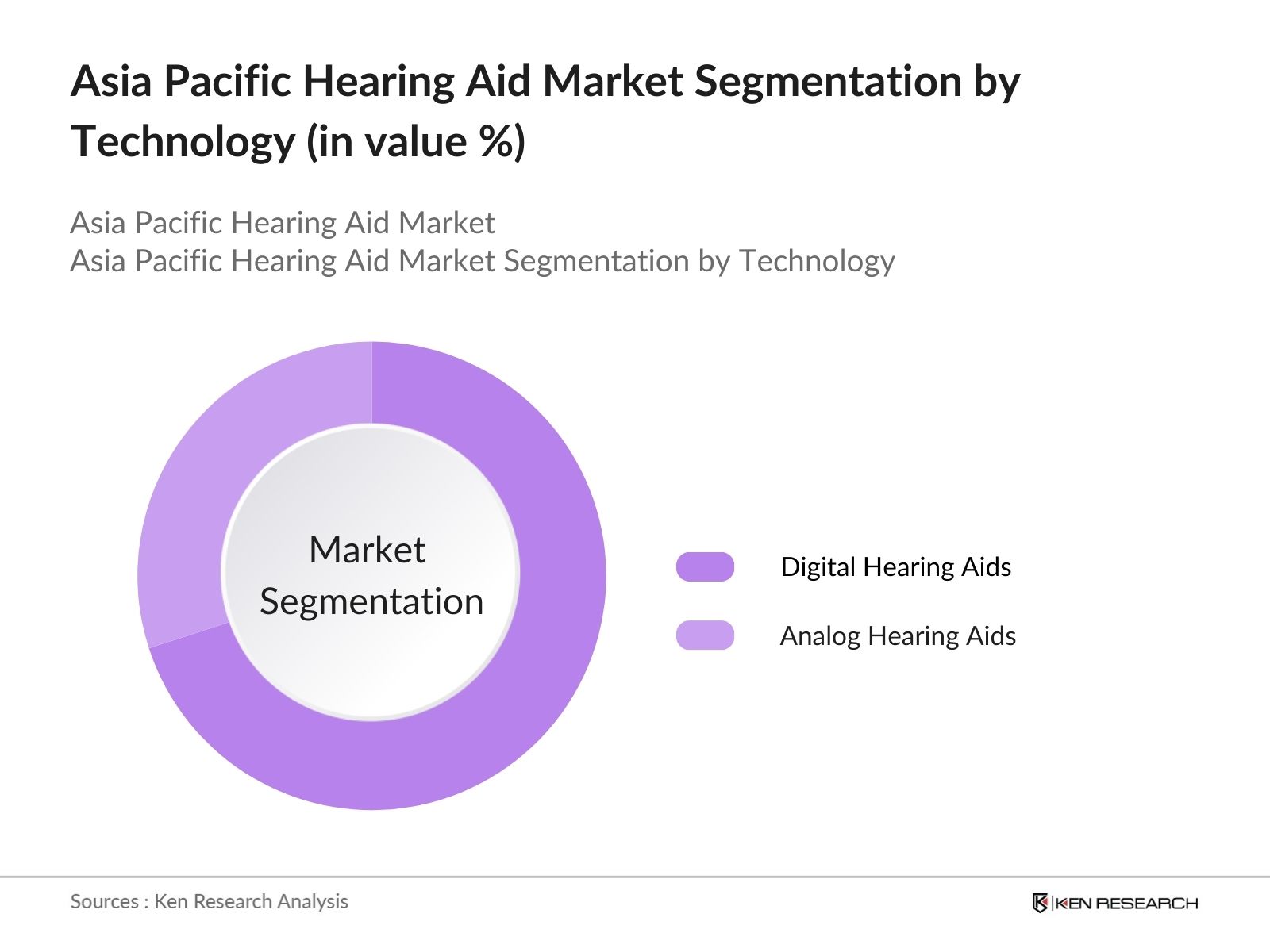
By Technology: The market is also segmented by technology into analog hearing aids and digital hearing aids. Digital hearing aids currently dominate the market, driven by their superior sound quality and the ability to program them for specific user needs. Digital technology also allows for advanced features like AI-powered noise cancellation, remote control through smartphone apps, and automatic adjustment based on ambient sounds, making them more desirable to users than traditional analog aids.
Asia Pacific Hearing Aid Market Analysis
Growth Drivers
- Aging Population: The elderly population in Asia-Pacific continues to grow, with Japan having one of the highest percentages of people aged 65 and above, accounting for 29% of the total population in 2023. Similarly, countries like South Korea and China are seeing rapid aging, contributing to the rising demand for hearing aids. Current estimates indicate that over 95 million people in China experience moderate-to-complete hearing loss, and this number is projected to rise substantially. By 2060, it is anticipated that approximately 242 million people will have moderate-to-complete hearing loss, reflecting a significant increase due to the aging population.
- Technological Advancements: Technological innovation in hearing aids, such as cochlear implants and Bluetooth-enabled devices, is boosting market demand. According to the Australian Institute of Health and Welfare (AIHW), there have been over 300 cochlear implant procedures conducted in Australia, with a total of 5,000 to 6,000 surgeries performed worldwide. The increasing integration of Bluetooth technology into hearing aids allows users to connect seamlessly with smartphones and other devices, which has become a crucial feature.
- Rising Prevalence of Hearing Loss: The rising prevalence of hearing loss, particularly due to occupational hazards and noise pollution, is a significant growth driver in the Asia-Pacific market. According to the WHO, around 466 million people worldwide have disabling hearing loss, and this number is expected to rise to 900 million by 2050. In countries like India and Indonesia, rapid urbanization and industrial growth have worsened noise pollution, creating a greater need for hearing aids.
Challenges
- High Cost of Hearing Aids: The high cost of hearing aids is a significant barrier to market growth, especially in developing regions. InAustralia, the prices for hearing aids vary significantly based on technology and features. The search results indicate that hearing aids can range from approximatelyUSD 1,300toUSD 6,500per device. The lack of affordable options limits market penetration in these regions.
- Lack of Awareness in Rural Areas: Despite government programs, the lack of awareness about hearing health in rural areas remains a challenge. In countries like Vietnam and Indonesia, rural communities often have limited access to audiologists and healthcare services. A 2023 report from the Asian Development Bank (ADB) stated that over 70% of rural populations in these countries do not have regular access to hearing healthcare. This contributes to low adoption rates of hearing aids, even when affordable options are available.
Asia Pacific Hearing Aid Market Competitive Landscape
The Asia Pacific hearing aid market is dominated by a mix of global leaders and regional manufacturers. The competitive landscape is marked by heavy investments in R&D and partnerships for product innovations.
The market is dominated by key players like Sonova, Demant, and Cochlear, who have established strong distribution networks and product portfolios catering to a wide range of consumer needs. The use of advanced digital technologies has allowed these companies to maintain a competitive edge.
|
Company |
Establishment Year |
Headquarters |
No. of Employees |
Revenue (USD bn) |
R&D Investment (USD) |
Key Products |
Technology Focus |
Market Presence |
|
Sonova Holding AG |
1947 |
Switzerland |
- |
- |
- |
- |
- |
- |
|
Demant A/S |
1904 |
Denmark |
- |
- |
- |
- |
- |
- |
|
Cochlear Ltd. |
1981 |
Australia |
- |
- |
- |
- |
- |
- |
|
GN Store Nord A/S |
1869 |
Denmark |
- |
- |
- |
- |
- |
- |
|
Starkey Hearing |
1967 |
United States |
- |
- |
- |
- |
- |
- |
Asia Pacific Hearing Aid Future Market Outlook
Over the next five years, the Asia Pacific hearing aid market is expected to witness significant growth, driven by ongoing technological advancements and increasing demand from the aging population. Governments in key countries are increasingly recognizing hearing loss as a public health issue, implementing policies that improve access to hearing aids. Innovations such as AI-driven noise cancellation, miniaturization of devices, and rechargeable batteries are anticipated to drive future market growth, especially in developing regions.
Market Opportunities
- Untapped Markets: Untapped markets in Southeast Asia and rural areas provide significant growth opportunities. Countries like Cambodia and Myanmar, where hearing healthcare is underdeveloped, present vast potential. The World Health Organization (WHO) reports that approximately 90% of the 460 million people with disabling hearing loss live in low- and middle-income regions, highlighting a substantial gap in access to necessary audiological services.
- Expansion in Online Distribution Channels: The rise of e-commerce across Asia-Pacific is opening up new distribution channels for hearing aids. In 2023, the e-commerce market in China alone reached over USD 2 trillion. This expansion allows manufacturers to reach previously inaccessible regions, such as rural areas and smaller cities, by bypassing traditional retail channels. The trend toward online purchasing of medical devices, including hearing aids.
Scope of the Report
|
Segment |
Sub-Segments |
|
Product Type |
Behind-the-Ear (BTE) In-the-Ear (ITE) Completely-in-Canal (CIC) Invisible-in-Canal (IIC) Cochlear Implants |
|
Technology |
Analog Hearing Aids Digital Hearing Aids |
|
Distribution Channel |
Retail Stores Online Platforms Clinics & Audiologists |
|
Patient Type |
Adults Pediatrics |
|
Region |
China Japan India Australia Southeast Asia |
Products
Key Target Audience
Hearing Aid Manufacturers
Hearing Healthcare Providers
Hospitals and Audiology Clinics
Technology Providers (for hearing aid innovation)
E-commerce Platforms
Government and Regulatory Bodies (e.g., National Health Ministries)
Investors and Venture Capitalist Firms
Companies
Major Players Mentioned in the Report
Sonova Holding AG
Demant A/S
Cochlear Ltd.
GN Store Nord A/S
Starkey Hearing Technologies
Sivantos Pte. Ltd.
Widex A/S
Amplifon S.p.A.
Med-El
Rion Co., Ltd.
Oticon A/S
Arphi Electronics
Audina Hearing Instruments
Zounds Hearing
Eargo
Table of Contents
1. Asia Pacific Hearing Aid Market Overview
1.1. Definition and Scope
1.2. Market Taxonomy
1.3. Market Growth Rate
1.4. Market Segmentation Overview
2. Asia Pacific Hearing Aid Market Size (In USD Bn)
2.1. Historical Market Size
2.2. Year-On-Year Growth Analysis
2.3. Key Market Developments and Milestones
3. Asia Pacific Hearing Aid Market Analysis
3.1. Growth Drivers
3.1.1. Aging Population (Increasing demand for hearing aids due to elderly population growth)
3.1.2. Technological Advancements (Cochlear implants, Bluetooth-enabled hearing aids)
3.1.3. Government Healthcare Initiatives (Subsidized hearing aid programs)
3.1.4. Rising Prevalence of Hearing Loss (Occupational hearing damage, noise pollution)
3.2. Market Challenges
3.2.1. High Cost of Hearing Aids (Affordability issues across developing regions)
3.2.2. Lack of Awareness in Rural Areas (Limited access to hearing healthcare services)
3.2.3. Regulatory Barriers (Stringent certification requirements across countries)
3.3. Opportunities
3.3.1. Untapped Markets (Emerging regions in Southeast Asia and rural areas)
3.3.2. Expansion in Online Distribution Channels (E-commerce growth)
3.3.3. Innovations in Battery Technology (Rechargeable, long-lasting batteries)
3.4. Trends
3.4.1. Integration of Artificial Intelligence (Personalized hearing aid settings)
3.4.2. Miniaturization of Hearing Aids (Discreet and lightweight devices)
3.4.3. Adoption of Tele-audiology (Remote hearing tests and device tuning)
3.5. Regulatory Landscape
3.5.1. FDA Approvals and Certifications (Specific to Asia Pacific markets)
3.5.2. Government Reimbursement Policies (Subsidies and insurance)
3.5.3. ISO Standards for Hearing Devices (Product compliance in key markets)
3.6. SWOT Analysis
3.7. Competitive Landscape
3.8. Porters Five Forces
4. Asia Pacific Hearing Aid Market Segmentation
4.1. By Product Type (In Value %)
4.1.1. Behind-the-Ear (BTE)
4.1.2. In-the-Ear (ITE)
4.1.3. Completely-in-Canal (CIC)
4.1.4. Invisible-in-Canal (IIC)
4.1.5. Cochlear Implants
4.2. By Technology (In Value %)
4.2.1. Analog Hearing Aids
4.2.2. Digital Hearing Aids
4.3. By Distribution Channel (In Value %)
4.3.1. Retail Stores
4.3.2. Online Platforms
4.3.3. Clinics & Audiologists
4.4. By Patient Type (In Value %)
4.4.1. Adults
4.4.2. Pediatrics
4.5. By Region (In Value %)
4.5.1. China
4.5.2. Japan
4.5.3. India
4.5.4. Australia
4.5.5. Southeast Asia
5. Asia Pacific Hearing Aid Market Competitive Analysis
5.1. Detailed Profiles of Major Competitors
5.1.1. Sonova Holding AG
5.1.2. Demant A/S
5.1.3. Cochlear Ltd.
5.1.4. GN Store Nord A/S
5.1.5. Starkey Hearing Technologies
5.1.6. Sivantos Pte. Ltd.
5.1.7. Widex A/S
5.1.8. Amplifon S.p.A.
5.1.9. Med-El
5.1.10. Rion Co., Ltd.
5.1.11. Oticon A/S
5.1.12. Arphi Electronics
5.1.13. Audina Hearing Instruments
5.1.14. Zounds Hearing
5.1.15. Eargo
5.2. Cross Comparison Parameters (Headquarters, Employees, Market Presence, R&D Investments, Revenue, Product Portfolio, Technological Capabilities, Partnerships)
5.3. Market Share Analysis
5.4. Strategic Initiatives
5.5. Mergers and Acquisitions
5.6. Investment Analysis
5.6.1. Private Equity Investments
5.6.2. Government Grants
5.7. Venture Capital Funding
6. Asia Pacific Hearing Aid Market Regulatory Framework
6.1. Regional Compliance Requirements
6.2. Certification Processes
6.3. Environmental and Safety Standards
7. Asia Pacific Hearing Aid Market Future Size (In USD Bn)
7.1. Market Size Projections
7.2. Key Drivers for Future Market Growth
8. Asia Pacific Hearing Aid Market Future Segmentation
8.1. By Product Type (In Value %)
8.2. By Technology (In Value %)
8.3. By Distribution Channel (In Value %)
8.4. By Patient Type (In Value %)
8.5. By Region (In Value %)
9. Asia Pacific Hearing Aid Market Analyst's Recommendations
9.1. TAM/SAM/SOM Analysis
9.2. Customer Demographic Analysis
9.3. Marketing Initiatives
9.4. White Space Opportunity Analysis
Research Methodology
Step 1: Identification of Key Variables
This phase involves creating an ecosystem map of stakeholders within the Asia Pacific hearing aid market. Extensive desk research is carried out to gather market data from secondary and proprietary sources, focusing on identifying the main variables impacting market trends.
Step 2: Market Analysis and Construction
Historical data from trusted sources is compiled and analyzed. This includes examining market penetration, key distribution channels, and product segments. The goal is to evaluate the reliability and accuracy of data to build a comprehensive market analysis.
Step 3: Hypothesis Validation and Expert Consultation
Key hypotheses about market growth are tested through direct consultations with industry experts. Interviews with professionals in hearing aid companies provide essential insights, helping to validate the data.
Step 4: Research Synthesis and Final Output
In the final stage, the gathered data is cross-verified with information provided by manufacturers and distributors. This ensures a holistic and accurate understanding of the Asia Pacific hearing aid market, contributing to a validated research output.
Frequently Asked Questions
01. How big is the Asia Pacific Hearing Aid Market?
The Asia Pacific hearing aid market was valued at USD 6 billion, driven by the aging population, increased healthcare access, and advancements in hearing aid technology.
02. What are the challenges in the Asia Pacific Hearing Aid Market?
The market faces challenges like the high cost of advanced hearing aids, lack of awareness in rural areas, and stringent regulatory barriers that slow down market expansion.
03. Who are the major players in the Asia Pacific Hearing Aid Market?
Key players in the market include Sonova, Demant, Cochlear, GN Store Nord, and Starkey. These companies have strong distribution networks and invest heavily in research and development.
04. What are the growth drivers of the Asia Pacific Hearing Aid Market?
The market is driven by the increasing prevalence of hearing loss, especially among the elderly, government initiatives to improve healthcare access, and technological advancements in hearing aid devices.
05. What technological trends are shaping the Asia Pacific Hearing Aid Market?
Key technological trends include the integration of artificial intelligence, miniaturization of hearing aids, and the rise of rechargeable devices. These innovations are improving user experience and product efficiency.
Why Buy From Us?

What makes us stand out is that our consultants follows Robust, Refine and Result (RRR) methodology. i.e. Robust for clear definitions, approaches and sanity checking, Refine for differentiating respondents facts and opinions and Result for presenting data with story

We have set a benchmark in the industry by offering our clients with syndicated and customized market research reports featuring coverage of entire market as well as meticulous research and analyst insights.

While we don't replace traditional research, we flip the method upside down. Our dual approach of Top Bottom & Bottom Top ensures quality deliverable by not just verifying company fundamentals but also looking at the sector and macroeconomic factors.

With one step in the future, our research team constantly tries to show you the bigger picture. We help with some of the tough questions you may encounter along the way: How is the industry positioned? Best marketing channel? KPI's of competitors? By aligning every element, we help maximize success.

Our report gives you instant access to the answers and sources that other companies might choose to hide. We elaborate each steps of research methodology we have used and showcase you the sample size to earn your trust.

If you need any support, we are here! We pride ourselves on universe strength, data quality, and quick, friendly, and professional service.