















Asia-Pacific Hybrid Memory Cube and High-Bandwidth Memory Market Outlook to 2030
Region:Global
Author(s):Abhinav kumar
Product Code:KROD6262
November 2024
95
About the Report
Asia-Pacific Hybrid Memory Cube and High-Bandwidth Memory Market Overview
- The Asia-Pacific Hybrid Memory Cube (HMC) and High-Bandwidth Memory (HBM) market is currently valued at USD 1.1 billion. The market has experienced substantial growth, driven by the increasing demand for high-performance memory solutions across industries such as artificial intelligence (AI), high-performance computing (HPC), and data centers. The need for faster data processing capabilities and enhanced energy efficiency has been pivotal in the markets expansion, especially as these sectors become increasingly integral to business and technological advancements.
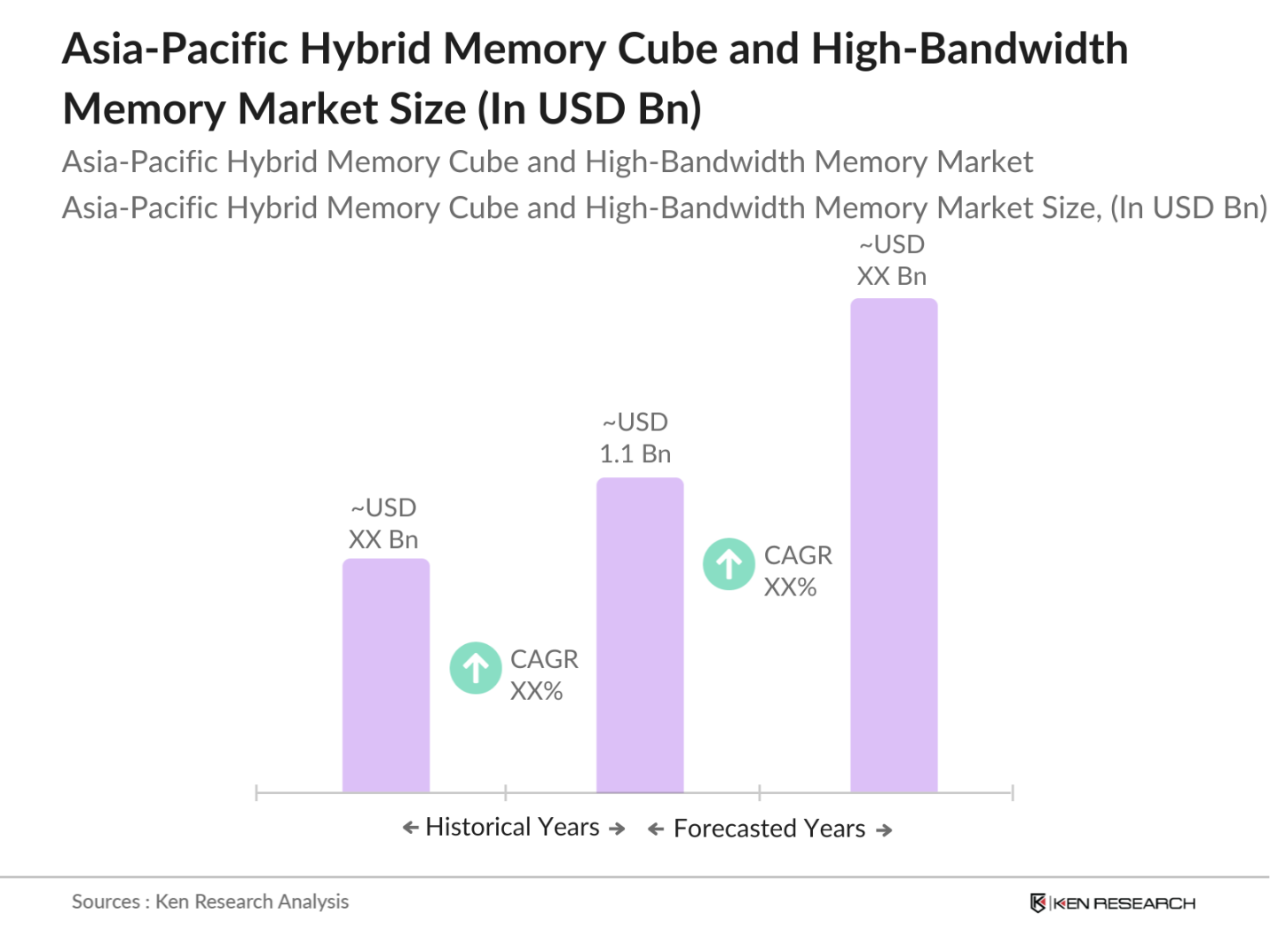
- Countries such as China, Japan, and South Korea dominate the Asia-Pacific HMC and HBM market due to their advanced semiconductor industries, strong manufacturing capabilities, and government support in the form of subsidies and incentives. These countries have emerged as the leaders in innovation and production of high-bandwidth memory, with significant investments in technology and infrastructure, making them critical players in the global supply chain.
- Governments in the Asia-Pacific region are increasingly providing subsidies and incentives to support semiconductor development, including HMC and HBM technologies. As of 2023, several countries have allocated over $10 billion in funding aimed at bolstering domestic semiconductor manufacturing capabilities. These initiatives are designed to reduce reliance on imports and enhance local production, ensuring a steady supply of advanced memory technologies to meet growing market demands. Such regulatory support is crucial for sustaining innovation and competitiveness in the memory market.
Asia-Pacific Hybrid Memory Cube and High-Bandwidth Memory Market Segmentation
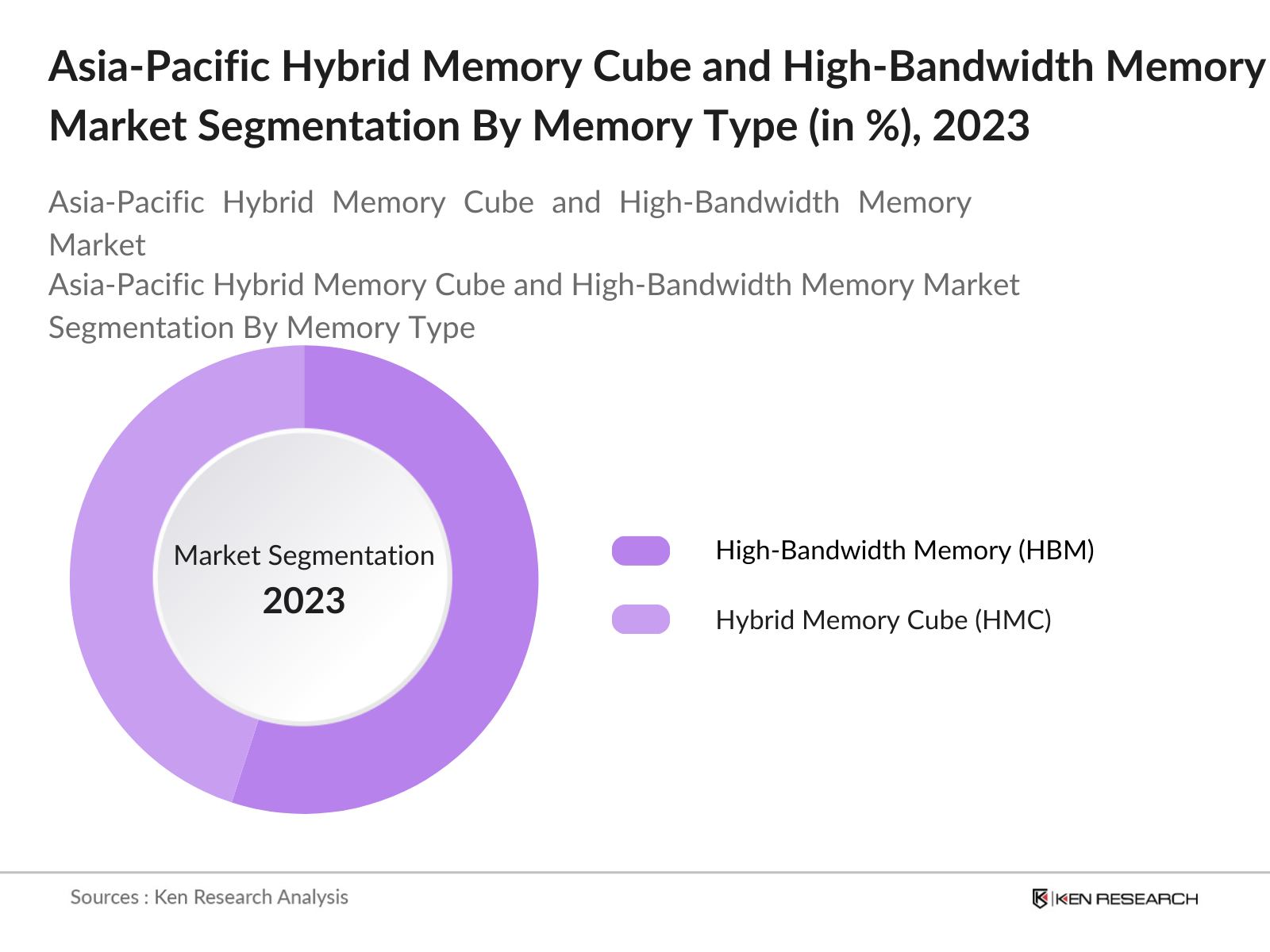
By Memory Type: The Asia-Pacific HMC and HBM market is segmented by memory type into Hybrid Memory Cube (HMC) and High-Bandwidth Memory (HBM). HBM holds a dominant market share due to its widespread adoption in graphics processing units (GPUs) and AI accelerators. Its ability to provide high data bandwidth with low power consumption makes it an ideal solution for demanding applications in AI, machine learning, and cloud computing environments. Major players like Samsung and SK Hynix have spearheaded the development of HBM technology, ensuring its continuous advancement and market penetration.
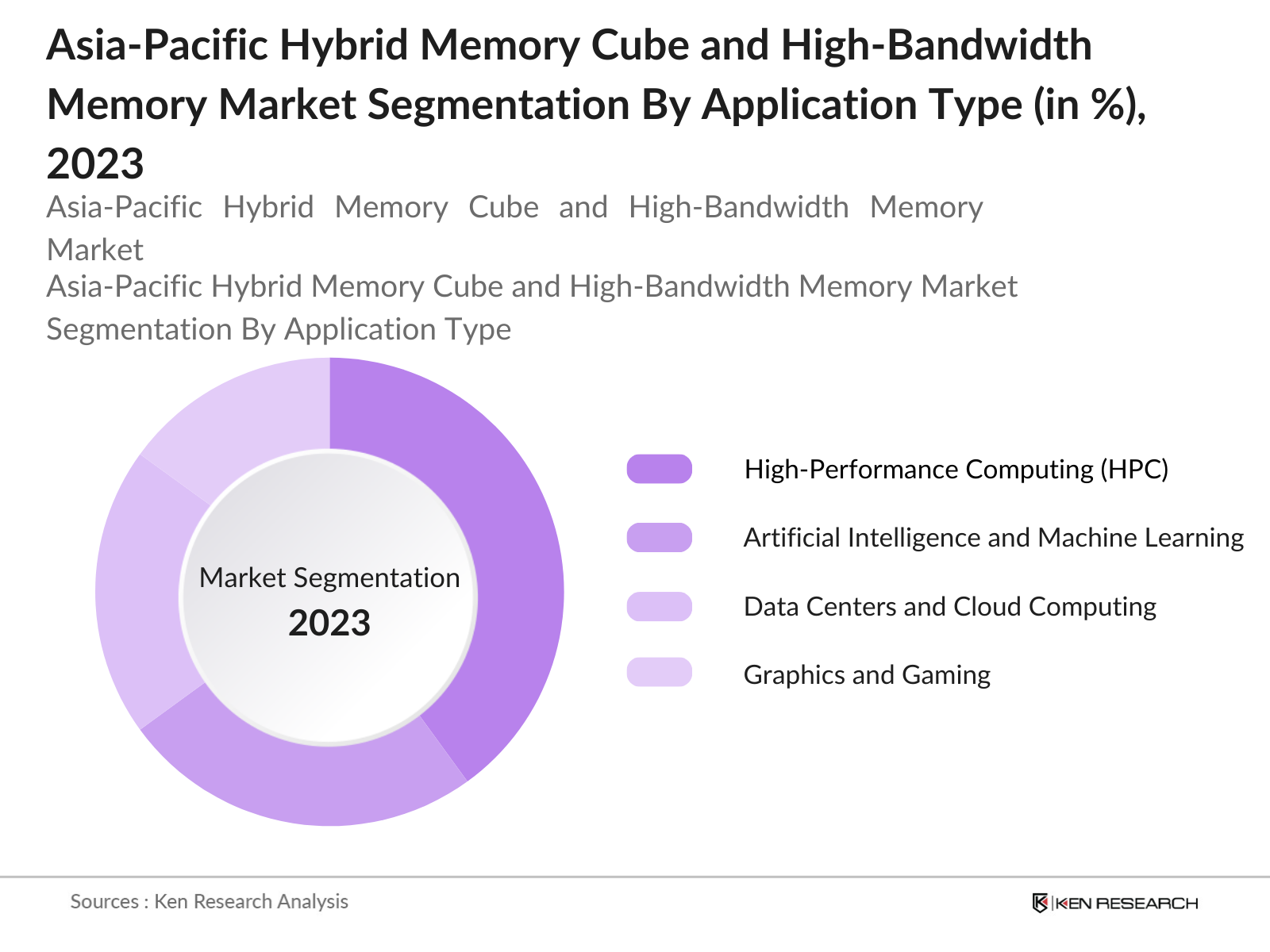
By Application: The market is further segmented by application into high-performance computing (HPC), artificial intelligence and machine learning, data centers and cloud computing, graphics and gaming, and automotive electronics. High-performance computing (HPC) applications currently dominate the market share due to the increasing need for robust data processing and analytics capabilities across various industries. HPC systems, powered by HBM, are essential for processing large volumes of data in real time, making them indispensable in sectors such as scientific research, financial services, and engineering.
Asia-Pacific Hybrid Memory Cube and High-Bandwidth Memory Market Competitive Landscape
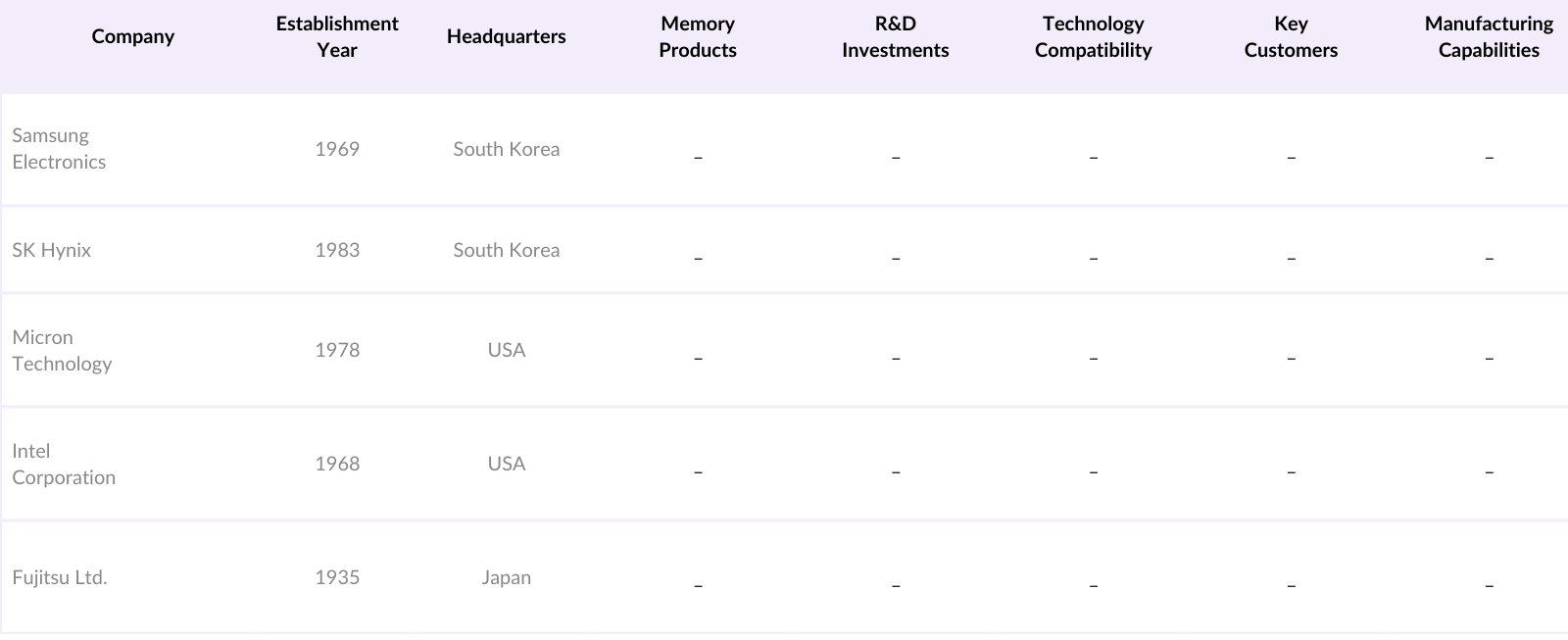
The Asia-Pacific HMC and HBM market is dominated by several key players that have significant influence over the market's growth and development. These companies are leading innovators in memory technology and continue to push the boundaries of performance and efficiency. The competition in this market is characterized by the following key players. The consolidation of these companies demonstrates the significant technological and financial resources necessary to remain competitive in the HBM and HMC markets.
Asia-Pacific Hybrid Memory Cube and High-Bandwidth Memory Industry Analysis
Growth Drivers
- Rising Demand for High-Performance Computing (HPC): The demand for High-Performance Computing (HPC) in the Asia-Pacific region is accelerating significantly, driven by sectors such as research, government, and corporate data analysis. According to the World Bank, global spending on HPC infrastructure reached approximately $43 billion in 2023, indicating a robust investment climate for advanced memory technologies. In 2022, the region accounted for around 35% of the global HPC market, highlighting a critical need for efficient memory solutions like Hybrid Memory Cube (HMC) and High-Bandwidth Memory (HBM) to support complex computations. The emphasis on research and development across various sectors further propels the demand for these advanced memory architectures.
- Increasing Application in AI, Machine Learning, and Big Data: The integration of HMC and HBM technologies is increasingly essential in artificial intelligence (AI), machine learning, and big data analytics applications. The International Monetary Fund (IMF) reported that investments in AI technologies reached $120 billion in 2023, with a projected increase in demand for faster and more efficient memory solutions. In the context of big data, it is estimated that global data generation will surpass 175 zettabytes by 2025, necessitating the use of advanced memory solutions to facilitate real-time processing and analysis. Such growth signifies the vital role HMC and HBM play in enabling data-intensive applications.
- Growing Adoption in Data Centers and Networking: Data centers are rapidly adopting HMC and HBM technologies due to the increasing need for enhanced bandwidth and reduced latency. As of 2023, data center traffic in the Asia-Pacific region is expected to exceed 19.5 zettabytes, necessitating robust memory architectures to manage the influx of data efficiently. The need for higher performance in networking applications, alongside the growing trend towards cloud computing, has led to increased investment in these memory technologies. Reports indicate that about 70% of new data centers are incorporating advanced memory solutions, driving significant growth in this market segment.
Market Challenges
- High Cost of Production and Implementation: The production and implementation costs of HMC and HBM technologies pose significant challenges for widespread adoption in the Asia-Pacific market. Current estimates suggest that the fabrication cost for HBM is approximately $3,500 per die, which remains a barrier for many manufacturers. This high cost is exacerbated by the limited availability of advanced fabrication facilities in the region. In 2023, only 12% of semiconductor manufacturers in Asia reported having the necessary infrastructure to produce advanced memory solutions, limiting scalability and increasing overall costs.
- Limited Supply Chain for Advanced Packaging: The supply chain for advanced packaging technologies necessary for HMC and HBM remains limited, hindering market growth. As of 2023, approximately 25% of semiconductor companies in Asia faced challenges in sourcing materials and components required for advanced packaging solutions. This bottleneck in the supply chain results in longer lead times and higher production costs, impacting the overall feasibility of implementing HMC and HBM technologies. The lack of a robust supply chain also affects the competitive landscape, making it difficult for new entrants to establish themselves in the market.
Asia-Pacific Hybrid Memory Cube and High-Bandwidth Memory Market Future Outlook
The Asia-Pacific Hybrid Memory Cube (HMC) and High-Bandwidth Memory (HBM) market is projected to experience significant growth over the next five years. The increasing demand for high-performance computing systems, coupled with advancements in artificial intelligence and machine learning, will drive this expansion. Moreover, the growing adoption of cloud-based services and the need for more efficient data processing in automotive and telecommunications sectors will further fuel market growth. Companies are expected to invest heavily in research and development to enhance memory performance, efficiency, and scalability. In addition, governments across the Asia-Pacific region will likely continue supporting the semiconductor industry through subsidies, grants, and infrastructure investments, providing further impetus to the market.
Opportunities
- Emerging Use Cases in Autonomous Vehicles: The advent of autonomous vehicles represents a significant opportunity for the HMC and HBM market. Current data shows that the autonomous vehicle market in the Asia-Pacific region is projected to reach approximately $80 billion by 2025, with advanced memory technologies playing a crucial role in data processing and real-time analytics. As vehicles become increasingly equipped with sensors and cameras generating vast amounts of data, the need for high-bandwidth memory solutions is critical to support seamless operation and safety features.
- Expansion in Consumer Electronics: The expansion of consumer electronics, particularly smart devices and wearables, offers substantial growth potential for the HMC and HBM market. In 2023, the Asia-Pacific region accounted for nearly 45% of global consumer electronics sales, with devices increasingly requiring higher memory bandwidth for functionalities like augmented reality and gaming. Current trends indicate that manufacturers are investing in advanced memory solutions to enhance user experiences, driving demand for HMC and HBM technologies. This trend reflects a shift towards more integrated and high-performance electronics.
Scope of the Report
|
Memory Type |
Hybrid Memory Cube (HMC) High-Bandwidth Memory (HBM) |
|
Application |
High-Performance Computing (HPC) Artificial Intelligence and Machine Learning Data Centers and Cloud Computing Graphics and Gaming Automotive and Consumer Electronics |
|
End-User Industry |
IT & Telecom Healthcare and Life Sciences Automotive Aerospace and Defense |
|
Form Factor |
DRAM Memory Modules Stacked Die Packages |
|
Region |
China Japan South Korea India Australia |
Products
Key Target Audience Organizations and Entities Who Can Benefit by Subscribing This Report:
Semiconductor manufacturing Companies
Cloud service provider Companies
AI and machine learning development Companies
High-performance computing vendor Companies
Data center operator Companies
Graphics and gaming Companies
Government and regulatory bodies (e.g., Ministry of Industry and Information Technology - China, METI - Japan)
Investor and venture capitalist firms
Companies
Players Mentioned in the Report
Samsung Electronics Co. Ltd.
SK Hynix Inc.
Micron Technology Inc.
Intel Corporation
Fujitsu Ltd.
Nvidia Corporation
Advanced Micro Devices (AMD)
ARM Holdings
TSMC
Rambus Inc.
Table of Contents
1. Asia-Pacific Hybrid Memory Cube and High-Bandwidth Memory Market Overview
1.1. Definition and Scope
1.2. Market Taxonomy
1.3. Market Growth Rate
1.4. Market Segmentation Overview
2. Asia-Pacific Hybrid Memory Cube and High-Bandwidth Memory Market Size (In USD Mn)
2.1. Historical Market Size
2.2. Year-On-Year Growth Analysis
2.3. Key Market Developments and Milestones
3. Asia-Pacific Hybrid Memory Cube and High-Bandwidth Memory Market Analysis
3.1. Growth Drivers
3.1.1. Rising Demand for High-Performance Computing (HPC)
3.1.2. Increasing Application in AI, Machine Learning, and Big Data
3.1.3. Growing Adoption in Data Centers and Networking
3.1.4. Technological Advancements in Memory Architectures
3.2. Market Challenges
3.2.1. High Cost of Production and Implementation
3.2.2. Limited Supply Chain for Advanced Packaging
3.2.3. Lack of Standardization Across Platforms
3.3. Opportunities
3.3.1. Emerging Use Cases in Autonomous Vehicles
3.3.2. Expansion in Consumer Electronics
3.3.3. Collaboration with Semiconductor Manufacturers
3.4. Trends
3.4.1. Integration of HMC and HBM in Cloud Computing Infrastructure
3.4.2. Increasing Focus on Power Efficiency
3.4.3. Adoption of 3D Stacking and Chiplet Designs
3.5. Government Regulations
3.5.1. Semiconductor Subsidies and Incentives
3.5.2. Compliance with Data Privacy Laws
3.5.3. Export Control Policies on Semiconductor Technologies
3.6. SWOT Analysis
3.7. Stake Ecosystem
3.8. Porters Five Forces
3.9. Competition Ecosystem
4. Asia-Pacific Hybrid Memory Cube and High-Bandwidth Memory Market Segmentation
4.1. By Memory Type (In Value %)
4.1.1. Hybrid Memory Cube (HMC)
4.1.2. High-Bandwidth Memory (HBM)
4.2. By Application (In Value %)
4.2.1. High-Performance Computing (HPC)
4.2.2. Artificial Intelligence and Machine Learning
4.2.3. Data Centers and Cloud Computing
4.2.4. Graphics and Gaming
4.2.5. Automotive and Consumer Electronics
4.3. By End-User Industry (In Value %)
4.3.1. IT & Telecom
4.3.2. Healthcare and Life Sciences
4.3.3. Automotive
4.3.4. Aerospace and Defense
4.4. By Form Factor (In Value %)
4.4.1. DRAM Memory Modules
4.4.2. Stacked Die Packages
4.5. By Region (In Value %)
4.5.1. China
4.5.2. Japan
4.5.3. South Korea
4.5.4. India
4.5.5. Australia
5. Asia-Pacific Hybrid Memory Cube and High-Bandwidth Memory Market Competitive Analysis
5.1. Detailed Profiles of Major Companies
5.1.1. Samsung Electronics Co. Ltd.
5.1.2. SK Hynix Inc.
5.1.3. Micron Technology Inc.
5.1.4. Intel Corporation
5.1.5. Advanced Micro Devices (AMD)
5.1.6. Nvidia Corporation
5.1.7. Fujitsu Ltd.
5.1.8. IBM Corporation
5.1.9. Xilinx Inc.
5.1.10. Rambus Inc.
5.1.11. Cadence Design Systems Inc.
5.1.12. ARM Holdings
5.1.13. TSMC
5.1.14. Marvell Technology Group
5.1.15. Broadcom Inc.
5.2. Cross Comparison Parameters (Revenue, Memory Capacity, Power Consumption, Form Factor, Bandwidth, Latency, Technology Compatibility, End-User Industry)
5.3. Market Share Analysis
5.4. Strategic Initiatives
5.5. Mergers and Acquisitions
5.6. Investment Analysis
5.7. Venture Capital Funding
5.8. Government Grants
5.9. Private Equity Investments
6. Asia-Pacific Hybrid Memory Cube and High-Bandwidth Memory Market Regulatory Framework
6.1. Semiconductor Manufacturing Standards
6.2. Trade and Export Regulations
6.3. Compliance with Environmental Laws
7. Asia-Pacific Hybrid Memory Cube and High-Bandwidth Memory Future Market Size (In USD Mn)
7.1. Future Market Size Projections
7.2. Key Factors Driving Future Market Growth
8. Asia-Pacific Hybrid Memory Cube and High-Bandwidth Memory Future Market Segmentation
8.1. By Memory Type (In Value %)
8.2. By Application (In Value %)
8.3. By End-User Industry (In Value %)
8.4. By Form Factor (In Value %)
8.5. By Region (In Value %)
9. Asia-Pacific Hybrid Memory Cube and High-Bandwidth Memory Market Analysts Recommendations
9.1. TAM/SAM/SOM Analysis
9.2. Customer Cohort Analysis
9.3. Marketing Initiatives
9.4. White Space Opportunity Analysis
Disclaimer Contact UsResearch Methodology
Step 1: Identification of Key Variables
In the initial phase, we mapped out the entire ecosystem of the Asia-Pacific HMC and HBM market, identifying key variables such as memory capacity, data bandwidth, and industry applications. Extensive secondary research was conducted using industry reports, databases, and proprietary sources.
Step 2: Market Analysis and Construction
This step involved analyzing historical data on market penetration, production capacities, and technological adoption. We utilized bottom-up approaches to compile a detailed understanding of the markets revenue dynamics.
Step 3: Hypothesis Validation and Expert Consultation
Industry experts were consulted to validate hypotheses and obtain qualitative insights on the trends and challenges in the HBM and HMC market. These consultations were critical for understanding the operational nuances of the market.
Step 4: Research Synthesis and Final Output
The final phase involved synthesizing research findings into a comprehensive report, ensuring that data collected through primary and secondary research was aligned and validated. Direct engagement with market participants, including semiconductor companies, was instrumental in refining the final analysis.
Frequently Asked Questions
01. How big is the Asia-Pacific Hybrid Memory Cube and High-Bandwidth Memory market?
The Asia-Pacific Hybrid Memory Cube and High-Bandwidth Memory market is valued at USD 1.1 billion, driven by the demand for high-performance computing, AI, and cloud computing.
02. What are the challenges in the Asia-Pacific Hybrid Memory Cube and High-Bandwidth Memory market?
Challenges include high production costs, a complex supply chain, and the need for technological standardization across applications.
03. Who are the major players in the Asia-Pacific Hybrid Memory Cube and High-Bandwidth Memory market?
Key players include Samsung Electronics, SK Hynix, Micron Technology, Intel Corporation, and Fujitsu Ltd., which dominate due to their technological innovations and extensive manufacturing capabilities.
04. What are the growth drivers of the Asia-Pacific Hybrid Memory Cube and High-Bandwidth Memory market?
The market is driven by the growing demand for high-performance computing, advancements in AI and machine learning, and increased investment in cloud infrastructure.
Why Buy From Us?

What makes us stand out is that our consultants follows Robust, Refine and Result (RRR) methodology. i.e. Robust for clear definitions, approaches and sanity checking, Refine for differentiating respondents facts and opinions and Result for presenting data with story

We have set a benchmark in the industry by offering our clients with syndicated and customized market research reports featuring coverage of entire market as well as meticulous research and analyst insights.

While we don't replace traditional research, we flip the method upside down. Our dual approach of Top Bottom & Bottom Top ensures quality deliverable by not just verifying company fundamentals but also looking at the sector and macroeconomic factors.

With one step in the future, our research team constantly tries to show you the bigger picture. We help with some of the tough questions you may encounter along the way: How is the industry positioned? Best marketing channel? KPI's of competitors? By aligning every element, we help maximize success.

Our report gives you instant access to the answers and sources that other companies might choose to hide. We elaborate each steps of research methodology we have used and showcase you the sample size to earn your trust.

If you need any support, we are here! We pride ourselves on universe strength, data quality, and quick, friendly, and professional service.