
Asia-Pacific In Situ Hybridization Market outlook to 2030
Region:Asia
Author(s):Meenakshi Bisht
Product Code:KROD7175
December 2024
82
About the Report
Asia-Pacific In Situ Hybridization Market Overview
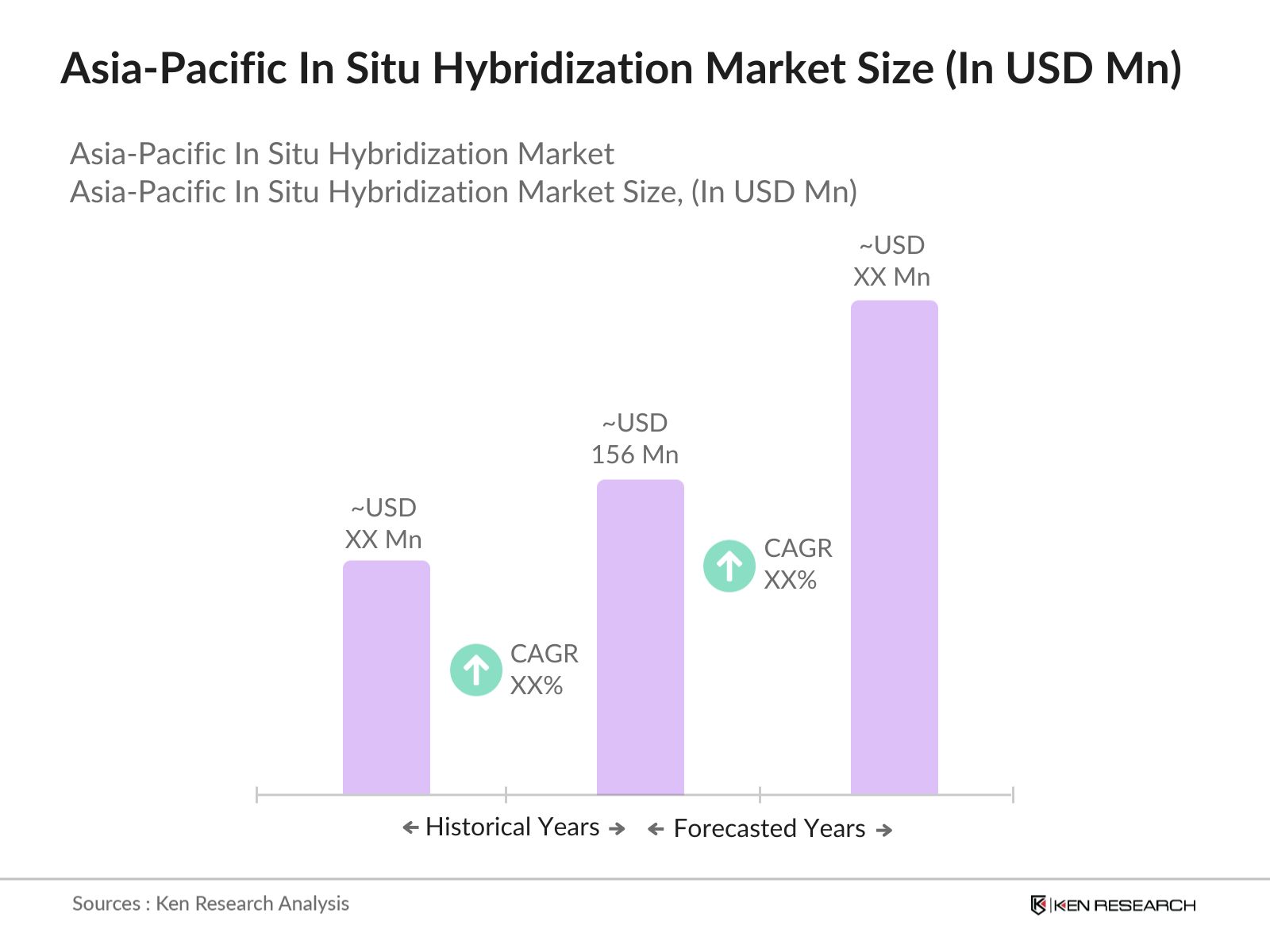
- The Asia-Pacific In Situ Hybridization Market is valued at USD 156 million, driven primarily by the growing demand for advanced diagnostic techniques in cancer detection and genetic disorder identification. The increasing prevalence of cancer in countries like China, Japan, and India has significantly contributed to the adoption of ISH techniques, particularly in clinical and research applications.
- Countries like China, Japan, and South Korea dominate the ISH market in the Asia-Pacific region. China's dominance stems from its large population, increasing cancer incidence rates, and substantial investments in research and development. Japan's leadership is due to its advanced healthcare system and focus on early cancer detection through molecular diagnostics. Meanwhile, South Korea is emerging as a key player owing to technological innovations and growing government support for diagnostic research.
- Regulations for diagnostic devices, including ISH tools, are tightening in the Asia-Pacific region. In China, the National Medical Products Administration mandates strict safety checks for all diagnostic devices before approval. Similarly, South Korea's Ministry of Food and Drug Safety ensures molecular diagnostic tools like ISH kits meet high-quality standards. These regulations are crucial for ensuring the accuracy and reliability of diagnostics, particularly for cancer and genetic disorder treatments.
Asia-Pacific In Situ Hybridization Market Segmentation
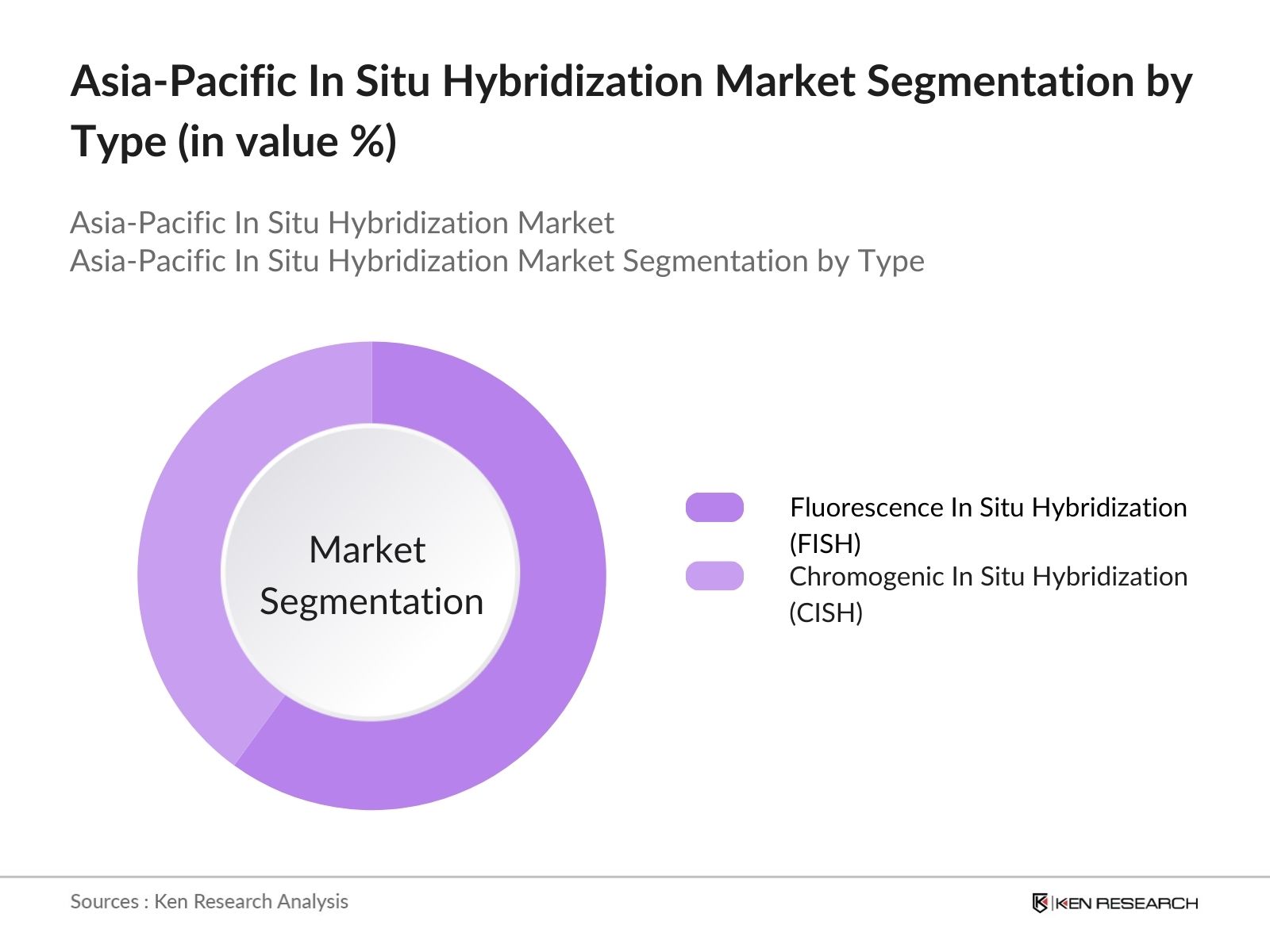
By Type: The Asia-Pacific ISH market is segmented by type into Fluorescence In Situ Hybridization (FISH) and Chromogenic In Situ Hybridization (CISH). The FISH has a dominant market share due to its wide application in cancer diagnostics and its ability to provide highly accurate, detailed imaging. FISH is widely adopted in research and clinical labs because of its enhanced ability to detect genetic abnormalities with precision. Its growing use in cancer research, along with its application in prenatal and postnatal testing, has strengthened its market position.
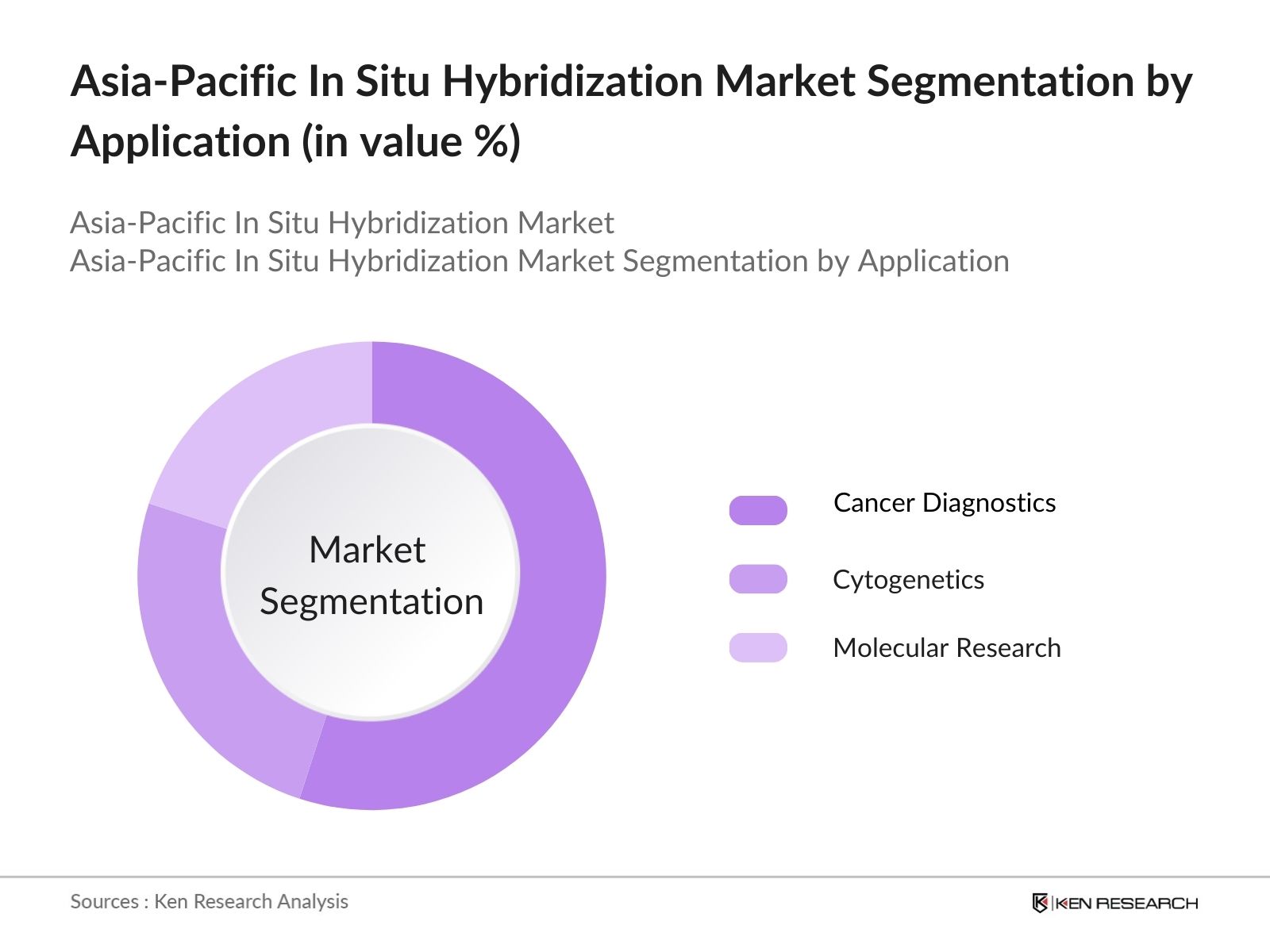
By Application: The Asia-Pacific ISH market is segmented by application into Cancer Diagnostics, Cytogenetics, and Molecular Research. Cancer Diagnostics dominates the market due to the rising number of cancer cases and the growing emphasis on early detection and personalized treatments. ISH techniques, especially FISH, have become a crucial tool in detecting specific cancer markers and abnormalities in tumors. The demand for precise and reliable diagnostic tests has pushed cancer diagnostics to hold the largest share in the ISH market.
Asia-Pacific In Situ Hybridization Market Competitive Landscape
The market is highly consolidated, with major players like Roche Diagnostics and Thermo Fisher Scientific leading the market due to their innovation in molecular diagnostics and their wide range of ISH products. Companies like Agilent Technologies and PerkinElmer are also strengthening their presence through strategic collaborations and acquisitions, which provide them with a competitive edge in the market.
|
Company Name |
Establishment Year |
Headquarters |
Revenue |
Product Portfolio |
R&D Focus |
Global Reach |
Strategic Partnerships |
|
Roche Diagnostics |
1896 |
Basel, Switzerland |
|||||
|
Thermo Fisher Scientific |
1956 |
Waltham, USA |
|||||
|
Agilent Technologies |
1999 |
Santa Clara, USA |
|||||
|
PerkinElmer |
1937 |
Waltham, USA |
|||||
|
Abnova Corporation |
2002 |
Taipei, Taiwan |
Asia-Pacific In Situ Hybridization Industry Analysis
Growth Drivers
- Increase in Cancer Diagnostics: Cancer diagnostics is witnessing a surge in the Asia-Pacific region, driving the demand for in situ hybridization (ISH) technologies. According to the World Health Organization (WHO), over 9 million new cancer cases were diagnosed in Asia in 2022. This growth is partly due to enhanced healthcare infrastructure and increasing awareness of early detection. Molecular diagnostics, including ISH, play a pivotal role in cancer diagnosis. Governments in countries like China and India are also ramping up investment in cancer care, leading to more ISH usage in hospitals and research labs.
- Rising Prevalence of Genetic Disorders: The Asia-Pacific region is experiencing a significant increase in the diagnosis of genetic disorders. The region has seen a notable rise in clinical trials related to genetic disorders, with a reported 184% increase over the past decade, indicating a growing focus on these conditions within the healthcare system. This rise has led to greater utilization of ISH, particularly for prenatal screening. For example, countries such as Japan and South Korea are using ISH techniques for genetic diagnosis in specialized clinics, boosting demand for molecular diagnostic tools.
- Advancements in Molecular Diagnostics: Advancements in molecular diagnostics are boosting the adoption of in situ hybridization (ISH) across the Asia-Pacific region, with countries like Singapore and Australia leading the way. Technologies like fluorescence in situ hybridization (FISH) have enhanced the accuracy of cancer and genetic disorder diagnostics. The expansion of molecular diagnostic labs and the focus on precision medicine are driving ISH use in both clinical and research environments, especially in oncology and genetics.
Market Challenges
- High Costs of ISH Procedures: The cost of in situ hybridization (ISH) procedures poses a significant challenge in the Asia-Pacific region. Despite technological advancements, ISH remains an expensive diagnostic tool, limiting its accessibility in many areas. The high costs of reagents, specialized equipment, and the need for skilled professionals contribute to the overall expense. As a result, ISH usage is often confined to specialized centers, hindering its broader application in diagnostics across the region.
- Limited Availability of Skilled Professionals: The Asia-Pacific region is experiencing a shortage of skilled professionals trained to perform and interpret ISH procedures. This scarcity is particularly pronounced in developing countries, where healthcare infrastructure and training programs in advanced molecular diagnostics are lacking. The limited availability of professionals proficient in techniques like fluorescence in situ hybridization (FISH) restricts the widespread use of these advanced diagnostics, especially in rural areas.
Asia-Pacific In Situ Hybridization Market Future Outlook
Over the next five years, the Asia-Pacific In Situ Hybridization market is expected to experience steady growth, driven by advancements in molecular diagnostic technologies and the rising adoption of personalized medicine. Continuous government support, particularly in developing countries, will further encourage the adoption of advanced diagnostic techniques such as ISH. Additionally, the growing focus on cancer research and genetic disorder studies will ensure that the demand for ISH techniques continues to rise.
Market Opportunities
- Emerging Markets for Personalized Medicine: Personalized medicine is gaining momentum in the Asia-Pacific region, creating opportunities for the growth of in situ hybridization (ISH) technologies. As healthcare systems across the region increasingly focus on individualized treatment plans, ISH plays a crucial role in customizing therapies, especially in areas like oncology and genetic disorders. The expanding focus on precision diagnostics aligns with the growing demand for personalized medicine, driving the adoption of advanced molecular techniques such as ISH.
- Technological Innovations in Diagnostic Tools: Technological innovations are opening new pathways for the growth of ISH in the Asia-Pacific region. Advances in digital pathology, when combined with ISH techniques, are enabling faster and more accurate diagnostics, particularly in cancer research. The development of multiplex ISH, which detects multiple markers simultaneously, is further enhancing diagnostic capabilities. These innovations are transforming the landscape of molecular diagnostics, improving efficiency and precision in clinical settings.
Scope of the Report
|
Type |
Fluorescence In Situ Hybridization (FISH) Chromogenic In Situ Hybridization (CISH) Other Types |
|
Application |
Cancer Diagnostics Cytogenetics Molecular Research |
|
End-User |
Hospitals & Diagnostic Laboratories Academic & Research Institutes Pharmaceutical & Biotechnology Companies |
|
Technology |
DNA ISH RNA ISH |
|
Region |
China Japan India Australia Southeast Asia |
Products
Key Target Audience
Pharmaceutical and Biotechnology Companies
Hospitals and Healthcare Facilities
Medical Device Manufacturers
Healthcare Technology Companies
Government and Regulatory Bodies (FDA, CDSCO)
Investors and venture capital Firms
Banks and Financial Institutions
Companies
Players Mentioned in the Report
Roche Diagnostics
Thermo Fisher Scientific
Agilent Technologies
PerkinElmer
Abnova Corporation
Bio-Techne Corporation
Leica Biosystems
Advanced Cell Diagnostics
Merck Group
Zytovision GmbH
Table of Contents
1. Asia-Pacific In Situ Hybridization Market Overview
1.1. Definition and Scope
1.2. Market Taxonomy
1.3. Market Growth Rate
1.4. Market Segmentation Overview
2. Asia-Pacific In Situ Hybridization Market Size (In USD Mn)
2.1. Historical Market Size
2.2. Year-on-Year Growth Analysis
2.3. Key Market Developments and Milestones
3. Asia-Pacific In Situ Hybridization Market Analysis
3.1. Growth Drivers
3.1.1. Increase in Cancer Diagnostics
3.1.2. Rising Prevalence of Genetic Disorders
3.1.3. Advancements in Molecular Diagnostics
3.1.4. Increased Government Funding for Research
3.2. Market Challenges
3.2.1. High Costs of ISH Procedures
3.2.2. Limited Availability of Skilled Professionals
3.2.3. Complexities in Technological Integration
3.3. Opportunities
3.3.1. Emerging Markets for Personalized Medicine
3.3.2. Technological Innovations in Diagnostic Tools
3.3.3. Growth in Biomarker Discovery
3.4. Trends
3.4.1. Adoption of Fluorescence In Situ Hybridization (FISH)
3.4.2. Shift Towards Digital Pathology
3.4.3. Integration with Next-Generation Sequencing (NGS)
3.5. Government Regulation
3.5.1. Regional Regulatory Requirements (APAC)
3.5.2. Diagnostic Device Regulations
3.5.3. Ethical Guidelines in Genomic Research
3.6. SWOT Analysis
3.7. Stakeholder Ecosystem
3.8. Porters Five Forces
3.9. Competitive Ecosystem
4. Asia-Pacific In Situ Hybridization Market Segmentation
4.1. By Type (In Value %)
4.1.1. Fluorescence In Situ Hybridization (FISH)
4.1.2. Chromogenic In Situ Hybridization (CISH)
4.1.3. Other Types
4.2. By Application (In Value %)
4.2.1. Cancer Diagnostics
4.2.2. Cytogenetics
4.2.3. Molecular Research
4.3. By End-User (In Value %)
4.3.1. Hospitals & Diagnostic Laboratories
4.3.2. Academic & Research Institutes
4.3.3. Pharmaceutical & Biotechnology Companies
4.4. By Technology (In Value %)
4.4.1. DNA ISH
4.4.2. RNA ISH
4.5. By Region (In Value %)
4.5.1. China
4.5.2. Japan
4.5.3. India
4.5.4. Australia
4.5.5. Southeast Asia
5. Asia-Pacific In Situ Hybridization Market Competitive Analysis
5.1 Detailed Profiles of Major Companies
5.1.1. Agilent Technologies
5.1.2. Roche Diagnostics
5.1.3. Thermo Fisher Scientific
5.1.4. PerkinElmer
5.1.5. Abnova Corporation
5.1.6. Bio-Techne Corporation
5.1.7. Leica Biosystems
5.1.8. Merck Group
5.1.9. Advanced Cell Diagnostics (ACD)
5.1.10. Oxford Gene Technology
5.1.11. BioGenex
5.1.12. Zytovision GmbH
5.1.13. Thermo Fisher Scientific
5.1.14. Qiagen NV
5.1.15. Genemed Biotechnologies Inc.
5.2 Cross Comparison Parameters (Revenue, Market Share, Product Portfolio, R&D Focus, Geographical Presence, Partnerships, M&A Activities, Regulatory Approvals)
5.3 Market Share Analysis
5.4 Strategic Initiatives
5.5 Mergers and Acquisitions
5.6 Investment Analysis
5.7 Venture Capital Funding
5.8 Government Grants
5.9 Private Equity Investments
6. Asia-Pacific In Situ Hybridization Market Regulatory Framework
6.1 Diagnostic Regulations
6.2 Compliance Requirements
6.3 Certification Processes
7. Asia-Pacific In Situ Hybridization Future Market Size (In USD Mn)
7.1 Future Market Size Projections
7.2 Key Factors Driving Future Market Growth
8. Asia-Pacific In Situ Hybridization Future Market Segmentation
8.1 By Type (In Value %)
8.2 By Application (In Value %)
8.3 By End-User (In Value %)
8.4 By Technology (In Value %)
8.5 By Region (In Value %)
9. Asia-Pacific In Situ Hybridization Market Analysts Recommendations
9.1 TAM/SAM/SOM Analysis
9.2 Customer Cohort Analysis
9.3 Marketing Initiatives
9.4 White Space Opportunity Analysis
Disclaimer Contact UsResearch Methodology
Step 1: Identification of Key Variables
The first step involves creating a comprehensive market map of the Asia-Pacific In Situ Hybridization market. This step requires in-depth secondary research using proprietary databases and industry reports. The objective is to identify market drivers, constraints, and key participants.
Step 2: Market Analysis and Construction
Next, we analyze historical market data, including product usage trends, sales patterns, and market penetration. This phase includes gathering input from stakeholders in the healthcare industry to verify the accuracy of revenue estimates.
Step 3: Hypothesis Validation and Expert Consultation
We validate market assumptions through consultations with industry experts from diagnostics and pharmaceutical sectors. These interviews provide insights into market trends, regulatory changes, and the competitive landscape.
Step 4: Research Synthesis and Final Output
Finally, we consolidate the research findings into a detailed report. The data is validated through cross-verification with industry sources, ensuring that the final analysis is accurate and reliable.
Frequently Asked Questions
01. How big is the Asia-Pacific In Situ Hybridization Market?
The Asia-Pacific In Situ Hybridization Market is valued at USD 156 million, driven by rising cancer cases and the growing importance of molecular diagnostics in the region.
02. What are the challenges in the Asia-Pacific In Situ Hybridization Market?
Challenges in Asia-Pacific In Situ Hybridization Market include high costs associated with ISH procedures and the limited availability of skilled professionals in emerging markets, which could impede wider adoption.
03. Who are the major players in the Asia-Pacific In Situ Hybridization Market?
Key players in Asia-Pacific In Situ Hybridization Market include Roche Diagnostics, Thermo Fisher Scientific, Agilent Technologies, PerkinElmer, and Abnova Corporation, all of whom dominate due to their innovation in molecular diagnostics and extensive product portfolios.
04. What drives the growth of the Asia-Pacific In Situ Hybridization Market?
The Asia-Pacific In Situ Hybridization Market growth is driven by the increasing need for cancer diagnostics, advancements in molecular biology research, and the adoption of personalized medicine in countries like China and Japan.
Why Buy From Us?

What makes us stand out is that our consultants follows Robust, Refine and Result (RRR) methodology. i.e. Robust for clear definitions, approaches and sanity checking, Refine for differentiating respondents facts and opinions and Result for presenting data with story

We have set a benchmark in the industry by offering our clients with syndicated and customized market research reports featuring coverage of entire market as well as meticulous research and analyst insights.

While we don't replace traditional research, we flip the method upside down. Our dual approach of Top Bottom & Bottom Top ensures quality deliverable by not just verifying company fundamentals but also looking at the sector and macroeconomic factors.

With one step in the future, our research team constantly tries to show you the bigger picture. We help with some of the tough questions you may encounter along the way: How is the industry positioned? Best marketing channel? KPI's of competitors? By aligning every element, we help maximize success.

Our report gives you instant access to the answers and sources that other companies might choose to hide. We elaborate each steps of research methodology we have used and showcase you the sample size to earn your trust.

If you need any support, we are here! We pride ourselves on universe strength, data quality, and quick, friendly, and professional service.