
Asia Pacific In Vitro Diagnostics (IVD) Market Outlook to 2030
Region:Asia
Author(s):Abhinav kumar
Product Code:KROD3459
Region:Asia
Author(s):Abhinav kumar
Product Code:KROD3459
December 2024
88
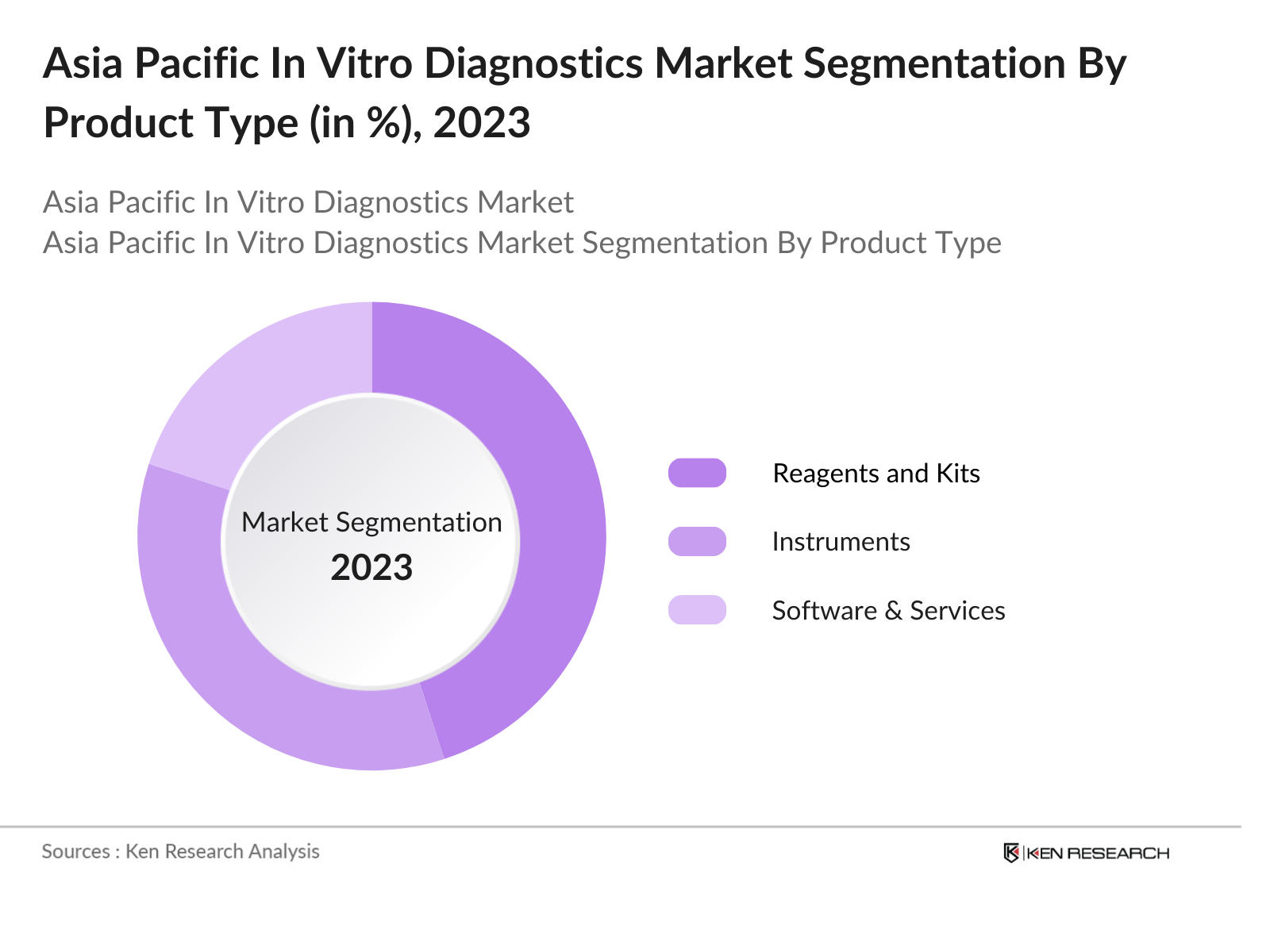
By Product Type: The Asia Pacific IVD market is segmented by product type into reagents and kits, instruments, and software and services. Recently, reagents and kits have a dominant market share under the segmentation product type, owing to the widespread need for diagnostic testing across various applications, particularly in infectious disease testing and oncology. The increasing frequency of routine diagnostic tests, combined with the COVID-19 pandemic, has driven the demand for reagents and kits, as they are essential for conducting diagnostic procedures across laboratories and point-of-care settings.
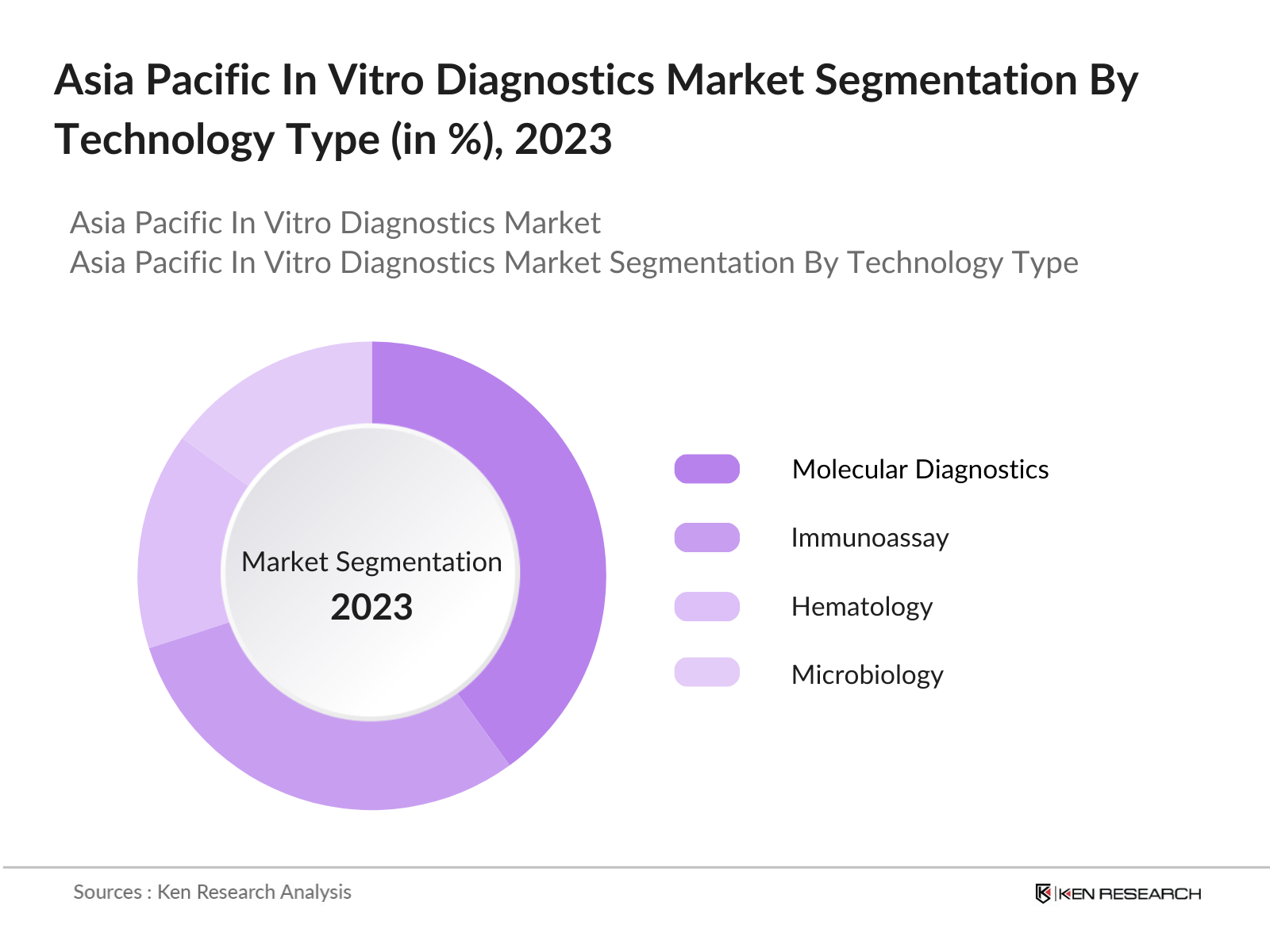
By Technology: The Asia Pacific IVD market is also segmented by technology into molecular diagnostics, immunoassay, hematology, and microbiology. Molecular diagnostics leads in market share due to its role in diagnosing complex diseases, including cancer and genetic disorders. Its high specificity and sensitivity have made it the preferred method for detecting infectious diseases like COVID-19, tuberculosis, and influenza, contributing to its dominance. Furthermore, advancements in next-generation sequencing (NGS) and polymerase chain reaction (PCR) technologies are bolstering this segments growth.
The Asia Pacific IVD market is highly competitive, dominated by both local players and international giants. The market features a mix of established multinational companies and emerging regional manufacturers. The major players are engaged in product innovation, strategic partnerships, and acquisitions to maintain their competitive edge. Companies like Roche Diagnostics and Abbott Laboratories dominate due to their expansive product portfolios and strong distribution networks, while regional players in China and India focus on cost-effective solutions to cater to the rising demand for diagnostics in their respective countries.
|
Company |
Establishment Year |
Headquarters |
No. of Employees |
R&D Expenditure |
Revenue (USD Bn) |
Key Products |
Market Strategy |
Recent Initiatives |
|
Roche Diagnostics |
1896 |
Switzerland |
_ |
_ |
_ |
_ |
_ |
_ |
|
Abbott Laboratories |
1888 |
USA |
_ |
_ |
_ |
_ |
_ |
_ |
|
Thermo Fisher Scientific |
1956 |
USA |
_ |
_ |
_ |
_ |
_ |
_ |
|
Siemens Healthineers |
1847 |
Germany |
_ |
_ |
_ |
_ |
_ |
_ |
|
Sysmex Corporation |
1968 |
Japan |
_ |
_ |
_ |
_ |
_ |
_ |
Over the next five years, the Asia Pacific In Vitro Diagnostics (IVD) market is expected to witness robust growth driven by continuous advancements in molecular diagnostics, increased demand for personalized medicine, and growing government investments in healthcare infrastructure. The rise of telemedicine and home diagnostics is also anticipated to contribute to the markets future expansion. Additionally, as the region continues to combat the increasing prevalence of chronic and infectious diseases, the demand for advanced diagnostic solutions will surge, positioning the market for sustained growth.
|
By Product Type |
Reagents and Kits Instruments Software and Services |
|
By Technology |
Molecular Diagnostics Immunoassay Hematology Microbiology |
|
By Application |
Infectious Disease Testing Oncology Diagnostics Cardiology Diagnostics Diabetes Management |
|
By End User |
Hospitals and Clinics Diagnostic Laboratories Research Institutes Homecare Settings |
|
By Region |
China Japan India Australia Southeast Asia |
1.1. Definition and Scope
1.2. Market Taxonomy
1.3. Market Growth Rate
1.4. Market Segmentation Overview
2.1. Historical Market Size
2.2. Year-On-Year Growth Analysis
2.3. Key Market Developments and Milestones
3.1. Growth Drivers
3.1.1. Increasing prevalence of chronic diseases
3.1.2. Rising demand for point-of-care diagnostics
3.1.3. Advancements in molecular diagnostics
3.1.4. Increasing healthcare expenditure
3.2. Market Challenges
3.2.1. Regulatory complexities
3.2.2. High costs of advanced diagnostic tools
3.2.3. Limited accessibility in rural areas
3.3. Opportunities
3.3.1. Expansion of diagnostics in emerging economies
3.3.2. Growth of personalized medicine
3.3.3. Integration of AI and machine learning in diagnostics
3.4. Trends
3.4.1. Shift towards home diagnostics
3.4.2. Increased use of molecular diagnostics for infectious diseases
3.4.3. Growth in non-invasive prenatal testing
3.5. Government Regulations
3.5.1. IVD regulations in key Asia-Pacific countries
3.5.2. Reimbursement policies
3.5.3. Harmonization of regulations
3.6. SWOT Analysis
3.7. Stake Ecosystem
3.8. Porters Five Forces
3.9. Competition Ecosystem
4.1. By Product Type (In Value %)
4.1.1. Reagents and Kits
4.1.2. Instruments
4.1.3. Software and Services
4.2. By Technology (In Value %)
4.2.1. Molecular Diagnostics
4.2.2. Immunoassay
4.2.3. Hematology
4.2.4. Microbiology
4.3. By Application (In Value %)
4.3.1. Infectious Disease Testing
4.3.2. Oncology Diagnostics
4.3.3. Cardiology Diagnostics
4.3.4. Diabetes Management
4.4. By End User (In Value %)
4.4.1. Hospitals and Clinics
4.4.2. Diagnostic Laboratories
4.4.3. Research Institutes
4.4.4. Homecare Settings
4.5. By Region (In Value %)
4.5.1. China
4.5.2. Japan
4.5.3. India
4.5.4. Australia
4.5.5. Southeast Asia
5.1. Detailed Profiles of Major Competitors
5.1.1. Abbott Laboratories
5.1.2. Roche Diagnostics
5.1.3. Thermo Fisher Scientific
5.1.4. Siemens Healthineers
5.1.5. Bio-Rad Laboratories
5.1.6. Sysmex Corporation
5.1.7. Danaher Corporation
5.1.8. Becton Dickinson & Company
5.1.9. Qiagen N.V.
5.1.10. Agilent Technologies
5.1.11. PerkinElmer Inc.
5.1.12. Biomerieux SA
5.1.13. Illumina Inc.
5.1.14. Hologic Inc.
5.1.15. Ortho Clinical Diagnostics
5.2. Cross Comparison Parameters (No. of Employees, Headquarters, Revenue, Product Portfolio, R&D Spend, Global Presence, Market Share, Partnerships)
5.3. Market Share Analysis
5.4. Strategic Initiatives
5.5. Mergers and Acquisitions
5.6. Investment Analysis
5.7. Venture Capital Funding
5.8. Government Grants
5.9. Private Equity Investments
6.1. IVD Regulations and Guidelines
6.2. Approval Processes in Major Markets (China, Japan, India, Australia)
6.3. Country-Specific Compliance Requirements
6.4. Certification and Licensing Processes
7.1. Future Market Size Projections
7.2. Key Factors Driving Future Market Growth
8.1. By Product Type (In Value %)
8.2. By Technology (In Value %)
8.3. By Application (In Value %)
8.4. By End User (In Value %)
8.5. By Region (In Value %)
9.1. TAM/SAM/SOM Analysis
9.2. Customer Cohort Analysis
9.3. Marketing Initiatives
9.4. White Space Opportunity Analysis
The first step involves mapping out all major stakeholders in the Asia Pacific IVD market. This includes comprehensive desk research using both secondary and proprietary databases to gather a holistic view of the market. We aim to pinpoint the key variables influencing market dynamics, such as government regulations, healthcare expenditures, and diagnostic trends.
We collect and analyze historical data from various sources to assess the penetration of diagnostic tools, revenue generation, and service quality across the Asia Pacific market. This data is compiled and processed to ensure it reflects the latest market conditions.
Our research team formulates market hypotheses that are validated through interviews with industry experts, including healthcare professionals, diagnostic companies, and market regulators. These consultations provide direct insights into market trends, operational challenges, and growth opportunities.
In the final stage, we synthesize the data collected from both primary and secondary sources. The findings are cross-validated with major players in the market, ensuring an accurate, detailed, and comprehensive analysis of the Asia Pacific IVD market. This ensures that our report provides actionable insights for business decision-makers.
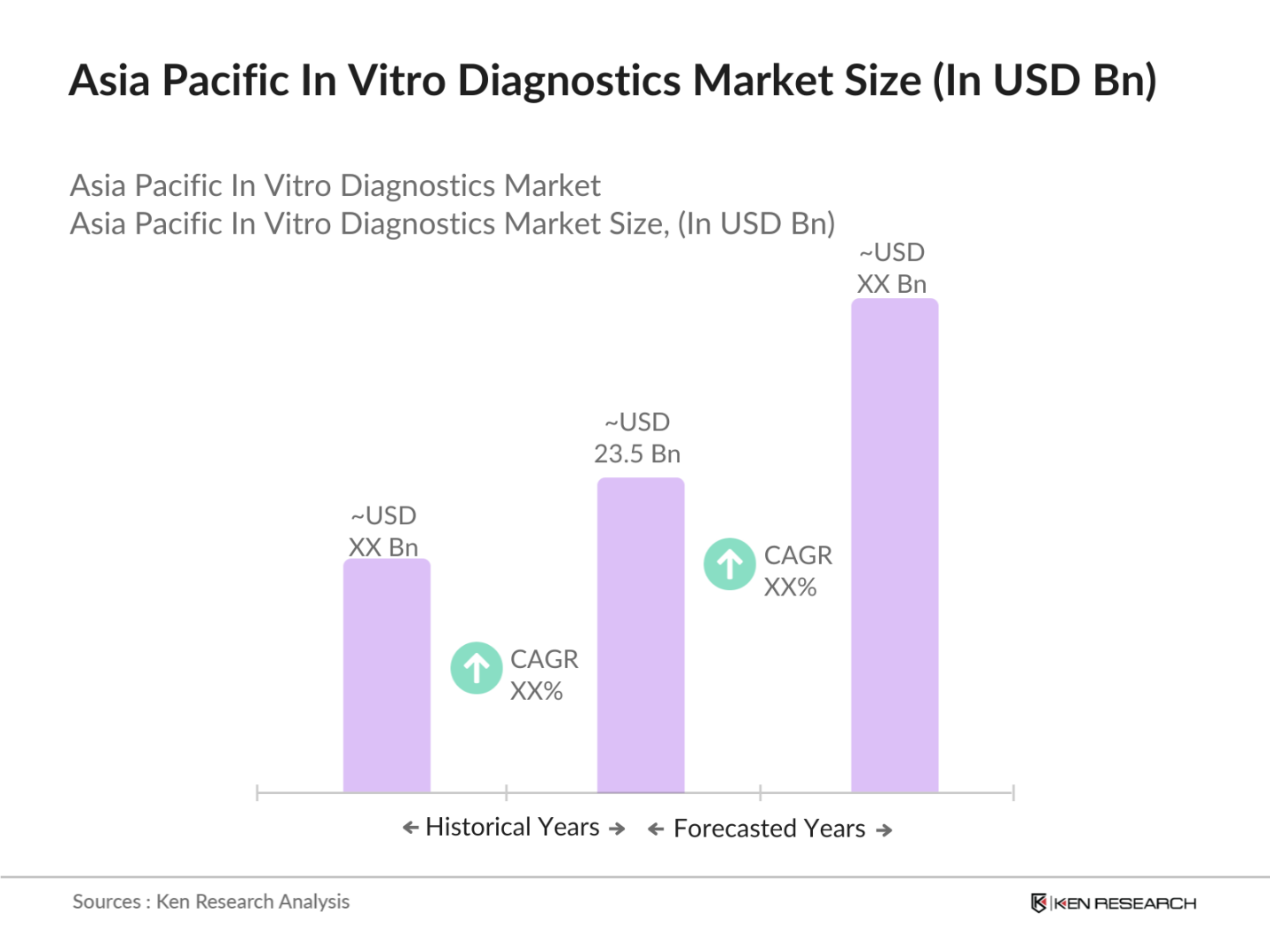
The Asia Pacific IVD market is valued at USD 23.5 billion, driven by rising demand for point-of-care diagnostics and advancements in molecular diagnostics.
Key challenges include regulatory complexities, the high cost of advanced diagnostic tools, and limited accessibility in rural regions.
Major players include Abbott Laboratories, Roche Diagnostics, Thermo Fisher Scientific, Siemens Healthineers, and Sysmex Corporation.
Growth drivers include an increasing prevalence of chronic diseases, rising demand for personalized medicine, and technological advancements in diagnostics.
China, Japan, and India dominate due to large populations, strong healthcare systems, and significant government support for diagnostic innovations.

What makes us stand out is that our consultants follows Robust, Refine and Result (RRR) methodology. i.e. Robust for clear definitions, approaches and sanity checking, Refine for differentiating respondents facts and opinions and Result for presenting data with story

We have set a benchmark in the industry by offering our clients with syndicated and customized market research reports featuring coverage of entire market as well as meticulous research and analyst insights.

While we don't replace traditional research, we flip the method upside down. Our dual approach of Top Bottom & Bottom Top ensures quality deliverable by not just verifying company fundamentals but also looking at the sector and macroeconomic factors.

With one step in the future, our research team constantly tries to show you the bigger picture. We help with some of the tough questions you may encounter along the way: How is the industry positioned? Best marketing channel? KPI's of competitors? By aligning every element, we help maximize success.

Our report gives you instant access to the answers and sources that other companies might choose to hide. We elaborate each steps of research methodology we have used and showcase you the sample size to earn your trust.

If you need any support, we are here! We pride ourselves on universe strength, data quality, and quick, friendly, and professional service.