
Asia Pacific Interventional Cardiology Market Outlook to 2030
Region:Asia
Author(s):Meenakshi Bisht
Product Code:KROD9500
Region:Asia
Author(s):Meenakshi Bisht
Product Code:KROD9500
December 2024
80
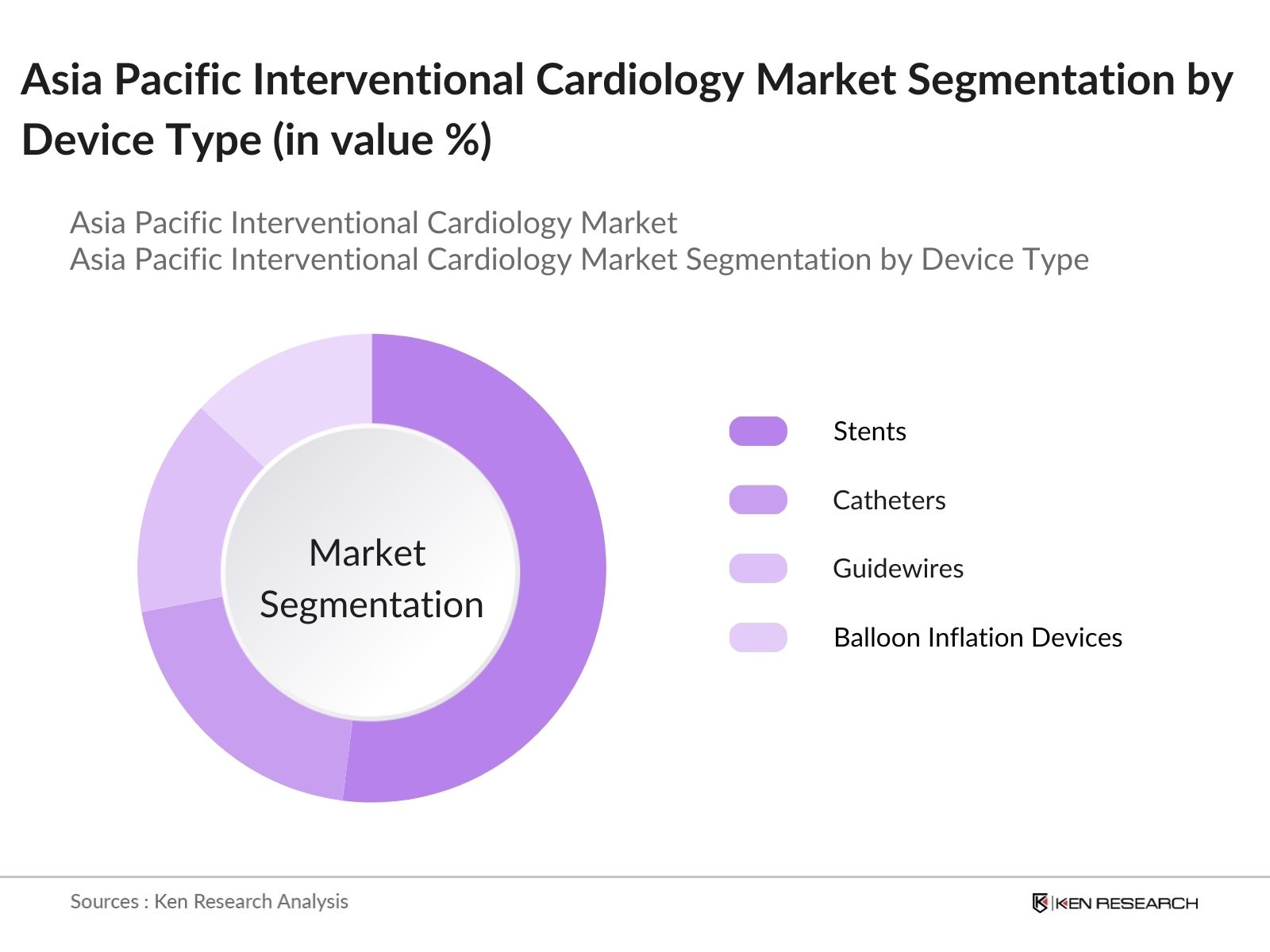
By Device Type: The Asia Pacific Interventional Cardiology market is segmented by device type into stents, catheters, guidewires, and balloon inflation devices. The Stents have been dominating the device type segmentation due to their critical role in treating narrowed arteries, thus preventing heart attacks and other cardiac complications. Advanced stents, such as drug-eluting stents (DES), are in high demand because of their ability to reduce the risk of restenosis. Technological advancements in stent designs and materials, coupled with strong clinical outcomes, have cemented their place as the leading device category.
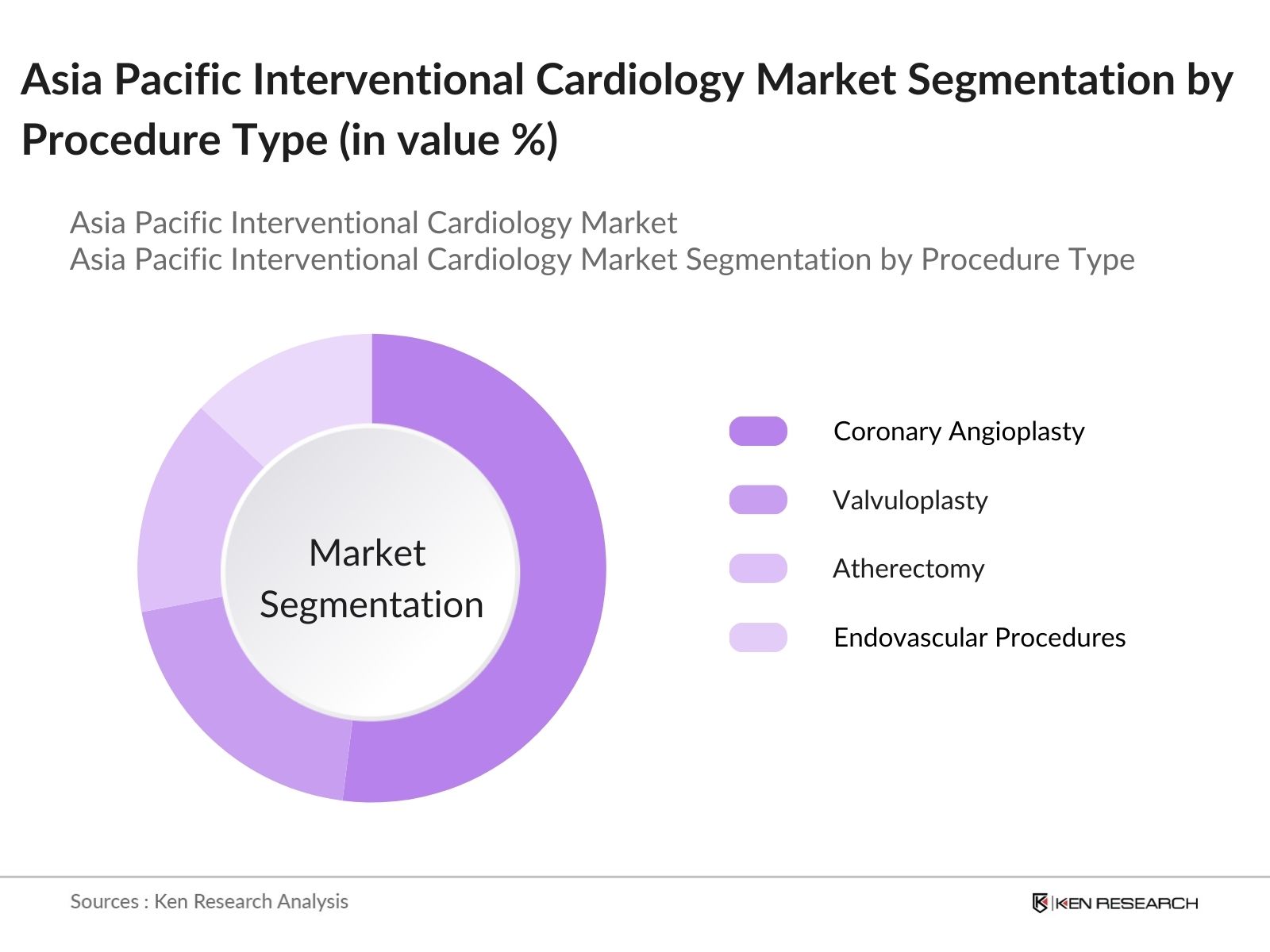
By Procedure Type: The Asia Pacific Interventional Cardiology market is segmented by procedure type into coronary angioplasty, valvuloplasty, atherectomy, and endovascular procedures. Coronary angioplasty is the dominant procedure type, accounting for the majority of interventional procedures in the region. This dominance is attributed to the growing incidence of coronary artery diseases, particularly in aging populations. Coronary angioplasty is minimally invasive, reducing hospital stays and recovery times, making it a preferred choice for both patients and healthcare providers.
The market is dominated by major global and regional players. These companies have been driving innovation, engaging in partnerships, and expanding their geographical presence to strengthen their foothold in the market. The competitive landscape highlights the importance of technological advancements, clinical success rates, and geographical diversification in maintaining market leadership.
|
Company Name |
Establishment Year |
Headquarters |
Specialty |
Annual Revenue (USD) |
Key Products |
R&D Investment |
Employee Strength |
Global Presence |
Recent M&A Activity |
|
Boston Scientific Corporation |
1979 |
Marlborough, USA |
|||||||
|
Medtronic PLC |
1949 |
Dublin, Ireland |
|||||||
|
Abbott Laboratories |
1888 |
Illinois, USA |
|||||||
|
Terumo Corporation |
1921 |
Tokyo, Japan |
|||||||
|
Biosensors International Group |
1990 |
Singapore |
Over the next five years, the Asia Pacific Interventional Cardiology market is expected to see significant growth driven by technological advancements in interventional procedures, growing government initiatives aimed at reducing the burden of cardiovascular diseases, and increasing patient awareness. The demand for minimally invasive procedures is likely to fuel the growth of advanced products such as bioresorbable stents and drug-coated balloons. Furthermore, expanding healthcare access in developing economies and increased investment in research and development (R&D) are poised to elevate market growth.
|
Device Type |
Stents Catheters Guidewires Balloon Inflation Devices |
|
Procedure |
Coronary Angioplasty Valvuloplasty Atherectomy Endovascular Procedures |
|
End-User |
Hospitals Ambulatory Surgical Centers Cardiac Catheterization Labs |
|
Disease Type |
Coronary Artery Disease (CAD) Heart Valve Disease Peripheral Artery Disease (PAD) |
|
Region |
China India Japan Australia South Korea |
1.1. Definition and Scope
1.2. Market Taxonomy
1.3. Market Growth Rate (Procedure Volume, Device Penetration, Hospital Adoption)
1.4. Market Segmentation Overview
2.1. Historical Market Size (Hospital Adoption Rates, Patient Pool)
2.2. Year-On-Year Growth Analysis (Interventional Procedures, Cardiovascular Disease Incidence)
2.3. Key Market Developments and Milestones (New Device Launches, Regulatory Approvals)
3.1. Growth Drivers
3.1.1. Aging Population
3.1.2. Increased Incidence of Cardiovascular Diseases
3.1.3. Technological Advancements in Imaging & Catheter Systems
3.1.4. Government Health Initiatives
3.2. Market Challenges
3.2.1. High Cost of Interventional Procedures
3.2.2. Limited Skilled Workforce for Complex Procedures
3.2.3. Stringent Regulatory Pathways
3.3. Opportunities
3.3.1. Expansion in Emerging Markets (Access to Affordable Care)
3.3.2. Advancements in Robotic-Assisted Interventions
3.3.3. Public-Private Partnerships in Healthcare
3.4. Trends
3.4.1. Increasing Use of Drug-Eluting Stents (DES)
3.4.2. Growth in Minimally Invasive Procedures
3.4.3. Emergence of Bioabsorbable Stents
3.5. Government Regulation
3.5.1. Asia-Pacific Regional Health Policy
3.5.2. FDA and CE Marking for Medical Devices
3.5.3. National Health Insurance Programs
3.6. SWOT Analysis
3.7. Stakeholder Ecosystem (Hospitals, Device Manufacturers, Insurance Providers)
3.8. Porters Five Forces Analysis (Buyer Power, Supplier Power, Industry Rivalry, etc.)
3.9. Competitive Ecosystem
4.1. By Device Type (In Value %)
4.1.1. Stents
4.1.2. Catheters
4.1.3. Guidewires
4.1.4. Balloon Inflation Devices
4.2. By Procedure (In Value %)
4.2.1. Coronary Angioplasty
4.2.2. Valvuloplasty
4.2.3. Atherectomy
4.2.4. Endovascular Procedures
4.3. By End-User (In Value %)
4.3.1. Hospitals
4.3.2. Ambulatory Surgical Centers
4.3.3. Cardiac Catheterization Laboratories
4.4. By Disease Type (In Value %)
4.4.1. Coronary Artery Disease (CAD)
4.4.2. Heart Valve Disease
4.4.3. Peripheral Artery Disease (PAD)
4.5. By Country (In Value %)
4.5.1. China
4.5.2. India
4.5.3. Japan
4.5.4. Australia
4.5.5. South Korea
5.1. Detailed Profiles of Major Companies
5.1.1. Boston Scientific Corporation
5.1.2. Medtronic PLC
5.1.3. Abbott Laboratories
5.1.4. Terumo Corporation
5.1.5. B. Braun Melsungen AG
5.1.6. Cardinal Health
5.1.7. Asahi Intecc Co., Ltd.
5.1.8. Biosensors International Group, Ltd.
5.1.9. Biotronik SE & Co. KG
5.1.10. MicroPort Scientific Corporation
5.1.11. C. R. Bard, Inc.
5.1.12. Cook Medical Incorporated
5.1.13. SMT (Sahajanand Medical Technologies)
5.1.14. Lepu Medical Technology (Beijing) Co., Ltd.
5.1.15. W. L. Gore & Associates, Inc.
5.2. Cross Comparison Parameters (Market Share, Product Portfolio, Geographic Presence, Technological Expertise, Regulatory Approvals, Revenue, Employee Strength, Strategic Collaborations)
5.3. Market Share Analysis
5.4. Strategic Initiatives
5.5. Mergers and Acquisitions
5.6. Investment Analysis
5.7. Venture Capital Funding
5.8. Private Equity Investments
6.1. Compliance Requirements for Medical Devices
6.2. Healthcare Access Regulations
6.3. Certification Processes (ISO, CE Marking, FDA Approvals)
7.1. Future Market Size Projections
7.2. Key Factors Driving Future Market Growth (Rising Adoption, Technological Advancements, Increased Patient Pool)
8.1. By Device Type
8.2. By Procedure
8.3. By End-User
8.4. By Disease Type
8.5. By Country
9.1. TAM/SAM/SOM Analysis
9.2. Customer Cohort Analysis
9.3. Marketing Initiatives
9.4. White Space Opportunity Analysis
Disclaimer Contact UsIn this phase, we identified key market variables, such as the number of interventional procedures, device penetration rates, and disease prevalence, through extensive desk research. Our proprietary databases and secondary sources, including market studies and government reports, provided crucial insights for constructing a market map.
The data collected were analyzed to understand the past market trends, device adoption rates, and evolving procedure techniques. We performed both top-down and bottom-up analyses to verify revenue estimates and the adoption of specific devices, such as drug-eluting stents.
In this step, we consulted with leading cardiologists, healthcare providers, and device manufacturers through interviews to validate our findings. These interviews provided practical insights into market trends and evolving technological preferences.
Finally, we synthesized all the collected data and expert insights to produce a comprehensive report on the Asia Pacific Interventional Cardiology Market. The final output was thoroughly reviewed for accuracy, reliability, and completeness before being presented to the target audience.
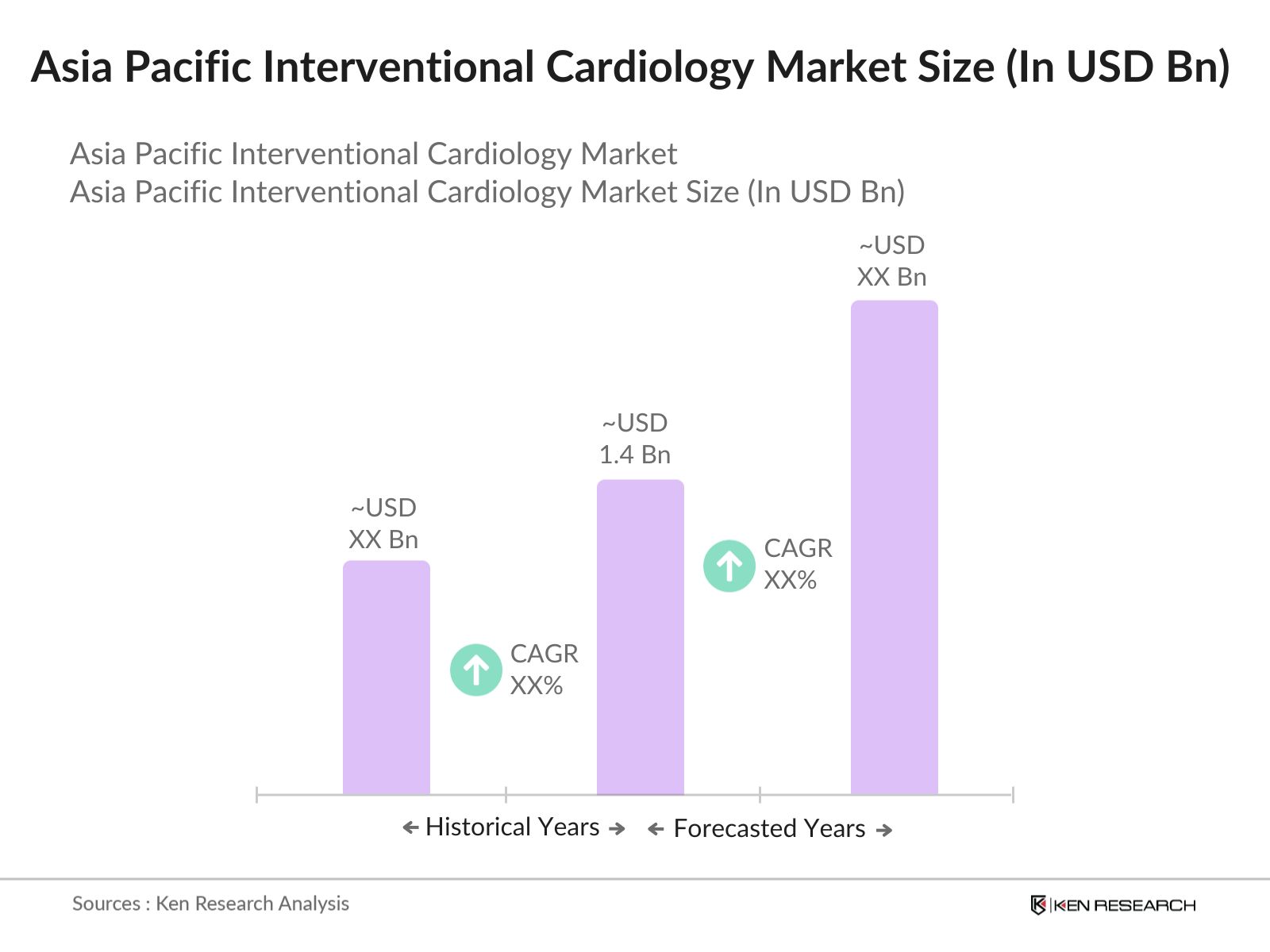
The Asia Pacific Interventional Cardiology Market is valued at USD 1.4 billion, driven by the increasing prevalence of cardiovascular diseases and technological advancements in interventional procedures.
Challenges in the Asia Pacific Interventional Cardiology Market include high procedure costs, a shortage of skilled professionals, and stringent regulatory processes for medical devices.
Key players in the Asia Pacific Interventional Cardiology Market include Boston Scientific, Medtronic, Abbott Laboratories, Terumo Corporation, and Biosensors International Group. These companies dominate due to their extensive product portfolios and strong R&D investments.
The Asia Pacific Interventional Cardiology Market growth is driven by an aging population, increased cardiovascular disease cases, and the rising adoption of minimally invasive technologies in healthcare settings.

What makes us stand out is that our consultants follows Robust, Refine and Result (RRR) methodology. i.e. Robust for clear definitions, approaches and sanity checking, Refine for differentiating respondents facts and opinions and Result for presenting data with story

We have set a benchmark in the industry by offering our clients with syndicated and customized market research reports featuring coverage of entire market as well as meticulous research and analyst insights.

While we don't replace traditional research, we flip the method upside down. Our dual approach of Top Bottom & Bottom Top ensures quality deliverable by not just verifying company fundamentals but also looking at the sector and macroeconomic factors.

With one step in the future, our research team constantly tries to show you the bigger picture. We help with some of the tough questions you may encounter along the way: How is the industry positioned? Best marketing channel? KPI's of competitors? By aligning every element, we help maximize success.

Our report gives you instant access to the answers and sources that other companies might choose to hide. We elaborate each steps of research methodology we have used and showcase you the sample size to earn your trust.

If you need any support, we are here! We pride ourselves on universe strength, data quality, and quick, friendly, and professional service.