















Asia Pacific Ketone Meter Market Outlook to 2030
Region:Asia
Author(s):Shreya Garg
Product Code:KROD8982
December 2024
95
About the Report
Asia Pacific Ketone Meter Market Overview
- The Asia Pacific Ketone Meter Market is valued at USD 68.5 billion, driven by the increasing adoption of ketogenic diets and heightened interest in self-monitoring health devices. This growth is fueled by consumer awareness around metabolic health and fitness, paired with the rising prevalence of diabetes and obesity across the region. As individuals seek accurate tools for monitoring ketone levels, the demand for high-precision, portable ketone meters have surged, supported by innovations from established manufacturers.
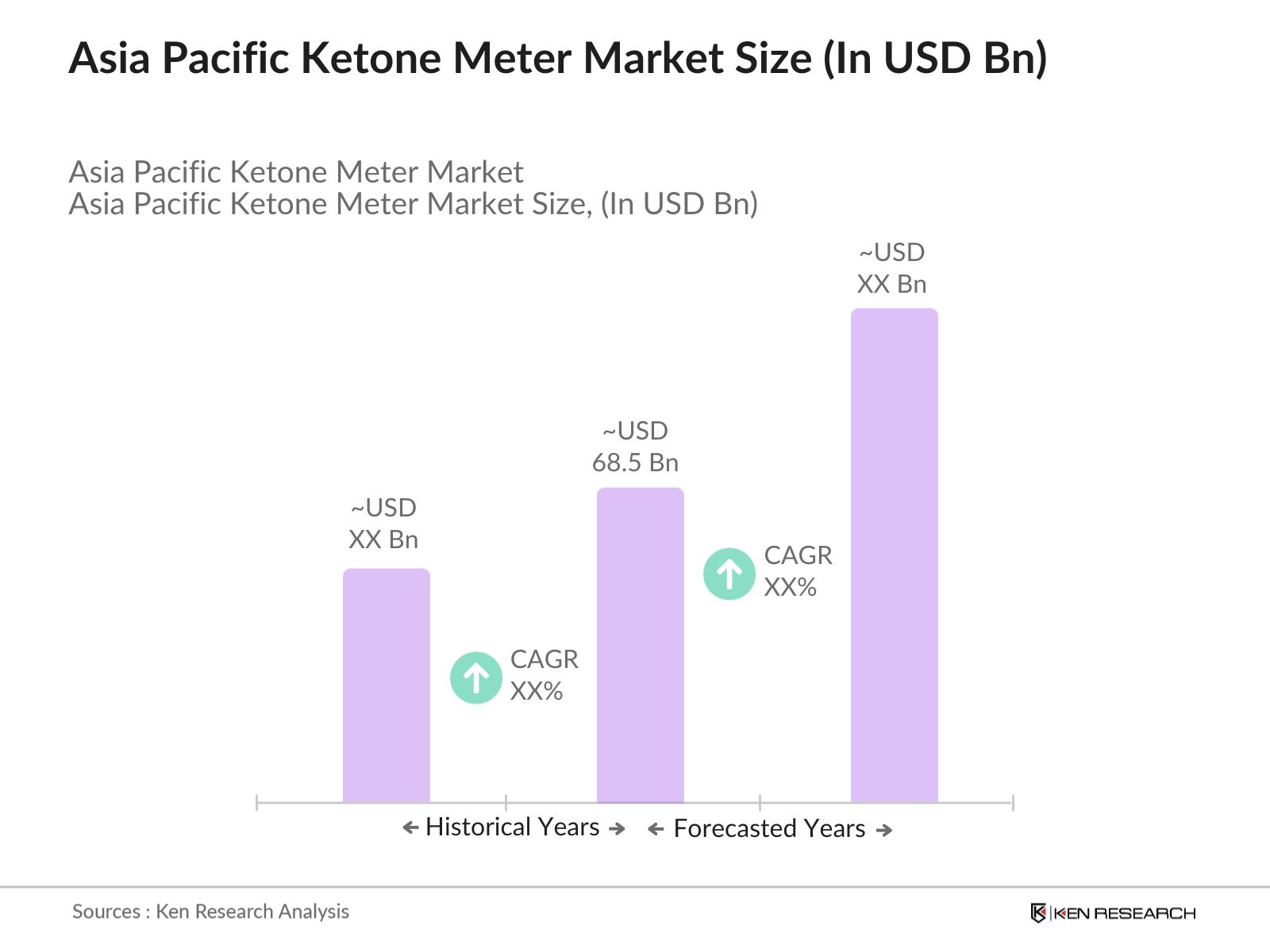
- China, Japan, and South Korea are among the dominant markets in the Asia Pacific Ketone Meter Market. China leads due to its vast population base and increasing consumer interest in preventive healthcare tools. Japan follows closely, with strong health technology integration and a tech-savvy demographic. South Koreas dominance is attributed to its highly developed healthcare infrastructure and strong market penetration by international brands in digital health and wellness.
- The import and distribution of ketone meters in the Asia Pacific region are regulated to ensure consumer safety. In 2023, the Chinese government imposed strict quality checks on health monitoring imports, including ketone meters, as documented by the China Customs Agency. Such measures ensure that only certified devices reach the market, maintaining product quality and consumer trust, but they also create hurdles for international brands looking to enter the market.
Asia Pacific Ketone Meter Market Segmentation
By Product Type: The Market is segmented by product type into blood ketone meters, breath ketone meters, and urine ketone meters. Blood ketone meters dominate this segmentation as they provide the most accurate ketone measurements, which is particularly crucial for individuals managing health conditions like diabetes and for those strictly following ketogenic diets. Popular brands offering highly accurate readings with compact designs have strengthened this segment's position. 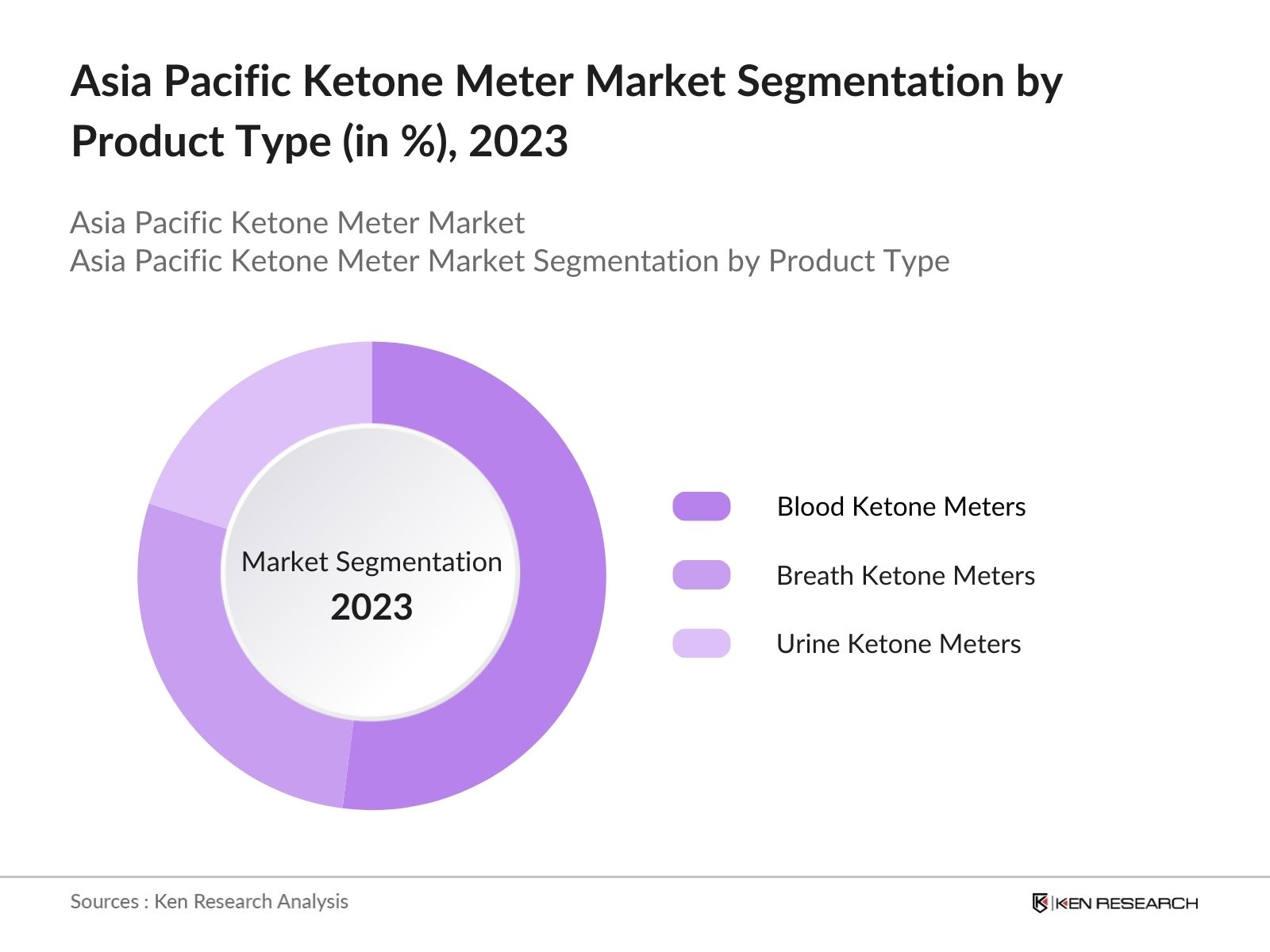
By Application: The market is segmented by application into home care, clinical settings, and athletic performance. The home care segment holds the largest market share due to the increasing popularity of at-home health monitoring. The convenience of tracking health metrics privately, without frequent clinical visits, appeals to a broad user base including fitness enthusiasts and those managing long-term health conditions. 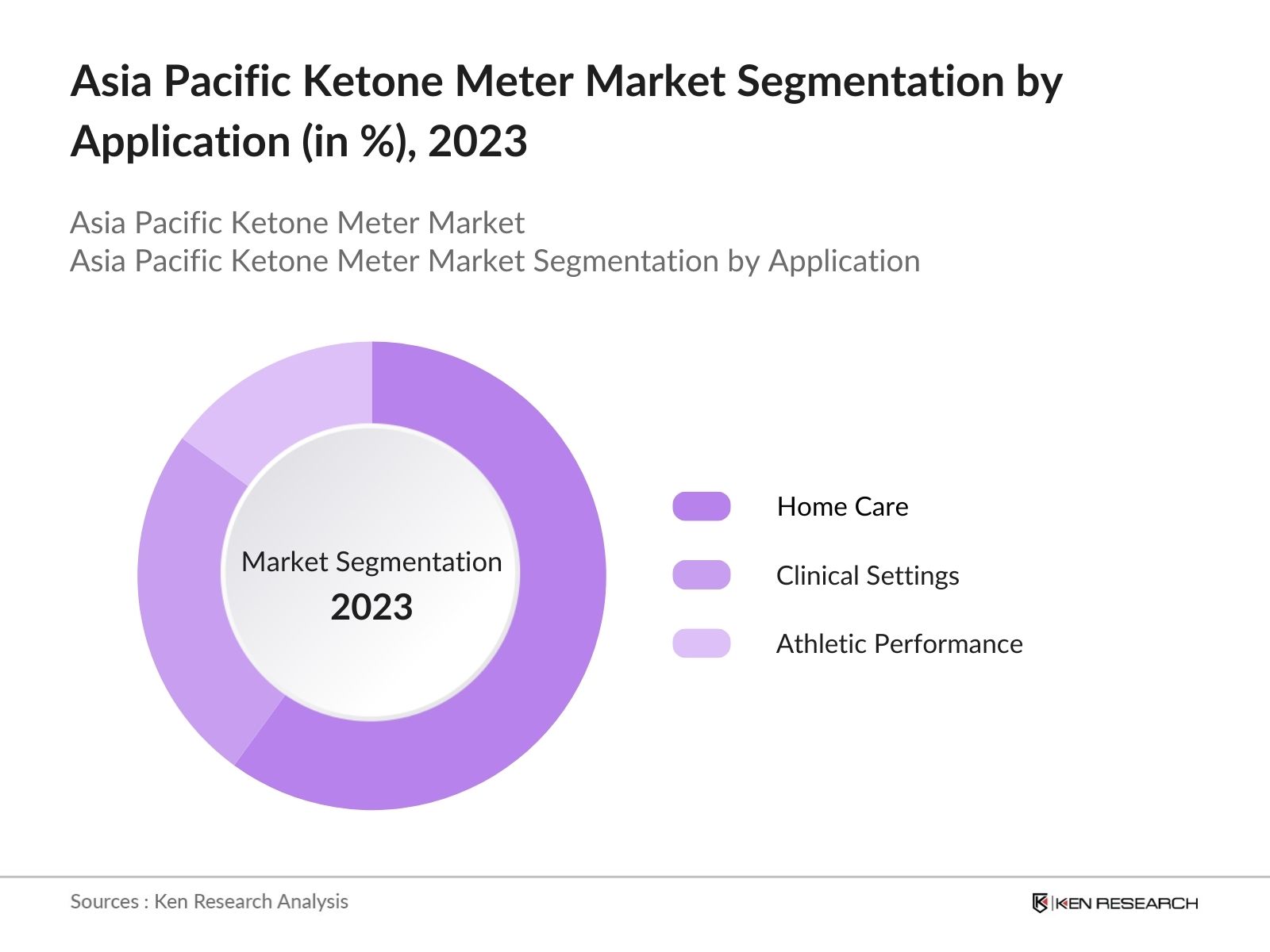
Asia Pacific Ketone Meter Market Competitive Landscape
The Asia Pacific Ketone Meter Market is led by key players like Abbott Laboratories, Keto-Mojo Inc., and Nova Biomedical, alongside regional competitors. These companies contribute to a consolidated market where innovative product offerings and technological advancements are highly competitive factors. The robust distribution networks of these companies allow them to maintain strong market shares.
|
Company Name |
Establishment Year |
Headquarters |
Market Position |
R&D Investments |
Revenue (USD Mn) |
Distribution Reach |
Customer Ratings |
Product Portfolio |
|
Abbott Laboratories |
1888 |
United States |
||||||
|
Keto-Mojo Inc. |
2017 |
United States |
||||||
|
Nova Biomedical |
1976 |
United States |
||||||
|
ForaCare Inc. |
1992 |
Switzerland |
||||||
|
SD Biosensor Inc. |
2010 |
South Korea |
Asia Pacific Ketone Meter Industry Analysis
Growth Drivers
- Rising Health Consciousness: The rising health consciousness across the Asia Pacific region is fostering demand for ketone meters as consumers focus on metabolic health. In 2023, the World Health Organization (WHO) reported a 25% increase in adult obesity rates compared to 2020, influencing many to adopt monitoring tools for personal health, such as ketone meters. Health tracking devices, including ketone meters, are increasingly popular in countries like Japan and South Korea, where adult obesity has prompted significant health expenditures. In South Korea alone, healthcare costs related to lifestyle diseases rose by 13% in 2023, creating a fertile market for devices that aid in proactive health management.
- Increase in Ketogenic Diet Popularity: The ketogenic diet has gained widespread adoption, especially in urban centers within Asia Pacific, where diet-related diseases have risen. In Australia, a report from the Australian Institute of Health and Welfare in 2023 revealed that over 1 million adults are exploring low-carbohydrate diets, including ketogenic approaches. This surge has spurred demand for ketone meters, as individuals seek to monitor ketone levels accurately. The influence of social media and digital health platforms has also amplified interest, making ketone monitoring a vital tool for tracking dietary effects.
- Expansion of Digital Health Initiatives: The Asia Pacific region is witnessing substantial digital health expansion, with governments supporting remote health tools, including ketone meters. The WHO Regional Office for the Western Pacific highlights that nations like China and India allocated over $5 billion combined in 2022-2023 towards telehealth and digital health infrastructures, boosting the accessibility of ketone meters and related health monitoring devices. Such investments have facilitated wide adoption, especially in areas with limited access to traditional healthcare, underlining a sustained demand for ketone meters across varied demographics.
Market Challenges
- High Cost of Advanced Ketone Meters: Advanced ketone meters, particularly those with integration capabilities for mobile applications, are priced out of reach for many consumers in Asia Pacifics emerging markets. In 2023, the WHO documented a substantial gap in healthcare spending between high-income and low-income regions in Asia Pacific, with spending per capita at only $42 in Southeast Asia compared to $322 in East Asia. These disparities hinder widespread adoption, as individuals in lower-income areas may forgo these devices due to prohibitive costs.
- Lack of Awareness in Emerging Markets: Awareness about the benefits of ketone monitoring remains low in emerging Asia Pacific markets, especially in rural areas. Data from the Asian Development Bank in 2023 indicates that health literacy remains a concern, with only 38% of adults in developing Southeast Asian countries familiar with personal health monitoring tools. This knowledge gap limits market growth in these regions, requiring efforts to educate and promote the advantages of ketone meters for preventative health.
Asia Pacific Ketone Meter Market Future Outlook
The Asia Pacific Ketone Meter Market is expected to experience steady growth, driven by continuous advancements in health monitoring technology and increasing consumer demand for at-home diagnostic tools. As the awareness around metabolic health grows, the market is set to benefit from both new entrants and existing players expanding their offerings.
Future Market Opportunities
- Growth in E-Commerce Channels: E-commerce platforms have surged in the Asia Pacific, providing new avenues for ketone meter distribution. In 2023, e-commerce contributed $2.5 trillion to the Asia Pacific economy, with digital health products becoming one of the fastest-growing categories, according to the Asia-Pacific Economic Cooperation (APEC). This growth enables manufacturers to reach a broader audience, catering to consumers in both urban and rural settings. Cross-border e-commerce also facilitates the import of international ketone meter brands, further broadening consumer choice and accessibility.
- Demand for Personal Health Monitoring Devices: Personal health monitoring is on the rise across Asia Pacific, fueled by increasing self-care awareness. The WHO reported a 35% increase in health device purchases in 2023 among adults aged 25-45, especially in urbanized areas of China and India. This trend highlights a growing market for ketone meters, particularly among individuals adopting a proactive approach to personal health. The demand for continuous, at-home health monitoring will likely sustain the need for ketone meters.
Scope of the Report
|
Product Type |
Breath Ketone Meters |
|
End-User |
Home Care |
|
Distribution Channel |
Online Channels |
|
Application |
Ketogenic Diet Monitoring |
|
Region |
China |
Products
Key Target Audience
Investor and Venture Capitalist Firms
Government and Regulatory Bodies (Ministry of Health, Asia Pacific Medical Device Regulation Authority)
Healthcare Device Manufacturers
Fitness and Nutrition Industry Leaders
Digital Health Startups
Banks and Financial Institutes
Home Healthcare Providers
Pharmaceutical Retail Chains
Wearable and Health Tech Innovators
Companies
Major Players
Abbott Laboratories
Keto-Mojo Inc.
Nova Biomedical
ForaCare Inc.
SD Biosensor Inc.
Bayer Healthcare LLC
EKF Diagnostics
TaiDoc Technology Corporation
KETOSCAN Co., Ltd.
OSANG Healthcare Co., Ltd.
GlucoRx Ltd.
iHealth Labs, Inc.
LUX Metering
KETOSCAN
ForaCare Suisse AG
Table of Contents
Asia Pacific Ketone Meter Market Overview
1.1. Definition and Scope
1.2. Market Taxonomy
1.3. Market Growth Rate
1.4. Market Segmentation Overview
Asia Pacific Ketone Meter Market Size (in USD Mn)
2.1. Historical Market Size
2.2. Year-On-Year Growth Analysis
2.3. Key Market Developments and Milestones
Asia Pacific Ketone Meter Market Analysis
3.1. Growth Drivers
3.1.1. Rising Health Consciousness
3.1.2. Increase in Ketogenic Diet Popularity
3.1.3. Technological Advancements in Ketone Monitoring Devices
3.1.4. Expansion of Digital Health Initiatives
3.2. Market Challenges
3.2.1. High Cost of Advanced Ketone Meters
3.2.2. Lack of Awareness in Emerging Markets
3.2.3. Accuracy Variability Among Brands
3.3. Opportunities
3.3.1. Growth in E-Commerce Channels
3.3.2. Demand for Personal Health Monitoring Devices
3.3.3. Expanding Applications in Clinical Diagnosis
3.4. Trends
3.4.1. Integration with Mobile Applications
3.4.2. Increasing Focus on Precision Health
3.4.3. Wearable Ketone Tracking Devices
3.5. Government Regulations
3.5.1. Import and Distribution Regulations
3.5.2. Medical Device Certification Requirements
3.5.3. Privacy and Data Security Standards for Health Data
3.6. SWOT Analysis
3.7. Value Chain Analysis
3.8. Porters Five Forces
3.9. Competitive Ecosystem
Asia Pacific Ketone Meter Market Segmentation
4.1. By Product Type (in Value %)
4.1.1. Breath Ketone Meters
4.1.2. Blood Ketone Meters
4.1.3. Urine Ketone Meters
4.2. By End-User (in Value %)
4.2.1. Home Care
4.2.2. Healthcare Providers
4.2.3. Research Laboratories
4.3. By Distribution Channel (in Value %)
4.3.1. Online Channels
4.3.2. Offline Retailers
4.3.3. Pharmacies
4.4. By Application (in Value %)
4.4.1. Ketogenic Diet Monitoring
4.4.2. Diabetic Ketone Monitoring
4.4.3. Athletic and Fitness Applications
4.5. By Region (in Value %)
4.5.1. China
4.5.2. Japan
4.5.3. South Korea
4.5.4. India
4.5.5. Australia
Asia Pacific Ketone Meter Market Competitive Analysis
5.1. Detailed Profiles of Major Companies
5.1.1. Abbott Laboratories
5.1.2. Keto-Mojo Inc.
5.1.3. Nova Biomedical
5.1.4. Bayer Healthcare LLC
5.1.5. EKF Diagnostics
5.1.6. TaiDoc Technology Corporation
5.1.7. ForaCare Inc.
5.1.8. KETOSCAN Co., Ltd.
5.1.9. OSANG Healthcare Co., Ltd.
5.1.10. GlucoRx Ltd.
5.1.11. iHealth Labs, Inc.
5.1.12. LUX Metering
5.1.13. SD Biosensor Inc.
5.1.14. KETOSCAN
5.1.15. ForaCare Suisse AG
5.2. Cross Comparison Parameters (Market Presence, Distribution Reach, Revenue, R&D Investments, Product Portfolio Breadth, Customer Service Ratings, Innovation Capabilities, Regional Penetration)
5.3. Market Share Analysis
5.4. Strategic Initiatives
5.5. Partnerships and Collaborations
5.6. Mergers and Acquisitions
5.7. Investment Analysis
5.8. New Product Launches
5.9. R&D Expenditure Analysis
Asia Pacific Ketone Meter Market Regulatory Framework
6.1. Medical Device Regulations by Country
6.2. Compliance Requirements
6.3. Health Data Privacy Regulations
6.4. Certification Standards
Asia Pacific Ketone Meter Future Market Size (in USD Mn)
7.1. Future Market Size Projections
7.2. Factors Driving Future Market Growth
Asia Pacific Ketone Meter Future Market Segmentation
8.1. By Product Type (in Value %)
8.2. By End-User (in Value %)
8.3. By Distribution Channel (in Value %)
8.4. By Application (in Value %)
8.5. By Region (in Value %)
Asia Pacific Ketone Meter Market Analysts Recommendations
9.1. Total Addressable Market (TAM), Serviceable Addressable Market (SAM), and Serviceable Obtainable Market (SOM) Analysis
9.2. Product Positioning Strategy
9.3. Customer Demographic Analysis
9.4. Growth Opportunity Analysis
Disclaimer Contact UsResearch Methodology
Step 1: Identification of Key Variables
An initial ecosystem mapping involved identifying major stakeholders across the Asia Pacific Ketone Meter Market. This step included comprehensive desk research, using secondary and proprietary databases to define key market variables.
Step 2: Market Analysis and Construction
This phase involved compiling and analyzing historical data on market adoption, usage patterns, and revenue generation. Analysis of product distribution channels was conducted to accurately estimate market dynamics.
Step 3: Hypothesis Validation and Expert Consultation
Hypotheses were validated via consultations with industry experts through computer-assisted telephone interviews (CATI), providing operational insights that refined the market data.
Step 4: Research Synthesis and Final Output
Direct engagements with ketone meter manufacturers were conducted to verify the gathered data on product categories, sales, and consumer behavior, ensuring a comprehensive market analysis.
Frequently Asked Questions
01. How big is the Asia Pacific Ketone Meter Market?
The Asia Pacific Ketone Meter Market is valued at USD 68.5 billion, reflecting growing consumer demand for health monitoring devices, especially among individuals following ketogenic diets or managing diabetes.
02. What are the main challenges in the Asia Pacific Ketone Meter Market?
Challenges in the Asia Pacific Ketone Meter Market include high product costs, limited awareness in certain areas, and the need for product accuracy. Competitive pricing from global brands also pressures smaller players in the market.
03. Who are the major players in the Asia Pacific Ketone Meter Market?
Key players in the Asia Pacific Ketone Meter Market include Abbott Laboratories, Keto-Mojo Inc., and Nova Biomedical, who lead the market with a strong presence and diverse product offerings tailored to different user segments.
04. What are the growth drivers of the Asia Pacific Ketone Meter Market?
Market growth in the Asia Pacific Ketone Meter Market is driven by rising health consciousness, popularity of the ketogenic diet, and increased demand for home health monitoring solutions, along with advancements in sensor technology for more accurate readings.
05. Which countries dominate the Asia Pacific Ketone Meter Market?
China, Japan, and South Korea dominate the Asia Pacific Ketone Meter Market due to a combination of high consumer awareness, supportive healthcare infrastructure, and strong distribution networks.
Why Buy From Us?

What makes us stand out is that our consultants follows Robust, Refine and Result (RRR) methodology. i.e. Robust for clear definitions, approaches and sanity checking, Refine for differentiating respondents facts and opinions and Result for presenting data with story

We have set a benchmark in the industry by offering our clients with syndicated and customized market research reports featuring coverage of entire market as well as meticulous research and analyst insights.

While we don't replace traditional research, we flip the method upside down. Our dual approach of Top Bottom & Bottom Top ensures quality deliverable by not just verifying company fundamentals but also looking at the sector and macroeconomic factors.

With one step in the future, our research team constantly tries to show you the bigger picture. We help with some of the tough questions you may encounter along the way: How is the industry positioned? Best marketing channel? KPI's of competitors? By aligning every element, we help maximize success.

Our report gives you instant access to the answers and sources that other companies might choose to hide. We elaborate each steps of research methodology we have used and showcase you the sample size to earn your trust.

If you need any support, we are here! We pride ourselves on universe strength, data quality, and quick, friendly, and professional service.