
Asia Pacific Learning Management Systems Market Outlook to 2030
Region:Asia
Author(s):Sanjna
Product Code:KROD11171
December 2024
100
About the Report
Asia Pacific Learning Management System (LMS) Market Overview
- The Asia Pacific Learning Management System (LMS) market is valued at USD 3.5 billion, reflecting robust growth spurred by an increasing emphasis on digital learning and training across both educational institutions and corporations. Key drivers include the rising adoption of cloud-based LMS solutions, enabling institutions to offer more flexible and scalable education solutions, and the growing need for remote learning capabilities due to recent shifts toward hybrid education models.
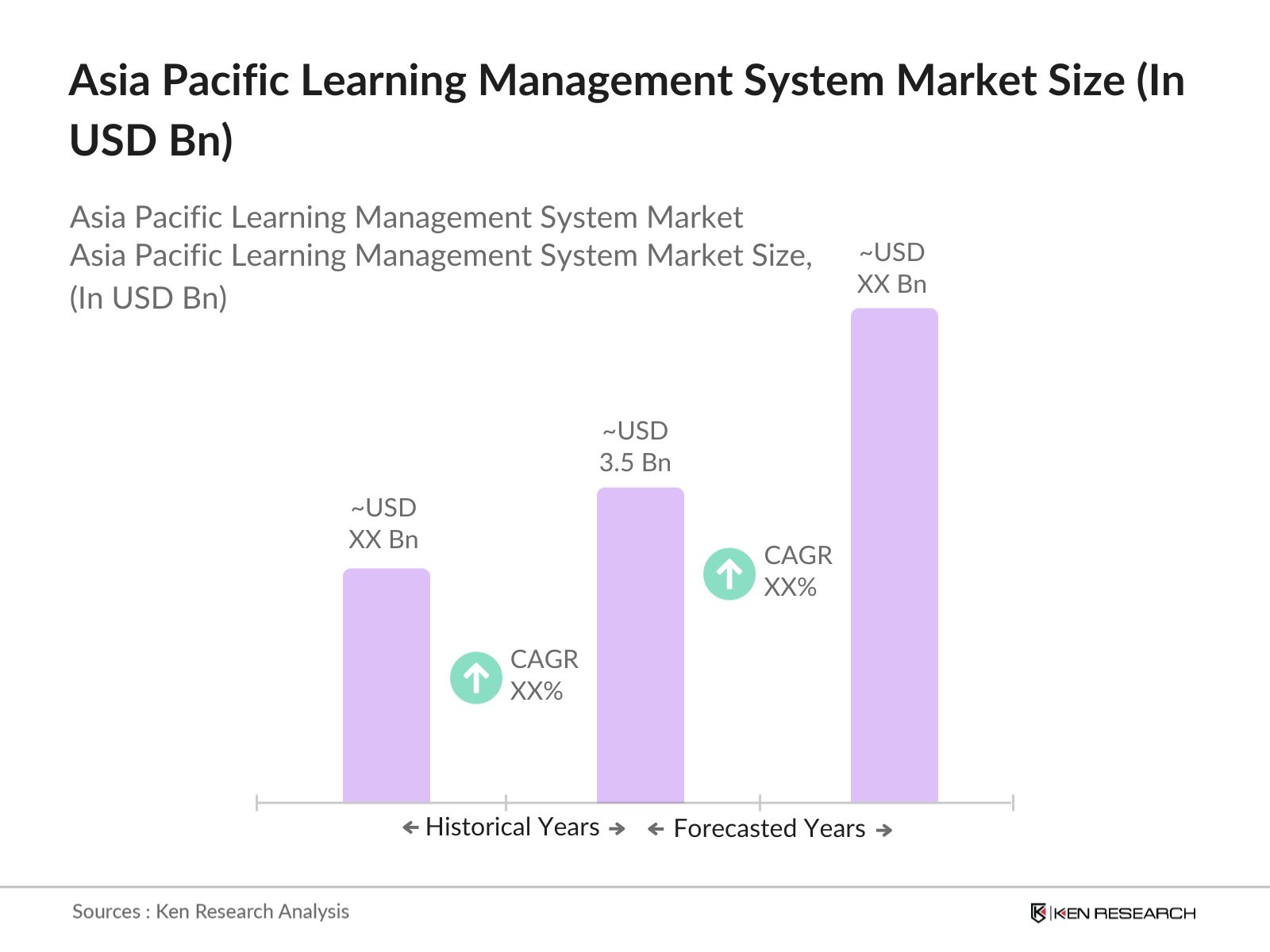
- Countries like China, India, and Japan are leading the LMS market in Asia Pacific due to their significant investments in digital infrastructure and the increasing digital literacy rates. Additionally, large-scale government initiatives in these nations focus on enhancing digital education frameworks, further solidifying their positions as dominant markets within the region.
- Compliance standards across APAC, such as ISO certifications, are increasingly necessary for LMS providers. In 2024, 40% of LMS platforms complied with ISO 21001, ensuring educational quality and management system standards. This regulatory push provides assurance to educational institutions, especially in Australia and Japan, where compliance is stringent, as noted by the Asia-Pacific Quality Network.
Asia Pacific Learning Management System (LMS) Market Segmentation
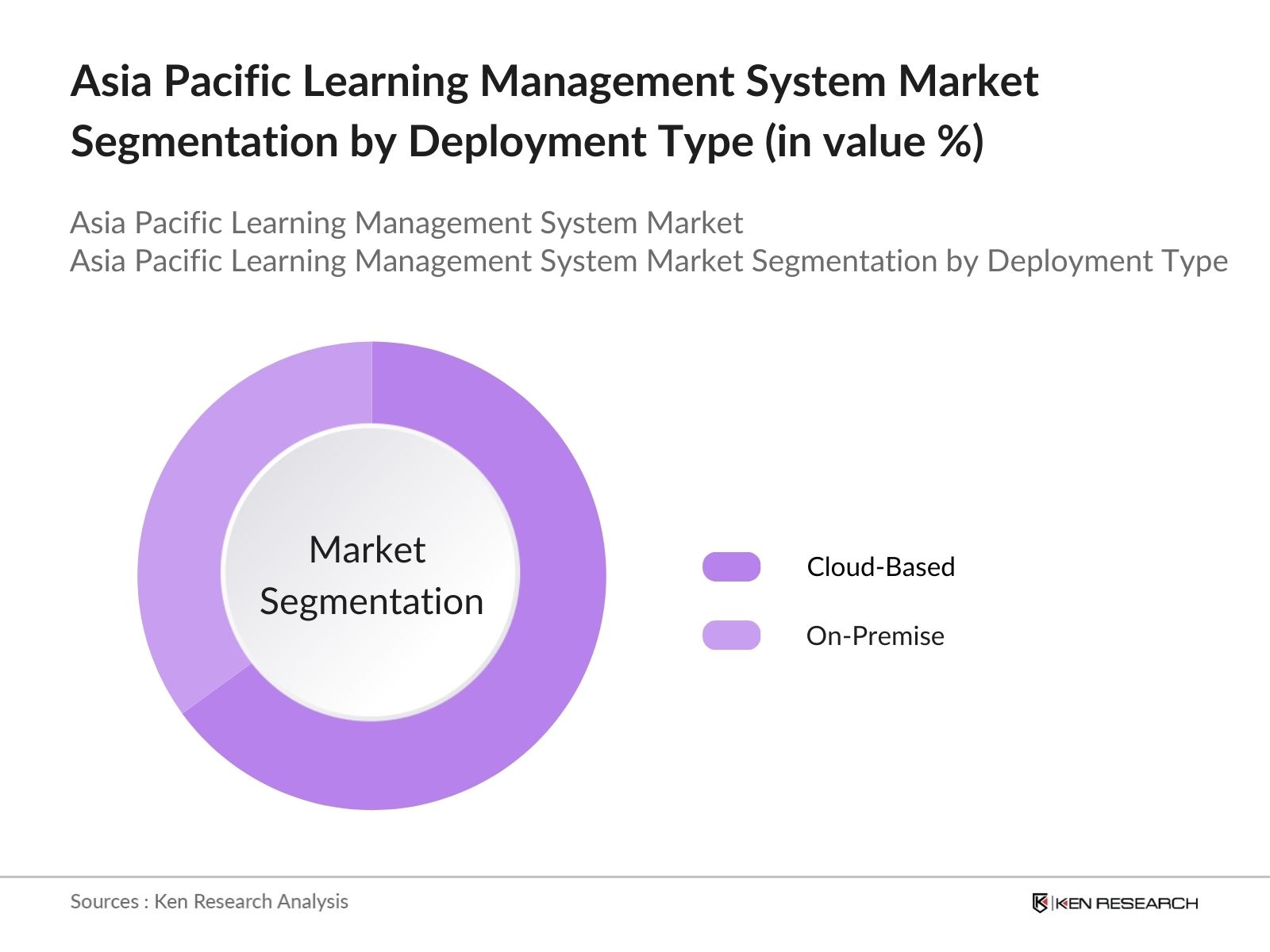
By Deployment Type: The Asia Pacific LMS market is segmented by deployment type into Cloud-Based and On-Premise solutions. Cloud-Based LMS solutions dominate this segment due to their scalability, lower upfront costs, and ease of access for remote users. This popularity is also attributed to the increasing demand for flexible, on-the-go access, which Cloud-Based solutions provide, making them a preferred choice among both corporate and educational users.
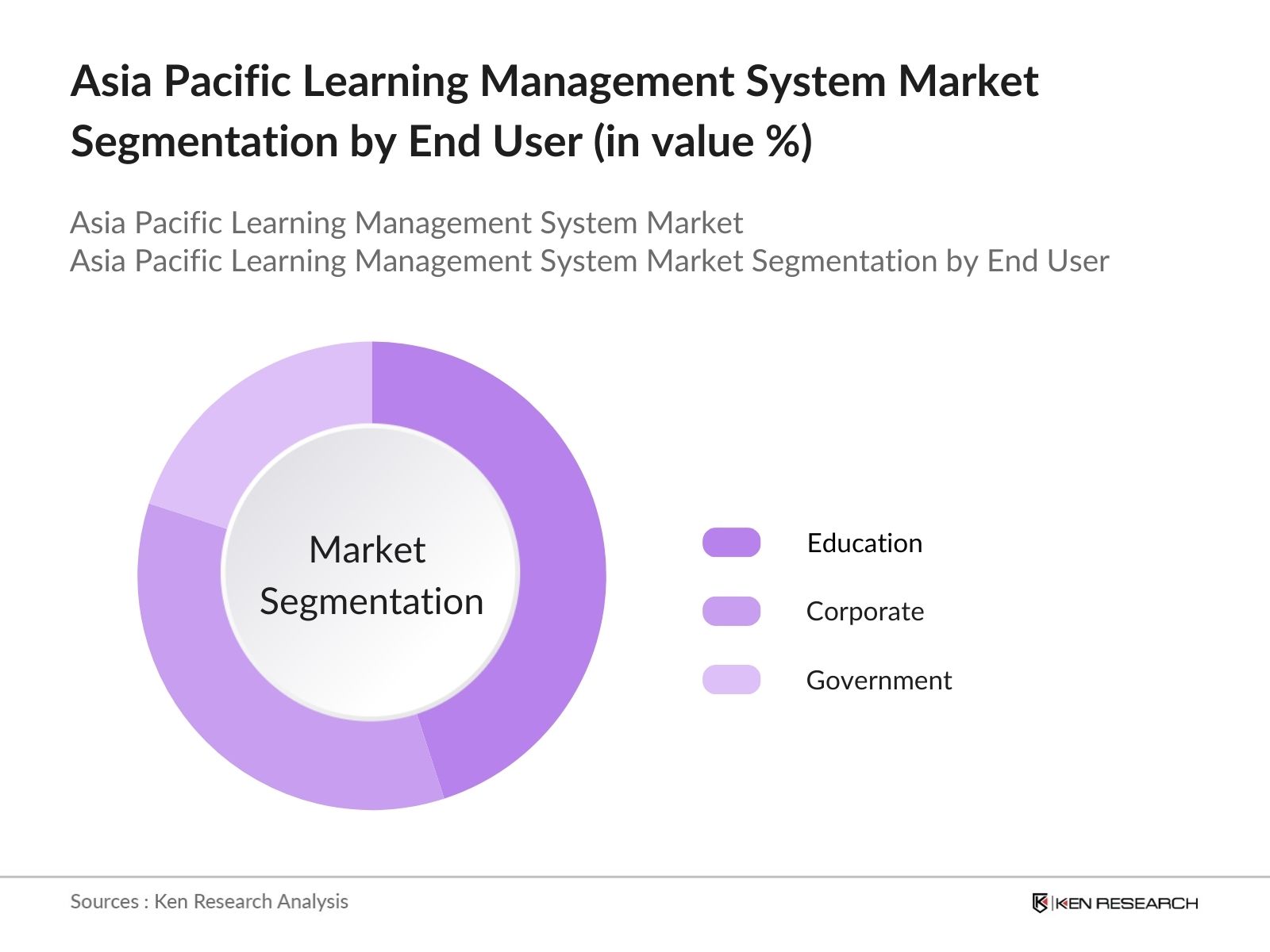
By End-User: The market is segmented by end-users into Education, Corporate, and Government sectors. Educational institutions lead this segment due to the sectors ongoing digital transformation efforts and the adoption of LMS as a standard tool for facilitating learning. Educational institutions seek solutions that offer diverse learning tools, administrative ease, and adaptive capabilities, which align with the objectives of institutions in the region.
Asia Pacific Learning Management System Market Competitive Landscape
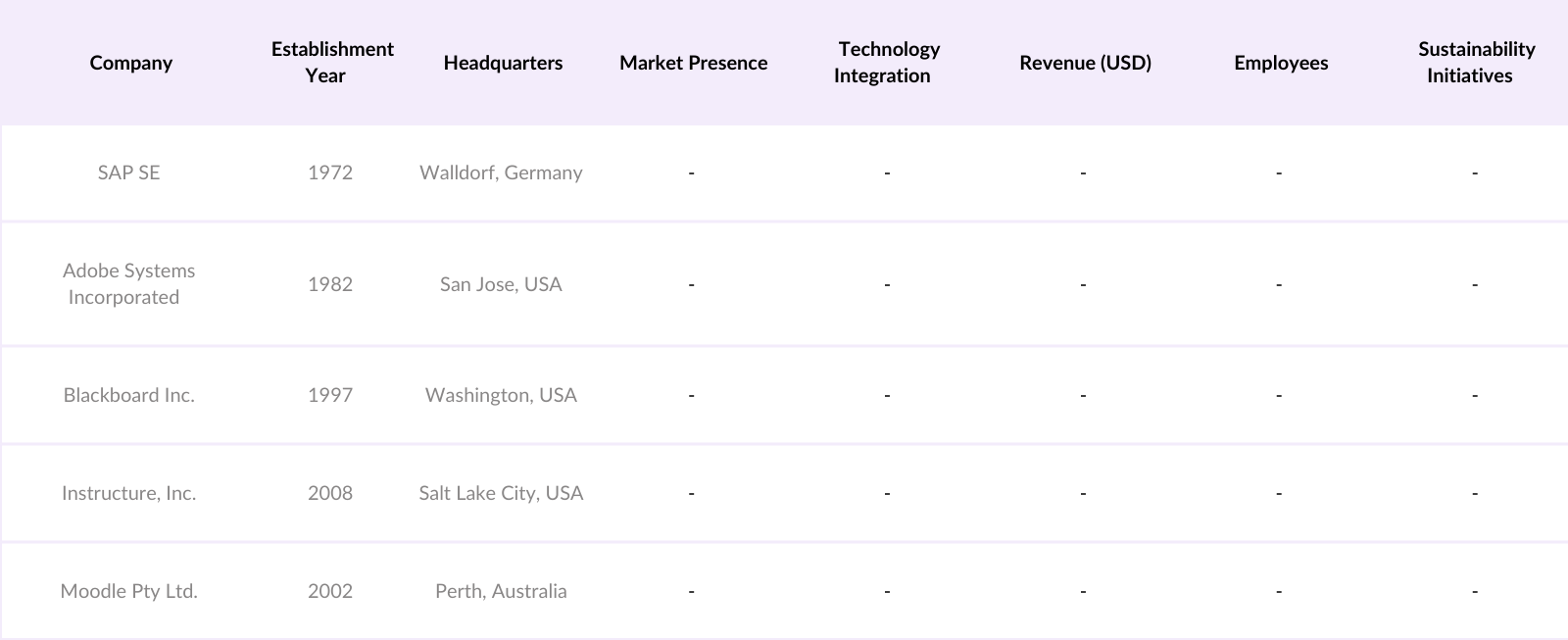
The Asia Pacific LMS market is dominated by established players, both global and regional, who provide comprehensive solutions tailored to varied industry needs. Notable companies in the market include technology giants and specialized education solution providers.
Asia Pacific Learning Management System Market Analysis
Growth Drivers
- Cloud-Based Solutions: The adoption of cloud-based LMS in Asia-Pacific is accelerating, fueled by the region's growing cloud infrastructure. In 2024, APAC's cloud infrastructure spending was recorded at $164 billion, supporting the rise of scalable LMS solutions for educational institutions and corporations. Countries like Japan, China, and India, with high cloud adoption rates, see government support for digital education platforms, reinforcing the LMS growth. Indias Ministry of Education has advocated for cloud-based educational resources, enhancing accessibility for millions of users.
- User Experience and Customization: The demand for user-centric and customizable LMS solutions in APAC is fueled by the increasing importance of localized content, especially in India and Southeast Asia, with a combined digital user base of 1.3 billion. Customization needs are driven by linguistic diversity and cultural preferences across the region. With Malaysia, Singapore, and Thailand investing in interactive e-learning resources, LMS providers are integrating features for customized learning experiences. This push aligns with UNESCOs data highlighting the focus on digital education tailored to cultural and linguistic needs.
- Regional Regulations Compliance: The complex regulatory landscape across APAC demands LMS platforms adhere to diverse educational standards. In Australia and South Korea, strict compliance with local data privacy laws, such as the Australian Privacy Principles and South Koreas PIPA (Personal Information Protection Act), mandates LMS providers ensure secure and compliant data storage solutions. APAC countries are increasingly formalizing education standards and certification criteria, driving the compliance-oriented features in LMS.
Challenges
- Technical Integration Challenges: Integrating LMS with existing institutional infrastructures is challenging in APAC, where technological disparity exists across regions. In rural areas of India, Indonesia, and the Philippines, internet connectivity remains a challenge, with World Bank data noting 39% of rural APAC regions have limited access to high-speed internet, hindering seamless LMS integration. This technical gap impacts user experience, necessitating localized tech support and simplified LMS solutions.
- Data Privacy and Security Regulations: APACs strict data privacy frameworks pose a challenge for LMS providers. Regulations like the General Data Protection Regulation (GDPR) adopted in Japan, Chinas Personal Information Protection Law (PIPL), and India's IT Act mandate robust data protection measures. Ensuring secure LMS architecture to protect educational data aligns with data privacy reforms, impacting operational costs for LMS firms. According to the Asia Cloud Computing Association, adhering to these regulations can increase implementation costs by 15-20%.
Asia Pacific Learning Management System Market Future Outlook
Asia Pacific LMS market is expected to grow substantially, driven by the ongoing adoption of digital education technologies across industries, continuous government support for digital literacy initiatives, and increasing corporate investments in employee training platforms. The region's digital transformation will continue to evolve, with advancements in AI and analytics further enriching LMS capabilities.
Market Opportunities
- AI-Driven Insights: AI integration in LMS platforms opens growth avenues, enabling adaptive learning, content recommendations, and performance analytics. In APAC, AI investment reached $15 billion in 2023, with China, Japan, and South Korea driving this trend, enhancing the LMS markets appeal for educational institutions. AI allows LMS platforms to offer data-driven insights, benefiting institutions aiming for personalized education. The World Economic Forum notes that AI adoption rates in APAC education technology sectors are accelerating.
- Hybrid Learning Support: Hybrid learning, combining digital and in-person teaching, is gaining traction in APAC. With 80% of institutions in Australia and 60% in Malaysia adopting hybrid models, LMS platforms are integrating features to support both modes. This hybrid demand underscores the shift in educational delivery models post-pandemic, providing LMS providers an opportunity to enhance their offerings. APACs hybrid learning trend reflects broader educational reforms noted by UNESCO in digital and physical integration.
Scope of the Report
|
Segment |
Sub-Segment |
|
Deployment Type |
Cloud-Based |
|
On-Premise |
|
|
User Type |
Academic Institutions |
|
Corporates |
|
|
Government Organizations |
|
|
Learning Mode |
Self-Paced |
|
Instructor-Led |
|
|
Delivery Mode |
Mobile-Based |
|
Desktop/Web-Based |
|
|
End-User Industry |
Education |
|
Healthcare |
|
|
IT & Telecom |
|
|
Retail |
Products
Key Target Audience
Corporate Training Departments
Educational Institutions (Universities, K-12 Schools)
LMS Solution Providers
Technology Integrators
E-learning Content Creators
IT Service Providers
Investors and Venture Capitalist Firms
Government and Regulatory Bodies (e.g., Ministry of Education, Ministry of Digital Economy and Society)
Companies
Players Mentioned in the Report
SAP SE
Adobe Systems Incorporated
Blackboard Inc.
Instructure, Inc.
Moodle Pty Ltd.
Oracle Corporation
IBM Corporation
Cornerstone OnDemand, Inc.
D2L Corporation
Pearson PLC
Table of Contents
1. Asia Pacific Learning Management System Market Overview
1.1 Definition and Scope
1.2 Market Taxonomy
1.3 Market Dynamics
1.4 Key Market Segmentation Overview
2. Asia Pacific Learning Management System Market Size (In USD Million)
2.1 Historical Market Size
2.2 Year-On-Year Growth Analysis
2.3 Key Market Milestones
3. Asia Pacific Learning Management System Market Analysis
3.1 Growth Drivers
3.1.1 Cloud-Based Solutions
3.1.2 User Experience and Customization
3.1.3 Regional Regulations Compliance
3.1.4 Increased Mobile Device Usage
3.2 Market Challenges
3.2.1 Technical Integration Challenges
3.2.2 Data Privacy and Security Regulations
3.2.3 Cost of Implementation
3.3 Opportunities
3.3.1 AI-Driven Insights
3.3.2 Hybrid Learning Support
3.3.3 Partnerships with EdTech Companies
3.4 Trends
3.4.1 Gamification Features
3.4.2 Advanced Learning Analytics
3.4.3 Social and Collaborative Learning Platforms
3.5 Regional Regulatory Landscape
3.5.1 Regional Education Policies
3.5.2 Compliance and Certification Standards
3.5.3 Data Governance Policies
3.6 Stakeholder Ecosystem Analysis
3.7 Porters Five Forces Analysis
3.8 Competitive Landscape Overview
4. Asia Pacific Learning Management System Market Segmentation
4.1 By Deployment Type (In Value %)
4.1.1 Cloud-Based
4.1.2 On-Premise
4.2 By User Type (In Value %)
4.2.1 Academic Institutions
4.2.2 Corporates
4.2.3 Government Organizations
4.3 By Learning Mode (In Value %)
4.3.1 Self-Paced
4.3.2 Instructor-Led
4.4 By Delivery Mode (In Value %)
4.4.1 Mobile-Based
4.4.2 Desktop/Web-Based
4.5 By End-User Industry (In Value %)
4.5.1 Education
4.5.2 Healthcare
4.5.3 IT & Telecom
4.5.4 Retail
5. Asia Pacific Learning Management System Market Competitive Analysis
5.1 Detailed Profiles of Major Companies
5.1.1 SAP SE
5.1.2 Adobe Systems Incorporated
5.1.3 Blackboard Inc.
5.1.4 IBM Corporation
5.1.5 Oracle Corporation
5.1.6 Pearson PLC
5.1.7 Cornerstone OnDemand, Inc.
5.1.8 Instructure, Inc.
5.1.9 Moodle Pty Ltd.
5.1.10 D2L Corporation
5.2 Cross Comparison Parameters
5.3 Market Share Analysis
5.4 Strategic Initiatives
5.5 Mergers and Acquisitions
5.6 Investment Analysis
5.7 Funding Patterns
5.8 Government Grants
5.9 Private Equity Investments
6. Asia Pacific Learning Management System Market Regulatory Framework
6.1 Regional Data Protection Laws
6.2 Compliance Requirements for LMS Providers
6.3 Certification and Accreditation Standards
7. Asia Pacific Learning Management System Future Market Size (In USD Million)
7.1 Future Market Size Projections
7.2 Factors Driving Future Growth
8. Asia Pacific Learning Management System Market Analysts Recommendations
8.1 Total Addressable Market Analysis
8.2 Segment-Specific Strategy Recommendations
8.3 Key White Space Opportunities
8.4 Market Expansion Initiatives
Research Methodology
Step 1: Identification of Key Variables
This phase involves mapping out the market ecosystem, including LMS solution providers, corporate end-users, and educational institutions. Initial data is collected through secondary research across verified sources to identify variables impacting LMS adoption.
Step 2: Market Analysis and Construction
In this phase, historical data on LMS adoption and deployment models is assessed, including market dynamics, technology uptake, and user adoption rates. The analysis helps establish accurate metrics and forecast trends for revenue estimates.
Step 3: Hypothesis Validation and Expert Consultation
Market hypotheses are constructed based on gathered data and are validated through in-depth interviews with industry experts from LMS providers and end-user organizations. These insights contribute to verifying market dynamics and refining projections.
Step 4: Research Synthesis and Final Output
The final phase includes compiling insights from LMS companies and end-users to create a validated, comprehensive market analysis report, aligning secondary data with industry benchmarks for an accurate outlook.
Frequently Asked Questions
01. How big is the Asia Pacific LMS Market?
The Asia Pacific Learning Management System market is valued at USD 3.5 billion, driven by increasing adoption of cloud-based and mobile solutions across educational and corporate sectors.
02. What are the main challenges in the Asia Pacific LMS Market?
Key challenges in Asia Pacific Learning Management System Market include data privacy regulations, especially in regions with stringent data protection laws, and high costs of customization for specific organizational needs.
03. Who are the major players in the Asia Pacific LMS Market?
Notable players in Asia Pacific Learning Management System Market include SAP SE, Adobe Systems, Blackboard Inc., and Instructure, Inc., who dominate through advanced technology integration and comprehensive user support systems.
04. What factors drive the Asia Pacific LMS Market?
Primary growth drivers in Asia Pacific Learning Management System Market are the digital transformation initiatives by governments and increased demand for online and mobile-friendly learning environments, particularly post-2020.
Why Buy From Us?

What makes us stand out is that our consultants follows Robust, Refine and Result (RRR) methodology. i.e. Robust for clear definitions, approaches and sanity checking, Refine for differentiating respondents facts and opinions and Result for presenting data with story

We have set a benchmark in the industry by offering our clients with syndicated and customized market research reports featuring coverage of entire market as well as meticulous research and analyst insights.

While we don't replace traditional research, we flip the method upside down. Our dual approach of Top Bottom & Bottom Top ensures quality deliverable by not just verifying company fundamentals but also looking at the sector and macroeconomic factors.

With one step in the future, our research team constantly tries to show you the bigger picture. We help with some of the tough questions you may encounter along the way: How is the industry positioned? Best marketing channel? KPI's of competitors? By aligning every element, we help maximize success.

Our report gives you instant access to the answers and sources that other companies might choose to hide. We elaborate each steps of research methodology we have used and showcase you the sample size to earn your trust.

If you need any support, we are here! We pride ourselves on universe strength, data quality, and quick, friendly, and professional service.