















Asia-Pacific Locomotive Market Outlook to 2030
Region:Asia
Author(s):Naman Rohilla
Product Code:KROD2675
November 2024
83
About the Report
Asia-Pacific Locomotive Market Overview
- The Asia-Pacific Locomotive Market is valued at USD 5.6 billion. The markets growth is driven by the expansion of railway networks, government initiatives supporting infrastructure modernization, and increasing investments in sustainable and high-speed rail projects across the region.
- Key players in the Asia-Pacific Locomotive Market include CRRC Corporation, Siemens Mobility, Alstom, Kawasaki Heavy Industries, and Hyundai Rotem. These companies focus on innovative locomotive solutions, high-speed rail technology, and sustainability initiatives.
- BHEL and Kawasaki Heavy Industries are in advanced talks to establish a joint venture for manufacturing metro locomotives and steel coaches in India. This collaboration could increase BHEL's Bhopal unit turnover by 1,500 to 2,000 crore, supporting metro rail projects in various states.
- China led the Asia-Pacific Locomotive Market in 2023, driven by its extensive railway infrastructure and high investment in high-speed rail. Japan and India followed closely with their focus on modernization and expansion of railway networks.
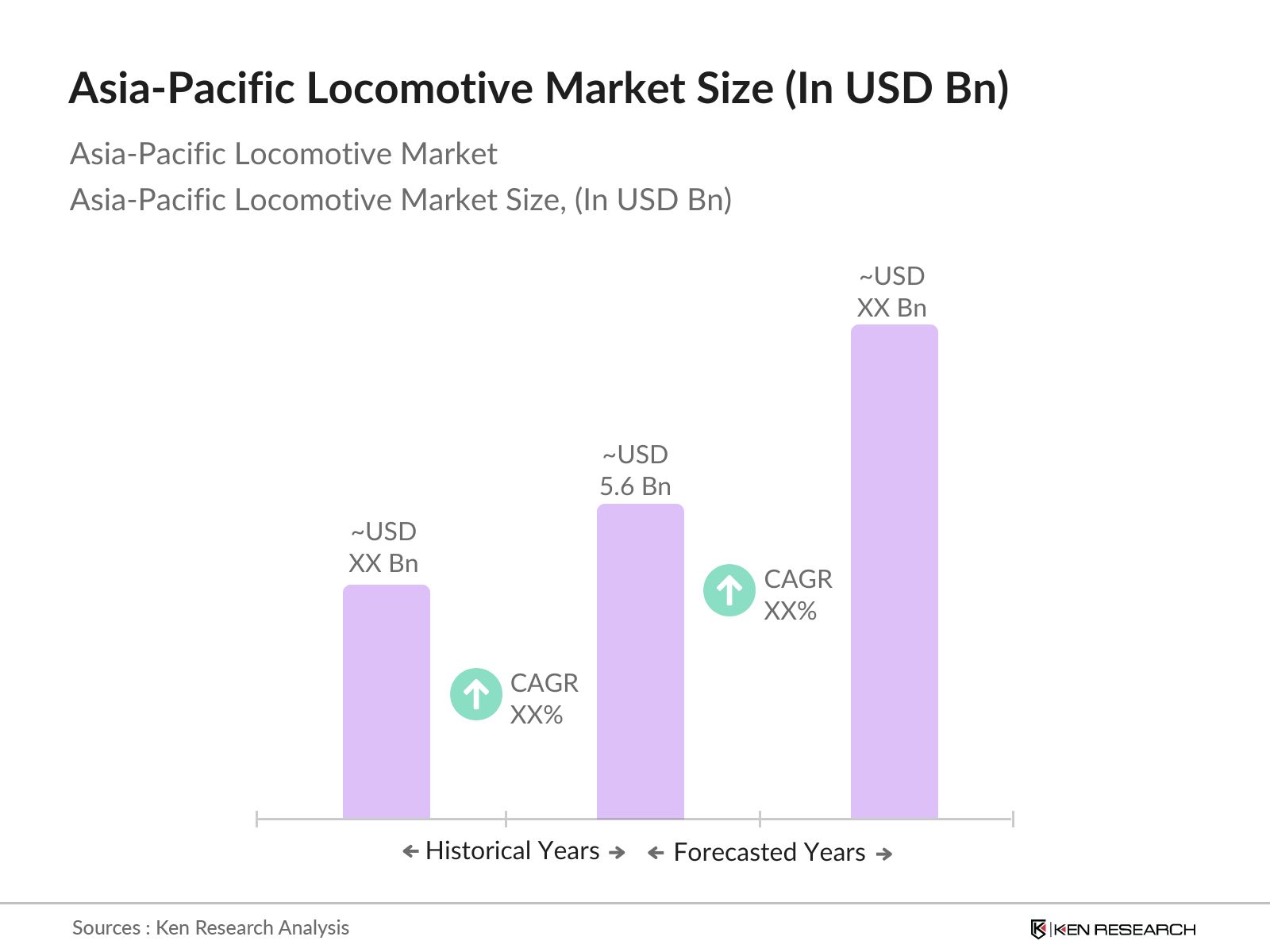
Asia-Pacific Locomotive Market Segmentation
The Asia-Pacific Locomotive Market is segmented by type, propulsion, and region.
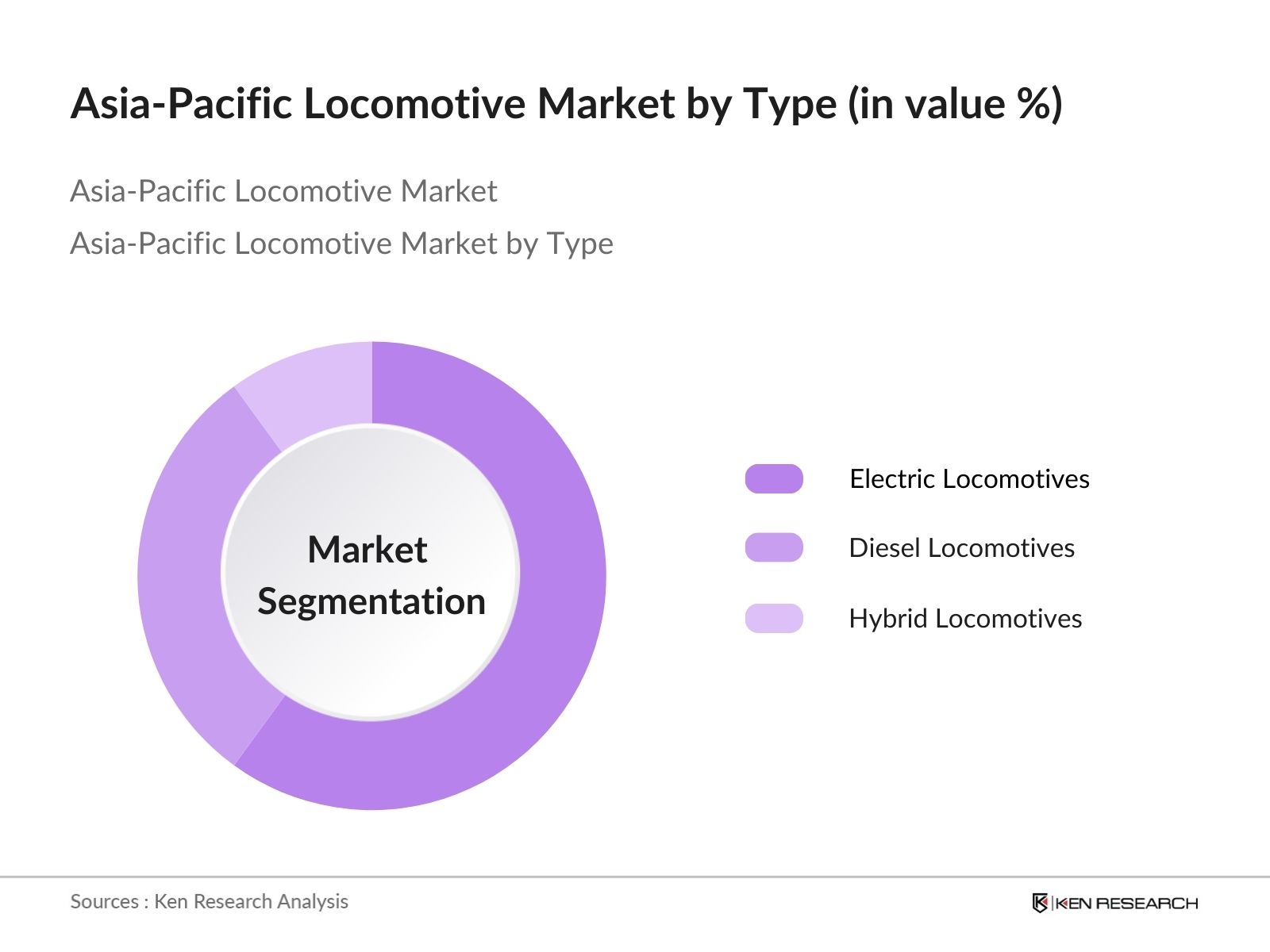
- By Type: The market is segmented into diesel locomotives, electric locomotives, and hybrid locomotives. In 2023, electric locomotives dominated the market due to the increasing focus on decarbonization and electrification of rail networks.
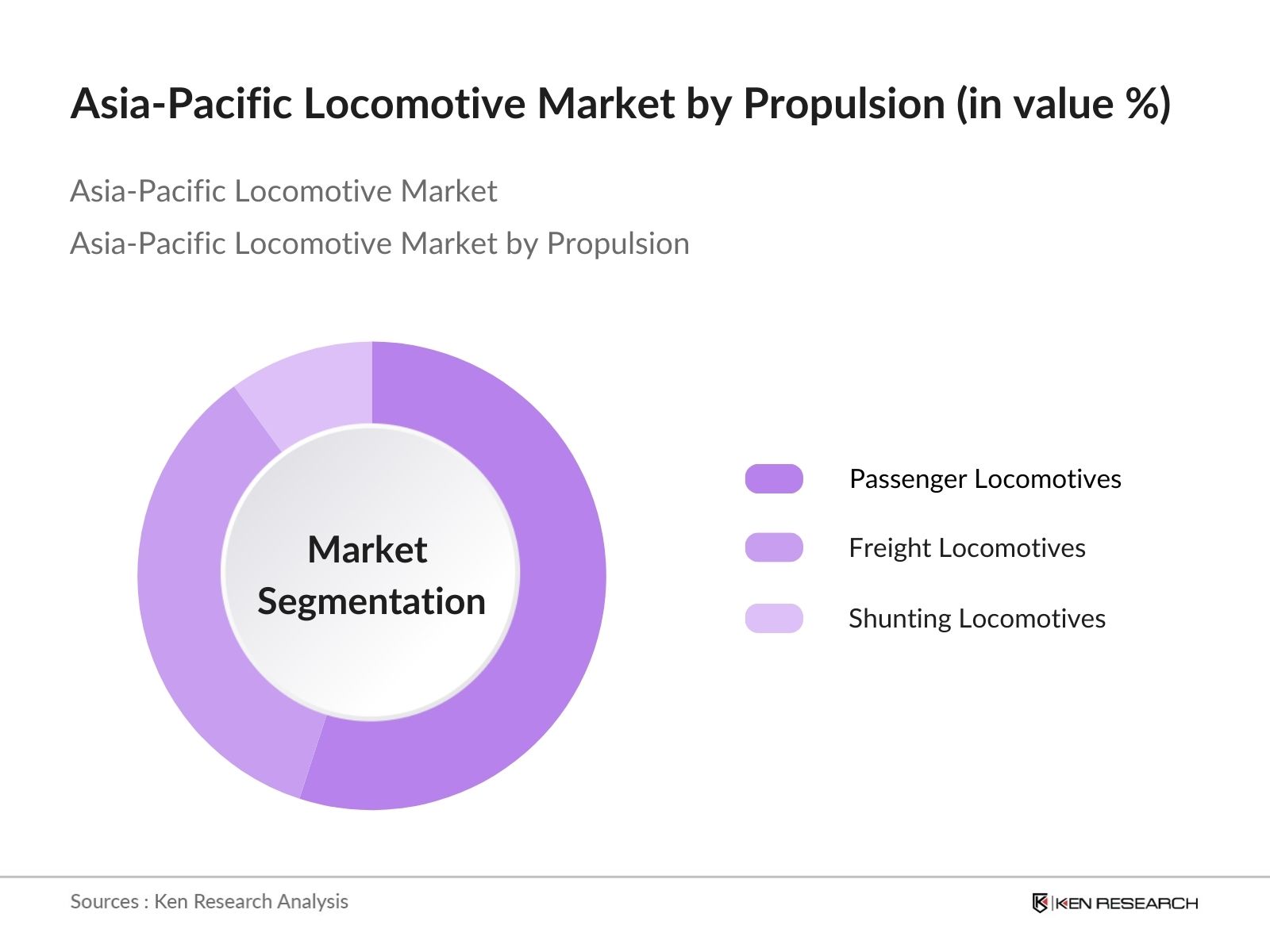
- By Propulsion: The market is segmented into freight, passenger, and shunting locomotives. The passenger locomotive segment held the largest market share in 2023, attributed to growing urbanization and demand for faster and efficient transportation options.
- By Region: The market is segmented into China, Japan, India, South Korea, Australia, and the Rest of APAC. China accounted for the highest market share in 2023 due to its strong investment in rail infrastructure and high-speed rail development.
Asia-Pacific Locomotive Market Competitive Landscape
|
Company |
Establishment Year |
Headquarters |
|
CRRC Corporation |
2015 |
Beijing, China |
|
Siemens Mobility |
1847 |
Munich, Germany |
|
Alstom |
1928 |
Saint-Ouen, France |
|
Kawasaki Heavy Industries |
1896 |
Kobe, Japan |
|
Hyundai Rotem |
1999 |
Seoul, South Korea |
- CRRC Corporation: Chinese CRRC Corporation has withdrawn from a 610 million Bulgarian train tender amid an EU investigation into alleged state subsidies. The EU's probe, aimed at ensuring fair competition, follows concerns that CRRC's bid substantially undercut local firms, raising issues of economic security and trade practices.
- Siemens Mobility: Siemens Ltd plans to invest over Rs 1,000 crore in expanding its operations in India, including Rs 186 crore for a new Metro train manufacturing facility in Aurangabad. This facility will serve as an export hub and align with sustainability initiatives under India's Make in India program.
Asia-Pacific Locomotive Market Analysis
Asia-Pacific Locomotive Market Growth Drivers:
- Expansion of Rail Networks:China and India are substantially investing in expanding their railway networks. China plans to add about 95,000 kilometers, focusing on high-speed rail. Indias initiatives, like the Dedicated Freight Corridor, aim to enhance freight transport efficiency, boosting the locomotive market.
- Electrification of Railways: Electrification is a key trend in China and India, aimed at reducing carbon emissions and enhancing efficiency. By 2023, China had electrified over 60% of its rail network, with plans for further expansion by 2028. India aims for 100% electrification, driving electric locomotive demand.
- Shift Toward Sustainable Transportation: The growing emphasis on sustainable transportation is accelerating the adoption of electric and hybrid locomotives, particularly in China and Japan. Indias green railway initiatives align with this trend, reflecting a global shift towards environmentally friendly solutions, further boosting the demand for electric locomotives.
Asia-Pacific Locomotive Market Challenges:
- High Costs of Modern Locomotives: The capital cost of electric locomotives can be substantially higher than that of diesel-electric locomotives. While a traditional diesel-electric locomotive costs around $2 million, recent orders for electric locomotives, such as Amtrak's Siemens ACS-64, have reached around $6.66 million each, highlighting the financial barrier for smaller economies.
- Infrastructure Modernization: In Southeast Asia, many countries face substantial challenges in modernizing rail infrastructure, with only about 20% of the region's rail network electrified as of 2022. This lack of modernization limits the operational capacity and efficiency of rail systems, hindering potential market growth in these areas.
Asia-Pacific Locomotive Market Government Initiatives:
- Bangladesh Railway: During Prime Minister Sheikh Hasina's visit to India in May 2023, Indian Railways provided Bangladesh Railway with 20 broad gauge diesel locomotives as a grant. This initiative aims to enhance Bangladesh's rail transport system to better manage increasing passenger and freight operations.
- Indias National Rail Plan: Indian Railways is integrating hydrogen fuel cell locomotives into its fleet to promote sustainable mobility. This initiative is part of India's National Rail Plan, with design and manufacturing processes already underway, aiming to reduce carbon emissions and improve the efficiency of rail transport.
Asia-Pacific Locomotive Future Market Outlook
The Asia-Pacific Locomotive Market is projected to grow steadily due to the ongoing expansion of high-speed rail networks, rising demand for energy-efficient locomotives, and technological advancements in the sector.
Asia-Pacific Locomotive Future Market Trends:
- Development of Autonomous Locomotives: In the coming years, research in autonomous locomotives will advance rapidly, with Alstom expected to demonstrate GoA4 automation in shunting operations. The intelligent obstacle detection system will identify obstacles up to 500 meters away, enhancing safety and efficiency.
- Sustainability Initiatives: In the coming years, the push for green locomotives will become more pronounced, with Indian Railways aiming for net-zero carbon emissions by 2030. Initiatives will include integrating hydrogen fuel cell technology, which will substantially reduce emissions. Additionally, solar-powered trains will be introduced, showcasing a commitment to sustainable and efficient rail transport solutions.
Scope of the Report
|
By Type |
Diesel Locomotives Electric Locomotives Hybrid Locomotives |
|
By Propulsion |
Freight Locomotives Passenger Locomotives Shunting Locomotives |
|
By Region |
China Japan India South Korea Australia Rest of APAC |
Products
Key Target Audience Organizations and Entities Who Can Benefit by Subscribing This Report:
Government and Regulatory Bodies
Banks and Financial Institutes
Investors and Venture Capitalists
Railway Operators and Manufacturers
Energy Companies
Locomotive Manufacturers
Time Period Captured in the Report
Historical Period: 2018-2023
Base Year: 2023
Forecast Period: 2023-2028
Companies
Players Mentioned in the Report:
CRRC Corporation
Siemens Mobility
Alstom
Kawasaki Heavy Industries
Hyundai Rotem
Hitachi Rail
Wabtec Corporation
Stadler Rail
Bombardier Transportation (now part of Alstom)
CAF (Construcciones y Auxiliar de Ferrocarriles)
CSR Corporation Limited (now merged with CRRC)
Toshiba Infrastructure Systems & Solutions
General Electric (GE) Transportation
Talgo
Mitsubishi Electric Corporation
Table of Contents
1. Asia-Pacific Locomotive Market Overview
1.1 Definition and Scope of the Asia-Pacific Locomotive Market
1.2 Market Taxonomy (Type, Propulsion, Region)
1.3 Market Growth Rate and Trends
1.4 Market Drivers (Railway Expansion, Government Initiatives, Sustainable Transportation)
1.5 Market Restraints (High Costs, Infrastructure Modernization Challenges)
2. Asia-Pacific Locomotive Market Size (in USD Billion)
2.1 Historical Market Size Analysis (2018-2023)
2.2 Year-on-Year Growth Analysis
2.3 Forecast Market Size and Growth Projections (2023-2028)
2.4 Key Market Milestones and Developments
3. Asia-Pacific Locomotive Market Analysis
3.1 Growth Drivers
3.1.1 Expansion of Railway Networks
3.1.2 Electrification of Railways
3.1.3 Shift Towards Sustainable Transportation
3.2 Market Challenges
3.2.1 High Capital Costs for Modern Locomotives
3.2.2 Infrastructure Modernization Challenges in Southeast Asia
3.3 Opportunities
3.3.1 Investments in High-Speed Rail Projects
3.3.2 Opportunities in Hybrid and Electric Locomotives
3.4 Market Trends
3.4.1 Focus on Autonomous Locomotives
3.4.2 Integration of Hydrogen Fuel Cells in Locomotives
4. Asia-Pacific Locomotive Market Segmentation
4.1 By Type (in Value %)
4.1.1 Diesel Locomotives
4.1.2 Electric Locomotives
4.1.3 Hybrid Locomotives
4.2 By Propulsion (in Value %)
4.2.1 Freight Locomotives
4.2.2 Passenger Locomotives
4.2.3 Shunting Locomotives
4.3 By Region (in Value %)
4.3.1 China
4.3.2 Japan
4.3.3 India
4.3.4 South Korea
4.3.5 Australia
4.3.6 Rest of APAC
5. Asia-Pacific Locomotive Market Competitive Landscape
5.1 Competitive Market Share Analysis
5.2 Company Profiles
5.2.1 CRRC Corporation (Established 2015, Headquarters: Beijing, China)
5.2.2 Siemens Mobility (Established 1847, Headquarters: Munich, Germany)
5.2.3 Alstom (Established 1928, Headquarters: Saint-Ouen, France)
5.2.4 Kawasaki Heavy Industries (Established 1896, Headquarters: Kobe, Japan)
5.2.5 Hyundai Rotem (Established 1999, Headquarters: Seoul, South Korea)
5.2.6 Hitachi Rail (Established 1910, Headquarters: Tokyo, Japan)
5.2.7 Wabtec Corporation (Established 1869, Headquarters: Pennsylvania, USA)
5.2.8 Stadler Rail (Established 1942, Headquarters: Bussnang, Switzerland)
5.2.9 Bombardier Transportation (now part of Alstom)
5.2.10 CAF (Construcciones y Auxiliar de Ferrocarriles)
5.2.11 CSR Corporation Limited (now merged with CRRC)
5.2.12 Toshiba Infrastructure Systems & Solutions
5.2.13 General Electric (GE) Transportation
5.2.14 Talgo
5.2.15 Mitsubishi Electric Corporation
5.3 Strategic Initiatives and Investments
5.4 Recent Mergers and Acquisitions
5.5 Technological Innovations and R&D Investments
6. Asia-Pacific Locomotive Market Government Regulations and Initiatives
6.1 Chinas 14th Five-Year Plan for Railway Development
6.2 Indias National Rail Plan and Electrification Targets
6.3 Sustainability and Carbon Emission Reduction Goals
7. Asia-Pacific Locomotive Market Future Market Size and Segmentation
7.1 Market Segmentation by Type (2023-2028)
7.2 Market Segmentation by Propulsion (2023-2028)
7.3 Market Segmentation by Region (2023-2028)
7.4 Future Market Trends (Sustainability, Autonomous Locomotives, Hydrogen Fuel Cells)
8. Asia-Pacific Locomotive Market Technological Advancements
8.1 Innovations in Electric and Hybrid Locomotives
8.2 Development of Autonomous and AI-Powered Locomotives
8.3 Advances in Hydrogen Fuel Cell Technology for Locomotives
9. Asia-Pacific Locomotive Market Investment and Funding Landscape
9.1 Key Investments in Rail Technology and Locomotive Manufacturing
9.2 Mergers and Acquisitions in the Asia-Pacific Locomotive Market
9.3 Government Grants and Subsidies for Railway Development and Electrification
9.4 Private Equity and Venture Capital Funding in Locomotive Startups
10. Asia-Pacific Locomotive Market SWOT Analysis
10.1 Strengths (Extensive Rail Infrastructure in China, Focus on High-Speed Rail Projects)
10.2 Weaknesses (High Initial Costs, Infrastructure Modernization in Southeast Asia)
10.3 Opportunities (Expansion in Emerging Markets, Adoption of Electric and Hybrid Solutions)
10.4 Threats (Regulatory Hurdles, Competition from Low-Cost Alternatives)
11. Analysts Recommendations
11.1 Strategic Market Entry and Expansion Opportunities
11.2 Collaboration with Governments and Rail Operators
11.3 Innovative Product Development (Sustainable Locomotives, Autonomous Solutions)
11.4 Market Positioning Strategies for Key Players
Disclaimer Contact UsResearch Methodology
Step: 1 Identifying Key Variables
Ecosystem creation for all the major entities and referring to multiple secondary and proprietary databases to perform desk research around the market to collate market-level information.
Step: 2 Market Building
Collating statistics on the Asia-Pacific Locomotive Market over the years and analyzing the penetration of products as well as the ratio of suppliers to compute the revenue generated for the market. We will also review product quality statistics to ensure accuracy behind the data points shared.
Step: 3 Validating and Finalizing
Building market hypothesis and conducting CATIs with market experts from different companies to validate statistics and seek operational and financial information from company representatives.
Step: 4 Research Output
Our research team approaches multiple locomotive manufacturers and railway operators to understand product segments, sales trends, consumer preferences, and other parameters. This approach supports us in validating the statistics derived from the bottom-up approach of these locomotive manufacturers and railway operators.
Frequently Asked Questions
01. How big is the Asia-Pacific Locomotive Market?
The Asia-Pacific Locomotive Market was valued at USD 5.6 billion, driven by infrastructure expansion, government initiatives, and increasing demand for high-speed and sustainable rail transportation across key markets like China, India, and Japan.
02. Who are the major players in the Asia-Pacific Locomotive Market?
Key players in the Asia-Pacific Locomotive Market include CRRC Corporation, Siemens Mobility, Alstom, Kawasaki Heavy Industries, and Hyundai Rotem, all focusing on advanced locomotive technologies, sustainability, and network expansions in the Asia-Pacific region.
03. What are the growth drivers of the Asia-Pacific Locomotive Market?
The expansion of railway networks, government-driven modernization initiatives, and increasing investments in sustainable, electric, and high-speed locomotives are the primary growth drivers of the Asia-Pacific Locomotive Market.
04. What are the Asia-Pacific Locomotive Market challenges?
High costs of electric locomotives, infrastructure modernization challenges, and regulatory complexities in emerging markets like Southeast Asia limit market growth in the Asia-Pacific Locomotive Market.
Why Buy From Us?

What makes us stand out is that our consultants follows Robust, Refine and Result (RRR) methodology. i.e. Robust for clear definitions, approaches and sanity checking, Refine for differentiating respondents facts and opinions and Result for presenting data with story

We have set a benchmark in the industry by offering our clients with syndicated and customized market research reports featuring coverage of entire market as well as meticulous research and analyst insights.

While we don't replace traditional research, we flip the method upside down. Our dual approach of Top Bottom & Bottom Top ensures quality deliverable by not just verifying company fundamentals but also looking at the sector and macroeconomic factors.

With one step in the future, our research team constantly tries to show you the bigger picture. We help with some of the tough questions you may encounter along the way: How is the industry positioned? Best marketing channel? KPI's of competitors? By aligning every element, we help maximize success.

Our report gives you instant access to the answers and sources that other companies might choose to hide. We elaborate each steps of research methodology we have used and showcase you the sample size to earn your trust.

If you need any support, we are here! We pride ourselves on universe strength, data quality, and quick, friendly, and professional service.