
Asia Pacific Luxury Travel Market Outlook to 2030
Region:China
Author(s):Vijay Kumar
Product Code:KROD7250
Region:China
Author(s):Vijay Kumar
Product Code:KROD7250
November 2024
98
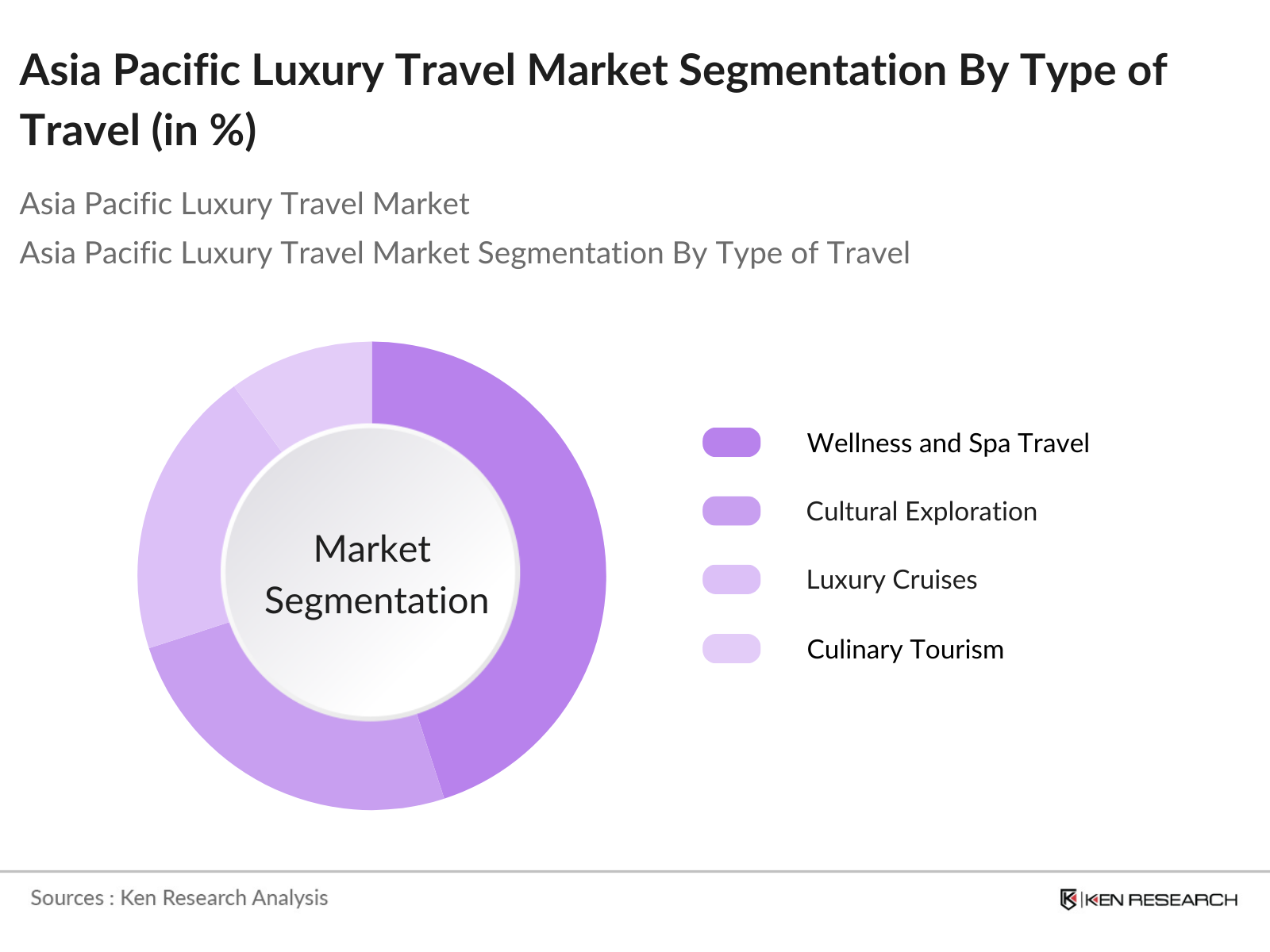
By Type of Travel: The Asia Pacific luxury travel market is segmented by type of travel into adventure travel, wellness and spa travel, cultural exploration, culinary tourism, and luxury cruises. Among these, wellness and spa travel hold a dominant market share due to the regions globally renowned wellness retreats, particularly in destinations like Bali, Thailand, and India.
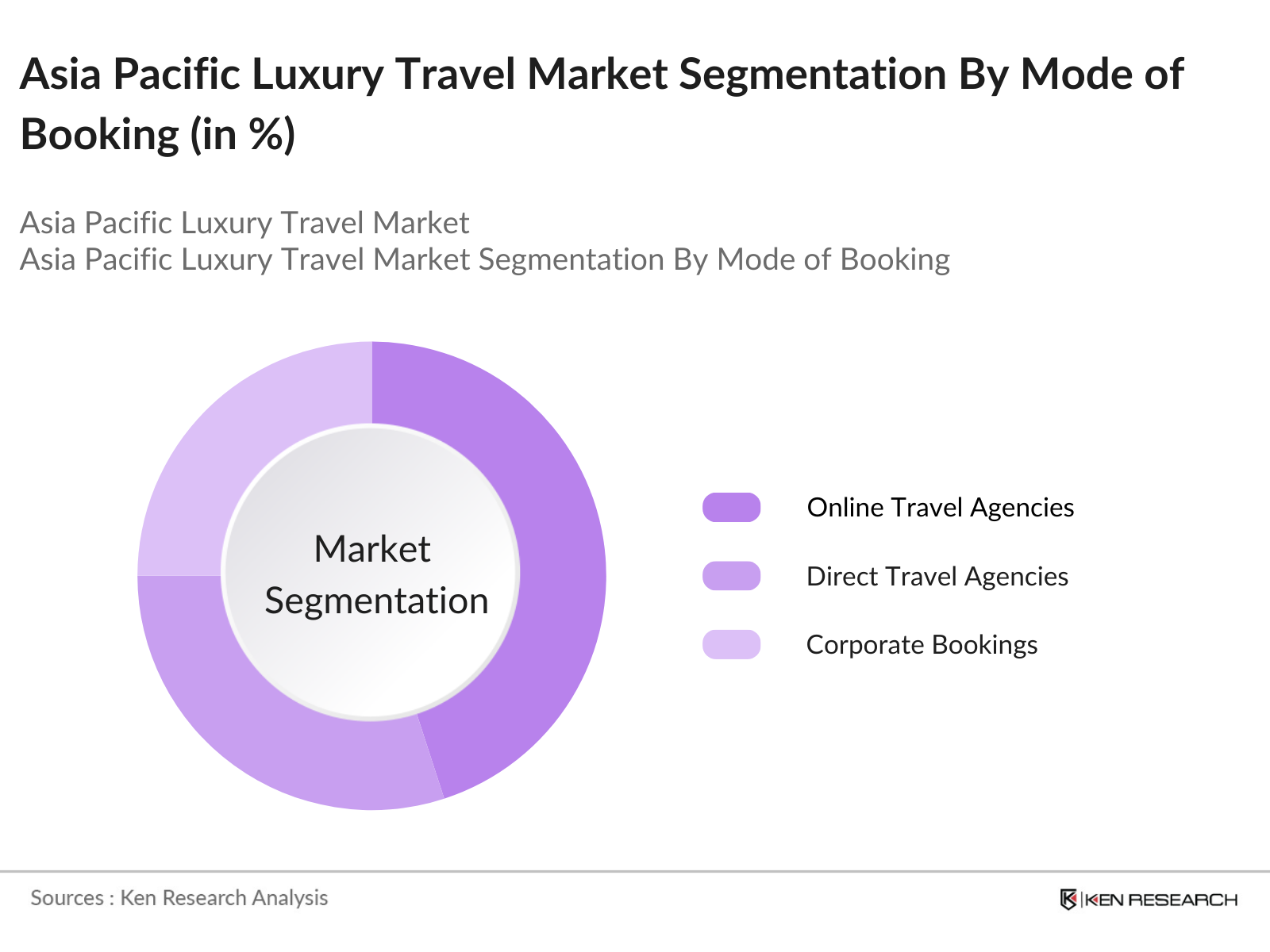
By Mode of Booking: Luxury travel in the Asia Pacific region is also segmented by mode of booking into online travel agencies (OTAs), direct travel agencies, and corporate bookings. Online travel agencies (OTAs) dominate the segment with a significant market share, driven by the rise of tech-savvy affluent travelers who prefer booking bespoke luxury experiences online.
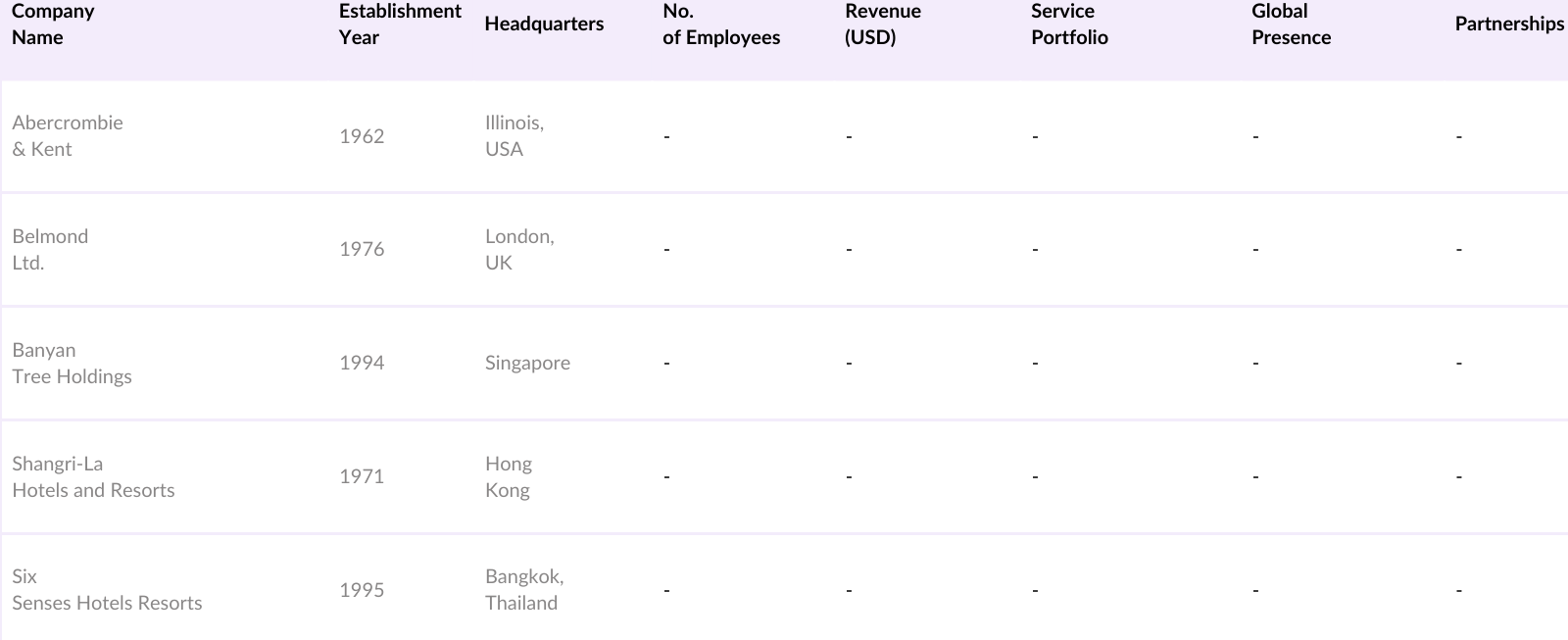
The Asia Pacific luxury travel market is dominated by several major players, both local and international, offering a wide range of luxury travel services. The market is highly competitive, with key players focusing on strategic partnerships, acquisitions, and expansion into emerging markets to strengthen their position. Luxury hotel chains, boutique travel agencies, and digital platforms compete for affluent customers seeking exclusive experiences.
Over the next five years, the Asia Pacific luxury travel market is poised for significant growth, driven by rising disposable incomes, evolving consumer preferences for unique experiences, and the expanding middle class in emerging markets like India and China. The market is expected to benefit from the increasing adoption of digital platforms that provide personalized travel experiences and the rising demand for sustainable tourism options.
|
Type of Travel |
Adventure Travel Culinary Travel Wellness & Spa Travel Cultural Exploration Wildlife Safari |
|
Mode of Booking |
Online Travel Agencies Direct Travel Agencies Corporate Bookings |
|
Type of Accommodation |
Luxury Hotels and Resorts Private Villas Boutique Hotels Yacht Charters Luxury Cruise Ships |
|
Demographic |
Ultra-High-Net-Worth Individuals (UHNWIs) High-Net-Worth Individuals (HNWIs) Affluent Millennials Generation Z Affluent Travelers |
|
Destination |
Southeast Asia Australia and New Zealand East Asia South Asia Pacific Islands |
1.1. Definition and Scope
1.2. Market Taxonomy
1.3. Market Growth Rate
1.4. Market Segmentation Overview
2.1. Historical Market Size
2.2. Year-On-Year Growth Analysis
2.3. Key Market Developments and Milestones
3.1. Growth Drivers
3.1.1. Rising Disposable Income (Wealth Distribution, Affluent Class Growth)
3.1.2. Expansion of Premium Tourism Infrastructure (Luxury Hotel Chains, Exclusive Resorts)
3.1.3. Increasing Demand for Personalized Experiences (Curated Itineraries, Customized Services)
3.1.4. Strong Preference for Experiential Travel (Eco-Tourism, Adventure Luxury)
3.2. Market Challenges
3.2.1. High Travel Costs and Accessibility Issues (Private Jet Costs, Remote Locations)
3.2.2. Stringent Visa and Entry Regulations (Travel Restrictions, Border Controls)
3.2.3. Volatility in Economic Conditions (Currency Fluctuations, Economic Slowdowns)
3.3. Opportunities
3.3.1. Growing Interest in Wellness Travel (Spa, Wellness Retreats)
3.3.2. Demand for Sustainable Luxury Tourism (Eco-Friendly Accommodations, Conservation Projects)
3.3.3. Expansion into Untapped Markets (Emerging Destinations in Southeast Asia)
3.4. Trends
3.4.1. Rise of Digital Nomads (Remote Luxury Work Experiences)
3.4.2. Growth of Private and Customized Group Travel (Private Villas, Personalized Yacht Charters)
3.4.3. Luxury Cruising Surge (Boutique Cruises, Exclusive River Cruises)
3.5. Government Regulation
3.5.1. Visa Regulations and Entry Requirements
3.5.2. Tax Incentives for Tourism Investments
3.5.3. Sustainability and Environmental Tourism Policies
3.6. SWOT Analysis
3.7. Stake Ecosystem (Tour Operators, Accommodation Providers, Travel Advisors)
3.8. Porters Five Forces
3.9. Competition Ecosystem
4.1. By Type of Travel (In Value %)
4.1.1. Adventure Travel
4.1.2. Culinary Travel
4.1.3. Wellness & Spa Travel
4.1.4. Cultural Exploration
4.1.5. Wildlife Safari
4.2. By Mode of Booking (In Value %)
4.2.1. Online Travel Agencies
4.2.2. Direct Travel Agencies
4.2.3. Corporate Bookings
4.3. By Type of Accommodation (In Value %)
4.3.1. Luxury Hotels and Resorts
4.3.2. Private Villas
4.3.3. Boutique Hotels
4.3.4. Yacht Charters
4.3.5. Luxury Cruise Ships
4.4. By Demographic (In Value %)
4.4.1. Ultra-High-Net-Worth Individuals (UHNWIs)
4.4.2. High-Net-Worth Individuals (HNWIs)
4.4.3. Affluent Millennials
4.4.4. Generation Z Affluent Travelers
4.5. By Destination (In Value %)
4.5.1. Southeast Asia
4.5.2. Australia and New Zealand
4.5.3. East Asia
4.5.4. South Asia
4.5.5. Pacific Islands
5.1. Detailed Profiles of Major Companies
5.1.1. Abercrombie & Kent
5.1.2. Belmond Ltd.
5.1.3. Mandarin Oriental Hotel Group
5.1.4. The Peninsula Hotels
5.1.5. Banyan Tree Holdings
5.1.6. Aman Resorts
5.1.7. Rosewood Hotels & Resorts
5.1.8. Shangri-La Hotels and Resorts
5.1.9. Four Seasons Hotels and Resorts
5.1.10. Six Senses Hotels Resorts Spas
5.1.11. Ritz-Carlton Hotel Company
5.1.12. Virtuoso Ltd.
5.1.13. Capella Hotel Group
5.1.14. Luxury Escapes
5.1.15. G Adventures
5.2. Cross Comparison Parameters (No. of Employees, Headquarters, Service Portfolio, Market Reach, Revenue, Strategic Partnerships, Global Presence, Technological Advancements)
5.3. Market Share Analysis
5.4. Strategic Initiatives
5.5. Mergers and Acquisitions
5.6. Investment Analysis
5.7. Venture Capital Funding
5.8. Government Grants
5.9. Private Equity Investments
6.1. Travel Safety and Health Regulations
6.2. Compliance Requirements for Operators
6.3. Certification and Accreditation Processes
7.1. Future Market Size Projections
7.2. Key Factors Driving Future Market Growth
8.1. By Type of Travel (In Value %)
8.2. By Mode of Booking (In Value %)
8.3. By Type of Accommodation (In Value %)
8.4. By Demographic (In Value %)
8.5. By Destination (In Value %)
9.1. TAM/SAM/SOM Analysis
9.2. Customer Segmentation and Targeting Strategies
9.3. Marketing and Branding Initiatives
9.4. White Space Opportunity Analysis
The first step involves creating an ecosystem map of the Asia Pacific luxury travel market, identifying major stakeholders such as travel agencies, accommodation providers, and tourism boards. This step requires extensive secondary research using proprietary databases and industry reports to pinpoint key factors influencing market dynamics.
In this phase, historical data regarding luxury travel preferences, revenue streams, and accommodation types are analyzed. Various metrics such as traveler spending, booking preferences, and destination popularity are examined to construct an accurate market model.
Key industry hypotheses are developed and validated through consultations with luxury travel operators, digital travel agencies, and hospitality providers. Expert opinions from the Asia Pacific region are gathered through in-depth interviews to confirm and refine the market data.
Finally, the collected data is synthesized, ensuring that the market insights reflect both top-down and bottom-up analyses. Luxury hotel chains and travel operators' data are cross-verified for accuracy, leading to a comprehensive market report.
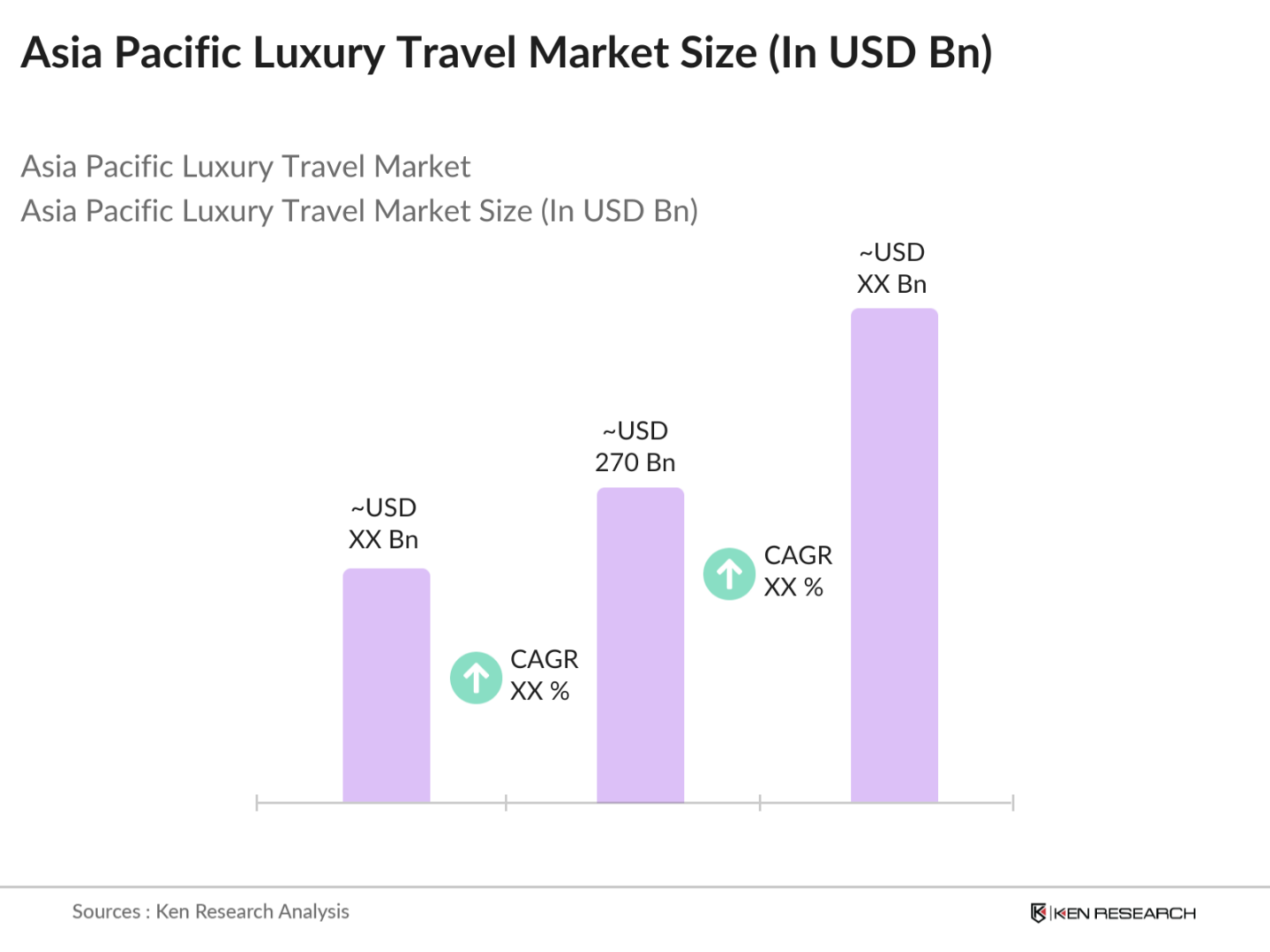
The Asia Pacific Luxury Travel market is valued at USD 270 billion, based on a five-year historical analysis. This market is primarily driven by the rising disposable income of high-net-worth individuals (HNWI) and ultra-high-net-worth individuals (UHNWI) in the region, alongside an increasing demand for unique, personalized, and experiential travel services.
Challenges include high operational costs, stringent visa regulations, and economic instability in certain regions, which may hinder market growth and accessibility to luxury travelers.
Key players include Abercrombie & Kent, Belmond Ltd., Banyan Tree Holdings, Shangri-La Hotels and Resorts, and Six Senses Hotels Resorts Spas, dominating the market with their extensive service portfolios and global presence.
The market is driven by rising disposable incomes, increased demand for wellness tourism, and technological advancements in digital bookings and personalized travel services.

What makes us stand out is that our consultants follows Robust, Refine and Result (RRR) methodology. i.e. Robust for clear definitions, approaches and sanity checking, Refine for differentiating respondents facts and opinions and Result for presenting data with story

We have set a benchmark in the industry by offering our clients with syndicated and customized market research reports featuring coverage of entire market as well as meticulous research and analyst insights.

While we don't replace traditional research, we flip the method upside down. Our dual approach of Top Bottom & Bottom Top ensures quality deliverable by not just verifying company fundamentals but also looking at the sector and macroeconomic factors.

With one step in the future, our research team constantly tries to show you the bigger picture. We help with some of the tough questions you may encounter along the way: How is the industry positioned? Best marketing channel? KPI's of competitors? By aligning every element, we help maximize success.

Our report gives you instant access to the answers and sources that other companies might choose to hide. We elaborate each steps of research methodology we have used and showcase you the sample size to earn your trust.

If you need any support, we are here! We pride ourselves on universe strength, data quality, and quick, friendly, and professional service.