















Asia Pacific Massage Equipment Market Outlook to 2030
Region:Asia
Author(s):Meenakshi Bisht
Product Code:KROD7280
November 2024
94
About the Report
Asia Pacific Massage Equipment Market Overview
- The Asia Pacific massage equipment market is valued at USD 7.1 billion, based on a five-year historical analysis. This growth is driven by increasing health consciousness, technological advancements, and rising disposable incomes across the region. Consumers are increasingly seeking at-home wellness solutions, contributing to the market's expansion.

- China and Japan dominate the Asia Pacific massage equipment market due to their robust economies, technological innovation, and high consumer spending on health and wellness products. These countries have a strong tradition of integrating technology into daily life, which has facilitated the widespread adoption of advanced massage equipment.
- The Asia Pacific region has stringent safety standards for electronic wellness devices, with countries like Japan and South Korea frequently updating their regulatory requirements. In 2024, Japans Ministry of Health, Labour, and Welfare introduced additional testing requirements for massage equipment, ensuring product safety and consumer protection. These regulations impact market entry and compliance costs but reinforce quality assurance.
Asia Pacific Massage Equipment Market Segmentation
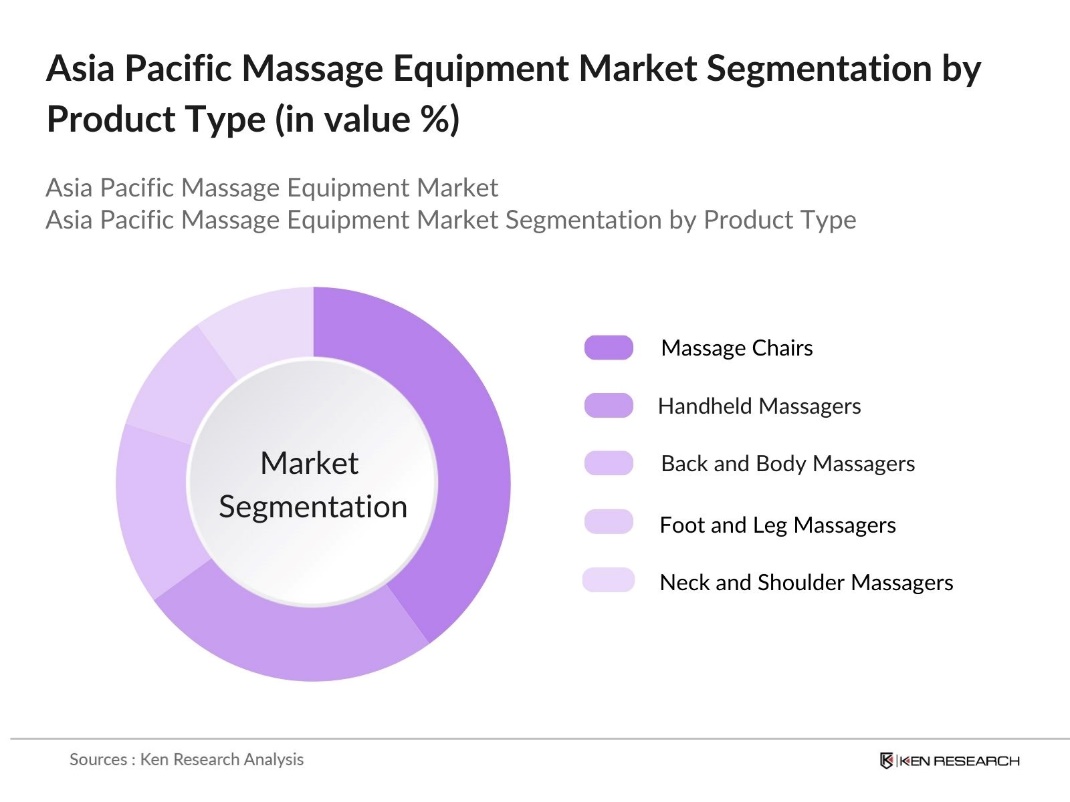
By Product Type: The market is segmented by product type into massage chairs, handheld massagers, back and body massagers, foot and leg massagers, and neck and shoulder massagers. Massage chairs hold a dominant market share in this segment, attributed to their comprehensive features that offer full-body relaxation and therapeutic benefits. The integration of advanced technologies, such as AI and IoT, enhances user experience, making massage chairs a preferred choice among consumers.
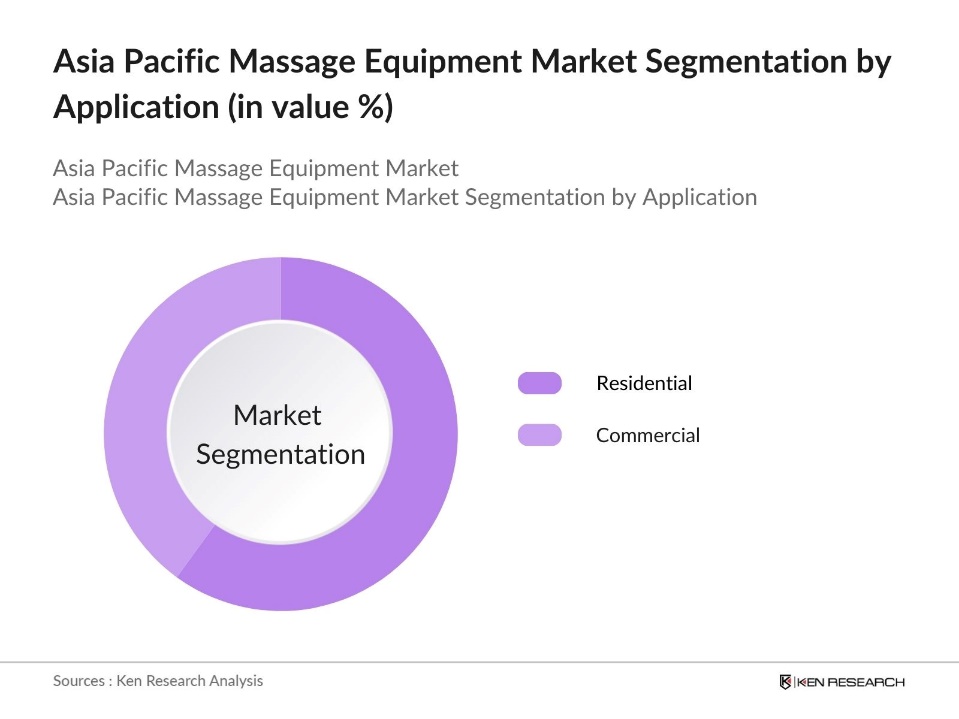
By Application: The market is segmented by application into residential and commercial uses. The residential segment leads the market, driven by the growing trend of home-based wellness solutions. Consumers are investing in personal massage equipment to alleviate stress and improve health, especially in urban areas where hectic lifestyles prevail.
Asia Pacific Massage Equipment Market Competitive Landscape
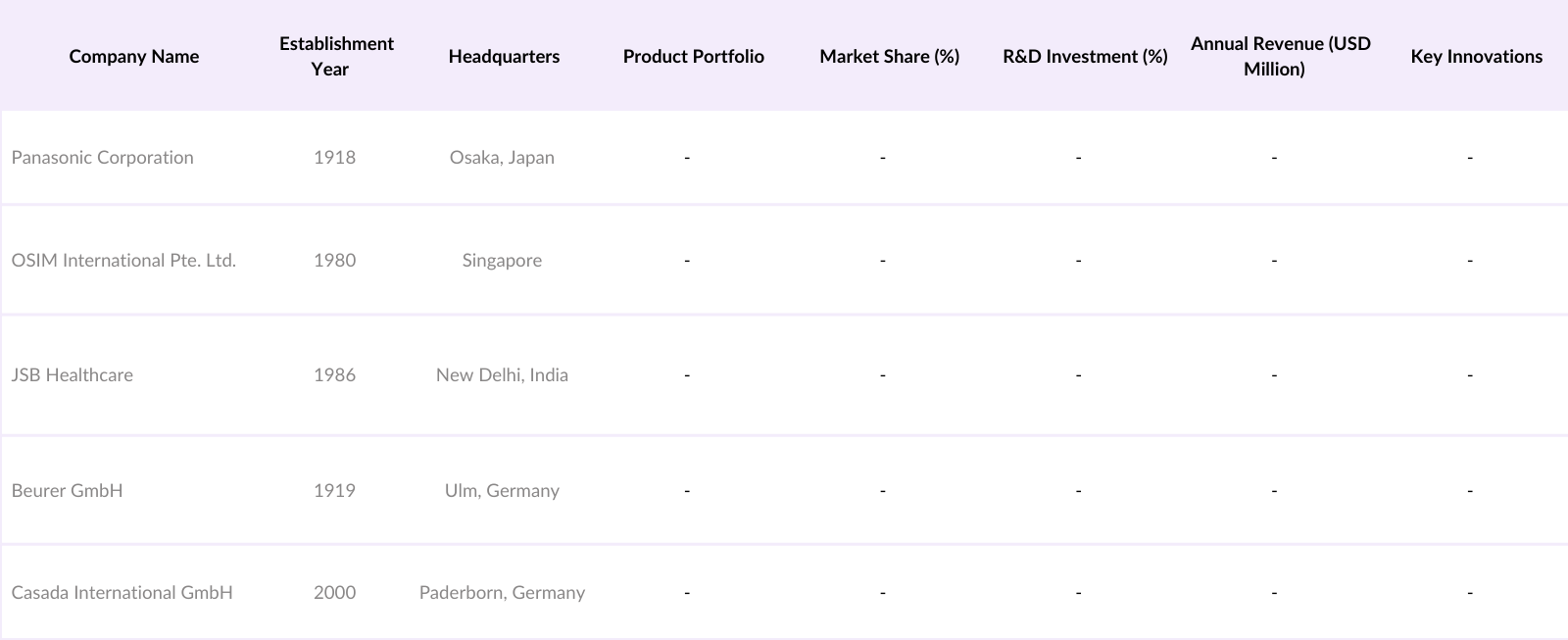
The Asia Pacific massage equipment market is characterized by the presence of several key players who drive innovation and competition. These companies leverage technological advancements and extensive distribution networks to maintain their market positions.
Asia Pacific Massage Equipment Industry Analysis
Growth Drivers
- Rising Health Consciousness: In 2024, health-conscious behavior in the Asia Pacific is notably high due to increased awareness around wellness and preventive health. For example, data from the WHO shows a rise in lifestyle-related diseases, such as cardiovascular and musculoskeletal disorders, which encourages individuals to seek therapeutic solutions like massage equipment. The adoption of wellness practices is also seen in urban centers, where cities like Tokyo and Seoul report an increased rate of gym memberships and wellness service usage, signifying a growing demand for complementary wellness products, including massage equipment.
- Increasing Disposable Income: Data from the IMF shows that Asia Pacific countries, particularly China and India, experienced a rise in disposable income per capita, contributing to higher spending on lifestyle-enhancing products. For instance, In 2023, India's total disposable personal income reached approximately 296.38 trillion (or 296,383,300 million) compared to 273.36 trillion in 2022. This trend signifies an opportunity for massage equipment manufacturers, especially in regions where rising middle-class incomes foster increased spending on non-essential items like personal wellness devices.
- Technological Advancements: The Asia Pacific region is advancing in tech-driven wellness devices, with Japan and South Korea leading innovations in AI-enabled massage equipment that personalizes therapy based on user profiles. Investment in sensor technologies enhances these devices, making them more responsive and efficient. Government incentives for R&D further boost innovation, catering to tech-savvy consumers seeking smart wellness solutions across urban markets in the region.
Market Challenges
- High Initial Costs: Technologically advanced massage equipment in Asia Pacific often comes with a high price tag, making it less accessible for middle-income households. High costs limit market penetration, particularly in emerging economies, where disposable income levels are lower. This pricing barrier deters potential buyers from investing in wellness products, affecting overall market expansion in cost-sensitive regions.
- Availability of Alternative Therapies: Traditional therapies like acupuncture and herbal treatments remain widely popular in countries such as China and India. The strong cultural acceptance and established use of these therapies reduce the demand for massage equipment, as many consumers continue to favor familiar, longstanding wellness practices over technological alternatives, especially in rural areas.
Asia Pacific Massage Equipment Market Future Outlook
Over the next five years, the Asia Pacific massage equipment market is expected to show significant growth driven by continuous technological advancements, increasing consumer demand for at-home wellness solutions, and the expansion of e-commerce platforms facilitating wider product accessibility. The integration of smart technologies and the development of portable, user-friendly devices are anticipated to further propel market growth.
Market Opportunities
- Emerging Markets: Emerging markets like Vietnam and the Philippines hold significant growth potential for the massage equipment industry. Increasing consumer spending in these regions signals a readiness for wellness products, especially in urban areas where health-conscious lifestyles are on the rise. This trend opens opportunities for brands to expand into markets where wellness and personal care are gaining importance among growing middle-class populations.
- Product Innovation: Demand for innovative wellness products in the Asia Pacific market is driving diversification in massage equipment offerings. Companies are developing devices with immersive features like VR integration and IoT capabilities, appealing to tech-savvy consumers seeking enhanced, personalized relaxation experiences. This focus on innovation aligns with the region's shift towards advanced, connected wellness solutions and supports the markets forward-looking growth trajectory.
Scope of the Report
|
Product Type |
Massage Chairs |
|
Application |
Residential |
|
Technology |
Electric |
|
Distribution Channel |
Hypermarkets and Supermarkets |
|
Country |
China |
Products
Key Target Audience
Massage Equipment Manufacturers
Health and Wellness Industry
E-commerce Platforms
Consumer Electronics Companies
Investors and Venture Capitalist Firms
Government and Regulatory Bodies (e.g., Ministry of Health)
Banks and Financial Institutions
Companies
Players Mentioned in the Report
Panasonic Corporation
OSIM International Pte. Ltd.
JSB Healthcare
Beurer GmbH
Casada International GmbH
Xiamen Comfort Science & Technology Group Co., Ltd.
RoboTouch
OMRON Corporation
HoMedics
Human Touch
Table of Contents
1. Asia Pacific Massage Equipment Market Overview
1.1. Definition and Scope
1.2. Market Taxonomy
1.3. Market Growth Rate
1.4. Market Segmentation Overview
2. Asia Pacific Massage Equipment Market Size (In USD Mn)
2.1. Historical Market Size
2.2. Year-On-Year Growth Analysis
2.3. Key Market Developments and Milestones
3. Asia Pacific Massage Equipment Market Analysis
3.1. Growth Drivers
3.1.1. Rising Health Consciousness
3.1.2. Technological Advancements
3.1.3. Increasing Disposable Income
3.1.4. Expansion of Wellness Tourism
3.2. Market Challenges
3.2.1. High Initial Costs
3.2.2. Availability of Alternative Therapies
3.2.3. Regulatory Compliance
3.3. Opportunities
3.3.1. Emerging Markets
3.3.2. Product Innovation
3.3.3. E-commerce Expansion
3.4. Trends
3.4.1. Integration of Smart Technologies
3.4.2. Customizable Massage Solutions
3.4.3. Portable and Compact Designs
3.5. Government Regulations
3.5.1. Safety Standards
3.5.2. Import and Export Policies
3.5.3. Certification Requirements
3.6. SWOT Analysis
3.7. Stakeholder Ecosystem
3.8. Porters Five Forces Analysis
3.9. Competitive Landscape
4. Asia Pacific Massage Equipment Market Segmentation
4.1. By Product Type (In Value %)
4.1.1. Massage Chairs
4.1.2. Handheld Massagers
4.1.3. Back and Body Massagers
4.1.4. Foot and Leg Massagers
4.1.5. Neck and Shoulder Massagers
4.2. By Application (In Value %)
4.2.1. Residential
4.2.2. Commercial
4.3. By Technology (In Value %)
4.3.1. Electric
4.3.2. Non-Electric
4.4. By Distribution Channel (In Value %)
4.4.1. Hypermarkets and Supermarkets
4.4.2. Specialty Stores
4.4.3. Online Sales Channels
4.4.4. Others
4.5. By Country (In Value %)
4.5.1. China
4.5.2. Japan
4.5.3. India
4.5.4. South Korea
4.5.5. Australia
4.5.6. Rest of Asia Pacific
5. Asia Pacific Massage Equipment Market Competitive Analysis
5.1. Detailed Profiles of Major Companies
5.1.1. Panasonic Corporation
5.1.2. OSIM International Pte. Ltd.
5.1.3. JSB Healthcare
5.1.4. Beurer GmbH
5.1.5. Casada International GmbH
5.1.6. Xiamen Comfort Science & Technology Group Co., Ltd.
5.1.7. RoboTouch
5.1.8. OMRON Corporation
5.1.9. HoMedics
5.1.10. Human Touch
5.1.11. BODYFRIEND
5.1.12. Fujiiryoki
5.1.13. Family Inada Co., Ltd.
5.1.14. Prospera
5.1.15. Healthmate International, LLC
5.2. Cross Comparison Parameters (Number of Employees, Headquarters, Inception Year, Revenue, Product Portfolio, Market Share, R&D Investment, Regional Presence)
5.3. Market Share Analysis
5.4. Strategic Initiatives
5.5. Mergers and Acquisitions
5.6. Investment Analysis
5.6.1. Venture Capital Funding
5.6.2. Government Grants
5.6.3. Private Equity Investments
6. Asia Pacific Massage Equipment Market Regulatory Framework
6.1. Safety and Quality Standards
6.2. Compliance Requirements
6.3. Certification Processes
7. Asia Pacific Massage Equipment Future Market Size (In USD Mn)
7.1. Future Market Size Projections
7.2. Key Factors Driving Future Market Growth
8. Asia Pacific Massage Equipment Future Market Segmentation
8.1. By Product Type (In Value %)
8.2. By Application (In Value %)
8.3. By Technology (In Value %)
8.4. By Distribution Channel (In Value %)
8.5. By Country (In Value %)
9. Asia Pacific Massage Equipment Market Analysts Recommendations
9.1. Total Addressable Market (TAM), Serviceable Available Market (SAM), Serviceable Obtainable Market (SOM) Analysis
9.2. Customer Cohort Analysis
9.3. Marketing Initiatives
9.4. White Space Opportunity Analysis
Disclaimer Contact UsResearch Methodology
Step 1: Identification of Key Variables
The initial phase involves constructing an ecosystem map encompassing all major stakeholders within the Asia Pacific Massage Equipment Market. This step is underpinned by extensive desk research, utilizing a combination of secondary and proprietary databases to gather comprehensive industry-level information. The primary objective is to identify and define the critical variables that influence market dynamics.
Step 2: Market Analysis and Construction
In this phase, we compile and analyze historical data pertaining to the Asia Pacific Massage Equipment Market. This includes assessing market penetration, the ratio of marketplaces to service providers, and the resultant revenue generation. Furthermore, an evaluation of service quality statistics is conducted to ensure the reliability and accuracy of the revenue estimates.
Step 3: Hypothesis Validation and Expert Consultation
Market hypotheses are developed and subsequently validated through computer-assisted telephone interviews (CATIs) with industry experts representing a diverse array of companies. These consultations provide valuable operational and financial insights directly from industry practitioners, which are instrumental in refining and corroborating the market data.
Step 4: Research Synthesis and Final Output
The final phase involves direct engagement with multiple massage equipment manufacturers to acquire detailed insights into product segments, sales performance, consumer preferences, and other pertinent factors. This interaction serves to verify and complement the statistics derived from the bottom-up approach, thereby ensuring a comprehensive, accurate, and validated analysis of the Asia Pacific Massage Equipment market.
Frequently Asked Questions
O1 How big is the Asia Pacific Massage Equipment Market?
The Asia Pacific massage equipment market is valued at USD 7.1 billion, based on a five-year historical analysis.
02 What are the key drivers for the Asia Pacific Massage Equipment Market?
The Asia Pacific massage equipment market is driven by rising health consciousness, technological advancements, and growing disposable incomes across the region. These factors have increased the demand for at-home wellness solutions, contributing to significant market expansion.
03 Which countries dominate the Asia Pacific Massage Equipment Market?
China and Japan are the dominant countries in the Asia Pacific massage equipment market due to their advanced technological infrastructure, high consumer spending on health and wellness products, and a strong tradition of adopting technology-enhanced wellness solutions.
04 What are the main challenges in the Asia Pacific Massage Equipment Market?
Key challenges in Asia Pacific massage equipment market include high initial costs, availability of alternative therapies, and the complexity of regulatory compliance, which can affect market entry and expansion for new players in the industry.
Why Buy From Us?

What makes us stand out is that our consultants follows Robust, Refine and Result (RRR) methodology. i.e. Robust for clear definitions, approaches and sanity checking, Refine for differentiating respondents facts and opinions and Result for presenting data with story

We have set a benchmark in the industry by offering our clients with syndicated and customized market research reports featuring coverage of entire market as well as meticulous research and analyst insights.

While we don't replace traditional research, we flip the method upside down. Our dual approach of Top Bottom & Bottom Top ensures quality deliverable by not just verifying company fundamentals but also looking at the sector and macroeconomic factors.

With one step in the future, our research team constantly tries to show you the bigger picture. We help with some of the tough questions you may encounter along the way: How is the industry positioned? Best marketing channel? KPI's of competitors? By aligning every element, we help maximize success.

Our report gives you instant access to the answers and sources that other companies might choose to hide. We elaborate each steps of research methodology we have used and showcase you the sample size to earn your trust.

If you need any support, we are here! We pride ourselves on universe strength, data quality, and quick, friendly, and professional service.