
Asia Pacific Meat Substitutes Market Outlook to 2030
Region:Asia
Author(s):Shreya Garg
Product Code:KROD6345
December 2024
98
About the Report
Asia Pacific Meat Substitutes Market Overview
- The Asia Pacific Meat Substitutes Market is valued at USD 2 billion, based on a five-year historical analysis. The market is driven by increasing consumer interest in plant-based diets, particularly among urban populations in China, India, and Japan, where concerns over environmental sustainability and personal health have grown significantly. The rising awareness of the negative impacts of animal agriculture, coupled with innovative product launches from companies, has further bolstered demand in this sector.
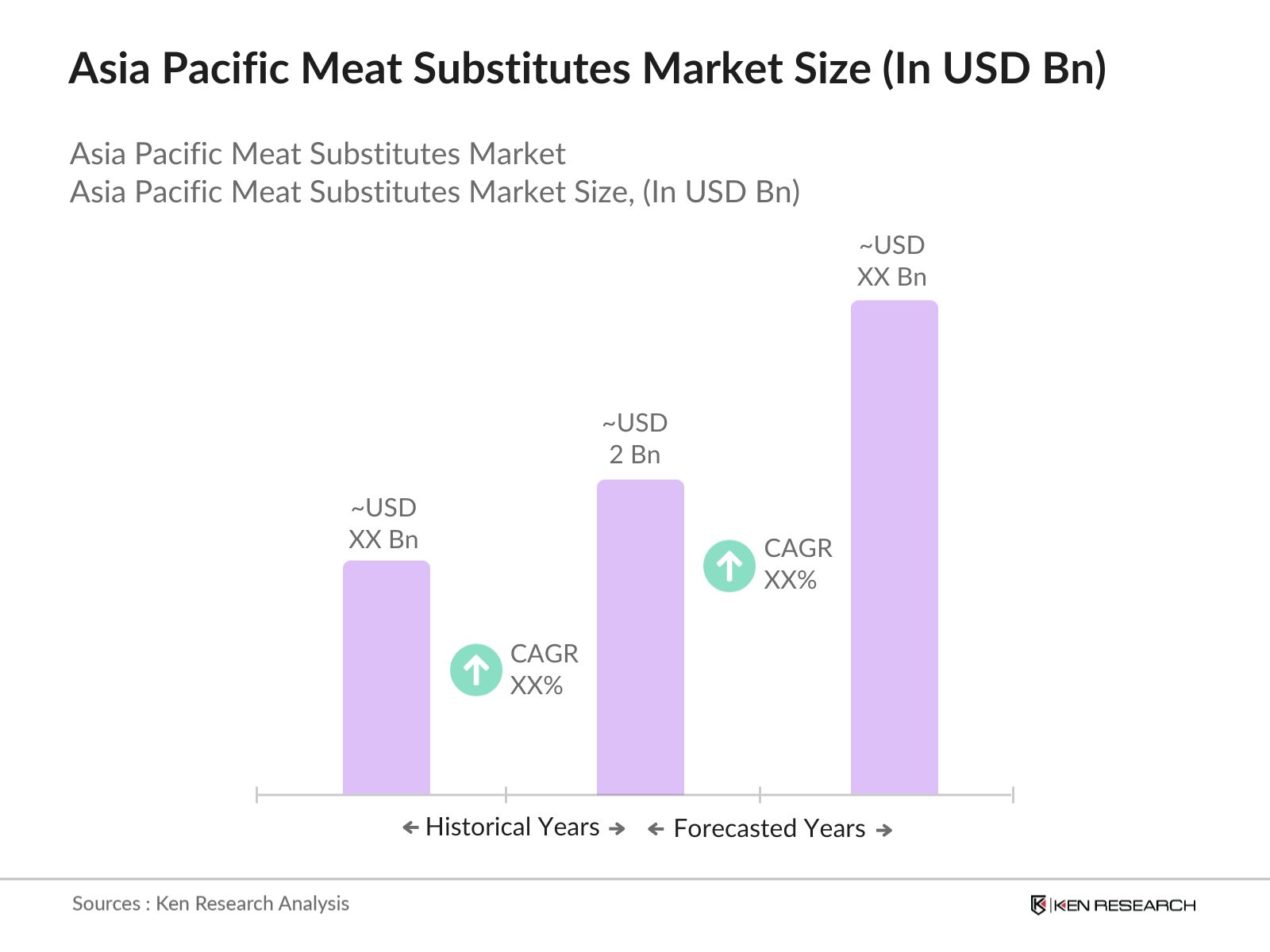
- China, India, and Japan are the dominant markets in the region due to their large populations and evolving dietary preferences. China leads due to a significant shift towards healthier, plant-based eating habits and government initiatives promoting sustainable food sources. Indias dominance stems from the cultural acceptance of vegetarian diets, alongside a growing middle class that is embracing alternatives to traditional meat products. Japan, known for its focus on innovation, is witnessing strong demand due to its tech-savvy consumers and the introduction of advanced meat substitute technologies.
- The Asia Pacific region is tightening labelling standards for plant-based, cultured, and hybrid products. In 2023, Australia introduced new labelling guidelines requiring plant-based products to avoid terms traditionally associated with animal-based foods, such as "meat" or "burger," unless clearly marked as plant-based. The same year, Indias FSSAI established regulations for alternative protein labelling, mandating clear distinctions between plant-based and animal-derived products. These changes are aimed at preventing consumer confusion and ensuring transparency in product marketing. The evolving regulatory landscape underscores the need for compliance by manufacturers in the meat substitute market.
Asia Pacific Meat Substitutes Market Segmentation
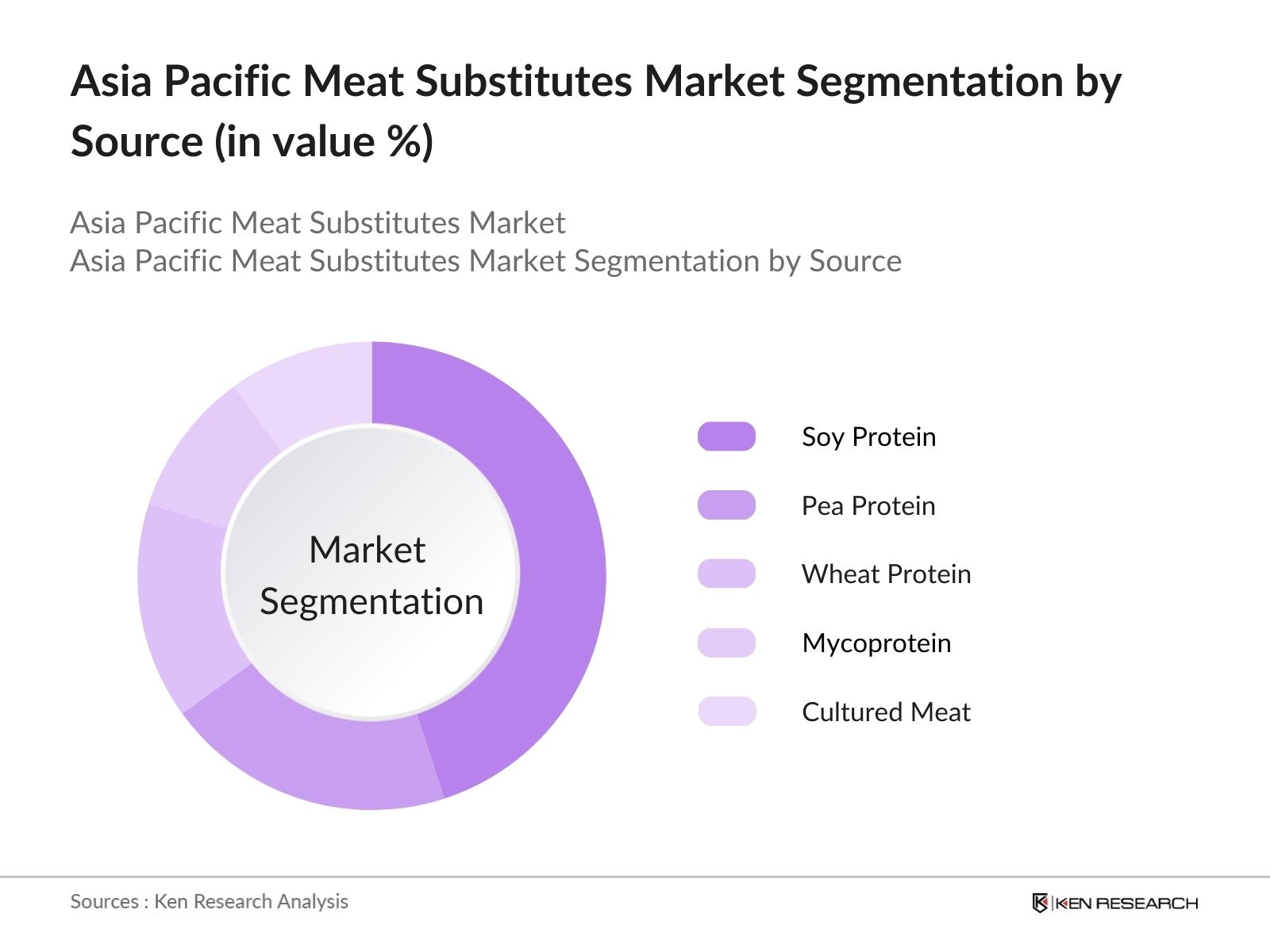
By Source: The market is segmented by source into soy protein, pea protein, wheat protein, mycoprotein, and cultured meat. Soy Protein has a dominant market share within this segment, driven by its wide availability and established presence in various products, including tofu and soy-based meat alternatives. Its affordability and rich protein content make it a preferred choice among manufacturers and consumers alike, particularly in China and Japan where tofu has been a dietary staple for centuries.
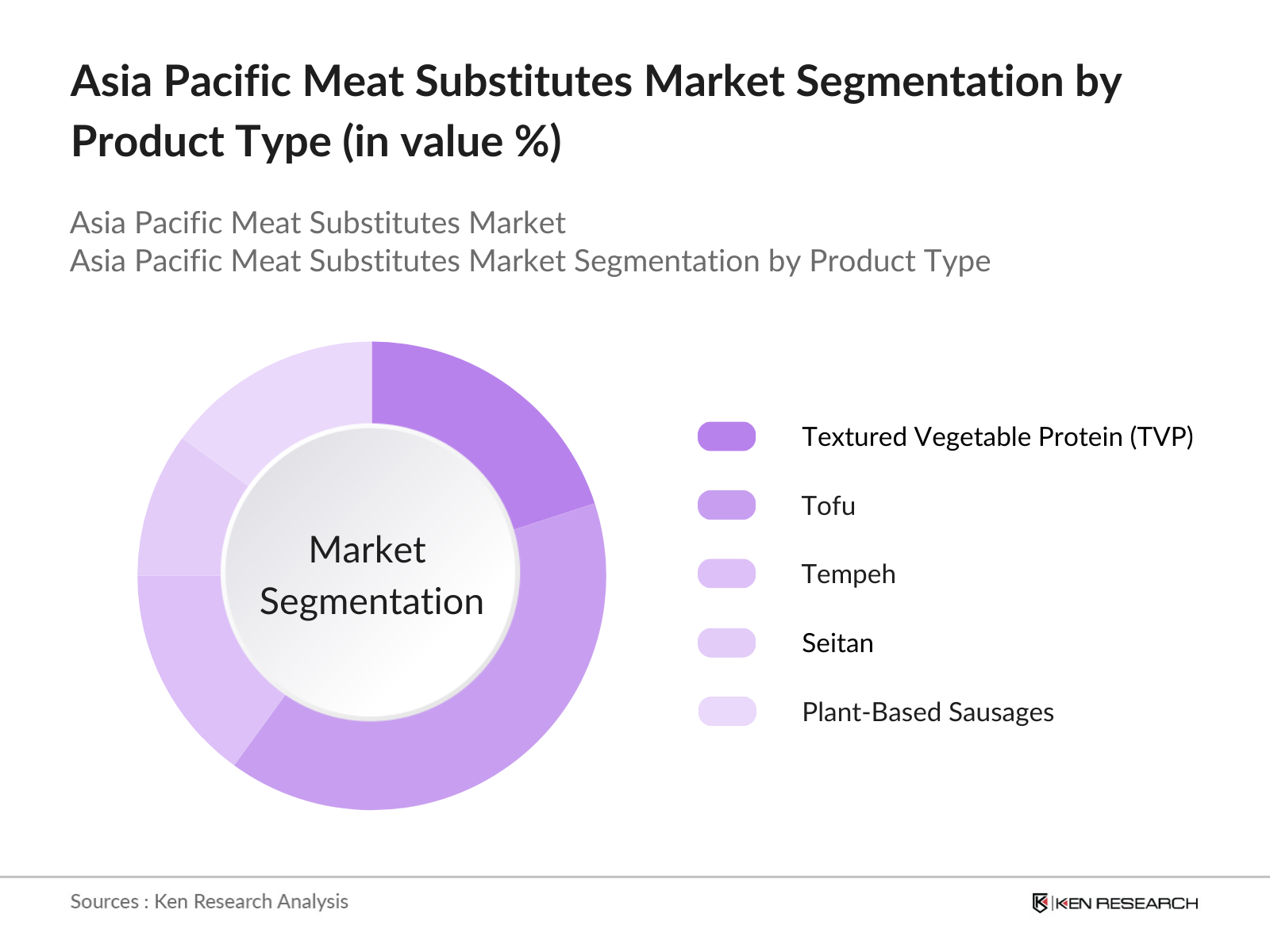
By Product Type: The market is also segmented by product type into textured vegetable protein (TVP), tofu, tempeh, seitan, and plant-based sausages. Tofu holds a dominant position in this segment, largely due to its traditional acceptance in Asian cuisines and versatile applications in various recipes. As a rich source of protein and other nutrients, tofu is widely used in households and food services across China, Japan, and Southeast Asia, contributing to its leading position in this category.
Asia Pacific Meat Substitutes Market Competitive Landscape
The Asia Pacific Meat Substitutes market is characterized by a blend of local and international players, competing on the grounds of product innovation, sustainability practices, and distribution networks. The market is dominated by major global players such as Beyond Meat Inc. and Impossible Foods Inc., alongside regional innovators like Green Monday Holdings Ltd. This consolidation showcases the strategic advantage these companies have in terms of branding and consumer loyalty, as well as their ability to quickly adapt to market needs.
|
Company |
Establishment Year |
Headquarters |
Product Portfolio |
Sustainability Initiatives |
Revenue |
R&D Expenditure |
Regional Presence |
Strategic Partnerships |
Number of Employees |
|
Beyond Meat Inc. |
2009 |
El Segundo, USA |
|||||||
|
Impossible Foods Inc. |
2011 |
Redwood City, USA |
|||||||
|
Green Monday Holdings Ltd. |
2012 |
Hong Kong, China |
|||||||
|
Quorn Foods |
1985 |
Stokesley, UK |
|||||||
|
V2food |
2019 |
Sydney, Australia |
Asia Pacific Meat Substitutes Industry Analysis
Growth Drivers
- Increasing Vegan and Flexitarian Populations: The Asia Pacific region has seen significant growth in the vegan and flexitarian populations over recent years. As of 2023, countries like India and China have experienced shifts towards plant-based diets due to increasing awareness about health and environmental sustainability. In Australia, more than 2.5 million people now identify as vegan or flexitarian, with a growing consumer base driving demand for plant-based meat substitutes. The Indian government has reported a 12% increase in plant-based food consumption in urban areas between 2022 and 2023. These trends contribute to the expansion of the meat substitutes market, as consumers seek alternatives to traditional meat.
- Government Initiatives for Sustainability: Governments across the Asia Pacific are actively promoting sustainability, which includes the adoption of plant-based food alternatives. In China, the governments "Healthy China 2030" initiative promotes sustainable eating practices, including reducing meat consumption. In India, several state governments have introduced incentives for plant-based food manufacturers to boost sustainable agriculture practices. In 2023, the Ministry of Agriculture in India allocated $100 million to promote sustainable food production methods, encouraging companies to develop alternative protein sources. These government initiatives are crucial in accelerating the growth of the meat substitutes market in the region.
- Rise in Health Consciousness: The rise in health consciousness is a significant driver for the meat substitutes market in the Asia Pacific. A growing awareness of dietary preferences and food allergies is pushing consumers towards plant-based alternatives. In 2023, surveys by health departments in Australia revealed that 42% of individuals are now avoiding meat for health reasons, including managing allergies or reducing cholesterol intake. Similarly, Japan reported a 30% rise in the consumption of allergen-free food products between 2022 and 2023, highlighting the growing market for meat substitutes in addressing health concerns.
Market Challenges
- High Production Costs: The production of meat substitutes in the Asia Pacific market is hampered by high costs, primarily due to the expensive nature of sourcing raw materials and the processing technologies involved. For instance, in 2023, plant-based protein production in Southeast Asia faced supply chain challenges, with the cost of soy protein imports rising due to supply shortages in China. Additionally, technological processing, including fermentation and extrusion methods, adds further operational costs. The reliance on imported raw materials from the U.S. and Europe inflates production expenses, slowing the penetration of these products in price-sensitive markets.
- Regulatory Hurdles: Regulatory frameworks across various Asia Pacific nations pose a significant challenge to the growth of the meat substitutes market. Countries like India and Indonesia have stringent food safety regulations under bodies such as FSSAI and BPOM, making it difficult for new plant-based products to enter the market. In 2023, the Food Safety and Standards Authority of India (FSSAI) introduced new labelling requirements for plant-based meats, further complicating the approval processes for manufacturers. Similarly, import-export restrictions for key ingredients, such as soy and pea protein, add complexity to the market expansion in these regions.
Asia Pacific Meat Substitutes Market Future Outlook
Over the next five years, the Asia Pacific Meat Substitutes market is expected to show substantial growth, driven by an increasing shift towards plant-based diets, rising consumer health consciousness, and government support for sustainable food practices. Key industry players are likely to continue their focus on product innovation and strategic partnerships to tap into new markets and demographics. Furthermore, advancements in cultured meat technology and the growing interest in alternative protein sources will create new opportunities for growth.
Future Market Opportunities
- Expansion into Untapped Markets: With rural populations making up a significant portion of Asia Pacific, there is an opportunity for meat substitute manufacturers to expand into these underserved markets. In 2023, rural areas in India alone had over 700 million consumers, representing a massive untapped market for plant-based products. Increased distribution networks, supported by government-backed initiatives for food security, make these regions attractive for market penetration. Additionally, rising digital access in these areas, with over 1 billion mobile internet users, creates new e-commerce opportunities for the distribution of meat substitutes.
- Technological Advancements in Cultured Meat Production: Technological innovation in cultured meat production is expected to offer significant growth opportunities in the Asia Pacific market. Singapore, for instance, became the first country to approve the sale of lab-grown meat in 2022, with other countries exploring similar regulatory frameworks. In 2023, Singapores government invested $144 million in food innovation, including the development of cultured meat. Such advancements reduce reliance on traditional farming, making it possible for Asia Pacific countries to meet their growing protein demands sustainably. Companies that embrace these technologies will benefit from reduced production timelines and enhanced scalability.
Scope of the Report
|
Source |
Soy Protein Pea Protein Wheat Protein Mycoprotein Cultured Meat |
|
Product Type |
Textured Vegetable Protein (TVP) Tofu Tempeh Seitan Plant-Based Sausages |
|
Distribution Channel |
Retail (Supermarkets, Specialty Stores) Food Service (Restaurants, QSR) E-commerce Platforms |
|
End-Use |
Household Consumption Food Industry (Processed Meat Substitutes) HORECA (Hotels, Restaurants, Cafs) |
|
Region |
China India Japan Australia & New Zealand Southeast Asia |
Products
Key Target Audience
Plant-Based Food Manufacturers
Investors and Venture Capitalist Firms
Government and Regulatory Bodies (e.g., Food Safety and Standards Authority of India, China Food and Drug Administration)
Retail Chains and Supermarkets
Food Service Industry (QSRs, Restaurants)
Ingredient Suppliers and Distributors
Consumer Advocacy Groups
Cultured Meat Startups
Companies
Major Players
Beyond Meat Inc.
Impossible Foods Inc.
The Meatless Farm Co.
Green Monday Holdings Ltd.
Quorn Foods
V2food
Next Meats Co.
Eat Just Inc.
Tofurky
Gardein (Conagra Brands)
Sunfed Meats
GoodDot
Phuture Foods
LikeMeat (Livekindly Collective)
Zhenmeat
Table of Contents
Asia Pacific Meat Substitutes Market Overview
1.1. Definition and Scope
1.2. Market Taxonomy
1.3. Plant-Based, Mycoprotein, and Cultured Meat Segmentation Overview
1.4. Market Growth Rate (Growth Patterns, Adoption Rates)
1.5. Regional Market Penetration (Key Countries)
Asia Pacific Meat Substitutes Market Size (In USD Bn)
2.1. Historical Market Size
2.2. Year-On-Year Growth Analysis (Volume, Revenue)
2.3. Key Market Developments and Milestones (Product Launches, Strategic Partnerships)
Asia Pacific Meat Substitutes Market Analysis
3.1. Growth Drivers
3.1.1. Increasing Vegan and Flexitarian Populations
3.1.2. Government Initiatives for Sustainability
3.1.3. Rise in Health Consciousness (Dietary Preferences, Allergies)
3.2. Market Challenges
3.2.1. High Production Costs (Raw Material Sourcing, Processing Technology)
3.2.2. Regulatory Hurdles (FDA, FSSAI Regulations)
3.2.3. Limited Consumer Awareness in Emerging Markets
3.3. Opportunities
3.3.1. Expansion into Untapped Markets (Rural Penetration)
3.3.2. Technological Advancements in Cultured Meat Production
3.3.3. Growth in E-commerce Distribution Channels
3.4. Trends
3.4.1. Adoption of Fermented Protein Solutions
3.4.2. Rising Demand for Clean Label Products (Ingredient Transparency)
3.4.3. Hybrid Meat Products (Plant-Based Blends)
3.5. Government Regulation
3.5.1. Labelling Standards (Plant-Based, Cultured, and Hybrid Products)
3.5.2. Import-Export Tariffs (Soy, Pea Protein)
3.5.3. Subsidies and Incentives for Sustainable Farming
3.5.4. Food Safety Standards
3.6. SWOT Analysis (Strengths, Weaknesses, Opportunities, Threats)
3.7. Stakeholder Ecosystem (Producers, Distributors, Retailers)
3.8. Porters Five Forces (Supplier Power, Buyer Power, Competitive Rivalry)
3.9. Competitive Landscape Analysis
Asia Pacific Meat Substitutes Market Segmentation
4.1. By Source (In Value %)
4.1.1. Soy Protein
4.1.2. Pea Protein
4.1.3. Wheat Protein
4.1.4. Mycoprotein
4.1.5. Cultured Meat
4.2. By Product Type (In Value %)
4.2.1. Textured Vegetable Protein (TVP)
4.2.2. Tofu
4.2.3. Tempeh
4.2.4. Seitan
4.2.5. Plant-Based Sausages
4.3. By Distribution Channel (In Value %)
4.3.1. Retail (Supermarkets, Specialty Stores)
4.3.2. Food Service (Restaurants, QSR)
4.3.3. E-commerce Platforms
4.4. By End-Use (In Value %)
4.4.1. Household Consumption
4.4.2. Food Industry (Processed Meat Substitutes)
4.4.3. HORECA (Hotels, Restaurants, Cafs)
4.5. By Region (In Value %)
4.5.1. China
4.5.2. India
4.5.3. Japan
4.5.4. Australia & New Zealand
4.5.5. Southeast Asia
Asia Pacific Meat Substitutes Market Competitive Analysis
5.1 Detailed Profiles of Major Companies
5.1.1. Beyond Meat Inc.
5.1.2. Impossible Foods Inc.
5.1.3. The Meatless Farm Co.
5.1.4. Green Monday Holdings Ltd.
5.1.5. Quorn Foods
5.1.6. V2food
5.1.7. Next Meats Co.
5.1.8. Eat Just Inc.
5.1.9. Tofurky
5.1.10. Gardein (Conagra Brands)
5.1.11. Sunfed Meats
5.1.12. GoodDot
5.1.13. Phuture Foods
5.1.14. LikeMeat (Livekindly Collective)
5.1.15. Zhenmeat
5.2 Cross Comparison Parameters (Product Portfolio, Production Capacity, Regional Presence, Pricing Strategy, Innovation Index, Sustainability Initiatives, Market Share, Distribution Network)
5.3. Market Share Analysis (Key Players by Revenue)
5.4. Strategic Initiatives (Partnerships, Collaborations)
5.5. Mergers and Acquisitions (Recent Transactions)
5.6. Investment Analysis (Funding Rounds, Market Entry)
5.7 Venture Capital & Private Equity Funding
5.8. Government Grants & Incentives (Sustainable Protein Development)
5.9. Expansion Strategies
Asia Pacific Meat Substitutes Market Regulatory Framework
6.1. Certification Processes (Non-GMO, Organic Certification)
6.2. Compliance Requirements (Food Labeling, Health Claims)
6.3. Import-Export Regulations (Tariffs, Quotas)
6.4. Sustainable Production Practices (Carbon Footprint, Water Usage Standards)
Asia Pacific Meat Substitutes Future Market Size (In USD Bn)
7.1. Future Market Size Projections
7.2. Key Factors Driving Future Market Growth (Demographic Shifts, Protein Alternatives)
Asia Pacific Meat Substitutes Future Market Segmentation
8.1. By Source (In Value %)
8.2. By Product Type (In Value %)
8.3. By Distribution Channel (In Value %)
8.4. By End-Use (In Value %)
8.5. By Region (In Value %)
Asia Pacific Meat Substitutes Market Analysts Recommendations
9.1. TAM/SAM/SOM Analysis (Total Addressable Market, Serviceable Available Market, Serviceable Obtainable Market)
9.2. Marketing Strategies for Penetration (Brand Positioning, Pricing Strategy)
9.3. Customer Cohort Analysis (Consumer Preferences, Purchase Patterns)
9.4. White Space Opportunity Analysis (Untapped Markets, Product Innovation)
Disclaimer Contact UsResearch Methodology
Step 1: Identification of Key Variables
This step involves mapping out the ecosystem of the Asia Pacific Meat Substitutes Market, identifying all major stakeholders, and defining critical variables like production costs, distribution networks, and consumer preferences. The data was gathered through secondary research, including reputable industry databases and proprietary sources.
Step 2: Market Analysis and Construction
In this phase, historical data related to the market is compiled, focusing on production volumes, market penetration levels, and sales revenue. Key factors influencing market dynamics, such as pricing strategies and consumer trends, are analyzed to ensure accurate estimates.
Step 3: Hypothesis Validation and Expert Consultation
Through structured interviews with market experts and stakeholders, initial hypotheses are validated to refine the market model. These consultations provide valuable insights into emerging trends and validate the quantitative data collected through secondary research.
Step 4: Research Synthesis and Final Output
The final phase integrates insights from both primary and secondary research, providing a comprehensive view of market dynamics. The synthesis process ensures that the report offers actionable insights and reliable data, making it a valuable resource for decision-making in the industry.
Frequently Asked Questions
01. How big is the Asia Pacific Meat Substitutes Market?
The Asia Pacific Meat Substitutes Market is valued at USD 2 billion, driven by increasing consumer interest in plant-based diets and sustainable food sources.
02. What are the challenges in the Asia Pacific Meat Substitutes Market?
Challenges in the Asia Pacific Meat Substitutes Market include high production costs, regulatory barriers in different countries, and consumer perception issues in emerging markets where traditional diets dominate.
03. Who are the major players in the Asia Pacific Meat Substitutes Market?
Key players in the Asia Pacific Meat Substitutes Market include Beyond Meat Inc., Impossible Foods Inc., Green Monday Holdings Ltd., Quorn Foods, and V2food, known for their product innovation and strong distribution networks.
04. What are the growth drivers of the Asia Pacific Meat Substitutes Market?
Growth drivers in the Asia Pacific Meat Substitutes Market include rising health awareness, government support for sustainable food production, and advancements in alternative protein technology like cultured meat.
05. What are the key trends in the Asia Pacific Meat Substitutes Market?
Key trends in the Asia Pacific Meat Substitutes Market include the increasing demand for clean-label products, the integration of technological innovations in food production, and the rising popularity of hybrid meat products.
Why Buy From Us?

What makes us stand out is that our consultants follows Robust, Refine and Result (RRR) methodology. i.e. Robust for clear definitions, approaches and sanity checking, Refine for differentiating respondents facts and opinions and Result for presenting data with story

We have set a benchmark in the industry by offering our clients with syndicated and customized market research reports featuring coverage of entire market as well as meticulous research and analyst insights.

While we don't replace traditional research, we flip the method upside down. Our dual approach of Top Bottom & Bottom Top ensures quality deliverable by not just verifying company fundamentals but also looking at the sector and macroeconomic factors.

With one step in the future, our research team constantly tries to show you the bigger picture. We help with some of the tough questions you may encounter along the way: How is the industry positioned? Best marketing channel? KPI's of competitors? By aligning every element, we help maximize success.

Our report gives you instant access to the answers and sources that other companies might choose to hide. We elaborate each steps of research methodology we have used and showcase you the sample size to earn your trust.

If you need any support, we are here! We pride ourselves on universe strength, data quality, and quick, friendly, and professional service.