















Asia Pacific Medical Alert Systems Market Outlook to 2030
Region:Asia
Author(s):Vijay Kumar
Product Code:KROD10082
November 2024
88
About the Report
Asia Pacific Medical Alert Systems Market Overview
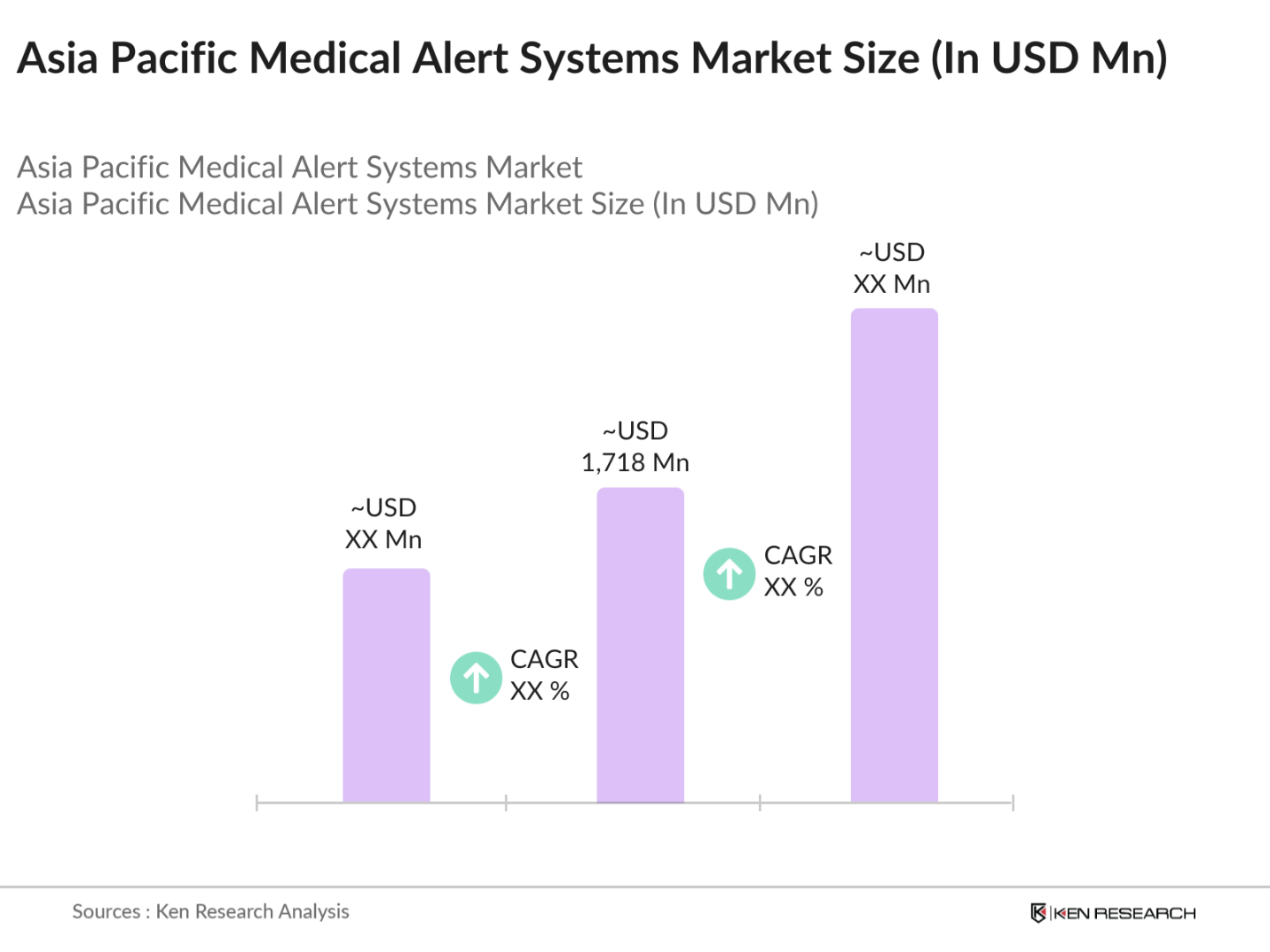
- The Asia Pacific Medical Alert Systems market is valued at USD 1,718 million, based on a five-year historical analysis. This market's expansion is primarily driven by the region's rapidly aging population, particularly in China and Japan, along with technological advancements in home-based healthcare solutions. As healthcare priorities shift toward providing secure, in-home care, the adoption of mobile and personal emergency response systems has risen, appealing to seniors seeking independent yet secure living solutions.
- Countries such as China, Japan, and India lead the Asia Pacific market, supported by their large elderly populations, growing healthcare expenditures, and rising awareness of personal safety technology. China, with its vast elderly demographic and substantial healthcare investment, dominates the region. Japans highly developed healthcare system and focus on advanced elderly care also contribute significantly, while Indias expanding middle class and urbanization drive the adoption of alert systems as home healthcare becomes increasingly accessible.
- Countries in the Asia-Pacific region is updating healthcare standards, particularly around data protection for digital health devices. In South Korea, stringent measures now regulate health data storage and transmission, supporting a safer environment for medical alert devices. These compliance requirements are essential for consumer trust in IoT-based healthcare solutions.
Asia Pacific Medical Alert Systems Market Segmentation
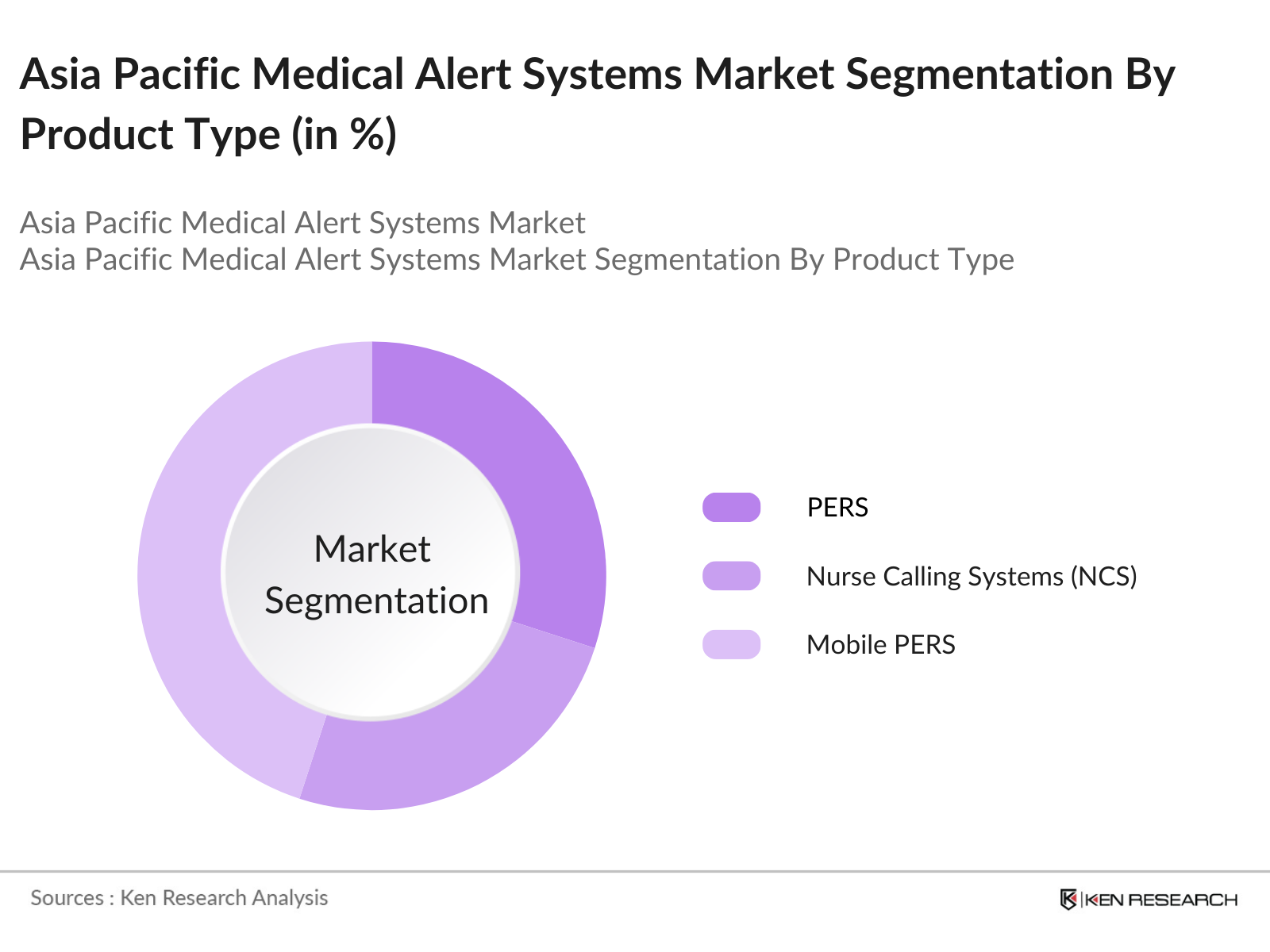
By Product Type: The market is segmented by product type, including personal emergency response systems (PERS), nurse calling systems (NCS), and mobile PERS. Mobile PERS commands the largest market share within this category due to its flexibility, enabling seniors to access emergency services both at home and on-the-go. The increasing use of smartphones and GPS technology further supports the dominance of mobile PERS, appealing to seniors who prefer maintaining an active lifestyle while ensuring their safety.
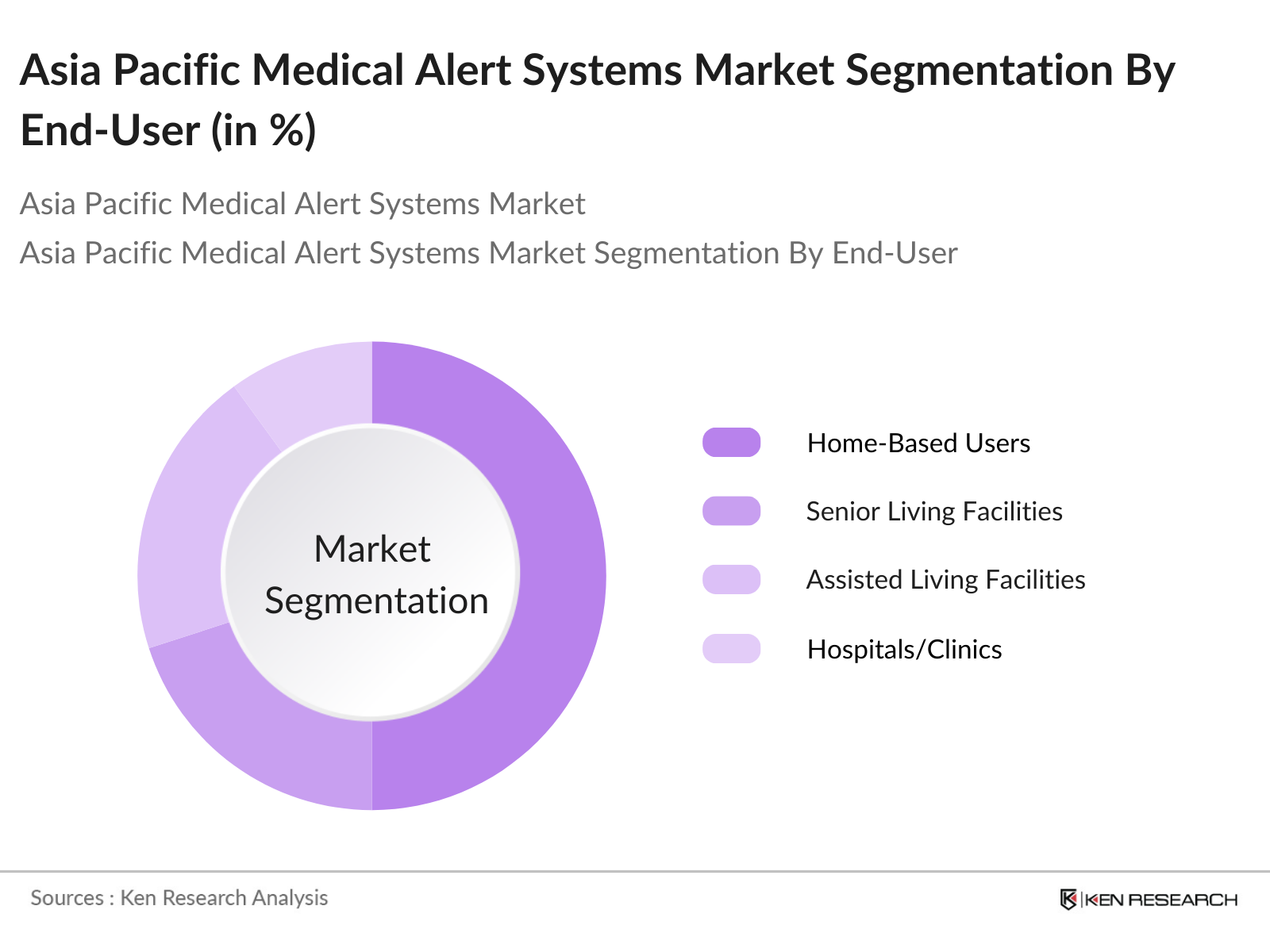
By End-User: The market is also segmented by end-users, such as home-based users, senior living facilities, assisted living facilities, and hospitals/clinics. The home-based user segment dominates due to the growing trend toward aging in place, where elderly individuals prefer staying in their own homes with reliable alert systems for added security. The increasing prevalence of chronic diseases among seniors and the need for immediate assistance contribute significantly to this segments growth.
Asia Pacific Medical Alert Systems Market Competitive Landscape
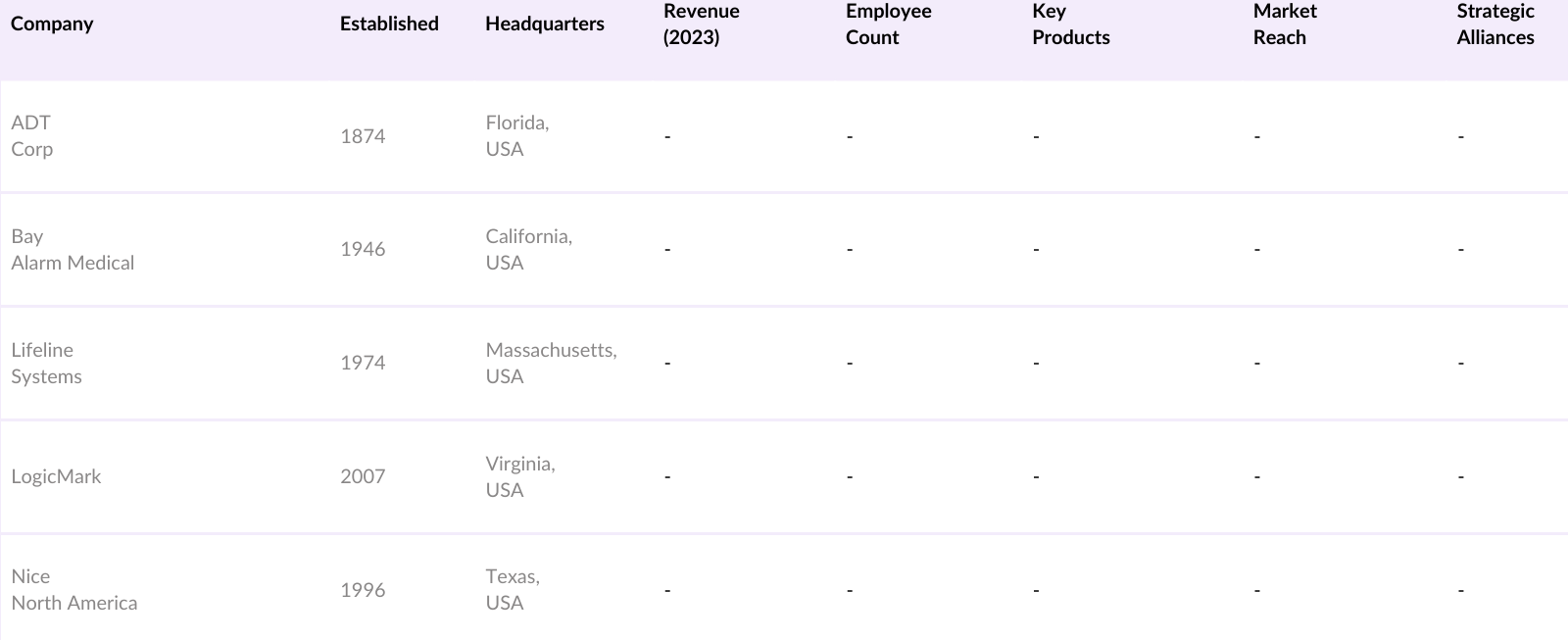
The Asia Pacific medical alert systems market includes a mix of regional and global players, each contributing to the competitive landscape with unique technological offerings and market strategies. Key players focus on product innovation, geographic expansion, and integration with digital health and home automation systems. The markets competitive landscape is characterized by a few prominent players dominating due to their expansive distribution networks, innovative technology integration, and established consumer trust.
Asia Pacific Medical Alert Systems Industry Analysis
Growth Drivers
- Growing Geriatric Population: Asias population is rapidly aging, with over 20% of people in countries like Japan and South Korea aged 60 or older, compared to around 8% a decade ago. China alone now has over 200 million people above 65. This demographic shift drives the demand for medical alert systems as these systems help manage risks like falls, which account for over 37 million injuries requiring medical attention annually across Asia. With life expectancy increasing, the need for support devices for aging populations continues to rise.
- Rising Awareness of Personal Safety and Healthcare Access: Awareness regarding personal health monitoring has surged in Asia Pacific. In recent years, national health campaigns in countries like Australia and Japan have promoted at-home health monitoring, spurring demand for medical alert systems among seniors seeking to age at home. This trend aligns with healthcare decentralization initiatives, which aim to enhance home-based care, reducing pressure on hospitals. Health alerts are essential for addressing aging-related health issues that are projected to impact 25% of the regions population by 2030.
- Technological Advancements (5G-enabled mPERS, Smart Home Integration): Technological innovations, such as 5G connectivity and smart home integration, have enhanced the utility of medical alert systems. In 2023, several Asia-Pacific markets, including Japan and South Korea, saw the rollout of 5G-enabled medical alert devices, increasing network reliability and response times. These advancements facilitate integration with wearable devices and IoT solutions, creating more responsive personal emergency response systems (PERS) tailored to at-home senior care needs.
Market Challenges
- High Initial Costs and Installation Fees: While beneficial, medical alert systems are often perceived as expensive, especially in developing economies in Asia, where median household incomes are significantly lower than in Western countries. In countries like the Philippines and Indonesia, installation costs may exceed monthly household healthcare budgets, creating barriers to adoption. Affordability remains a key challenge in expanding the reach of these systems.
- Limited Connectivity in Remote Areas: Rural areas in Asia-Pacific often face network and connectivity issues, which hinder the effectiveness of real-time medical alert systems. While 5G rollout has progressed in urban regions of countries like Japan and South Korea, remote areas in countries such as India and Indonesia still rely on limited 4G or even 3G networks, affecting system reliability.
Asia Pacific Medical Alert Systems Market Future Outlook
The Asia Pacific medical alert systems market is poised for sustained growth over the next five years, fueled by demographic shifts, technological advancements, and rising awareness of personal safety solutions. The aging population in countries like China and India will further drive demand for emergency response systems, while smart home integration will expand usage beyond traditional settings. Manufacturers focusing on product innovation and strategic partnerships will likely capture a larger market share in this evolving landscape.
Market Opportunities
- Expansion into Rural and Emerging Regions: Rural areas represent an untapped market due to lower awareness and limited infrastructure. Countries like India and Vietnam have initiated programs to improve digital health access in rural regions, presenting an opportunity to introduce affordable, basic alert systems tailored to local needs. Government support and subsidies for healthcare technology can further drive growth.
- Integration with Wearables and Health Monitoring Apps: With the rise of wearable tech in Asia, integrating medical alert systems with health apps offers significant potential. Devices like smartwatches with emergency alerts can enhance real-time monitoring for seniors with chronic conditions. South Korea and Japan have seen growing adoption rates for such integrations, underscoring their potential across Asia-Pacific.
Scope of the Report
|
Product Type |
Personal Emergency Response Systems (PERS) |
|
Application |
Home-Based Users |
|
Technology |
Two-way Communication Systems |
|
Connection Type |
Wired Systems |
|
Distribution Channel |
Pharmacies |
|
By Region |
North-East Midwest West Coast Southern States |
Products
Key Target Audience
Medical Device Manufacturers
Healthcare Providers
Assisted Living Facility Operators
Hospitals and Clinics
Investors and Venture Capitalist Firms
Government and Regulatory Bodies (e.g., Ministry of Health, Food and Drug Administration)
Home Care Service Providers
Insurance Companies
Companies
Players Mentioned in the Report
ADT Corp
Bay Alarm Medical
Lifeline Systems
LogicMark
Nice North America
Medical Guardian LLC
GreatCall
Rescue Alert
AlertONE Services Inc.
Life Alert Emergency Response, Inc.
Table of Contents
1. Asia Pacific Medical Alert Systems Market Overview
1.1. Definition and Scope
1.2. Market Taxonomy
1.3. Market Growth Rate
1.4. Market Segmentation Overview
2. Asia Pacific Medical Alert Systems Market Size (in USD Million)
2.1. Historical Market Size
2.2. Year-on-Year Growth Analysis
2.3. Key Developments and Industry Milestones
3. Asia Pacific Medical Alert Systems Market Analysis
3.1. Market Drivers
3.1.1. Growing Geriatric Population
3.1.2. Rising Awareness of Personal Safety and Healthcare Access
3.1.3. Technological Advancements (5G-enabled mPERS, Smart Home Integration)
3.1.4. Increased Prevalence of Chronic Conditions
3.2. Market Challenges
3.2.1. High Initial Costs and Installation Fees
3.2.2. Limited Connectivity in Remote Areas
3.2.3. Privacy and Security Concerns with IoT Integration
3.3. Market Opportunities
3.3.1. Expansion into Rural and Emerging Regions
3.3.2. Integration with Wearables and Health Monitoring Apps
3.3.3. Strategic Collaborations with Telehealth Providers
3.4. Emerging Trends
3.4.1. Rise of Wireless and IP-based Systems
3.4.2. Adoption of AI-driven Monitoring and Alerts
3.4.3. Increasing Partnerships with Assisted Living Facilities
3.5. Regulatory Landscape
3.5.1. Compliance Standards in APAC Countries
3.5.2. Government Health Initiatives
3.6. SWOT Analysis
3.7. Stakeholder Ecosystem
3.8. Porters Five Forces Analysis
3.9. Competitive Environment and Market Share Analysis
4. Asia Pacific Medical Alert Systems Market Segmentation
4.1. By Product Type
4.1.1. Personal Emergency Response Systems (PERS)
4.1.2. Nurse Calling Systems (NCS)
4.1.3. Mobile PERS (mPERS)
4.2. By Application
4.2.1. Home-Based Users
4.2.2. Senior Living Facilities
4.2.3. Assisted Living Facilities
4.2.4. Hospitals and Clinics
4.3. By Technology
4.3.1. Two-way Communication Systems
4.3.2. Fall Detection Systems
4.3.3. IP-based Systems
4.4. By Connection Type
4.4.1. Wired Systems
4.4.2. Wireless Systems
4.5. By Distribution Channel
4.5.1. Pharmacies
4.5.2. Online Sales
4.5.3. Hypermarkets and Retail Stores
5. Asia Pacific Medical Alert Systems Market Competitive Landscape
5.1. Company Profiles of Major Competitors
5.1.1. ADT Corporation
5.1.2. Bay Alarm Medical
5.1.3. Life Alert Emergency Response, Inc.
5.1.4. Medical Guardian LLC
5.1.5. GreatCall
5.1.6. VRI
5.1.7. Tunstall Group
5.1.8. Nice North America
5.1.9. LogicMark
5.1.10. AlertONE Services Inc.
5.1.11. Rescue Alert
5.1.12. Lifeline Systems
5.1.13. BlueTree Wireless Data Inc.
5.1.14. Essence Group
5.1.15. Philips Healthcare
5.2. Cross-Comparison Parameters (Headquarters, Employee Size, Product Portfolio, R&D Investment, Technological Advancements, Market Share, Revenue, Global Presence)
5.3. Market Share Analysis
5.4. Key Strategic Initiatives
5.5. Mergers and Acquisitions
5.6. Venture Capital Funding Analysis
5.7. Regional Investments
5.8. Government Grants and Private Equity Investments
6. Asia Pacific Medical Alert Systems Regulatory Framework
6.1. Health and Safety Compliance Standards
6.2. Data Security and Privacy Requirements
6.3. Certification and Quality Assurance
7. Asia Pacific Future Market Size (in USD Million)
7.1. Projections and Growth Trajectory
7.2. Key Factors Influencing Future Market Expansion
8. Future Market Segmentation
8.1. Product Type
8.2. Application
8.3. Technology
8.4. Connection Type
8.5. Distribution Channel
9. Market Analysts Recommendations
9.1. TAM/SAM/SOM Analysis
9.2. White Space Opportunity
9.3. Strategic Marketing Initiatives
9.4. Key Expansion Recommendations
Disclaimer Contact UsResearch Methodology
Step 1: Identification of Key Variables
Initial research involves constructing a comprehensive overview of all stakeholders in the Asia Pacific Medical Alert Systems Market. Utilizing proprietary databases and public records, this step identifies critical factors shaping market dynamics, such as demographics, regulations, and economic conditions.
Step 2: Market Analysis and Construction
This step entails analyzing historical data, evaluating key performance metrics, and assessing distribution patterns. By examining supply-demand balances and technological adoption rates, we gain insights into the markets growth trajectory and segment viability.
Step 3: Hypothesis Validation and Expert Consultation
Market assumptions are refined through consultations with industry experts via telephonic interviews, providing practical insights from seasoned professionals. These consultations validate data accuracy and ensure representation of on-ground realities.
Step 4: Research Synthesis and Final Output
The concluding phase involves integrating findings from stakeholders to produce a well-rounded report. This synthesis ensures a robust, validated output, allowing for a comprehensive understanding of the Asia Pacific medical alert systems markets current and projected landscape.
Frequently Asked Questions
01. How big is the Asia Pacific Medical Alert Systems Market?
The Asia Pacific Medical Alert Systems market is valued at USD 1,718 million, based on a five-year historical analysis. This market's expansion is primarily driven by the region's rapidly aging population, particularly in China and Japan, along with technological advancements in home-based healthcare solutions.
02. What are the challenges in the Asia Pacific Medical Alert Systems Market?
Key challenges include high initial costs, connectivity issues in rural areas, and privacy concerns with the use of connected devices, which may hinder market adoption.
03. Who are the major players in the Asia Pacific Medical Alert Systems Market?
Major players include ADT Corp, Bay Alarm Medical, Lifeline Systems, Logic Mark, and Nice North America, with each dominating due to extensive distribution networks and advanced product offerings.
04. What are the growth drivers of the Asia Pacific Medical Alert Systems Market?
The market is driven by the growing elderly population, advancements in wearable technology, and integration with home automation, enhancing safety and usability for home-based and facility-based users.
Why Buy From Us?

What makes us stand out is that our consultants follows Robust, Refine and Result (RRR) methodology. i.e. Robust for clear definitions, approaches and sanity checking, Refine for differentiating respondents facts and opinions and Result for presenting data with story

We have set a benchmark in the industry by offering our clients with syndicated and customized market research reports featuring coverage of entire market as well as meticulous research and analyst insights.

While we don't replace traditional research, we flip the method upside down. Our dual approach of Top Bottom & Bottom Top ensures quality deliverable by not just verifying company fundamentals but also looking at the sector and macroeconomic factors.

With one step in the future, our research team constantly tries to show you the bigger picture. We help with some of the tough questions you may encounter along the way: How is the industry positioned? Best marketing channel? KPI's of competitors? By aligning every element, we help maximize success.

Our report gives you instant access to the answers and sources that other companies might choose to hide. We elaborate each steps of research methodology we have used and showcase you the sample size to earn your trust.

If you need any support, we are here! We pride ourselves on universe strength, data quality, and quick, friendly, and professional service.