
Asia Pacific Natural Sweeteners Market Outlook to 2030
Region:Asia
Author(s):Sanjna
Product Code:KROD5788
Region:Asia
Author(s):Sanjna
Product Code:KROD5788
November 2024
92
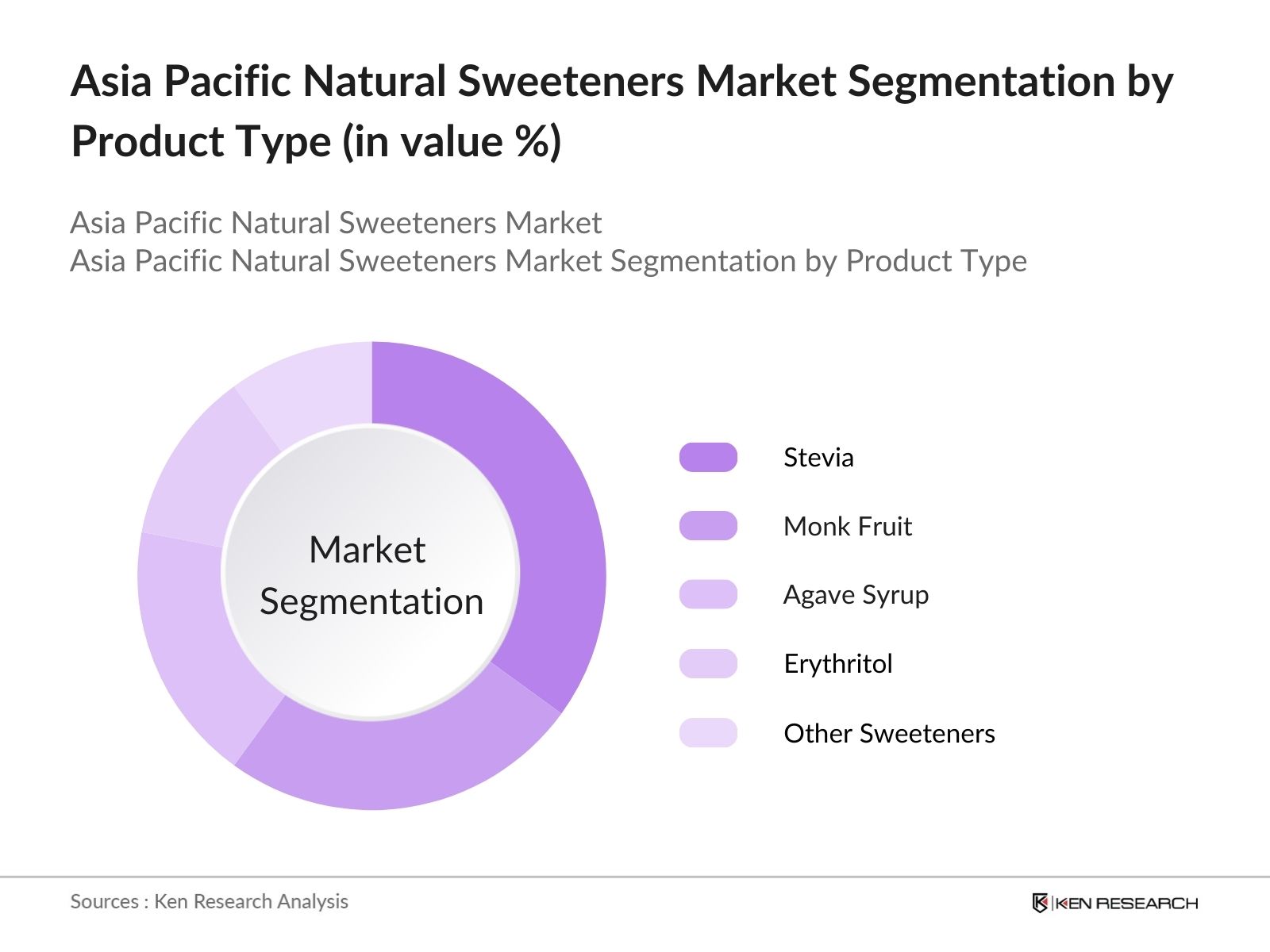
By Product Type: The Asia Pacific natural sweeteners market is segmented by product type into stevia, monk fruit, agave syrup, erythritol, and other plant-based sweeteners. Stevia currently holds a dominant market share in the product type segmentation due to its zero-calorie content and widespread acceptance in both food and beverage applications. Major manufacturers are adopting stevia as a healthier alternative to sugar, as its natural origin and ability to offer sweetness without raising blood glucose levels make it an attractive option for consumers who are looking to manage their sugar intake.
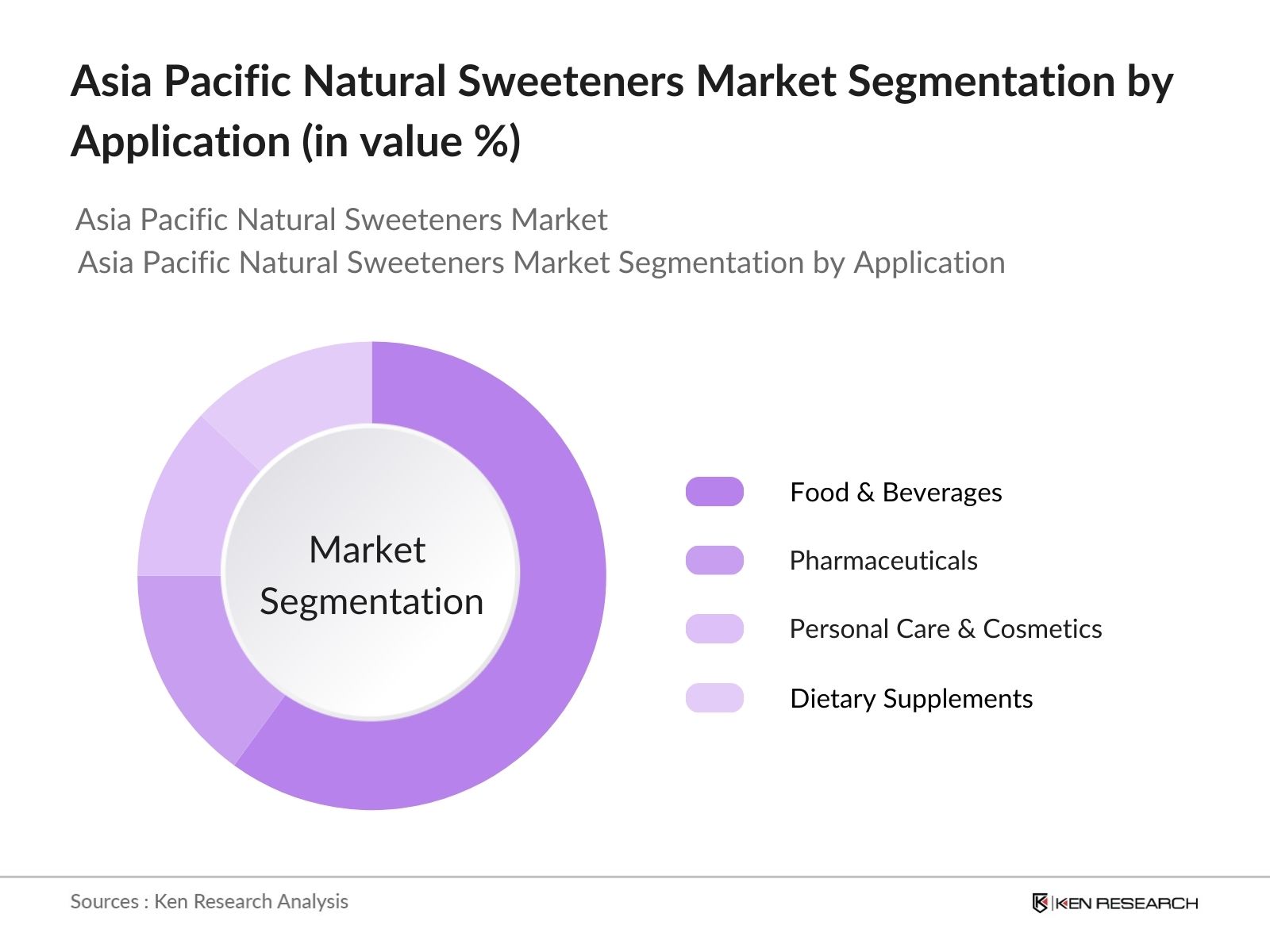
By Application: The Asia Pacific natural sweeteners market is also segmented by application into food & beverages, pharmaceuticals, personal care & cosmetics, and dietary supplements. The food and beverages segment dominates this category, driven by a growing preference for natural ingredients in processed foods and drinks. The increasing demand for sugar-free and low-calorie beverages, particularly in markets like China and Japan, has led to the widespread use of stevia and erythritol as sugar replacements in soft drinks, dairy products, and baked goods.
 Asia Pacific Natural Sweeteners Market Competitive Landscape
The Asia Pacific natural sweeteners market is dominated by a mix of local and international companies. These key players have a strong presence in the food and beverage sector, contributing to the market's consolidation. Local producers in countries like China and Japan are major exporters of raw ingredients such as stevia and monk fruit, while global companies leverage their extensive distribution networks and technological capabilities to enhance product offerings.
|
Company Name |
Establishment Year |
Headquarters |
Product Range |
R&D Investments |
Sustainability Initiatives |
Market Presence |
Strategic Partnerships |
Raw Material Sourcing |
Revenue (2023) |
|
PureCircle |
2001 |
Malaysia |
- |
- |
- |
- |
- |
- |
- |
|
Cargill Inc. |
1865 |
USA |
- |
- |
- |
- |
- |
- |
- |
|
GLG Life Tech Corp. |
1999 |
Canada |
- |
- |
- |
- |
- |
- |
- |
|
Tate & Lyle |
1921 |
UK |
- |
- |
- |
- |
- |
- |
- |
|
Monk Fruit Corp. |
2009 |
USA |
- |
- |
- |
- |
- |
- |
- |
Growth Drivers
Challenges
Asia Pacific Natural Sweeteners Market is expected to show significant growth driven by increasing consumer demand for healthier alternatives to sugar, advancements in natural sweetener formulations, and government initiatives aimed at reducing sugar consumption. As food and beverage manufacturers continue to reformulate products with reduced sugar content, the demand for natural sweeteners such as stevia, monk fruit, and erythritol is expected to rise.
Market Opportunities
|
Segment |
Sub-Segments |
|
Product Type |
Stevia Monk Fruit Agave Syrup Erythritol Other Plant-Based Sweeteners |
|
Form |
Liquid Powder Crystal |
|
Application |
Food & Beverages Pharmaceuticals Personal Care & Cosmetics Dietary Supplements |
|
Distribution Channel |
Supermarkets & Hypermarkets Health Food Stores Online Retailers Direct Sales |
|
Country |
China Japan India Australia South Korea Rest of Asia Pacific |
1.1. Definition and Scope
1.2. Market Taxonomy
1.3. Market Growth Rate
1.4. Market Segmentation Overview
2.1. Historical Market Size
2.2. Year-On-Year Growth Analysis
2.3. Key Market Developments and Milestones
3.1. Growth Drivers
3.1.1. Increasing Demand for Plant-Based Sweeteners
3.1.2. Health-Conscious Consumers
3.1.3. Regulatory Push for Sugar Reduction
3.1.4. Shift Towards Natural Ingredients
3.1.5. Rise in Functional Foods and Beverages
3.2. Market Challenges
3.2.1. High Production Costs
3.2.2. Regulatory Hurdles and Approvals
3.2.3. Fluctuating Raw Material Prices
3.2.4. Limited Consumer Awareness in Developing Markets
3.3. Opportunities
3.3.1. Innovations in Extraction Technologies
3.3.2. Growing Demand for Organic and Non-GMO Sweeteners
3.3.3. Expansion into Emerging Markets
3.3.4. Partnerships with Health and Wellness Brands
3.4. Trends
3.4.1. Rising Preference for Stevia and Monk Fruit
3.4.2. Advancements in Fermentation-Based Sweeteners
3.4.3. Increased Use in Functional Food and Beverages
3.4.4. Sustainable and Eco-Friendly Sweetener Production
3.5. Regulatory Environment
3.5.1. Food Safety Standards (FSSAI, EFSA, FDA)
3.5.2. Permissible Levels for Different Sweeteners
3.5.3. Government Initiatives Promoting Natural Ingredients
3.5.4. Labeling Laws and Consumer Protection
3.6. SWOT Analysis
3.6.1. Strengths: Growth in Sugar Alternatives
3.6.2. Weaknesses: Limited Awareness of Health Benefits
3.6.3. Opportunities: Health and Wellness Trends
3.6.4. Threats: Competition from Artificial Sweeteners
3.7. Stakeholder Ecosystem
3.7.1. Natural Sweetener Suppliers
3.7.2. Manufacturers
3.7.3. Distributors and Retailers
3.7.4. Food & Beverage Companies
3.8. Porters Five Forces Analysis
3.8.1. Supplier Power
3.8.2. Buyer Power
3.8.3. Competitive Rivalry
3.8.4. Threat of New Entrants
3.8.5. Threat of Substitutes
3.9. Competitive Ecosystem
3.9.1. Analysis of Market Leaders
3.9.2. Emerging Players
3.9.3. New Entrants and Their Impact on the Market
4.1. By Product Type (In Value %)
4.1.1. Stevia
4.1.2. Monk Fruit
4.1.3. Agave Syrup
4.1.4. Erythritol
4.1.5. Other Plant-Based Sweeteners
4.2. By Form (In Value %)
4.2.1. Liquid
4.2.2. Powder
4.2.3. Crystal
4.3. By Application (In Value %)
4.3.1. Food & Beverages
4.3.2. Pharmaceuticals
4.3.3. Personal Care & Cosmetics
4.3.4. Dietary Supplements
4.4. By Distribution Channel (In Value %)
4.4.1. Supermarkets & Hypermarkets
4.4.2. Health Food Stores
4.4.3. Online Retailers
4.4.4. Direct Sales
4.5. By Country (In Value %)
4.5.1. China
4.5.2. Japan
4.5.3. India
4.5.4. Australia
4.5.5. South Korea
4.5.6. Rest of Asia Pacific
5.1. Detailed Profiles of Major Companies
5.1.1. PureCircle
5.1.2. GLG Life Tech Corporation
5.1.3. Cargill Inc.
5.1.4. Tate & Lyle
5.1.5. Stevia First Corporation
5.1.6. Archer Daniels Midland Company
5.1.7. Ingredion Incorporated
5.1.8. SweeGen
5.1.9. Monk Fruit Corp
5.1.10. The Coca-Cola Company
5.1.11. PepsiCo, Inc.
5.1.12. Morita Kagaku Kogyo Co., Ltd.
5.1.13. NOW Foods
5.1.14. Tereos Group
5.1.15. Roquette Frres
5.2. Cross Comparison Parameters (Product portfolio diversity, geographic reach, R&D intensity, pricing strategy, product purity levels, supply chain robustness, certifications, key partnerships)
5.3. Market Share Analysis
5.4. Strategic Initiatives (New product launches, acquisitions, partnerships, joint ventures)
5.5. Mergers And Acquisitions (Key deals and their impact on market positioning)
5.6. Investment Analysis
5.7. Venture Capital Funding
5.8. Government Grants
5.9. Private Equity Investments
6.1. Food Safety Standards
6.2. Compliance Requirements
6.3. Certification Processes
7.1. Future Market Size Projections
7.2. Key Factors Driving Future Market Growth
8.1. By Product Type (In Value %)
8.2. By Form (In Value %)
8.3. By Application (In Value %)
8.4. By Distribution Channel (In Value %)
8.5. By Country (In Value %)
9.1. TAM/SAM/SOM Analysis
9.2. Customer Cohort Analysis
9.3. Marketing Initiatives
9.4. White Space Opportunity Analysis
The initial phase involves constructing an ecosystem map encompassing all major stakeholders within the Asia Pacific Natural Sweeteners Market. This step is underpinned by extensive desk research, utilizing a combination of secondary and proprietary databases to gather comprehensive industry-level information. The primary objective is to identify and define the critical variables that influence market dynamics.
In this phase, we compile and analyze historical data related to the Asia Pacific Natural Sweeteners Market. This includes assessing market penetration, consumer preferences, and the ratio of product offerings across different application segments. We also conduct evaluations of product purity levels and price sensitivity to ensure the accuracy of market projections.
Market hypotheses are developed and subsequently validated through interviews with industry experts. These consultations provide valuable insights into operational and financial metrics directly from manufacturers and distributors, refining and corroborating market data.
The final phase involves synthesizing research insights into a comprehensive report. Multiple natural sweetener manufacturers are consulted to acquire detailed insights into their product portfolios, sales strategies, and market positioning. This ensures the report reflects a holistic understanding of the market, backed by verified and accurate data.
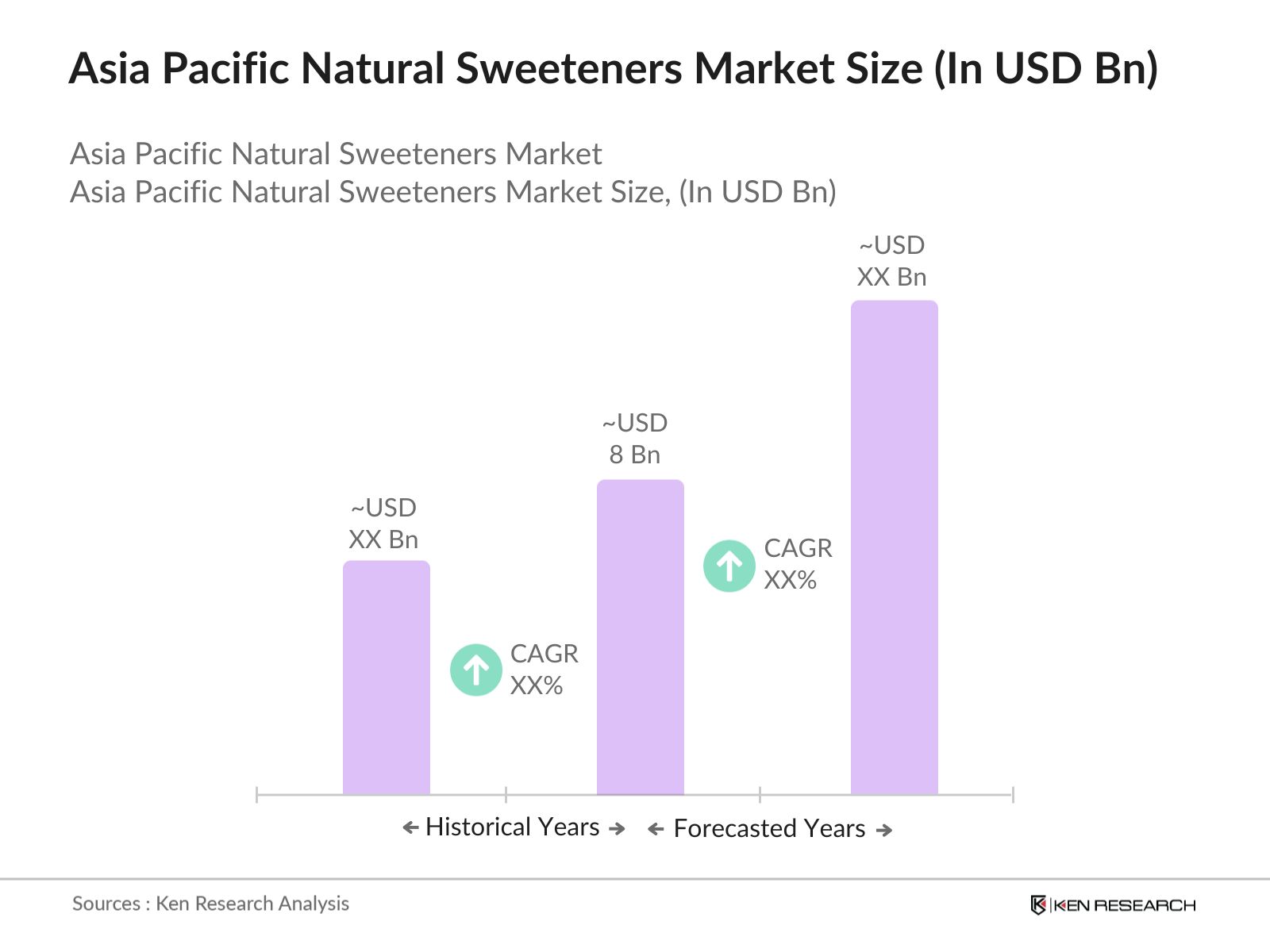
The Asia Pacific Natural Sweeteners market is valued at USD 8 billion, with stevia and monk fruit leading the product segments due to their widespread adoption in the food and beverage sector.
Key challenges include high production costs, stringent regulatory requirements, and fluctuating raw material prices, which can impact the profitability of natural sweetener manufacturers.
Major players include PureCircle, Cargill Inc., GLG Life Tech Corporation, Tate & Lyle, and Monk Fruit Corp. These companies have established strong global and regional market positions through strategic partnerships and innovation.
The market is driven by increasing health consciousness, growing demand for sugar alternatives, regulatory support for sugar reduction, and the rising popularity of plant-based sweeteners in food and beverage applications.

What makes us stand out is that our consultants follows Robust, Refine and Result (RRR) methodology. i.e. Robust for clear definitions, approaches and sanity checking, Refine for differentiating respondents facts and opinions and Result for presenting data with story

We have set a benchmark in the industry by offering our clients with syndicated and customized market research reports featuring coverage of entire market as well as meticulous research and analyst insights.

While we don't replace traditional research, we flip the method upside down. Our dual approach of Top Bottom & Bottom Top ensures quality deliverable by not just verifying company fundamentals but also looking at the sector and macroeconomic factors.

With one step in the future, our research team constantly tries to show you the bigger picture. We help with some of the tough questions you may encounter along the way: How is the industry positioned? Best marketing channel? KPI's of competitors? By aligning every element, we help maximize success.

Our report gives you instant access to the answers and sources that other companies might choose to hide. We elaborate each steps of research methodology we have used and showcase you the sample size to earn your trust.

If you need any support, we are here! We pride ourselves on universe strength, data quality, and quick, friendly, and professional service.