
Asia Pacific Nicotine Pouch Market Outlook to 2030
Region:China
Author(s):Sanjeev
Product Code:KROD4712
Region:China
Author(s):Sanjeev
Product Code:KROD4712
November 2024
83

The Asia Pacific nicotine pouch market is dominated by a few key players that have established strong distribution networks and brand presence. The competition in this market is fierce, with both established tobacco companies and emerging startups vying for market share. This consolidation reflects the significant influence of these major players and their ability to innovate and expand into new markets. Furthermore, partnerships with retailers and aggressive marketing strategies have allowed these companies to maintain their competitive edge.
|
Company |
Year Established |
Headquarters |
Product Portfolio |
Revenue (2023) |
Flavour Portfolio |
Distribution Network |
Nicotine Strength Variations |
|
Swedish Match AB |
1915 |
Stockholm, Sweden |
|||||
|
British American Tobacco (BAT) |
1902 |
London, UK |
|||||
|
Philip Morris International |
1847 |
New York, USA |
|||||
|
Japan Tobacco International |
1985 |
Tokyo, Japan |
|||||
|
Rogue Nicotine |
2017 |
California, USA |
Over the next five years, the Asia Pacific nicotine pouch market is expected to exhibit significant growth driven by increasing government support for harm-reduction products and innovations in product formulation and flavor. The growing popularity of online sales platforms, coupled with a steady increase in consumer health consciousness, will continue to drive market demand. Additionally, favorable regulatory frameworks in key countries, especially those with stringent tobacco control policies, will provide a conducive environment for further market expansion.
|
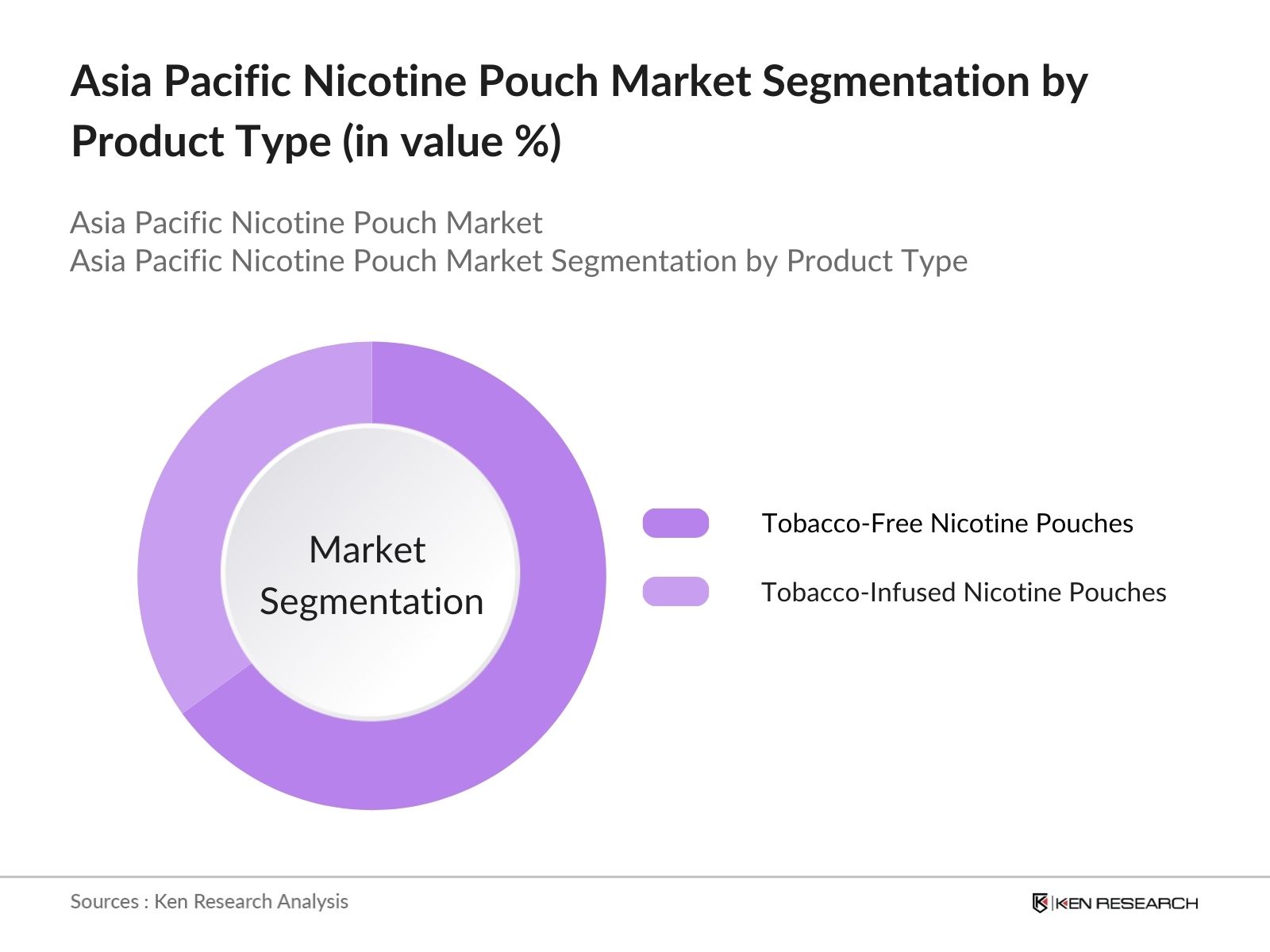
By Product Type |
Tobacco-Free Nicotine Pouches Tobacco-Infused Nicotine Pouches |
|
By Distribution Channel |
Retail Stores Online Sales Specialty Stores Vending Machines |
|
By Consumer Group |
Millennials Gen Z Adults Aged 35+ |
|
By Flavor Type |
Mint Citrus Berry Coffee Custom Flavors |
|
By Region |
China Japan Australia India South Korea |
1.1. Definition and Scope
1.2. Market Taxonomy
1.3. Market Growth Rate
1.4. Market Segmentation Overview
2.1. Historical Market Size
2.2. Year-On-Year Growth Analysis
2.3. Key Market Developments and Milestones
3.1. Growth Drivers (Nicotine consumption trends, regulatory policies, market demand evolution)
3.1.1. Rise in Smoking Cessation Initiatives
3.1.2. Increasing Consumer Awareness on Health Benefits of Alternatives
3.1.3. Expanding Retail Distribution Channels
3.1.4. Favourable Government Policies Supporting Harm Reduction
3.2. Market Challenges (Supply chain dynamics, raw material constraints, regulatory hurdles)
3.2.1. Regulatory Approvals and Restrictions
3.2.2. Price Sensitivity Among Consumers
3.2.3. Stringent Product Regulations
3.2.4. Misconceptions Around Nicotine Pouch Products
3.3. Opportunities (Emerging markets, product innovation, corporate partnerships)
3.3.1. Expansion in Emerging Economies (India, Southeast Asia)
3.3.2. Innovations in Flavour Profiles and Product Delivery
3.3.3. Strategic Partnerships for Enhanced Distribution
3.4. Trends (Consumer preferences, product development, market innovation)
3.4.1. Increasing Adoption of Flavoured Nicotine Pouches
3.4.2. Growth of Online and Digital Sales Channels
3.4.3. Rising Preference for Non-Tobacco Nicotine Alternatives
3.4.4. Sustainability Trends in Packaging Materials
3.5. Regulatory Framework (Government policies, taxation structures, regulatory restrictions)
3.5.1. Excise Tax Structures Across Major Countries
3.5.2. Health and Safety Regulations
3.5.3. Labelling and Packaging Guidelines
3.5.4. Restrictions on Advertising and Promotion
3.6. SWOT Analysis (Asia Pacific Nicotine Pouch Market)
3.7. Stakeholder Ecosystem (Producers, distributors, end-users)
3.8. Porters Five Forces (Bargaining power of suppliers, buyers, substitutes, competition, threat of new entrants)
3.9. Competitive Ecosystem (Analysis of top market players)
4.1. By Product Type (In Value %)
4.1.1. Tobacco-Free Nicotine Pouches
4.1.2. Tobacco-Infused Nicotine Pouches
4.1.3. Low Nicotine Strength
4.1.4. Medium Nicotine Strength
4.1.5. High Nicotine Strength
4.2. By Distribution Channel (In Value %)
4.2.1. Retail Stores
4.2.2. Online Sales
4.2.3. Specialty Stores
4.2.4. Vending Machines
4.3. By Consumer Group (In Value %)
4.3.1. Millennials
4.3.2. Gen Z
4.3.3. Adults Aged 35+
4.4. By Flavour Type (In Value %)
4.4.1. Mint
4.4.2. Citrus
4.4.3. Berry
4.4.4. Coffee
4.4.5. Custom Flavours
4.5. By Region (In Value %)
4.5.1. China
4.5.2. Japan
4.5.3. Australia
4.5.4. India
4.5.5. South Korea
5.1. Detailed Profiles of Major Companies
5.1.1. Swedish Match AB
5.1.2. British American Tobacco (BAT)
5.1.3. Philip Morris International
5.1.4. Altria Group
5.1.5. Japan Tobacco International
5.1.6. Imperial Brands
5.1.7. Nicopods.co
5.1.8. Rogue Nicotine
5.1.9. Lyft
5.1.10. Velo
5.1.11. ZYN
5.1.12. Nordic Spirit
5.1.13. Snusdirect
5.1.14. Vont
5.1.15. On!
5.2. Cross Comparison Parameters (Employee base, headquarters location, product portfolio, revenue size, nicotine content variation, flavour portfolio, distribution network, market share %)
5.3. Market Share Analysis
5.4. Strategic Initiatives
5.5. Mergers and Acquisitions
5.6. Investment Analysis
5.7. Venture Capital Funding
5.8. Private Equity Investments
6.1. Taxation Policies and Structures (Country-specific)
6.2. Product Approval Processes (Including Health Safety Certifications)
6.3. Marketing and Advertisement Regulations (Cross-country variations)
6.4. Packaging and Labelling Requirements
7.1. Future Market Size Projections (Cross-country breakdown)
7.2. Key Factors Driving Future Market Growth (Product innovation, market penetration)
8.1. By Product Type (In Value %)
8.2. By Distribution Channel (In Value %)
8.3. By Consumer Group (In Value %)
8.4. By Flavor Type (In Value %)
8.5. By Region (In Value %)
9.1. TAM/SAM/SOM Analysis
9.2. Customer Cohort Analysis
9.3. Strategic Marketing Initiatives
9.4. White Space Opportunity Analysis
This step involved constructing a market ecosystem map, identifying all key stakeholders in the Asia Pacific nicotine pouch market. Through extensive desk research and data analysis, we focused on variables such as consumer behavior, product trends, and distribution channels.
Historical data from proprietary databases were compiled to analyze the penetration of nicotine pouches in different countries. Additionally, key market developments, such as regulatory changes and product innovations, were analyzed to assess their impact on revenue generation.
In-depth interviews with industry experts and company representatives were conducted to validate the initial market hypotheses. This step was essential to ensure the accuracy and reliability of the data gathered.
The final phase involved synthesizing the research findings into a comprehensive report. The bottom-up approach was employed to cross-verify data points, ensuring a thorough and validated analysis of the Asia Pacific nicotine pouch market.
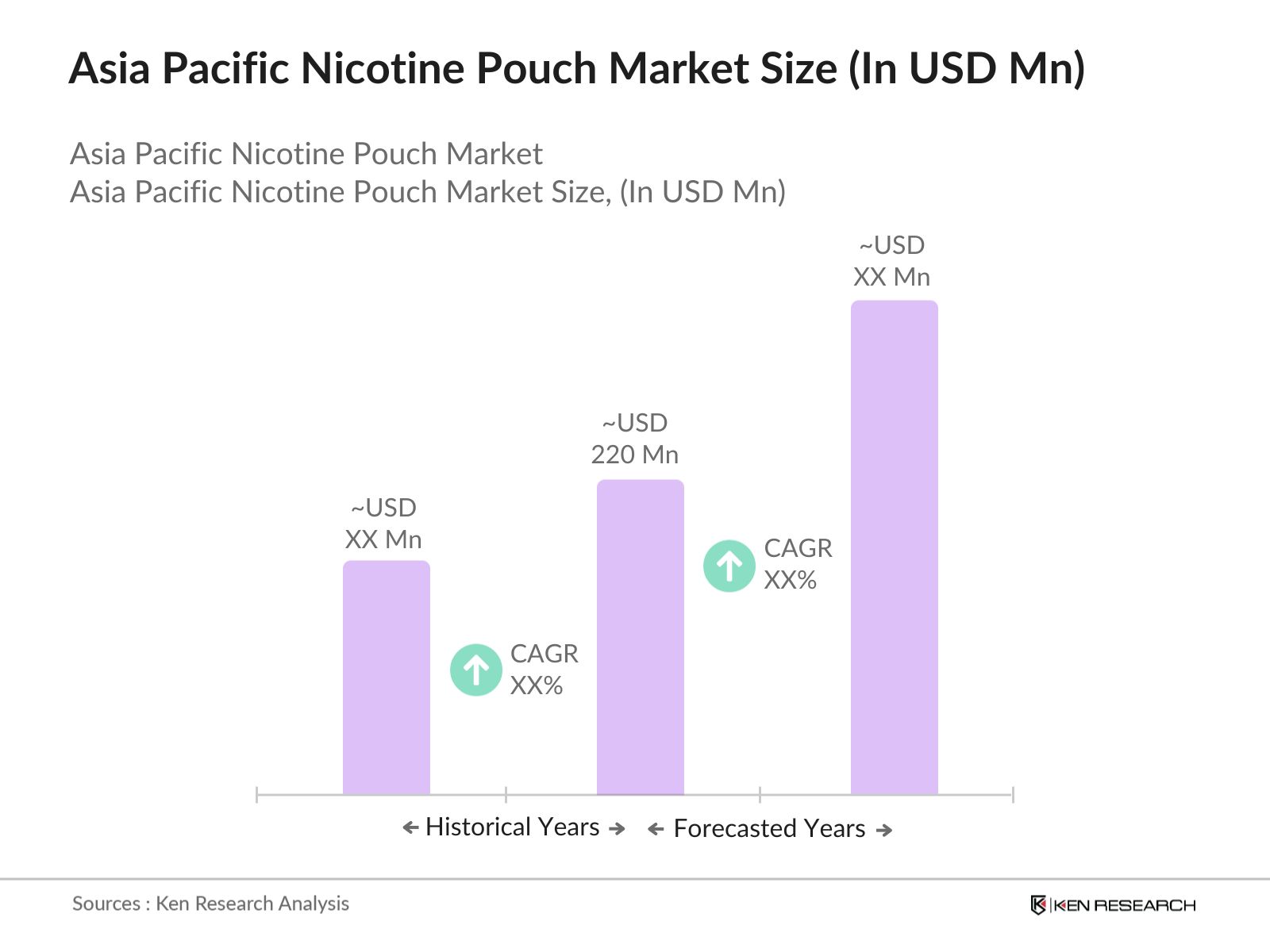
The Asia Pacific nicotine pouch market is valued at USD 220 million, driven by increased demand for tobacco-free alternatives and innovative flavor offerings.
Challenges in Asia Pacific nicotine pouch market include regulatory hurdles in different countries, the stigma around nicotine products, and the competition from traditional tobacco products like cigarettes and e-cigarettes.
Key players in the Asia Pacific nicotine pouch market include Swedish Match AB, British American Tobacco, Philip Morris International, Altria Group, and Japan Tobacco International. These companies dominate due to their strong product portfolios and well-established distribution networks.
The Asia Pacific nicotine pouch market is propelled by growing consumer demand for healthier nicotine alternatives, government regulations favoring harm-reduction products, and increasing innovation in flavors and product formats.
E-commerce plays a significant role in the growth of the Asia Pacific nicotine pouch market, offering consumers convenience, wider product selection, and competitive pricing, especially in markets with restrictive retail environments.

What makes us stand out is that our consultants follows Robust, Refine and Result (RRR) methodology. i.e. Robust for clear definitions, approaches and sanity checking, Refine for differentiating respondents facts and opinions and Result for presenting data with story

We have set a benchmark in the industry by offering our clients with syndicated and customized market research reports featuring coverage of entire market as well as meticulous research and analyst insights.

While we don't replace traditional research, we flip the method upside down. Our dual approach of Top Bottom & Bottom Top ensures quality deliverable by not just verifying company fundamentals but also looking at the sector and macroeconomic factors.

With one step in the future, our research team constantly tries to show you the bigger picture. We help with some of the tough questions you may encounter along the way: How is the industry positioned? Best marketing channel? KPI's of competitors? By aligning every element, we help maximize success.

Our report gives you instant access to the answers and sources that other companies might choose to hide. We elaborate each steps of research methodology we have used and showcase you the sample size to earn your trust.

If you need any support, we are here! We pride ourselves on universe strength, data quality, and quick, friendly, and professional service.