















Asia Pacific Nicotine Replacement Therapy (NRT) Market Outlook to 2030
Region:Asia
Author(s):Sanjna
Product Code:KROD4128
December 2024
93
About the Report
Asia Pacific Nicotine Replacement Therapy (NRT) Market Overview
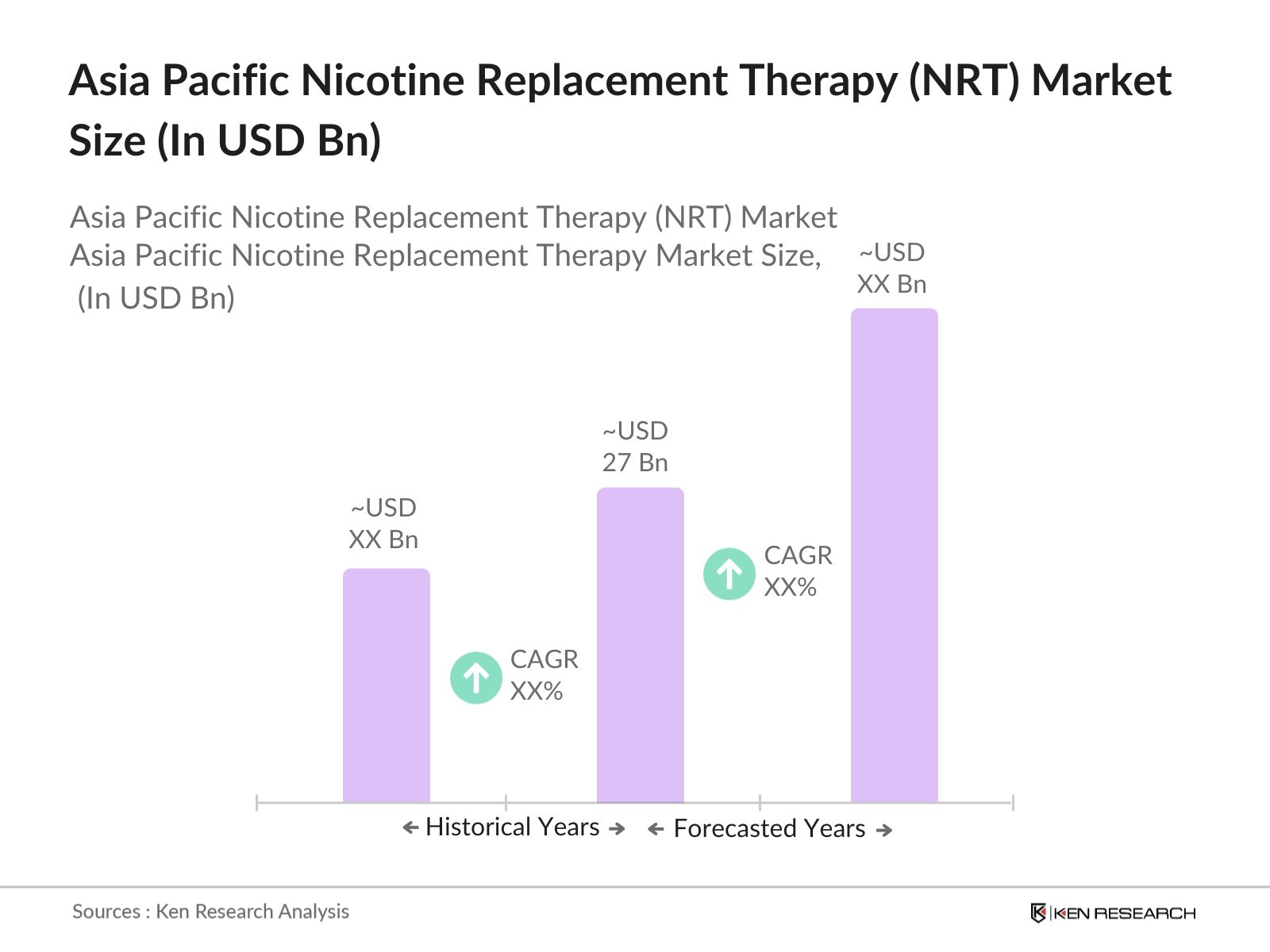
- Asia Pacific Nicotine Replacement Therapy (NRT) market is valued at USD 27 billion, driven by increasing health awareness, government-led anti-smoking campaigns, and a growing consumer preference for healthier alternatives to traditional tobacco products. The availability of NRT products in diverse forms such as gums, patches, lozenges, and inhalers contributes significantly to this markets expansion.
- China and Japan dominate the market in the region due to their large population bases and well-established healthcare systems. In these countries, the government is heavily involved in promoting smoking cessation through public health initiatives and supportive regulatory frameworks, which drive the adoption of NRT products.
- Governments across the Asia Pacific are increasingly adopting favorable tax policies for NRT products as opposed to tobacco. In 2023, South Korea imposed a 70% tax on tobacco products but kept NRT products tax-exempt to encourage quitting. Similarly, Australia, with one of the highest cigarette taxes in the world, offered tax deductions on certain NRT products purchased through government programs in 2024. These fiscal policies are driving the increased adoption of NRT in these countries.
Asia Pacific Nicotine Replacement Therapy (NRT) Market Segmentation
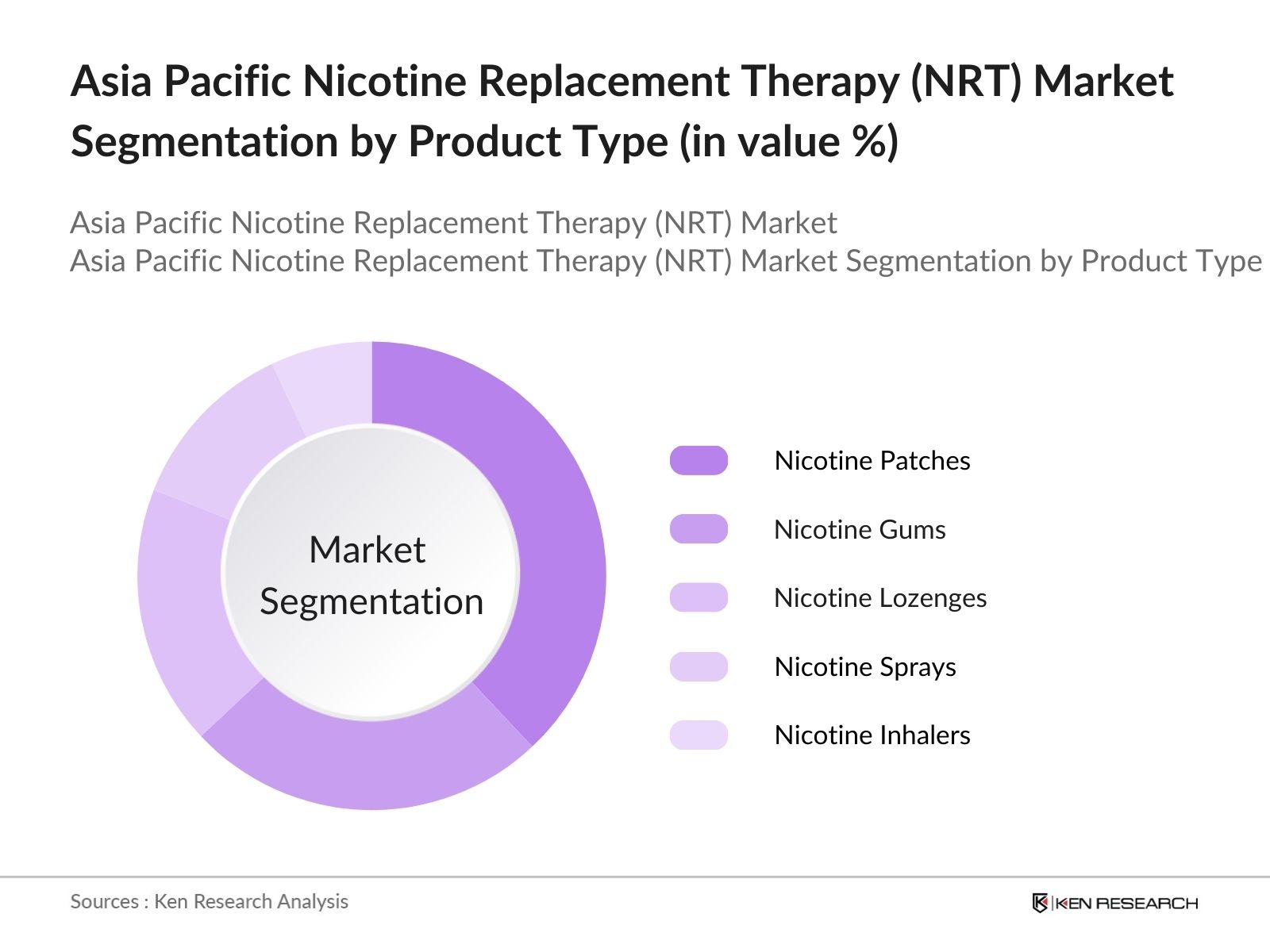
By Product Type: The Asia Pacific Nicotine Replacement Therapy market is segmented by product type into nicotine patches, gums, lozenges, sprays, and inhalers. Nicotine patches hold a dominant market share due to their ease of use and long-lasting effect, which makes them particularly attractive to individuals seeking a simple yet effective solution to manage their nicotine cravings. Furthermore, their cost-effectiveness compared to other NRT forms enhances their market dominance.
By Distribution Channel: The market is segmented by distribution channel into pharmacies, online retailers, and supermarkets/hypermarkets. Pharmacies dominate the distribution channel segmentation, holding the largest market share due to their accessibility and the availability of expert advice. Consumers prefer pharmacies for purchasing NRT products because they trust pharmacists recommendations, particularly in urban areas with well-established healthcare infrastructure.

Asia Pacific Nicotine Replacement Therapy (NRT) Market Competitive Landscape
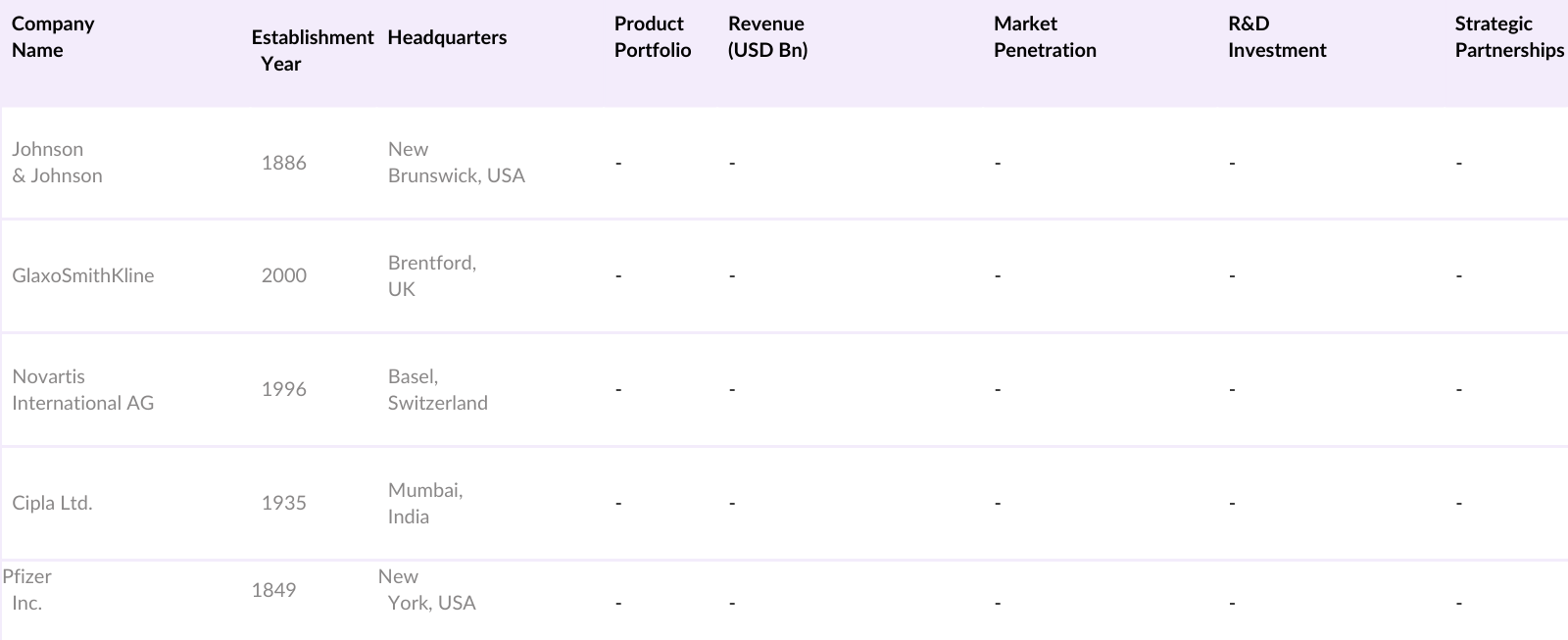
The Asia Pacific Nicotine Replacement Therapy market is dominated by a few key players, including multinational pharmaceutical companies and local manufacturers. These companies invest heavily in research and development to innovate their product offerings, ensuring they stay ahead of consumer demand and regulatory changes. The competition is fierce, with companies leveraging strategic partnerships, product diversification, and mergers to consolidate their positions.
Asia Pacific Nicotine Replacement Therapy (NRT) Market Analysis
Growth Drivers
- Rise in Smoking Cessation Programs: Government-backed initiatives in the Asia Pacific region have accelerated smoking cessation programs, especially in countries like Australia and Japan. Australia has witnessed the expansion of the Quitline program, where over 600,000 individuals accessed resources for quitting smoking in 2023. These programs are also gaining momentum in developing countries like India, where 1.8 million smokers enrolled in government-sponsored cessation initiatives in 2022.
- Increasing Health Awareness: The rising focus on health consciousness across Asia Pacific has resulted in a significant shift toward healthier alternatives. The World Health Organization (WHO) reports that the prevalence of tobacco use in the region decreased from 45 million users in 2022 to 43 million in 2024, particularly driven by younger populations opting for alternatives like Nicotine Replacement Therapy (NRT).
- Rising Tobacco Prices: The economic cost of smoking has continued to rise across the Asia Pacific region, providing a strong financial incentive for smokers to quit. In 2024, the average price of cigarettes in Australia hit USD 31.5 per pack due to increased excise taxes, a 15% rise since 2022. Similarly, in Japan, cigarette taxes were raised by 8% in 2023, bringing the cost to USD 3.89 per pack. This economic pressure has driven nearly 2.5 million smokers to explore cost-effective alternatives, such as NRT products.
Challenges
- High Cost of NRT Products: The cost of Nicotine Replacement Therapy (NRT) remains a major barrier for smokers in lower-income countries. In countries like Indonesia and the Philippines, where the average monthly wage in 2024 was around USD 220 and USD 300, respectively, the cost of a standard NRT kit can range from USD 15 to USD 20, making it less accessible for a large segment of the population.
- Lack of Awareness in Rural Areas: Awareness of NRT products and smoking cessation programs remains limited in rural areas of the Asia Pacific region. In India, rural regions, home to 68% of the population, reported a low awareness level of just 15% in 2023 regarding available NRT products. Similarly, in Vietnam, government surveys from 2024 indicated that only 12% of rural smokers had access to information about cessation programs, compared to 45% in urban areas.
Asia Pacific Nicotine Replacement Therapy Market Future Outlook
Asia Pacific Nicotine Replacement Therapy market is expected to witness significant growth. This expansion will be driven by the increasing number of government-supported smoking cessation programs, a rise in public health awareness, and a growing inclination toward alternative nicotine solutions. Countries like China and Japan will likely continue to lead the market due to their well-established healthcare infrastructures, while emerging markets such as India and Indonesia are anticipated to experience accelerated adoption of NRT products.
Market Opportunities
- Expansion into Emerging Economies: Emerging economies in the Asia Pacific, such as Vietnam and the Philippines, present growth opportunities for the NRT market due to the rising middle class. In 2030, Vietnams middle class is projected to reach 36 million, providing a significant consumer base for NRT products, shows potential for increased demand for smoking cessation products. These expanding economic demographics are expected to increase NRT adoption as disposable incomes rise and awareness of health risks becomes more prevalent.
- Strategic Collaborations Between Pharma and Tech Firms: Pharmaceutical companies are collaborating with tech firms to develop integrated digital health solutions for smoking cessation. These collaborations are providing real-time data to users, making the quitting process more personalized. For instance, collaborations between pharmaceutical giants like Pfizer and tech startups in Japan have developed apps offering tailored NRT regimens, enhancing user engagement.
Scope of the Report
|
Segment |
Sub-Segment |
|
By Product Type |
Nicotine Patches Nicotine Gum Nicotine Lozenges Nicotine Nasal Sprays Nicotine Inhalers |
|
By Distribution Channel |
Pharmacies Online Retailers Supermarkets and Hypermarkets Specialist Clinics |
|
By Application |
Smoking Cessation Programs Individual Users Dual Therapy Approaches |
|
By End-User Demographic |
Male Consumers Female Consumers Age Groups (18-30, 31-50, 51+) |
|
By Country |
China India Japan Australia South Korea |
Products
Key Target Audience
Pharmaceutical companies
Tobacco Companies
Healthcare providers (clinics, hospitals, pharmacies)
Smoking cessation organizations
Tobacco harm reduction advocacy groups
Manufacturers of nicotine replacement products
Investors and venture capitalist firms
Government and regulatory bodies (Ministry of Health, World Health Organization)
Companies
Players Mentioned in the Report:
Johnson & Johnson
GlaxoSmithKline
Novartis International AG
Pfizer Inc.
Cipla Ltd.
British American Tobacco (BAT)
Perrigo Company Plc
Dr. Reddys Laboratories
Pierre Fabre Group
Haleon (GSK Consumer Healthcare)
Table of Contents
1. Asia Pacific Nicotine Replacement Therapy Market Overview
1.1. Definition and Scope
1.2. Market Taxonomy
1.3. Market Growth Rate
1.4. Market Segmentation Overview
2. Asia Pacific Nicotine Replacement Therapy Market Size (In USD Bn)
2.1. Historical Market Size
2.2. Year-On-Year Growth Analysis
2.3. Key Market Developments and Milestones
3. Asia Pacific Nicotine Replacement Therapy Market Analysis
3.1. Growth Drivers
3.1.1. Rise in Smoking Cessation Programs (Government and NGO Initiatives)
3.1.2. Increasing Health Awareness (Shift Towards Healthier Alternatives)
3.1.3. Rising Tobacco Prices (Economic Incentive for Quitting)
3.1.4. Availability of Over-the-Counter NRT Products
3.2. Market Challenges
3.2.1. High Cost of NRT Products
3.2.2. Lack of Awareness in Rural Areas
3.2.3. Regulatory Challenges (Stringent Approval Processes)
3.2.4. Limited Government Support in Certain Regions
3.3. Opportunities
3.3.1. Expansion into Emerging Economies (Growing Middle Class)
3.3.2. Development of New Delivery Formats (E-cigarettes, Oral Nicotine Pouches)
3.3.3. Strategic Collaborations Between Pharma and Tech Firms
3.3.4. Online Sales Channels Growth (Digital Health Integration)
3.4. Trends
3.4.1. Adoption of Personalized NRT Solutions (Customization Based on Consumer Preferences)
3.4.2. Increased Use of Alternative Nicotine Products (Tobacco-Free)
3.4.3. Focus on Non-nicotine-based Therapies (Herbal Alternatives)
3.4.4. Use of AI and Digital Tools in Smoking Cessation Programs
3.5. Government Regulation
3.5.1. Regional Regulatory Frameworks for NRT Product Approvals
3.5.2. Tax Policies on Tobacco vs. NRT Products
3.5.3. Government-Funded Smoking Cessation Programs
3.5.4. Public-Private Partnerships to Promote NRT
3.6. SWOT Analysis
3.7. Stakeholder Ecosystem
3.8. Porters Five Forces Analysis
3.9. Competition Ecosystem
4. Asia Pacific Nicotine Replacement Therapy Market Segmentation
4.1. By Product Type (In Value %)
4.1.1. Nicotine Patches
4.1.2. Nicotine Gum
4.1.3. Nicotine Lozenges
4.1.4. Nicotine Nasal Sprays
4.1.5. Nicotine Inhalers
4.2. By Distribution Channel (In Value %)
4.2.1. Pharmacies
4.2.2. Online Retailers
4.2.3. Supermarkets and Hypermarkets
4.2.4. Specialist Clinics
4.3. By Application (In Value %)
4.3.1. Smoking Cessation Programs
4.3.2. Individual Users (Self-administered)
4.3.3. Dual Therapy Approaches
4.4. By End-User Demographic (In Value %)
4.4.1. Male Consumers
4.4.2. Female Consumers
4.4.3. Age Group (18-30, 31-50, 51+)
4.5. By Country (In Value %)
4.5.1. China
4.5.2. India
4.5.3. Japan
4.5.4. Australia
4.5.5. South Korea
5. Asia Pacific Nicotine Replacement Therapy Market Competitive Analysis
5.1 Detailed Profiles of Major Companies
5.1.1. Johnson & Johnson
5.1.2. GlaxoSmithKline
5.1.3. Novartis International AG
5.1.4. Pfizer Inc.
5.1.5. Cipla Ltd.
5.1.6. Perrigo Company Plc
5.1.7. British American Tobacco (BAT)
5.1.8. Dr. Reddys Laboratories
5.1.9. Pierre Fabre Group
5.1.10. Haleon (GSK Consumer Healthcare)
5.1.11. Johnson Matthey Plc
5.1.12. Fertin Pharma
5.1.13. Kenvue Inc.
5.1.14. 22nd Century Group
5.1.15. Rohto Pharmaceutical Co.
5.2 Cross Comparison Parameters (Revenue, Market Presence, Product Portfolio, R&D Investments, Key Markets, M&A Activity, Growth Rate, Strategic Collaborations)
5.3 Market Share Analysis
5.4 Strategic Initiatives
5.5 Mergers And Acquisitions
5.6 Investment Analysis
5.7 Venture Capital Funding
5.8 Government Grants
5.9 Private Equity Investments
6. Asia Pacific Nicotine Replacement Therapy Market Regulatory Framework
6.1. Regional and National Health Policies
6.2. Compliance Requirements for NRT Products
6.3. Certification and Labeling Standards
7. Asia Pacific Nicotine Replacement Therapy Future Market Size (In USD Bn)
7.1. Future Market Size Projections
7.2. Key Factors Driving Future Market Growth
8. Asia Pacific Nicotine Replacement Therapy Future Market Segmentation
8.1. By Product Type (In Value %)
8.2. By Distribution Channel (In Value %)
8.3. By Application (In Value %)
8.4. By End-User Demographic (In Value %)
8.5. By Country (In Value %)
9. Asia Pacific Nicotine Replacement Therapy Market Analysts' Recommendations
9.1. TAM/SAM/SOM Analysis
9.2. Consumer Behavior Analysis
9.3. White Space Opportunity Analysis
9.4. Marketing Strategies
Disclaimer Contact UsResearch Methodology
Step 1: Identification of Key Variables
The research commenced with the identification of key variables in the Asia Pacific Nicotine Replacement Therapy market, including product types, distribution channels, and consumer behavior patterns. Desk research was performed to collect data from secondary sources such as government reports and proprietary databases to understand the market's structure.
Step 2: Market Analysis and Construction
Historical data from industry reports was analyzed to determine market size, market penetration, and growth rates. The analysis focused on the NRT market's performance across different segments, offering insights into consumer preferences and distribution trends.
Step 3: Hypothesis Validation and Expert Consultation
To validate the market assumptions, interviews with key stakeholders such as industry experts, healthcare providers, and product manufacturers were conducted. These consultations provided qualitative insights that supported the quantitative findings.
Step 4: Research Synthesis and Final Output
After collecting and validating the data, a final report was compiled with detailed insights into the market's dynamics, trends, and competitive landscape. The synthesis of primary and secondary research ensured the reports accuracy and reliability.
Frequently Asked Questions
1. How big is the Asia Pacific Nicotine Replacement Therapy market?
The Asia Pacific Nicotine Replacement Therapy Market is valued at USD 27 billion, driven by rising health awareness and an increasing number of government-led smoking cessation programs.
2. What are the challenges in the Asia Pacific Nicotine Replacement Therapy market?
Key challenges of Asia Pacific Nicotine Replacement Therapy Market include high costs of NRT products, low awareness in rural areas, and stringent regulatory hurdles that delay the introduction of new products.
3. Who are the major players in the Asia Pacific Nicotine Replacement Therapy market?
Major players of Asia Pacific Nicotine Replacement Therapy Market include Johnson & Johnson, GlaxoSmithKline, Novartis International AG, Pfizer Inc., and Cipla Ltd., all of which have a strong presence in the market due to their extensive product portfolios.
4. What are the growth drivers of the Asia Pacific Nicotine Replacement Therapy market?
Growth of Asia Pacific Nicotine Replacement Therapy Market is driven by the increasing health consciousness among consumers, government initiatives for smoking cessation, and the availability of a wide range of NRT products in both online and offline channels.
Why Buy From Us?

What makes us stand out is that our consultants follows Robust, Refine and Result (RRR) methodology. i.e. Robust for clear definitions, approaches and sanity checking, Refine for differentiating respondents facts and opinions and Result for presenting data with story

We have set a benchmark in the industry by offering our clients with syndicated and customized market research reports featuring coverage of entire market as well as meticulous research and analyst insights.

While we don't replace traditional research, we flip the method upside down. Our dual approach of Top Bottom & Bottom Top ensures quality deliverable by not just verifying company fundamentals but also looking at the sector and macroeconomic factors.

With one step in the future, our research team constantly tries to show you the bigger picture. We help with some of the tough questions you may encounter along the way: How is the industry positioned? Best marketing channel? KPI's of competitors? By aligning every element, we help maximize success.

Our report gives you instant access to the answers and sources that other companies might choose to hide. We elaborate each steps of research methodology we have used and showcase you the sample size to earn your trust.

If you need any support, we are here! We pride ourselves on universe strength, data quality, and quick, friendly, and professional service.