















Asia Pacific Nonwoven Fabrics Market Outlook to 2030
Region:Asia
Author(s):Yogita Sahu
Product Code:KROD9085
November 2024
92
About the Report
Asia Pacific Nonwoven Fabrics Market Overview
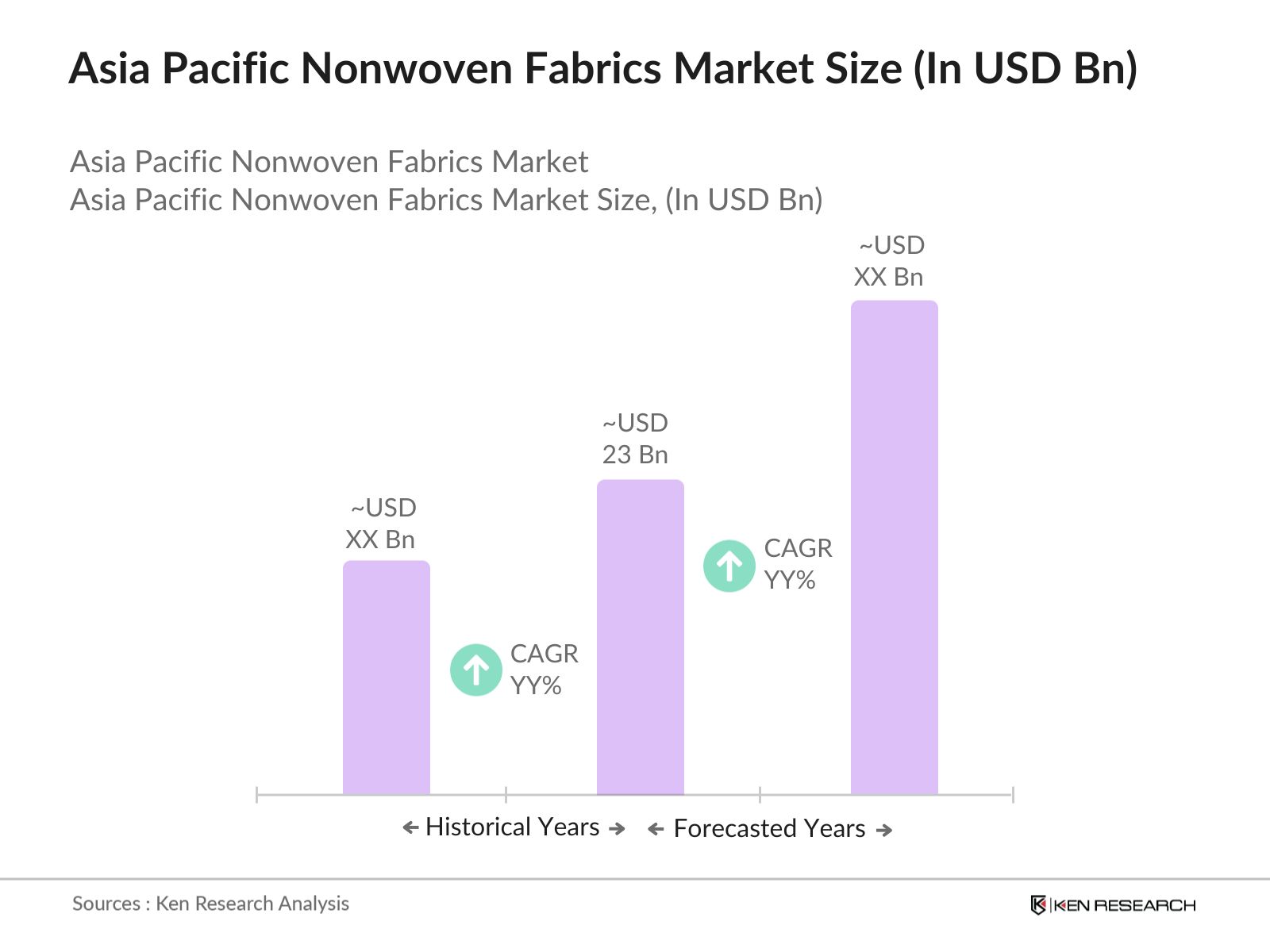
- The Asia Pacific Nonwoven Fabrics Market is valued at USD 23 billion, driven by a five-year growth trajectory shaped by increasing demand from the hygiene, medical, and automotive industries. This growth aligns with the rising adoption of sustainable, eco-friendly fabrics, responding to the evolving regulatory frameworks and consumer awareness in the region.
- China and India lead the market in Asia Pacific, due to established manufacturing capacities, a robust supply chain, and substantial demand for nonwoven materials in industrial applications. Their dominance stems from government support for technological advancements and infrastructure investment in manufacturing nonwoven fabric solutions.
- The Chinese governments Made in China 2025 initiative emphasizes the production of high-quality, advanced textiles, allocating $20 billion in funding by 2024 to modernize manufacturing plants. This policy is encouraging domestic production of nonwoven fabrics to reduce dependency on imports, enhancing local market growth.
Asia Pacific Nonwoven Fabrics Market Segmentation
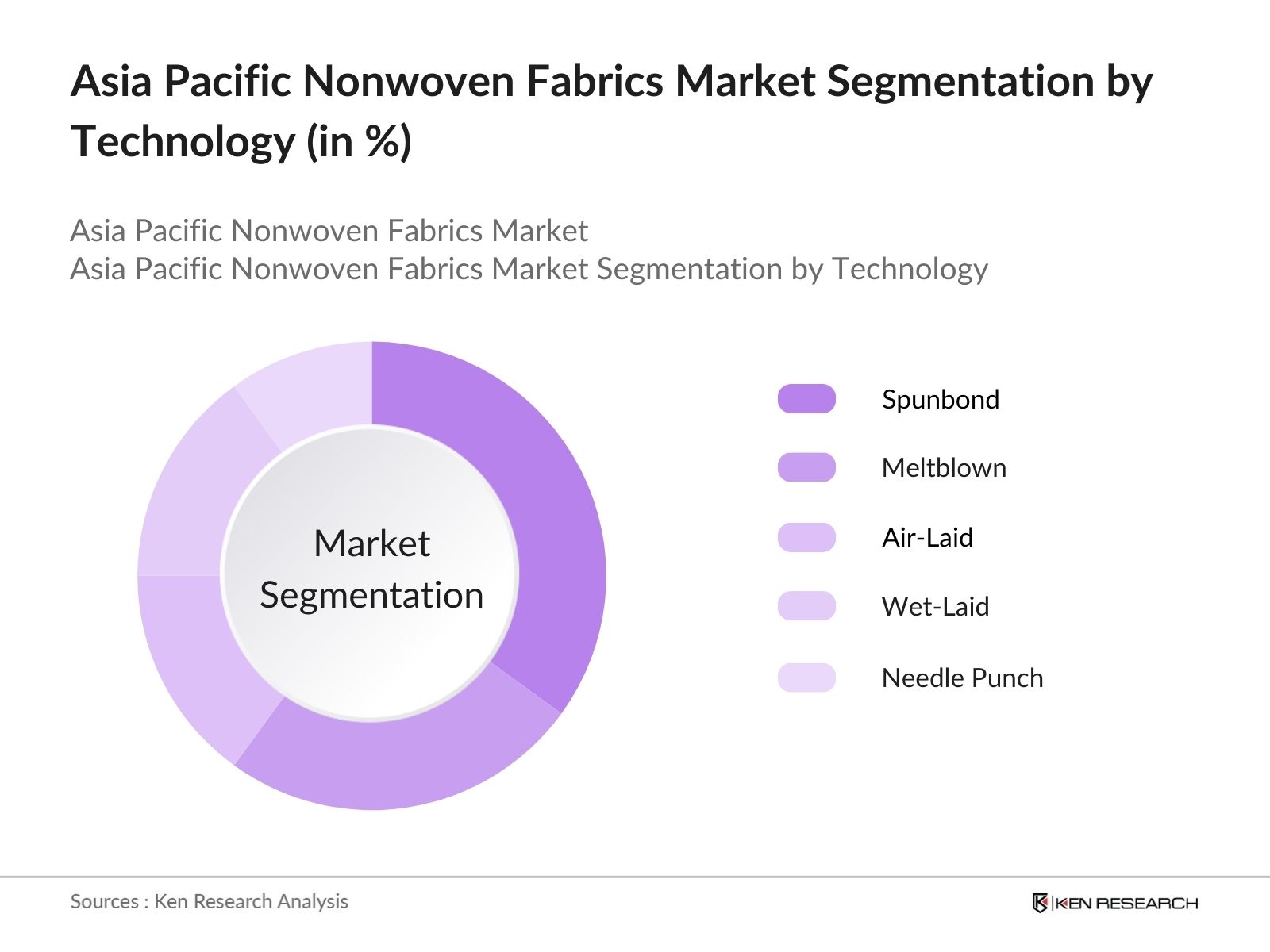
By Technology: The market is segmented by technology into Spunbond, Meltblown, Air-Laid, Wet-Laid, and Needle Punch. Spunbond technology holds the dominant market share due to its cost-effectiveness and high efficiency in producing nonwoven fabrics for hygiene and medical applications. The scalability of spunbond processes and its adaptability across applications make it a preferred choice among manufacturers.
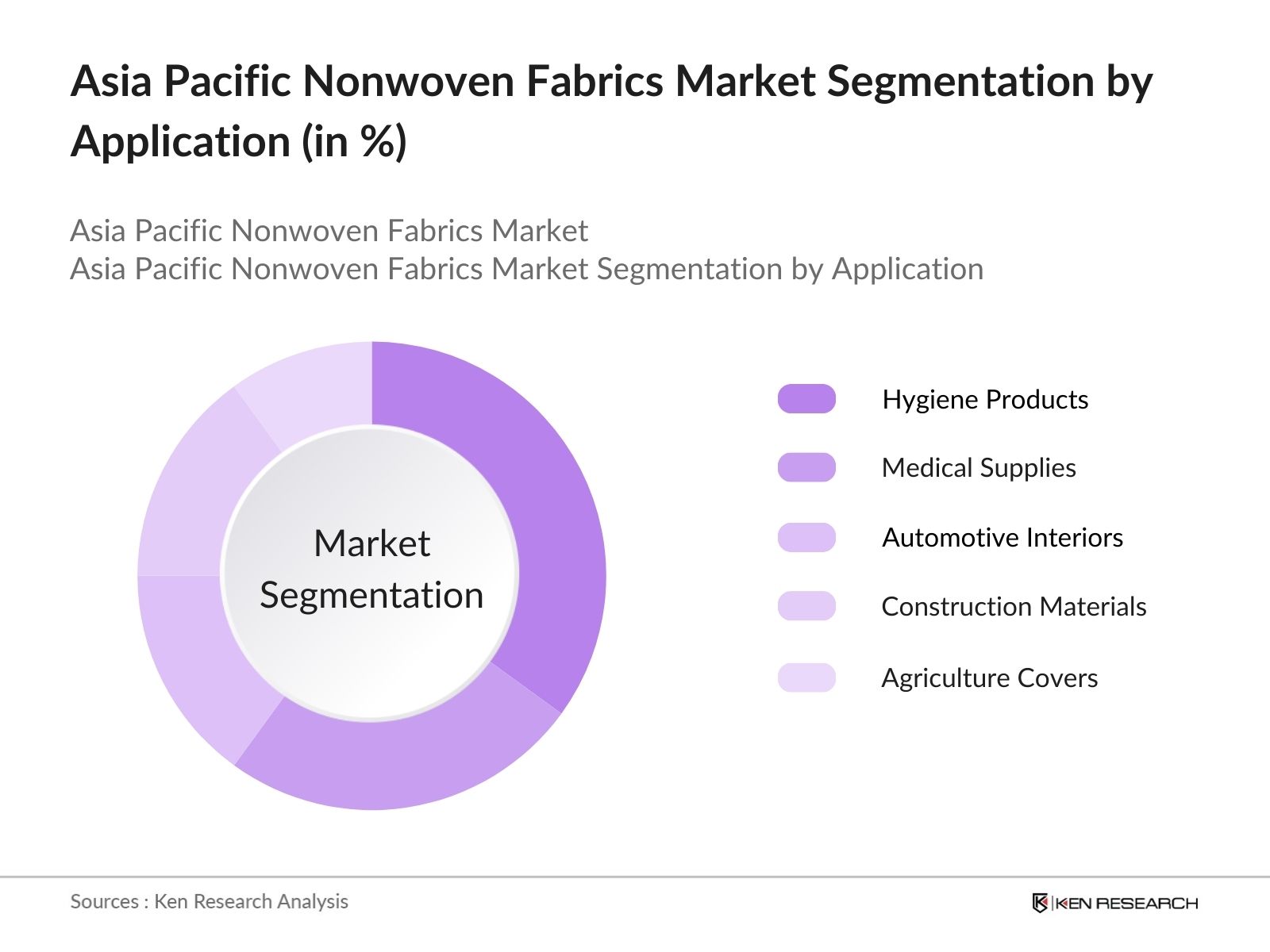
By Application: The market is also segmented by application into Hygiene Products, Medical Supplies, Automotive Interiors, Construction Materials, and Agriculture Covers. Hygiene products dominate due to the consistent demand for sanitary and healthcare applications, especially in densely populated areas. This segments growth is further fueled by the increased awareness around hygiene, boosting demand for disposable, high-quality nonwoven fabrics.
Asia Pacific Nonwoven Fabrics Market Competitive Landscape
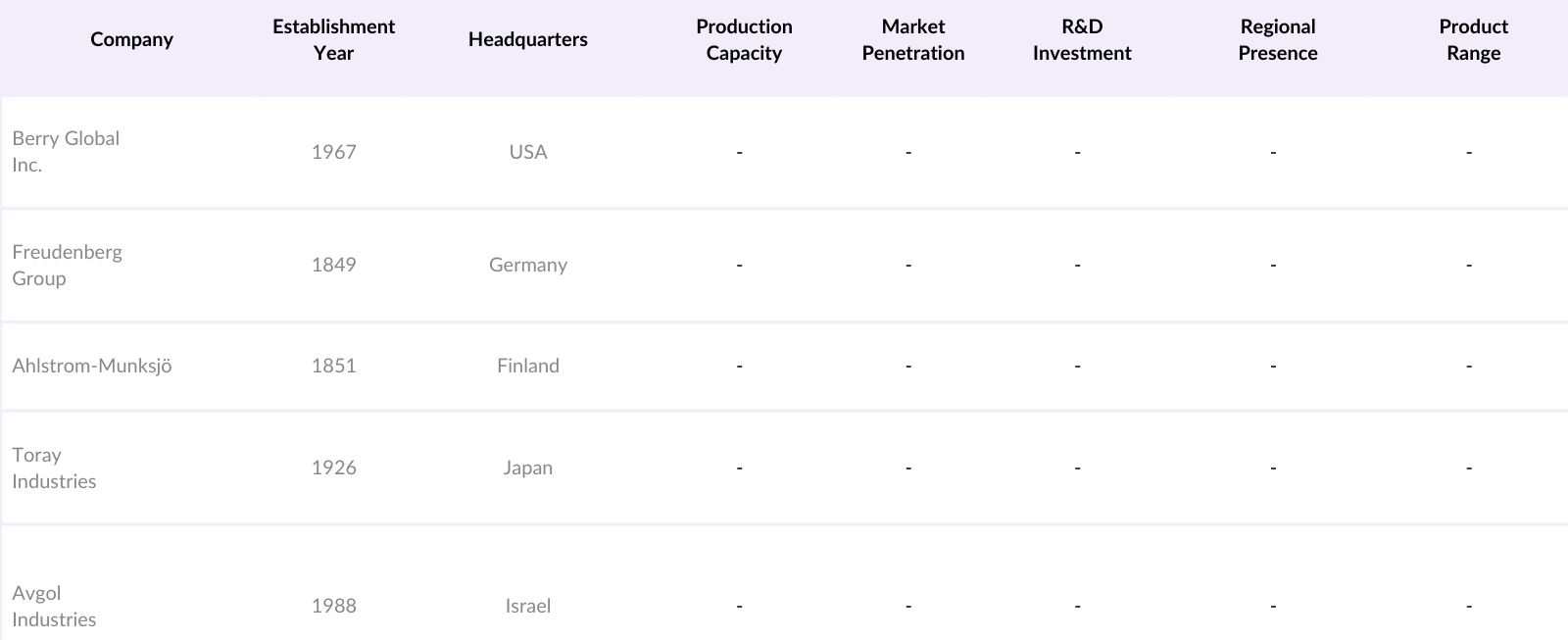
The market features a consolidated landscape with several major players, some of which include Ahlstrom-Munksj, Berry Global Inc., Freudenberg Group, DuPont, and Kimberly-Clark Corporation. These companies maintain dominance through extensive distribution channels, R&D investments, and regional partnerships that strengthen their market presence.
Asia Pacific Nonwoven Fabrics Market Analysis
Market Growth Drivers
- Increased Demand for Hygiene Products: The Asia Pacific region is seeing growth in demand for hygiene products such as baby diapers and sanitary pads, primarily due to the rising birth rate across countries like India, which recorded around 23 million births in 2024. This increase fuels the nonwoven fabrics market, as these materials are essential in manufacturing high-absorbency hygiene products that cater to a rapidly expanding consumer base in the region.
- Booming Automotive Industry in Asia Pacific: The automotive industry in Asia Pacific has been a major driver of demand for nonwoven fabrics, particularly in China and Japan, where car production reached 27 million and 9 million units respectively in 2024. Nonwoven fabrics are preferred for car interiors due to their lightweight and durable properties, helping manufacturers meet fuel efficiency standards while reducing production costs.
- Rising Healthcare Spending and Disposable Medical Supplies: Healthcare expenditures in Asia Pacific have escalated, with Chinas healthcare budget alone reaching $650 billion in 2024. This increase is propelling demand for disposable medical supplies like surgical masks, gowns, and drapes, which rely on nonwoven fabrics for their cost-effectiveness and hygienic qualities, thus driving growth in the nonwoven fabrics industry.
Market Challenges
- High Raw Material Costs for Nonwoven Fabrics: The rising cost of raw materials like polypropylene and polyester, crucial for nonwoven fabric production, has posed a challenge in the market. In 2024, the cost of polypropylene reached $1,200 per metric ton, putting pressure on manufacturers to either absorb or pass on these costs, affecting profitability and overall market dynamics.
- Environmental Concerns Related to Synthetic Nonwoven Fabrics: Environmental regulations are tightening across the Asia Pacific region, especially in countries like Japan and South Korea, which collectively implemented stricter emissions and waste management policies in 2024. These policies directly impact nonwoven fabric manufacturers who primarily use synthetic, non-biodegradable materials, leading to increased compliance costs.
Asia Pacific Nonwoven Fabrics Market Future Outlook
The Asia Pacific Nonwoven Fabrics industry is anticipated to experience robust growth due to increasing demand across various industries. Government regulations supporting sustainable practices, coupled with technological advancements in fabric production, are set to drive this market forward.
Future Market Opportunities
- Expansion of Nonwoven Fabrics in the Medical and Healthcare Sector: The Asia Pacific region is expected to see a $2 billion increase in demand for nonwoven medical textiles by 2029 due to ongoing investments in healthcare infrastructure. Countries such as China and India are projected to prioritize the use of disposable nonwoven products in hospitals, further cementing the role of nonwovens in healthcare.
- Increased Automation and Technological Integration in Nonwoven Production: Automation in nonwoven manufacturing facilities is likely to increase, with an expected $800 million investment in advanced machinery by 2029 across Asia Pacific. This investment will enhance production efficiency and reduce labor dependency, enabling faster and more cost-effective manufacturing processes to meet growing market demands.
Scope of the Report
|
Technology |
Spunbond |
|
Application |
Hygiene Products |
|
Material |
Polypropylene |
|
Distribution Channel |
Direct Sales |
|
Region |
China |
Products
Key Target Audience Organizations and Entities Who Can Benefit by Subscribing This Report:
Manufacturers of Hygiene Products
Medical Supplies Companies
Automotive Interior Suppliers
Construction Material Companies
Agricultural Product Manufacturers
Investor and Venture Capitalist Firms
Government and Regulatory Bodies (e.g., Ministry of Industry and Trade, Environmental Protection Agency)
Sustainable Development Organizations
Companies
Ahlstrom-Munksj
Berry Global Inc.
Freudenberg Group
DuPont
Kimberly-Clark Corporation
Toray Industries
PFNonwovens
Avgol Industries
Fitesa
Pegas Nonwovens
Table of Contents
1. Asia Pacific Nonwoven Fabrics Market Overview
1.1. Definition and Scope
1.2. Market Taxonomy
1.3. Industry Growth Potential
1.4. Market Segmentation Overview
2. Asia Pacific Nonwoven Fabrics Market Size (In USD Billion)
2.1. Historical Market Size
2.2. Year-on-Year Growth Analysis
2.3. Key Developments and Industry Milestones
3. Asia Pacific Nonwoven Fabrics Market Dynamics
3.1. Growth Drivers
3.1.1. Healthcare Demand Surge
3.1.2. Industrial Applications Expansion
3.1.3. Sustainability Focus (Eco-Friendly Production)
3.1.4. Advanced Material Innovation
3.2. Market Challenges
3.2.1. Raw Material Volatility
3.2.2. Environmental Regulations
3.2.3. Technical Skill Shortages
3.3. Opportunities
3.3.1. Medical & Hygiene Market Growth
3.3.2. Rising Automotive Sector Demand
3.3.3. Biodegradable Nonwoven Fabrics
3.4. Trends
3.4.1. Adoption of Spunbond Technology
3.4.2. Product Customization
3.4.3. Focus on Lightweight Materials
3.5. Government Regulations and Standards
3.5.1. APAC Standards for Nonwovens
3.5.2. Import and Export Policies
3.5.3. Certifications (ISO, ASTM)
3.6. SWOT Analysis
3.7. Supply Chain and Stakeholder Ecosystem
3.8. Porters Five Forces
3.9. Competition Ecosystem
4. Asia Pacific Nonwoven Fabrics Market Segmentation
4.1. By Technology (Market Share %)
4.1.1. Spunbond
4.1.2. Meltblown
4.1.3. Air-Laid
4.1.4. Wet-Laid
4.1.5. Needle Punch
4.2. By Application (Market Share %)
4.2.1. Hygiene Products
4.2.2. Medical Supplies
4.2.3. Automotive Interiors
4.2.4. Construction Materials
4.2.5. Agriculture Covers
4.3. By Material (Market Share %)
4.3.1. Polypropylene
4.3.2. Polyester
4.3.3. Rayon
4.3.4. Nylon
4.3.5. Wood Pulp
4.4. By Distribution Channel (Market Share %)
4.4.1. Direct Sales
4.4.2. Distributors
4.4.3. E-commerce
4.4.4. Specialty Retailers
4.5. By Region (Market Share %)
4.5.1. China
4.5.2. Japan
4.5.3. India
4.5.4. Southeast Asia
4.5.5. Australia & New Zealand
5. Asia Pacific Nonwoven Fabrics Market Competitive Analysis
5.1. Profiles of Major Companies
5.1.1. Ahlstrom-Munksj
5.1.2. Berry Global Inc.
5.1.3. Freudenberg Group
5.1.4. DuPont
5.1.5. Kimberly-Clark Corporation
5.1.6. Toray Industries
5.1.7. PFNonwovens
5.1.8. Avgol Industries
5.1.9. Fitesa
5.1.10. Pegas Nonwovens
5.1.11. Johns Manville
5.1.12. TWE Group
5.1.13. Suominen Corporation
5.1.14. Mitsui Chemicals
5.1.15. Asahi Kasei
5.2. Cross Comparison Parameters (Production Capacity, Market Penetration, R&D Investment, Regional Presence, Product Range, Environmental Initiatives, Innovation Capabilities, Market Share)
5.3. Market Share Analysis
5.4. Strategic Initiatives (New Product Launches, Market Expansion)
5.5. Mergers and Acquisitions
5.6. Investment Analysis
5.7. Venture Capital Funding
5.8. Private Equity Investments
6. Asia Pacific Nonwoven Fabrics Market Regulatory Framework
6.1. Environmental Standards
6.2. Compliance and Certifications (ISO Standards, ASTM Standards)
6.3. Import and Export Compliance
7. Asia Pacific Nonwoven Fabrics Future Market Size (In USD Billion)
7.1. Future Market Size Projections
7.2. Key Drivers of Future Market Growth
8. Asia Pacific Nonwoven Fabrics Market Segmentation
8.1. By Technology (Market Share %)
8.2. By Application (Market Share %)
8.3. By Material (Market Share %)
8.4. By Distribution Channel (Market Share %)
8.5. By Region (Market Share %)
9. Asia Pacific Nonwoven Fabrics Market Analysts' Recommendations
9.1. TAM/SAM/SOM Analysis
9.2. Customer Cohort Analysis
9.3. Strategic Market Initiatives
9.4. White Space Opportunity Analysis
Disclaimer Contact UsResearch Methodology
Step 1: Identification of Key Variables
This initial phase involves mapping the stakeholder ecosystem across the Asia Pacific Nonwoven Fabrics Market. Desk research, supported by proprietary databases, is employed to identify the primary market variables influencing demand.
Step 2: Market Analysis and Construction
Historical data on nonwoven fabrics, covering applications and production methodologies, are analyzed to evaluate market dynamics. This phase also includes a comprehensive assessment of technology trends and application statistics to estimate market penetration.
Step 3: Hypothesis Validation and Expert Consultation
Through consultations with industry experts via structured interviews, market hypotheses are validated to refine production estimates, distribution analysis, and sector-specific market dynamics.
Step 4: Research Synthesis and Final Output
In the final phase, direct interactions with nonwoven fabric manufacturers provide insights into production volumes, technological advancements, and market challenges. This phase ensures accuracy in the data and reinforces the analysis with industry-backed insights.
Frequently Asked Questions
1. How big is the Asia Pacific Nonwoven Fabrics Market?
The Asia Pacific Nonwoven Fabrics Market, valued at USD 23 billion, is driven by increased adoption across hygiene and medical applications, further supported by technological advancements.
2. What are the challenges in the Asia Pacific Nonwoven Fabrics Market?
The Asia Pacific Nonwoven Fabrics Market faces challenges such as raw material cost volatility and strict environmental regulations, which impact operational costs and industry sustainability efforts.
3. Who are the major players in the Asia Pacific Nonwoven Fabrics Market?
Key players in the Asia Pacific Nonwoven Fabrics Market include Ahlstrom-Munksj, Berry Global Inc., Freudenberg Group, DuPont, and Kimberly-Clark Corporation, recognized for their expansive product portfolios and strong distribution networks.
4. What are the growth drivers of the Asia Pacific Nonwoven Fabrics Market?
Growth in the Asia Pacific Nonwoven Fabrics Market is propelled by the expanding applications in hygiene, medical, and automotive sectors, alongside increased awareness of sustainable practices in manufacturing
Why Buy From Us?

What makes us stand out is that our consultants follows Robust, Refine and Result (RRR) methodology. i.e. Robust for clear definitions, approaches and sanity checking, Refine for differentiating respondents facts and opinions and Result for presenting data with story

We have set a benchmark in the industry by offering our clients with syndicated and customized market research reports featuring coverage of entire market as well as meticulous research and analyst insights.

While we don't replace traditional research, we flip the method upside down. Our dual approach of Top Bottom & Bottom Top ensures quality deliverable by not just verifying company fundamentals but also looking at the sector and macroeconomic factors.

With one step in the future, our research team constantly tries to show you the bigger picture. We help with some of the tough questions you may encounter along the way: How is the industry positioned? Best marketing channel? KPI's of competitors? By aligning every element, we help maximize success.

Our report gives you instant access to the answers and sources that other companies might choose to hide. We elaborate each steps of research methodology we have used and showcase you the sample size to earn your trust.

If you need any support, we are here! We pride ourselves on universe strength, data quality, and quick, friendly, and professional service.