















Asia-Pacific Pea Protein Market Outlook to 2030
Region:Asia
Author(s):Sanjeev
Product Code:KROD4180
November 2024
98
About the Report
Asia-Pacific Pea Protein Market Overview
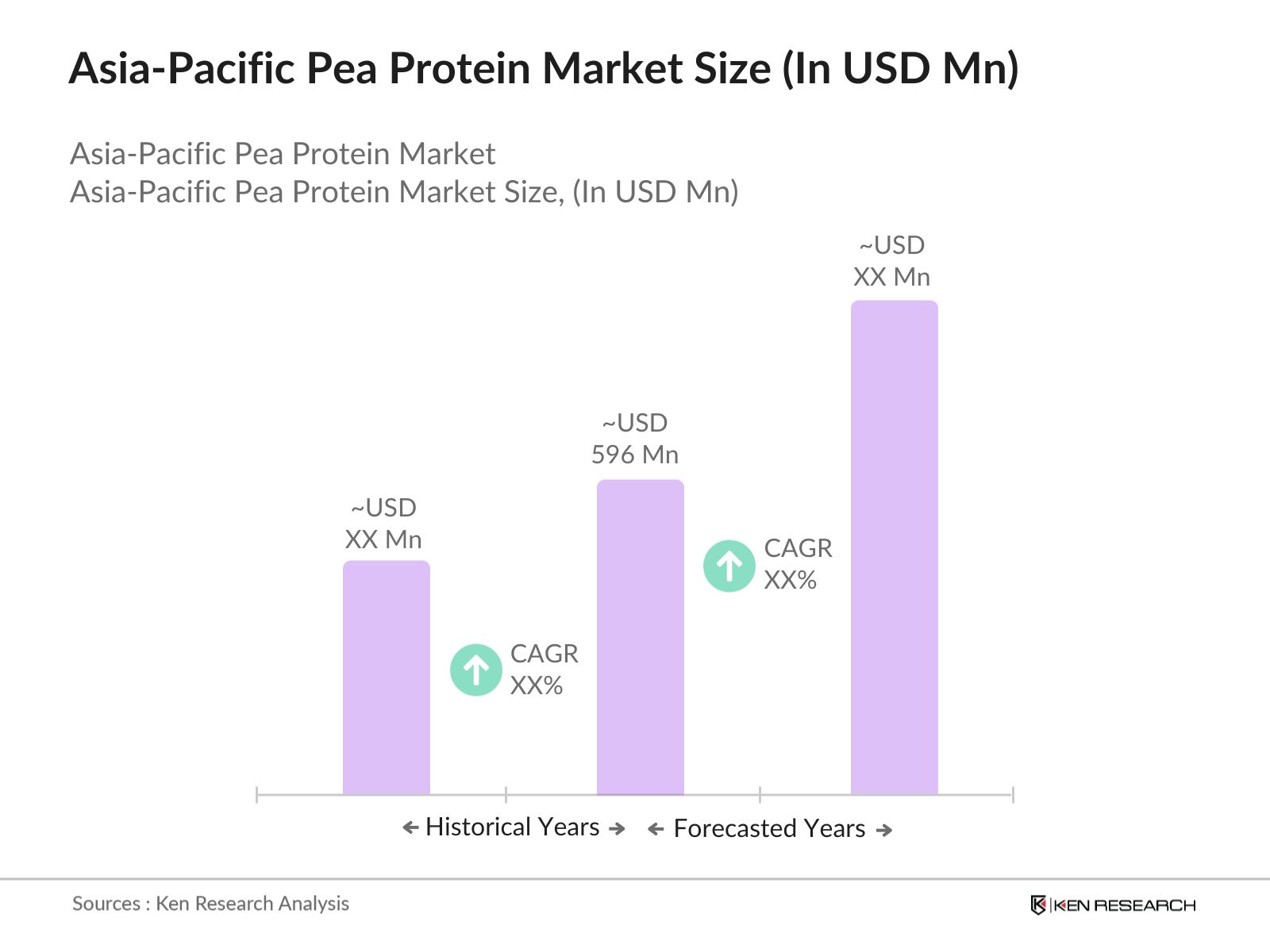
- The Asia-Pacific pea protein market is valued at USD 596 million, primarily driven by a growing shift toward plant-based nutrition, particularly in densely populated areas where dietary trends are rapidly evolving. The increasing consumer preference for high-protein, sustainable, and non-allergenic food options has boosted demand significantly. This market growth is further encouraged by the use of pea protein in various applications like meat substitutes, dairy alternatives, and functional foods, which align with the rising health awareness across the region.
- The market dominance is observed in countries such as China, Japan, and India, largely due to high population density, urbanization, and increasing disposable incomes in these regions. China leads in market consumption, as the country has experienced a substantial increase in demand for plant-based alternatives to meet its urban consumers dietary preferences. Meanwhile, Japans long-standing trend toward healthy eating and its aging populations focus on high-protein diets contribute to the markets expansion in the country.
- Regulatory bodies in Asia impose quality standards on pea protein imports to ensure safety and quality. Chinas General Administration of Customs mandates that all imported plant proteins meet specific purity and quality standards, ensuring product consistency. In Japan, the Ministry of Agriculture requires stringent quality checks and certifications for organic pea protein. Additionally, India has implemented strict import guidelines under the Food Safety and Standards Authority to prevent contamination, supporting consumer trust and product quality across the region.
Asia-Pacific Pea Protein Market Segmentation
The Asia-Pacific Pea Protein market is segmented by product type and by application.
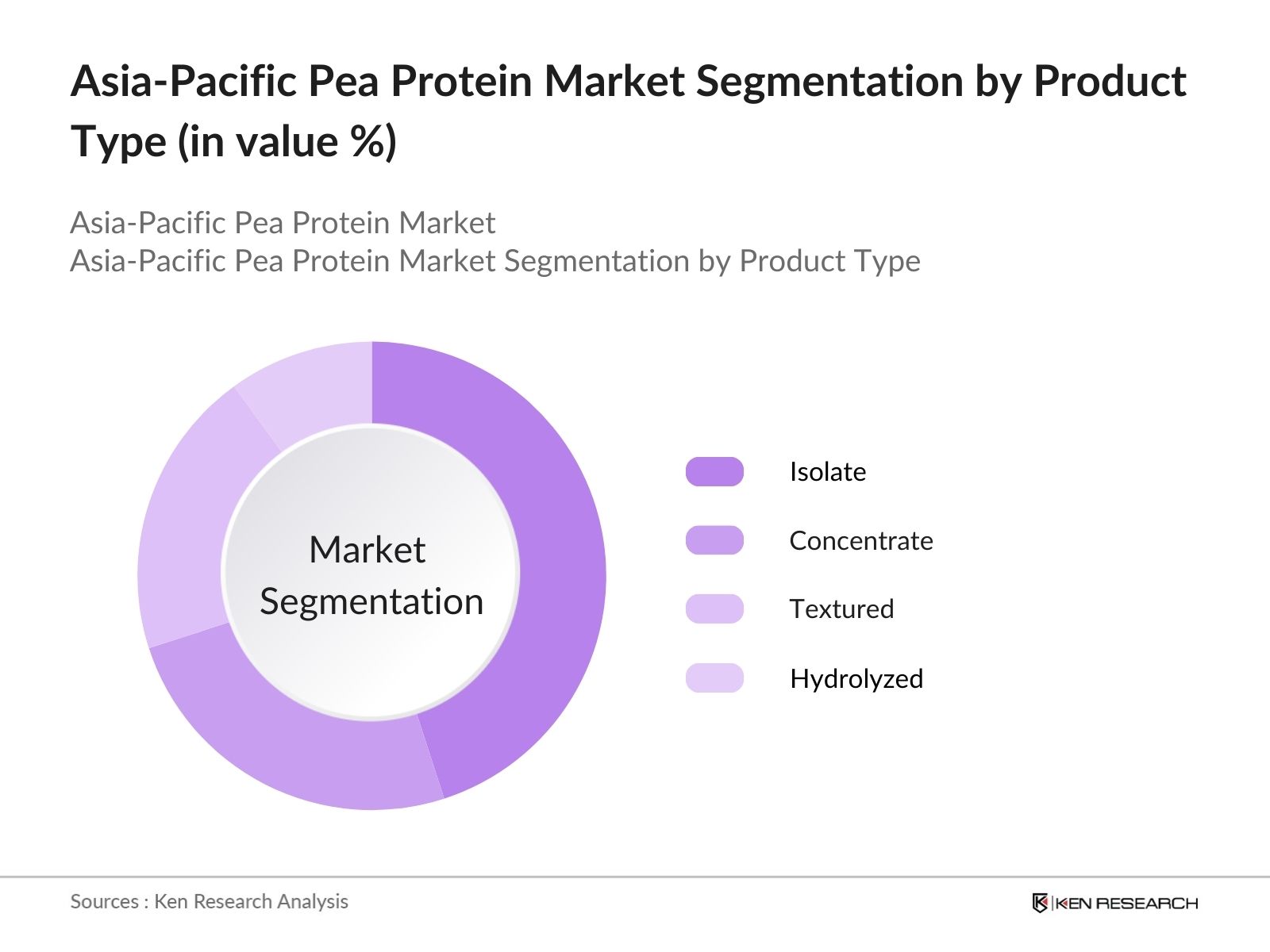
- By Product Type: The Asia-Pacific Pea Protein market is segmented by product type into Isolate, Concentrate, Textured, and Hydrolyzed. Recently, Isolate products have gained a dominant share in the market, attributed to their high protein content, which is favorable for functional foods and supplements. Isolate pea proteins appeal lies in its smooth texture, low-fat profile, and minimal taste interference, making it ideal for consumers seeking clean-label products. With increasing demand for clean eating and high-protein diets across the region, isolate pea protein remains a preferred choice for manufacturers and consumers alike.
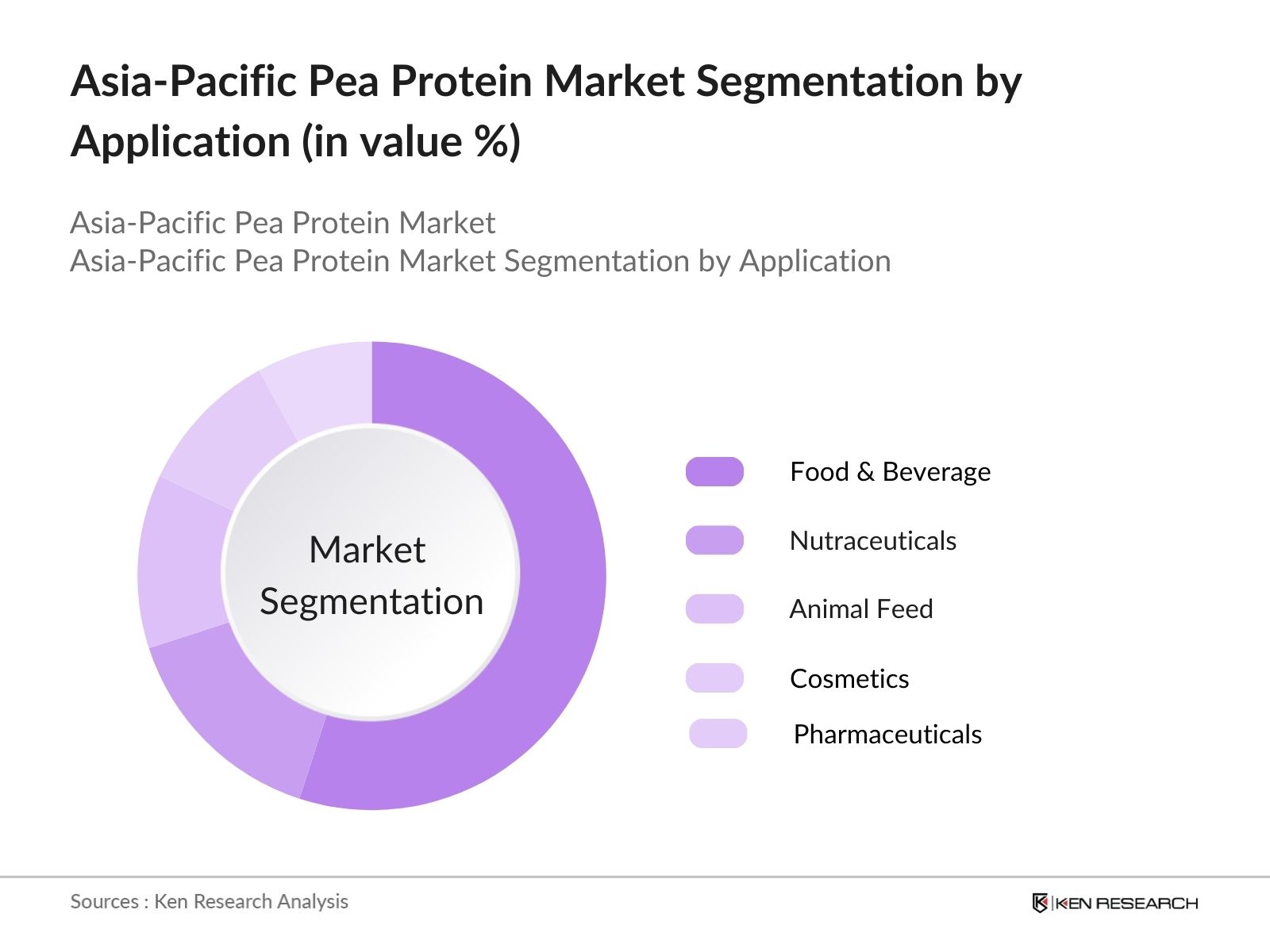
- By Application: The market is segmented by application into Food & Beverage, Nutraceuticals, Animal Feed, Cosmetics, and Pharmaceuticals. Food & Beverage applications currently dominate the market, as pea protein is widely used in meat and dairy substitutes, snacks, and bakery products. This segments growth is driven by a rise in vegan and flexitarian lifestyles across Asia-Pacific, where consumers prioritize plant-based alternatives for environmental and health reasons. Pea proteins compatibility with these applications, due to its neutral taste and allergen-free nature, strengthens its position in the food and beverage segment.
Asia-Pacific Pea Protein Market Competitive Landscape
The Asia-Pacific Pea Protein Market is characterized by a mix of global and regional players, each leveraging unique strategies such as new product development, acquisitions, and sustainable sourcing to strengthen market presence. Leading companies have established strong distribution channels, partnerships, and research capabilities that position them competitively.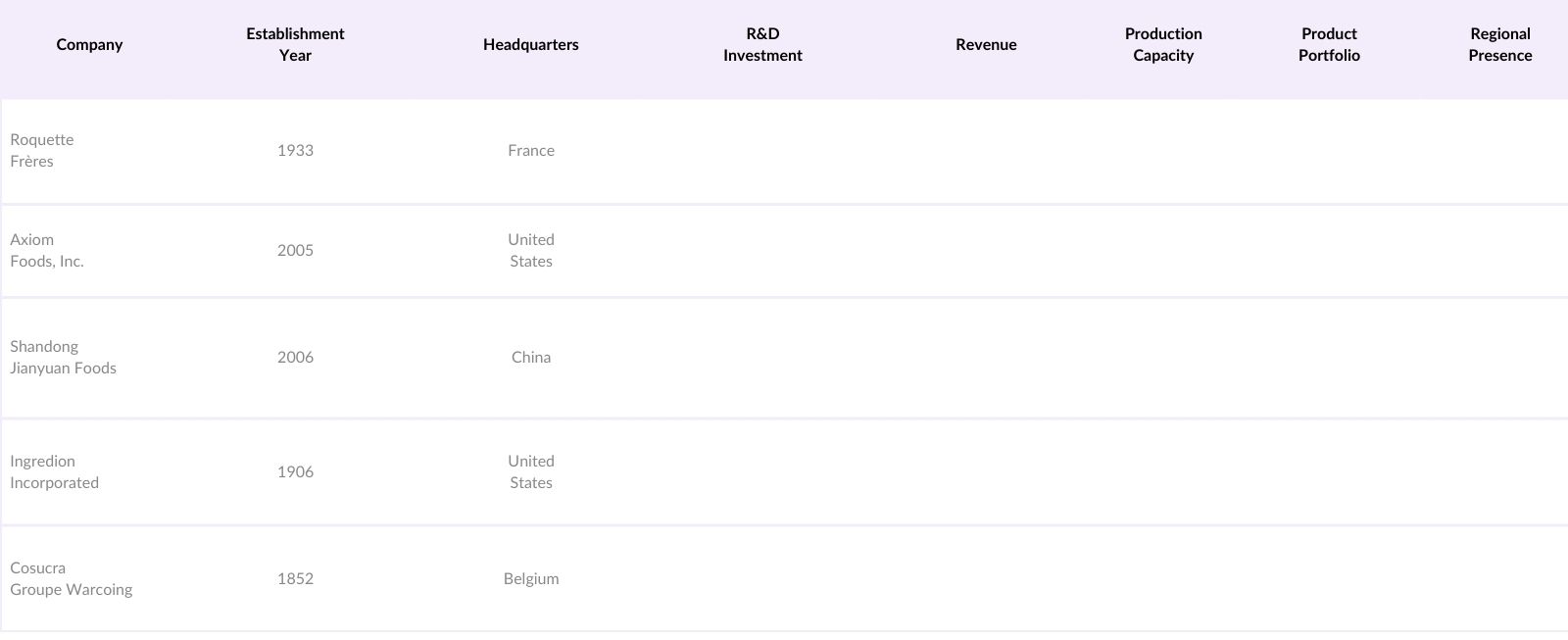
Asia-Pacific Pea Protein Market Analysis
Growth Drivers
- Rising Demand for Plant-based Proteins: With increasing health consciousness, the Asia-Pacific region has seen a significant shift toward plant-based protein consumption. According to the Food and Agriculture Organization, Asia accounts for nearly 60% of the global population, with a growing preference for sustainable and plant-based diets. The United Nations reports that 32% of consumers in urban Asian areas are choosing plant-based alternatives for health reasons. Additionally, China's National Health Commission reports a 15% rise in demand for plant-based proteins from 2022 to 2024, supported by government campaigns encouraging sustainable diets to reduce carbon footprints.
- Increasing Health Awareness: Heightened health awareness has driven a surge in demand for nutrient-dense foods. A World Health Organization survey reveals that over 40% of adults in urban Asian regions are now opting for protein-rich diets as part of healthier lifestyles. Japans Ministry of Health notes that 45% of adults aged 1840 are switching to diets with more plant-based proteins due to health benefits linked to reduced cholesterol levels. The rise of chronic diseases has led to dietary shifts across Asia, emphasizing clean-label proteins, including pea protein.
- Technological Advancements in Extraction Processes: With advanced extraction technologies, Asia-Pacific producers are now achieving higher pea protein yield and quality. Innovations such as membrane filtration, which retains more protein content, have gained traction, with 70% of facilities in China adopting this technique by 2023, according to Chinas Ministry of Industry and Information Technology. Similarly, India has invested $150 million in protein extraction research, emphasizing improvements in processing efficiency to meet rising demand for pea protein. Such advancements help reduce environmental impacts and enhance production output.
Market Challenges
- Limited Raw Material Availability: Pea protein relies on yellow peas, which are primarily grown in North America. With Asia importing over 70% of its yellow peas, the market faces high dependency on external supply. Chinas import data shows that 2 million metric tons of yellow peas were sourced from Canada in 2023, contributing to vulnerability in supply chains. Additionally, India faces periodic restrictions on yellow pea imports, affecting steady supply to local producers and increasing costs due to limited raw material availability.
- Regulatory Compliance and Standards: Asia-Pacific countries maintain diverse regulatory standards, affecting uniformity in pea protein production. For instance, Chinas Food Safety Law mandates specific protein content levels and additives in plant proteins, creating regulatory complexities. Japan has distinct labeling requirements under the Ministry of Health, which can challenge exports. Navigating these regional standards imposes additional costs for compliance and creates barriers for new entrants aiming to standardize across multiple markets.
Asia-Pacific Pea Protein Market Future Outlook
The Asia-Pacific Pea Protein Market is projected to expand significantly over the next five years, driven by the rising adoption of plant-based diets, innovations in food technology, and increased investments in sustainable agriculture. Additionally, the regions large, health-conscious demographic continues to seek high-protein alternatives, especially as functional foods and dietary supplements gain popularity. Manufacturers are anticipated to focus on enhancing product quality, sustainability, and availability to meet the growing demand.
Market Opportunities
- Expansion into Functional Foods and Beverages: Functional foods and beverages in Asia are expanding rapidly, with a projected 10% annual growth, per the Food and Agriculture Organization. Pea protein is increasingly incorporated into these segments due to its high amino acid profile. Chinas Health Commission reports that functional drinks with added plant proteins, including pea protein, saw a 12% increase in sales volume from 2022 to 2023, highlighting demand for nutritionally enhanced products.
- Innovation in Product Formulations: Product diversification is driving growth in the pea protein sector. The Japanese Food Research Institute has supported advancements in textured pea protein, suited for traditional dishes, while South Korean companies are developing fortified snacks using pea protein isolates. Innovation in formulation addresses taste and texture preferences, increasing product variety and expanding consumer acceptance across various dietary patterns. This trend aligns with evolving consumer preferences for protein-rich options.
Scope of the Report
Products
Key Target Audience
Food and Beverage Manufacturers
Nutraceutical and Supplement Companies
Health-Conscious Consumers
Animal Feed Producers
Cosmetics Industry Players
Banks and Financial Institutes
Pharmaceuticals Industry Stakeholders
Investors and Venture Capitalist Firms
Government and Regulatory Bodies (e.g., Food Safety and Standards Authority of India, Australian Department of Health)
Companies
Players Mention in the Report:
Roquette Frres
Axiom Foods, Inc.
Cosucra Groupe Warcoing
Ingredion Incorporated
Shandong Jianyuan Foods Co., Ltd.
NutriPea LP
Puris Foods
Sotexpro
Emsland Group
AGT Food and Ingredients
Kerry Group
Yantai Shuangta Food Co., Ltd.
Farbest Brands
Glanbia plc
Burcon NutraScience Corporation
Table of Contents
1. Asia-Pacific Pea Protein Market Overview
1.1. Definition and Scope
1.2. Market Taxonomy
1.3. Key Metrics: CAGR and Revenue Growth Rate
1.4. Value Chain Analysis
1.5. Market Dynamics Overview
2. Asia-Pacific Pea Protein Market Size (In USD Billion)
2.1. Historical Market Size
2.2. Current Market Size Analysis
2.3. Year-on-Year Growth Rate
2.4. Key Milestones and Market Developments
3. Asia-Pacific Pea Protein Market Analysis
3.1. Growth Drivers
- Rising Demand for Plant-based Proteins
- Increasing Health Awareness
- Technological Advancements in Extraction Processes
- Favorable Government Policies
3.2. Market Challenges
- Limited Raw Material Availability
- Regulatory Compliance and Standards
- High Production Costs
- Consumer Perception and Taste Concerns
3.3. Opportunities
- Expansion into Functional Foods and Beverages
- Innovation in Product Formulations
- Partnerships and Joint Ventures
- Market Expansion into Untapped Regions
3.4. Trends
- Clean Label and Organic Trends
- Premiumization of Plant-based Protein Products
- Adoption of Pea Protein in Nutraceuticals
- Sustainable and Ethical Sourcing
3.5. Regulatory Landscape (Quality Standards, Import-Export Regulations)
3.6. SWOT Analysis
3.7. Stakeholder Ecosystem (Raw Material Suppliers, Manufacturers, End-Users)
3.8. Porters Five Forces Analysis
3.9. Competitive Landscape Overview
4. Asia-Pacific Pea Protein Market Segmentation
4.1. By Type (In Value %)
- Isolate
- Concentrate
- Textured
- Hydrolyzed
4.2. By Application (In Value %)
- Food & Beverage
- Nutraceuticals
- Animal Feed
- Cosmetics
- Pharmaceuticals
4.3. By Form (In Value %)
- Dry
- Liquid
4.4. By Source (In Value %)
- Yellow Peas
- Green Peas
4.5. By Region (In Value %)
- North
- East
- West
- South
5. Asia-Pacific Pea Protein Market Competitive Analysis
5.1. Detailed Profiles of Major Companies
- Roquette Frres
- Axiom Foods, Inc.
- Cosucra Groupe Warcoing
- Ingredion Incorporated
- Shandong Jianyuan Foods Co., Ltd.
- NutriPea LP
- Puris Foods
- Sotexpro
- Emsland Group
- AGT Food and Ingredients
- Kerry Group
- Yantai Shuangta Food Co., Ltd.
- Farbest Brands
- Glanbia plc
- Burcon NutraScience Corporation
5.2. Cross Comparison Parameters (No. of Employees, Production Capacity, Revenue, Product Portfolio, R&D Investment, Regional Presence, Market Share, Strategic Partnerships)
5.3. Market Share Analysis (In Value % by Segment)
5.4. Strategic Initiatives (Partnerships, Collaborations, Product Launches)
5.5. Mergers and Acquisitions Activity
5.6. Investment Analysis (Capital Investments, Government Grants, Private Equity Funding)
5.7. Venture Capital Funding Activity
5.8. Key Market Innovations
6. Asia-Pacific Pea Protein Market Regulatory Framework
6.1. Food Safety and Quality Standards
6.2. Certification Processes (Non-GMO, Organic, Vegan)
6.3. Import and Export Regulations
6.4. Environmental Regulations and Sustainability Standards
7. Asia-Pacific Pea Protein Future Market Size (In USD Billion)
7.1. Future Market Size Projections
7.2. Projected Growth Rates
7.3. Key Factors Driving Future Market Growth
8. Asia-Pacific Pea Protein Future Market Segmentation
8.1. By Type (In Value %)
8.2. By Application (In Value %)
8.3. By Form (In Value %)
8.4. By Source (In Value %)
8.5. By Country (In Value %)
9. Asia-Pacific Pea Protein Market Analysts Recommendations
9.1. Total Addressable Market (TAM), Serviceable Available Market (SAM), Serviceable Obtainable Market (SOM) Analysis
9.2. Customer Segmentation and Targeting Strategies
9.3. Product Development Recommendations
9.4. Market Entry and Expansion Strategies
9.5. White Space Opportunity Analysis
Disclaimer
Contact Us
Research Methodology
Step 1: Identification of Key Variables
The initial step involves mapping the entire ecosystem of the Asia-Pacific Pea Protein Market. This entails extensive desk research to pinpoint critical variables influencing market trends, dynamics, and growth. A combination of proprietary and secondary databases aids in gathering comprehensive data at industry and stakeholder levels.
Step 2: Market Analysis and Construction
Historical data are compiled and analyzed, encompassing market penetration rates, production capacities, and application-specific demand across segments. Quality assessments and statistical evaluations are performed to ensure accurate revenue projections.
Step 3: Hypothesis Validation and Expert Consultation
Market hypotheses are developed based on data insights and validated through expert consultations, including interviews with executives from key companies. This process gathers actionable insights to support market estimations and operational understandings.
Step 4: Research Synthesis and Final Output
The final phase synthesizes all data inputs, with a bottom-up approach to verify projections and ensure accuracy. Market statistics are cross-referenced with primary insights, producing a validated, precise market analysis for the Asia-Pacific Pea Protein Market.
Frequently Asked Questions
01. How big is the Asia-Pacific Pea Protein Market?
The Asia-Pacific Pea Protein Market is valued at USD 596 million, propelled by growing health awareness and demand for plant-based protein alternatives.
02. What are the primary challenges in the Asia-Pacific Pea Protein Market?
Challenges in Asia-Pacific Pea Protein Market include limited raw material availability, regulatory compliance complexities, and the cost-intensive nature of pea protein extraction processes.
03. Who are the major players in the Asia-Pacific Pea Protein Market?
Key players in Asia-Pacific Pea Protein Market include Roquette Frres, Axiom Foods, Inc., Cosucra Groupe Warcoing, Ingredion Incorporated, and Shandong Jianyuan Foods Co., Ltd., each with strong market positioning and extensive regional influence.
04. What factors drive growth in the Asia-Pacific Pea Protein Market?
Growth drivers in Asia-Pacific Pea Protein Market include increased consumer preference for high-protein diets, the rise of plant-based nutrition trends, and innovations in food technology that enhance product quality and appeal.
05. Which application dominates the Asia-Pacific Pea Protein Market?
The Food & Beverage segment leads the Asia-Pacific Pea Protein Market due to the popularity of pea protein in meat substitutes, dairy alternatives, and functional foods that cater to health-focused consumers.
Why Buy From Us?

What makes us stand out is that our consultants follows Robust, Refine and Result (RRR) methodology. i.e. Robust for clear definitions, approaches and sanity checking, Refine for differentiating respondents facts and opinions and Result for presenting data with story

We have set a benchmark in the industry by offering our clients with syndicated and customized market research reports featuring coverage of entire market as well as meticulous research and analyst insights.

While we don't replace traditional research, we flip the method upside down. Our dual approach of Top Bottom & Bottom Top ensures quality deliverable by not just verifying company fundamentals but also looking at the sector and macroeconomic factors.

With one step in the future, our research team constantly tries to show you the bigger picture. We help with some of the tough questions you may encounter along the way: How is the industry positioned? Best marketing channel? KPI's of competitors? By aligning every element, we help maximize success.

Our report gives you instant access to the answers and sources that other companies might choose to hide. We elaborate each steps of research methodology we have used and showcase you the sample size to earn your trust.

If you need any support, we are here! We pride ourselves on universe strength, data quality, and quick, friendly, and professional service.