
Asia Pacific Perimeter Security Market Outlook to 2030
Region:Asia
Author(s):Paribhasha Tiwari
Product Code:KROD9093
Region:Asia
Author(s):Paribhasha Tiwari
Product Code:KROD9093
November 2024
81
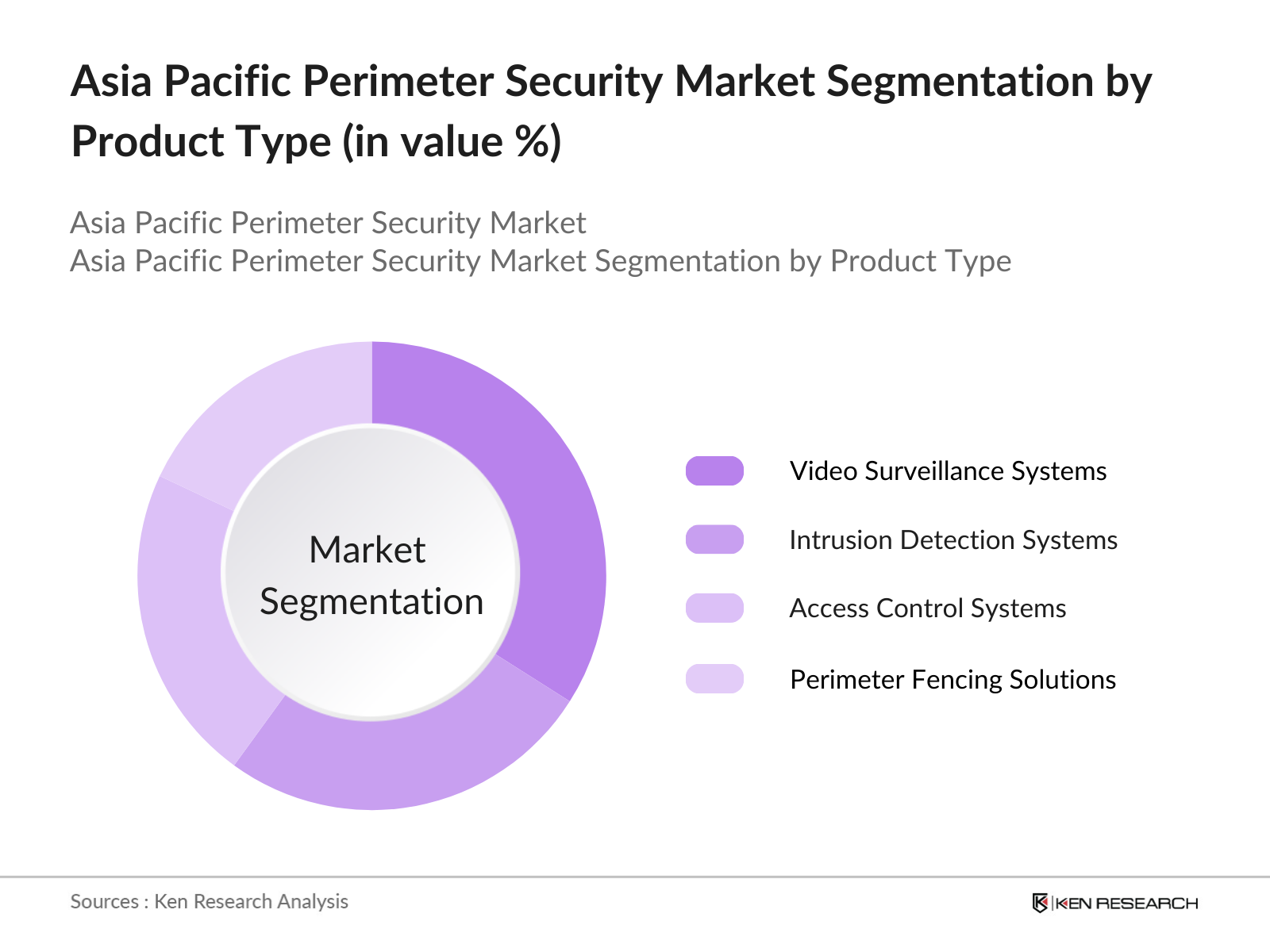
By Product Type: The Asia Pacific Perimeter Security Market is segmented by product type into Intrusion Detection Systems, Video Surveillance Systems, Access Control Systems, and Perimeter Fencing Solutions. Recently, Video Surveillance Systems have held a dominant market share in this segment due to the rapid adoption of AI-powered video analytics and facial recognition systems. This is further fueled by the integration of these technologies with existing security infrastructures, enabling real-time threat detection and response. Major industries like defense, energy, and transportation sectors across the region have also driven this demand due to the need for comprehensive monitoring solutions.
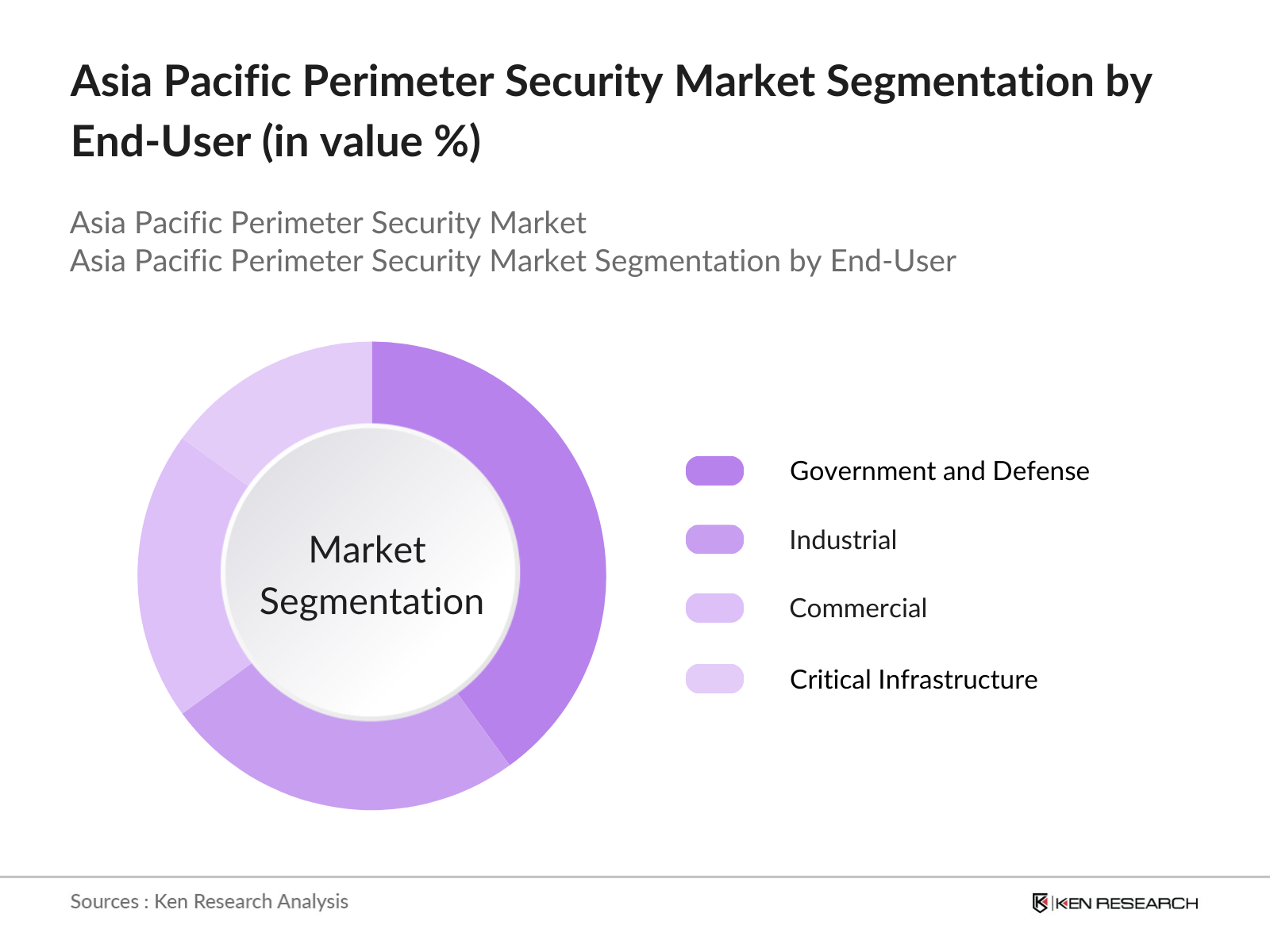
By End-User: The market is also segmented by end-user into Government and Defense, Commercial, Industrial, and Critical Infrastructure. The Government and Defense sector dominates this segmentation, owing to increasing investments in national security initiatives and cross-border surveillance. Additionally, government agencies across countries like China, India, and Australia are prioritizing defense modernization projects that include the adoption of AI, facial recognition, and biometric systems, all of which drive the growth of perimeter security solutions.
The Asia Pacific Perimeter Security Market is highly competitive, with key players focusing on innovation and strategic partnerships to strengthen their market positions. Companies are investing heavily in R&D to develop AI-driven perimeter security solutions that cater to the region's increasing demand for automated surveillance systems. Global players have also entered into partnerships with local firms to tap into specific regional demands.
|
Company Name |
Establishment Year |
Headquarters |
Product Offerings |
Revenue (USD Bn) |
Global Presence |
R&D Investments |
Strategic Partnerships |
Number of Employees |
Market Share |
|
Honeywell International Inc. |
1906 |
Charlotte, USA |
- | - | - | - | - | - | - |
|
Bosch Security Systems |
1886 |
Stuttgart, Germany |
- | - | - | - | - | - | - |
|
Hikvision Digital Technology |
2001 |
Hangzhou, China |
- | - | - | - | - | - | - |
|
Axis Communications |
1984 |
Lund, Sweden |
- | - | - | - | - | - | - |
|
Dahua Technology |
2001 |
Hangzhou, China |
- | - | - | - | - | - | - |
Over the next five years, the Asia Pacific Perimeter Security Market is expected to experience significant growth. This will be driven by continuous advancements in AI-based video surveillance systems, an increased focus on smart city projects, and heightened border security concerns. Government initiatives in countries such as China and India will further fuel market expansion as they continue to invest in cutting-edge security technologies for national security and critical infrastructure protection.
|
By Product Type |
Intrusion Detection Systems Video Surveillance Systems Access Control Systems Perimeter Fencing Solutions |
|
By Component |
Hardware Software Services |
|
By Deployment Type |
On-Premise Cloud-Based |
|
By End-User |
Government and Defense Industrial Commercial Critical Infrastructure |
|
By Region |
China India Japan Australia Southeast Asia |
1.1 Definition and Scope
1.2 Market Taxonomy
1.3 Market Growth Rate
1.4 Market Segmentation Overview
2.1 Historical Market Size
2.2 Year-On-Year Growth Analysis
2.3 Key Market Developments and Milestones
3.1 Growth Drivers (Technological Advancements, Geopolitical Tensions, Regulatory Mandates, Increased Urbanization)
3.1.1 Rising Need for Enhanced Security Systems
3.1.2 Growing Integration of AI and IoT in Security Solutions
3.1.3 Increase in Cross-Border Threats
3.1.4 Government Initiatives for Critical Infrastructure Protection
3.2 Market Challenges (Cost Constraints, Lack of Skilled Workforce, Integration Complexities)
3.2.1 High Initial Investment Costs
3.2.2 Cybersecurity Vulnerabilities in Smart Systems
3.2.3 Difficulty in Retrofitting Existing Systems
3.3 Opportunities (Innovation in AI-driven Surveillance, Expansion in Emerging Markets, Adoption of Cloud-based Perimeter Security Solutions)
3.3.1 Demand for Cloud-Connected Surveillance
3.3.2 Growing Use of Video Surveillance Analytics
3.3.3 Expansion into Rural and Semi-Urban Markets
3.4 Trends (Adoption of Wireless Perimeter Security Solutions, Increased Demand for Remote Monitoring, Biometric Integration)
3.4.1 Biometric-Based Access Control Systems
3.4.2 Use of Drones for Perimeter Surveillance
3.4.3 Increased Adoption of Wireless Sensors and Infrared Barriers
3.5 Government Regulation (Government Initiatives, Security Standards Compliance, Export Regulations)
3.5.1 National Security Policies
3.5.2 Perimeter Security Standards and Certifications
3.5.3 Export and Import Regulations for Security Equipment
3.6 SWOT Analysis
3.7 Stake Ecosystem (Manufacturers, Distributors, System Integrators, Government Agencies)
3.8 Porters Five Forces
3.9 Competition Ecosystem
4.1 By Product Type (In Value %)
4.1.1 Intrusion Detection Systems
4.1.2 Video Surveillance Systems
4.1.3 Access Control Systems
4.1.4 Perimeter Fencing Solutions
4.2 By Component (In Value %)
4.2.1 Hardware
4.2.2 Software
4.2.3 Services
4.3 By Deployment Type (In Value %)
4.3.1 On-Premise
4.3.2 Cloud-Based
4.4 By End-User (In Value %)
4.4.1 Government and Defense
4.4.2 Industrial
4.4.3 Commercial
4.4.4 Critical Infrastructure
4.5 By Region (In Value %)
4.5.1 China
4.5.2 India
4.5.3 Japan
4.5.4 Australia
4.5.5 Southeast Asia
5.1 Detailed Profiles of Major Companies
5.1.1 Honeywell International Inc.
5.1.2 Bosch Security Systems
5.1.3 Hikvision Digital Technology Co. Ltd.
5.1.4 Axis Communications
5.1.5 Tyco International Plc
5.1.6 Senstar Corporation
5.1.7 Johnson Controls International Plc
5.1.8 United Technologies Corporation
5.1.9 Schneider Electric SE
5.1.10 Dahua Technology Co. Ltd.
5.1.11 Anixter International Inc.
5.1.12 Avigilon Corporation
5.1.13 Axis Communications AB
5.1.14 Pelco Inc.
5.1.15 Genetec Inc.
5.2 Cross Comparison Parameters (Product Offerings, R&D Investments, Market Share, Partnerships, Global Presence, No. of Employees, Revenue, Headquarters)
5.3 Market Share Analysis
5.4 Strategic Initiatives
5.5 Mergers and Acquisitions
5.6 Investment Analysis
5.7 Government Grants and Incentives
5.8 Private Equity Investments
6.1 Security Standards and Guidelines
6.2 Compliance Requirements for Perimeter Security
6.3 Certification Processes for Products and Solutions
7.1 Future Market Size Projections
7.2 Key Factors Driving Future Market Growth
8.1 By Product Type (In Value %)
8.2 By Component (In Value %)
8.3 By Deployment Type (In Value %)
8.4 By End-User (In Value %)
8.5 By Region (In Value %)
9.1 TAM/SAM/SOM Analysis
9.2 Customer Cohort Analysis
9.3 Marketing Initiatives
9.4 White Space Opportunity Analysis
Disclaimer Contact UsIn the initial phase, an ecosystem map was constructed, encompassing all major stakeholders in the Asia Pacific Perimeter Security Market. This involved extensive desk research, utilizing secondary and proprietary databases to gather industry-level data. The primary objective was to identify critical variables that influence market dynamics, including product types, technological advancements, and end-user sectors.
Historical data was compiled and analyzed to assess market penetration, service quality statistics, and revenue generation. Market share data for different product types, such as video surveillance and intrusion detection systems, were also evaluated to ensure accuracy and reliability.
Market hypotheses were developed and validated through consultations with industry experts. These interviews provided financial insights and operational data, ensuring the accuracy of the market analysis.
The final phase involved direct engagement with perimeter security manufacturers and end-users, providing detailed insights into the market landscape. This process verified the bottom-up market approach, ensuring that the final report presents a comprehensive and validated analysis of the Asia Pacific Perimeter Security Market.
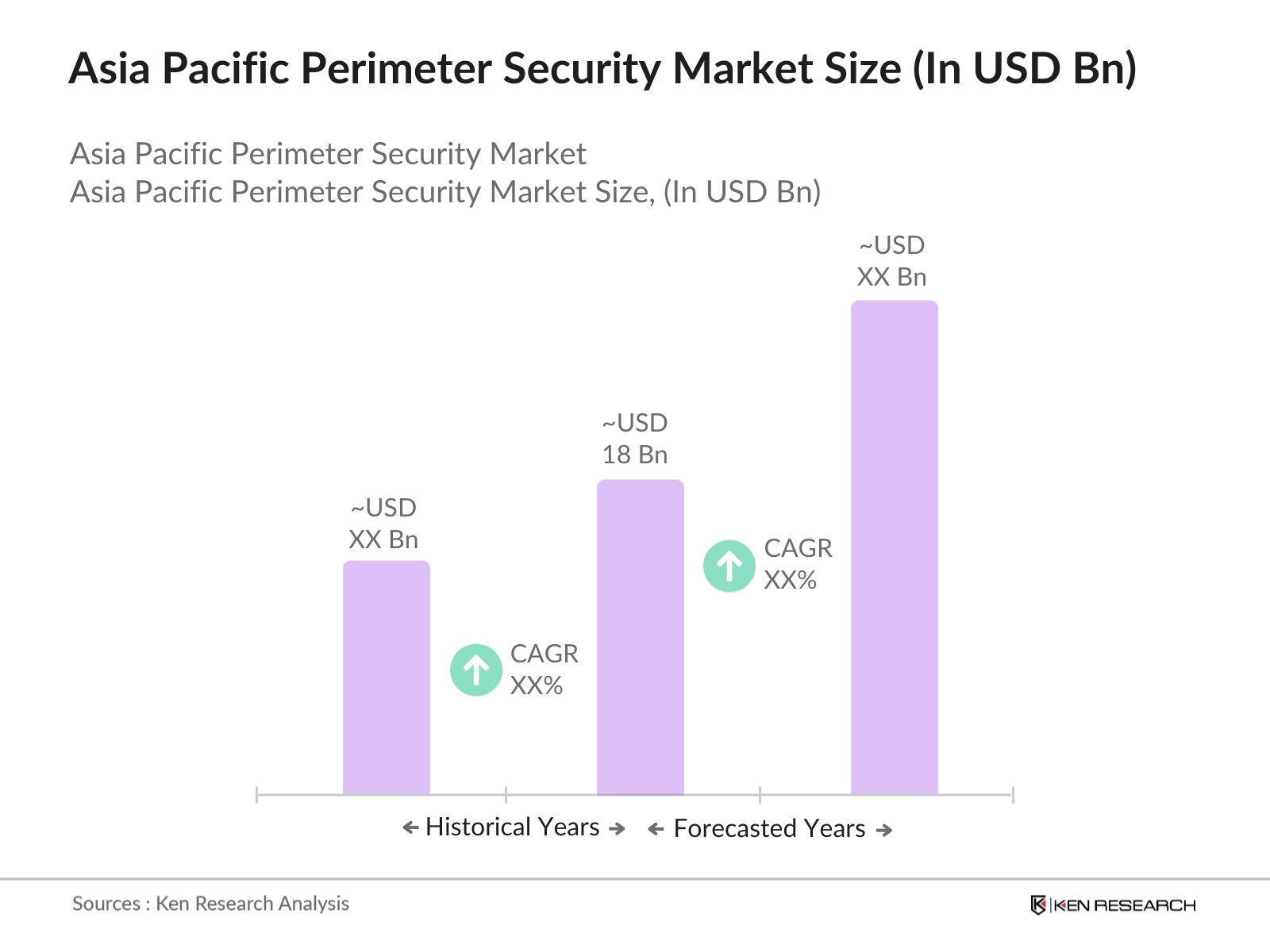
The Asia Pacific Perimeter Security Market is valued at USD 18 billion, driven by increasing investments in critical infrastructure protection and the adoption of AI-powered security systems.
Challenges include the high cost of advanced security systems, cybersecurity vulnerabilities, and the lack of skilled workforce capable of handling AI-enabled solutions.
Major players include Honeywell International Inc., Bosch Security Systems, Hikvision Digital Technology, Axis Communications, and Dahua Technology, among others.
Key growth drivers include increased border security concerns, advancements in AI and IoT technologies, and government initiatives for smart city projects and infrastructure protection.

What makes us stand out is that our consultants follows Robust, Refine and Result (RRR) methodology. i.e. Robust for clear definitions, approaches and sanity checking, Refine for differentiating respondents facts and opinions and Result for presenting data with story

We have set a benchmark in the industry by offering our clients with syndicated and customized market research reports featuring coverage of entire market as well as meticulous research and analyst insights.

While we don't replace traditional research, we flip the method upside down. Our dual approach of Top Bottom & Bottom Top ensures quality deliverable by not just verifying company fundamentals but also looking at the sector and macroeconomic factors.

With one step in the future, our research team constantly tries to show you the bigger picture. We help with some of the tough questions you may encounter along the way: How is the industry positioned? Best marketing channel? KPI's of competitors? By aligning every element, we help maximize success.

Our report gives you instant access to the answers and sources that other companies might choose to hide. We elaborate each steps of research methodology we have used and showcase you the sample size to earn your trust.

If you need any support, we are here! We pride ourselves on universe strength, data quality, and quick, friendly, and professional service.