
Asia Pacific Pharmaceutical Packaging Market Outlook to 2030
Region:Global
Author(s):Abhinav kumar
Product Code:KROD3472
Region:Global
Author(s):Abhinav kumar
Product Code:KROD3472
December 2024
92
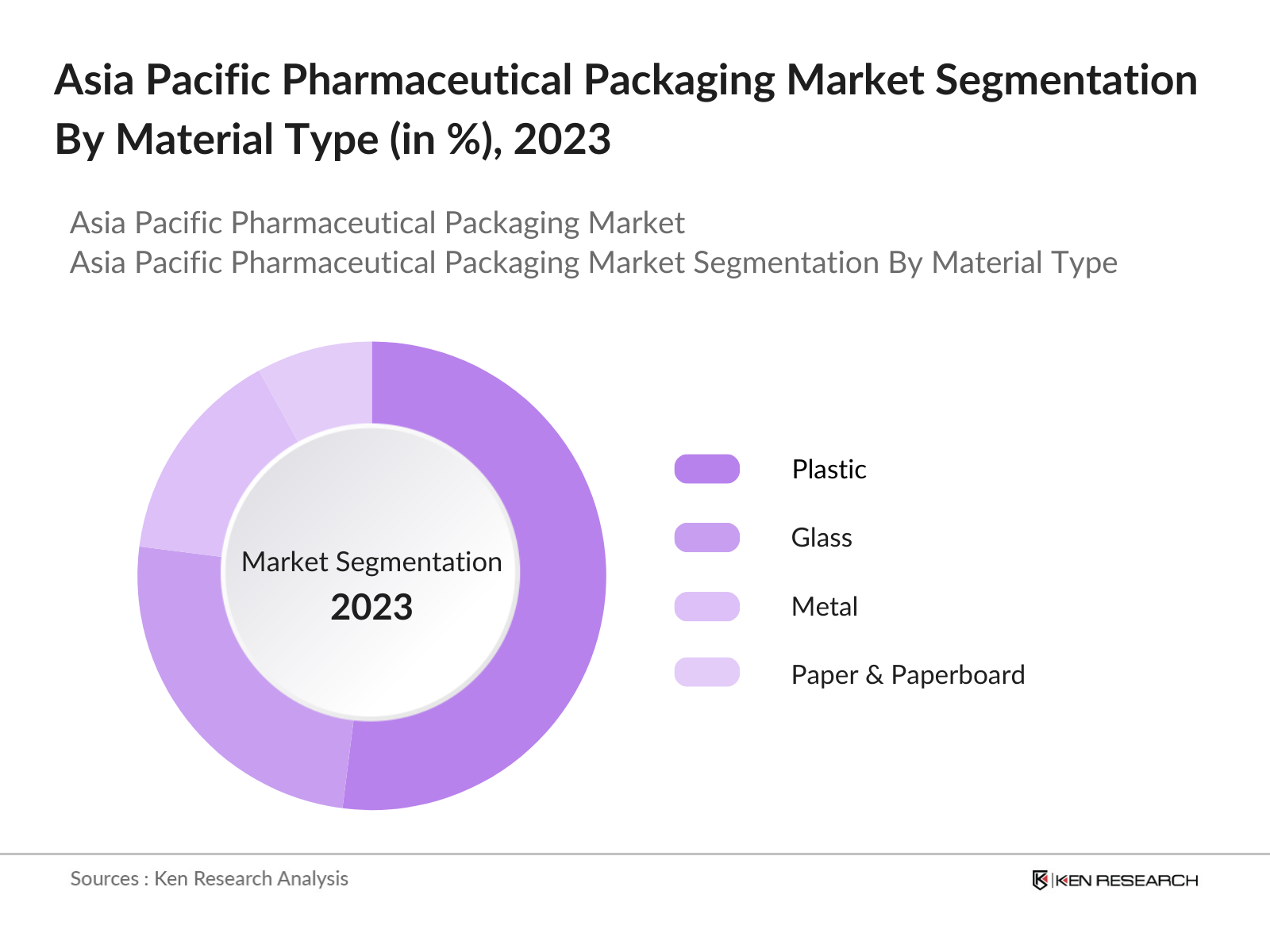
By Material Type: The Asia Pacific pharmaceutical packaging market is segmented by material type into plastic, glass, metal, and paper & paperboard. Plastic packaging holds a dominant market share due to its lightweight, cost-effectiveness, and flexibility. Plastic materials like HDPE, PET, and PP are widely used in pharmaceutical packaging for their durability and resistance to contamination. The demand for plastic-based packaging continues to grow due to the increasing production of oral drugs and injectables that require high-performance packaging solutions to maintain drug efficacy.
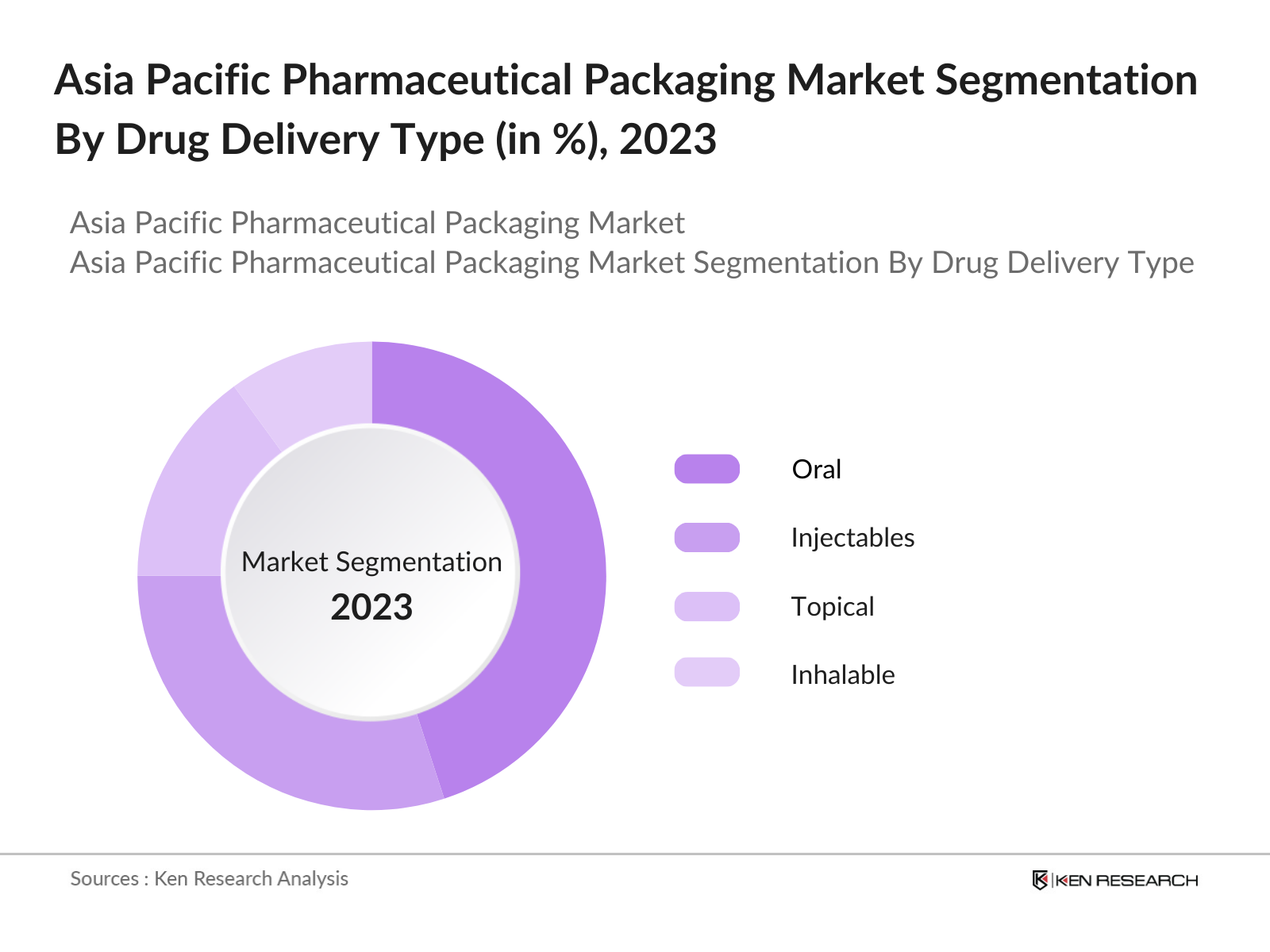
By Drug Delivery Type:The market is also segmented by drug delivery type into oral, injectables, topical, and inhalable. Oral drug packaging leads the market, primarily due to the high consumption of tablets and capsules in the region. Oral drug delivery is the most preferred method for administering medicines, and pharmaceutical packaging for oral drugs ensures product safety, efficacy, and extended shelf life. Bottles, blister packs, and sachets are some of the key packaging types used in this segment, making it a major contributor to market growth.
The Asia Pacific pharmaceutical packaging market is dominated by several key players, both local and global, who contribute significantly to market growth through product innovation, strategic partnerships, and investment in R&D. This market is characterized by the presence of a few major players with extensive portfolios, making it highly competitive. Companies like Amcor and Gerresheimer AG lead the market due to their extensive product range, global presence, and continuous innovations in sustainable packaging solutions.
|
Company |
Establishment Year |
Headquarters |
No. of Employees |
Global Footprint |
R&D Investments |
Sustainability Initiatives |
Product Portfolio |
Revenue (USD Bn) |
|
Amcor Plc |
1860 |
Zurich, Switzerland |
_ |
_ |
_ |
_ |
_ |
_ |
|
Gerresheimer AG |
1864 |
Dsseldorf, Germany |
_ |
_ |
_ |
_ |
_ |
_ |
|
SCHOTT AG |
1884 |
Mainz, Germany |
_ |
_ |
_ |
_ |
_ |
_ |
|
West Pharmaceutical |
1923 |
Exton, USA |
_ |
_ |
_ |
_ |
_ |
_ |
|
Berry Global, Inc. |
1967 |
Evansville, USA |
_ |
_ |
_ |
_ |
_ |
_ |
Over the next five years, the Asia Pacific pharmaceutical packaging market is expected to experience significant growth driven by continuous advancements in drug development, expanding healthcare infrastructure, and increased focus on sustainable packaging solutions. Countries like China and India are anticipated to lead this growth due to their strong manufacturing capabilities and government initiatives aimed at improving healthcare access. Additionally, the shift towards biologics and personalized medicine will create further demand for innovative packaging technologies, particularly in areas like temperature-controlled and sterile packaging.
|
Material Type |
Plastic Glass Metal Paper & Paperboard |
|
Packaging Type |
Primary Secondary Tertiary |
|
Drug Delivery Type |
Oral Injectables Topical Inhalable |
|
End User |
Pharmaceutical Manufacturers CPOs Biopharmaceuticals |
|
Region |
China Japan India ASEAN Australia |
1.1. Definition and Scope
1.2. Market Taxonomy
1.3. Market Growth Rate (GDP, Pharmaceutical Industry Growth, Healthcare Expenditure)
1.4. Market Segmentation Overview
2.1. Historical Market Size (Value-Based Growth)
2.2. Year-On-Year Growth Analysis (Key Growth Metrics, Market Drivers)
2.3. Key Market Developments and Milestones (Regulatory Updates, Product Launches, Key Collaborations)
3.1. Growth Drivers
3.1.1. Rising Chronic Diseases
3.1.2. Growth in Biologics and Biosimilars
3.1.3. Regulatory Push on Sustainable Packaging
3.1.4. Expansion of e-Commerce in Pharmaceuticals
3.2. Market Challenges
3.2.1. Stringent Regulatory Framework
3.2.2. Volatile Raw Material Prices
3.2.3. Counterfeiting in the Pharmaceutical Industry
3.3. Opportunities
3.3.1. Growing Demand for Smart Packaging
3.3.2. Adoption of Biodegradable and Recyclable Packaging
3.3.3. Expansion in Emerging Markets
3.4. Trends
3.4.1. Shift to Plastic-Free Packaging
3.4.2. Increased Focus on Sterile Packaging
3.4.3. Digital Health Integration
3.5. Government Regulations
3.5.1. National Health Policies
3.5.2. ISO Standards for Pharmaceutical Packaging
3.5.3. Global Regulatory Frameworks (FDA, EMA)
3.6. SWOT Analysis
3.7. Stakeholder Ecosystem
3.8. Porters Five Forces
3.8.1. Threat of New Entrants
3.8.2. Bargaining Power of Suppliers
3.8.3. Bargaining Power of Buyers
3.8.4. Threat of Substitutes
3.8.5. Industry Rivalry
3.9. Competition Ecosystem
4.1. By Material Type (In Value %)
4.1.1. Plastic (HDPE, PET, PP)
4.1.2. Glass (Ampoules, Vials, Syringes)
4.1.3. Metal (Aluminum Foils, Tins)
4.1.4. Paper & Paperboard (Cartons, Labels)
4.2. By Packaging Type (In Value %)
4.2.1. Primary Packaging (Bottles, Blisters, Tubes)
4.2.2. Secondary Packaging (Cartons, Paperboard Boxes)
4.2.3. Tertiary Packaging (Pallets, Shrink Wrap)
4.3. By Drug Delivery Type (In Value %)
4.3.1. Oral Drugs (Tablets, Capsules)
4.3.2. Injectables (Syringes, Vials, Ampoules)
4.3.3. Topical (Tubes, Jars)
4.3.4. Inhalable (Inhalers, Nebulizers)
4.4. By End User (In Value %)
4.4.1. Pharmaceutical Manufacturers
4.4.2. Contract Packaging Organizations (CPOs)
4.4.3. Biopharmaceuticals
4.5. By Region (In Value %)
4.5.1. China
4.5.2. Japan
4.5.3. India
4.5.4. ASEAN
4.5.5. Australia
5.1. Detailed Profiles of Major Companies
5.1.1. Amcor Plc
5.1.2. Gerresheimer AG
5.1.3. SCHOTT AG
5.1.4. West Pharmaceutical Services, Inc.
5.1.5. Berry Global, Inc.
5.1.6. SGD Pharma
5.1.7. Nipro Corporation
5.1.8. Uflex Ltd.
5.1.9. AptarGroup, Inc.
5.1.10. CCL Industries
5.1.11. Owens-Illinois, Inc.
5.1.12. Huhtamaki Group
5.1.13. Sealed Air Corporation
5.1.14. Sonoco Products Company
5.1.15. Klckner Pentaplast
5.2. Cross Comparison Parameters (Production Capacity, Global Footprint, Product Portfolio, Sustainability Practices, R&D Investment, Market Share, Inception Year, Revenue)
5.3. Market Share Analysis
5.4. Strategic Initiatives
5.5. Mergers and Acquisitions
5.6. Investment Analysis
5.7. Venture Capital Funding
5.8. Government Grants
5.9. Private Equity Investments
6.1. National and International Compliance Standards (GMP, ISO)
6.2. Packaging Materials Certification (FDA, EMA)
6.3. Regulatory Processes (Drug Regulatory Bodies, Approvals, Testing Requirements)
7.1. Future Market Size Projections
7.2. Key Factors Driving Future Market Growth (Healthcare Infrastructure, Biotechnology Advances)
8.1. By Material Type (In Value %)
8.2. By Packaging Type (In Value %)
8.3. By Drug Delivery Type (In Value %)
8.4. By End User (In Value %)
8.5. By Region (In Value %)
9.1. TAM/SAM/SOM Analysis
9.2. Customer Cohort Analysis (Market Targeting)
9.3. Marketing Initiatives (Branding, Digital Transformation)
9.4. White Space Opportunity Analysis (New Markets, Product Innovation)
The initial phase involves mapping the entire ecosystem of the Asia Pacific pharmaceutical packaging market. This includes in-depth desk research using a combination of secondary sources and proprietary databases to gather industry-specific information. The goal is to identify critical factors influencing the market such as regulatory frameworks, consumer preferences, and technological advancements.
In this phase, historical data is compiled to analyze market trends, packaging material usage, and drug delivery methods. The analysis also includes assessing revenue generated by packaging segments across different regions and their respective growth patterns. Evaluations on quality and compliance standards are made to ensure accuracy.
Industry experts are consulted through interviews to validate market hypotheses. These consultations provide direct insights into operational strategies and product innovations from key market players, which is crucial in refining the market data.
The final phase synthesizes the data from market analysis, expert consultation, and desk research. This step ensures the report reflects comprehensive insights into product segmentation, consumer behavior, and regulatory factors, offering a robust market assessment.
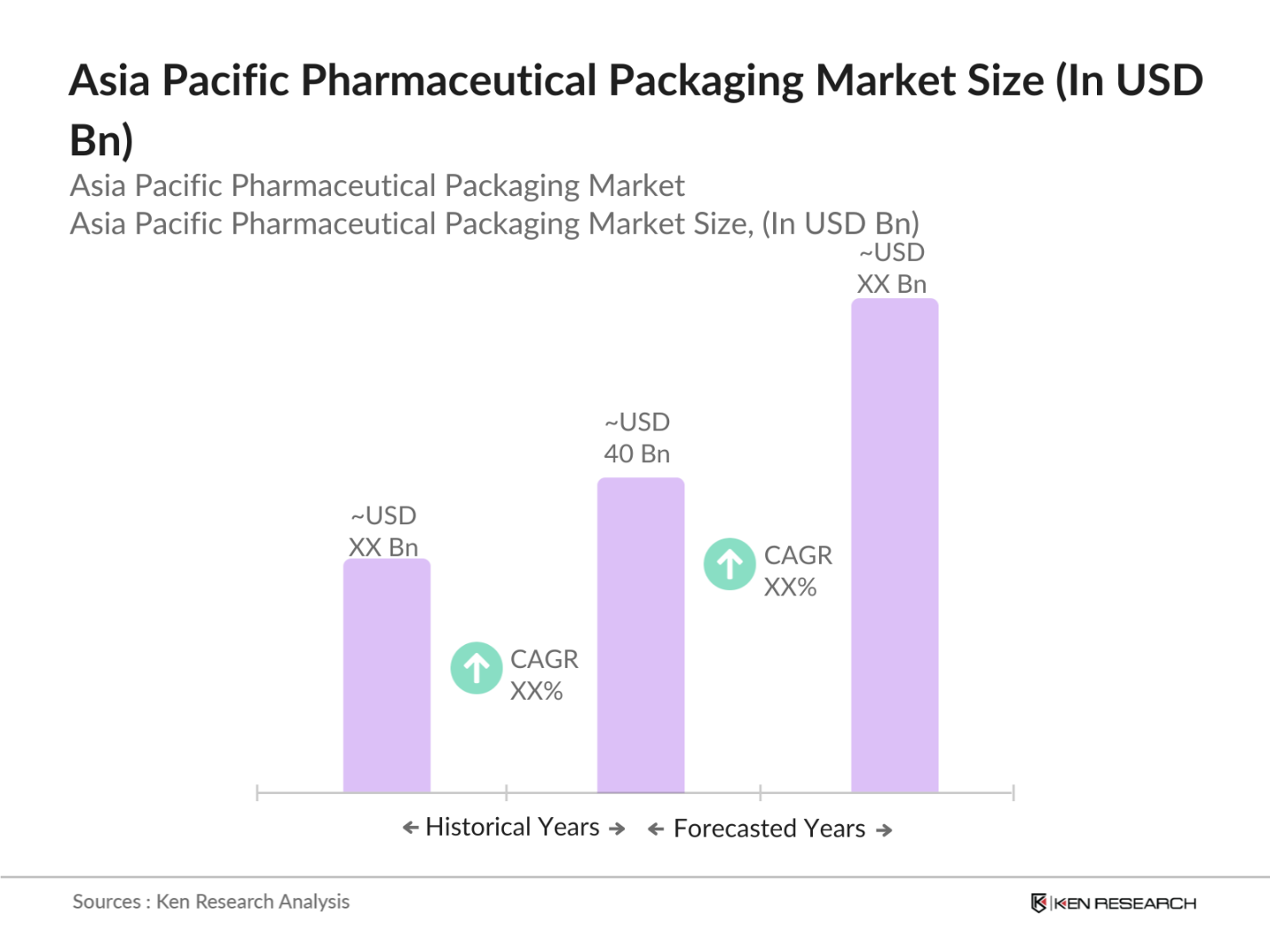
The Asia Pacific pharmaceutical packaging market is valued at USD 40 billion, driven by increasing healthcare expenditure and the rise in chronic diseases. The demand for innovative and sustainable packaging solutions is also pushing market growth.
Key challenges include strict regulatory frameworks, volatile raw material prices, and the growing threat of counterfeit products. Additionally, the industry is facing pressure to adopt sustainable packaging solutions, which can increase production costs.
Leading players in the market include Amcor Plc, Gerresheimer AG, SCHOTT AG, West Pharmaceutical Services, Inc., and Berry Global, Inc. These companies dominate due to their strong global presence, extensive product portfolios, and continuous innovation in packaging technologies.
The market is driven by rising demand for biologics and biosimilars, advancements in packaging technology, and increasing government regulations focusing on sustainable packaging. The expansion of e-commerce in the pharmaceutical sector is also a major growth driver.
Key trends include the adoption of smart packaging solutions, the shift towards eco-friendly materials, and increased focus on sterile packaging solutions. The demand for digital health integration into packaging is also on the rise.

What makes us stand out is that our consultants follows Robust, Refine and Result (RRR) methodology. i.e. Robust for clear definitions, approaches and sanity checking, Refine for differentiating respondents facts and opinions and Result for presenting data with story

We have set a benchmark in the industry by offering our clients with syndicated and customized market research reports featuring coverage of entire market as well as meticulous research and analyst insights.

While we don't replace traditional research, we flip the method upside down. Our dual approach of Top Bottom & Bottom Top ensures quality deliverable by not just verifying company fundamentals but also looking at the sector and macroeconomic factors.

With one step in the future, our research team constantly tries to show you the bigger picture. We help with some of the tough questions you may encounter along the way: How is the industry positioned? Best marketing channel? KPI's of competitors? By aligning every element, we help maximize success.

Our report gives you instant access to the answers and sources that other companies might choose to hide. We elaborate each steps of research methodology we have used and showcase you the sample size to earn your trust.

If you need any support, we are here! We pride ourselves on universe strength, data quality, and quick, friendly, and professional service.