
Asia Pacific Plasticizers Market Outlook to 2030
Region:Asia
Author(s):Shreya Garg
Product Code:KROD7450
November 2024
95
About the Report
Asia Pacific Plasticizers Market Overview
The Asia Pacific plasticizers market is valued at USD 10.5 billion, reflecting a steady demand driven by the regions rapid urbanization and industrial growth. The construction and automotive sectors play crucial roles in propelling market expansion due to their heavy reliance on flexible and durable plastics. Furthermore, the increasing use of eco-friendly and non-phthalate plasticizers aligns with regulatory shifts, influencing overall market dynamics. 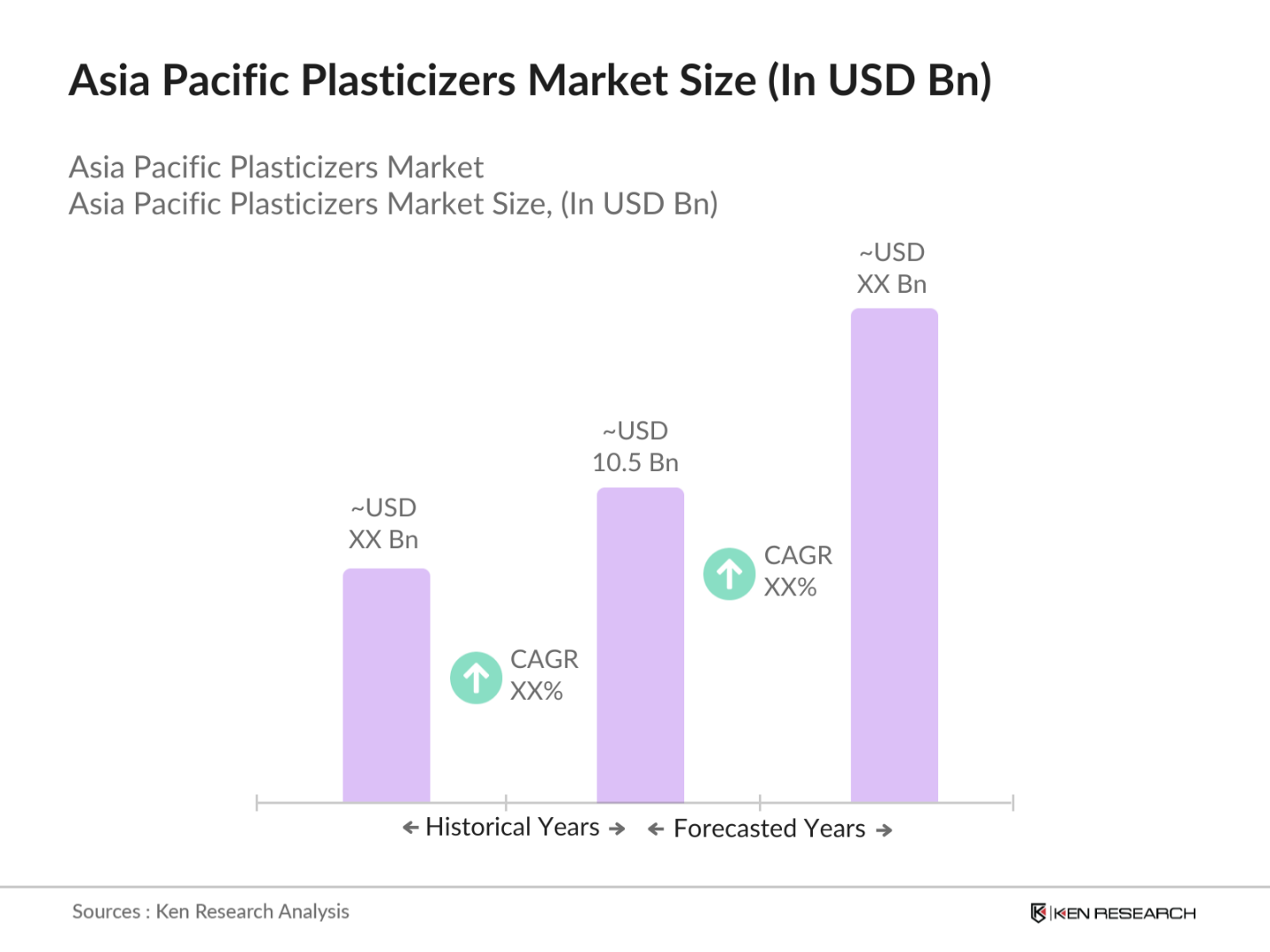
China and India are dominant players in the Asia Pacific plasticizers market due to their expansive industrial base and robust manufacturing capabilities. Chinas extensive construction and infrastructure projects, coupled with Indias growing automotive and consumer goods industries, contribute to their leading positions. These countries benefit from abundant raw material availability and strong supply chain networks, enhancing their market influence.
Regulatory alignment with REACH standards, originally set by the EU, has influenced policies in Asia Pacific, prompting local governments to introduce analogous legislation. Singapores National Environment Agency adopted similar compliance requirements in 2023 to ensure the safe use of chemical additives, impacting plasticizer production. Companies that meet these stringent standards are better positioned to maintain trade relations and consumer trust.
Asia Pacific Plasticizers Market Segmentation
By Type: The market is segmented by type into phthalates, non-phthalates, and bio-based plasticizers. Recently, non-phthalates have gained a dominant market share due to increasing regulations against phthalate-based products. The preference for non-toxic, environmentally friendly options in construction and medical device manufacturing supports this shift. 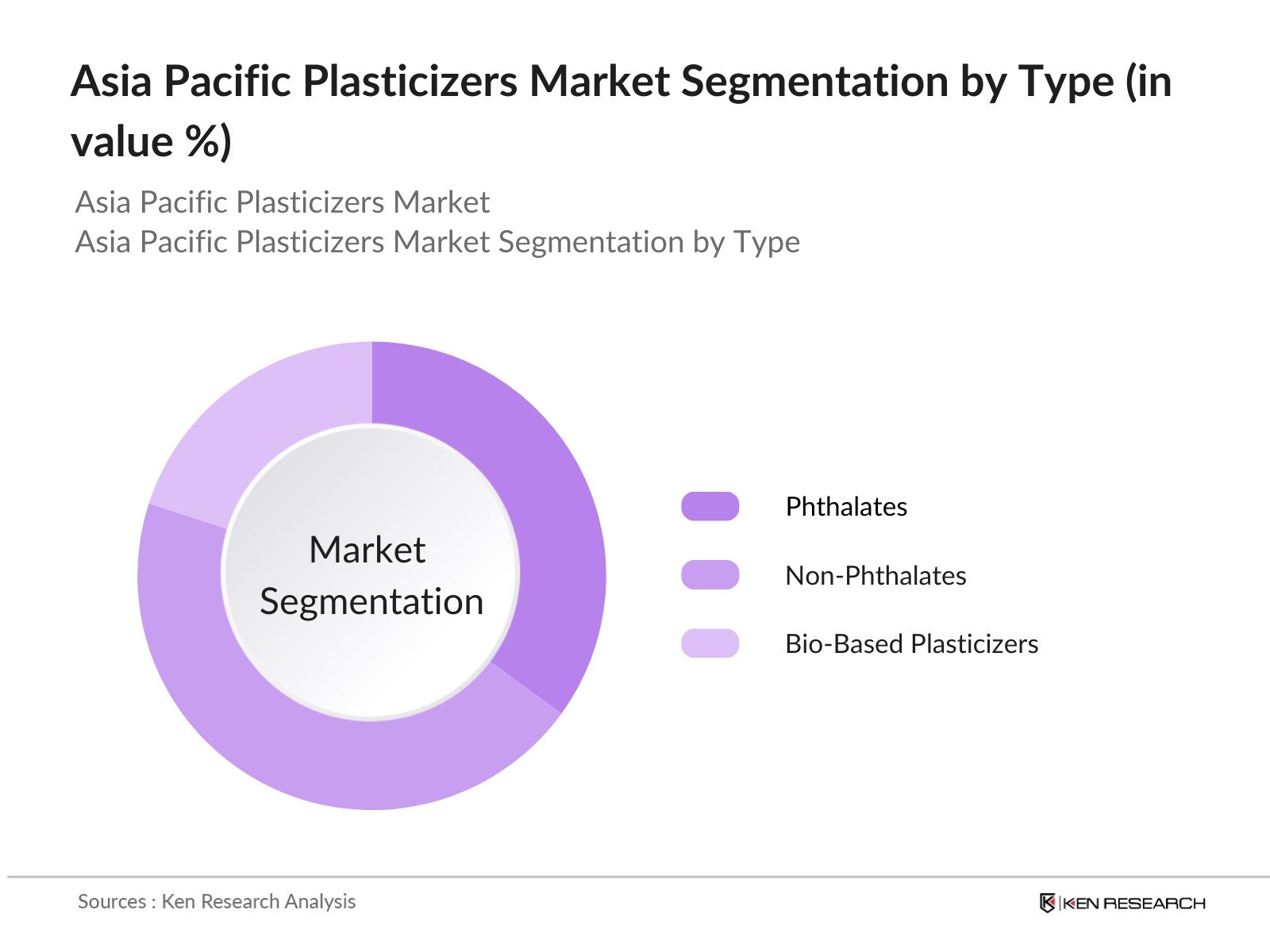
By Application: The market is segmented by application into flooring & wall coverings, wires & cables, coated fabrics, medical devices, and others. Flooring & wall coverings hold a significant market share due to their essential role in residential and commercial construction. The durable and flexible nature of plasticized PVC in this sub-segment continues to drive demand. 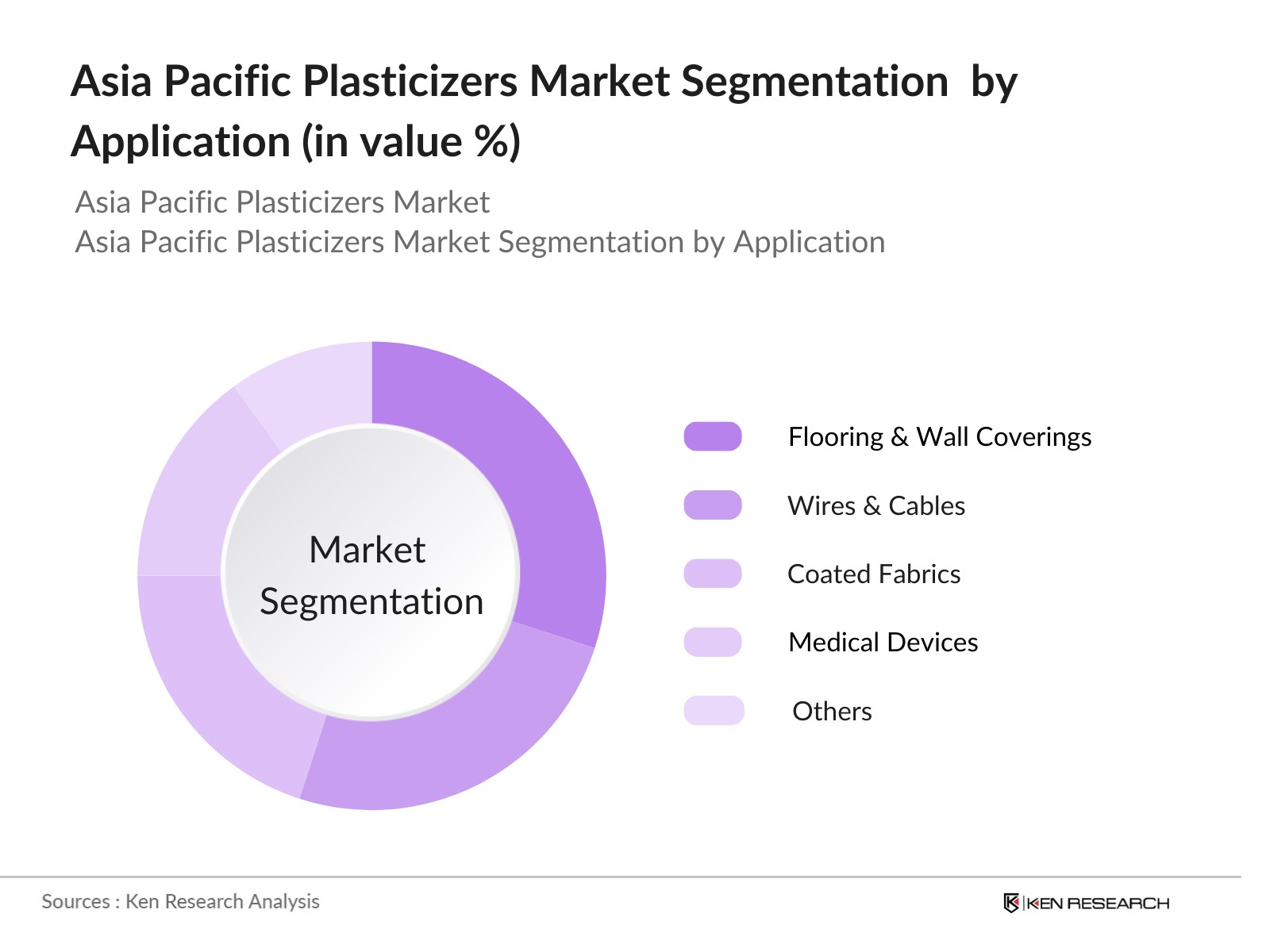
Asia Pacific Plasticizers Market Competitive Landscape
The Asia Pacific plasticizers market is characterized by a mix of global giants and regional players. This competitive landscape is shaped by key manufacturers who invest in R&D and sustainable practices to meet evolving regulatory standards. The market is dominated by leading companies like BASF SE and Eastman Chemical Company due to their advanced product portfolios and robust R&D investment, enabling them to maintain a competitive edge. 
Asia Pacific Plasticizers Industry Analysis
Growth Drivers
- Increasing Demand in Construction Sector: The Asia Pacific construction sector has been witnessing substantial expansion, driven by government-led infrastructure projects and urbanization. According to the Asian Development Bank, in 2023, infrastructure spending across major economies in Asia Pacific, including China, India, and Indonesia, surpassed $1.7 trillion. The utilization of plasticizers in concrete formulations and PVC-based building materials has increased due to their ability to enhance flexibility and durability. With an estimated population of over 4.7 billion in the region, ongoing urbanization and housing demands bolster the growth of construction, thereby stimulating demand for plasticizers.
- Growing Automotive Industry: The automotive industry in Asia Pacific remains one of the fastest-expanding sectors globally, with countries like China and India producing a combined total of approximately 34 million vehicles in 2023, as reported by the International Organization of Motor Vehicle Manufacturers. Plasticizers play a crucial role in manufacturing flexible components such as dashboard covers, upholstery, and door panels. The expansion of electric vehicle production, projected to continue increasing due to policy support and consumer interest, further elevates the demand for advanced plasticizers that can withstand high temperatures and provide long-lasting flexibility.
- Rising Adoption in Medical Applications: The medical sector in Asia Pacific has been expanding due to increased healthcare expenditure, which reached approximately $4.1 trillion in 2023, according to the World Bank. The adoption of plasticizers in medical devices, such as flexible tubing and blood bags, has surged due to their essential properties like elasticity and safety compliance. As regional governments invest heavily in healthcare infrastructure, particularly in countries like China and Japan, the demand for safe, biocompatible plasticizers in medical-grade plastics has risen.
Market Challenges
- Stringent Environmental Regulations: Environmental policies, such as the European Unions REACH compliance, have influenced regulations in Asia Pacific, demanding stringent adherence to standards. The introduction of local policies to control chemical emissions has imposed limitations on the use of traditional phthalates, impacting producers. For instance, Japans Ministry of the Environment enforced stricter regulations on chemical use in 2023, which has complicated the operations of manufacturers reliant on conventional plasticizers. This challenge has pushed companies towards innovating and producing eco-friendly alternatives to remain compliant with national and international standards. Source: Ministry of the Environment Japan.
- Volatile Raw Material Prices: The Asia Pacific market has faced fluctuations in raw material prices, particularly in petrochemicals used to manufacture plasticizers. The IMF reported a significant increase in crude oil prices, averaging $84 per barrel in 2023, contributing to cost pressures for manufacturers reliant on petroleum-based inputs. Such volatility disrupts production costs and profit margins, forcing companies to seek cost-effective alternatives or invest in bio-based production technologies that could mitigate long-term risks.
Asia Pacific Plasticizers Market Future Outlook
The Asia Pacific plasticizers market is expected to experience continued growth, driven by advancements in bio-based plasticizers and expanding construction and automotive sectors. Increasing demand for sustainable and phthalate-free products will further shape market dynamics, with regulatory frameworks promoting safer chemical alternatives. The integration of eco-friendly materials and strategic partnerships will remain pivotal for sustained market growth.
Future Market Opportunities
- Advancements in Bio-Based Plasticizers: Technological developments in bio-based plasticizers present significant growth opportunities. Research supported by the Asian Institute of Chemical Engineering revealed that bio-based plasticizers derived from renewable sources have started to gain traction. Innovations in processes that utilize castor oil and other plant-based materials for flexible plastic products are being adopted to meet environmental standards. Countries like India, with a high agricultural output, are investing in converting agricultural by-products into raw materials for bio-plasticizers, creating a localized and sustainable supply chain.
- Expansion in Emerging Economies: Emerging markets in Southeast Asia, such as Vietnam and the Philippines, are witnessing rapid industrialization and urbanization. The World Bank reported that GDP growth in these nations reached an average of $380 billion collectively in 2023. This economic rise stimulates infrastructure projects and consumer goods production, both of which drive the demand for flexible and durable plastics. These developments open opportunities for plasticizer manufacturers to expand operations and establish partnerships in these high-growth areas.
Scope of the Report
|
By Type |
Phthalates Non-Phthalates Bio-Based |
|
By Application |
Flooring & Wall Coverings Wires & Cables Coated Fabrics Medical Devices Others |
|
By End-Use Industry |
Construction Automotive Packaging Healthcare Consumer Goods |
|
By Product Function |
Primary Plasticizers Secondary Plasticizers |
|
By Region |
China India Japan South Korea Southeast Asia |
Products
Key Target Audience
Plastic and polymer manufacturers
Automotive industry stakeholders
Construction companies
Healthcare equipment manufacturers
Government and regulatory bodies (e.g., Environmental Protection Agency, REACH)
Investors and venture capitalist firms
Suppliers and distributors of chemicals
Research and development institutions
Companies
Major Players mentioned in the Report:
BASF SE
Eastman Chemical Company
LG Chem Ltd.
Evonik Industries AG
Mitsubishi Chemical Corporation
UPC Technology Corporation
Dow Chemical Company
Adeka Corporation
Arkema S.A.
Shandong Hongxin Chemicals
Zhejiang Weifeng New Materials
Aekyung Petrochemical Co., Ltd.
Perstorp AB
Nan Ya Plastics Corporation
ExxonMobil Chemical
Table of Contents
1. Asia Pacific Plasticizers Market Overview
1.1. Definition and Scope
1.2. Market Taxonomy
1.3. Market Growth Rate
1.4. Market Segmentation Overview
2. Asia Pacific Plasticizers Market Size (In USD Bn)
2.1. Historical Market Size
2.2. Year-On-Year Growth Analysis
2.3. Key Market Developments and Milestones
3. Asia Pacific Plasticizers Market Analysis
3.1. Growth Drivers
3.1.1. Increasing Demand in Construction Sector
3.1.2. Growing Automotive Industry
3.1.3. Rising Adoption in Medical Applications
3.1.4. Regulatory Support for Sustainable Plasticizers
3.2. Market Challenges
3.2.1. Stringent Environmental Regulations
3.2.2. Volatile Raw Material Prices
3.2.3. Availability of Substitutes
3.3. Opportunities
3.3.1. Advancements in Bio-Based Plasticizers
3.3.2. Expansion in Emerging Economies
3.3.3. Strategic Partnerships and Collaborations
3.4. Trends
3.4.1. Shift Towards Phthalate-Free Plasticizers
3.4.2. Use of Plasticizers in Smart Materials
3.4.3. Growth in Flexible PVC Demand
3.5. Government Regulation
3.5.1. REACH Compliance
3.5.2. Environmental Protection Laws
3.5.3. Industry Safety Standards
3.6. SWOT Analysis
3.7. Stakeholder Ecosystem (Manufacturers, Distributors, End-Users)
3.8. Porters Five Forces Analysis
3.9. Competition Landscape
4. Asia Pacific Plasticizers Market Segmentation
4.1. By Type (In Value %)
4.1.1. Phthalates
4.1.2. Non-Phthalates
4.1.3. Bio-Based Plasticizers
4.2. By Application (In Value %)
4.2.1. Flooring & Wall Coverings
4.2.2. Wires & Cables
4.2.3. Coated Fabrics
4.2.4. Medical Devices
4.2.5. Others
4.3. By End-Use Industry (In Value %)
4.3.1. Construction
4.3.2. Automotive
4.3.3. Packaging
4.3.4. Healthcare
4.3.5. Consumer Goods
4.4. By Product Function (In Value %)
4.4.1. Primary Plasticizers
4.4.2. Secondary Plasticizers
4.5. By Region (In Value %)
4.5.1. China
4.5.2. India
4.5.3. Japan
4.5.4. South Korea
4.5.5. Southeast Asia
5. Asia Pacific Plasticizers Market Competitive Analysis
5.1. Detailed Profiles of Major Companies
5.1.1. BASF SE
5.1.2. Evonik Industries AG
5.1.3. ExxonMobil Chemical
5.1.4. LG Chem Ltd.
5.1.5. UPC Technology Corporation
5.1.6. Eastman Chemical Company
5.1.7. Adeka Corporation
5.1.8. Dow Chemical Company
5.1.9. Arkema S.A.
5.1.10. Shandong Hongxin Chemicals
5.1.11. Zhejiang Weifeng New Materials
5.1.12. Aekyung Petrochemical Co., Ltd.
5.1.13. Mitsubishi Chemical Corporation
5.1.14. Perstorp AB
5.1.15. Nan Ya Plastics Corporation
5.2. Cross Comparison Parameters (Production Capacity, Technological Expertise, Global Presence, Sustainability Initiatives, Product Portfolio Strength, Strategic Partnerships, R&D Investments, Market Share)
5.3. Market Share Analysis
5.4. Strategic Initiatives
5.5. Mergers and Acquisitions
5.6. Investment Analysis
5.7. Venture Capital Funding
5.8. Government Grants
5.9. Private Equity Investments
6. Asia Pacific Plasticizers Market Regulatory Framework
6.1. Environmental Compliance Standards
6.2. Certification Processes
6.3. International Trade Regulations
7. Asia Pacific Plasticizers Future Market Size (In USD Bn)
7.1. Future Market Size Projections
7.2. Key Factors Driving Future Market Growth
8. Asia Pacific Plasticizers Future Market Segmentation
8.1. By Type (In Value %)
8.2. By Application (In Value %)
8.3. By End-Use Industry (In Value %)
8.4. By Product Function (In Value %)
8.5. By Region (In Value %)
9. Asia Pacific Plasticizers Market Analysts Recommendations
9.1. TAM/SAM/SOM Analysis
9.2. Customer Cohort Analysis
9.3. Marketing Initiatives
9.4. White Space Opportunity Analysis
Research Methodology
Step 1: Identification of Key Variables
The first phase involves mapping key stakeholders in the Asia Pacific plasticizers market. This is supported by comprehensive desk research and analysis of proprietary databases to pinpoint essential market variables.
Step 2: Market Analysis and Construction
This step includes assessing historical data on the Asia Pacific plasticizers market, examining production rates, end-user industries, and market revenue streams. Data on import-export dynamics and regulatory compliance are also incorporated.
Step 3: Hypothesis Validation and Expert Consultation
Hypotheses formed during the initial analysis are validated through structured interviews with industry experts, ensuring the accuracy of projections and understanding industry-specific challenges and opportunities.
Step 4: Research Synthesis and Final Output
Detailed interactions with manufacturers and industry practitioners help finalize data accuracy and contextual insights. This bottom-up approach ensures a reliable and comprehensive overview of the market.
Frequently Asked Questions
01 How big is the Asia Pacific Plasticizers Market?
The Asia Pacific plasticizers market is valued at USD 10.5 billion, supported by the region’s booming construction and automotive industries.
02 What challenges face the Asia Pacific Plasticizers Market?
Key challenges in the Asia Pacific plasticizers market include stringent environmental regulations, fluctuating raw material prices, and the availability of substitute products.
03 Who are the major players in the Asia Pacific Plasticizers Market?
Leading players in the Asia Pacific plasticizers market include BASF SE, Eastman Chemical Company, LG Chem Ltd., Evonik Industries AG, and Mitsubishi Chemical Corporation.
04 What is driving the growth of the Asia Pacific Plasticizers Market?
The Asia Pacific plasticizers market is driven by strong demand from the construction and automotive sectors, as well as increased adoption of bio-based and non-phthalate plasticizers.
05 What trends are emerging in the Asia Pacific Plasticizers Market?
Notable trends in the Asia Pacific plasticizers market include a shift toward sustainable, phthalate-free plasticizers and the incorporation of advanced, eco-friendly technologies.
Why Buy From Us?

What makes us stand out is that our consultants follows Robust, Refine and Result (RRR) methodology. i.e. Robust for clear definitions, approaches and sanity checking, Refine for differentiating respondents facts and opinions and Result for presenting data with story

We have set a benchmark in the industry by offering our clients with syndicated and customized market research reports featuring coverage of entire market as well as meticulous research and analyst insights.

While we don't replace traditional research, we flip the method upside down. Our dual approach of Top Bottom & Bottom Top ensures quality deliverable by not just verifying company fundamentals but also looking at the sector and macroeconomic factors.

With one step in the future, our research team constantly tries to show you the bigger picture. We help with some of the tough questions you may encounter along the way: How is the industry positioned? Best marketing channel? KPI's of competitors? By aligning every element, we help maximize success.

Our report gives you instant access to the answers and sources that other companies might choose to hide. We elaborate each steps of research methodology we have used and showcase you the sample size to earn your trust.

If you need any support, we are here! We pride ourselves on universe strength, data quality, and quick, friendly, and professional service.