















Asia Pacific Polymethyl Methacrylate (PMMA) Market Outlook to 2030
Region:Asia
Author(s):Vijay Kumar
Product Code:KROD9089
November 2024
97
About the Report
Asia Pacific Polymethyl Methacrylate (PMMA) Market Overview
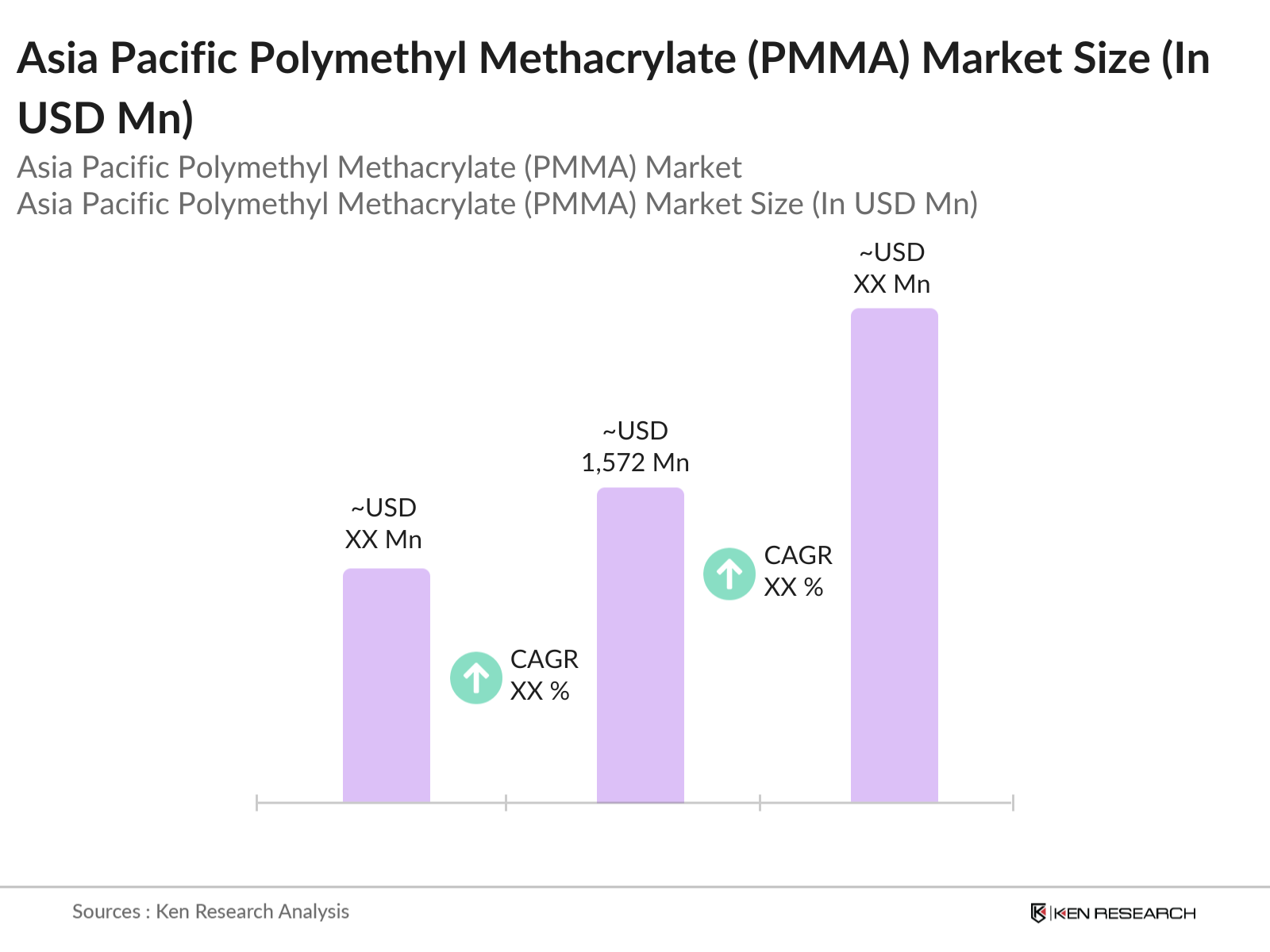
- The Asia Pacific Polymethyl Methacrylate (PMMA) market is valued at USD 1,572 million, based on a five-year historical analysis. This markets growth is primarily driven by increasing demand from the automotive, construction, and electronics sectors, where PMMA's optical clarity, impact resistance, and lightweight characteristics make it an ideal alternative to traditional glass. The materials versatility in applications such as display screens, architectural glazing, and automotive parts is further strengthening its demand, especially as industries look for durable and sustainable materials to meet evolving standards.
- Key countries like China, Japan, and South Korea dominate the market due to their extensive automotive, electronics, and construction industries. China leads the region with its strong manufacturing base, while Japan and South Korea excel in technology-driven applications of PMMA. These countries benefit from favorable government policies, an established supply chain, and substantial investment in research and development, further reinforcing their market dominance.
- The Asia Pacific automotive sector adheres to strict compliance standards for safety and environmental impact, with Japan implementing additional regulations for component durability and recyclability in 2023. These regulations affect PMMA usage in automotive interiors and lighting, requiring improved quality standards. For example, Japan mandates specific durability standards for transparent materials in vehicle manufacturing to enhance passenger safety, favoring PMMA for its high compliance levels.
Asia Pacific Polymethyl Methacrylate (PMMA) Market Segmentation
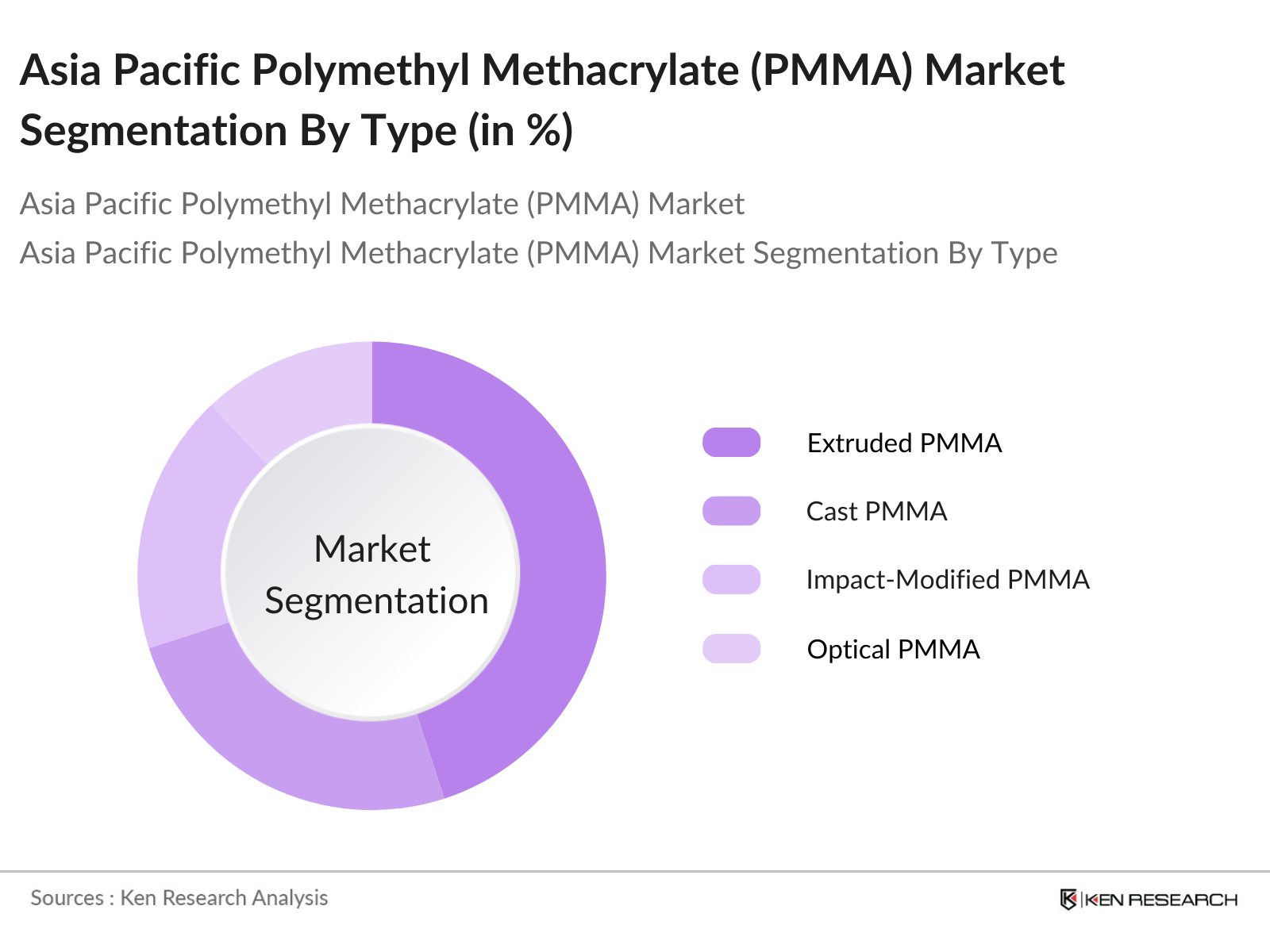
By Type: The market is segmented by type into extruded PMMA, cast PMMA, impact-modified PMMA, and optical PMMA. Extruded PMMA holds a dominant market share within this segmentation, driven by its cost-effective production and extensive application in consumer goods and construction. This type is widely used for windows, signage, and displays due to its clarity, ease of fabrication, and weather resistance, making it particularly popular in outdoor applications.
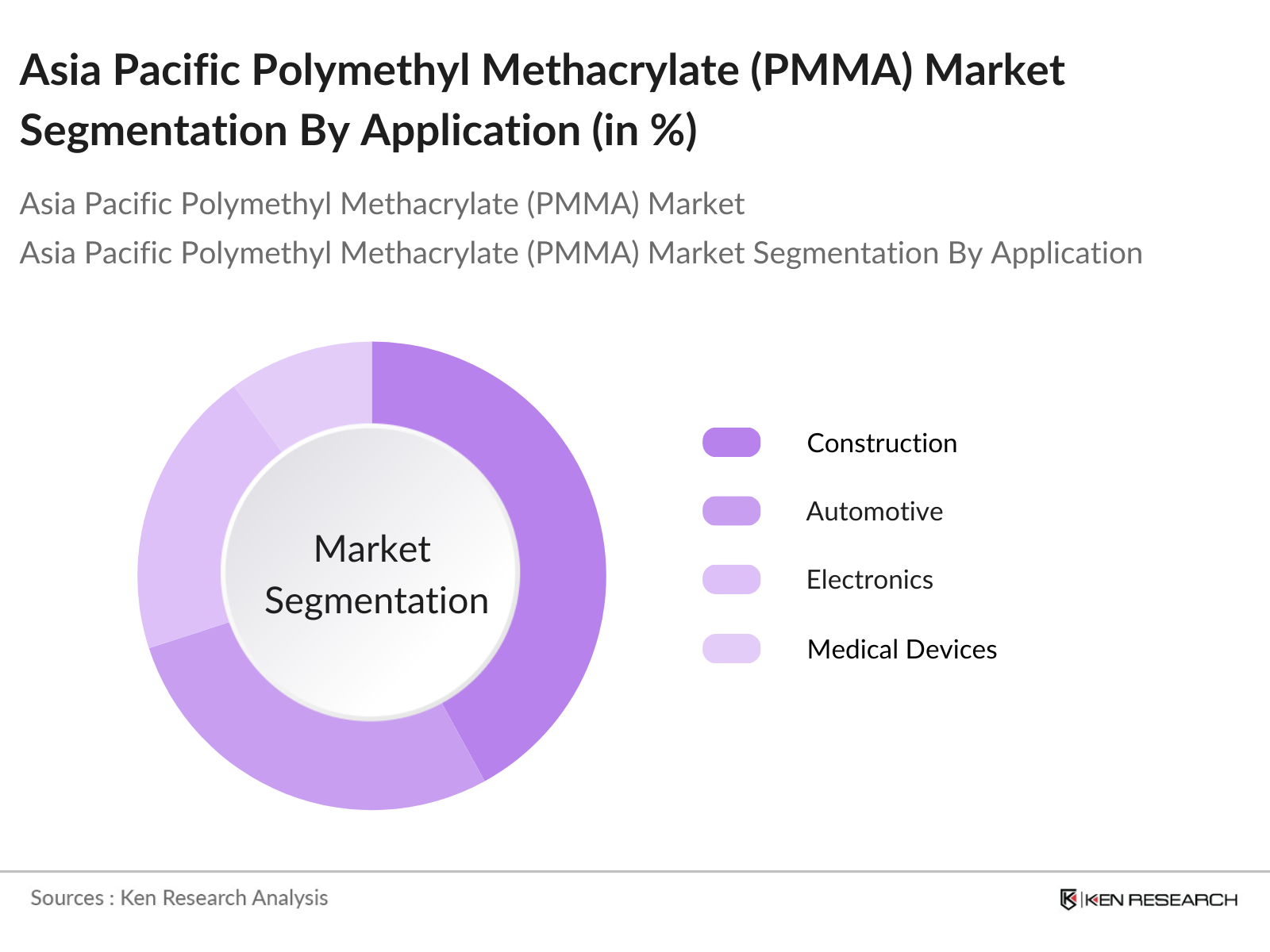
By Application: The market is further segmented by application, including construction, automotive, electronics, medical devices, and advertising & signs. The construction segment leads, driven by the high demand for PMMA in applications such as architectural glazing, protective barriers, and aesthetic elements. The material's durability, UV resistance, and versatility make it particularly suited for construction in both residential and commercial projects.
Asia Pacific Polymethyl Methacrylate (PMMA) Market Competitive Landscape
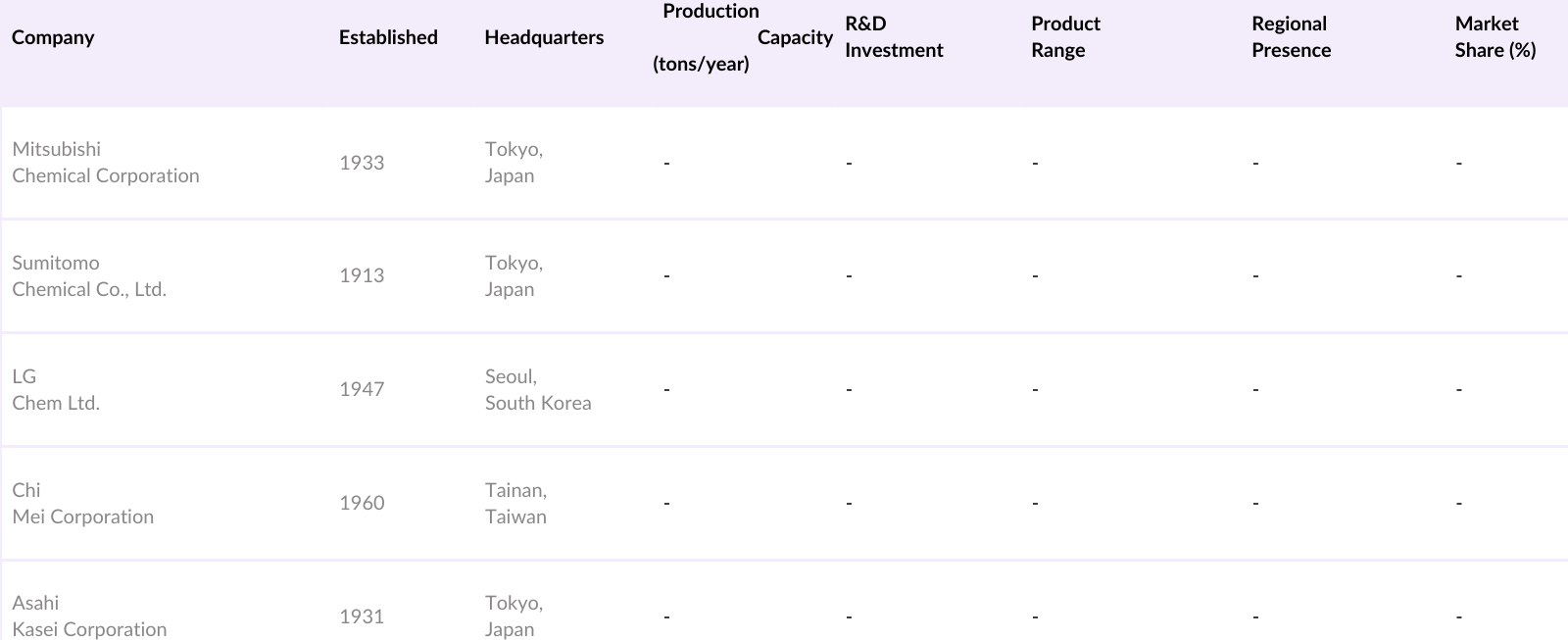
The Asia Pacific PMMA market is dominated by a mix of regional and global players who have established strong market positions through their extensive product portfolios and production capacities. The PMMA market in the Asia Pacific is consolidated, with key players focusing on innovation, strategic partnerships, and mergers to maintain their competitive edge.
Asia Pacific Polymethyl Methacrylate (PMMA) Industry Analysis
Growth Drivers
- Increased Demand in Construction (Building Materials, Urban Development): The Asia Pacific region is witnessing substantial urbanization, with approximately 2.3 billion residents living in urban areas, catalyzing demand for durable construction materials like PMMA. The construction sectors contribution to GDP reached $3.1 trillion in 2023, with rising investments in infrastructure. PMMAs applications in windows, panels, and roofing materials are favored for their lightweight nature and durability.
- Rising Applications in Automotive Sector (Lightweight Materials, Aesthetics): Asias automotive industry produced over 43 million vehicles in 2023, positioning the region as a key PMMA market, given its use in lightweight materials and aesthetic components. The automotive sector emphasizes reduced vehicle weight for fuel efficiency, and PMMAs lightweight properties are vital for this objective. Countries like Japan and South Korea are investing in advanced materials to comply with fuel efficiency regulations, promoting the adoption of PMMA.
- High Demand in Electronics (Optical Clarity, Durability): Asia Pacific leads globally in electronics production, with an estimated $1.6 trillion in output value in 2023, requiring materials with optical clarity and durability such as PMMA. Applications in LEDs, screens, and optical lenses drive this demand. Notably, China accounts for over 40% of global electronics exports, with PMMAs durability and transparency as preferred attributes. The material's compatibility with electronic components aligns well with production needs in countries like China, Japan, and South Korea, which lead in electronics manufacturing.
Market Challenges
- Volatility in Raw Material Prices: Fluctuating prices of raw materials like methyl methacrylate monomer (MMA) challenge PMMA manufacturers, impacting stability. MMA costs have seen variations due to petrochemical supply chain disruptions, largely influenced by fluctuating oil prices, which are currently averaging around $85 per barrel. Asias reliance on imports for petrochemical products also heightens cost variability. As of 2023, Chinas import dependency for petrochemicals reached approximately 45%, amplifying raw material cost issues for PMMA manufacturers reliant on MMA.
- Environmental Regulations and Restrictions: The Asia Pacific region has strengthened its environmental regulations, impacting PMMA manufacturing due to its emissions profile. South Korea and Japan introduced tighter emission standards in 2023, requiring chemical plants to reduce VOC (Volatile Organic Compounds) emissions by nearly 30%. With China imposing additional standards for pollutants under its Blue Sky Initiative, PMMA manufacturers are under increased regulatory scrutiny, driving up production costs and necessitating technological upgrades to reduce emissions.
Asia Pacific Polymethyl Methacrylate (PMMA) Market Future Outlook
The Asia Pacific PMMA market is expected to experience substantial growth over the coming years, driven by expanding applications across diverse industries and increasing demand for lightweight, durable, and recyclable materials. This growth will likely be supported by technological innovations in PMMA production, such as bio-based PMMA and impact-resistant grades, which can cater to the evolving requirements of automotive, electronics, and construction industries.
Market Opportunities
- Emerging Green PMMA Solutions: Green PMMA solutions are gaining attention as sustainable alternatives, driven by governmental support for eco-friendly materials. South Koreas Green New Deal, allocating $61 billion to green projects, promotes low-carbon material development, favoring biodegradable PMMA applications. Japans initiatives also support sustainable plastic alternatives, aligning with PMMAs development as an eco-friendly choice in automotive and electronics. In 2024, Japans circular economy initiatives focus on plastic waste reduction, incentivizing PMMA innovations in sustainable materials.
- Expansion in Solar Energy Applications: Solar energy expansion across Asia presents a promising market for PMMA due to its high optical clarity and UV resistance. Japan and India collectively aim to install over 60 gigawatts of solar capacity by 2025. PMMAs utility in solar panel covers due to its durability and light transmission properties aligns well with this growth. Japans solar energy production grew by 18% in 2023, highlighting PMMAs potential role in meeting regional renewable energy targets.
Scope of the Report
|
Type |
Extruded PMMA Cast PMMA Impact Modified PMMA Optical PMMA |
|
Application |
Construction Automotive Electronics Medical Devices Advertising & Signs |
|
Form |
Sheet Pellets Beads Tubes |
|
End-User Industry |
Building & Construction Transportation Consumer Goods Healthcare Solar & Photovoltaics |
|
Region |
China India Japan South Korea Australia |
Products
Key Target Audience
Manufacturers of PMMA
Automotive Industry Players
Construction and Real Estate Companies
Electronics Manufacturers
Medical Device Manufacturers
Advertising and Signage Companies
Investments and Venture Capitalist Firms
Government and Regulatory Bodies (Ministry of Industry and Information Technology, Ministry of Environmental Protection)
Companies
Players Mentioned in the Report
Mitsubishi Chemical Corporation
Sumitomo Chemical Co., Ltd.
LG Chem Ltd.
Chi Mei Corporation
Asahi Kasei Corporation
Arkema Group
Evonik Industries AG
Plaskolite LLC
Rhm GmbH
Lotte Chemical Corporation
Table of Contents
1. Asia Pacific Polymethyl Methacrylate (PMMA) Market Overview
1.1. Definition and Scope
1.2. Market Taxonomy
1.3. Market Growth Rate and Dynamics
1.4. Market Segmentation Overview
2. Asia Pacific Polymethyl Methacrylate (PMMA) Market Size (In USD Mn)
2.1. Historical Market Size
2.2. Year-On-Year Growth Analysis
2.3. Key Market Developments and Milestones
3. Asia Pacific Polymethyl Methacrylate (PMMA) Market Analysis
3.1. Growth Drivers
3.1.1. Increased Demand in Construction (Building Materials, Urban Development)
3.1.2. Rising Applications in Automotive Sector (Lightweight Materials, Aesthetics)
3.1.3. High Demand in Electronics (Optical Clarity, Durability)
3.1.4. Substitutes to Traditional Glass (Enhanced Safety, Cost Efficiency)
3.2. Market Challenges
3.2.1. Volatility in Raw Material Prices
3.2.2. Environmental Regulations and Restrictions
3.2.3. Competitive Pressure from Alternative Materials
3.3. Opportunities
3.3.1. Emerging Green PMMA Solutions
3.3.2. Expansion in Solar Energy Applications
3.3.3. Potential Growth in Medical and Healthcare Devices
3.4. Trends
3.4.1. Technological Innovations (Self-Healing PMMA, Bio-Based PMMA)
3.4.2. Increasing Adoption in High-End Aesthetic Applications
3.4.3. Development of Recyclable and Sustainable PMMA
3.5. Government Regulations
3.5.1. Compliance Standards for Automotive Applications
3.5.2. Environmental Compliance in Production Processes
3.5.3. Regional Import-Export Tariffs and Policies
3.6. SWOT Analysis
3.7. Stakeholder Ecosystem Analysis
3.8. Porters Five Forces Analysis
3.9. Competitive Landscape and Market Positioning
4. Asia Pacific Polymethyl Methacrylate (PMMA) Market Segmentation
4.1. By Type (In Value %)
4.1.1. Extruded PMMA
4.1.2. Cast PMMA
4.1.3. Impact Modified PMMA
4.1.4. Optical PMMA
4.2. By Application (In Value %)
4.2.1. Construction
4.2.2. Automotive
4.2.3. Electronics
4.2.4. Medical Devices
4.2.5. Advertising & Signs
4.3. By Form (In Value %)
4.3.1. Sheet
4.3.2. Pellets
4.3.3. Beads
4.3.4. Tubes
4.4. By End-User Industry (In Value %)
4.4.1. Building & Construction
4.4.2. Transportation
4.4.3. Consumer Goods
4.4.4. Healthcare
4.4.5. Solar & Photovoltaics
4.5. By Country (In Value %)
4.5.1. China
4.5.2. India
4.5.3. Japan
4.5.4. South Korea
4.5.5. Australia
5. Asia Pacific Polymethyl Methacrylate (PMMA) Market Competitive Analysis
5.1 Detailed Profiles of Major Companies
5.1.1. Mitsubishi Chemical Corporation
5.1.2. Sumitomo Chemical Co., Ltd.
5.1.3. LG Chem Ltd.
5.1.4. Asahi Kasei Corporation
5.1.5. Chi Mei Corporation
5.1.6. Kolon Industries Inc.
5.1.7. Arkema Group
5.1.8. Evonik Industries AG
5.1.9. Plaskolite LLC
5.1.10. Rhm GmbH
5.1.11. Lotte Chemical Corporation
5.1.12. Toray Industries, Inc.
5.1.13. Unigel S.A.
5.1.14. PolyOne Corporation
5.1.15. Daesan MMA Corp.
5.2 Cross Comparison Parameters (Revenue, Product Types, Production Capacities, R&D Investment, Global Presence, Market Share, Employee Count, Supply Chain Partnerships)
5.3. Market Share Analysis
5.4. Strategic Initiatives
5.5. Mergers And Acquisitions
5.6. Investment and R&D Analysis
5.7. Government Support and Grants
5.8. Private Equity Investments
6. Asia Pacific Polymethyl Methacrylate (PMMA) Market Regulatory Framework
6.1. Environmental Standards Compliance
6.2. Certification Requirements
6.3. Import and Export Policies
7. Asia Pacific Polymethyl Methacrylate (PMMA) Future Market Size (In USD Mn)
7.1. Future Market Size Projections
7.2. Factors Driving Future Growth
8. Asia Pacific Polymethyl Methacrylate (PMMA) Future Market Segmentation
8.1. By Type (In Value %)
8.2. By Application (In Value %)
8.3. By Form (In Value %)
8.4. By End-User Industry (In Value %)
8.5. By Country (In Value %)
9. Asia Pacific Polymethyl Methacrylate (PMMA) Market Analysts Recommendations
9.1. TAM/SAM/SOM Analysis
9.2. Customer Cohort Analysis
9.3. Marketing Initiatives
9.4. White Space Opportunity Analysis
Disclaimer Contact UsResearch Methodology
Step 1: Identification of Key Variables
The initial stage involved creating a comprehensive ecosystem map covering all stakeholders in the Asia Pacific PMMA Market. This process included extensive desk research using secondary and proprietary databases to establish the variables influencing market dynamics.
Step 2: Market Analysis and Construction
In this step, historical data was compiled and analyzed to assess PMMA market penetration, segment performance, and regional distribution. Service quality statistics and production figures were evaluated to verify the accuracy of revenue estimates.
Step 3: Hypothesis Validation and Expert Consultation
Market hypotheses were developed and validated through interviews with industry experts from leading PMMA producers and downstream applications. These consultations provided critical insights into operational and financial aspects, enhancing the robustness of the market data.
Step 4: Research Synthesis and Final Output
In the final phase, direct engagement with PMMA manufacturers was conducted to obtain detailed information on product segmentation, production capabilities, and technological innovations. These interactions served to confirm the statistical analyses, ensuring a comprehensive and validated market report.
Frequently Asked Questions
01. How big is the Asia Pacific Polymethyl Methacrylate (PMMA) Market?
The Asia Pacific Polymethyl Methacrylate (PMMA) market is valued at USD 1,572 million, based on a five-year historical analysis. This markets growth is primarily driven by increasing demand from the automotive, construction, and electronics sectors, where PMMA's optical clarity, impact resistance, and lightweight characteristics make it an ideal alternative to traditional glass.
02. What are the challenges in the Asia Pacific PMMA Market?
Challenges include raw material price volatility, regulatory compliance requirements, and competition from alternative materials, which may impact market growth.
03. Who are the major players in the Asia Pacific PMMA Market?
Key players include Mitsubishi Chemical Corporation, Sumitomo Chemical, LG Chem Ltd., Chi Mei Corporation, and Asahi Kasei Corporation, which lead the market due to extensive production capacities and strong customer bases.
04. What are the growth drivers of the Asia Pacific PMMA Market?
The market is driven by increased PMMA applications in automotive, electronics, and construction, with PMMA's properties such as optical clarity, durability, and lightweight nature fueling its demand.
Why Buy From Us?

What makes us stand out is that our consultants follows Robust, Refine and Result (RRR) methodology. i.e. Robust for clear definitions, approaches and sanity checking, Refine for differentiating respondents facts and opinions and Result for presenting data with story

We have set a benchmark in the industry by offering our clients with syndicated and customized market research reports featuring coverage of entire market as well as meticulous research and analyst insights.

While we don't replace traditional research, we flip the method upside down. Our dual approach of Top Bottom & Bottom Top ensures quality deliverable by not just verifying company fundamentals but also looking at the sector and macroeconomic factors.

With one step in the future, our research team constantly tries to show you the bigger picture. We help with some of the tough questions you may encounter along the way: How is the industry positioned? Best marketing channel? KPI's of competitors? By aligning every element, we help maximize success.

Our report gives you instant access to the answers and sources that other companies might choose to hide. We elaborate each steps of research methodology we have used and showcase you the sample size to earn your trust.

If you need any support, we are here! We pride ourselves on universe strength, data quality, and quick, friendly, and professional service.